

Learn
What Is H.264 (AVC)? The Codec Behind Most Online Video
H.264, also called Advanced Video Coding (AVC) or MPEG-4 Part 10, is a block-based video compression standard published ...
India crossed 950 million internet users in Q1 2026, yet median page-load times from origin servers in Mumbai still hover around 3.2 seconds for users in Tier-2 and Tier-3 cities. The gap between a well-tuned CDN deployment and a bare-origin setup is not incremental — it is the difference between a 400 ms TTFB and a 2,400 ms one. If you are evaluating the best CDN in India right now, the decision hinges on three variables that have shifted materially since 2025: regional edge density outside the metro triangle, the real cost per TB once you move past promotional tiers, and whether the provider's India presence actually means Indian PoP capacity or just Anycast routes through Singapore. This article gives you a head-to-head comparison of seven CDN providers on latency, throughput, pricing, and workload fit — plus a decision matrix you will not find in any other roundup.
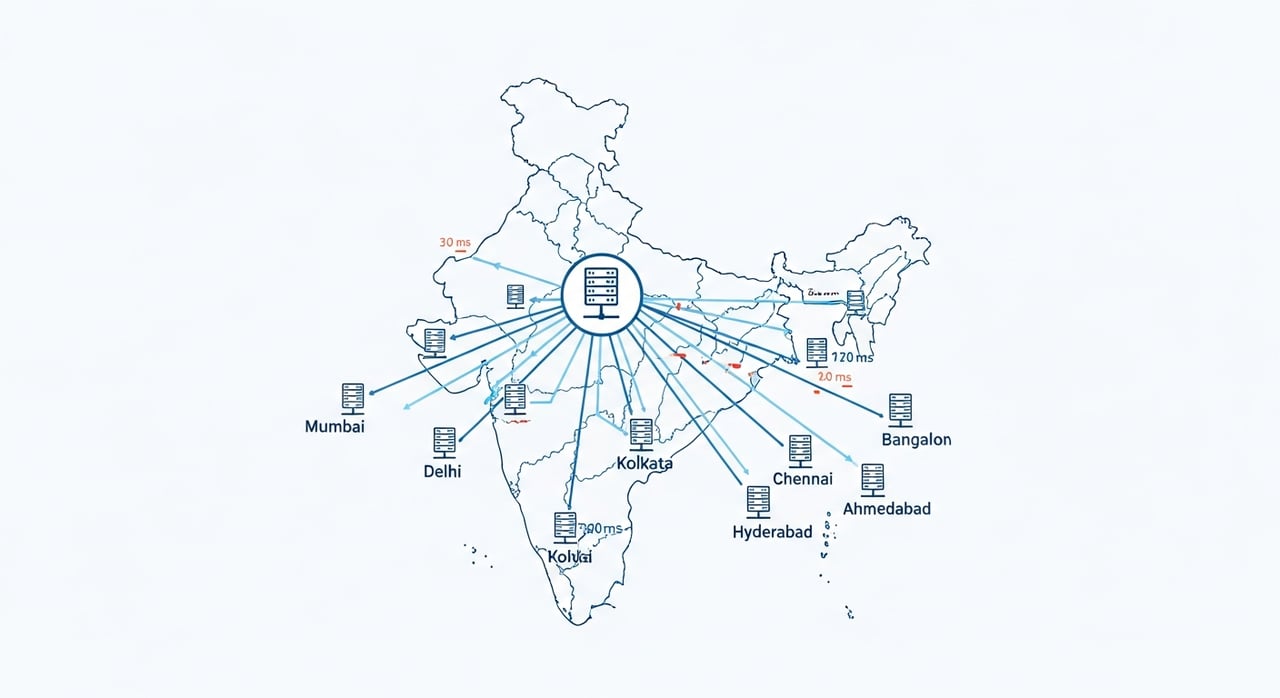
Two structural changes reshaped the Indian CDN landscape this year. First, Jio's 5G SA rollout now covers 85%+ of urban India, which means last-mile latency dropped — but mid-mile congestion between ISP peering and CDN edges actually worsened in several regions as traffic volumes surged. A CDN with shallow India presence (one or two metros) now performs worse relative to 2024 than its spec sheet suggests. Second, India's data-localization amendments that took effect in January 2026 require certain categories of user data to be processed on Indian soil, making edge-compute location a compliance question, not just a performance one.
The result: picking a CDN for India in 2026 is less about global footprint bragging rights and more about verifiable in-country capacity, peering quality with Jio, Airtel, and BSNL, and transparent pricing that does not punish India-heavy traffic mixes.
BlazingCDN targets the cost-performance intersection that matters most to Indian deployments serving high-volume static and video workloads. As of October 2026, pricing starts at $5 per TB and drops to $2.50 per TB at volume, with a 100 TB/month workload at $415. The platform runs Anycast routing with built-in failover and is built for large static and video delivery, so it fits startups shipping their first product and large media companies alike. See BlazingCDN pricing and volume tiers.
Akamai's India footprint remains the deepest of any global CDN — over 40 edge locations as of 2026, with strong peering across all major Indian ISPs. P50 latency in Mumbai and Delhi sits around 8–12 ms for cached content. The tradeoff is cost: Akamai's India traffic pricing typically runs $0.02–$0.04/GB on negotiated enterprise contracts, roughly 5–10x more per TB than budget-conscious alternatives. If your workload involves adaptive bitrate streaming at scale or you need Prolexic-grade DDoS mitigation baked in, Akamai justifies the premium. For static asset delivery or software downloads, the ROI math is harder to close.
Cloudflare expanded its India presence to approximately 30 cities by early 2026, including smaller metros like Kochi, Lucknow, and Indore. The free and Pro tiers remain compelling for low-traffic sites, but the bandwidth-based pricing on enterprise plans and the opaque "unmetered but fair-use" model on lower tiers make it tricky to budget precisely. Cloudflare's real strength in India is its integrated security stack — Bot Management, Turnstile, and Zero Trust — bundled without per-request charges. For WordPress sites and SaaS dashboards targeting Indian users, it is the path of least resistance.
CloudFront's India pricing (as of May 2026) is $0.109/GB for the first 10 TB/month from Indian edge locations, stepping down to $0.085/GB above 50 TB. That makes it one of the more expensive options per byte. Where CloudFront wins is integration: if your origin is S3 or ALB, the configuration overhead is near zero, and Origin Shield from Mumbai reduces origin load effectively. Lambda@Edge and CloudFront Functions provide real edge-compute capability. For AWS-native shops, switching CDNs incurs migration cost that often exceeds the per-TB savings for the first year.
Fastly's India edge presence is thinner than competitors — two locations (Mumbai, Chennai) as of 2026. What it lacks in geographic spread, it compensates with VCL-based configurability and sub-200ms global purge times. For teams running Compute@Edge workloads or needing instant cache invalidation (think: real-time sports scores, live inventory), Fastly is unmatched. India pricing is approximately $0.028/GB, placing it mid-range. The platform is not the right fit for teams that need coverage in Tier-3 Indian cities; users in Patna or Ranchi may route through Singapore or Mumbai with added latency.
Google Cloud CDN leverages Google's private backbone and has edge-cache locations in Mumbai, Delhi, and Chennai. Cache-egress pricing in India is $0.08/GB as of Q1 2026. Like CloudFront, its primary value is ecosystem integration — if your origin sits behind a GCP load balancer, setup is a toggle. HTTP/3 and QUIC are supported natively. The limitations: minimal configurability compared to Fastly or Akamai, no built-in WAF (you need Cloud Armor separately), and the pricing does not scale favorably for high-volume video delivery.
StackPath operates a smaller but functional India presence with edges in Mumbai. It positions as a developer-friendly CDN with straightforward per-GB billing at approximately $0.06/GB for Asia-Pacific traffic (2026). The platform supports edge scripting via EdgeEngine. For smaller teams that want predictable billing without enterprise-sales friction, StackPath is a reasonable mid-market option. It lacks the depth of Indian peering that Akamai or Cloudflare offer, which means Tier-2 city performance may lag.
| Provider | India Price/GB (at 50 TB/mo) | Approx. Price/TB | Edge Compute |
|---|---|---|---|
| BlazingCDN | $0.0035 | ~$3.50 | No |
| Akamai | ~$0.020–$0.040 | ~$20–$40 | EdgeWorkers |
| Cloudflare | Unmetered (plan-based) | Varies | Workers |
| CloudFront | $0.085 | ~$85 | Lambda@Edge |
| Fastly | ~$0.028 | ~$28 | Compute@Edge |
| Google Cloud CDN | $0.08 | ~$80 | No (separate product) |
| StackPath | ~$0.06 | ~$60 | EdgeEngine |
The delta is stark. At 100 TB/month of India-origin egress, your annual CDN spend ranges from roughly $4,200 (BlazingCDN) to over $100,000 (CloudFront). That is not a rounding error — it is headcount-level budget.
No single CDN wins every scenario. The table below maps workload profiles to the provider best suited for each, based on 2026 India-specific conditions.
| Workload Profile | Best Fit | Why |
|---|---|---|
| High-volume video streaming (100+ TB/mo) | BlazingCDN | Low per-TB cost at scale, fast scaling |
| Enterprise app with strict SLA + security | Akamai | Deepest India edge density, integrated security stack |
| WordPress / SaaS with security-first needs | Cloudflare | Bundled bot management, Zero Trust, free tier for small sites |
| AWS-native stack, moderate volume | CloudFront | Zero-friction integration, Origin Shield Mumbai |
| Real-time invalidation (live scores, inventory) | Fastly | Sub-200ms global purge, VCL programmability |
| GCP-native stack, API-heavy | Google Cloud CDN | Private backbone, native HTTP/3, tight LB integration |
| Startup / dev team, predictable billing | StackPath or BlazingCDN | Straightforward pricing, no enterprise-sales gating |
Three developments matter for anyone re-evaluating their CDN stack this year:
Edge AI inference is entering production. Akamai and Cloudflare both shipped GA edge-inference products in late 2025 and early 2026. If your application does content personalization, A/B test assignment, or fraud scoring at the edge, these features remove a round-trip to origin. Fastly's Compute@Edge supports WASM-based inference but lacks the managed-model hosting the other two provide.
QUIC adoption reached a tipping point. Chrome and Edge in India now negotiate HTTP/3 for over 70% of connections (as of Q1 2026 measurements). CDNs that still fall back to HTTP/2 on Indian edges — or worse, terminate QUIC only at Singapore — add measurable latency. Verify that your provider terminates QUIC at Indian edges, not just at the Anycast ingress.
India's data-localization enforcement tightened. The Digital India Act amendments effective January 2026 expanded the categories of data that must remain on Indian infrastructure during processing. If your CDN does edge-compute transformations on user data, the compute location is now a compliance surface. Confirm your provider can pin edge-compute execution to Indian nodes.
For high-volume video delivery (100 TB/month and above), BlazingCDN offers the lowest per-TB cost in the market at $2–$3.50/TB depending on commitment tier. If you need adaptive bitrate optimization and deep Indian edge density as non-negotiables, Akamai remains the performance leader but at 10–20x the cost per TB.
Point your domain's CNAME to the CDN's edge hostname, configure your cache-control headers at origin, and set an origin-shield location in Mumbai to reduce origin fetches. Test TTFB from Tier-2 cities (Jaipur, Lucknow, Kochi) specifically — metro-only testing hides the latency your actual users experience.
For sites under 50,000 monthly visits with modest asset weight, the free tier works. Beyond that, you hit fair-use limits that are poorly documented. The Pro tier at $20/month adds image optimization and better cache rules. For high-traffic WordPress in India, evaluate whether a volume-priced CDN like BlazingCDN is cheaper than Cloudflare's Business or Enterprise tiers once you factor in all features you actually use.
CloudFront's India performance is solid — Mumbai Origin Shield and multiple Indian edges deliver consistent sub-30ms TTFB for cached objects in Tier-1 cities. The issue is cost: at $85/TB, it is among the most expensive options for India-heavy traffic. If your stack is fully AWS, the integration convenience may justify it. If not, the cost gap is hard to ignore.
For cached static content, a CDN with strong Indian peering should deliver 5–15 ms TTFB in metros (Mumbai, Delhi, Bangalore) and 20–50 ms in Tier-2 cities. If you are seeing above 80 ms consistently, your traffic is likely routing through Singapore or another out-of-country edge. Run synthetic tests from Indian agents (via tools like Catchpoint or Thousand Eyes) at multiple times of day to catch peering congestion patterns.
Here is a concrete exercise for this week: pick three CDN candidates from the list above, set up trial accounts, and run a 72-hour synthetic-monitoring test from five Indian cities — Mumbai, Delhi, Bangalore, Hyderabad, and one Tier-3 city like Bhubaneswar or Coimbatore. Measure P50 and P99 TTFB for a 500 KB static asset and a 5 MB video segment. Compare the results not just on median latency but on variance: a CDN that delivers 12 ms at P50 but 400 ms at P99 during evening ISP congestion is worse for your users than one that delivers 25 ms at P50 and 60 ms at P99. The numbers will tell you more than any comparison article — including this one.

Heavy traffic.
Light bill.
The CDN for video and large traffic
Learn
H.264, also called Advanced Video Coding (AVC) or MPEG-4 Part 10, is a block-based video compression standard published ...
Compare
At 100 TB a month, the published price gap between options for a CDN for static content is more than 16 times: ...
Learn
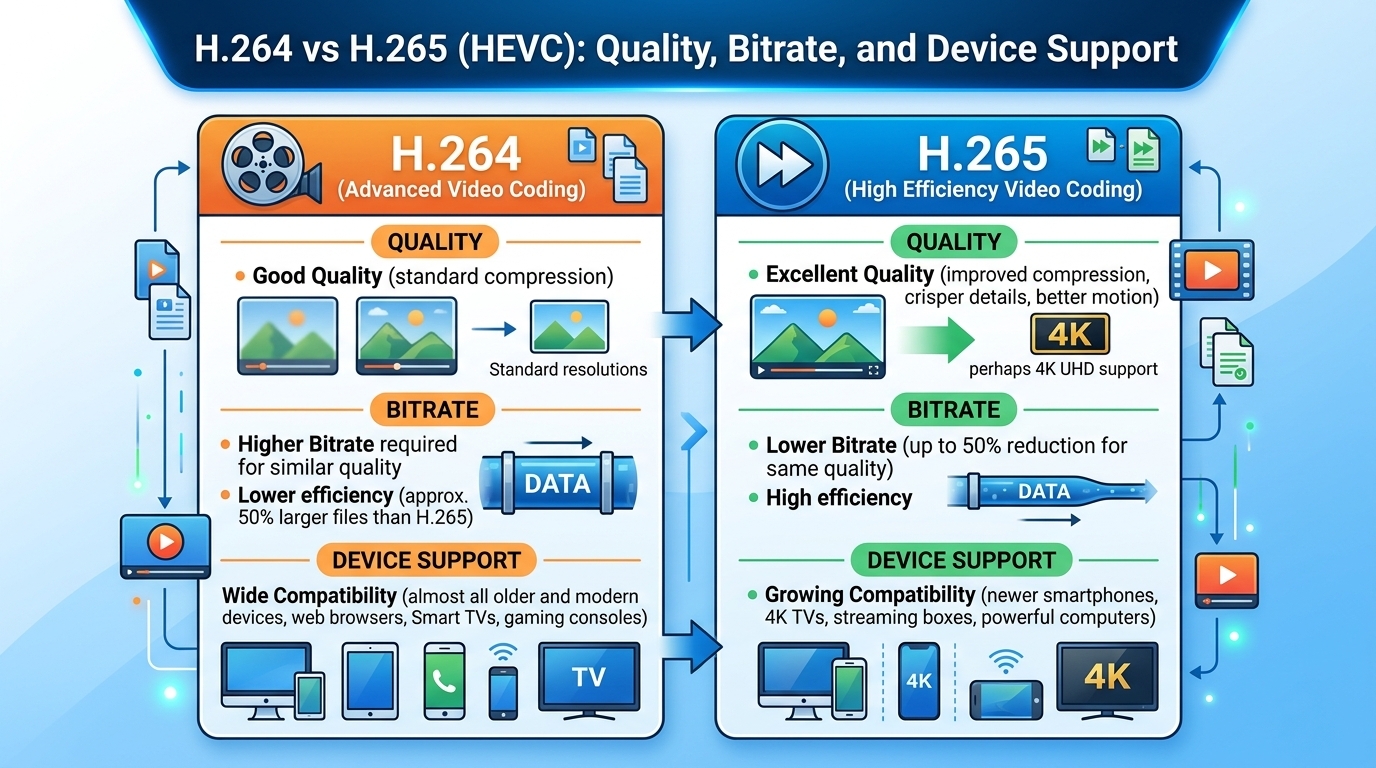
Evaluated October 2026: in the h264 vs h265 decision, HEVC (H.265) matches H.264 (AVC) quality at roughly 30 to 50 ...