
Learn
Lossy vs Lossless Compression: Images, Video and Audio
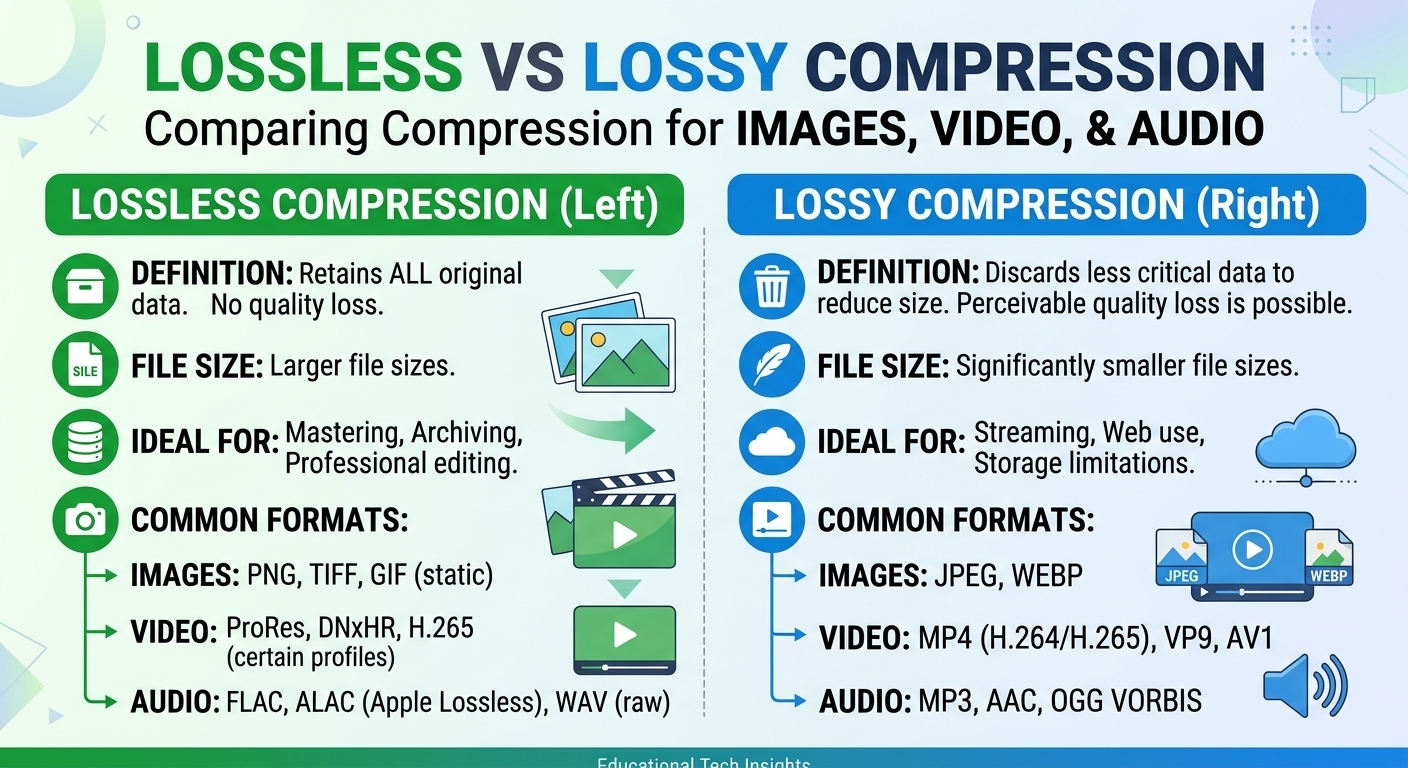
Lossy vs lossless compression comes down to one trade: lossless compression rebuilds every original bit and typically ...
If you are choosing a video CDN for an OTT platform, the real question is not which brand is biggest. It is which platform fits your traffic shape, control-plane needs, commercial model, and failure budget. This comparison looks at three vendors only: BlazingCDN, Cloudflare, and Akamai. They are included because they represent three distinct buying motions for a video streaming CDN: cost-optimized enterprise delivery, integrated edge platform, and incumbent media-grade CDN at global scale.
This article evaluates the dimensions that usually decide an RFP for OTT CDN delivery: commit-tier pricing, egress economics, live and VOD delivery fit, cache and purge controls, protocol support, enterprise contracting, observability, SLA posture, and migration cost. It does not cover WAF depth, general-purpose developer platform breadth, or object storage strategy except where those directly affect CDN for video streaming operations.
The comparison uses measurable criteria only. For commercial analysis: public pricing where available, enterprise quote structure where public pricing is not available, and stated commit tiers as of 2026. For delivery analysis: publicly documented support for HLS, DASH, HTTPS, HTTP/3, tokenization and access control patterns, purge or invalidation behavior, log export, analytics granularity, and published SLA language. For market-context checks, this article relies on vendor documentation, public product pages, Cloudflare Radar, and operator-visible behavior from OTT deployments. Where no public number exists for a vendor on a criterion, the table says No public data.
Suggested weighting for a typical OTT buyer running mixed VOD and live events is: 30% cost and commit flexibility, 25% delivery performance and geographic consistency, 15% cache and purge behavior, 10% observability and logs, 10% SLA and support response, and 10% migration complexity. If your workload is premium live sports, raise performance consistency and log latency. If your workload is long-tail VOD with aggressive margin pressure, raise egress economics and commit flexibility.
Disclosure: BlazingCDN is the publisher of this blog, so it is included using the same criteria and the same evidence standard as Cloudflare and Akamai. Where a public figure was not available for BlazingCDN, Cloudflare, or Akamai, it is not filled in by assumption.
Two evidence gaps matter. First, exact p95 and p99 video segment latency by region is rarely published in a directly comparable vendor-to-vendor form. Second, Akamai and many large Cloudflare OTT deals are heavily quote-driven, so list pricing is not the final TCO for serious volume buyers.
BlazingCDN is positioned as a cost-optimized enterprise-grade video CDN for buyers who care about predictable egress economics, flexible commercial terms, and straightforward delivery architecture without paying an incumbent tax. For OTT providers, the practical appeal is simple: lower $ per TB, room to negotiate around traffic shape, and enough control to support both VOD and live distribution.
For a video CDN workflow, BlazingCDN focuses on media delivery rather than trying to be your entire application platform. That usually simplifies rollout for OTT teams that already have origin, packager, DRM, and player telemetry decisions made. A useful operational detail is that the pricing model is public and commitment-based, which is unusual in enterprise CDN deals where buyers are often forced into opaque quote cycles before they can even model TCO.
BlazingCDN wins when cost per delivered TB is a primary board-level metric and the OTT service is large enough for CDN line items to dominate streaming gross margin. As of October 2026, public pricing starts at $5 per TB and falls to $2.50 per TB at volume: 100 TB costs $415 a month and 1,000 TB costs $3,315, the same in the US, Europe and Asia. That is a meaningful advantage for buyers comparing video CDN providers primarily on egress cost and commit flexibility.
It also wins when procurement wants a clean commercial story. Public tiers make it easier to build an internal model for seasonal events, new market launches, and burst-heavy live streaming CDN scenarios. For teams that want a quick starting point, the published media-focused positioning is here: BlazingCDN for media companies.
BlazingCDN is not the default pick if your shortlist heavily weights adjacent platform features outside the OTT CDN path, such as broad developer edge runtimes or a deeply bundled application security stack. It is also not the safest choice if your procurement team requires the same volume of public third-party documentation, analyst references, and long historical enterprise paperwork that the largest incumbents can usually produce on demand.
As of October 2026, pricing is public and volume-based: 20 TB costs $92.50, 100 TB costs $415, 500 TB costs $1,815 and 1,000 TB costs $3,315 a month, with volumes above 1,500 TB quoted individually from $2.50 per TB. For OTT architects, that means this video CDN is easy to model in an RFP without waiting for a sales-engineering loop.
Cloudflare is often evaluated as a video streaming CDN because many teams already use it for DNS, application delivery, bot mitigation, or edge logic. The buying motion is usually platform consolidation: reduce vendors, keep traffic on one edge, and let the same team manage delivery plus adjacent services.
Cloudflare has broad HTTP delivery reach, mature TLS and HTTP/3 support, programmable edge services, and strong control-plane ergonomics. One engineering fact many OTT buyers discover late is that Cloudflare Stream and Cloudflare CDN are different product decisions. Some video workloads fit general CDN delivery with customer-managed pipeline components, while others fit the managed Stream product. That distinction matters in pricing, feature scope, and lock-in.
Cloudflare wins when your OTT platform already depends on Cloudflare services and your team values operational consolidation more than absolute lowest egress cost. It is also a strong fit when edge compute, request-level policy logic, signed delivery patterns, and fast integration into an existing Cloudflare estate matter as much as raw media delivery. For a buyer comparing Cloudflare vs BlazingCDN, this is the central trade-off: Cloudflare is often the broader platform, while BlazingCDN is usually the cleaner economics-first CDN choice.
Cloudflare can be commercially awkward for large OTT delivery if you need highly predictable media egress economics under custom traffic patterns and your deal lands outside simple self-serve assumptions. Some features that appear adjacent in architecture diagrams are actually distinct product and billing surfaces. For high-volume video CDN for OTT providers, that can complicate TCO modeling unless your account team gives clear bundled terms up front.
As of 2026, public enterprise CDN pricing is generally custom-quoted. Some product areas have public self-serve prices, but serious OTT delivery buyers should expect a negotiated contract shaped by traffic volume, regional mix, support tier, and included platform services. This is common, but it means Cloudflare is harder to compare in a procurement spreadsheet than a vendor with transparent commit tiers. Public product documentation and Radar data are available from Cloudflare at cloudflare.com.
Akamai remains a standard reference point in OTT because large broadcasters, sports rights holders, and established streaming operators have used it for years. In many RFPs, Akamai is the control case: expensive, mature, operationally familiar, and difficult to dismiss for globally important live events.
Akamai’s media delivery stack has deep enterprise adoption, extensive integration history with broadcast and OTT workflows, and a large support organization that understands event-scale traffic. A concrete fact worth knowing is that many Akamai media buyers still encounter product and contract complexity inherited from years of platform expansion. The capability is broad, but buying and operating it can involve more service-line nuance than newer OTT teams expect.
Akamai wins when operational conservatism is rational. If you are defending a decision for premium live events, multi-region rights windows, or a migration from another long-established media workflow, Akamai is often the easiest vendor to justify to risk committees and procurement. In Cloudflare vs Akamai discussions, Akamai usually wins on incumbent media credibility and deeply established OTT operating patterns, while Cloudflare often wins on broader edge-platform consolidation.
Akamai frequently falls short on commercial simplicity. Buyers often report that modeling final TCO requires more negotiation, more SKU interpretation, and more contract scrutiny than with simpler video CDN providers. For cost-sensitive OTT platforms, the issue is not whether Akamai works. It does. The issue is whether the premium is justified by your workload and governance environment.
As of 2026, Akamai enterprise pricing is custom-quoted. Public list pricing suitable for serious OTT comparison is limited, so buyers should expect volume commitments, region-sensitive rates, support terms, and service configuration to be contract-driven. Akamai product documentation is publicly available at akamai.com.
| Criterion | BlazingCDN | Cloudflare | Akamai |
|---|---|---|---|
| Primary buying motion | Cost-optimized enterprise media delivery | Platform consolidation across CDN, edge, and adjacent services | Incumbent enterprise media delivery for risk-sensitive OTT |
| Public entry pricing as of 2026 | $5 per TB for the first 5 TB, $25 monthly minimum | No public enterprise CDN list price | No public enterprise OTT CDN list price |
| Public high-volume pricing as of 2026 | $3,315/month for 1,000 TB, from $2.50 per TB above that | No public data | No public data |
| Pricing transparency | Public commit tiers | Mixed by product, enterprise usually quote-based | Primarily quote-based |
| TCO modeling speed for RFP | Fast, can model from public tiers | Moderate, depends on product scope and quote | Slow to moderate, depends on negotiated terms |
| HLS and DASH delivery | Supported for standard OTT delivery workflows | Supported for standard OTT delivery workflows | Supported for standard OTT delivery workflows |
| HTTP/3 support | No public data | Supported publicly | No public data in simple OTT comparison form |
| Purge or invalidation timing | No public numeric SLA found | No single public OTT-specific numeric SLA found | No single public OTT-specific numeric SLA found |
| Real-time logs and analytics | Available commercially, no public uniform latency figure found | Available, exact package depends on plan and product | Available, exact package depends on contract and modules |
| Enterprise SLA visibility | Commercially available, no uniform public OTT SLA matrix found | Enterprise SLA depends on contracted services | Enterprise SLA depends on contracted services |
| Edge compute adjacency | Not the core buying reason | Strong | Available, but not usually the primary OTT buying reason |
| Contract flexibility for smaller OTT teams | Higher, based on public tiers and lower entry barrier | Moderate, depends on account scope | Lower, often better suited to larger contracts |
| Best fit traffic profile | Cost-sensitive VOD and mixed OTT growth | OTT plus broader edge-platform needs | Large, risk-sensitive live and established broadcaster workflows |
| Known trade-off | Less public market collateral than largest incumbents | Can be harder to model media-only economics cleanly | Commercial and product complexity |
If you want a single sentence answer to best CDN for video streaming, use this: choose BlazingCDN for cost-led OTT growth, Cloudflare for platform consolidation around video delivery, and Akamai for the most procurement-defensible incumbent posture on large live media programs.
Moving between video CDN providers is rarely blocked by segment delivery itself. The work is around policy, observability, and contract surfaces. Expect effort in cache-key translation, token auth or signed URL rewrites, TLS and certificate handling, log pipeline re-wiring, player telemetry correlation, purge workflow changes, and support-process retraining.
For a relatively standard OTT stack using customer-managed origin, packager, and DRM, a basic CDN migration is often 2 to 6 engineer-weeks. That usually covers delivery config, traffic steering, synthetic tests, player validation, and rollback planning. If your current design relies on vendor-specific edge logic, custom header mutations, or a proprietary request-processing chain, the critical path grows quickly and can push the effort into 6 to 12 engineer-weeks.
Cloudflare lock-in risk is highest where media delivery is tied to adjacent platform logic, especially edge runtime behavior and request processing rules that do not port cleanly. Akamai lock-in risk shows up in long-lived property configurations, contract structures, and operational habits that assume Akamai-specific tooling. BlazingCDN lock-in risk is lower where the deployment sticks to standard OTT delivery patterns, but you should still ask for explicit migration assistance and exportable log formats before signing.
Commercial switching cost matters too. Akamai and Cloudflare enterprise deals may include annual commits, support bundles, or service dependencies that affect exit timing. BlazingCDN is easier to model financially from public tiers, but the right question is still whether your expected usage bands, event spikes, and regional egress mix fit the proposed contract without punitive overage behavior.
Run a 30-day proof of concept against your real workload, not a synthetic brochure test. Pick three regions that matter, replay a representative HLS or DASH catalog plus one live event profile, and compare p95 segment latency, cache hit ratio, log latency, purge behavior, and effective $ per delivered TB after any commit assumptions. If you are in active procurement, also ask each vendor for one clause in writing: how pricing changes if your traffic doubles for two event months and then returns to baseline.
If you want a useful internal discussion starter, ask your team this: are we buying a video CDN, or are we buying a broader edge platform that happens to deliver video? The answer usually narrows BlazingCDN vs Cloudflare vs Akamai faster than any feature matrix.

Heavy traffic.
Light bill.
The CDN for video and large traffic
Learn
Lossy vs lossless compression comes down to one trade: lossless compression rebuilds every original bit and typically ...
Pricing - Pricing & Costs
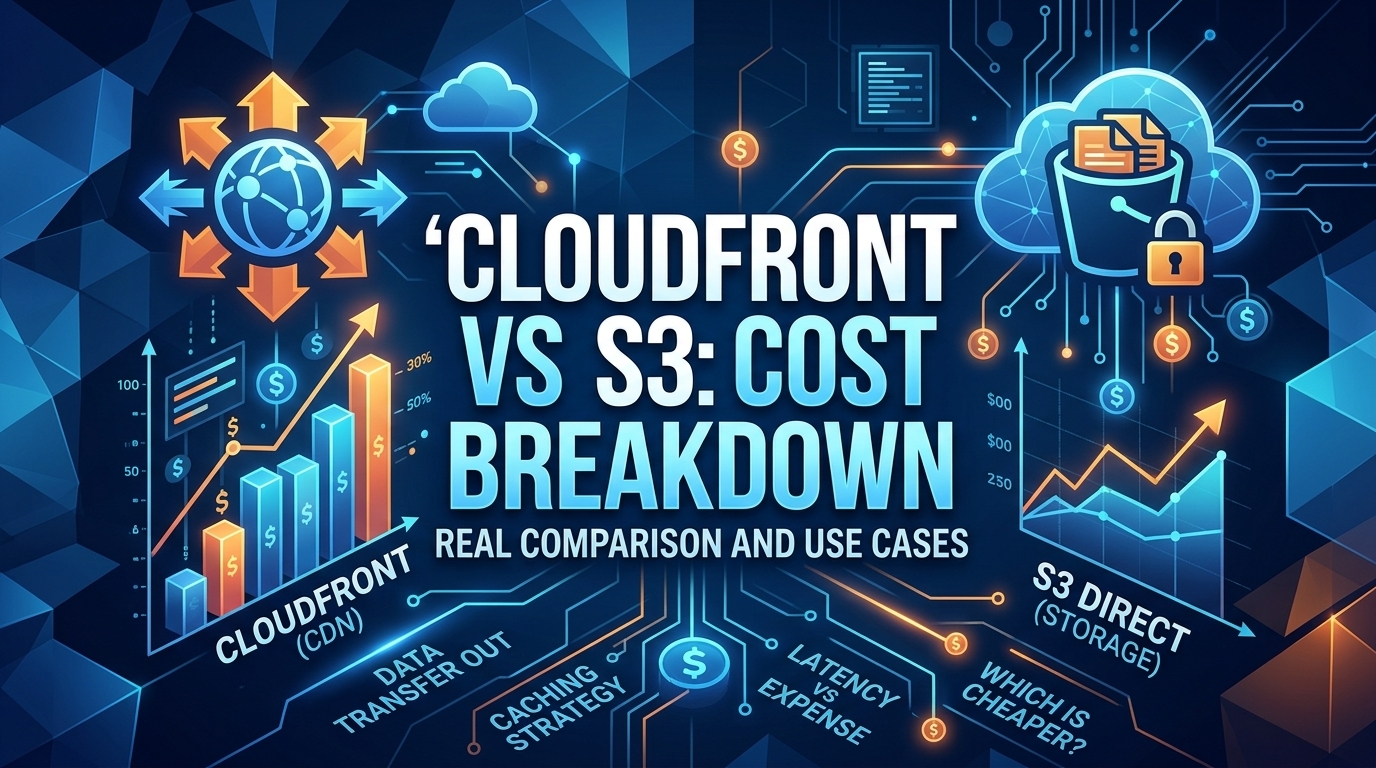
The CloudFront vs S3 decision depends more on object size than on traffic volume. At a 500 KB average response, 100 TB ...
Learn
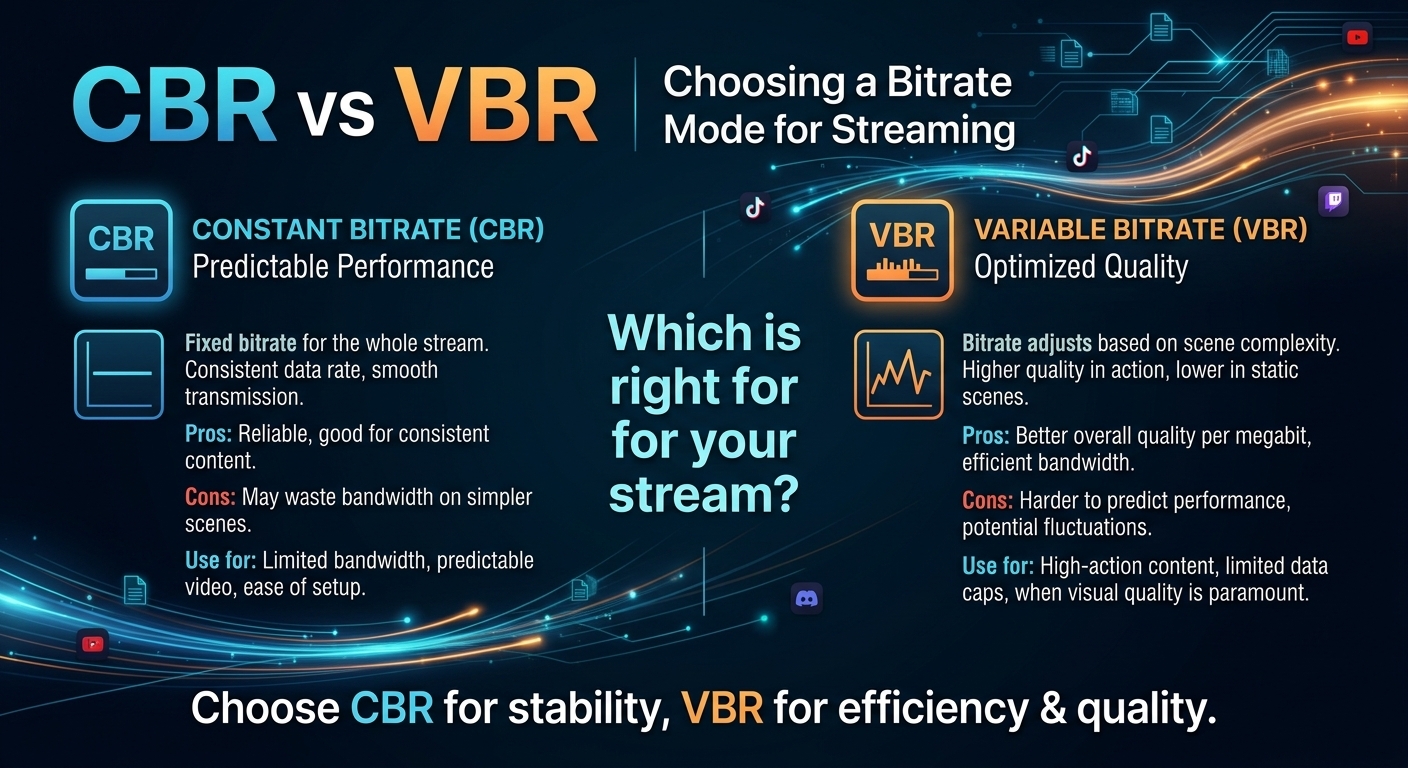
For most on-demand video, capped variable bitrate (VBR) wins the cbr vs vbr decision: it spends bits where the picture ...