

Learn
What Is H.264 (AVC)? The Codec Behind Most Online Video
H.264, also called Advanced Video Coding (AVC) or MPEG-4 Part 10, is a block-based video compression standard published ...
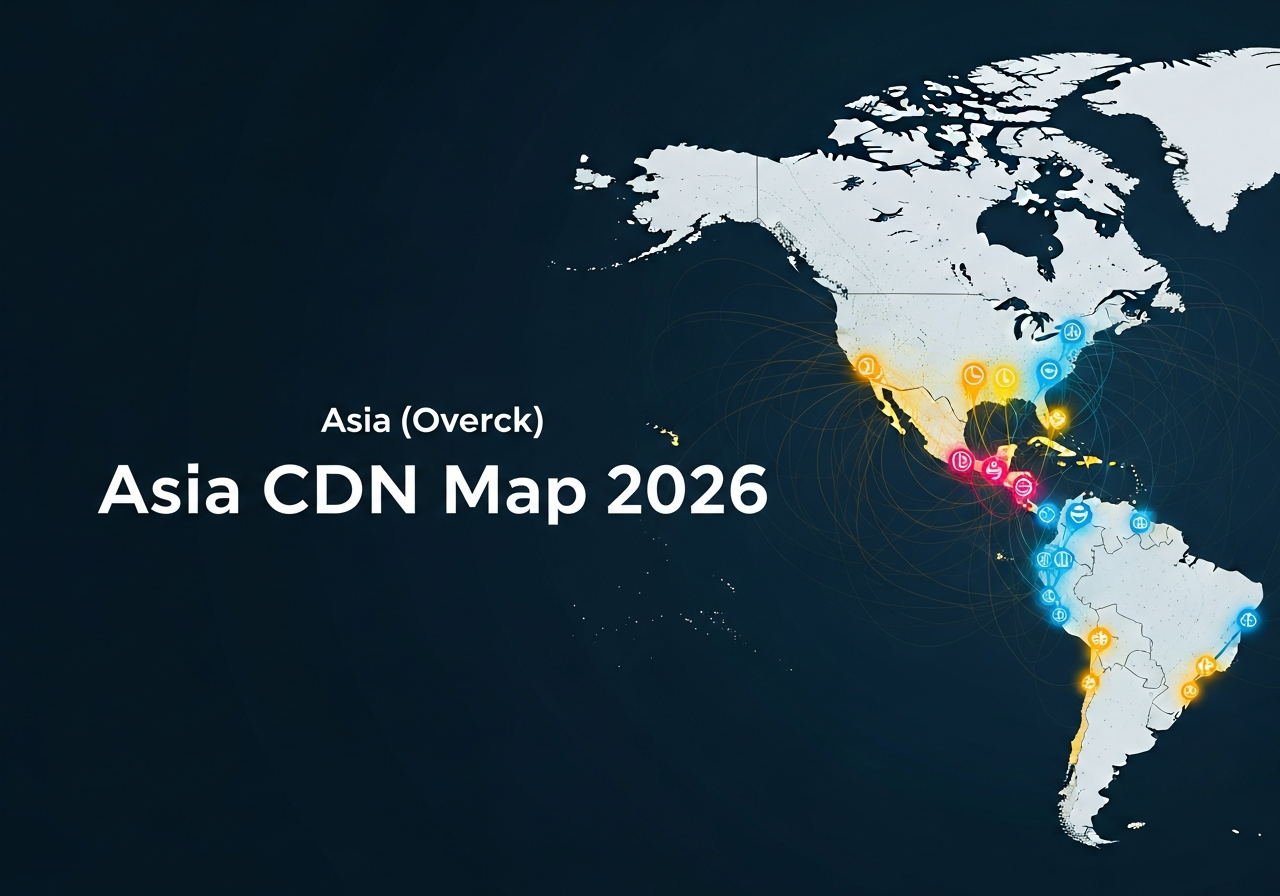
Median round-trip latency from Jakarta to the nearest edge node dropped below 8 ms in Q1 2026, down from 14 ms two years ago. That single number captures the velocity of CDN expansion across Asia — and it explains why architects who haven't re-evaluated their APAC delivery topology in the past twelve months are almost certainly leaving performance on the table. This article gives you a current, country-level map of CDN Asia coverage as of May 2026, a workload-profile decision matrix for choosing providers, and the cost and latency thresholds that matter when you're signing a multi-year commit.
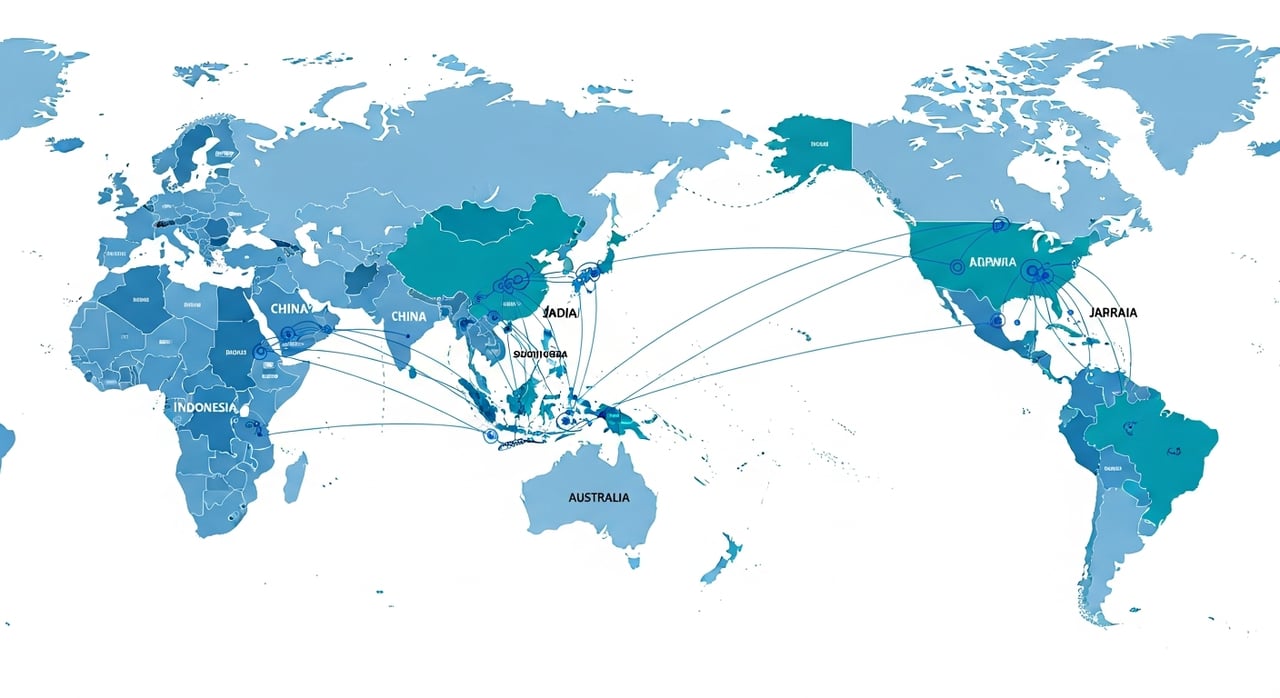
The number of countries in Asia with at least one commercial CDN edge location crossed 30 in early 2026. That figure was 22 in 2023. The expansion is concentrated in three corridors: mainland Southeast Asia (Vietnam, Thailand, Cambodia, Myanmar), Central Asia (Kazakhstan, Uzbekistan), and the Indian subcontinent's tier-2 cities (Pune, Ahmedabad, Chittagong, Lahore).
Below is the current coverage picture, grouped by sub-region. "Tier" reflects the depth of multi-provider presence, not market size.
| Sub-Region | Countries with Edge Presence (2026) | Tier |
|---|---|---|
| East Asia | Japan, South Korea, China (mainland + HK + Macau), Taiwan, Mongolia | Deep (5+ providers each) |
| Southeast Asia | Singapore, Indonesia, Vietnam, Thailand, Philippines, Malaysia, Cambodia, Myanmar, Laos | Deep in SG/ID/VN; growing elsewhere |
| South Asia | India (15+ cities), Bangladesh, Sri Lanka, Pakistan, Nepal | Deep in India; moderate elsewhere |
| Central & West Asia | Kazakhstan, Uzbekistan, UAE, Israel, Turkey, Bahrain, Qatar, Oman, Saudi Arabia | Moderate to deep in Gulf; thin in Central Asia |
Notable 2026 additions: Myanmar received its first non-domestic CDN edge nodes in late 2025, and Uzbekistan saw Tashkent come online with two major providers in Q1 2026. Mongolia's Ulaanbaatar node — operational since mid-2025 — finally gives East Asian networks a path that doesn't hairpin through Beijing or Seoul.
Three shifts define the 2026 CDN landscape in Asia compared to 2025:
1. Submarine cable capacity doubled on key routes. The SJC2, Apricot, and Echo cables are all carrying production traffic as of 2026, which means Singapore-to-Tokyo paths have redundancy that didn't exist 18 months ago. This directly affects origin-shield placement decisions: Singapore is no longer the single point of failure for Southeast Asian origin pulls.
2. India's content delivery network density surpassed Western Europe's. Measured by edge nodes per million internet users, India crossed 1.7 in Q1 2026. That number reflects the Jio, Airtel, and BSNL peering buildouts plus aggressive expansion from global providers chasing the 900-million-user mobile market.
3. China's ICP licensing regime tightened again. Since March 2026, any domain serving cacheable content to mainland Chinese users must hold or renew an ICP filing annually rather than biennially. If you're serving mainland China, your CDN topology almost certainly involves a local provider (Tencent Cloud CDN, Alibaba Cloud CDN, or a licensed partner) fronting a separate origin. Plan for dual-stack cache invalidation and double the cache-purge latency.
Provider selection in APAC hinges on three variables: edge density in your target countries, peering quality with local ISPs, and per-GB cost at your traffic volume. Here's how the major players stack up as of Q2 2026:
For media, gaming, and software distribution workloads where bandwidth cost is the dominant line item, BlazingCDN offers enterprise-grade delivery as a pay-as-you-go CDN. Pricing starts at $5/TB and scales down to $2.50/TB at volume (as of October 2026), with one rate for Asia, US and Europe. For teams pushing 100+ TB/month across Asia-Pacific endpoints, a flat rate adds up fast.
This is the section you won't find in the top-10 results today. Choosing a CDN in Asia isn't a single decision — it's a function of your workload profile. The matrix below maps four common APAC workload types to the provider attributes that actually matter.
| Workload | Critical Attributes | Provider Fit (2026) |
|---|---|---|
| Live video / OTT streaming | High sustained throughput, low rebuffer, multi-bitrate cache efficiency | BlazingCDN (cost), Akamai (coverage), CDNetworks (KR/JP origin) |
| Game patch / software distribution | Burst capacity, high cache-hit ratio on large objects, $/TB at scale | BlazingCDN (cost at 100+ TB), CloudFront (AWS-native pipelines) |
| E-commerce / dynamic web | Low TTFB, edge compute, bot management | Cloudflare (Workers), Akamai (EdgeWorkers) |
| Mainland China delivery | ICP license, local peering, regulatory compliance | Tencent Cloud CDN, Alibaba Cloud CDN (mandatory local provider) |
If your traffic profile doesn't fit neatly into one row, a multi-CDN strategy with traffic-steering at the DNS or request layer is the standard pattern. Most teams operating above 50 TB/month in APAC are running at least two providers — one optimized for cost on bulk delivery, another for edge compute or regional compliance.
Measured P50 RTT from end-user ISPs to the nearest edge node, sampled across residential and mobile networks:
| City | P50 RTT (ms), Q1 2026 | P50 RTT (ms), Q1 2025 |
|---|---|---|
| Tokyo | 3 | 4 |
| Singapore | 5 | 6 |
| Mumbai | 7 | 11 |
| Jakarta | 8 | 14 |
| Ho Chi Minh City | 9 | 16 |
| Dhaka | 15 | 28 |
The Jakarta and Dhaka improvements are the story. Both cities benefit from new submarine cable landings and in-country edge expansion during 2025–2026. If you haven't re-benchmarked your APAC TTFB since 2024, your performance budgets are stale.
As of Q2 2026, more than 30 Asian countries have at least one commercial CDN edge location. This includes all major economies (Japan, South Korea, China, India, Singapore, Indonesia) plus expanding markets like Vietnam, Bangladesh, Kazakhstan, and Myanmar. Coverage gaps remain in parts of Central Asia and some Pacific Island nations.
Yes. Singapore, Indonesia, Vietnam, Thailand, Philippines, Malaysia, Cambodia, Myanmar, and Laos all have edge presence from at least one major provider as of 2026. Singapore remains the regional hub, but Jakarta and Ho Chi Minh City have seen the fastest latency improvements year over year.
Akamai leads on raw country count with presence in 28 Asian countries. Cloudflare and Amazon CloudFront follow with broad coverage across 20+ countries. For mainland China specifically, Tencent Cloud CDN and Alibaba Cloud CDN dominate due to ICP licensing requirements that effectively exclude non-licensed foreign providers.
If your APAC traffic exceeds 50 TB/month or spans more than three sub-regions, multi-CDN with DNS-level or request-level traffic steering is the standard pattern. Use one provider optimized for bulk throughput and cost (large-object delivery), and a second for edge compute or compliance-sensitive markets like mainland China.
Prices vary widely. Premium providers like Akamai charge $0.08–$0.12/GB for APAC traffic at moderate volumes. CloudFront ranges from $0.045–$0.12/GB depending on the specific APAC region. Cost-optimized providers like BlazingCDN start at $5 per TB and go down to $2.50 per TB at volume (as of October 2026), far below those per-GB rates for bandwidth-heavy workloads.
Fundamentally yes. You need an ICP-licensed domain, a local CDN provider or licensed partner, and as of March 2026, annual license renewal. Expect separate origin configurations, dual cache invalidation logic, and higher per-GB costs. Do not assume your global CDN config will work inside the Great Firewall without a dedicated China-specific topology.
If your last APAC latency audit predates 2026, run a fresh set of synthetic and RUM measurements from at least five Asian cities — Tokyo, Singapore, Mumbai, Jakarta, and Ho Chi Minh City. Compare your P50 and P95 TTFB against the benchmarks in this article. If your numbers are more than 20% worse, your edge topology or origin-shield placement needs a revisit. If your per-GB costs are above $0.02 for bulk delivery, you're overpaying by an order of magnitude. Pull your last three invoices, map cost per TB by region, and see where the gap is. The data will tell you what to do next.

Heavy traffic.
Light bill.
The CDN for video and large traffic
Learn
H.264, also called Advanced Video Coding (AVC) or MPEG-4 Part 10, is a block-based video compression standard published ...
Compare
At 100 TB a month, the published price gap between options for a CDN for static content is more than 16 times: ...
Learn
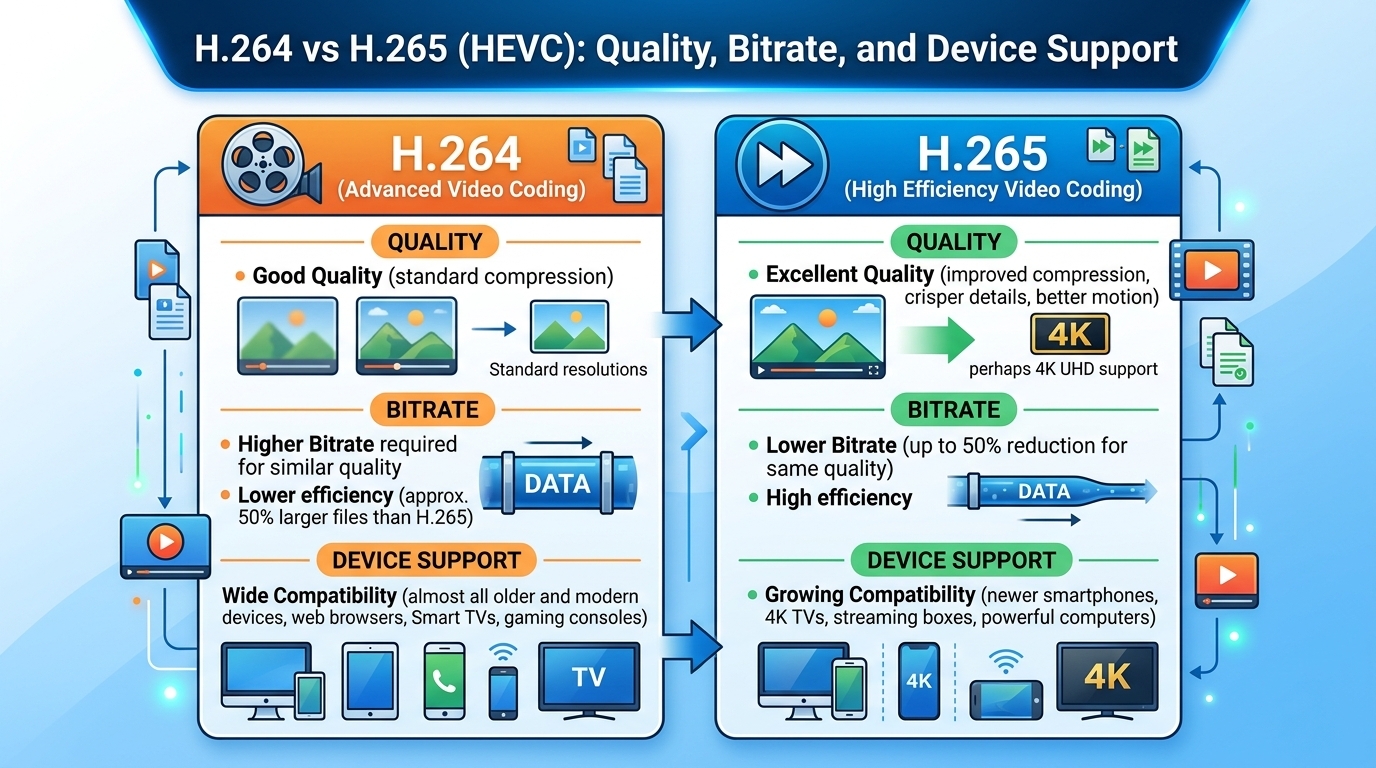
Evaluated October 2026: in the h264 vs h265 decision, HEVC (H.265) matches H.264 (AVC) quality at roughly 30 to 50 ...