
Learn
Lossy vs Lossless Compression: Images, Video and Audio
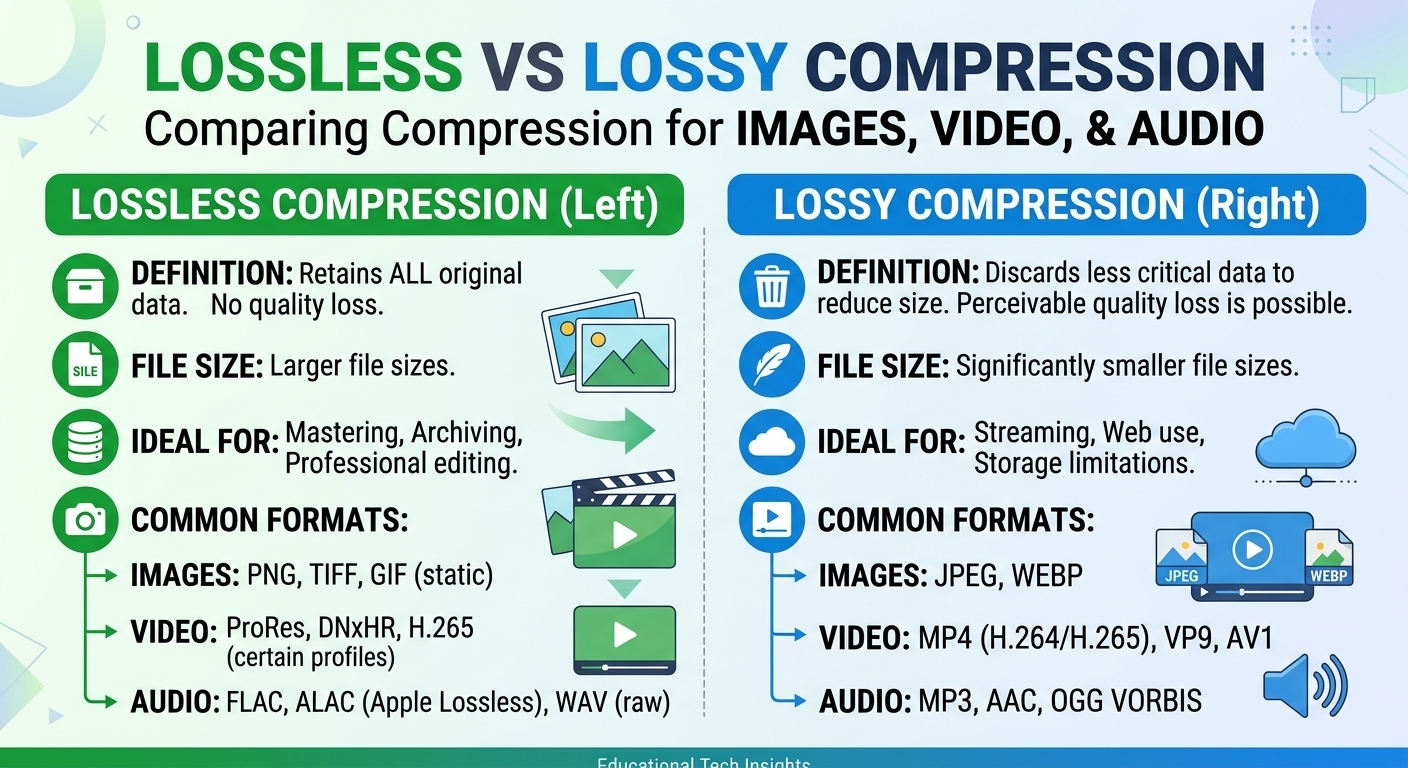
Lossy vs lossless compression comes down to one trade: lossless compression rebuilds every original bit and typically ...

SRT (Secure Reliable Transport) is an open-source, UDP-based protocol for moving live video across unpredictable networks at low latency. The SRT protocol recovers lost packets with selective retransmission inside a fixed latency window, 120 ms by default, and encrypts the payload with AES at 128, 192 or 256 bits. That combination makes it the standard replacement for RTMP in long-distance contribution feeds.
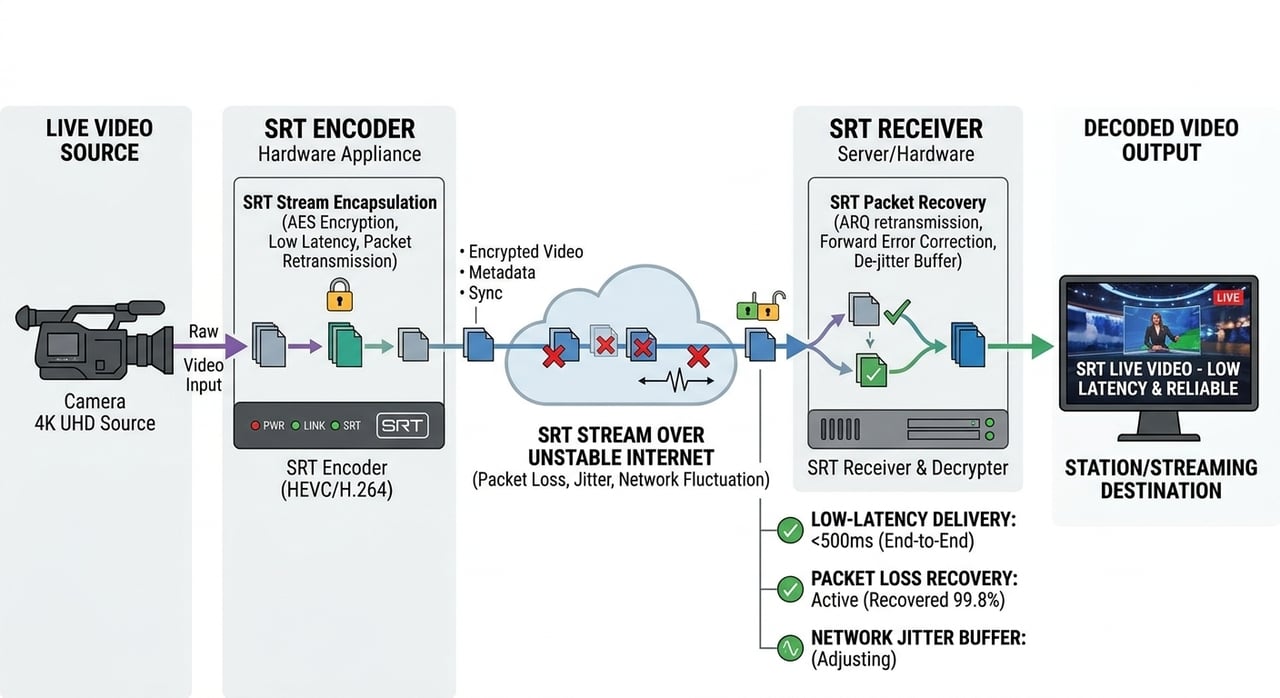
Secure Reliable Transport (SRT) was open-sourced by Haivision in 2017 and descends from UDT, a UDP data-transfer protocol built for high bandwidth-delay paths. A typical 2026 deployment sets receiver latency to 3–4 times the round-trip time, so a 150 ms transatlantic link runs at roughly 450–600 ms of buffer and absorbs several percent packet loss without visible artifacts.
The mechanics run on four pieces of per-connection state:
Encryption keys are derived from a shared passphrase (10–79 characters) and exchanged in the handshake. Connections run in caller, listener or rendezvous mode; rendezvous lets two firewalled endpoints connect outbound simultaneously. A stream ID field lets one listener port route many feeds.
SRT is transport only. It usually carries MPEG-TS in 1316-byte payloads (seven 188-byte TS packets), which is codec-agnostic: H.264, HEVC, AV1 and multichannel audio all ride unchanged. It lives on the contribution leg, encoder to cloud ingest or venue to master control. Viewers almost never receive SRT; the packager converts the feed into HLS or DASH segments for delivery.
Take an 8 Mbps HEVC feed from a stadium to a cloud encoder, 180 ms RTT, 2–4% loss on a bonded cellular uplink. The parameters below capture the practical tuning. They are the same options exposed by the reference library, ffmpeg and GStreamer.
| Parameter | Default | This link | Reasoning |
|---|---|---|---|
| latency | 120 ms | 720 ms | 4 x 180 ms RTT leaves room for two to three retransmission attempts |
| oheadbw | 25% | 25–35% | 8 Mbps input peaks near 10–11 Mbps during recovery; uplink must sustain it |
| pbkeylen | 16 (AES-128) | 32 (AES-256) | Negligible CPU cost on modern encoders |
| mode | caller | encoder caller, cloud listener | Venue firewalls allow outbound UDP; only the cloud side opens a port |
The single most important setting is latency: leaving the 120 ms default on a 180 ms RTT path means lost packets can never be recovered in time, so every loss becomes a visible drop.
SRT vs. RTMP: RTMP runs over TCP, so one lost segment stalls everything behind it, and TCP throughput falls roughly with RTT times the square root of loss. At 150 ms and 1% loss, a single RTMP connection struggles to hold high-bitrate video. SRT adds encryption natively, while RTMP needs RTMPS for that.
SRT vs. RIST: Reliable Internet Stream Transport solves the same problem with RTP-based ARQ and is specified by a broadcast industry forum rather than a single library. Choose based on encoder, decoder and cloud ingest support; interoperability matters more than protocol elegance here.
SRT vs. WebRTC: WebRTC targets sub-500 ms interactive delivery to browsers with congestion control that degrades quality to keep up. SRT holds bitrate constant and trades delay for fidelity, the right call for a feed that will be re-encoded downstream.
"SRT guarantees delivery." It does not. Packets that miss their release time are dropped by design; loss above what the latency and overhead budget can absorb still shows up on screen.
"The latency setting equals glass-to-glass delay." It is only the receiver buffer. Encode, decode and packaging delay stack on top, often adding one to several seconds.
"SRT has congestion control like TCP." Live mode deliberately does not back off. On a link without headroom, SRT keeps sending and loss climbs, so provision the uplink for peak rate plus overhead.
For contribution over long or lossy paths, yes. SRT recovers lost packets within a fixed latency window and encrypts by default, while RTMP over TCP suffers head-of-line blocking as RTT and loss grow. On a clean, short link RTMP still works fine, and some older platforms accept only RTMP ingest.
Start at 3–4 times the measured round-trip time, with 120 ms as the protocol default floor. Lossy paths such as cellular or satellite may need 5–6 times RTT. Watch the receiver's dropped-packet counter; if it climbs above zero during normal operation, raise latency before adding bandwidth overhead.
Usually yes. The caller side only needs outbound UDP, and rendezvous mode lets two NATed endpoints connect by calling each other simultaneously. The listener side needs one open UDP port. Corporate networks that block all outbound UDP will prevent SRT entirely, which is a common failure at venues.
Rarely at scale. SRT is point-to-point contribution transport without browser support, so feeds are transcoded and packaged into HLS or DASH for playback. Media players such as VLC can open SRT for monitoring, which is useful for confidence checks but not for large audiences.
This week, run your next contribution feed with SRT statistics logging enabled on the receiver. Record RTT, packets lost, packets retransmitted and packets dropped over a full event. If dropped is non-zero while retransmitted is healthy, your latency is too low; if retransmitted regularly hits the overhead ceiling, your uplink lacks headroom. Set latency from measured RTT, not the default, and rerun. For related transport and delivery explainers, browse the live streaming protocol guides on the BlazingCDN engineering blog.

Heavy traffic.
Light bill.
The CDN for video and large traffic
Learn
Lossy vs lossless compression comes down to one trade: lossless compression rebuilds every original bit and typically ...
Pricing - Pricing & Costs
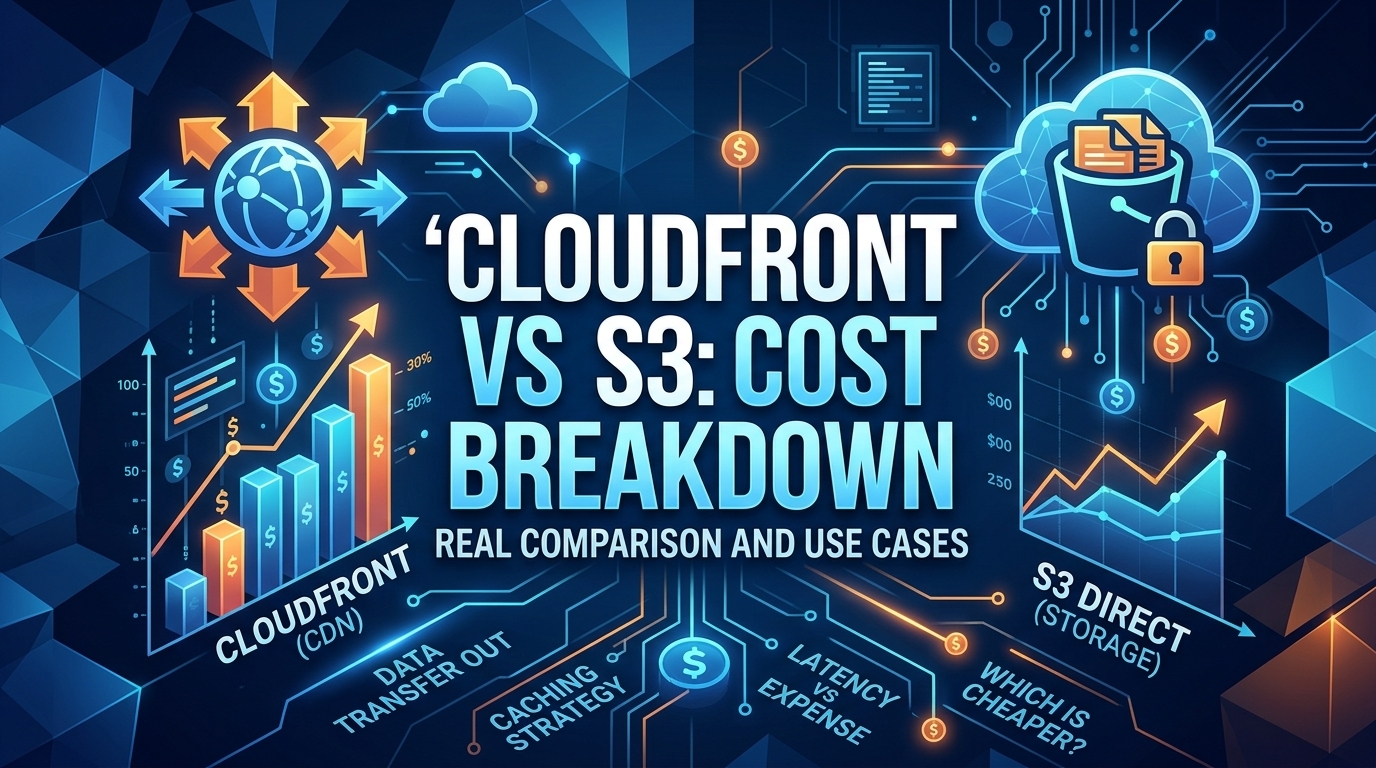
The CloudFront vs S3 decision depends more on object size than on traffic volume. At a 500 KB average response, 100 TB ...
Learn
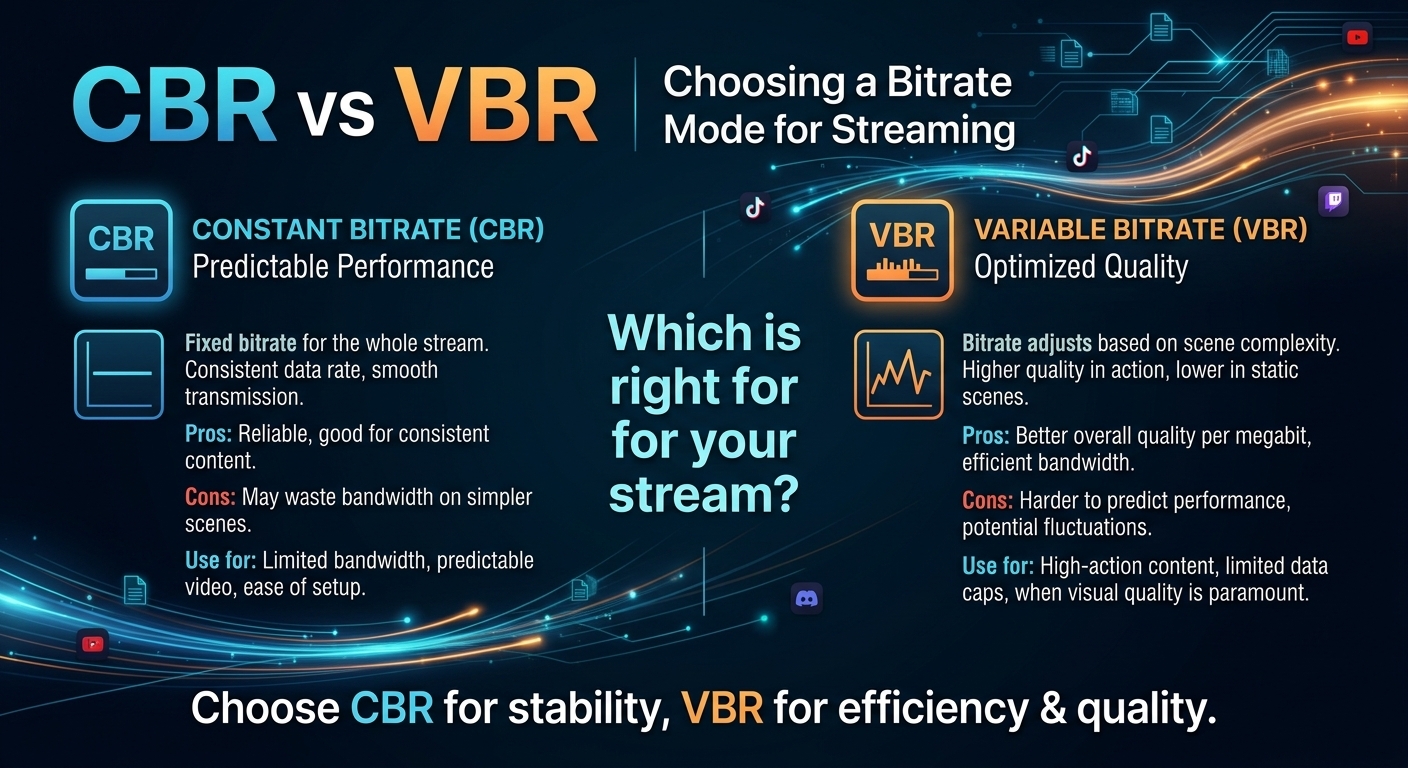
For most on-demand video, capped variable bitrate (VBR) wins the cbr vs vbr decision: it spends bits where the picture ...