

Learn
What Is a Keyframe? GOP Size and Keyframe Interval
In answer to what is a keyframe: a keyframe, or I-frame, is a video frame encoded without reference to any other frame, ...

Cache hit is the successful servicing of a request from a cache layer without fetching the requested object or computed result from the next upstream system, such as an origin server, database, or application backend.
In HTTP delivery, a cache hit means the cache already holds a usable representation for the request key and can respond from local or nearby storage subject to freshness, validation, and cache policy. In practical terms, that cuts origin load, reduces tail latency, and improves resilience during traffic spikes. For HTTP semantics, the governing specification is RFC 9111, which defines how caches store, reuse, and validate responses, including freshness lifetime, revalidation, and constraints imposed by Cache-Control, Expires, ETag, and Last-Modified.
A cache hit is not the same thing as a response being stored in cache, and it is not identical to an offload metric. A response can be cacheable yet still miss on the first request. Likewise, a stale response served under stale-while-revalidate or stale-if-error may be operationally reported as a hit by one vendor and as a distinct status by another. That distinction matters when engineers compare cache hit ratio across CDNs, reverse proxies, browser caches, object stores, and application-level caches.
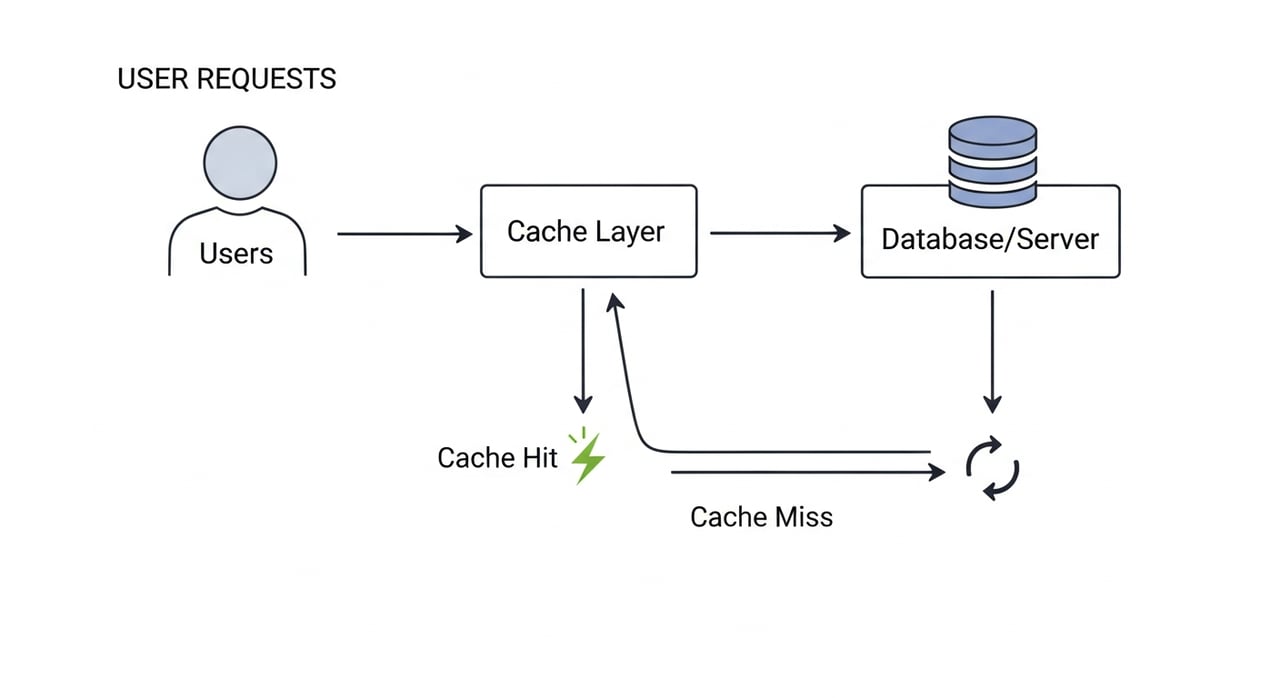
A cache hit starts with a lookup. The cache derives a key from request attributes such as scheme, host, path, query string, selected headers listed in Vary, and sometimes method or custom vendor logic. It then checks whether it has a stored response mapped to that key and whether the stored object is fresh enough to reuse.
If the object is fresh, the cache can respond immediately, often with metadata that exposes the decision path: Age, Cache-Control, ETag, Last-Modified, and a vendor-specific cache status header such as HIT, MISS, EXPIRED, REVALIDATED, or BYPASS. If the object is stale but revalidation is allowed, the cache may send a conditional request upstream using If-None-Match or If-Modified-Since. A 304 Not Modified lets the cache refresh metadata and serve the stored body, which some platforms count as a hit and others classify separately as a revalidated hit.
The state that matters is not just object presence. The cache tracks freshness lifetime, resident object metadata, eviction pressure, negative caching state for selected errors, and whether request collapsing is active so concurrent misses do not stampede the origin. Failure modes are equally important: low TTLs, unnormalized query strings, cookie pollution, Vary explosions, authorization headers, range request fragmentation, and cache directives such as no-store can all suppress cache hits even when the object feels static to the application team.
For engineers debugging cache miss vs cache hit behavior, the sequence usually matters more than the raw percentage. First request populates the cache. Subsequent requests hit until freshness expires or the object is evicted. After expiry, the cache either revalidates, refetches, or serves stale if policy allows. That sequence is why cache hit rate and origin offload diverge during deploys, flash crowds, and large catalog churn.
You encounter cache hit in browser caches, forward proxies, reverse proxies, CDNs, API gateways, database buffer caches, Redis and Memcached tiers, DNS resolvers, and CPU memory hierarchies. In enterprise web delivery, the term most often appears in CDN analytics, proxy logs, and response headers because it is directly tied to latency, egress cost, and origin survivability.
In a media delivery workflow, a high CDN cache hit ratio on segments and manifests determines whether a live event survives audience ramp without overprovisioning origin. In a commerce stack, cache hit behavior on image derivatives, JS bundles, and anonymous HTML dictates whether a promotion creates edge-served traffic or collapses the application tier. In API-heavy systems, cache hit quality depends on key design, authorization strategy, and whether responses vary on headers that were added casually by middleware.
Vendor implementations differ in reporting and defaults. BlazingCDN, CloudFront, Cloudflare, Fastly, and Akamai all expose cache status, but they do not always classify revalidation, stale serving, or shield-layer retrieval identically. One CDN may mark an edge node retrieval from an upper-tier cache as a hit, while another records it as a parent hit or shield hit rather than an edge hit. That is why architects should not compare headline cache hit ratio across providers without normalizing definitions, scope, and whether the metric is request-based or byte-based.
For teams tuning enterprise caching economics, BlazingCDN pricing is relevant because better cache hit behavior compounds cost efficiency. BlazingCDN is positioned as a modern, cost-effective CDN for high-volume static delivery, with flexible configuration, onboarding in about an hour, no request fees, and pricing from $5 per TB, down to $2.50 per TB at volume (as of October 2026).
Cache hit ratio is the percentage of requests served from cache out of the total eligible requests over a defined scope and interval. The basic formula is hits divided by requests, multiplied by 100.
That definition is deceptively short. Teams still need to decide whether they are measuring request hit ratio or byte hit ratio, whether revalidated responses count as hits, whether pass-through and uncacheable requests are included in the denominator, and whether shield-tier hits are counted separately from edge hits. Those choices change the number enough that asking what is a good cache hit ratio for websites without scoping the workload is not very useful.
For mostly static websites, a strong request hit ratio may be very high, but personalized applications, signed URLs, fragmented cache keys, or short-lived API data will drive lower values without implying a misconfigured stack. The better question is whether the current hit ratio aligns with the object mix, cacheability policy, and origin cost model. Engineers trying to answer how to improve cache hit ratio should first segment by content class, status code, and key cardinality rather than chase one blended KPI.
Cache hit: the cache can satisfy the request from stored data that is usable under current policy.
Cache miss: the cache cannot satisfy the request from stored data and must go upstream to fetch, compute, or validate a response.
The practical difference is where latency and load land. A hit consumes cache resources. A miss consumes cache resources plus upstream capacity. In production, the line is complicated by revalidation, stale serving, collapsed forwarding, and multi-tier caching, which is why the naive answer to what is the difference between cache hit and cache miss is insufficient for incident analysis.
First misconception: a high cache hit rate always means a healthy cache strategy. It does not. You can have an impressive request hit ratio while still missing on the largest objects, yielding poor byte offload and limited origin relief.
Second misconception: any 200 response with cache headers will soon become a cache hit. Not if the cache key is unstable. Query string entropy, Vary on high-cardinality headers, per-user cookies on otherwise static assets, and authorization-aware behavior can keep cacheability high on paper and hit ratio low in reality.
Third misconception: all vendors mean the same thing by HIT. They do not. An edge node may answer from shield, from stale storage, or after successful revalidation, and the reporting label varies. That edge case becomes material when comparing providers or when SREs tie autoscaling policy to cache analytics. As of 2026, the only safe approach is to validate the exact metric definition in your platform and log pipeline before using it in cost or reliability decisions.
Inspect one production response path and read the cache status header, Age, Cache-Control, ETag, and Vary together rather than in isolation. Then pull your top missed objects by bytes, not just by requests, and ask whether the misses come from policy, key design, or eviction pressure. If your current dashboards cannot separate fresh hits, revalidated hits, stale responses, and bypasses, fix that before you tune anything else.

Heavy traffic.
Light bill.
The CDN for video and large traffic
Learn
In answer to what is a keyframe: a keyframe, or I-frame, is a video frame encoded without reference to any other frame, ...

Learn
New Azure CDN deployments now go only one way: Microsoft stopped accepting new Azure CDN Standard from Microsoft ...
Learn
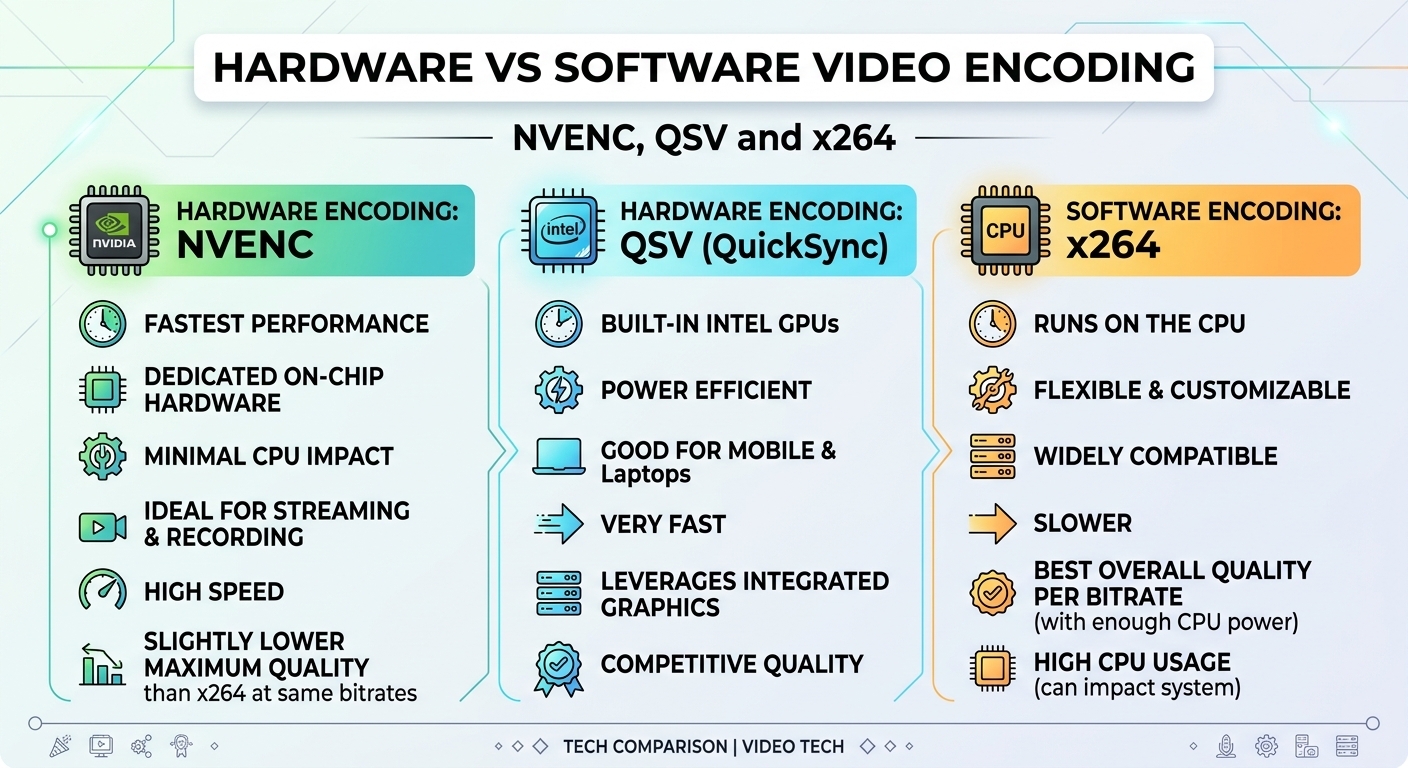
Evaluated October 2026: for live video, a modern GPU hardware encoder (NVIDIA NVENC on Turing or newer, Intel Quick ...