
Learn
Lossy vs Lossless Compression: Images, Video and Audio
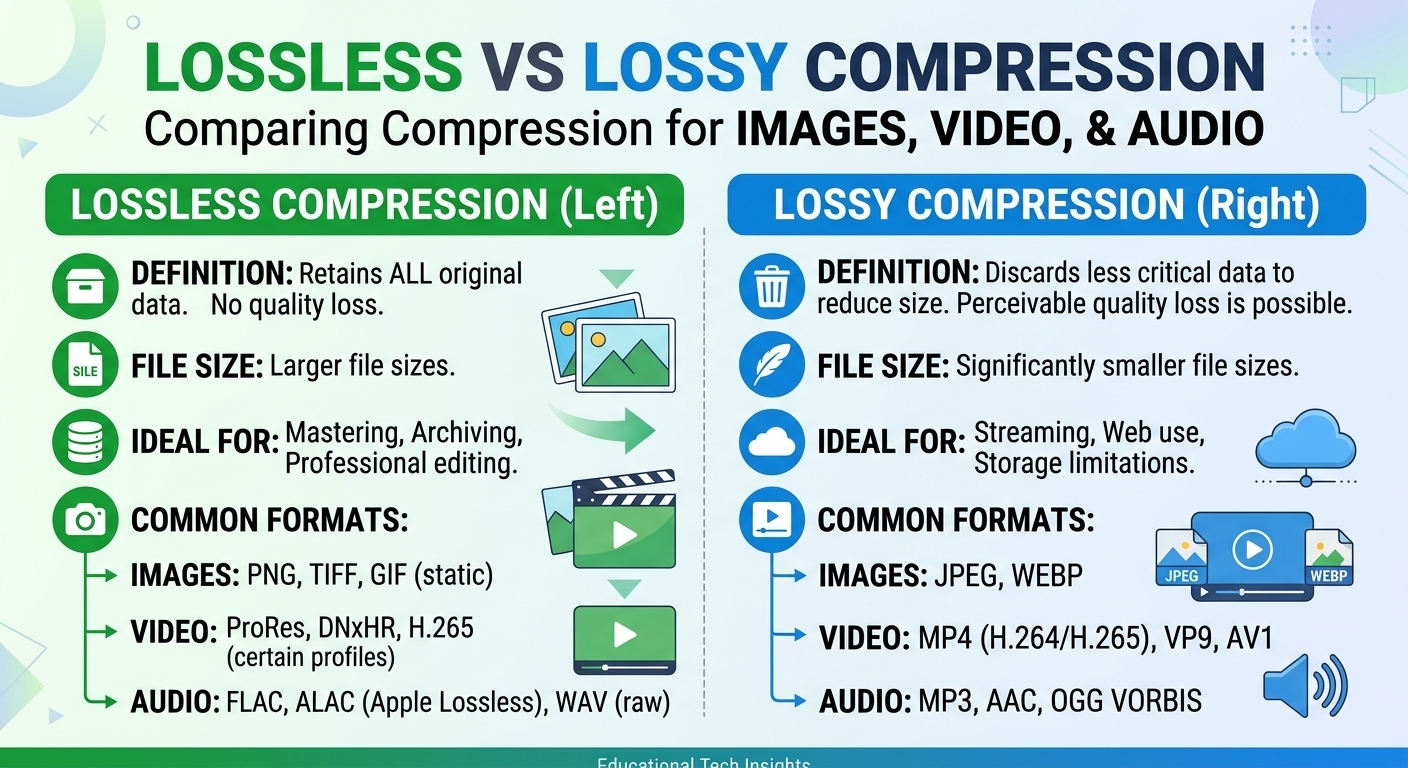
Lossy vs lossless compression comes down to one trade: lossless compression rebuilds every original bit and typically ...
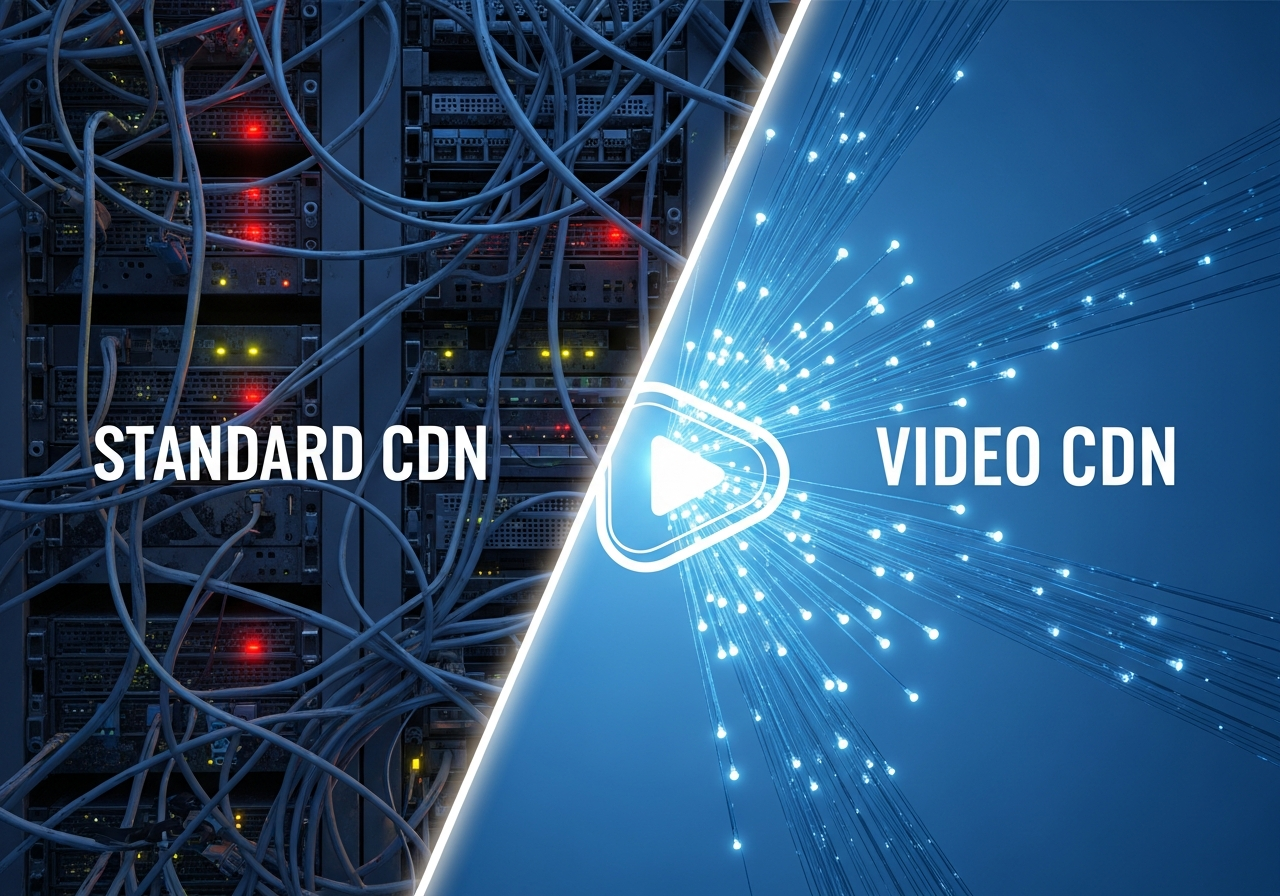
In 2025, Sandvine reported that video represented 38% of total internet traffic across fixed and mobile networks globally, and 39% on fixed access alone. That is the useful opening fact because it forces the real budgeting question: if video is one of the heaviest traffic classes on the network, should you buy delivery as if it were just another static asset problem? The short answer is no. If video is strategically important to your business, a standard CDN is rarely sufficient on its own; you need a video-aware delivery stack built for bitrate adaptation, origin shielding, startup time control, concurrency spikes, player telemetry, and multi-CDN failover economics.

Most teams frame this as a product comparison. That is too shallow. The decision is really about whether video delivery is a cost-optimized extension of your web stack or a revenue-critical media system with different failure modes, different observability requirements, and different vendor economics.
A standard CDN is built to accelerate web objects: images, JavaScript, CSS, software downloads, APIs, and cacheable site content. A video CDN must do that too, but it also has to handle segment-based streaming protocols, bitrate ladders, aggressive concurrency, playback continuity during demand spikes, and the ugly middle ground between network conditions, device behavior, and player logic. That changes both architecture and buying criteria.
If your use case includes live events, FAST channels, sports, education at scale, premium VOD, internal town halls, regional rights windows, or ad-supported streaming, the wrong CDN architecture creates measurable business damage: churn, lower watch time, weaker ad fill realization, higher support burden, and emergency engineering work that destroys the savings promised in procurement.
Three things changed. First, streaming economics tightened. Boards are now asking infrastructure teams to explain gross margin impact, not just technical performance. CDN contracts that were tolerated during growth-at-any-cost periods are being reopened under TCO scrutiny.
Second, demand patterns became less predictable. Sports rights, tentpole launches, election coverage, FAST growth, and creator-led traffic spikes create short bursts of extraordinary concurrency. A platform that looks cheap under average load can become expensive or unreliable when traffic shape changes.
Third, the market consolidated and specialized at the same time. Akamai remains large in delivery, but its 2025 results showed delivery revenue of $1.257 billion, down 5% year over year, while security and cloud infrastructure grew faster. That matters because many incumbent CDN vendors are strategically broader than media delivery alone, while media buyers increasingly need specialist capabilities and sharper contract flexibility. ([ir.akamai.com](https://www.ir.akamai.com/news-releases/news-release-details/akamai-reports-fourth-quarter-2025-and-full-year-2025-financial?utm_source=openai))
The cost stakes are not trivial. For a service delivering 1 PB per month, a price delta of even $0.01 per GB is roughly $10,000 per month or $120,000 per year before add-ons, origin egress, and support. At 5 PB per month, the same delta becomes $600,000 annually. And that is before you account for the commercial cost of degraded startup time or rebuffering during high-value events.
Netflix offers a useful strategic signal here. In its public disclosures, it identifies streaming delivery costs as part of cost of revenues and says those costs are primarily related to its Open Connect CDN. In a separate technical note, Netflix said it had invested over $1 billion in Open Connect and had reduced bitrates by half between 2015 and 2020 for equivalent quality delivery. The lesson is not that every enterprise should build its own CDN; it is that at sufficient scale, video delivery economics become important enough to justify custom architecture and long-horizon optimization. ([sec.gov](https://www.sec.gov/Archives/edgar/data/0001065280/000106528025000406/nflx-20250930.htm?utm_source=openai))
Sandvine’s 2024 Global Internet Phenomena Report found that video accounted for 38% of traffic across fixed and mobile networks and 39% on fixed networks. Within video, on-demand streaming generated the most traffic, with 7.9 GB per subscriber per day, or 54% of downstream video volume in Sandvine’s methodology. YouTube and Netflix were the top traffic-driving video applications in that dataset. ([sandvine.com](https://www.sandvine.com/hubfs/Sandvine_Redesign_2019/Downloads/2024/GIPR/GIPR%202024.pdf?utm_source=openai))
That matters because video does not behave like generic web acceleration. It is sustained throughput, long session duration, bursty popularity, and a user-perceived quality curve that degrades nonlinearly. A slow image hurts conversion. A bad stream causes abandonment.
Conviva’s 2025 State of Digital Experience report draws on 223 million user sessions globally, while Conviva’s broader streaming materials continue to emphasize the same economic truth: engagement drops when quality of experience deteriorates, especially when playback starts slowly, fails, or rebuffers. Even where exact thresholds vary by content type and platform, the direction is consistent and operationally actionable. ([conviva.com](https://www.conviva.com/state-of-digital-experience-report-2025/?utm_source=openai))
Executives should translate this into a procurement principle: in streaming, performance variance matters more than average performance. Buyers who optimize on median latency and ignore the tail will understate churn risk and ad-revenue leakage.
The vendor landscape is uneven. Akamai remains a major incumbent with deep enterprise penetration and media heritage. Cloudflare has simplified video and web delivery buying for many teams through integrated platform economics. Fastly remains relevant where programmability and operational control matter. AWS CloudFront is attractive for organizations already deep in AWS and willing to accept cloud-adjacent pricing and configuration patterns. Smaller and newer providers compete aggressively on cost, contract flexibility, and operational responsiveness.
What changed over the last few years is not simply technology. It is buyer posture. CFOs want contractual flexibility. Platform teams want less custom glue. Media engineering wants better playback visibility. Procurement wants lower unit economics without taking headline-event risk. Those requirements rarely point to the same vendor by default.
Use a weighted framework, not a feature checklist. Most CDN RFPs overweight network footprint claims and underweight the things that actually drive streaming outcomes: session startup, rebuffer rate under load, traffic surge behavior, control-plane usability, pricing transparency, and exit options.
| Criterion | Standard CDN | Video CDN | Executive take |
|---|---|---|---|
| Primary workload | Web assets, APIs, downloads | HLS, DASH, VOD, live, linear | If video is core, buy for streaming behavior, not generic acceleration |
| Performance metric that matters | Page load, cache hit ratio | Startup time, rebuffer rate, sustained bitrate, error rate | QoE metrics should be on the scorecard |
| Scale profile | Distributed but usually less burst-sensitive | Sharp concurrency spikes and long sessions | Ask for peak-event references, not average-volume references |
| Origin behavior | Moderate concern | Critical during cache misses, live edge churn, packaging changes | Origin protection is a budget line item, not a tuning detail |
| Integration | Usually lighter | Player, encoder, packager, analytics, ad stack | Integration effort can erase headline price savings |
| Vendor lock-in risk | Moderate | Higher if bundled with workflow, analytics, or proprietary controls | Insist on exportable logs and migration clauses |
| Contract flexibility | Often acceptable | Must be explicit on commits, burst bands, and failover traffic | Legal review matters as much as technical review |
| Support model | General support may be enough | Needs incident expertise during live events | Ask who is on the bridge at 2 a.m. during a stream failure |
My opinionated view: if less than 10% of your traffic is video and the streams are non-critical, a standard CDN may be enough. If video is customer-facing and tied to revenue, retention, compliance, or executive communications, treat video CDN as a distinct architectural category.
Here is a practical model for a mid-market to enterprise streaming workload.
Scenario A: standard CDN bought as part of a broader cloud stack
Now add hidden or adjacent costs:
Total monthly TCO = $30,000 + $4,000 + $2,500 + $3,000 + $2,000 = $41,500
Annualized TCO = $498,000
Scenario B: video-aware CDN with lower unit delivery cost and explicit media support
Adjacent costs:
Total monthly TCO = $12,000 + $3,000 + $2,000 + $3,500 + $2,000 = $22,500
Annualized TCO = $270,000
The TCO gap in this example is $228,000 per year. That is the number the CFO cares about. But the more important point is that the cheapest line-item CDN is not always the lowest-TCO streaming decision. Rebuffer-driven churn, support escalations, origin overruns, and live-event incident costs usually do not appear in the vendor quote.
For context, public cloud video options can simplify operations but shift the pricing model. Cloudflare Stream publishes a unified pricing approach for storage and delivery, while AWS CloudFront pricing remains tied to transfer and requests with additional cloud economics around the origin and surrounding services. Those are legitimate models, but buyers should compare them using full-stream TCO, not just headline delivery price. ([developers.cloudflare.com](https://developers.cloudflare.com/stream/pricing/?utm_source=openai))
This is where newer cost structures become strategically interesting. BlazingCDN, for example, fits organizations that want enterprise-grade delivery economics without the contract heaviness of older media procurement. It positions itself as a modern, reliable, cost-effective CDN for video and other bandwidth-intensive use cases, with pricing starting at $5 per TB. For high-volume workloads, its published pricing scales down to $2.50 per TB at volume (as of October 2026), with flexible configuration and Anycast routing with built-in failover. A practical next step for buyers comparing providers is to review a side-by-side CDN comparison against their own traffic profile.
Migration risk is consistently underestimated because teams assume the CDN is a thin layer. In streaming, it is not. The delivery layer interacts with manifests, segment TTLs, signed URLs, token logic, cache key behavior, mid-tiering, player retry behavior, ad insertion workflows, and analytics pipelines.
The Edgio restructuring period is a reminder that vendor viability is part of architecture, not just procurement. If your streaming business depends on a provider, you need an exit plan that is technically rehearsed and contractually permitted. Even when a migration path exists on paper, auto-migration to another platform can still introduce feature gaps and outages. ([reddit.com](https://www.reddit.com/r/sysadmin/comments/1i1exnz?utm_source=openai))
That distinction is the heart of the video CDN vs standard CDN question. It is not about whether one vendor has more features. It is about whether your traffic and business model justify a delivery stack designed for streaming physics rather than generic web acceleration.
If your organization is evaluating video CDN vs standard CDN, do not ask which vendor is “best” in the abstract. Ask which architecture gives you the lowest 24-month TCO at your actual traffic shape, the highest tolerance for demand spikes, the cleanest migration path, and the strongest negotiation position in year two. Then test that answer with production traffic, not slideware.
The useful next move is concrete: run the cost model against your own monthly TB, peak events, and regional mix; force vendors to price support, migration, and burst conditions explicitly; and take a short decision memo to your CTO, CFO, and platform lead with one recommendation, one fallback option, and one exit plan. That is how this choice survives both procurement review and real-world load.

Heavy traffic.
Light bill.
The CDN for video and large traffic
Learn
Lossy vs lossless compression comes down to one trade: lossless compression rebuilds every original bit and typically ...
Pricing - Pricing & Costs
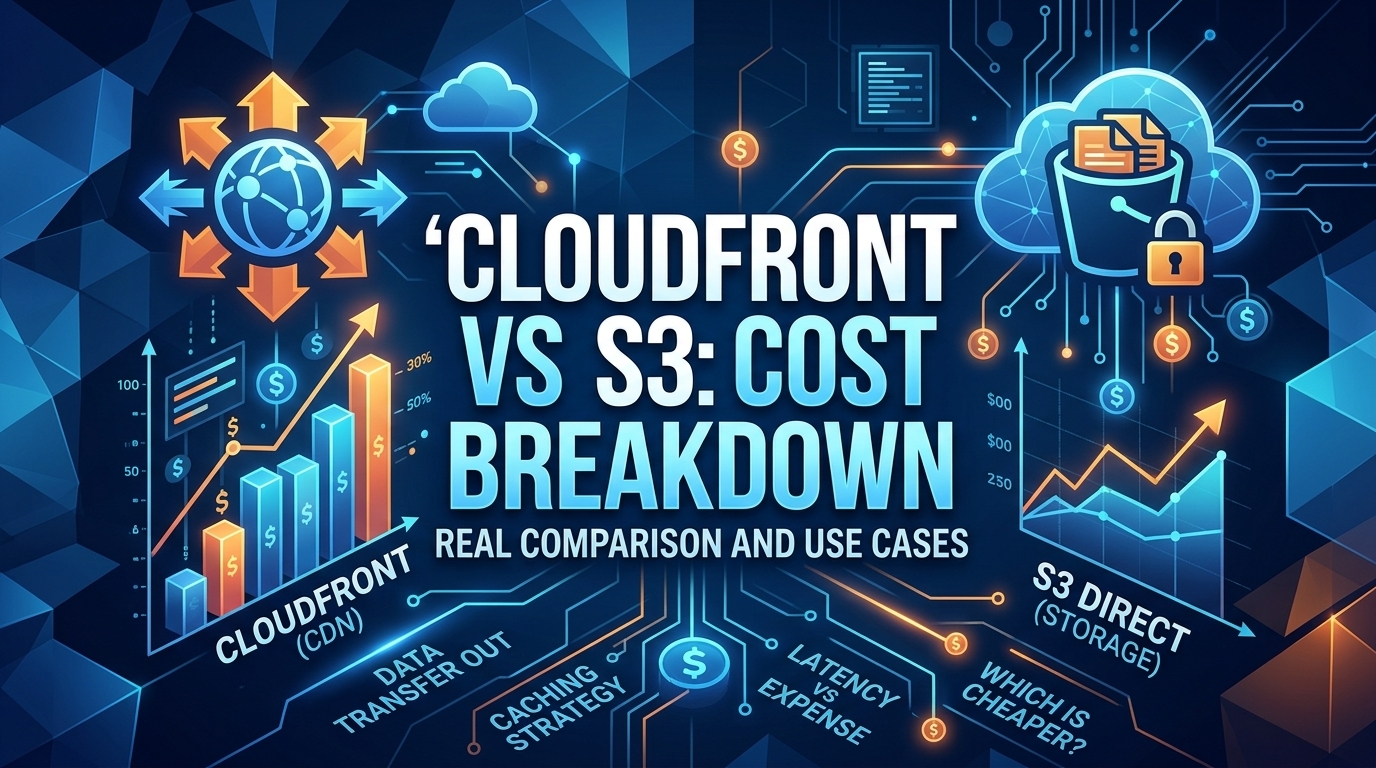
The CloudFront vs S3 decision depends more on object size than on traffic volume. At a 500 KB average response, 100 TB ...
Learn
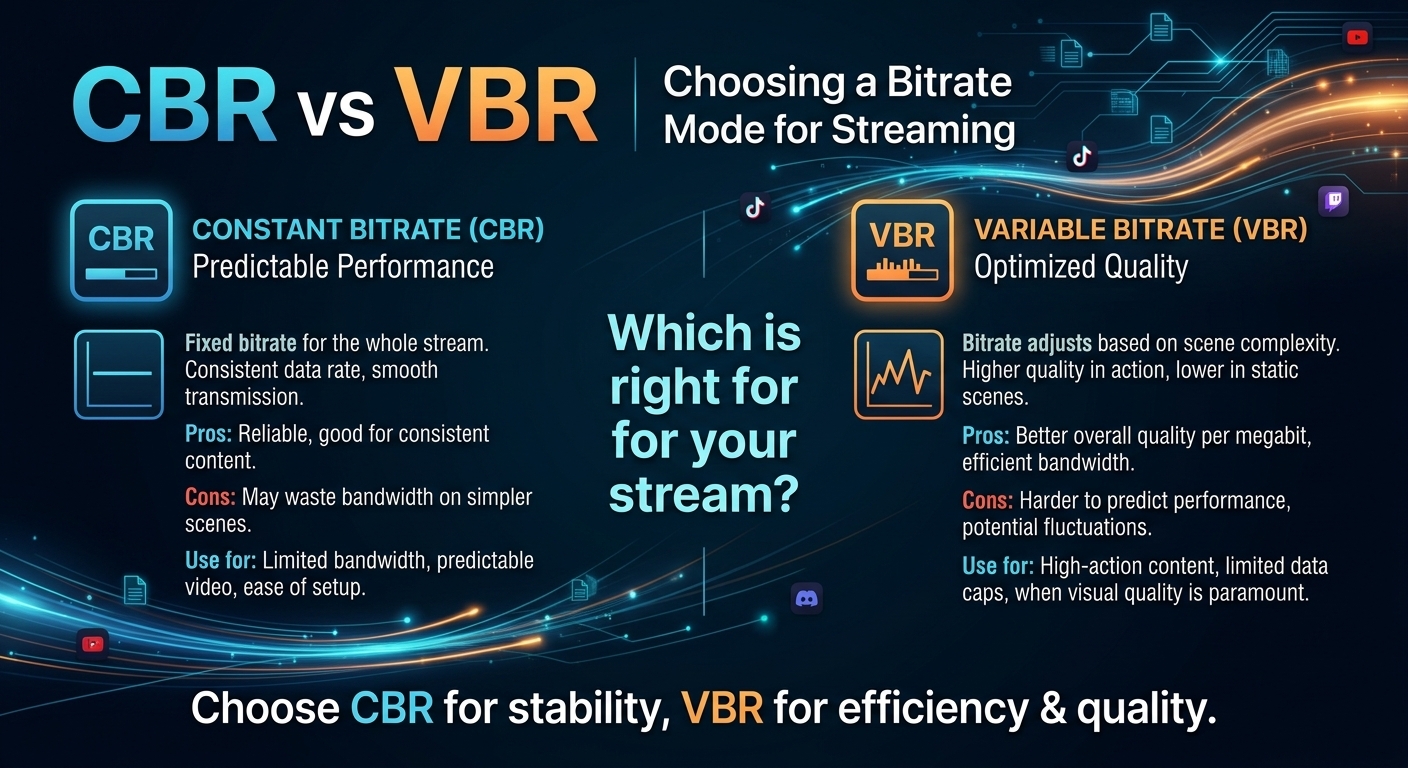
For most on-demand video, capped variable bitrate (VBR) wins the cbr vs vbr decision: it spends bits where the picture ...