

Learn
What Is the Opus Codec? Low-Latency Audio Explained
The Opus codec is a royalty-free audio codec, standardized by the IETF as RFC 6716 in 2012, that encodes speech and ...
In Q1 2026, global streaming platforms averaged 1.2 seconds of rebuffering per hour of viewed content, a figure that dropped 18% year-over-year but still correlates directly with subscriber churn: every additional 100 ms of rebuffering per session increases 30-day churn probability by roughly 0.8%. Choosing the right CDN for video streaming is not a procurement exercise. It is an architecture decision that shows up in your retention numbers. This article gives you a ranked comparison of 11 CDN providers serving OTT workloads in 2026, a workload-profile decision matrix you will not find in the competing top-10 results, and concrete threshold values for the metrics that actually predict viewer satisfaction.
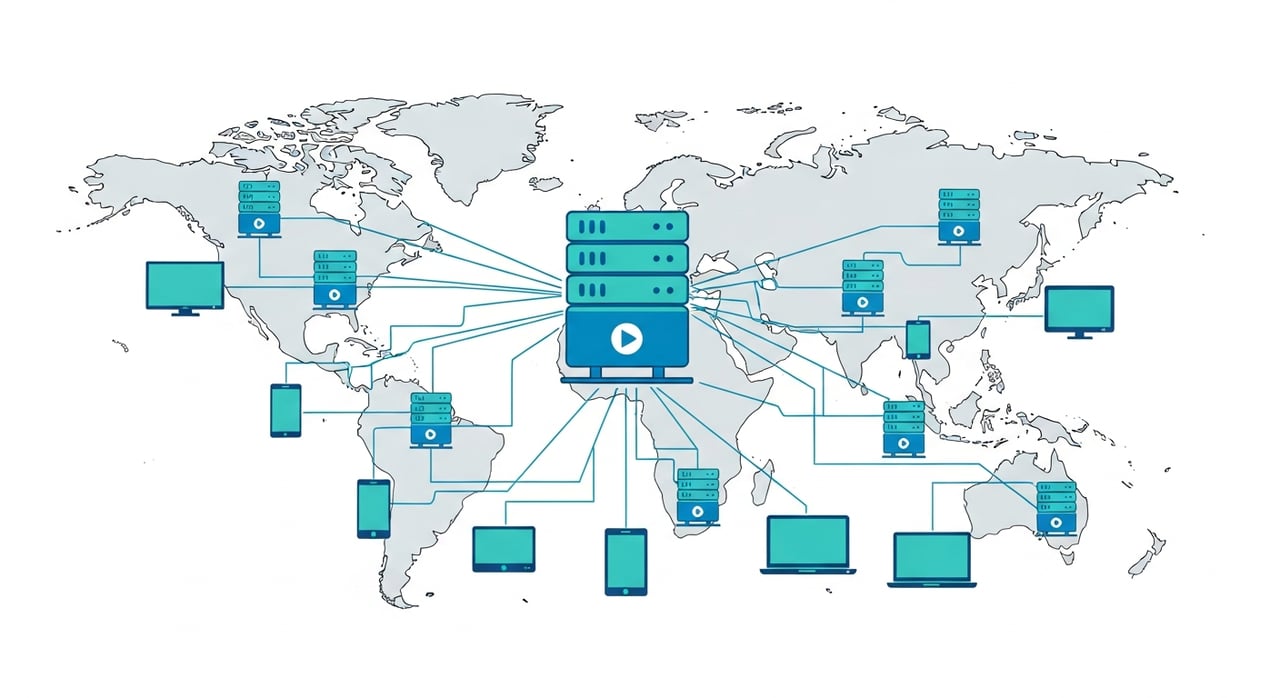
Three shifts reshaped the OTT CDN landscape since 2025. First, QUIC-based delivery (HTTP/3) moved from opt-in to default across four major providers, compressing connection setup to a single round trip and measurably improving TTFB on mobile networks. Second, the cost floor for bandwidth dropped: competitive pressure from newer entrants pushed per-TB pricing below $3 at volume for the first time at enterprise scale. Third, multi-CDN orchestration matured. Real-time quality-of-experience (QoE) switching, once limited to a handful of expensive middleware platforms, is now available as open-source or built-in functionality from several CDN vendors.
For architects evaluating a video streaming CDN contract in 2026, the implication is clear: the gap between premium incumbents and cost-optimized challengers has narrowed on performance while widening on price.
These are not aspirational targets. They represent the boundary between a platform that retains subscribers and one that leaks them.
| Metric | VOD Target (2026) | Live Target (2026) |
|---|---|---|
| TTFB (edge) | < 40 ms p95 | < 15 ms p95 |
| Rebuffering ratio | < 0.3% | < 0.5% |
| Playback failure rate | < 0.08% | < 0.1% |
| Edge hit ratio (catalog) | ≥ 96% | ≥ 85% |
| 4K sustained throughput | ≥ 25 Mbps per session | ≥ 25 Mbps per session |
| Glass-to-glass latency (live) | N/A | < 3 s (LL-HLS/LL-DASH) |
Tighten these thresholds against your own analytics. If your p95 TTFB on live streams exceeds 20 ms, the CDN layer is the first place to investigate.
Still the largest CDN by capacity. Akamai's 2026 edge platform supports LL-HLS natively and offers deep integration with its Adaptive Media Delivery product. Best suited for Tier-1 broadcasters who need contractual SLAs on concurrency above 10 million simultaneous viewers. Pricing remains the highest in this list, typically $8–$15+ per TB depending on commit and region as of Q1 2026.
Cloudflare Stream and its CDN proxy layer improved HTTP/3 delivery throughput meaningfully in early 2026. The zero-egress model on R2 storage makes Cloudflare attractive for VOD catalogs where origin-pull costs dominate. However, custom edge logic for live ABR workflows still trails Fastly's VCL/Wasm ecosystem. Enterprise plans with streaming-specific SLAs start around $5,000/month.
Deep integration with MediaLive, MediaPackage, and S3 makes CloudFront the default for shops already running on AWS. As of 2026, CloudFront charges $0.085/GB at the lowest on-demand tier for North America, with committed-use discounts bringing effective cost to roughly $4–6 per TB at volume. Origin Shield pricing adds up quickly for large catalogs.
Fastly's Compute@Edge (now Compute) platform remains the strongest option for teams that need programmable edge logic per-request. Its real-time log streaming and sub-second purge are useful for live event overlays and ad insertion. Pricing is consumption-based and sits in the $5–$10 per TB range for most streaming workloads in 2026.
Google's Media CDN, built on the same backbone that serves YouTube, made significant progress in 2026 with expanded LL-HLS support and per-title encoding integration. It is a strong pick for platforms already invested in GCP, though pricing transparency remains a sore point. Expect $0.02–$0.08/GB depending on region and commit.
For OTT platforms where bandwidth is the dominant line item, BlazingCDN's media delivery infrastructure offers pay-as-you-go pricing starting at $5 per TB, down to $2.50 per TB at volume (as of October 2026); 100 TB costs $415 per month. The platform offers flexible configuration and fast scaling under demand spikes. For platforms spending $10k+/month on delivery alone, comparing the per-TB tiers is worth the effort.
Bunny.net's Stream product bundles transcoding, storage, and delivery into a single billing line. At $0.01/GB for delivery in most regions (as of 2026), it remains the go-to for mid-market VOD platforms and creator-economy apps that need simplicity. It lacks the concurrency headroom and SLA granularity that large live-event operations require.
Gcore expanded its European and CIS footprint in 2026 and added LL-HLS ingest at edge. It is a compelling option for platforms with heavy Eastern European or Central Asian viewership. Pricing is competitive at $3–$6 per TB depending on volume, with integrated video hosting and transcoding services.
Following its restructuring, Edgio (formerly Limelight) has stabilized its network and retained its enterprise streaming customer base. Delivery performance in North America and Western Europe remains solid. However, the company's financial trajectory makes long-term contractual commitment a calculated risk in 2026. Typical pricing falls in the $5–$8 per TB range.
A budget-tier option charging $0.04/GB with pay-as-you-go billing. Suitable for low-traffic VOD sites and development environments. Not recommended for production live streaming at scale due to limited concurrency guarantees and absence of LL-HLS-specific optimizations.
StackPath's edge compute integration is interesting for platforms combining CDN delivery with serverless transcoding. As of mid-2026, its streaming-specific feature set is thinner than Fastly's or Cloudflare's, but its pricing model (from $0.04/GB) and VM-at-edge capability give it a niche among teams building custom delivery pipelines.
No single CDN fits every streaming workload. The matrix below maps five common OTT profiles to the providers that best match their constraints. Use it as a shortlist generator, then validate with your own synthetic and RUM tests.
| Workload Profile | Key Constraint | Best Fit (Primary) | Best Fit (Secondary) |
|---|---|---|---|
| Tier-1 live sports, 5M+ concurrent | Concurrency SLA, sub-3s latency | Akamai | Google Media CDN |
| Large VOD catalog (>50k titles, 4K) | Origin offload, cost per TB | BlazingCDN | Cloudflare (R2 + CDN) |
| AWS-native pipeline (MediaLive/S3) | Integration, single-bill ops | CloudFront | Fastly (via S3 origin) |
| Edge-logic-heavy (SSAI, A/B, auth) | Programmable edge runtime | Fastly | Cloudflare Workers |
| Budget VOD / creator platform | Simplicity, all-in-one billing | Bunny.net | KeyCDN |
| Europe/CIS-heavy audience | Regional edge density | Gcore | BlazingCDN |
If your workload does not fit neatly into one row, you probably need multi-CDN. That is not a compromise; it is the correct architecture for any platform above 1 PB/month in 2026.
The single-CDN vs multi-CDN debate has shifted. In 2026, the argument for multi-CDN is less about redundancy and more about cost arbitrage and regional optimization. A common pattern: route live event traffic through a premium provider with contractual concurrency guarantees (Akamai, Google Media CDN), while sending long-tail VOD through a cost-optimized provider like BlazingCDN where the per-TB savings compound across petabytes.
Multi-CDN orchestration requires real-time QoE telemetry to be effective. Without per-session metrics feeding a switching layer, you are just load-balancing randomly. Open-source projects like Mux's player SDK and Theoplayer's analytics hooks make this achievable without vendor lock-in. The architectural cost is a metrics pipeline and a switching function at the manifest or DNS layer. For platforms above 500 TB/month, the bandwidth savings alone pay for the added complexity within a single quarter.
Low latency CDN selection for live streaming requires testing under realistic conditions, not vendor demo traffic. Here is the evaluation framework worth running before any commit:
There is no single best. For Tier-1 live events, Akamai and Google Media CDN offer the highest concurrency guarantees. For large VOD catalogs where cost-per-TB dominates, BlazingCDN and Cloudflare offer the strongest economics. Most platforms above 500 TB/month benefit from a multi-CDN architecture that combines both categories.
As of Q2 2026, per-TB pricing ranges from $2 (BlazingCDN at 2 PB/month commit) to $15+ (Akamai premium live SLA tiers). Mid-market providers like Bunny.net and Gcore cluster around $3–$6 per TB. CloudFront effective cost lands at $4–$6 per TB with committed-use discounts.
Above 1 PB/month, multi-CDN is a de facto requirement for both resilience and cost optimization. Below that threshold, a single CDN with strong SLAs and a tested failover plan to a secondary provider is generally sufficient. The key dependency is whether you have real-time QoE telemetry to drive intelligent switching.
For LL-HLS and LL-DASH, target glass-to-glass latency under 3 seconds and edge TTFB under 15 ms at p95. Standard HLS delivery typically lands at 6–10 seconds of latency. If your use case involves live betting or interactive features, you need WebRTC or WHEP-based delivery, which operates in the sub-500 ms range.
Run synthetic tests from at least 10 geographic regions using tools like catchpoint or your own probe fleet. Simulate realistic ABR ladder traffic, not single-bitrate downloads. Measure TTFB, segment download time, error rate at concurrency peaks, and cache hit ratio over a 72-hour window. Any provider unwilling to give you a trial with real traffic at volume is not worth evaluating.
Pick your two highest-traffic regions. Set up parallel delivery through your current CDN and one challenger from this list. Instrument per-session TTFB, rebuffer ratio, and playback failure rate using your existing player analytics. Run it for 72 hours across a weekend peak window. The data will tell you more than any vendor deck. If you are spending more than $5/TB on VOD delivery in 2026 and your edge hit ratio is above 95%, you are likely overpaying, and a cost-optimized provider will match your quality metrics while cutting your delivery bill in half.

Heavy traffic.
Light bill.
The CDN for video and large traffic
Learn
The Opus codec is a royalty-free audio codec, standardized by the IETF as RFC 6716 in 2012, that encodes speech and ...
Learn
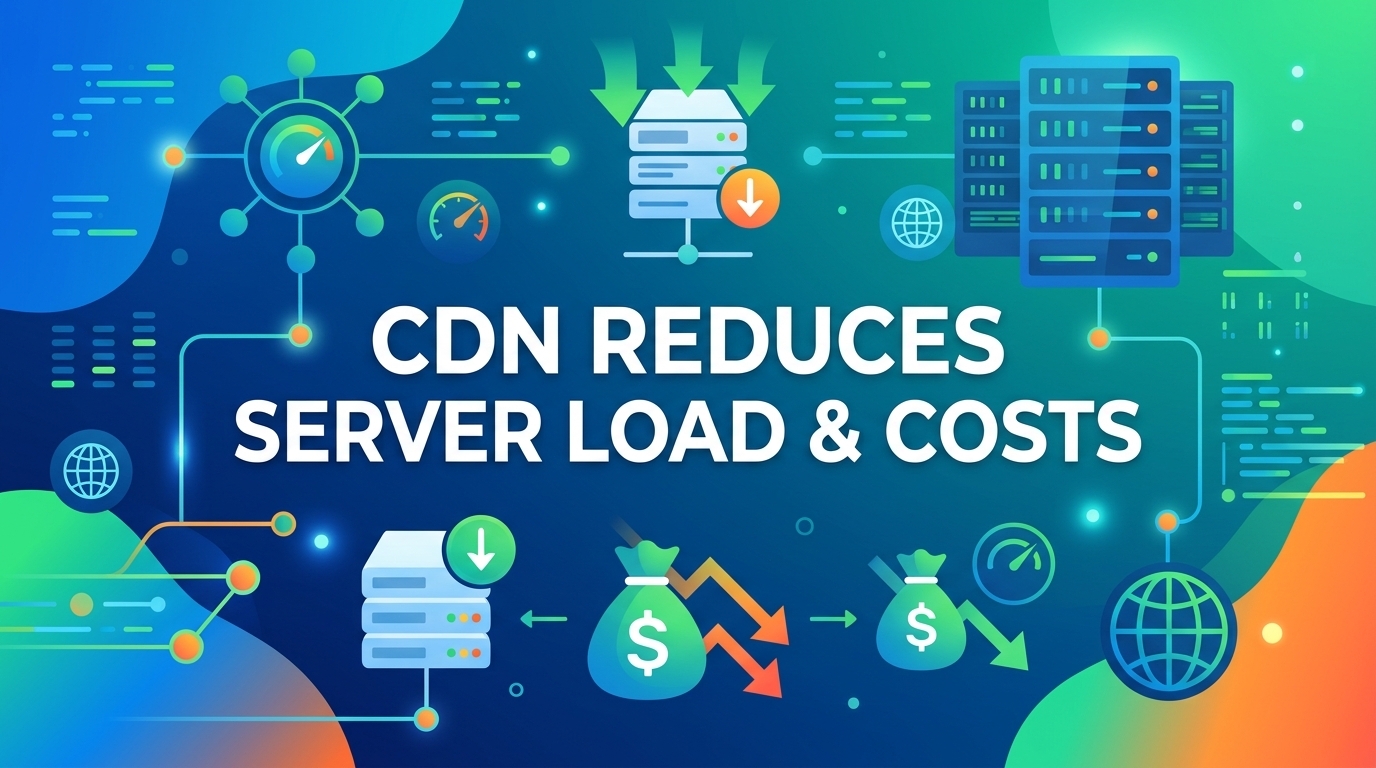
Most origin fleets are sized for cache misses, not for total traffic. A site delivering 100 TB a month at a 90% byte ...
Learn
Advanced Audio Coding (AAC) is the lossy codec behind nearly every HLS and DASH audio rendition. The short answer to ...