
Learn
Lossy vs Lossless Compression: Images, Video and Audio
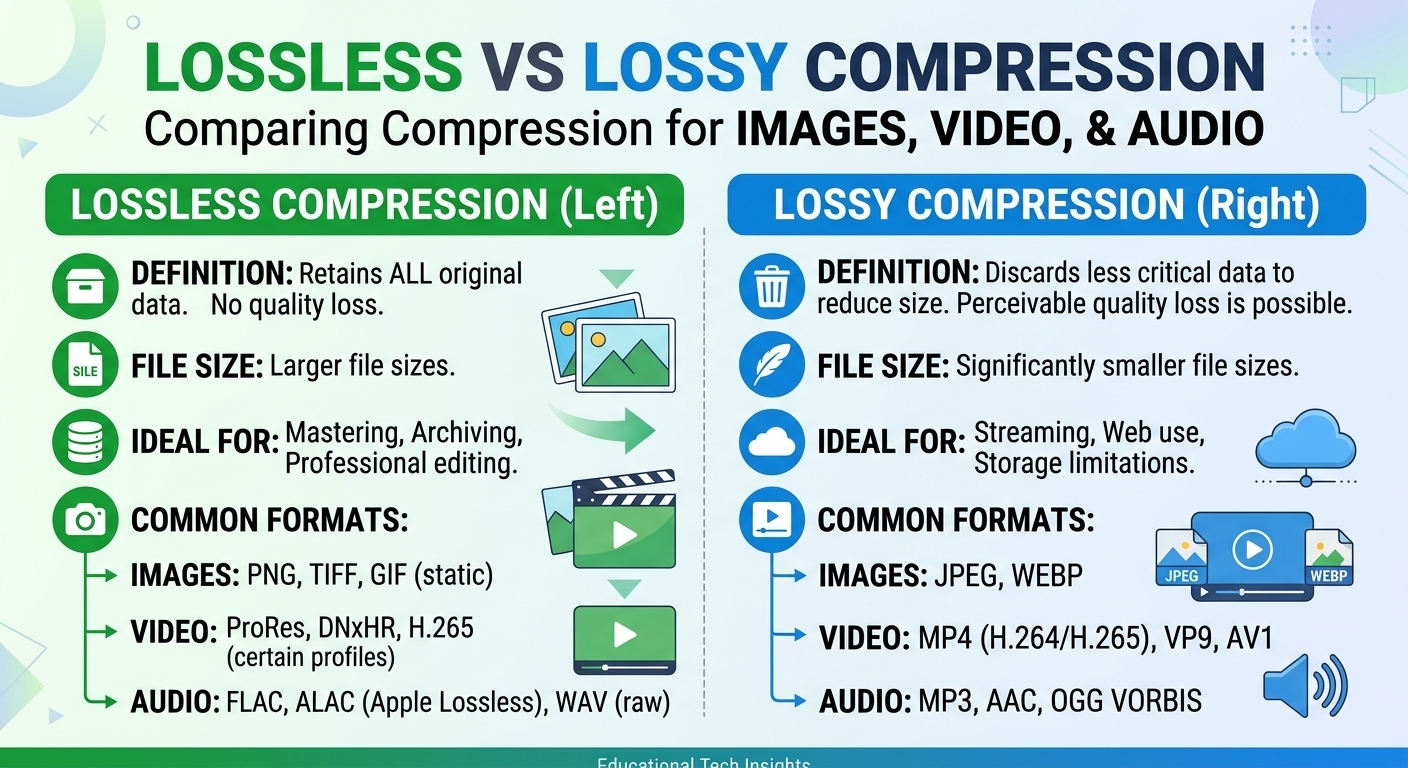
Lossy vs lossless compression comes down to one trade: lossless compression rebuilds every original bit and typically ...

At 500 TB a month, Amazon CloudFront's North America list pricing works out to roughly $24,600 before request fees, as of Q3 2026. The same bytes on a volume-tier CDN cost between $1,800 and $2,500. That spread of roughly 10 to 14 times at list price is the most important fact in any 2026 search for the best CDN, and most "top CDN providers" roundups leave it out.
This guide ranks the 11 best CDN providers in 2026 on four dimensions: tail latency, pricing model, network reach, and support. It includes a cost-per-TB walkthrough at four traffic volumes, a workload decision matrix, and the test protocol behind our picks, so you can reproduce the results against your own traffic.
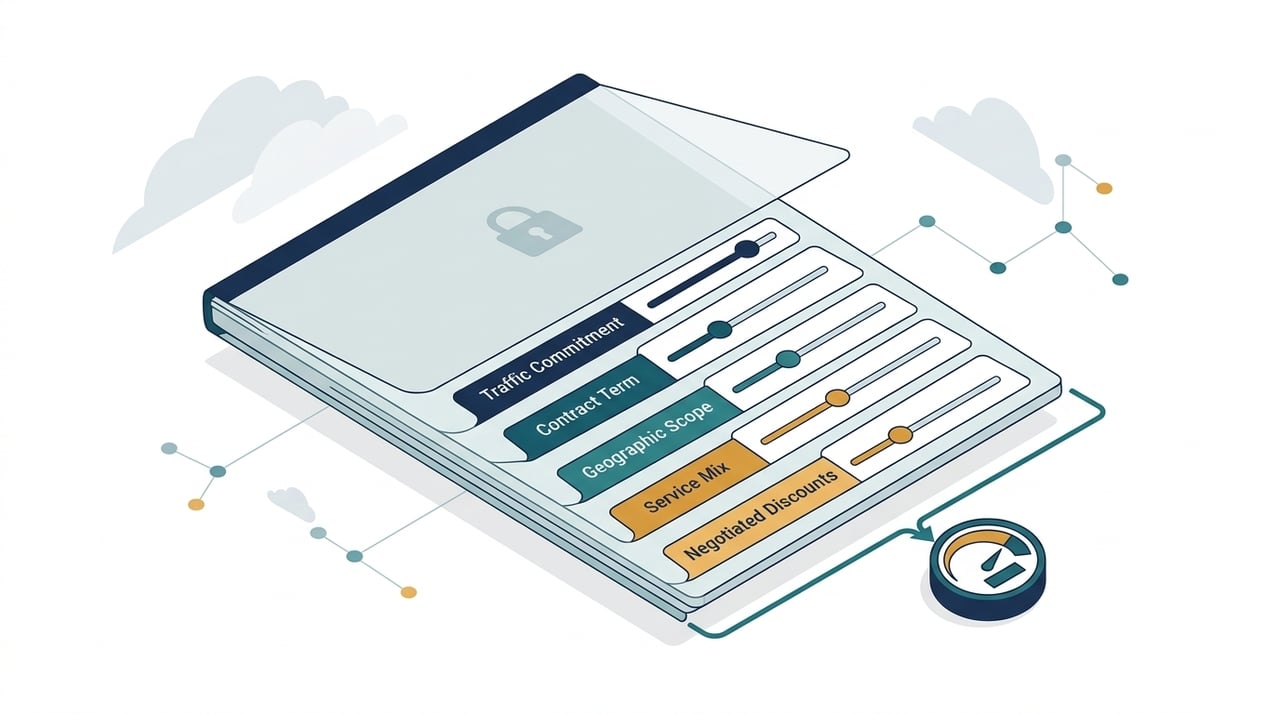
Returning readers should factor in four shifts:
We don't publish a single global speed leaderboard. Provider rankings flip between regions and between ISPs, so a single number would mislead more than it informs. Instead, each shortlisted provider was scored on the following protocol during Q2 and Q3 2026:
Treat our ordering as a shortlist rather than a verdict. Your real-user P95 is the only benchmark that should close a contract.
Cloudflare has the widest footprint and the deepest adjacent platform, including Workers, R2, bot management and zero trust. Self-serve plans run $0 (Free), $20/month (Pro, billed annually) and $200/month (Business), with no metered bandwidth, as of 2026. Enterprise pricing is negotiated. Heavy video and large-file use usually requires an Enterprise contract or a dedicated media product.
BlazingCDN competes with Bunny.net, CDN77, Gcore and Medianova, not with Cloudflare's platform breadth. Its advantage is predictable pay-as-you-go pricing. Rates start at $5 per TB ($0.005/GB) and fall to $2.50 per TB at volume (as of October 2026): 100 TB costs $415, 500 TB costs $1,815 and 1,000 TB costs $3,315, with a $25 monthly minimum. The edge runs on NVMe SSD storage, and onboarding typically takes about an hour.
Akamai offers the deepest contractual SLAs and edge security, along with strong media delivery that was expanded after it absorbed former Edgio customers. It publishes no list price. Expect committed contracts and a longer procurement cycle.
CloudFront is the natural choice if you already use Origin Access Control, Lambda@Edge and consolidated billing. North America list rates start at $0.085/GB and fall to $0.020/GB above 5 PB, and there is a 1 TB/month free tier, as of 2026. Private pricing agreements bring these rates down substantially at commit.
Fastly stands out for its VCL and Compute platform, sub-second purges and real-time log streaming. It is excellent for ecommerce, APIs and streaming, where cache-key control matters. Historical usage rates ran from $0.08 to $0.12/GB in North America and Europe. Most 2026 deals are packaged or committed-spend.
Bunny.net's standard network costs $0.01/GB in Europe and North America, rising to $0.03 to $0.06/GB in Asia, South America and Africa. Its volume network costs $0.005/GB but runs on fewer locations. The interface is clean, and origin shielding and a $1 monthly minimum make it easy to trial.
Google Cloud CDN pairs tightly with Cloud Armor and Premium Tier networking. Cache egress runs about $0.02 to $0.08/GB in North America and Europe, depending on volume. Cache fill and request fees are billed separately, so model all three before you commit.
Azure Front Door combines global load balancing, rules and a CDN in one product. Base fees are about $35/month for Standard and $330/month for Premium, plus egress and requests, as of 2026. It is the default migration path from classic Azure CDN SKUs.
CDN77 provides real-time analytics down to individual edge locations, which helps with debugging regional cache misses. Pricing is volume-based and competitive in the low cents per GB. Custom quotes are standard above roughly 100 TB.
KeyCDN charges around $0.04/GB for the first 10 TB in North America and Europe, with no request fees and a small monthly minimum. It suits mid-sized sites that want predictable invoices over feature depth.
CacheFly is known for consistent throughput and low jitter on media and large files. Pricing is negotiated.
This table shows approximate monthly list cost for traffic served in North America and Europe, as of Q3 2026. It excludes request fees, taxes and private discounts.
| Monthly volume | CloudFront (list) | Bunny.net volume network | BlazingCDN (commit) | Effective BlazingCDN $/TB |
|---|---|---|---|---|
| 25 TB | about $2,000 | about $125 | $100 | $4.00 |
| 100 TB | about $7,200 | about $500 | $415 | $4.15 |
| 500 TB | about $24,600 | about $2,500 | $1,815 | $3.63 |
| 2 PB | about $66,000 | tiered, lower per GB | $4,000 | $2.00 |
Two caveats keep this comparison honest. First, hyperscaler private pricing and flat-rate bundles can cut the CloudFront column sharply for committed buyers. Second, a smaller volume network trades some reach for price, so check P95 latency in your weakest region before migrating.
This is where BlazingCDN earns its place on the shortlist. It runs on Anycast routing with built-in failover, with flexible configuration, at a fraction of CloudFront's list cost. For enterprises moving hundreds of terabytes, BlazingCDN's volume pricing tiers turn a five-figure monthly line item into a low four-figure one.
| Workload profile | Metric that decides | Shortlist |
|---|---|---|
| Video and software downloads above 100 TB/month | Cost per TB, sustained throughput | BlazingCDN, CacheFly, Medianova, Fastly |
| Static sites and marketing | Cache hit ratio, ease of setup | Bunny.net, BlazingCDN, Cloudflare |
| Ecommerce with personalization | Purge latency, cache-key control | Fastly, Cloudflare, Akamai |
| SaaS APIs | P99 TTFB, edge compute | Fastly, Cloudflare Workers, CloudFront |
| Security-first and PCI | Bot mitigation, contractual SLA | Akamai, Imperva, Cloudflare Enterprise |
| Single-cloud applications | Egress bundling, IAM integration | CloudFront, Google Cloud CDN, Azure Front Door |
A pattern worth copying in 2026 is a split architecture. Keep dynamic and API traffic on a programmable or hyperscaler edge, and steer bulk bytes such as video segments, installers and game patches to a volume CDN through DNS or a separate hostname. The hit to your cache hit ratio is negligible, and at scale the egress savings usually fund the whole observability stack.
There is no single winner. Cloudflare leads on breadth and platform features. BlazingCDN and Bunny.net lead on cost per TB for bulk delivery. Fastly leads on programmable dynamic caching. Choose based on the metric that dominates your workload, whether that is cost, P99 latency or security depth.
Among published list prices as of 2026, volume-focused independents are cheapest. BlazingCDN reaches $2.50 per TB at volume, and Bunny.net's volume network starts at $0.005/GB. Hyperscalers can close part of the gap through private pricing, but only with multi-year commits.
Run real-user or synthetic probes from your actual audience regions and compare P95 and P99 TTFB rather than averages. Test cold-cache paths separately to expose shield behavior. Add purge latency, large-object throughput and effective cost at your projected volume.
Multi-CDN pays off above roughly 100 TB/month, or when an outage has a direct revenue cost. The overhead is real: you need DNS or client-side steering, normalized logs and consistent cache-key rules across vendors. A two-vendor split by traffic class is the lowest-friction starting point.
For AWS-native sites under 1 TB/month, it is hard to beat on convenience. Beyond that, per-GB list rates exceed those of most independents. Cloudflare's flat self-serve plans are usually cheaper for small non-AWS sites.
Pull last month's egress in TB per region from your current bill. Then price it against the four volume points in the table above. Next, stand up a secondary hostname on one volume CDN, route 5% of your largest objects through it for seven days, and compare P95 TTFB and throughput with your incumbent.
If the latency delta is within your SLO and the cost delta is five figures, you have the data for your renewal negotiation. Which metric decides your next CDN contract: P99 TTFB, or cost per TB?

Heavy traffic.
Light bill.
The CDN for video and large traffic
Learn
Lossy vs lossless compression comes down to one trade: lossless compression rebuilds every original bit and typically ...
Pricing - Pricing & Costs
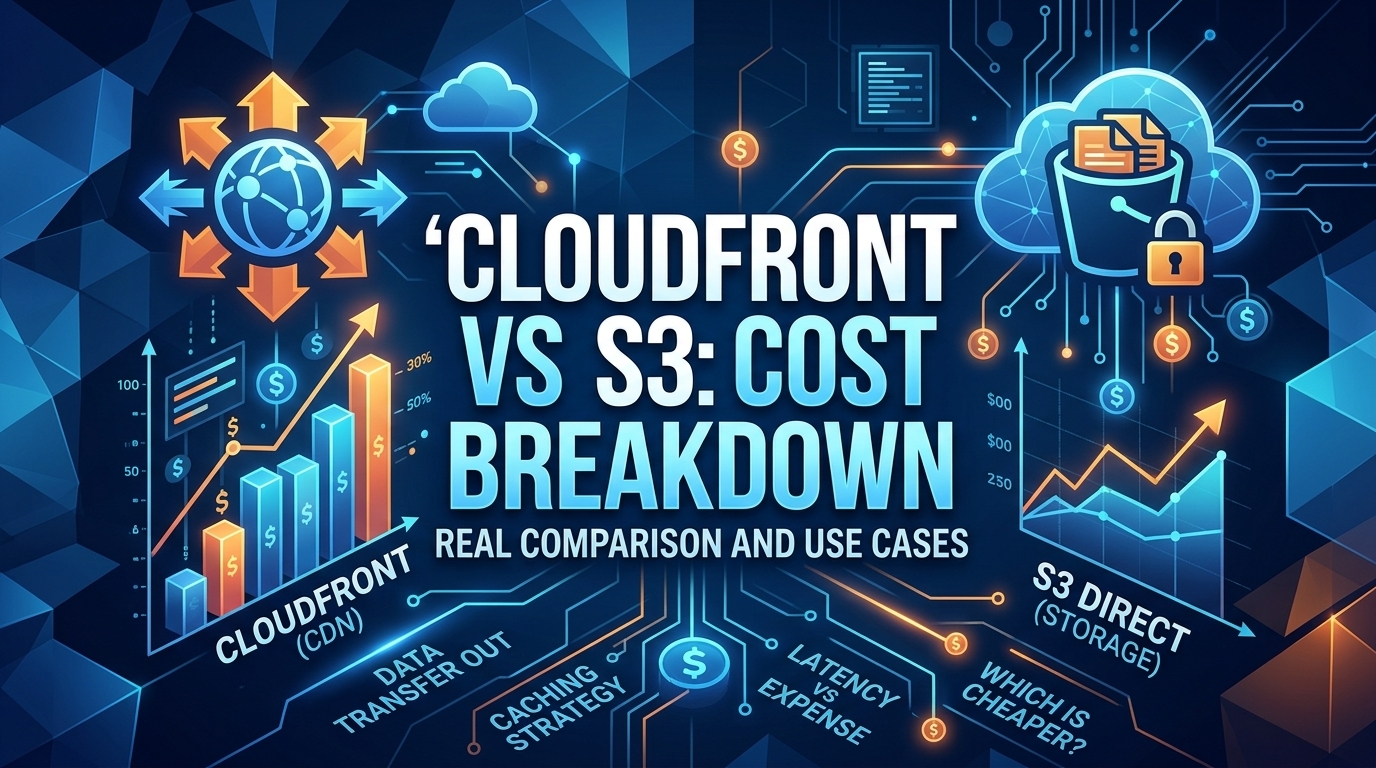
The CloudFront vs S3 decision depends more on object size than on traffic volume. At a 500 KB average response, 100 TB ...
Learn
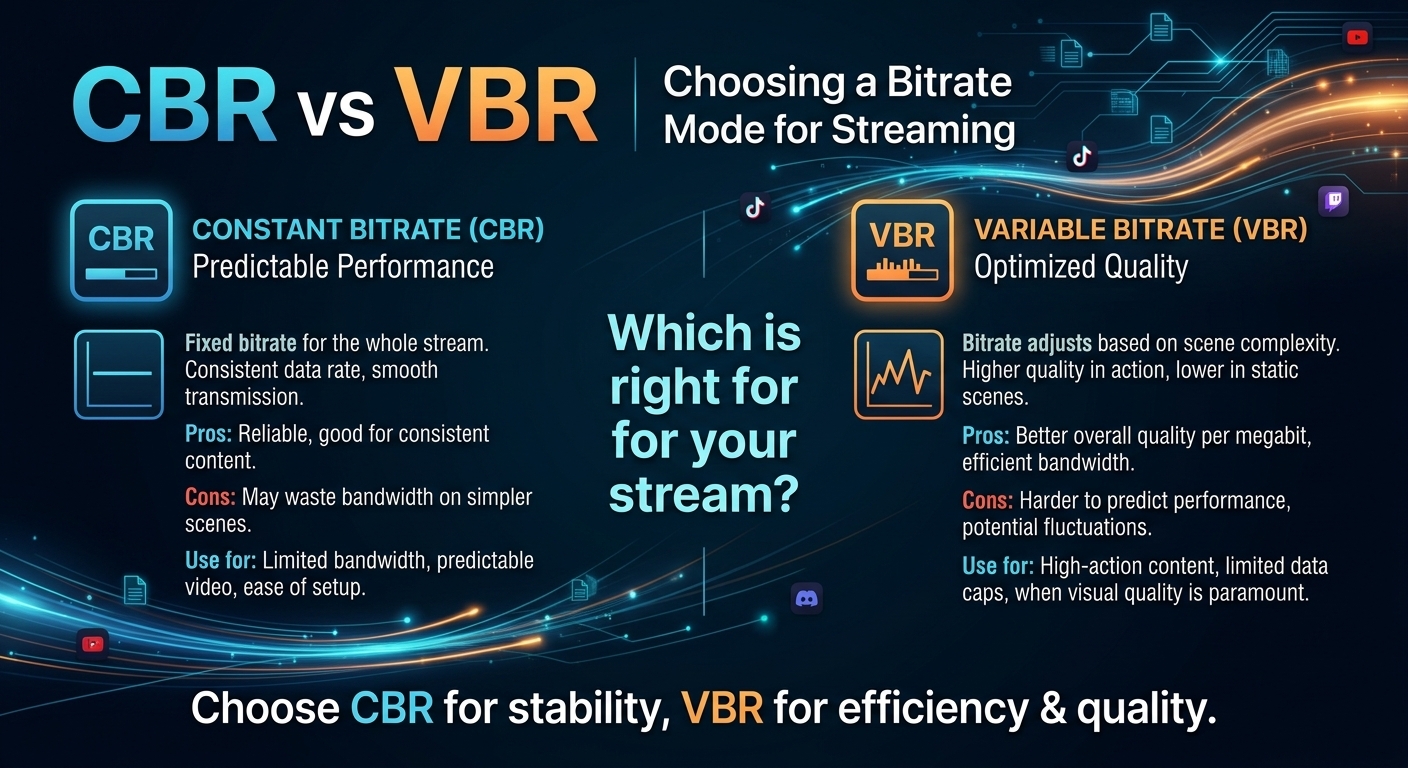
For most on-demand video, capped variable bitrate (VBR) wins the cbr vs vbr decision: it spends bits where the picture ...