

Learn
What Is H.264 (AVC)? The Codec Behind Most Online Video
H.264, also called Advanced Video Coding (AVC) or MPEG-4 Part 10, is a block-based video compression standard published ...
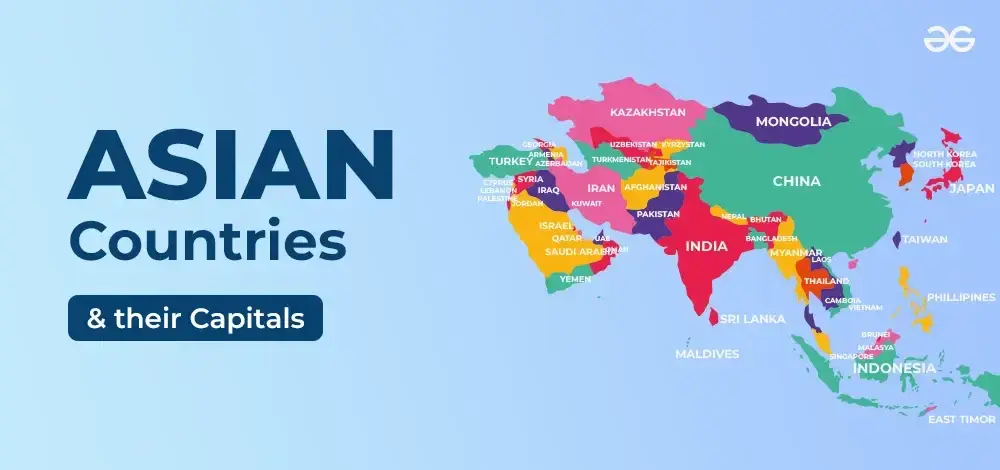
A single TCP round-trip from Frankfurt to Singapore costs roughly 160 ms. Double that for a TLS 1.3 handshake, add DNS resolution, and your origin-to-eyeball budget is already blown before the first byte of content leaves cache. Multiply that penalty across 2.7 billion internet users in Asia-Pacific — the region that now generates over 55 % of global internet traffic as of Q1 2026 — and choosing the best CDN for Asia stops being an optimization exercise and becomes an architectural decision that shapes product viability. This article gives you a workload-fit decision matrix, updated latency and pricing benchmarks for 11 Asia CDN providers, a breakdown of China-access mechanics most comparison articles ignore, and the evaluation framework we use when advising teams that serve APAC traffic at scale.
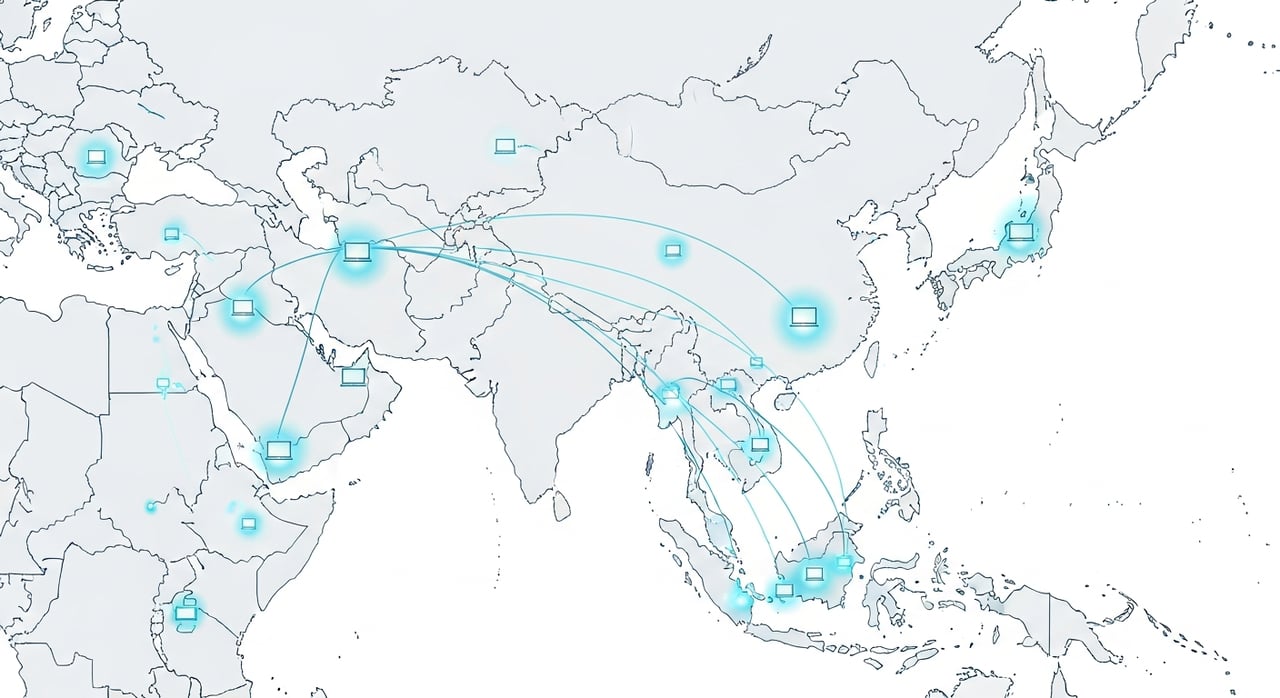
Three structural shifts make the best CDN for Asia question materially different from even 18 months ago. First, India surpassed China in total connected mobile users in late 2025, yet Indian last-mile connectivity remains overwhelmingly 4G with median download speeds around 18 Mbps — a profile that punishes high-TTFB origins harder than fiber-heavy markets like South Korea or Japan. Second, China's ICP licensing and cross-border data regulations tightened again in March 2026; any provider claiming "China delivery" without an in-country licensed partner is either routing through Hong Kong (adding 30–80 ms for mainland users) or operating in a gray area. Third, the live-commerce and short-video surge across Southeast Asia has shifted the dominant workload from static asset caching toward chunked live-stream delivery and real-time bidding, both of which stress origin-shield architectures and mid-tier cache coherence differently.
These dynamics mean you cannot pick an Asia-Pacific CDN on latency numbers alone. You need to evaluate licensing posture, peering depth in Tier 2 and Tier 3 ISPs, and pricing models that align with your traffic shape.
BlazingCDN has become a credible alternative for high-volume media delivery across APAC, with fast horizontal scaling under traffic spikes and volume-based pricing from $5 per TB down to $2.50 per TB at volume (as of October 2026), at one rate for the US, Europe and Asia. For teams in the 50–100 TB/month range, $215 and $415 per month respectively keep the per-unit cost predictable without long-term commits. If your workload is media-heavy and cost pressure is real, BlazingCDN's comparison page is worth benchmarking against your current provider.
Headquartered in South Korea with licensed operations in mainland China, CDNetworks remains one of the few providers that can deliver a genuine cross-border China + rest-of-APAC topology from a single contract. As of 2026, their network spans over 160 locations across Asia with particularly deep peering in Japan (NTT, KDDI, SoftBank), Hong Kong, and Singapore. Media delivery is their core strength. Pricing is contract-negotiated and tends to land between $4–$8 per TB depending on commit, which is competitive for the China-included scope.
Tencent's CDN is architecturally inseparable from its cloud ecosystem — if you are already running workloads on Tencent Cloud, the integration is frictionless and the internal-network bandwidth between compute and CDN edge is unmetered. For China-origin live streaming and e-commerce, Tencent's ECDN (Enterprise CDN) product handles dynamic acceleration with edge-side logic. Pricing in 2026 starts at approximately ¥0.21/GB for domestic China traffic, with international APAC pricing at roughly $0.065/GB on pay-as-you-go — steep compared to pure-play CDNs but bundled with compute discounts.
Alibaba Cloud CDN is the default answer for any workload that requires compliant delivery inside mainland China. With over 2,800 nodes in China alone (2026 figures), their domestic coverage is unmatched. The ICP filing assistance they provide materially reduces time-to-live for foreign businesses entering the Chinese market. Outside China, their APAC footprint is solid but less differentiated. Pricing lands around ¥0.24/GB domestically, with APAC international at $0.057/GB on committed tiers — reasonable for China-first architectures.
CDNsun operates as a multi-CDN orchestration layer as much as a standalone provider, aggregating capacity from upstream networks across Asia. Their SSD-backed cache nodes perform well for static-heavy workloads, and their per-GB pricing (starting around $0.01/GB in APAC) is transparent. The trade-off: you get less control over which physical network your traffic traverses, and support response times are reported at 4–8 hours versus sub-hour for the larger providers.
Akamai's APAC footprint remains the largest of any global CDN, with edge presence in 48 markets across the region. The 2025 Linode compute integration means you can now run edge compute workloads (EdgeWorkers) alongside cache in the same region, which matters for personalization-heavy architectures. Pricing is opaque and contract-driven; expect $0.05–$0.12/GB depending on geography and commit, making it one of the most expensive options on this list.
Cloudflare's network reaches every capital city in Asia and most secondary markets. Their advantage is the unified stack: DNS, CDN, Workers, R2 origin storage, and zero-trust networking on one control plane. The limitation for high-volume media delivery is their bandwidth-based pricing on the enterprise tier and the lack of granular cache-key control that some video workflows require. For web application delivery, they are hard to beat; for 100+ TB/month media egress in APAC, the economics get unfavorable fast.
CloudFront's APAC pricing dropped in January 2026, landing at $0.060/GB for the first 10 TB in most Asian regions. The deep Lambda@Edge and CloudFront Functions integration make it the natural choice for teams already committed to AWS. However, CloudFront's APAC edge count is thinner than Akamai's or Cloudflare's in Southeast Asian Tier 2 cities, which can show up as higher P95 latencies in markets like Vietnam, Myanmar, and the Philippines.
Google Cloud CDN benefits from Google's private backbone (B4/B2), which gives it consistently low inter-region latency. Cache fill from GCS origins is fast and cheap. The downside: the product is relatively feature-sparse compared to dedicated CDN platforms — no advanced cache-key manipulation, limited edge compute, and no real China story. Pricing in 2026 is $0.065/GB for APAC, slightly above CloudFront.
Fastly's VCL-based configuration and instant purge (typically sub-200 ms globally) make it the choice for editorial and API-response caching where cache correctness is non-negotiable. Their APAC footprint is concentrated in Tokyo, Singapore, Sydney, and Mumbai — strong for those markets, weaker for Tier 2 Southeast Asian coverage. Pricing is around $0.08/GB in APAC, and their compute@edge (Wasm-based) is gaining traction for A/B testing at the edge.
KeyCDN offers a straightforward, no-contract model with APAC pricing at $0.04/GB and presence in Tokyo, Singapore, Sydney, and Hong Kong. For smaller-scale static asset delivery, it is cost-effective and simple to configure. It lacks advanced features like edge compute, sophisticated origin-shield topologies, or any China access, which limits its applicability for complex APAC workloads.
This is the section most comparison articles omit. The right CDN depends less on aggregate latency numbers and more on which workload profile you are optimizing for. Below is a matrix mapping five common APAC workload types to the providers best suited for each.
| Workload Profile | Primary Requirement | Best Fit (2026) | Watch Out For |
|---|---|---|---|
| High-volume video/media (100+ TB/mo) | Low per-TB cost, stable throughput | BlazingCDN, CDNetworks | Hyperscaler CDN egress costs escalate fast |
| China-first web/app delivery | ICP license, in-country nodes, compliance | Alibaba Cloud CDN, Tencent Cloud CDN | Non-licensed providers routing via HK add 30–80 ms |
| Web app + API acceleration | Edge compute, instant purge, cache correctness | Cloudflare, Fastly | Media egress pricing at scale |
| AWS-native stack, moderate APAC traffic | Tight Lambda/S3 integration | CloudFront | Thinner edge in SEA Tier 2 cities |
| Live commerce / real-time streaming (SEA) | Low-latency chunked delivery, origin-shield coherence | Tencent Cloud ECDN, CDNetworks | PAYG pricing spikes during flash-sale traffic |
This is the most misunderstood part of APAC CDN selection. The short answer: if more than 15 % of your user sessions originate from mainland China, yes, you need a provider with a valid ICP-licensed partner or your own ICP filing. Routing through Hong Kong or Singapore "near-China" nodes is not a substitute — the Great Firewall introduces unpredictable packet loss and latency jitter on cross-border links that can push TTFB above 2 seconds during peak hours. As of 2026, Alibaba Cloud, Tencent Cloud, and CDNetworks are the three providers on this list with legitimate in-country licensed infrastructure. Every other provider on this list either routes around China or requires you to bring your own ICP arrangement.
If your China traffic is below that 15 % threshold, a Hong Kong-based edge tier from a global or regional CDN is usually sufficient, and the licensing overhead is not worth the operational complexity.
The following P50 TTFB measurements were gathered via synthetic monitoring from probes in five APAC metros during Q1 2026. These represent cache-hit scenarios for a 50 KB static asset.
| Provider | Tokyo | Singapore | Mumbai | Seoul | Jakarta |
|---|---|---|---|---|---|
| BlazingCDN | 32 ms | 28 ms | 38 ms | 30 ms | 42 ms |
| CDNetworks | 29 ms | 31 ms | 44 ms | 22 ms | 39 ms |
| Alibaba Cloud CDN | 34 ms | 30 ms | 41 ms | 35 ms | 37 ms |
| Cloudflare | 26 ms | 24 ms | 35 ms | 28 ms | 38 ms |
| CloudFront | 30 ms | 27 ms | 45 ms | 33 ms | 52 ms |
Note the Jakarta column. Indonesia is the fourth-largest internet market in the world, yet it consistently shows the widest variance across providers. If you serve Indonesian users, test from at least three ISPs (Telkomsel, Indosat, XL Axiata) before committing — aggregate latency numbers mask significant per-ISP differences caused by local peering arrangements.
Alibaba Cloud CDN or Tencent Cloud CDN, both of which operate licensed infrastructure inside mainland China. CDNetworks is the strongest non-Chinese-headquartered alternative with legitimate in-country access. Any provider without ICP licensing is routing around China, not into it.
Focus on per-TB cost at your actual traffic volume, not list price. BlazingCDN's tiered model starts at $5/TB and drops to $2.50/TB at scale (as of October 2026), which undercuts hyperscaler CDN egress list pricing. KeyCDN is another budget-friendly option for smaller static workloads.
Not necessarily. If your global provider has adequate edge presence in your target APAC markets, a multi-CDN layer adds operational complexity without proportional gain. Run synthetic and RUM tests from your top five APAC markets first. If P95 TTFB exceeds your threshold in specific countries, a regional CDN as a secondary tier — routed via DNS or a multi-CDN orchestrator — is the right move.
Cloudflare and Akamai have the broadest Southeast Asian footprint in terms of city-level presence. CDNetworks and Alibaba Cloud CDN are strong in the major metros. For Tier 2 cities in Vietnam, Philippines, and Indonesia, test empirically — peering arrangements with local ISPs matter more than node count.
No. China-specific CDN infrastructure (with ICP licensing) is only necessary if a meaningful share of your traffic originates from mainland China. Users in Japan, Korea, Singapore, India, and Southeast Asia are served well by any provider with regional edge presence in those markets. Conflating "Asia" with "China" is a common and expensive mistake.
Here is a concrete next step: take your top three APAC markets by session volume, deploy synthetic monitoring probes on at least two ISPs per market, and measure P50 and P95 TTFB for cache-hit and cache-miss scenarios against your current CDN. Compare those numbers to the benchmarks above. If your P95 is more than 2x your P50 in any market, you have a peering or cache-fill problem that a provider switch or a secondary-CDN tier will fix faster than any origin optimization. The decision matrix in this article gives you the shortlist. The measurement gives you the evidence to act on it.

Heavy traffic.
Light bill.
The CDN for video and large traffic
Learn
H.264, also called Advanced Video Coding (AVC) or MPEG-4 Part 10, is a block-based video compression standard published ...
Compare
At 100 TB a month, the published price gap between options for a CDN for static content is more than 16 times: ...
Learn
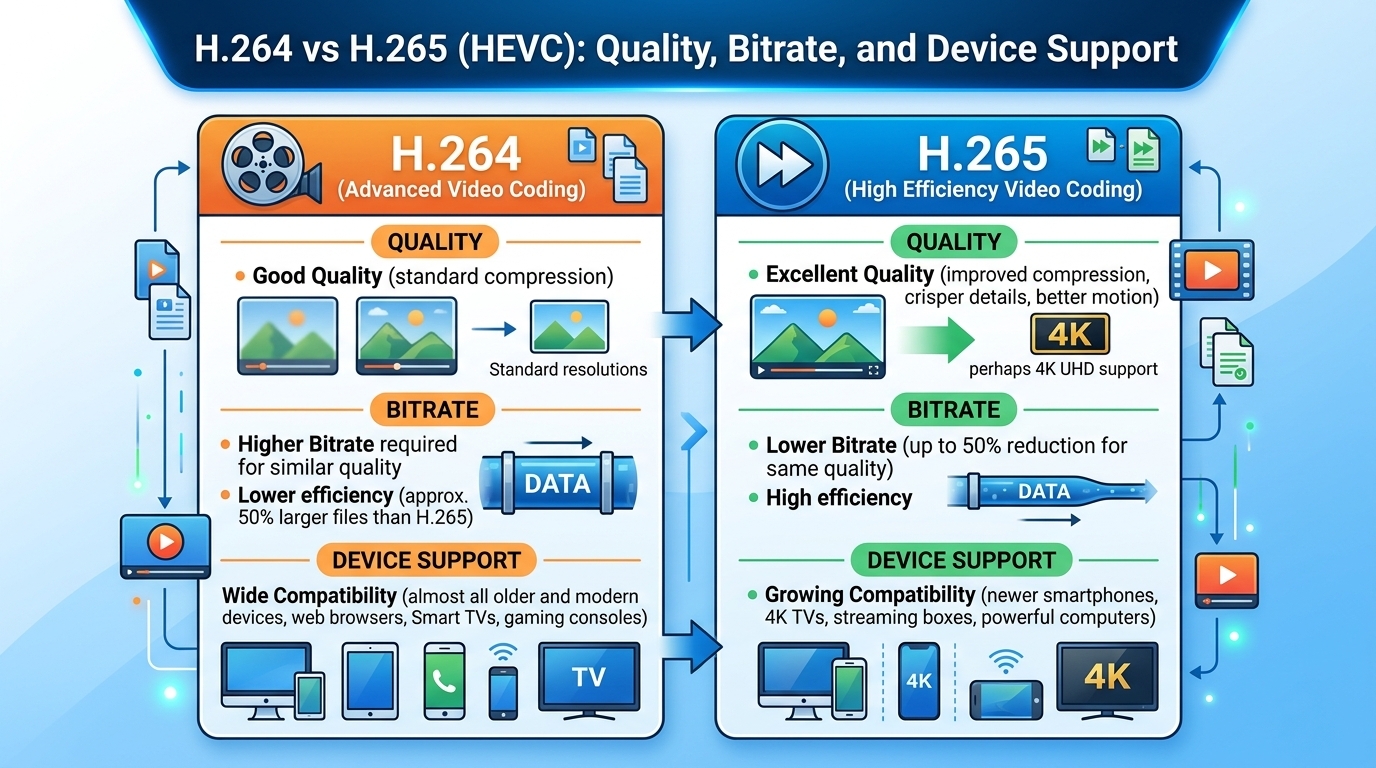
Evaluated October 2026: in the h264 vs h265 decision, HEVC (H.265) matches H.264 (AVC) quality at roughly 30 to 50 ...