Learn
Lossy vs Lossless Compression: Images, Video and Audio
Lossy vs lossless compression comes down to one trade: lossless compression rebuilds every original bit and typically ...
In Q1 2026, Akamai reported that median edge-compute execution times dropped below 0.8 ms across their network, down from roughly 1.5 ms two years prior. That single improvement cascades: lower TTFB, fewer origin round-trips, tighter personalization loops. CDN edge computing is no longer a feature bolted onto a delivery network—it is the delivery network. The boundary between "cache layer" and "compute layer" has collapsed, and architects who treat them as separate concerns are leaving latency and money on the table. This article gives you seven concrete optimization strategies for 2026, a workload-profile decision matrix you will not find elsewhere, and the failure modes that bite teams who move fast without instrumentation.
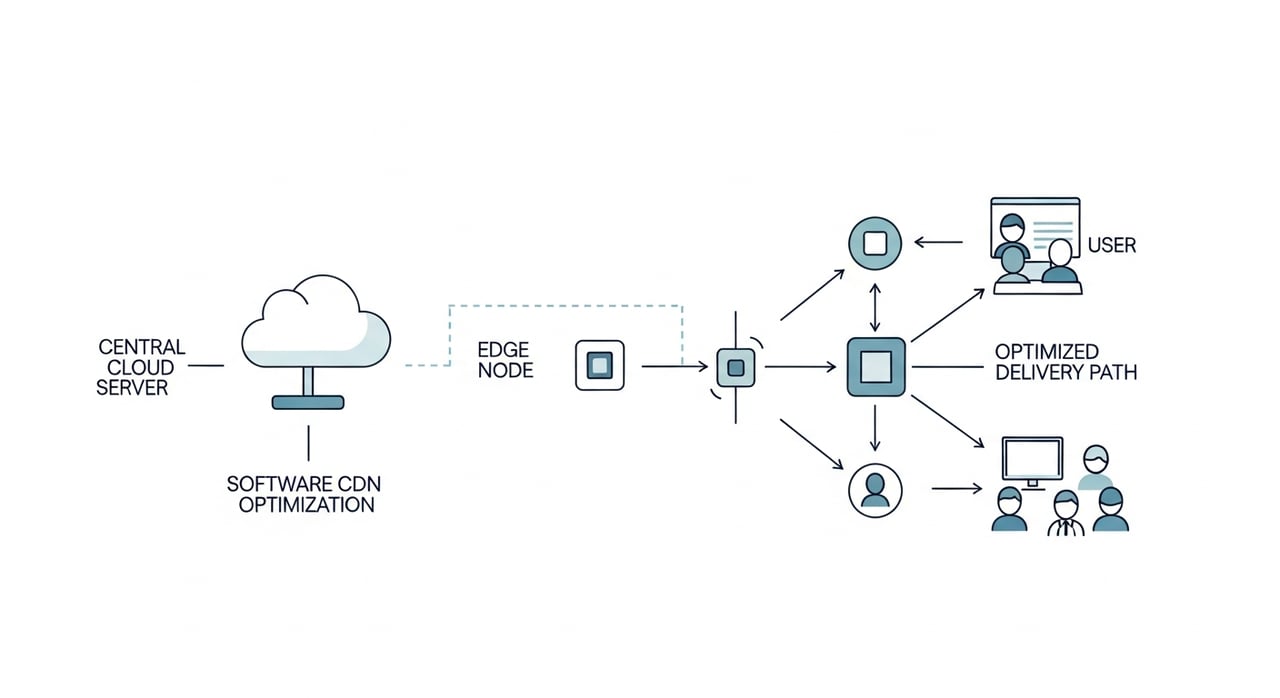
Two shifts define the 2026 edge landscape. First, V8 isolate-based runtimes matured enough that cold-start penalties effectively vanished for sub-5 MB workloads. Cloudflare Workers, Fastly Compute, and Deno Deploy all reported P99 cold starts under 5 ms as of early 2026. Second, the ECMA TC39 WinterCG alignment means portable edge code is finally real—you can move a request-handling function between providers without rewriting I/O bindings. This portability changes the cost calculus for multi-CDN architectures and makes the strategies below applicable regardless of your primary provider.
Flat cache hierarchies waste edge compute. In 2026, the winning pattern is a three-tier model: L1 edge PoP (sub-ms compute, hot cache), L2 regional shield (medium-TTL cache, aggregation logic), and L3 origin shield (cold-path compute, cache-fill coordination). The key move is placing lightweight compute at L1 and L2, not just at L1. Doing A/B test bucketing or geo-based content selection at L2 reduces L1 cache fragmentation by 30–40%, based on published Fastly engineering benchmarks from late 2025. If your cache-hit ratio sits below 85%, tier-aware compute placement is where to look first.
The classic trap: you push personalization to the edge, generate one cache variant per user segment, and watch your hit ratio crater. The 2026 fix is HTML streaming with edge-injected fragments. Serve a cacheable skeleton (one variant, high TTL) and inject personalized blocks—pricing tiers, locale-specific CTAs, user-state banners—via edge functions that stitch fragments at response time. This keeps your skeleton hit ratio above 95% while delivering per-user content. The technique requires chunked transfer encoding and careful buffer management, but most modern edge runtimes support ReadableStream natively as of 2026.
Edge nodes see navigation patterns before your origin does. By running lightweight probabilistic models (Markov chains, not full ML inference) at the edge, you can prefetch the next likely asset into the local cache before the user requests it. In gaming and media workloads, this technique cuts perceived load times by 100–250 ms, which compounds across session depth. The critical constraint: prefetch bandwidth. Cap prefetch at 10–15% of total egress per node, or you risk displacing high-value cached objects. Instrument prefetch hit rates separately—if they drop below 60%, your model is too noisy.
As of 2026, durable key-value and object stores at the edge—Cloudflare R2, Fastly KV Store, and equivalents—are production-grade for read-heavy workloads. The strategy: replicate frequently accessed origin data (user configs, feature flags, product catalogs under 50 MB) into edge-native storage and serve reads without touching origin at all. Teams running SaaS platforms report origin request reductions of 60–80% after migrating configuration reads to edge KV stores. The tradeoff is consistency. Eventual consistency with a replication lag of 1–3 seconds is fine for feature flags; it is not fine for account balances. Map your data access patterns before you migrate.
Bot mitigation, token validation, and request filtering at the edge are not just security measures—they are performance optimizations. Every malicious request that reaches origin consumes compute, memory, and connection slots. In Q1 2026 measurements, large media properties reported that 35–45% of requests hitting their CDN edge were automated and non-beneficial. Filtering these at the edge, before they enter cache-fill or origin-fetch paths, directly reduces P99 latency for legitimate users. The implementation pattern: a lightweight edge function that validates JWTs or checks bot-score headers in under 0.5 ms, returning 403 before any cache logic executes.
Static TTLs are a 2020 pattern. In 2026, edge functions can observe cache-hit ratios, request rates, and origin health in real time, then adjust TTLs dynamically. The approach: instrument each edge function to emit structured telemetry (cache status, compute duration, origin fetch latency) into a streaming pipeline. When origin latency spikes, edge logic extends TTLs to serve stale-while-revalidate for longer. When a content update deploys, a purge event triggers TTL shortening. This adaptive loop keeps content fresh without hammering origin during traffic spikes. Teams running live-streaming delivery report 20–30% reductions in origin load using adaptive TTLs alone.
For enterprises above 500 TB/month, single-provider risk is unacceptable. The 2026 pattern: a thin orchestration layer—either DNS-based or edge-compute-based—that routes requests to the best-performing CDN per region per content type. Edge functions at the orchestration layer run latency probes and cost lookups, then issue redirects or proxy-pass decisions in under 2 ms. This is where WinterCG portability matters: your edge logic should run identically on Provider A and Provider B, so failover is code-compatible, not just DNS-compatible.
For teams evaluating multi-CDN cost structures, BlazingCDN's CDN comparison tooling is worth a look. BlazingCDN offers Anycast routing with built-in failover, starting at $5 per TB at lower volumes and scaling down to $2.50 per TB at volume (as of October 2026). At 100 TB per month that is $415 versus about $6,965 on Amazon CloudFront pay-as-you-go (published price lists, checked August 2026). With flexible configuration and fast scaling under demand spikes, it fits well as a secondary or primary provider in multi-CDN architectures, particularly for media, gaming, and SaaS workloads.
Not every strategy applies to every workload. The matrix below maps the seven strategies to four common workload profiles, scored by impact (high, medium, low).
| Strategy | Live Streaming | SaaS Platform | Gaming Assets | E-Commerce |
|---|---|---|---|---|
| 1. Tiered cache + compute | High | Medium | High | Medium |
| 2. Edge personalization | Low | High | Low | High |
| 3. Predictive prefetching | Medium | Medium | High | High |
| 4. Edge-native storage | Low | High | Medium | Medium |
| 5. Edge security filtering | High | High | Medium | High |
| 6. Adaptive TTLs | High | Medium | Low | High |
| 7. Multi-CDN orchestration | High | Medium | High | Medium |
Start with the column that matches your primary workload. Implement the "High" items first. Move to "Medium" once your edge observability pipeline confirms baseline metrics.
Edge compute failures are subtle because they often look like intermittent performance regressions rather than outages. Three patterns to watch for in 2026:
Edge KV stores without TTL discipline accumulate stale keys. Over weeks, read latency creeps up as the store bloats. Set TTLs on every write. Run a weekly audit that compares active keys against expected cardinality.
A global cache purge forces simultaneous re-computation across all edge nodes. If your edge function does origin fetches, you create a thundering herd at origin. Mitigation: stagger purges by region, or use stale-while-revalidate to absorb the spike.
When requests fan out across two or three CDN providers, no single provider's dashboard shows the full picture. You need a provider-agnostic telemetry layer—real-user monitoring or synthetic probes—that correlates performance by provider, region, and content type. Without this, you are optimizing in the dark.
Traditional caching stores static copies of content at edge nodes. Edge computing adds a processing layer that can transform, personalize, or dynamically assemble responses at the edge without round-tripping to origin. As of 2026, this reduces P50 TTFB by 40–60% for dynamic content compared to cache-miss-to-origin paths.
A CDN is a distributed network optimized for content delivery. Edge computing is a compute paradigm that places processing close to users. In 2026, these have converged: major CDN providers embed compute runtimes directly into their edge nodes, making the distinction architectural rather than functional.
Use edge functions to normalize cache keys (strip tracking parameters, canonicalize headers), implement stale-while-revalidate logic, and dynamically adjust TTLs based on content type and origin health signals. The goal is maximizing hit ratio without serving stale content beyond your freshness tolerance.
Yes. Edge-native storage for configuration and feature-flag reads, combined with edge-side request filtering for bots, can reduce origin request volume by 60–80% in measured SaaS and media deployments as of Q1 2026. Each avoided origin fetch eliminates one full RTT plus origin processing time.
Live streaming, SaaS platforms with global user bases, gaming asset delivery, and high-traffic e-commerce all see material gains. The common thread is high request volume with a mix of cacheable and dynamic content, where even single-digit millisecond improvements compound across millions of requests per hour.
Pick one strategy from the matrix above that maps to "High" for your workload. Before you implement it, instrument the baseline: cache-hit ratio by content type, P50/P95/P99 TTFB at the edge, origin requests per second, and edge-compute execution time. Deploy the change to one region. Compare seven days of data. If the numbers move in the right direction, roll it globally. If they do not, you have the telemetry to understand why. That feedback loop—measure, change, measure—is the only reliable way to move from page-2 performance to page-1 delivery.

Heavy traffic.
Light bill.
The CDN for video and large traffic
Learn
Lossy vs lossless compression comes down to one trade: lossless compression rebuilds every original bit and typically ...
Pricing - Pricing & Costs
The CloudFront vs S3 decision depends more on object size than on traffic volume. At a 500 KB average response, 100 TB ...
Learn
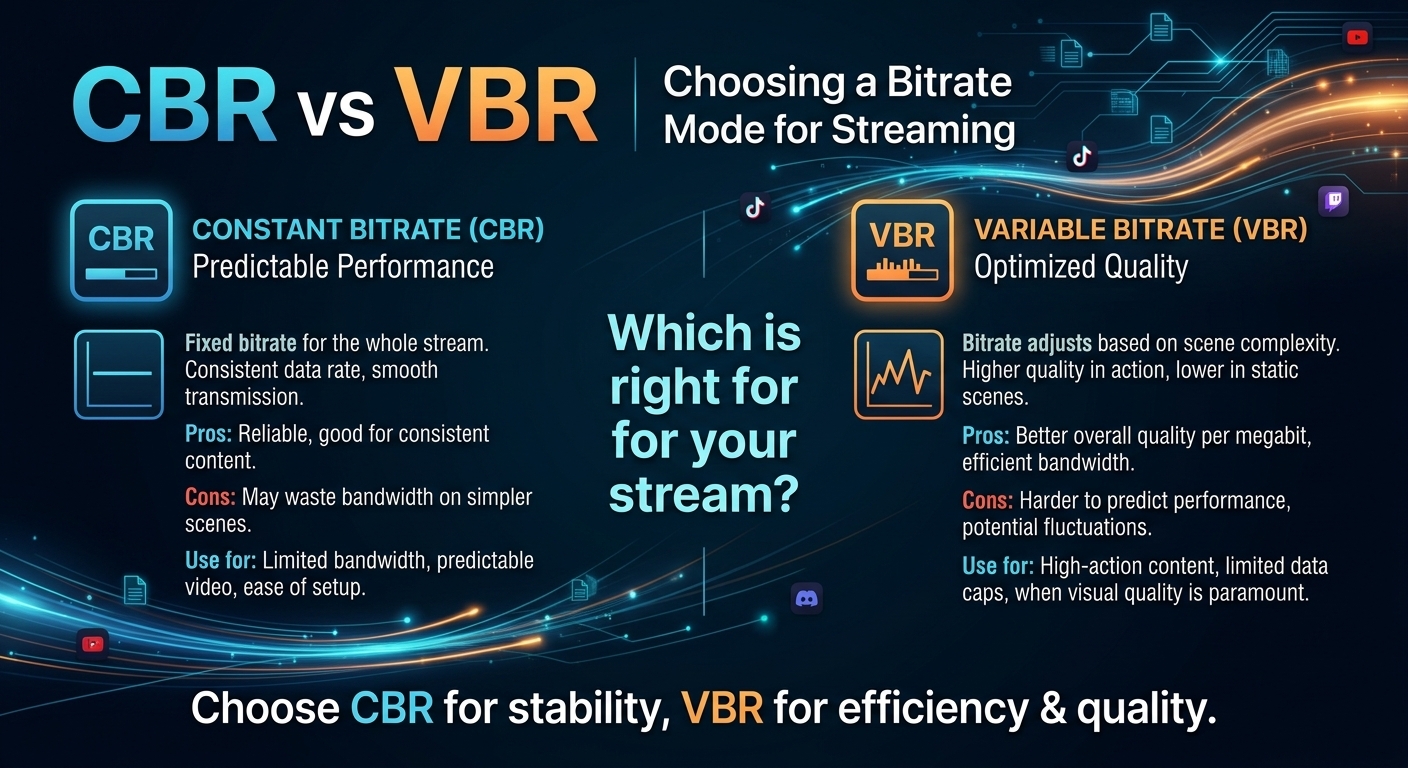
For most on-demand video, capped variable bitrate (VBR) wins the cbr vs vbr decision: it spends bits where the picture ...