
Learn
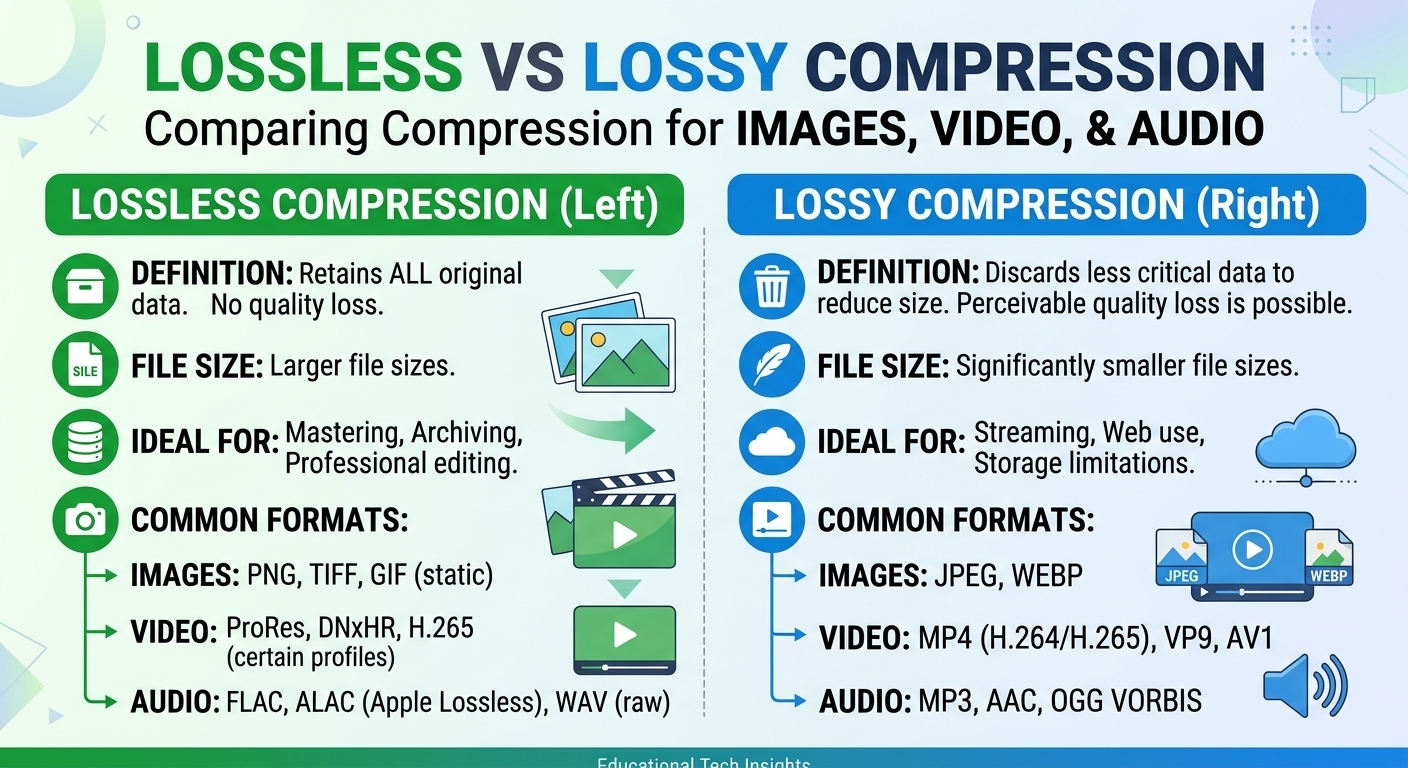
Lossy vs Lossless Compression: Images, Video and Audio
Lossy vs lossless compression comes down to one trade: lossless compression rebuilds every original bit and typically ...

Players say "lag" about two different problems: slow downloads and long loading screens, and delay inside a live match. A content delivery network (CDN) fixes the first and has almost no effect on the second. This guide separates the two.
Short answer: no, a CDN does not lower in-match ping, because gameplay packets travel over UDP straight to your game server. It does cut download and load times: a 20 GB patch finishes in about 9 minutes on a 300 Mb/s line when the edge keeps up, versus over 2 hours from an origin giving each player 20 Mb/s.
A CDN is a network of cache servers that keep copies of files close to players and serve them over HTTP or HTTPS. In an online game that covers far more bytes than gameplay: a match needs tens of kilobytes per second per player, while a client download is tens of gigabytes. A CDN accelerates:
If a response is the same for many players and travels over HTTP, it belongs on a CDN; if it is unique per player and per tick, it does not. For provider selection and launch-day planning, see the guide to choosing a CDN for gaming.
Ping is the round trip between the player and the game server that simulates the match. That server is authoritative: it receives inputs, runs the simulation and sends state updates back, usually over UDP. A server running 64 ticks per second produces a new state every 15.6 ms; at 128 ticks, every 7.8 ms. None of those packets can be cached, because each one describes a moment that has never happened before and will never be requested again.
Physics sets the floor. Light in optical fiber covers roughly 200,000 km per second, which works out to about 1 ms of round trip for every 100 km of cable. A player in Frankfurt connected to a server in Virginia, about 6,500 km away, cannot see less than roughly 65 ms of ping, and real routes are longer than the straight line. A CDN edge in Frankfurt does not move the simulation, so it does not change that number. Only moving the server, or improving the path to it, does.
Five levers move the in-match number, and none of them is HTTP caching:
Packet loss is the other half of lag. At 128 ticks a server sends about 7,680 updates per minute, so 1% loss drops about 77 of them, enough for visible rubber-banding. That loss usually happens on the player's last mile. Cloud gaming is a different architecture again, covered in the role of a CDN in cloud gaming.
A CDN does not carry UDP gameplay traffic, so it does not lower ping in a match, raise tick rate, repair packet loss on a player's Wi-Fi or ISP, or keep clients synchronized in multiplayer. It does not run matchmaking, lobbies, voice chat or anti-cheat. It does not replace game servers or databases, and it should never cache responses that hold player-specific data such as inventories, wallets or session tokens. If a vendor says its CDN will cut your in-game ping, ask exactly which packets it carries. For HTTP downloads the answer is clear. For the match itself, it is usually none.
Slow loading has more causes than distance, and a CDN addresses only the network ones. The usual suspects:
A CDN attacks the network share of that list. Files come from a cache near the player, so round trips shrink and TCP ramps up faster. Patch-day demand spreads across many servers, and an origin shield collapses misses so the origin sends each file once per region instead of once per player. Content-hashed URLs keep unchanged files cached across builds. BlazingCDN, measured June 2026 on a 100 MB HTTPS download, showed 24 ms and 1.11 Gb/s in North America, 27 ms and 1.12 Gb/s in Europe, and 47 ms and 761 Mb/s in Asia. At those rates the player's own connection becomes the limit, which is where you want it.
Retention follows friction: a patch that installs during a coffee break gets played, one that takes an evening does not. Track patch completion time by region and the day-1 return rate of players who hit the slowest downloads, and you get your own retention number instead of a borrowed industry statistic.
Cache-Control: public, max-age=31536000, immutable. Keep manifests short-lived, 30-60 seconds.Cache-Control: private.Launcher-specific patterns, such as chunked depots and resumable installs, are covered in CDN delivery for game launchers.
Delivery cost is patch size times the number of players who download it. BlazingCDN pricing starts at $5 per TB and goes down to $2.50 per TB at volume, with one rate for the US, Europe and Asia, a $25 monthly minimum, no request fees and no long-term contract (as of October 2026).
| Scenario | Monthly volume | BlazingCDN monthly total |
|---|---|---|
| Indie hotfixes: 2 GB to 25,000 players | 50 TB | $215 |
| Live-service game: 500 MB of patches and assets to 200,000 players | 100 TB | $415 |
| Season update: 15 GB to 30,000 players | 450 TB | $1,640 |
| Major patch: 20 GB to 50,000 players | 1,000 TB | $3,315 |
For reference at 100 TB, published price lists checked August 2026 show about $6,965 on Amazon CloudFront pay-as-you-go, $2,600 on KeyCDN (North America and Europe), $990 on CDN77, and $500 (Volume) or $1,000 (Standard) on bunny.net. This is the BlazingCDN blog, so test any provider, including us, on your own traffic. Full tiers are on the pricing page.
Synthetic tests against an empty cache say little about a real patch. BlazingCDN offers a 14-day testing period on real production traffic and can run as a second CDN behind DNS with a weighted split, for example 10% of download traffic while your current provider carries the rest. Onboarding takes about an hour with an engineer. Measure what players feel: median and 95th-percentile download speed per region, patch completion time, error rate and cache hit ratio (BlazingCDN averages 96%+). Origin egress should drop sharply once the shield and versioned URLs are in place. Keep ping out of this scorecard: it belongs to your game server host, and you measure it there. Details for studios are on the game company solutions page, and large-file delivery is described on the files CDN page.
Not in a match. In-game ping is the round trip between the player and the game server over UDP, and a CDN caches HTTP files, so it never sits on that path. A CDN reduces the time to download clients, patches and assets, and it speeds up cacheable web and API responses. To lower match ping, host servers closer to players and improve their network.
No. Rubber-banding comes from lost or late state updates between the client and the game server, most often on the player's Wi-Fi or ISP. A CDN does not carry those packets. Better netcode, servers in nearby regions, hosting with good ISP peering and wired connections reduce it. A CDN only prevents failed or stalled downloads during patches.
Everything that is identical for many players and fetched over HTTP: installers, launchers, patches, downloadable content, textures and audio, store and patch-note pages, and short-lived API snapshots such as news or event calendars. Keep gameplay packets, voice chat, authentication and any player-specific responses on your own servers, with player data marked as private.
Not directly. Synchronization is handled by the authoritative game server and the netcode on each client, which exchange state many times per second. A CDN helps indirectly by making sure every player has the same build and assets quickly, so fewer players are stuck on old versions and matchmaking pools are not split during a patch rollout.
Deploy game servers in that region and matchmake players there by measured latency. Each 100 km of fiber adds about 1 ms of round trip, so distance dominates. If you cannot add a region yet, a UDP relay or accelerated network from your hosting provider can smooth the route, but it will not beat a nearby server.

Heavy traffic.
Light bill.
The CDN for video and large traffic
Learn
Lossy vs lossless compression comes down to one trade: lossless compression rebuilds every original bit and typically ...
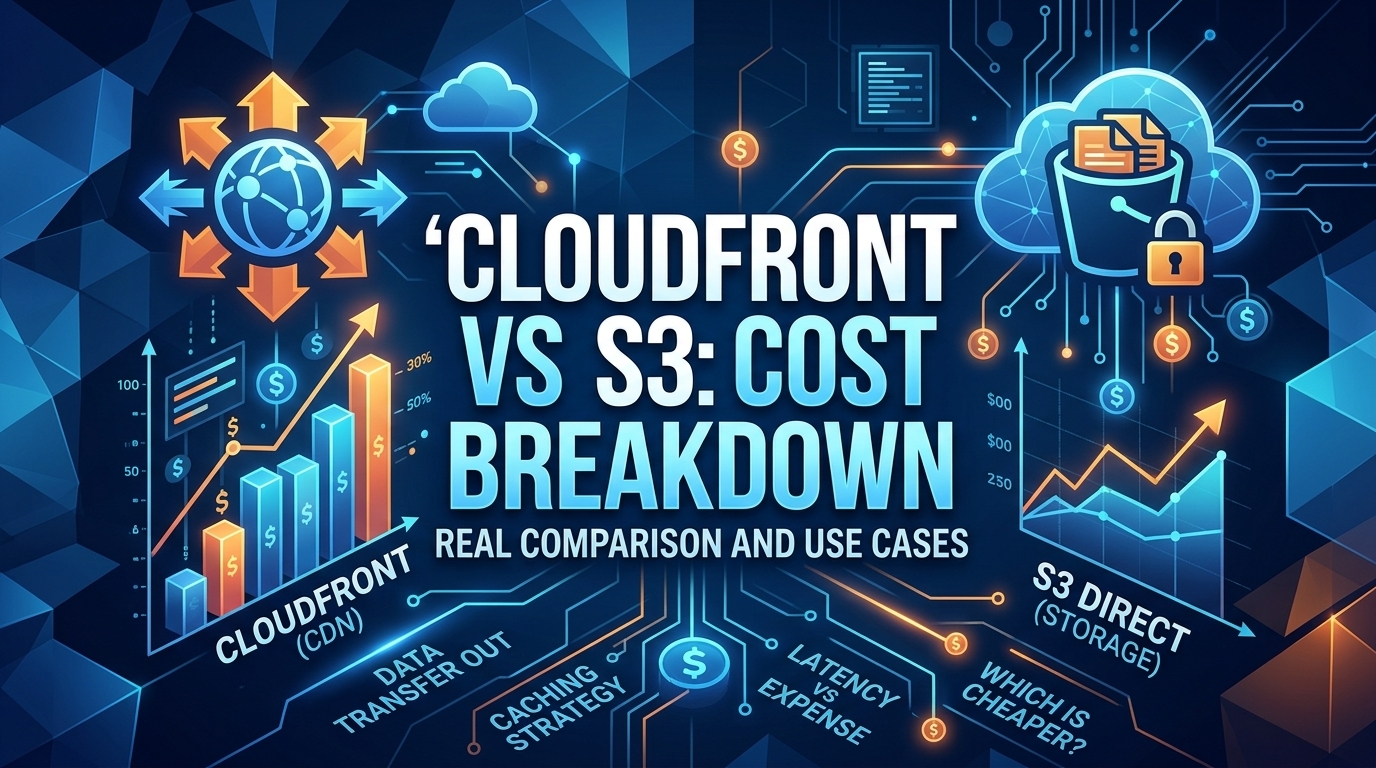
Pricing - Pricing & Costs
The CloudFront vs S3 decision depends more on object size than on traffic volume. At a 500 KB average response, 100 TB ...
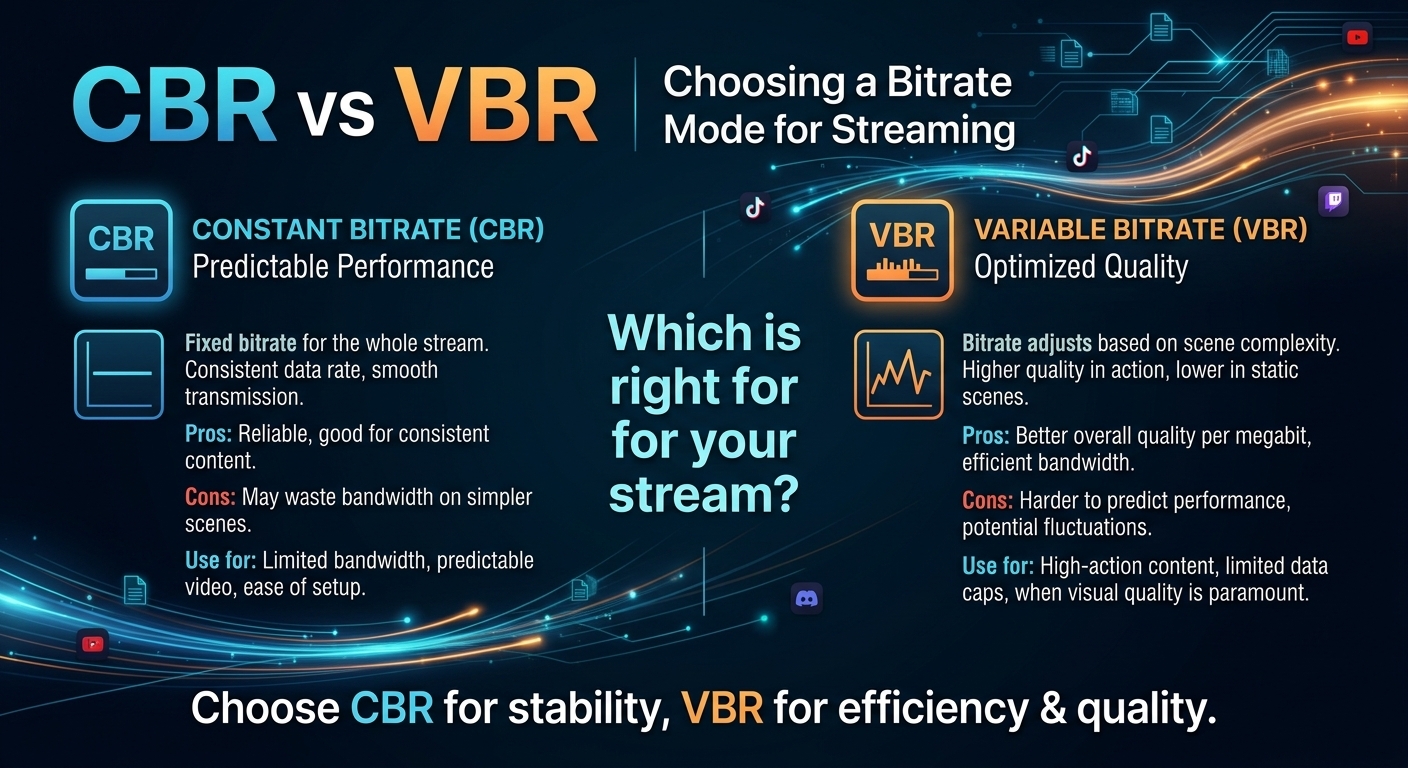
Learn
For most on-demand video, capped variable bitrate (VBR) wins the cbr vs vbr decision: it spends bits where the picture ...