Compare
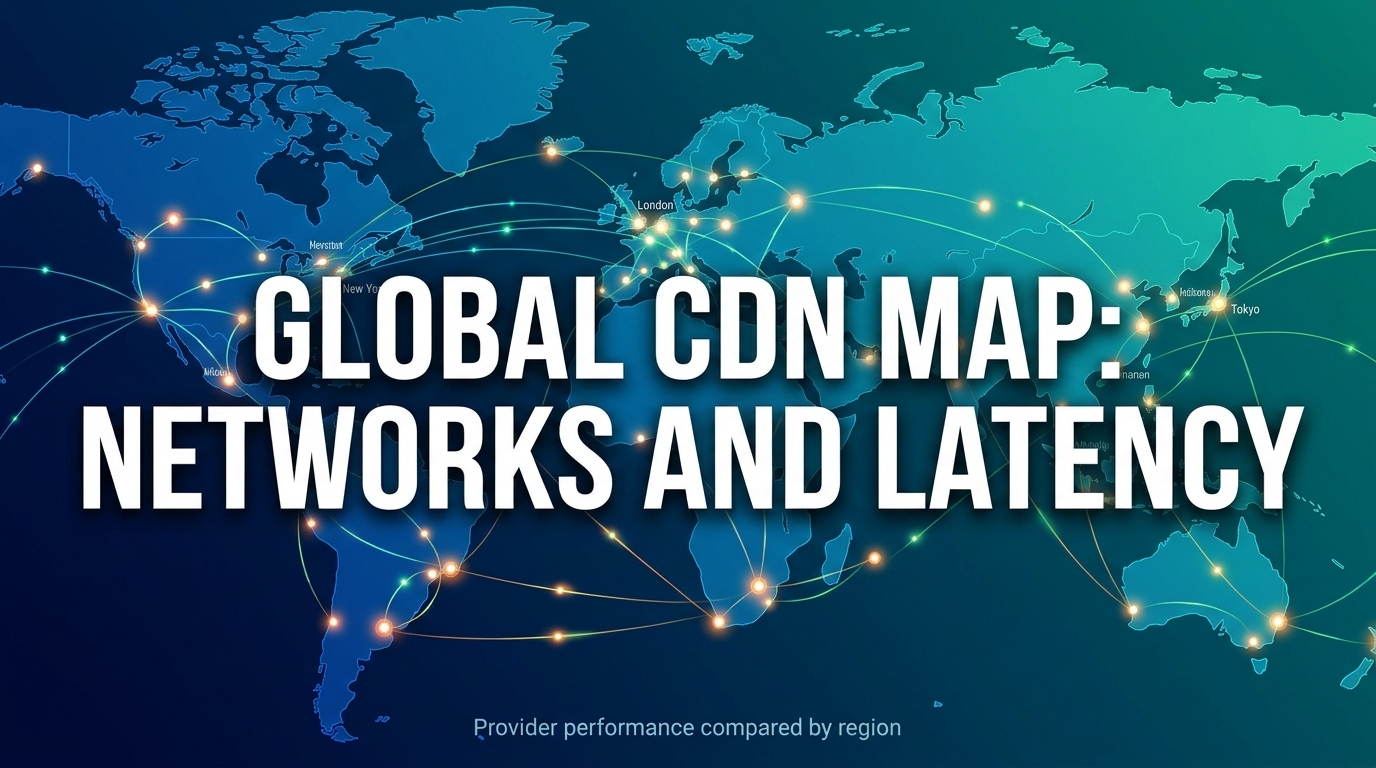
CDN Map: Provider Networks and Latency Compared by Region
A CDN map shows where a provider has placed servers, not how fast your users reach them. The gap between the two is ...
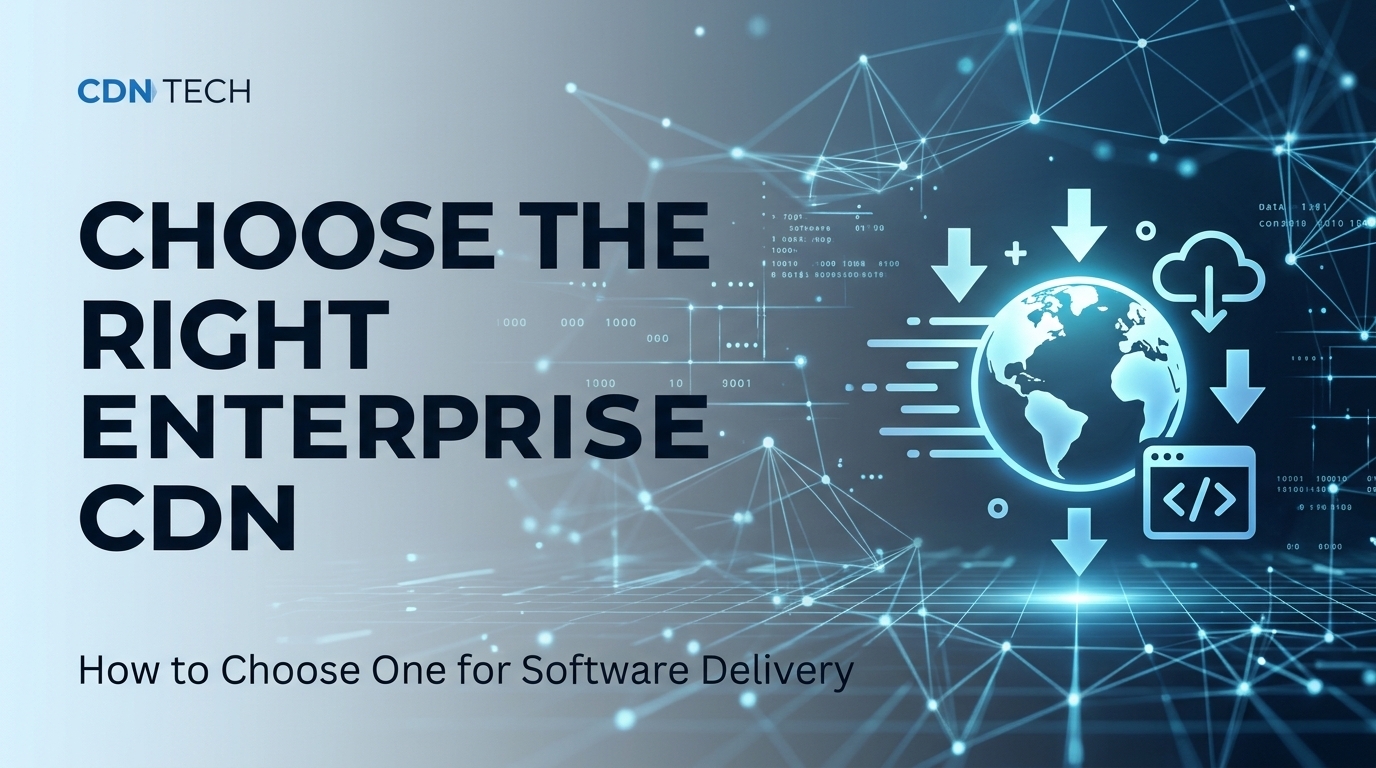
Choosing an enterprise CDN for software delivery comes down to four numbers that matter more than any feature list: cost per TB at your real monthly volume, the maximum object size, the cache hit ratio on release day, and the commitment the contract locks you into. On published price lists checked August 2026, 100 TB a month costs anywhere from $415 to $6,965 depending on the vendor and the billing model. That is a spread of nearly 17x for identical bytes. This guide was evaluated in October 2026 and gives you five tools: an evaluation checklist, an RFP criteria table, contract terms to redline, a release-day cost model and a best-fit matrix by workload.
For an enterprise content delivery network carrying 100 TB a month, published price lists checked August 2026 range from $500 (bunny.net Volume network) and $990 (CDN77) to $6,965 for Amazon CloudFront pay as you go, for transfer alone. At that scale, the billing model and the volume tier move the invoice more than any single feature does.
Software delivery is a different workload from web acceleration. A web page is many small objects with short Time to Live (TTL) values. A release is a few multi-gigabyte, immutable objects that every client requests within hours. The requirements below follow from that difference.
For a 4 GB installer, per-connection throughput matters more than time to first byte. At 1 Gb/s the download takes about 32 seconds. At 200 Mb/s it takes over 2.5 minutes, and abandonment rises with it. Reliability means three things here: Anycast or DNS failover between edge locations, resumable range requests, and an origin that survives the first hour after a release.
Installers and update packages are public or token-gated static files, so most protection happens at the URL layer. That covers signed URLs with short expiry, geo and IP allow lists, referrer rules and rate limiting. Full-site Distributed Denial of Service (DDoS) mitigation, Web Application Firewall (WAF) rules and bot management protect dynamic applications. Akamai and Cloudflare sell these as integrated suites, and many enterprises keep that suite in front of their application while a separate delivery layer carries the heavy files.
| Criterion | What to ask the vendor | Pass threshold |
|---|---|---|
| Effective cost per TB | Total invoice at your volume, with every fee included | One number; no per-request or per-region surprises |
| Billing model | Metered, flat plan or committed spend? What are the overage rates? | Overage at or below the committed rate |
| Large-object handling | Maximum cacheable object size and range request caching | 2x your largest artifact |
| Cache hit ratio | Measured on your traffic during a trial, not quoted | 95 percent or higher for versioned artifacts |
| Throughput | Single-connection speed on a 100 MB or larger file, per region | Around 1 Gb/s in your top two regions |
| Support | Who answers at 3 AM, and how fast? | An engineer, with a written response time |
| Switching cost | Minimum term, termination clause, onboarding time | Exit within one billing cycle |
Measured hit ratio and the effective cost per TB are the two criteria that a sales deck cannot answer for you.
| Vendor | Cost at 100 TB a month | Billing model | Strength / limitation |
|---|---|---|---|
| BlazingCDN | $415 | Metered progressive tiers, one global rate, no request fees | 50 GB objects / no HTTP/3, WAF or DDoS mitigation |
| bunny.net | $500 Volume, $1,000 Standard | Metered, network tier chosen per zone | Broad self-serve feature set / Volume network has a smaller footprint than Standard |
| CDN77 | $990 | Plan covering up to 250 TB | Strong video delivery focus / you pay for the full plan at partial use |
| Amazon CloudFront | $6,965 pay as you go, or from $1,000 on Premium flat rate | Regional metered rates plus request fees, or a flat plan | Deep AWS integration / pay-as-you-go transfer is the costliest row |
| Gcore | About EUR 2,000 at list | Plan plus overage | Integrated edge and security products / list price needs negotiation at this volume |
| KeyCDN | $2,600 (North America, Europe), $5,200 into Asia | Metered, regional pricing | Simple self-serve setup / Asia traffic costs double |
| Cloudflare Enterprise | Reported to start near $5,000 | Annual contract, quote-based | Broadest integrated security and edge compute / pricing not published |
| Akamai | Not published | Negotiated commit | Very large network and Prolexic DDoS mitigation / no price list to model against |
At 100 TB a month for static software artifacts, metered per-TB vendors cost a fraction of pay-as-you-go hyperscaler transfer or enterprise suites.
BlazingCDN publishes this blog, so verify this ranking on your own traffic; the 14-day testing period exists for exactly that purpose.
Platform breadth is a separate axis. BlazingCDN is a delivery layer, not a peer of Cloudflare or Akamai in security or edge compute, and the CDN comparison by provider and workload breaks those differences down vendor by vendor.
As of October 2026, BlazingCDN pricing runs from $5 per TB down to $2.50 per TB at volume, with one rate for the US, Europe and Asia and no request fees: 100 TB a month costs $415 and 500 TB costs $1,815. Current rates are listed on the BlazingCDN pricing page.
Three properties decide whether a CDN survives a release: how it handles cold large objects, how many times it hits your origin, and how fast a single client finishes the download. Versioned, immutable URLs (one path per build) let you set a long TTL and skip purges entirely. Delta patches cut transferred bytes, but they also multiply object count, so per-path hit ratio becomes the metric to watch.
Take a 4 GB update pulled by 50,000 installs within 72 hours. That is 200 TB of delivery. On published price lists checked August 2026, 200 TB costs $11,965 on Amazon CloudFront pay as you go for transfer alone, $3,500 on its Premium flat plan, and $765 on BlazingCDN as of October 2026 (current rates on its pricing page).
Origin load is the second half of the model. Assume, as an illustration, 40 edge caches that each miss independently: your origin serves 4 GB x 40 = 160 GB in the first minutes, and range-request fragmentation can multiply that further. With an origin shield and request coalescing, the origin serves roughly 4 GB once per shield. Warming the cache through the API before the announcement removes even that spike.
Throughput sets the user experience. BlazingCDN, measured June 2026 on a 100 MB HTTPS download, reached 1.12 Gb/s in Europe and 761 Mb/s in Asia. At those rates a 4 GB file finishes in about 29 seconds and 42 seconds respectively.
Download your largest artifact from three regions and record the cache status response header, time to first byte and sustained throughput. Then compare origin egress during the first hour after a release against the total bytes delivered; an offload below 95 percent points to cache-key or shield problems.
The right CDN solution depends on what dominates your traffic. High-volume static files favor metered per-TB delivery networks. Dynamic applications that need WAF and bot management favor integrated suites such as Cloudflare or Akamai. Below about 46 TB a month, flat plans from Amazon CloudFront and Cloudflare often cost less than any metered rate.
| Workload | Best fit | Why |
|---|---|---|
| Installers, updates, game builds above 100 TB a month | BlazingCDN, bunny.net Volume | Lowest cost per TB at volume; large-object support |
| Full-site SaaS delivery with WAF and bot management | Cloudflare Enterprise, Akamai | Integrated security suite in one contract |
| Programmable edge logic, HTTP/3 | Fastly, Cloudflare | Edge compute platforms |
| VOD and HLS at scale (media) | BlazingCDN Video CDN, CDN77 | Segment-heavy traffic priced per TB |
| Under 46 TB a month, AWS-native | Amazon CloudFront Business, Cloudflare Pro | Flat plans ($200 for 50 TB; $25 a month) beat metered pricing |
| Regulated data (healthcare, finance) | Any vendor that signs your data terms | Cache only public artifacts; keep regulated payloads uncached |
No single vendor wins every row, which is why many enterprises split static file delivery from application security.
The extremes confirm the pattern. Netflix built its own Open Connect CDN because video is its product. Large game platforms such as Steam combine their own content servers with commercial CDNs to absorb launch-day peaks.
Never migrate an enterprise CDN with a single DNS flip. Run the candidate as a second CDN behind weighted DNS: 5 percent of traffic for one release, then 25, then 50. At each step compare hit ratio, throughput and error rates. Rollback means setting the weight back to zero, so keep DNS TTLs at around 60 seconds during the test.
BlazingCDN supports this pattern directly. It runs behind DNS with a weighted split, onboarding takes about one hour with an engineer, and there is no long-term contract to unwind if the numbers disappoint.
CDN software is the edge caching, routing and control-plane stack that serves content from distributed servers. Most enterprises consume it as a managed service rather than running it themselves. Self-hosting only pays off at very large, predictable volume, as Netflix shows with Open Connect, because you also take on capacity planning, peering and on-call.
An enterprise content delivery network adds negotiated or volume pricing, configuration done together with engineers, written support response times and contract terms that procurement can review. The edge technology is often identical. Judge the difference by effective cost per TB, support access and exit terms rather than by the word enterprise on the plan name.
A software download migration typically takes two to six weeks. Technical onboarding can take hours, but a safe migration runs weighted DNS splits across at least two release cycles. Most of the elapsed time goes to validating hit ratio, throughput and origin offload, plus contract notice periods on the outgoing vendor.
On published price lists checked August 2026, 100 TB a month ranges from about $415 to $6,965 depending on vendor and billing model. As of October 2026, BlazingCDN charges $415 for 100 TB on progressive tiers with no request fees; see its pricing page for current rates. Always add request and regional fees before comparing.
Not always: a delivery-focused enterprise CDN protects files with signed URLs, tokens, geo lists and rate limiting, but it may not include a WAF or DDoS mitigation. Integrated suites such as Cloudflare and Akamai bundle both. Many teams keep their security suite on the application and route heavy static files through a separate delivery CDN.
This week, take your largest installer and your most recent update package and route 5 percent of downloads through a candidate CDN with a weighted DNS record. Over seven days, track four numbers per vendor: per-path hit ratio, single-connection throughput in your top three regions, origin egress per TB delivered, and the effective cost per TB with every fee included. That table is your RFP answer, and it holds regardless of which vendor wins.
If your traffic is installers, updates or game builds, BlazingCDN offers a 14-day testing period on real production traffic at $5 per TB with the monthly minimum waived, and the BlazingCDN Files on Demand page for large software downloads describes how to set up the test.

Heavy traffic.
Light bill.
The CDN for video and large traffic
Compare
A CDN map shows where a provider has placed servers, not how fast your users reach them. The gap between the two is ...
Learn
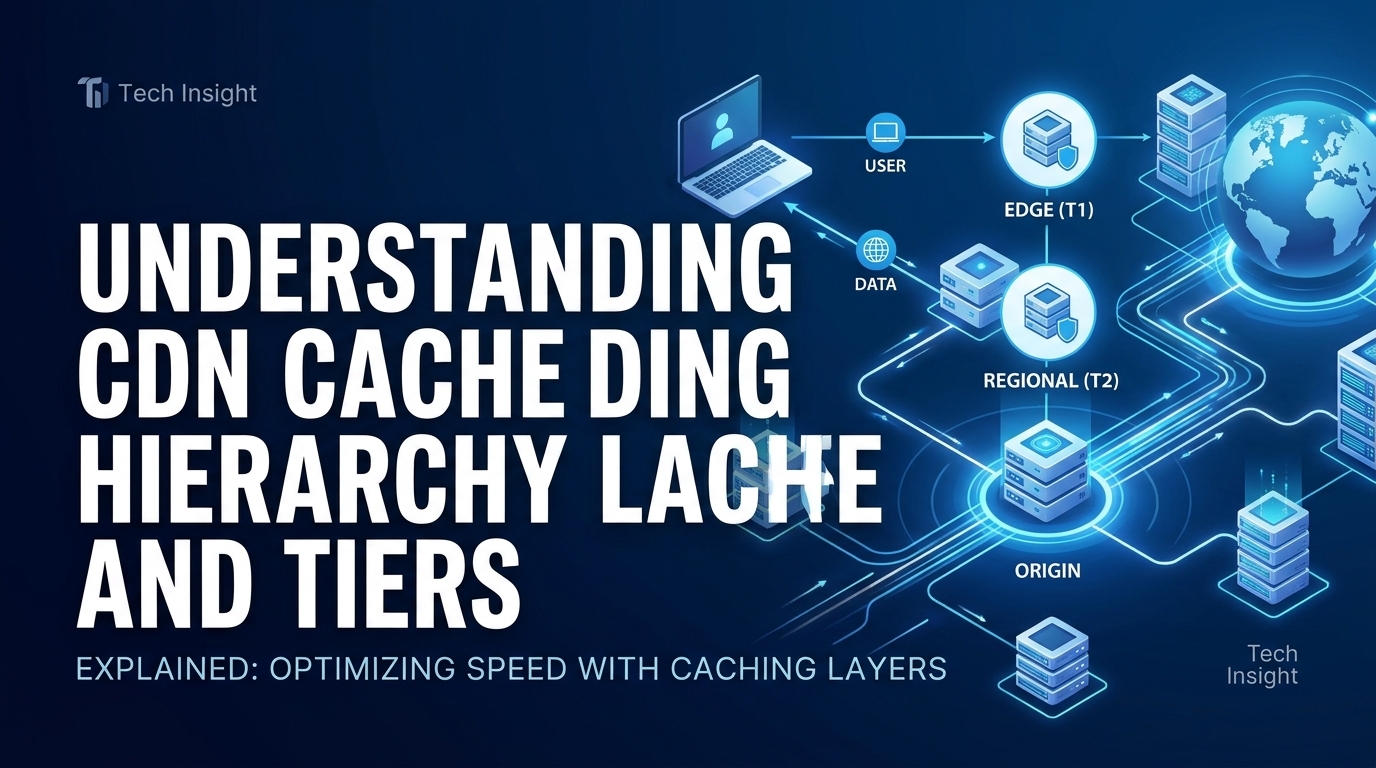
CDN caching stores copies of origin responses in a hierarchy of shared caches. Most requests are answered by an edge ...