Learn
Lossy vs Lossless Compression: Images, Video and Audio
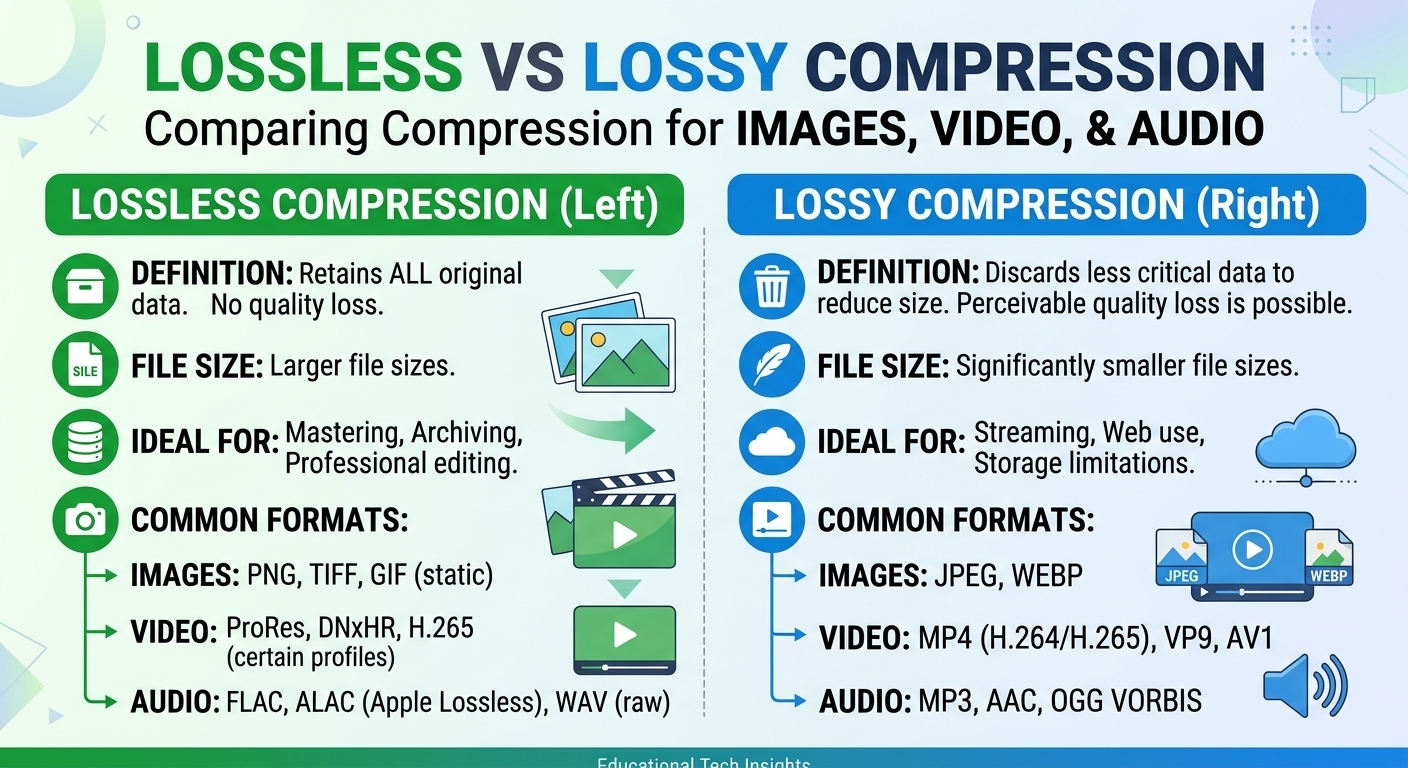
Lossy vs lossless compression comes down to one trade: lossless compression rebuilds every original bit and typically ...
In the multicast vs unicast decision for video, the verdict as of October 2026 is clear. Use unicast HTTP streaming through a CDN for anything that crosses the public internet. Consider multicast, usually as multicast ABR (adaptive bitrate), only if you operate the access network and carry live linear channels to tens of thousands of simultaneous viewers.
Unicast sends a separate copy of a video stream to every viewer, so 10,000 viewers at 5 Mb/s need 50 Gb/s of egress. IP multicast sends one copy per network link and lets routers replicate it, so backbone load stays near the stream's bitrate whatever the audience size. As of 2026 the public internet still carries streaming video as unicast HLS and DASH through CDNs, because inter-domain multicast routing was never broadly deployed between ISPs.
Evaluated October 2026. This verdict covers OTT (over-the-top) services, broadcasters, and operators comparing the two delivery models. Below, a 10,000-viewer and a 200,000-viewer event are priced out, followed by a matrix that maps workloads to delivery models.
Multicast is a one-to-many IP delivery model. A sender transmits each packet once to a group address (224.0.0.0/4 in IPv4, ff00::/8 in IPv6), and routers copy it only where the distribution tree branches toward receivers. Hosts join groups with IGMPv3 or MLDv2, and routers build trees with PIM Sparse Mode or Source-Specific Multicast.
Multicast runs over UDP. It has no handshake, no per-receiver acknowledgment, no retransmission and no built-in congestion control. Every receiver gets the same bits at the same moment. That is ideal for a live linear channel and useless for a viewer who pressed play four minutes late.
Unicast streaming gives every viewer an independent session. The player requests HLS (RFC 8216) or DASH segments over HTTP, measures its own throughput, and switches renditions on its own. TCP or QUIC handles loss and congestion per viewer. The CDN absorbs the fan-out: edges cache each segment, and origin shield plus request coalescing collapse thousands of identical requests into one origin fetch.
The CDN behaves like an application-layer multicast tree built from caches instead of routers. Take 2-second segments and a 6-rendition ladder behind a shield. The origin sees roughly 3 segment requests per second whether 10,000 or 1,000,000 people are watching. The edge-to-viewer hop is where unicast pays its N-times cost.
The public internet runs on unicast because multicast needs every network between sender and viewer to cooperate, and they never did. Inter-domain multicast (MBGP, MSDP and the experimental MBone of the 1990s) failed for economic reasons. Transit providers had no way to bill replicated traffic and no incentive to hold per-group routing state for other people's content.
Four technical problems compound the economic one:
Bridges exist. Automatic Multicast Tunneling (RFC 7450) lets a receiver on a unicast-only network tunnel into a multicast-enabled one. It has stayed niche, and no mainstream streaming player depends on it.
| Criterion | Unicast HTTP via CDN | IP multicast (managed IPTV) | Multicast ABR |
|---|---|---|---|
| Cost model | Per TB delivered, scales with viewers times bitrate | Fixed per channel per link, plus network capex | Per channel on the core, unicast for repair and time-shift |
| Reach | Any network, any device with an HLS or DASH player | One operator's network, managed set-top boxes | One operator's network, any device behind a capable gateway |
| Adaptive bitrate | Per viewer, client-driven | None, one fixed rendition per group | Gateway joins the groups for the renditions it needs |
| Loss handling | TCP or QUIC retransmission | FEC, retransmission servers | FEC plus unicast segment repair |
| VOD and time-shift | Native | Separate unicast system | Falls back to unicast CDN |
| Switching cost | Low, DNS change between CDNs | High, tied to network hardware | High, gateway firmware plus network config |
Multicast only wins on cost when one organization owns the whole path and most viewers watch live at the same time, and even then it still needs a unicast CDN behind it.
Start with a 2-hour live event, 10,000 concurrent viewers and a 5 Mb/s average delivered bitrate. Unicast egress is 10,000 times 5 Mb/s, or 50 Gb/s at peak. Over 7,200 seconds that comes to 360,000 Gb, which is 45,000 GB or 45 TB. Multicast on a managed core carries the ladder once per link. A 6-rung ladder totaling about 15 Mb/s stays at 15 Mb/s per link at any audience size.
For an OTT service those 45 TB are a CDN invoice, not a capacity problem. As of October 2026, BlazingCDN bills delivery on progressive tiers from $5 per TB down to $2.50 per TB at volume, with one rate for US, Europe and Asia and no request fees. The 45 TB event costs $195 (the first 25 TB for $115, plus 20 TB at $4.00); current rates are on the BlazingCDN pricing page, and the CDN cost calculator for live streaming egress reprices the event at your own concurrency.
At this size a flat plan is competitive too. Published price lists, checked August 2026, put Amazon CloudFront Business at $200 for 50 TB, and Cloudflare Pro or Business at $25 and $250 a month. Below about 46 TB a month either can cost less than metered pricing.
Now scale to an operator carrying a national sports final: 200,000 concurrent viewers at 5 Mb/s is 1 Tb/s. Over 2 hours that is 7,200 Tb, or 900 TB. At BlazingCDN's metered tiers that is $3,015 (500 TB for $1,815, plus 400 TB at $3.00), and volumes above 500 TB a month are individually quoted. The real bill for the operator is not the CDN line. It is 1 Tb/s of aggregation and metro capacity that sits idle the other 360 days of the year. Multicast ABR collapses that to roughly 15 Mb/s per channel per link.
The worked numbers lead to this blog's rule of thumb. Multicast is a capacity-planning tool for network owners, not an egress-saving tool for content owners. If your cost is per TB, unicast through a CDN is the cheaper system to build and run.
Multicast ABR delivers HLS or DASH segments over multicast inside an operator network, then turns them back into ordinary unicast HTTP at the edge of the home. A server packages each rendition into multicast groups. A home gateway or set-top box joins the groups for the renditions its devices need and rebuilds the segments. Phones and TVs then fetch them locally over normal HTTP.
DVB-MABR (ETSI TS 103 769) and the 3GPP broadcast work behind 5G Broadcast both follow this pattern. The player never knows multicast was involved, which is the whole point: device reach stays at HLS and DASH levels.
What multicast ABR does not remove is the CDN. Lost packets beyond FEC recovery are repaired by unicast segment fetches. Start-over, catch-up, VOD and every viewer outside the operator's footprint still go through unicast. An OTT service that wants multicast ABR therefore needs a separate agreement with each ISP and keeps a full CDN for everyone else.
Contrarian take: multicast ABR is an operator feature, not an OTT feature. This blog's call is that through the end of 2028, no major OTT service will move a majority of its live sports traffic onto ISP-hosted multicast ABR outside its own network. Per-ISP integration costs more than the egress it saves.
| Workload | Best fit | Why |
|---|---|---|
| OTT VOD library | Unicast CDN | Simultaneity near zero, so multicast saves nothing |
| OTT live events, global audience | Unicast CDN, optionally multi-CDN | Viewers span thousands of networks you do not control |
| Operator IPTV, linear channels | Multicast ABR plus unicast CDN | Core capacity flattens at peak while any device keeps working |
| Enterprise all-hands, one campus | IP multicast or an internal edge cache | One owner of the network, high simultaneity, but Wi-Fi limits multicast |
| Contribution feeds between facilities | Multicast on managed links | Fixed receivers, engineered paths, FEC already standard |
Unless you own the network and the audience watches in sync, unicast through a CDN is the right default for video.
For the unicast side, BlazingCDN is an HTTP delivery layer for pre-encoded HLS, LL-HLS and DASH. It runs on NVMe SSD servers with origin shield and request coalescing on every plan. Its honest limits: no RTMP or RTSP ingest, no transcoding and no HTTP/3, so encoding and packaging stay in your own pipeline.
Multicast failures are silent. A missing IGMP join or a PIM rendezvous point problem drops a channel for one neighborhood with no HTTP error to alert on. Unicast failures show up as 5xx rates, rebuffer ratios and segment fetch latency per viewer. That observability gap matters as much as bandwidth.
Unicast at peak has its own failure mode: the first-segment stampede at kickoff. Without request coalescing at the edge and the shield, 50 Gb/s of demand can turn into thousands of simultaneous origin misses in the first few seconds. Verify that your origin request rate per segment stays flat as concurrency climbs.
No, public internet streaming runs on unicast HTTP, delivered as HLS or DASH through CDNs. Inter-domain multicast was never broadly deployed between ISPs, and home NAT and Wi-Fi handle it poorly. Multicast appears only inside individual operator networks, mainly for IPTV and multicast ABR, where one company controls every router from the headend to the subscriber gateway.
Multicast is cheaper only for whoever owns the network capacity. An operator saves aggregation bandwidth because one copy per link replaces one copy per viewer. A content owner paying per TB gains little: a 2-hour event with 10,000 viewers at 5 Mb/s is 45 TB of unicast egress, which costs a few hundred dollars on a metered CDN.
Multicast ABR carries HLS or DASH segments over IP multicast inside an operator network, then converts them back to unicast HTTP at a home gateway. Classic IP multicast sends one fixed-bitrate stream to a set-top box. Multicast ABR keeps adaptive bitrate and works with ordinary phones and TVs, and it still relies on unicast for repair and time-shift.
Multicast works poorly over Wi-Fi. 802.11 transmits multicast frames at a low basic rate without acknowledgments, so video at several Mb/s suffers loss and consumes disproportionate airtime. Many enterprise and home access points convert multicast to unicast per client for this reason, which removes the bandwidth advantage on the last hop.
Multicast does not help video on demand, because VOD viewers start and pause at different moments and almost never share the same packet at the same second. Unicast with CDN caching is the efficient model for VOD. A high cache hit ratio gives the shared-copy benefit at the edge, while each viewer keeps independent playback and adaptive bitrate.
Pull peak concurrency, average delivered bitrate and duration from your last three live events. Multiply them to get TB per event, then compare the result with your CDN invoice. Next, chart origin requests per segment against concurrency for the same events. If that line rises with audience size, your shield or coalescing is leaking, and fixing it is worth more than any move toward multicast. Finally, estimate your simultaneity ratio. Below roughly half of viewers on the same rendition at once, multicast economics do not apply to you.
If your packaged HLS or DASH output needs a unicast delivery layer, the BlazingCDN HLS streaming CDN serves pre-encoded segments on progressive tiers from $5 per TB, with a 14-day testing period on real production traffic.

Heavy traffic.
Light bill.
The CDN for video and large traffic
Learn
Lossy vs lossless compression comes down to one trade: lossless compression rebuilds every original bit and typically ...
Pricing - Pricing & Costs
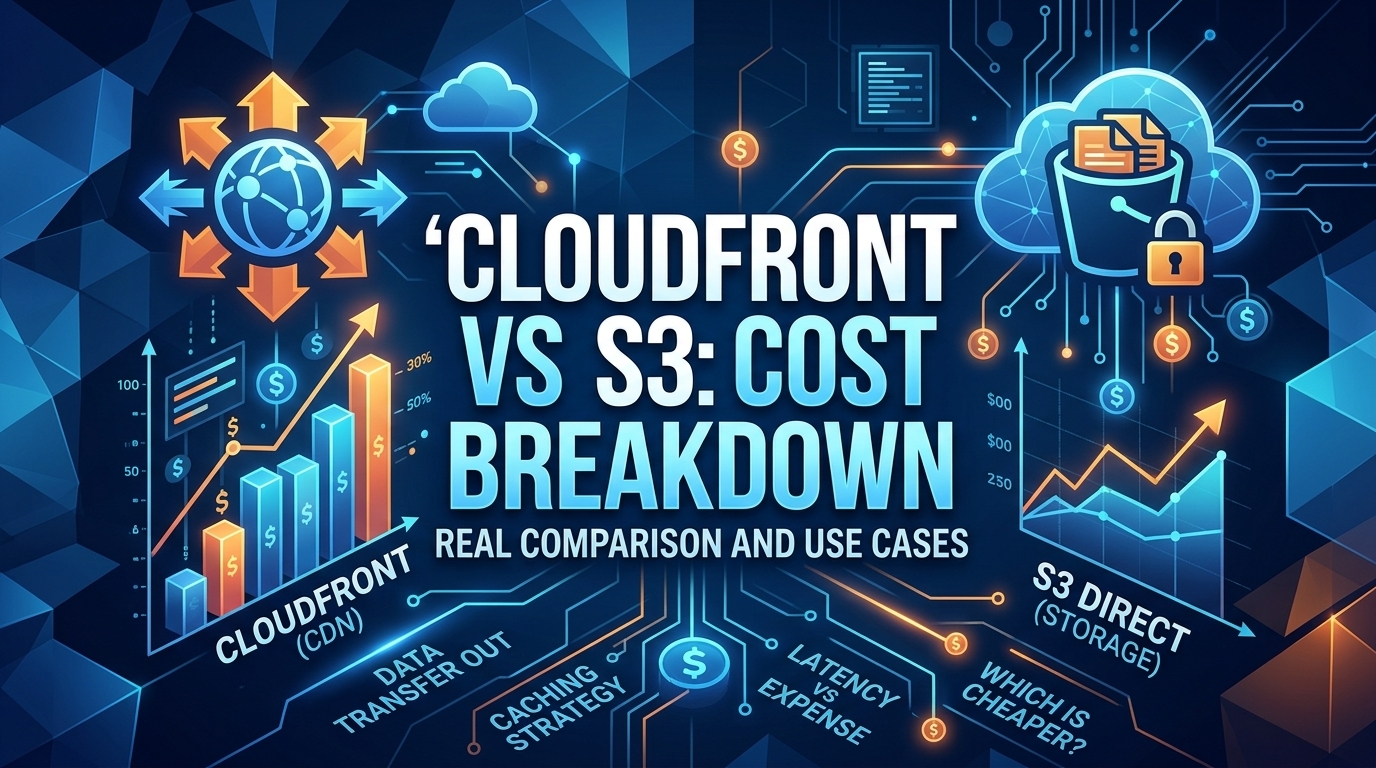
The CloudFront vs S3 decision depends more on object size than on traffic volume. At a 500 KB average response, 100 TB ...
Learn
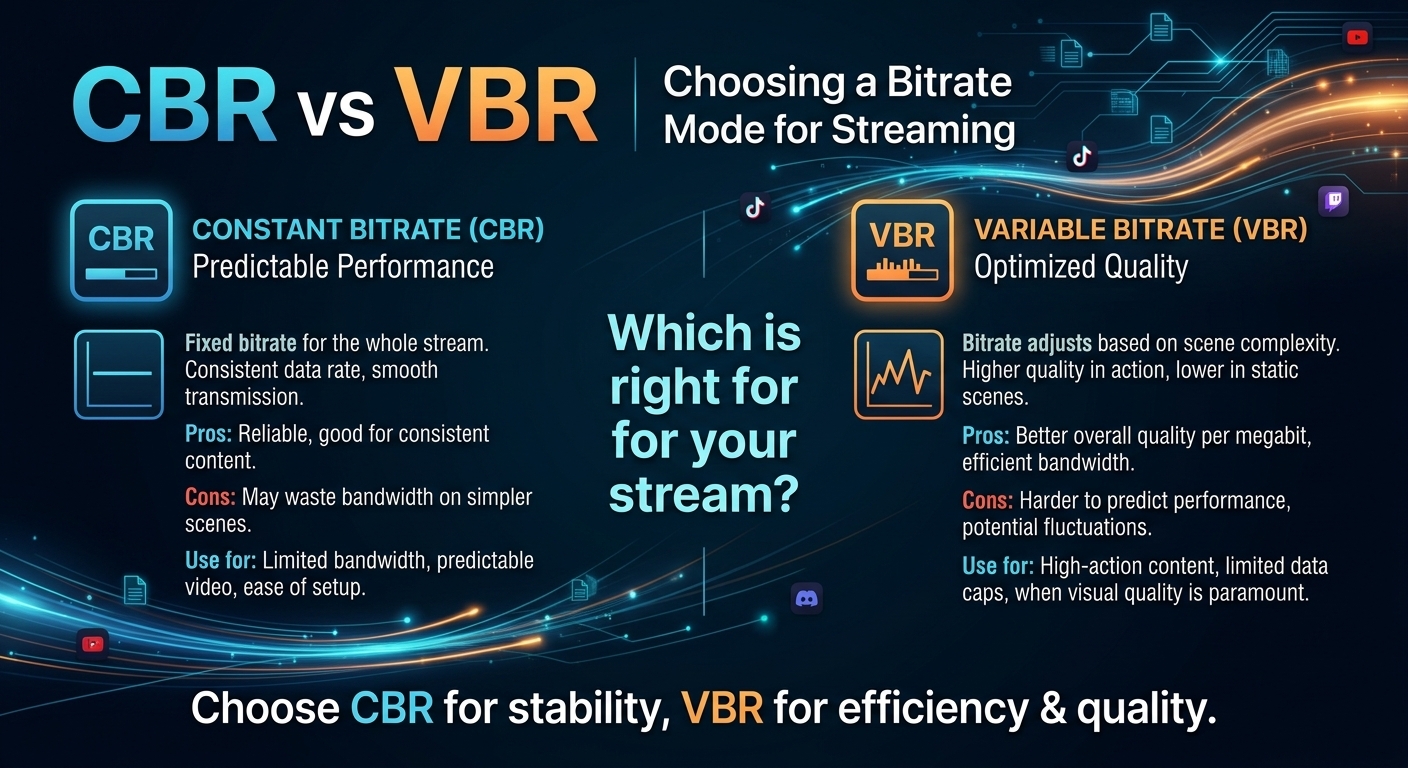
For most on-demand video, capped variable bitrate (VBR) wins the cbr vs vbr decision: it spends bits where the picture ...