
Learn
Lossy vs Lossless Compression: Images, Video and Audio
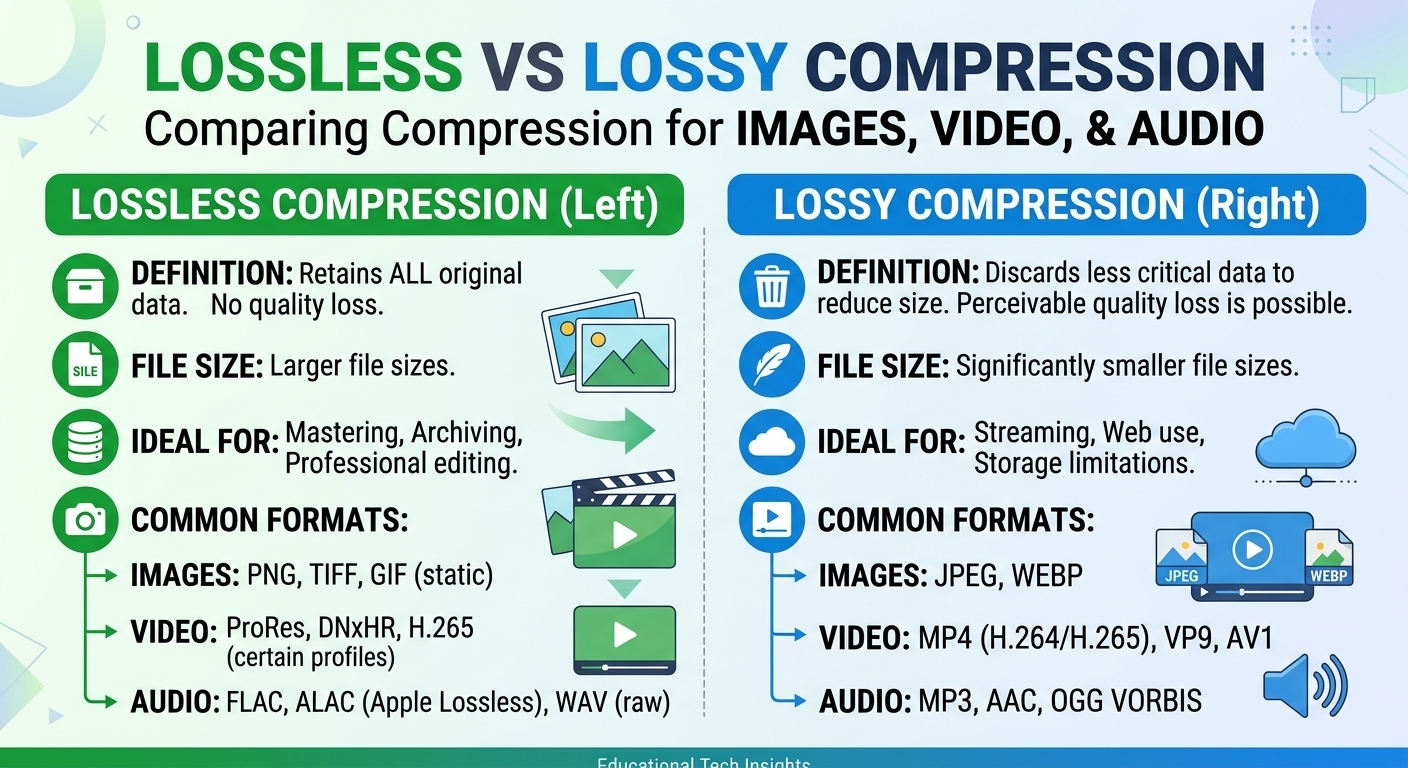
Lossy vs lossless compression comes down to one trade: lossless compression rebuilds every original bit and typically ...

When a user in India clicks play on a live sports stream hosted in the US, the first 2–3 seconds determine everything: stay and watch, or close and never return. According to a study by Akamai and Digital TV Research, every additional second of video startup delay can increase abandonment rates by up to 30%. For global audiences, video buffering is not just a nuisance — it’s a direct hit to revenue, brand trust, and viewer loyalty.
This article walks through, in practical detail, how to reduce video buffering for global audiences using a CDN. You’ll see the exact technical levers that matter, how major streaming platforms tackle the problem, and how to translate that into an architecture that works for your own OTT, e-learning, gaming, or SaaS video experiences.
Before you optimize, you need to understand precisely where buffering comes from. Most teams blame “slow internet” or “the player,” but in reality, buffering is a compound effect of multiple layers: encoding, network, CDN strategy, and player logic.
In a 2023 report from Conviva, global buffering ratios averaged around 0.88%, but the difference between the top and bottom quartile of publishers was dramatic: leaders saw less than 0.4% buffering, laggards above 2%. That gap is almost entirely driven by delivery architecture, not just end-user connectivity.
Think about your own stack for a moment: where are the weak links — encoding ladder, storage, routing, or CDN configuration? Keep that mental map in mind; we’ll plug optimization steps directly into those pressure points.
At its core, a CDN reduces the physical and network distance between your video segments and your audience. But the real buffering improvements come from how your CDN is configured and how it works together with your player and origin.
Latency is the hidden enemy of streaming. Even if a connection can theoretically deliver 10 Mbps, high round-trip times (RTT) mean the first bytes of each segment arrive too late to keep the buffer safe. For HTTP-based video (HLS/DASH), every segment request incurs latency, and when multiplied by thousands of concurrent viewers, the impact is huge.
A properly tuned CDN mitigates this by:
The result: lower Time to First Byte (TTFB), which correlates directly with lower startup delay and less risk of buffer underruns during playback.
During big launches, sports finals, or viral content spikes, origin servers become the silent failure point. When the origin can’t keep up, every viewer experiences longer TTFB, more rebuffering, and higher abandonment.
CDNs reduce buffering by:
This is a major reason large streaming platforms like Netflix built their own delivery platforms (Open Connect) rather than pushing everything from centralized origins; they understood that origin load is a buffer killer. You don’t need Netflix-scale engineering, but you do need a CDN strategy that keeps your origin almost bored, even during peak demand.
As you think about your next streaming milestone — a product launch, a live event, or a global course release — are you confident your origin wouldn’t become the single point of failure?
Reducing buffering is not a one-setting fix. It’s a systematic alignment of encoding, storage, CDN, and player strategies. This section gives you a practical blueprint from ingest to playback.
Adaptive Bitrate (ABR) streaming is your first line of defense against bandwidth variability. However, a poorly designed ABR ladder often causes buffering: if your lowest bitrate is too high, or your rendition spacing is too aggressive, the player has nowhere safe to fall back.
Industry practice (inspired by Apple’s HLS recommendations and real-world deployments by platforms like YouTube) suggests:
For global audiences — especially where 3G and congested 4G are still common — it’s better to offer an “ugly but smooth” low-bitrate fallback than let viewers stare at buffering. Research from Ericsson ConsumerLab has repeatedly shown that users tolerate lower visual quality better than interruptions.
When you review your ABR ladder, ask: is there a profile that will play reliably on the slowest realistic connection in my key regions?
Segment length (e.g., 2s, 4s, 6s) affects both latency and buffering risk:
Most modern streaming stacks targeting global audiences settle between 3–6 seconds per segment. For live sports or betting, 2–4 seconds is common, with low-latency extensions like LL-HLS or CMAF chunks becoming standard.
Coordinate segment duration with your CDN team. If you’re pushing aggressive low-latency settings, your CDN configuration (cache policies, keep-alives, HTTP/2/3) must be tuned to handle the higher request rate without adding jitter that leads to rebuffering.
Even the best CDN will struggle if the path from origin to edge is inconsistent. Key tactics include:
When your CDN fetches a segment from origin and gets it quickly, the probability of cache hits on subsequent requests skyrockets—and every cache hit is one less potential buffering event for a user.
Look at your last big traffic peak: did origin response times stay flat, or did they spike with audience size? That’s a leading indicator of your buffering risk.
Many organizations “turn on” a CDN and stop there. But to truly reduce buffering globally, you need to tune configuration for video workloads specifically.
Correct caching is non-negotiable for video. Typical best practices include:
Misconfigured TTLs or inconsistent query usage can lead to low cache hit ratios, which pushes more requests to origin, increasing latency and variability in delivery — both enemies of smooth playback.
Modern CDNs can significantly reduce buffering by leveraging protocol and routing optimizations:
In a 2020 Google study on QUIC and HTTP/3, the company reported up to 9% fewer rebuffers for video traffic in certain conditions compared to HTTP/2 over TCP. Those kinds of incremental improvements add up at global scale.
Ask your CDN provider: which protocol optimizations are actually active for my traffic, and what metrics prove their impact on buffering and TTFB?
For premieres, major live events, or time-sensitive marketing pushes, you already know which content will be hot. Don’t wait for first users to “cold-fetch” segments from the origin.
With a video-aware CDN setup, you can:
That way, your first million viewers get the same instantaneous response as your millionth, dramatically reducing initial buffering risk during the critical minutes of a release.
Different industries use video in different ways — but they all suffer when buffering creeps in. Here are three real-world patterns, drawn from how large players operate, that you can adapt.
Global OTT platforms like Netflix, Disney+, and regional services in Europe, Asia, and Latin America invest heavily in delivery strategies because a small improvement in buffering translates into significant business impact. Data from a study by the University of Massachusetts Amherst and Akamai showed that a 1% increase in buffering ratio could reduce user viewing time by 3 minutes per session on average.
Common techniques used by successful OTT platforms include:
BlazingCDN fits particularly well into this model for media companies that want a CDN built for high-volume delivery without absorbing hyperscaler-level pricing. With a starting cost of $5 per TB (as of October 2026), it enables OTT platforms to maintain high QoE while keeping delivery costs predictable, even as viewership scales up in new regions.
For eLearning, buffering has a different emotional impact: instead of frustration during entertainment, it becomes a barrier to progress. Universities and MOOC platforms that expanded globally during the pandemic learned quickly that students in bandwidth-constrained regions often dropped or delayed courses because lectures wouldn’t play smoothly.
Effective strategies here include:
For these platforms, a CDN that combines cost-efficiency with strong consistency is crucial. BlazingCDN has emerged as a forward-thinking choice for education technology providers that value both reliability and efficiency, helping them reduce infrastructure spend while still meeting strict QoE expectations for live classes and VOD lectures.
Cloud gaming and interactive video apps (e.g., real-time tutorials, betting overlays on live sports) are even less tolerant of buffering. A short stall during a critical game moment isn’t just annoying — it ruins the experience and often leads to immediate churn.
Here, CDNs are used to:
For gaming and highly interactive services, a modern, configurable CDN such as BlazingCDN can be tuned to favor low-latency delivery paths, keep per-TB costs predictable during tournaments or launches — a critical factor when delivering high-bitrate streams at scale.
Which of these patterns is closest to your use case — premium OTT, educational VOD, or highly interactive real-time video — and how well does your current CDN configuration support it?
You can’t reduce what you don’t measure. To systematically attack buffering, define a metrics framework and align it with both your CDN and player analytics.
At minimum, track:
Studies from platforms like YouTube and major broadcasters consistently show that reductions in startup delay and rebuffering correlate with longer viewing sessions and higher customer satisfaction.
On the CDN side, correlate QoE metrics with network behavior:
These metrics help identify whether buffering is caused by last-mile issues, CDN misconfiguration, or origin performance bottlenecks.
| Layer | Metric | Typical Target |
|---|---|---|
| Player | Startup Time | < 3 seconds for VOD, < 5 seconds for live |
| Player | Rebuffering Ratio | < 1% of total playtime |
| CDN | Cache Hit Ratio | > 90% for VOD segments |
| CDN | TTFB (Edge) | < 200 ms for key regions |
When was the last time you looked at your rebuffering ratio side-by-side with CDN cache hit rate and origin latency? That triangulation often reveals the fastest wins.
Even without re-architecting your entire workflow, there are pragmatic actions you can take in weeks, not months, to cut buffering rates.
Many streaming stacks inadvertently create distinct cache entries for identical video segments due to superfluous query parameters (tracking IDs, session tokens, etc.). This leads to cache fragmentation and lower hit ratios.
Actions:
Result: higher CHR, lower origin load, more consistent TTFB, and fewer stalls for viewers.
A common misconfiguration is using overly short TTLs for both manifests and segments, often due to caution about “stale” content. For VOD in particular, this is unnecessary.
Actions:
This balance preserves responsiveness where it matters (manifest updates) while keeping the heavy segment traffic off the origin and on the CDN edge.
Check that HTTP/2 is fully enabled and tuned — and where available, test HTTP/3 for your video endpoints. Measure before/after TTFB and stall rates in representative regions.
Actions:
Even single-digit percentage gains compound across millions of sessions, especially during peak events.
In some markets, certain ISPs or regions may show systematically higher buffering. Collaborative tuning with your CDN — including routing adjustments or peering improvements — can significantly improve stability for those segments of your audience.
Actions:
When you think about your current buffering hotspots, which of these four steps could you implement immediately, and which require deeper architectural change?
Optimizing configuration only goes so far if the underlying CDN platform can’t deliver consistent performance as you grow. For global video workloads, you need a provider that combines reliability, performance tuning options, and economic sustainability.
Amazon CloudFront is often the default choice for teams already on AWS, largely due to its close integration and reputation for stability. But many high-volume video businesses eventually discover that CloudFront’s cost structure becomes a major line item, especially when they expand to bandwidth-heavy regions.
This is where alternatives like BlazingCDN become strategically attractive. BlazingCDN is cost-optimized for enterprises pushing large volumes of video. With Anycast routing, built-in failover and a starting cost of $5 per TB (as of October 2026), it lets organizations scale global delivery without compromising on economics.
For media, entertainment, and streaming-first companies, an ideal CDN must offer:
BlazingCDN is built with these use cases in mind, giving engineering teams fine-grained control without overwhelming complexity. Many organizations that depend on uninterrupted video delivery — from large broadcasters to fast-growing platforms — already trust it as a forward-thinking alternative to traditional hyperscaler CDNs, reducing their infrastructure overhead while keeping QoE stable across continents.
If you’re evaluating options specifically for media workloads, the overview at BlazingCDN’s media-focused CDN solutions is a useful reference point when planning your next architecture iteration.
To turn all of this into an actionable roadmap, use the following checklist as a working document with your team.
Once you’ve worked through this list, you’ll have both quick wins (like better TTLs and cache keys) and deeper, strategic projects (like ABR ladder redesign or CDN provider evaluation) mapped out clearly.
Every second of buffering is a silent business loss — fewer completed videos, lower watch time, missed conversions, and frustrated users who are less likely to return. The good news is that most buffering problems are solvable with the right combination of encoding strategy, smart CDN configuration, and careful attention to metrics.
If you’re serious about delivering video experiences that feel instant and reliable from New York to Nairobi and from São Paulo to Singapore, now is the time to examine whether your current delivery stack is helping you — or quietly holding you back. Start by reviewing your ABR ladder, cache rules, and QoE metrics, then evaluate whether your existing CDN is giving you CloudFront-grade reliability at a cost that still makes sense as you scale.
BlazingCDN is built precisely for teams in your position: enterprises and high-growth platforms that rely on video and want fault-tolerant, globally consistent delivery without hyperscaler-level pricing. With Anycast routing, flexible configuration, and pricing from $5 per TB (as of October 2026), it suits companies that value both reliability and efficiency. If you’re ready to cut buffering for your global audiences and bring your delivery costs under control, explore the platform and talk directly with BlazingCDN’s CDN specialists about your streaming architecture — and then share your results, insights, or questions with peers so others can learn from your journey.

Heavy traffic.
Light bill.
The CDN for video and large traffic
Learn
Lossy vs lossless compression comes down to one trade: lossless compression rebuilds every original bit and typically ...
Pricing - Pricing & Costs
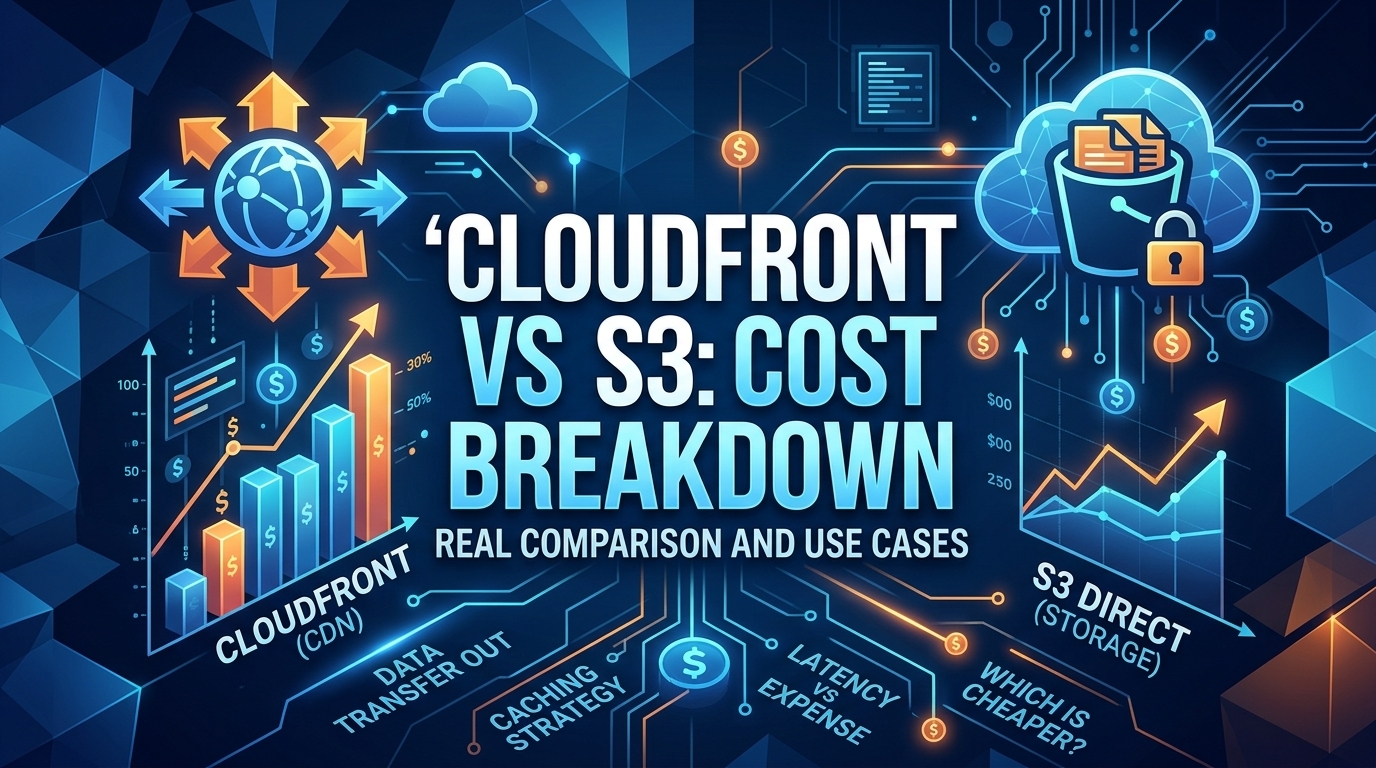
The CloudFront vs S3 decision depends more on object size than on traffic volume. At a 500 KB average response, 100 TB ...
Learn
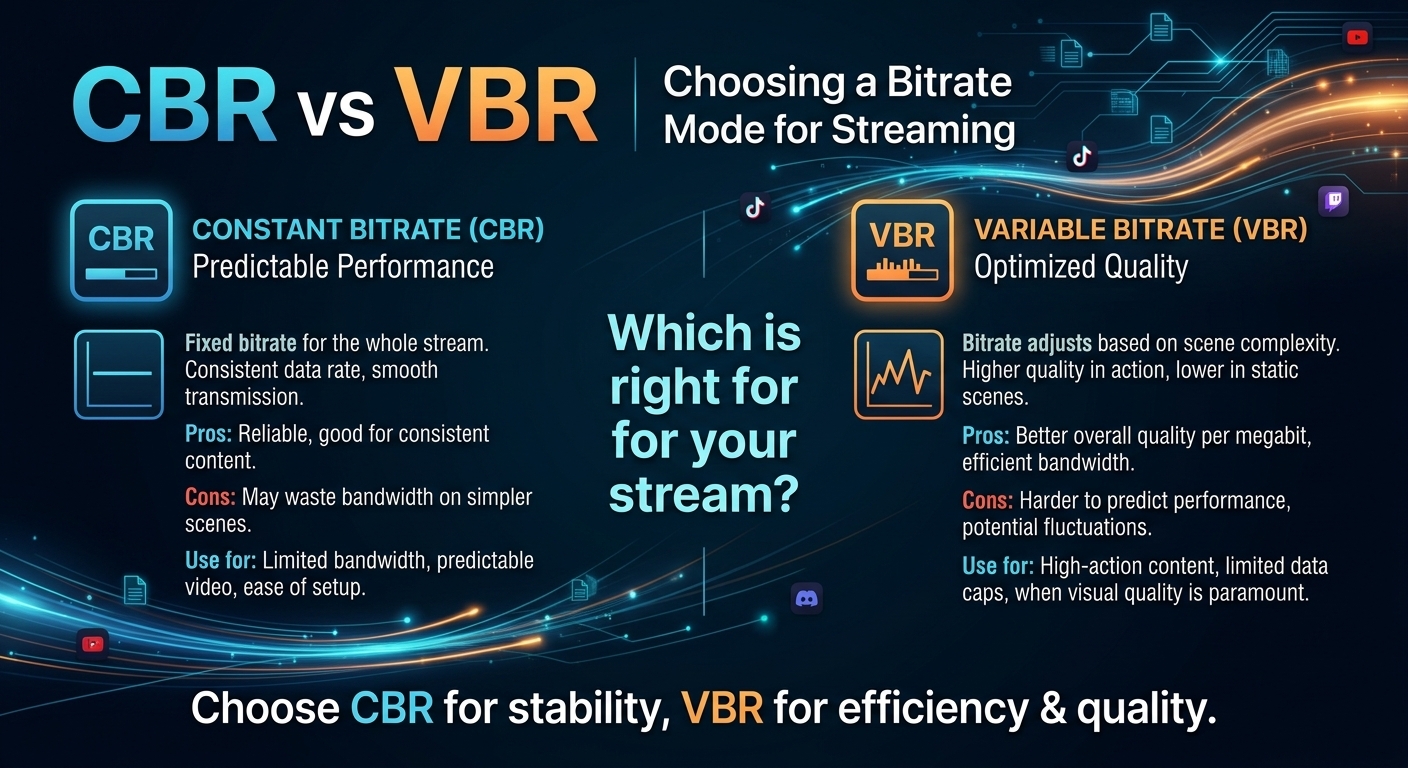
For most on-demand video, capped variable bitrate (VBR) wins the cbr vs vbr decision: it spends bits where the picture ...