
Learn
Lossy vs Lossless Compression: Images, Video and Audio
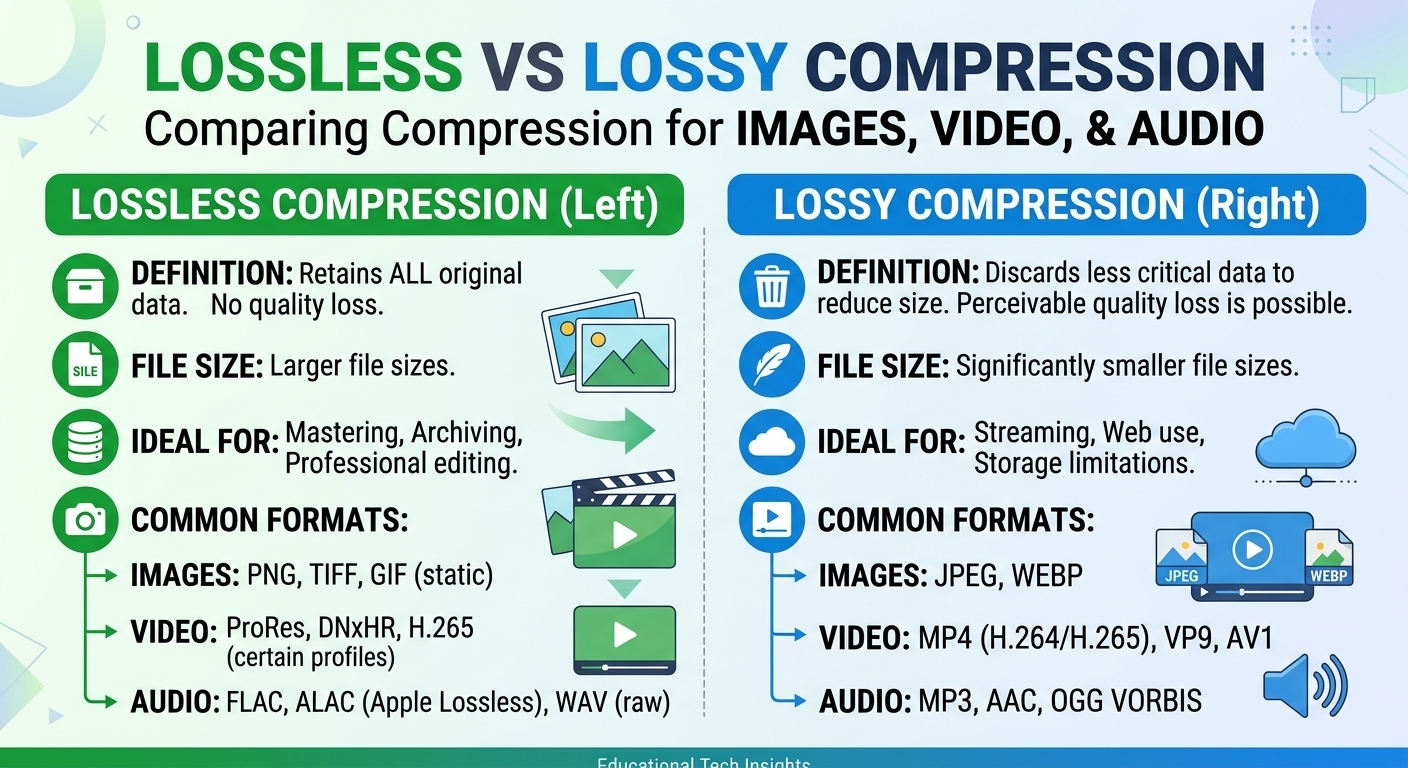
Lossy vs lossless compression comes down to one trade: lossless compression rebuilds every original bit and typically ...
In February 2026, a 22-second clip from a regional football match hit 140 million views in under four hours. The origin received zero requests after the first 90 seconds. Every byte was served from edge. That is the difference between a video streaming CDN architecture tuned for virality and one that folds under pressure. This article gives you the architectural patterns, failure-mode analysis, and cost-model framework to survive — and capitalize on — sudden traffic surges in 2026. Not theory. Production-grade decisions you can act on this quarter.
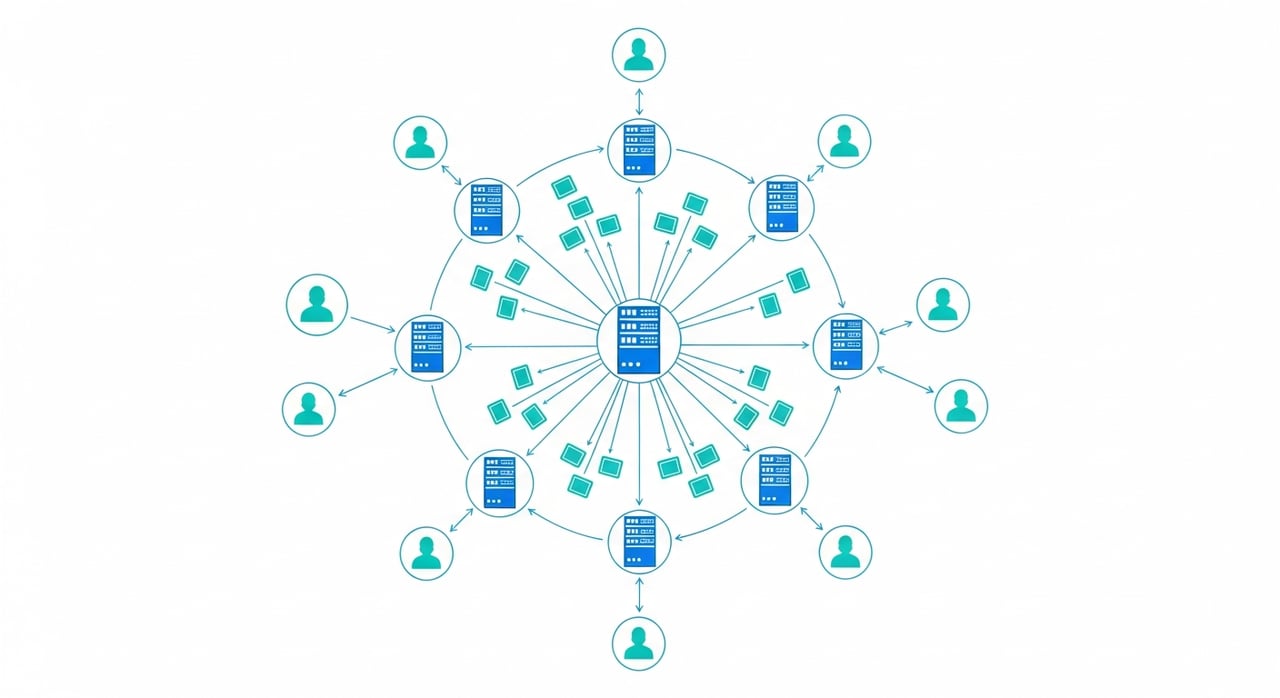
Three shifts in 2026 have redrawn how CDN for video streaming operates under spike conditions.
First, AV1 adoption crossed the 60% threshold on mobile browsers as of Q1 2026. That means edge transcoders are no longer a nice-to-have; they determine whether your adaptive bitrate ladder actually covers the audience. A CDN that cannot serve AV1 segments from cache is forcing fallback to HEVC or H.264, bloating per-viewer bandwidth by 25–40%.
Second, QUIC-based delivery (HTTP/3) now accounts for roughly 48% of video streaming sessions measured globally in early 2026, up from 31% a year ago. The implication: your video delivery CDN must handle 0-RTT resumption gracefully under connection storms. Connection-level load shedding that worked with TCP does not translate directly to QUIC's UDP model, and misconfigured QUIC admission control has been behind several high-profile stream failures this year.
Third, live commerce and short-form platforms have compressed the viral ramp curve. In 2024, a viral event typically took 15–30 minutes to saturate CDN capacity. As of 2026, the median ramp to peak is under 8 minutes. Any architecture that depends on reactive scaling — spinning up edge capacity after load arrives — will miss the window.
Origin shields consolidate cache misses into a single upstream request. Under normal load, this is efficient. During a viral event, the shield itself becomes a chokepoint. If your shield tier runs at 80% memory utilization during steady-state, a sudden cache key explosion (thousands of bitrate/resolution/codec combinations for a single asset) can trigger eviction storms. The shield starts passing through to origin, origin falls over, and the entire cache hierarchy collapses backward.
The fix is pre-warming. For live events, push manifests and initial segments into shield and edge caches before go-live. For unpredictable virality, configure tiered TTLs so that popular segments get extended retention automatically — not via manual intervention.
HLS and DASH manifests are small but requested frequently. A live stream with 500,000 concurrent viewers and a 2-second manifest refresh generates 250,000 manifest requests per second. If the manifest TTL is too short or the CDN does not support request coalescing (sometimes called "request collapsing" or "origin coalescing"), every cache miss fans out to origin. This is the single most common failure mode in live streaming CDN architectures during 2026 viral events.
Many CDN architectures use a two-tier or three-tier cache topology. Under normal conditions, the mid-tier absorbs cache misses from multiple edge locations. During a spike, mid-tier bandwidth becomes the constraint before edge bandwidth does. If your CDN provider does not expose mid-tier utilization metrics, you are flying blind during the exact moment visibility matters most.
Instead of every edge node independently caching every variant, consistent hashing assigns specific segment ranges to specific nodes within a cluster. This reduces redundant origin fetches by 60–80% during a spike. The tradeoff: a node failure within the cluster causes a localized cache miss burst. The mitigation is bounded rehashing — limit the key reassignment to one or two peers, not the entire ring.
For live streaming, the CDN can predict which segments will be requested next (segment N+1, N+2) based on manifest progression and begin fetching before client requests arrive. This converts synchronous cache misses into asynchronous background fills. It requires tight integration between the manifest parser and the cache subsystem — not all CDN providers expose this capability.
No single CDN is optimal in every region at every moment. Production-grade video platforms in 2026 typically use two or three CDNs with a client-side or DNS-based steering layer that routes based on real-time performance signals: segment download time, rebuffer ratio, and error rates. The key insight is that steering must operate at the segment level, not the session level. Locking a viewer to one CDN for an entire session means you cannot react when that CDN's edge cluster degrades mid-stream.
This section covers failure scenarios that the current top 10 results for "video streaming CDN" do not address. Knowing where breakdowns occur — before they happen — is more valuable than any vendor feature list.
| Failure Mode | Detection Signal | Mitigation |
|---|---|---|
| Shield eviction storm | Cache hit ratio drops below 85% while request volume is rising | Increase shield memory allocation; implement segment-pinning for top-N assets |
| Manifest thundering herd | Origin manifest request rate exceeds 5× baseline within 60 seconds | Enable request coalescing; extend manifest TTL from 1s to 2–3s during spike |
| QUIC admission failure | Connection error rate spikes on HTTP/3 while HTTP/2 fallback stays healthy | Tune max concurrent QUIC streams per edge; implement graceful H/2 downgrade |
| Mid-tier bandwidth ceiling | Edge-to-mid-tier latency exceeds 50ms p99 while origin latency stays flat | Add mid-tier capacity in saturated region; enable direct-to-origin bypass for secondary variants |
| ABR ladder mismatch | Rebuffer ratio increases while aggregate bandwidth utilization is below capacity | Audit ABR ladder against actual client distribution; drop unused renditions to reduce cache pressure |
A 60-second clip at 1080p AV1 averages roughly 4 MB per view. At 100 million views, that is 400 TB of egress. Here is what that costs across tiers:
| Provider Tier | Approx. Cost per TB (2026) | 400 TB Total |
|---|---|---|
| Hyperscaler CDN (standard) | $50–80 | $20,000–32,000 |
| Hyperscaler CDN (committed) | $20–40 | $8,000–16,000 |
| BlazingCDN (progressive tiers) | ~$3.66 | $1,465 |
At this volume, BlazingCDN keeps costs low. For enterprises managing recurring high-traffic events — product launches, live broadcasts, or viral-prone short-form content — the savings compound fast. Pricing starts at $5 per TB and drops to $2.50 per TB at volume (as of October 2026). Volume-based pricing means your cost per viewer decreases as your audience grows, which is the opposite of what most hyperscalers deliver. BlazingCDN's media delivery infrastructure is built for exactly this profile: high-throughput and spike-tolerant, with fast scaling under demand surges.
| Workload Profile | Primary Requirement | CDN Selection Criteria |
|---|---|---|
| Live sports / esports | Sub-3s glass-to-glass latency | LL-HLS/LL-DASH support, QUIC prioritization, regional mid-tier density |
| Short-form viral (UGC) | Unpredictable spike absorption | Request coalescing, aggressive edge caching, low per-TB cost at high volume |
| VOD library (long-tail) | Cache efficiency across millions of assets | Tiered caching with intelligent eviction, origin shield capacity, storage integration |
| SaaS webinars / training | Reliable delivery with predictable cost | Flat-rate or committed pricing, flexible configuration, uptime SLA |
| Live commerce / shopping | Low latency + instant scale in 5-minute windows | Pre-warm capability, segment-level multi-CDN steering, fast QUIC handshake |
The CDN absorbs the spike through edge and mid-tier caches so origin sees minimal load. Request coalescing ensures that when thousands of edge nodes simultaneously miss on the same segment, only one request propagates upstream. Combined with pre-warming and tiered TTLs, a properly configured video streaming CDN can sustain viral load with origin request rates barely above baseline.
Yes, but only if the ABR ladder, cache topology, and edge capacity align. Buffering during spikes most often results from cache misses on less-popular renditions or mid-tier saturation, not raw bandwidth shortfall. Monitoring rebuffer ratio by rendition tier — not just aggregate — is critical for diagnosing whether the CDN or the encoding pipeline is the bottleneck.
There is no single "best" — it depends on your workload profile. For unpredictable viral spikes at high volume, cost-per-TB dominates the decision. For sub-second live latency, protocol support and regional edge density matter more. Most production-grade platforms in 2026 use multi-CDN architectures and steer traffic at the segment level based on real-time quality signals.
Pre-warm edge caches with initial segments and manifests before go-live. Configure request coalescing at the shield layer. Set manifest TTLs to the highest value your latency budget allows (2–4 seconds for LL-HLS). Deploy segment-level multi-CDN steering so you can shift load away from any provider that degrades during the surge. Instrument edge-to-mid-tier latency as your early warning metric.
For platforms where a single viral event can 10× normal traffic, multi-CDN is not optional — it is insurance. No single provider guarantees zero degradation in every region during every spike. Multi-CDN with real-time steering gives you the ability to route around localized failures within seconds. The operational complexity is real, but the alternative is a rebuffer event seen by millions.
A 100-million-view clip at 1080p AV1 generates roughly 400 TB of egress. At hyperscaler standard rates, that runs $20,000–32,000. At committed rates, $8,000–16,000. At volume-optimized providers like BlazingCDN, the same traffic costs approximately $1,465 (as of October 2026). Codec choice matters: AV1 cuts bandwidth 25–40% versus H.264 for the same perceptual quality, directly reducing CDN costs.
This week, run a cache-efficiency audit on your current video delivery CDN. Pull cache hit ratios segmented by content type: manifests, init segments, media segments, and subtitle tracks. If any category is below 90% during steady-state, it will crater during a spike. Measure edge-to-mid-tier latency at p99 — if it is above 30ms today, it will exceed 100ms under viral load. Set up alerts on origin request rate broken out by asset, not just aggregate. These three metrics are the difference between riding a viral moment and being buried by it.

Heavy traffic.
Light bill.
The CDN for video and large traffic
Learn
Lossy vs lossless compression comes down to one trade: lossless compression rebuilds every original bit and typically ...
Pricing - Pricing & Costs
The CloudFront vs S3 decision depends more on object size than on traffic volume. At a 500 KB average response, 100 TB ...
Learn
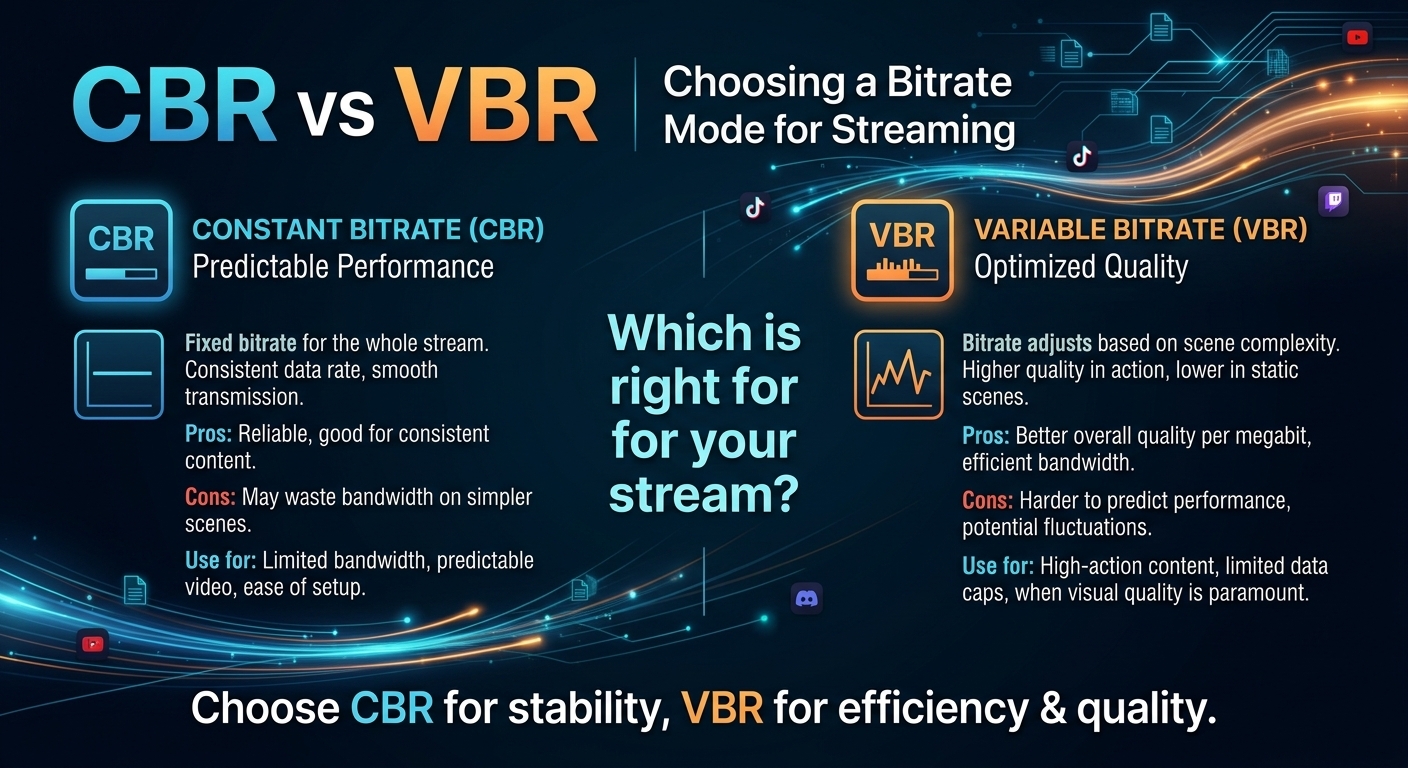
For most on-demand video, capped variable bitrate (VBR) wins the cbr vs vbr decision: it spends bits where the picture ...