
Learn
Lossy vs Lossless Compression: Images, Video and Audio
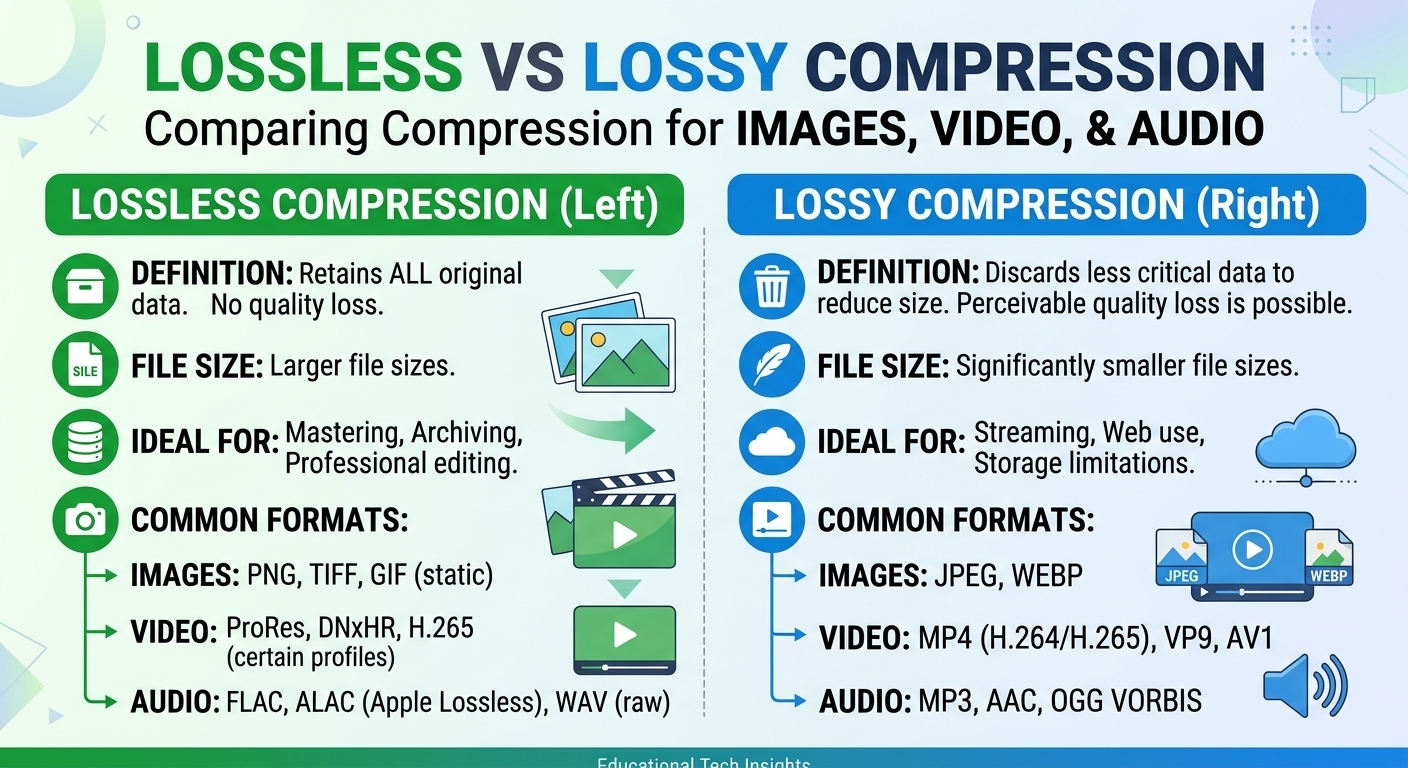
Lossy vs lossless compression comes down to one trade: lossless compression rebuilds every original bit and typically ...
A 1 ms increase in CDN latency at the P99 level costs a large-scale streaming platform roughly 0.3% of its concurrent session count. Multiply that across 40 million peak viewers, and the math gets uncomfortable fast. As of Q1 2026, median global round-trip times for cached content served from well-placed edge nodes sit around 18–22 ms, yet poorly configured deployments routinely clock 120 ms or more at the tail. The difference is not the network. It is seven specific engineering decisions that compound on each other. This article gives you the full playbook: the seven tactics, the failure modes that undo them, and a cost-efficiency framework for choosing where to invest egress budget for maximum latency reduction.
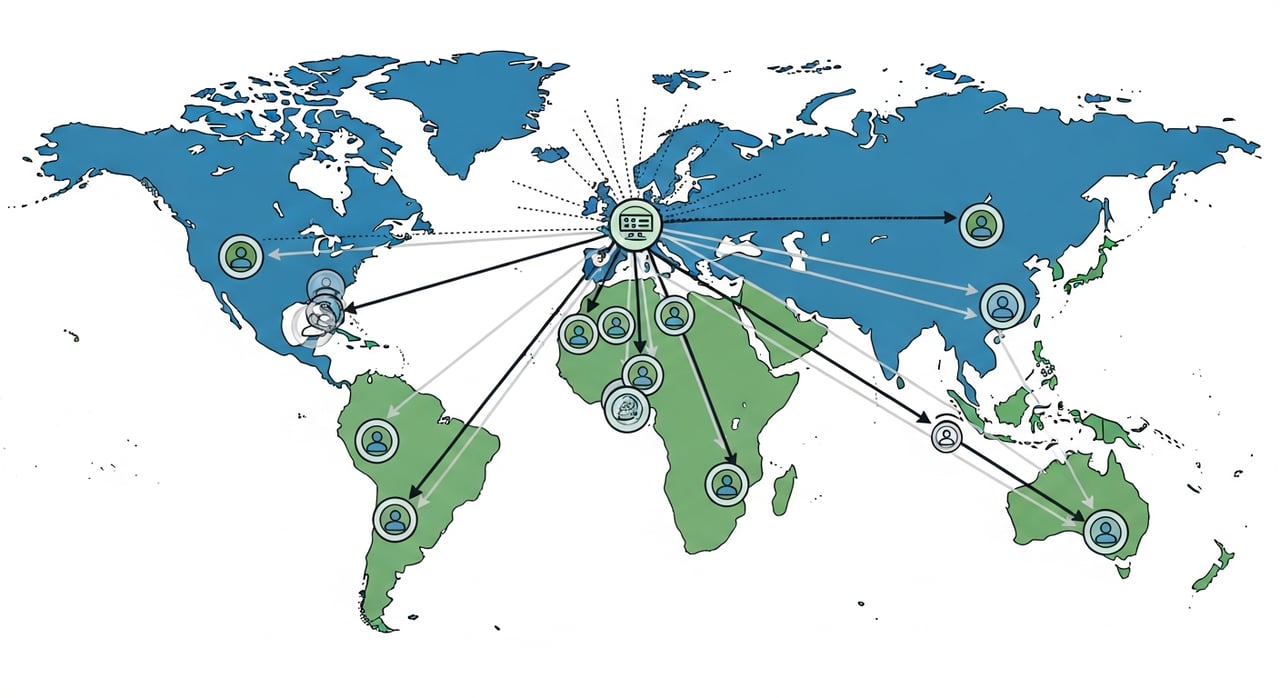
Throughput problems are solved by throwing bandwidth at them. Latency problems are structural. In 2026, three shifts have made CDN latency the dominant performance variable for most workloads. First, HTTP/3 with QUIC is now the majority transport for browser traffic (estimated at over 55% of web requests as of early 2026), which eliminates head-of-line blocking but exposes connection-migration latency when edge selection is suboptimal. Second, Core Web Vitals thresholds tightened again: Google's Interaction to Next Paint (INP) metric, fully enforced since March 2024, punishes any origin-dependent critical path that adds more than ~200 ms. Third, real-time workloads—live commerce, collaborative editing, cloud gaming input loops—are now mainstream, and their latency budgets are measured in single-digit milliseconds, not hundreds.
The bottom line: reducing CDN latency from 80 ms to 20 ms is not an incremental optimization. It is the difference between retaining users and losing them to a competitor whose edge topology is tighter.
Anycast gets the request to a nearby node. That is table stakes. What separates a low-latency CDN from a mediocre one in 2026 is what happens when the nearest node is degraded. Pure BGP Anycast routes based on AS path length, not actual latency. Modern implementations overlay real-time latency telemetry—sampled every 5–10 seconds per PoP pair—and withdraw routes from nodes whose measured RTT exceeds the regional baseline by more than 15%. Without this feedback loop, you inherit congestion silently. If your CDN vendor cannot describe their withdrawal logic, ask why not.
A full TLS 1.3 handshake adds one round trip. For a user 90 ms from the edge node, that is 90 ms of pure protocol overhead before a single byte of content moves. TLS session tickets and 0-RTT early data eliminate this on repeat visits. The 2026-era consideration: QUIC 0-RTT replay protection must be handled at the edge, not delegated to the origin, or you introduce an origin round trip that defeats the purpose. Ensure your edge nodes maintain their own anti-replay windows with a shared state backend whose sync latency stays below 50 ms across the cluster.
A flat cache topology means every cache miss goes to origin. A two-tier hierarchy—edge plus a regional shield—absorbs 85–95% of those misses. As of 2026, the effective pattern is three tiers for global deployments: L1 edge, L2 regional mid-tier (one per continent or major metro cluster), and L3 origin shield co-located with or within 5 ms of the origin. The critical tuning parameter is TTL differentiation across tiers. L1 TTLs can be aggressive (seconds to minutes); L2 TTLs should be longer (minutes to hours) with stale-while-revalidate semantics enabled. This prevents the cache stampede problem where simultaneous L1 expirations hammer the L2.
Every new TCP or QUIC connection between edge and origin costs at least one RTT, often more when TLS negotiation is involved. Persistent connection pools between edge nodes and upstream tiers—kept alive with minimal keepalive intervals—amortize that cost across thousands of requests. The 2026 benchmark to target: fewer than 2% of upstream requests should open a new connection. Monitor your CDN's upstream connection reuse ratio. If it is below 95%, you are bleeding latency on every cache miss.
Edge-side prefetch has matured significantly. Instead of the now-deprecated HTTP/2 Server Push, the pattern in 2026 is Early Hints (103 responses) combined with edge-side link-rel-preload injection. The edge node parses the HTML response, identifies critical subresources (fonts, CSS, key JS bundles), and injects preload headers before the full response body completes. This shaves 50–150 ms off the critical rendering path for first-time visitors. Some CDNs now offer ML-driven predictive prefetch that pre-warms resources based on navigation probability models trained on site-specific traffic patterns. Measure the hit rate on prefetched objects; anything below 60% means the model is wasting egress budget on speculative fetches.
HTTP/3 adoption is no longer optional for latency-sensitive workloads. The multiplexed stream model eliminates head-of-line blocking at the transport layer, but the default congestion control algorithm matters enormously. Cubic—the legacy default—reacts slowly to loss on high-BDP paths. BBRv3 (the current iteration as of early 2026) targets throughput based on measured bottleneck bandwidth and RTT, recovering from loss events 2–3x faster than Cubic on intercontinental paths. Confirm your CDN runs BBRv3 or an equivalent on its edge-to-client QUIC connections. On the edge-to-origin leg, if you control the origin stack, match the algorithm. Mismatched congestion control across path segments creates throughput oscillations that manifest as latency jitter.
Long TTLs reduce origin load and latency. But stale content is a product incident. The 2026 solution is surrogate-key (tag-based) purge with sub-second propagation. Tag every cacheable response with fine-grained keys (product ID, content version, locale). When content changes, purge by tag. If your CDN's purge propagation time exceeds 2 seconds globally, it is a bottleneck that forces you to set shorter TTLs than necessary, which increases cache miss rates, which increases latency. Measure purge propagation independently of what the vendor claims. Issue a tagged purge, then poll 10 geographically distributed edge nodes and timestamp when each begins serving the new version.
Most CDN latency regressions are not caused by network events. They are caused by configuration drift and operational blind spots. These are the three failure modes that appear most frequently in post-incident reviews:
Cache key bloat. Adding query parameters, cookies, or headers to the cache key without auditing uniqueness creates an explosion of cache variants. A single URL that should have one cached object ends up with hundreds. Hit ratios collapse. Every "miss" is a full origin round trip. Audit your cache key composition quarterly. Strip unnecessary Vary headers at the edge.
Origin health-check misconfiguration. Health checks that are too infrequent (30s+ intervals) or that test the wrong endpoint (a lightweight /health route instead of the actual content path) allow degraded origins to keep receiving traffic. Edge nodes dutifully forward requests to an origin returning 200 OK on /health while the content endpoint takes 3 seconds. Tighten check intervals to 5–10 seconds and test a path that exercises the real serving stack.
DNS resolution latency at the edge. If your edge nodes resolve origin hostnames through recursive DNS without local caching or pre-resolution, every cache miss incurs an extra 20–80 ms of DNS lookup. Pin origin IPs in your CDN configuration or use a dedicated resolver with aggressive caching at each edge cluster.
Not every millisecond of latency reduction costs the same. The table below maps each tactic to its typical implementation cost (in engineering effort and egress spend) versus expected latency reduction for a globally distributed web application serving 500 TB/month.
| Tactic | Effort | Typical P50 Improvement | Typical P99 Improvement |
|---|---|---|---|
| Anycast + latency-aware failover | CDN vendor selection | 5–15 ms | 30–80 ms |
| TLS 0-RTT at edge | Configuration | 10–40 ms | 10–40 ms |
| Tiered cache + origin shield | Medium (architecture) | 15–50 ms | 50–200 ms |
| Connection reuse | Configuration | 5–20 ms | 20–60 ms |
| Early Hints + prefetch | Medium (integration) | 50–150 ms (render) | 50–150 ms (render) |
| HTTP/3 + BBRv3 | CDN vendor selection | 10–30 ms | 30–100 ms |
| Tag-based purge (<2s) | Medium (instrumentation) | Indirect (enables longer TTLs) | Indirect (enables longer TTLs) |
The highest-ROI move for most teams is the cache hierarchy. It addresses the P99 tail directly because tail latency is dominated by cache misses that traverse the full path to origin. The second-highest ROI is protocol optimization, because it requires no architectural change—just vendor selection and configuration.
For teams running at 500 TB/month and above, the egress cost of the CDN itself becomes a significant variable. BlazingCDN uses Anycast routing with built-in failover and pricing that starts at $5 per TB, down to $2.50 per TB at volume (as of October 2026). At 500 TB, that is $1,815/month versus $4,250+ on CloudFront's standard tiers. The savings can fund the engineering effort to implement the remaining six tactics on this list.
A CDN places cached content at edge nodes geographically close to users, eliminating the long-haul round trip to origin. Combined with Anycast routing and TLS session resumption, this reduces both the network path length and the protocol overhead per request. The effect compounds: fewer round trips multiplied by shorter per-trip distance yields dramatic P99 improvements.
For static assets served from a well-placed edge node, P50 should be under 25 ms and P99 under 60 ms for users within the same continent. Intercontinental requests to cached content should target P50 under 80 ms. If your measurements exceed these thresholds, investigate cache hit ratios and edge node selection logic first.
Origin scaling increases throughput but does not reduce the physical distance between the origin and the user. Every uncached request still traverses the full network path. Edge caching eliminates that traversal for the majority of requests (target: 90%+ cache hit ratio), making the origin's capacity relevant only for the remaining cache misses and dynamic content.
Use synthetic monitoring from at least 15 geographically distributed probe locations, sampling every 60 seconds. Measure time-to-first-byte (TTFB) for both cache hits and cache misses separately. Aggregate at P50, P95, and P99. Do not rely on CDN vendor dashboards alone—they typically report server-side processing time and exclude last-mile network latency.
The three most common causes are cache purge storms (mass invalidation causing simultaneous origin fetches), origin health-check failures that go undetected (routing traffic to a degraded origin), and BGP route changes that shift traffic to a suboptimal edge node. Instrument all three with alerts: monitor origin request rate post-purge, health-check response times, and per-PoP latency baselines.
Pick one tactic from this list and measure your baseline before changing anything. Set up TTFB sampling from 10+ global locations, split by cache hit and cache miss, and run it for 72 hours. That dataset will tell you exactly which of the seven tactics will yield the largest improvement for your specific traffic shape. If your P99 cache-miss latency is more than 4x your P99 cache-hit latency, start with the cache hierarchy. If your cache-hit P99 is already above 60 ms, your problem is edge selection or protocol overhead. The data decides. Run the measurement this week.

Heavy traffic.
Light bill.
The CDN for video and large traffic
Learn
Lossy vs lossless compression comes down to one trade: lossless compression rebuilds every original bit and typically ...
Pricing - Pricing & Costs
The CloudFront vs S3 decision depends more on object size than on traffic volume. At a 500 KB average response, 100 TB ...
Learn
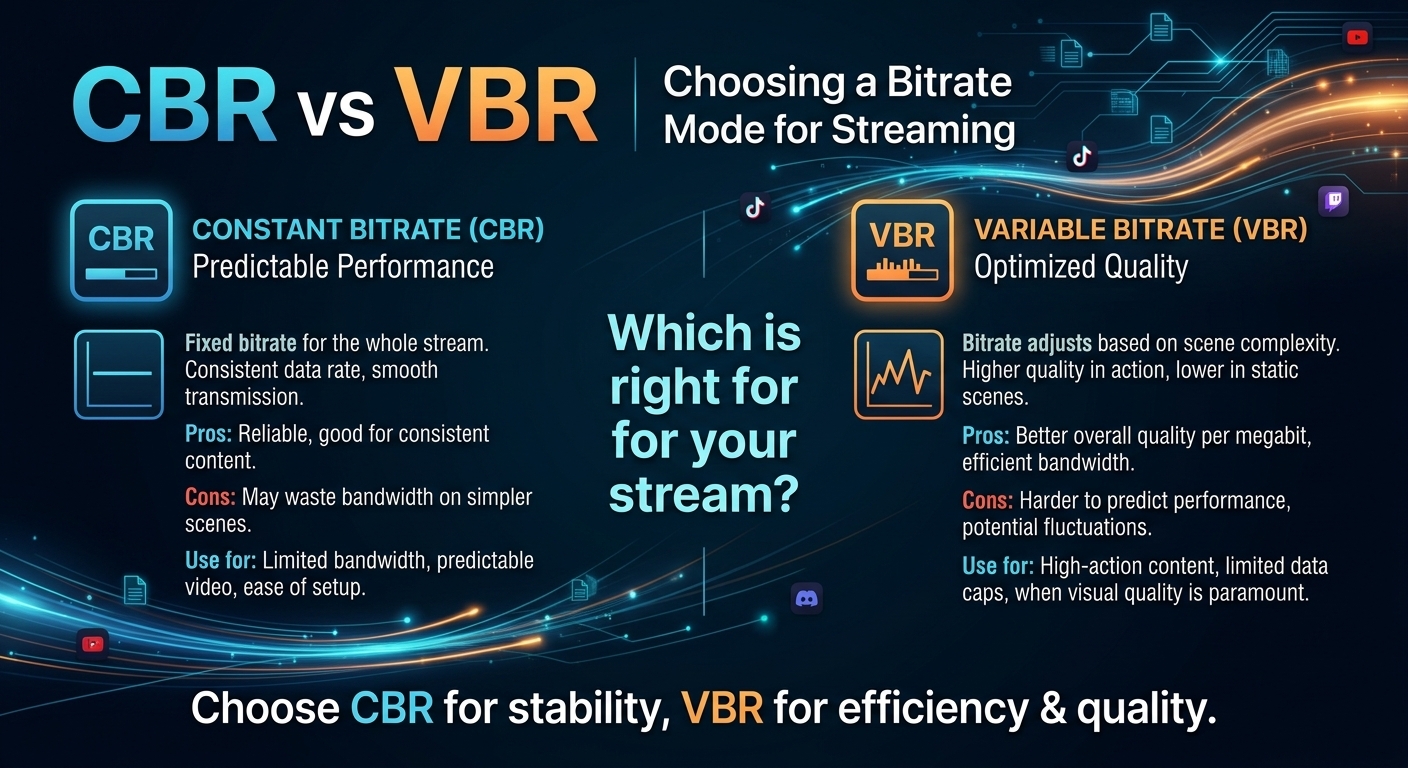
For most on-demand video, capped variable bitrate (VBR) wins the cbr vs vbr decision: it spends bits where the picture ...