
Learn
Lossy vs Lossless Compression: Images, Video and Audio
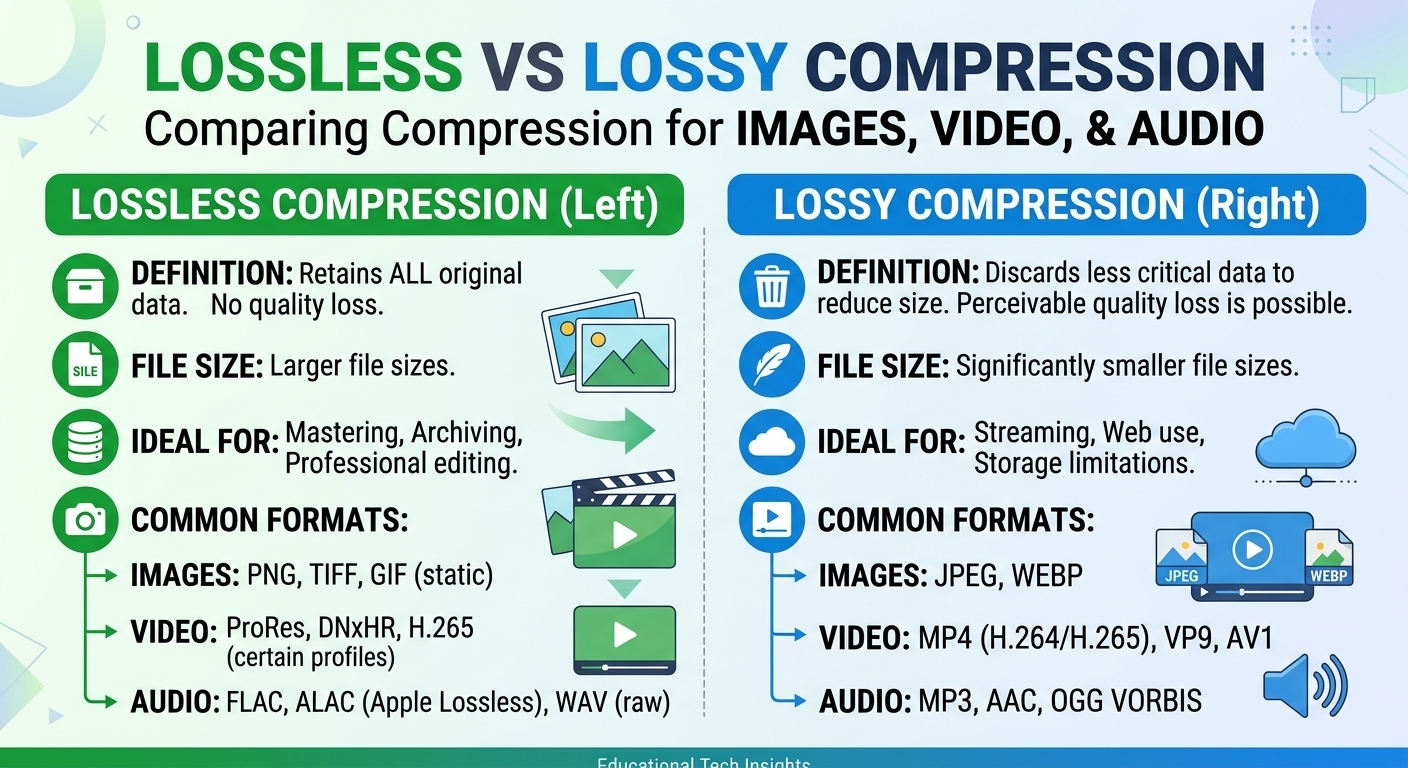
Lossy vs lossless compression comes down to one trade: lossless compression rebuilds every original bit and typically ...

In Q1 2026, Fastly reported sub-150ms global purge times across its network while Cloudflare surpassed 330 cities in its edge footprint. Both numbers look impressive in isolation. Neither tells you which CDN is right for your workload. The Cloudflare vs Fastly question keeps resurfacing because these two platforms have diverged further in 2026 than at any point in the past three years — Cloudflare doubling down on a platform-as-a-service model, Fastly sharpening its focus on programmable delivery for latency-sensitive infrastructure. This article gives you a workload-profile decision matrix, current pricing breakdowns, and the specific architectural tradeoffs that matter when you are choosing between them — or deciding to look elsewhere entirely.
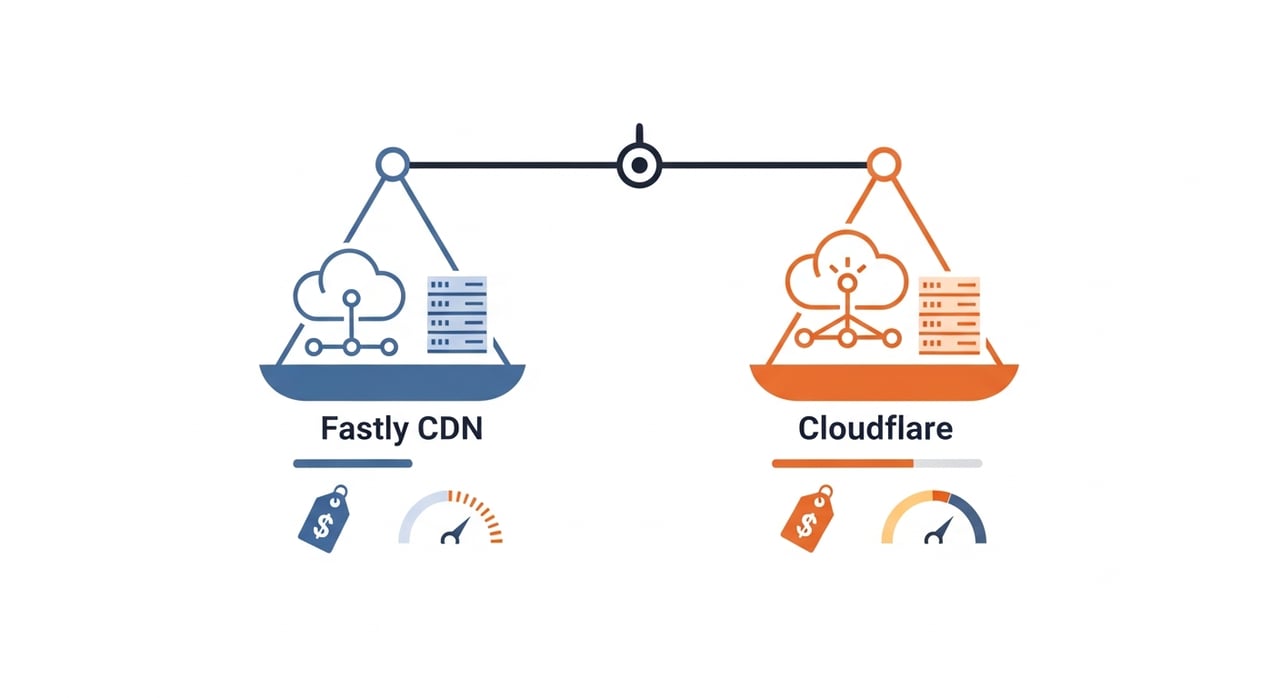
Cloudflare operates an anycast network across 330+ cities as of early 2026, with every node running the full stack: caching, WAF, Workers runtime, R2 storage, and DNS resolution. The architectural bet is density — put compute and cache as close to the eyeball as possible and let the anycast routing handle failover. For workloads that benefit from broad geographic coverage (global SaaS, marketing sites, APIs serving mobile clients worldwide), this density wins.
Fastly's network is smaller by city count — roughly 80+ PoP locations as of 2026 — but each site is built around high-capacity clusters designed for throughput-heavy delivery. Fastly co-locates directly with major IXPs and transit providers, prioritizing peering quality over PoP quantity. If you are delivering live video, large software updates, or high-request-rate API traffic concentrated in North America, Europe, and APAC tier-1 metros, Fastly's per-node capacity matters more than raw city count.
The difference is philosophical. Cloudflare optimizes for the long tail of geographies. Fastly optimizes for the fat head of traffic volume. Your access logs will tell you which strategy fits your user base.
Cloudflare Workers remains the more accessible runtime as of 2026. V8 isolates, millisecond cold starts, a mature ecosystem of bindings (KV, Durable Objects, D1, Queues, R2), and broad language support via WASM. The free tier allows 100,000 requests per day. The paid Workers tier starts at $5/month. For teams building full applications at the edge — auth gating, A/B routing, personalization, lightweight API backends — Workers offers the fastest path from idea to production.
Fastly's Compute (formerly Compute@Edge) runs WASM natively with support for Rust, Go, JavaScript, and other languages that compile to WASM. The cold-start penalty is near-zero because WASM modules are pre-compiled. Where Compute excels is deterministic performance under load: no garbage collection pauses, no V8 isolate scheduling jitter. For request-path logic on latency-critical delivery pipelines — think header manipulation, token validation, and origin selection for live streams — Compute gives you tighter performance bounds.
Fastly also retains VCL as a configuration language. VCL is not general-purpose compute, but for cache-key manipulation, routing rules, and conditional logic in the request/response flow, it remains faster to deploy and reason about than spinning up a full WASM module. If your team already maintains VCL configs, the migration cost to Cloudflare is non-trivial.
Cloudflare's pricing model is tiered and predictable. The free tier covers personal sites. Pro costs $20/month. Business runs $200/month. Enterprise is contract-based. A significant advantage: Cloudflare does not charge for bandwidth on most plans. You pay for features, not delivery volume. For small-to-medium workloads or teams that need budgeting certainty, this model is hard to beat.
Fastly charges on a consumption basis: bandwidth, requests, and compute usage. As of 2026, published bandwidth rates start around $0.08/GB in North America and Europe, with volume discounts available under contract. The consumption model scales linearly, which means costs grow with traffic — but it also means you only pay for what you use. For bursty workloads or event-driven traffic, this can be cheaper than an annual Enterprise contract with either vendor.
| Dimension | Cloudflare (2026) | Fastly (2026) |
|---|---|---|
| Entry cost | Free tier available; Pro at $20/mo | Free trial; pay-as-you-go from first GB |
| Bandwidth billing | Unmetered on most plans | ~$0.08/GB NA/EU; volume discounts under contract |
| Enterprise floor | Custom; typically $5,000+/mo | Custom; typically commitment-based |
| Edge compute cost | Workers: $5/mo + $0.50/million requests | Compute: metered by resource-seconds |
At high volumes — 100 TB/month and above — both vendors' published pricing becomes expensive compared to pure-play delivery networks. This is where alternatives become relevant. BlazingCDN's pricing starts at $5 per TB and drops to $2.50 per TB at volume (as of October 2026), with Anycast routing and built-in failover. For enterprises pushing serious volume — media companies, software distributors, SaaS platforms with global user bases — the unit economics matter. With flexible configuration, it is a credible option when the comparison between Fastly and Cloudflare leaves your CFO unsatisfied.
Cloudflare bundles DDoS mitigation, managed WAF rulesets, bot management, and SSL/TLS termination into its platform at every tier — even the free plan gets basic DDoS protection. The breadth of the security surface is Cloudflare's clearest differentiator. If your threat model requires layered defenses out of the box, Cloudflare gives you more at lower tiers.
Fastly's security tooling — its Next-Gen WAF (acquired via Signal Sciences) — is powerful but positioned as an add-on or enterprise feature. The Signal Sciences engine uses a request-anomaly model rather than regex-based rules, which produces fewer false positives on complex APIs. For teams running high-throughput APIs or microservices behind Fastly's edge, this approach is arguably more operationally sound. But you pay for it separately, and the initial configuration requires more investment than flipping on Cloudflare's managed rulesets.
Fastly's real-time log streaming (sub-second delay to your log endpoint) and instant purge (typically under 150ms globally, as of 2026) remain best-in-class for teams that need tight feedback loops. If your deployment pipeline depends on purge-and-verify cycles — common in news media, e-commerce, and live-score applications — Fastly's cache invalidation speed is a measurable advantage.
Cloudflare's purge latency is longer (typically 2–5 seconds for global purge as of 2026), and log access at granular levels requires an Enterprise plan or the Logpush service. Cloudflare's analytics dashboard is excellent for aggregate views but lacks the real-time granularity that Fastly exposes via its stats API.
The Cloudflare vs Fastly choice collapses when you map it to workload profiles rather than feature lists. Use this matrix as a starting framework:
| Workload Profile | Best Fit | Why |
|---|---|---|
| Global SaaS, mixed geo, moderate traffic | Cloudflare | Broadest edge coverage; unmetered bandwidth; bundled security |
| Edge-native applications, auth at edge, personalization | Cloudflare | Workers ecosystem maturity; Durable Objects for stateful edge logic |
| Live video/streaming, large-object delivery | Fastly | High per-node throughput; instant purge; real-time log streaming |
| High-traffic API gateway, latency-critical request path | Fastly | WASM compute with deterministic latency; Signal Sciences WAF for APIs |
| News/media with frequent cache busting | Fastly | Sub-150ms purge; surrogate-key-based invalidation |
| High-volume delivery (100 TB+/mo), cost-sensitive | BlazingCDN or multi-CDN | Neither Cloudflare nor Fastly is price-competitive at pure delivery scale |
| Small team, limited ops budget, needs security + CDN | Cloudflare | Free/Pro tiers; zero-config DDoS; minimal operational overhead |
Cloudflare typically delivers better value for mid-size SaaS. Unmetered bandwidth, bundled security, and the Workers ecosystem reduce both your infrastructure bill and operational complexity. Fastly's value emerges when you need sub-second purge or deterministic edge compute — features most SaaS products do not require.
For live and large-file video delivery concentrated in tier-1 markets, Fastly's high-capacity nodes and real-time log streaming give you tighter operational control. Cloudflare's broader network can outperform on long-tail geographies. Benchmark both against your actual viewer distribution before deciding.
Migrate if your workload has shifted toward edge-native applications (Workers, Durable Objects) or if you need integrated security without managing a separate WAF vendor. Do not migrate if your delivery pipeline depends on instant purge, VCL-based routing logic, or real-time log streaming — replicating these on Cloudflare requires significant re-architecture.
Cloudflare's unmetered bandwidth makes costs predictable regardless of traffic spikes. Fastly's consumption model can be cheaper for bursty traffic but scales linearly with sustained volume. At 100 TB/month and above, both become expensive relative to pure-delivery CDNs like BlazingCDN, where pricing starts at $3.50/TB at the 100 TB tier.
Yes, and many large platforms do. A common pattern is Cloudflare for security (DDoS, WAF) as the front layer and Fastly as the delivery tier behind it, or splitting traffic by geography or content type. Multi-CDN orchestration adds operational complexity, so instrument your RUM data before committing to the split.
Comparison articles — this one included — give you a framework, not a verdict. The verdict comes from your traffic. Pick your top five origin endpoints by request volume, configure both Cloudflare and Fastly in front of them (both offer trial access), and measure three things over 72 hours: p50 and p99 TTFB at the edge, cache hit ratio under your actual TTL policy, and purge-to-stale latency for your most frequently invalidated objects. Those three numbers will tell you more than any feature matrix. If neither vendor's unit economics work at your delivery volume, run the same test against BlazingCDN's infrastructure and compare the cost per TB delivered. The data will make the decision for you.

Heavy traffic.
Light bill.
The CDN for video and large traffic
Learn
Lossy vs lossless compression comes down to one trade: lossless compression rebuilds every original bit and typically ...
Pricing - Pricing & Costs
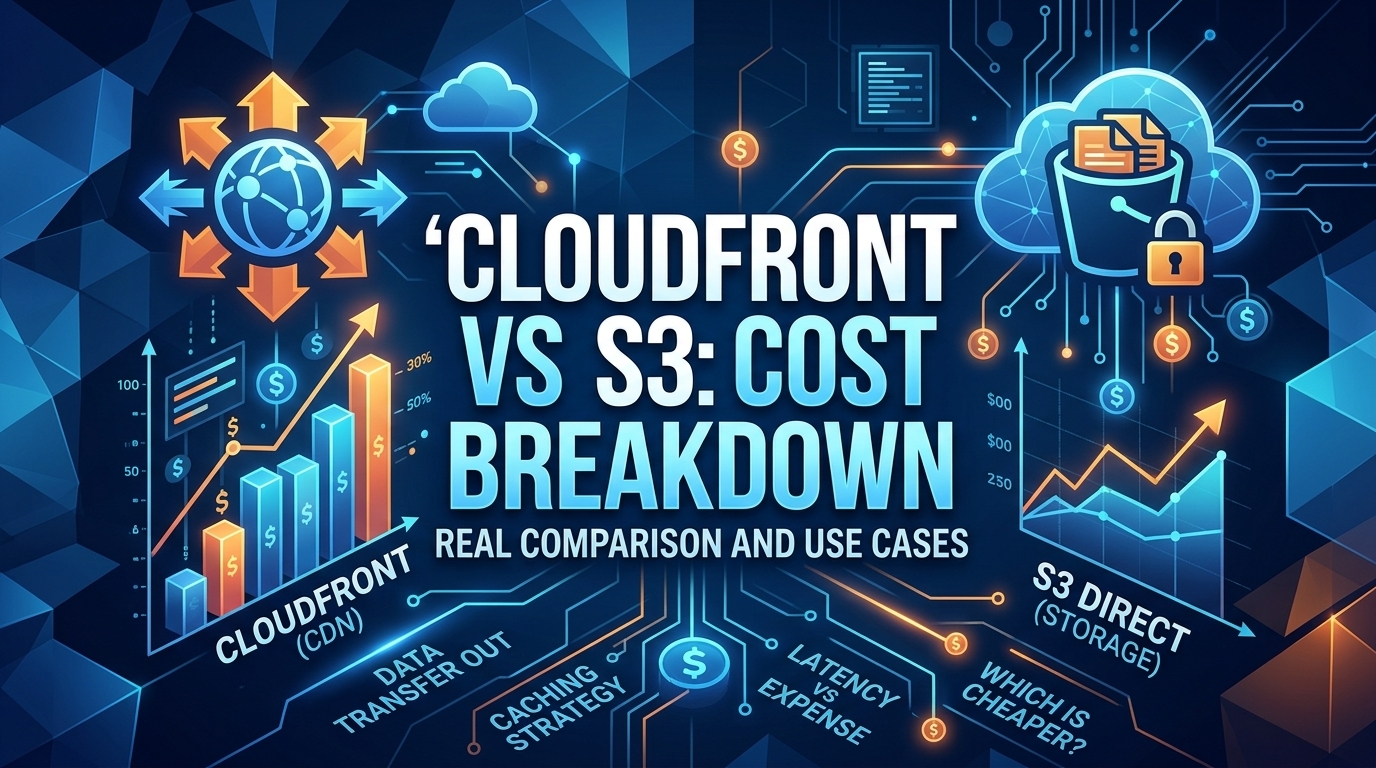
The CloudFront vs S3 decision depends more on object size than on traffic volume. At a 500 KB average response, 100 TB ...
Learn
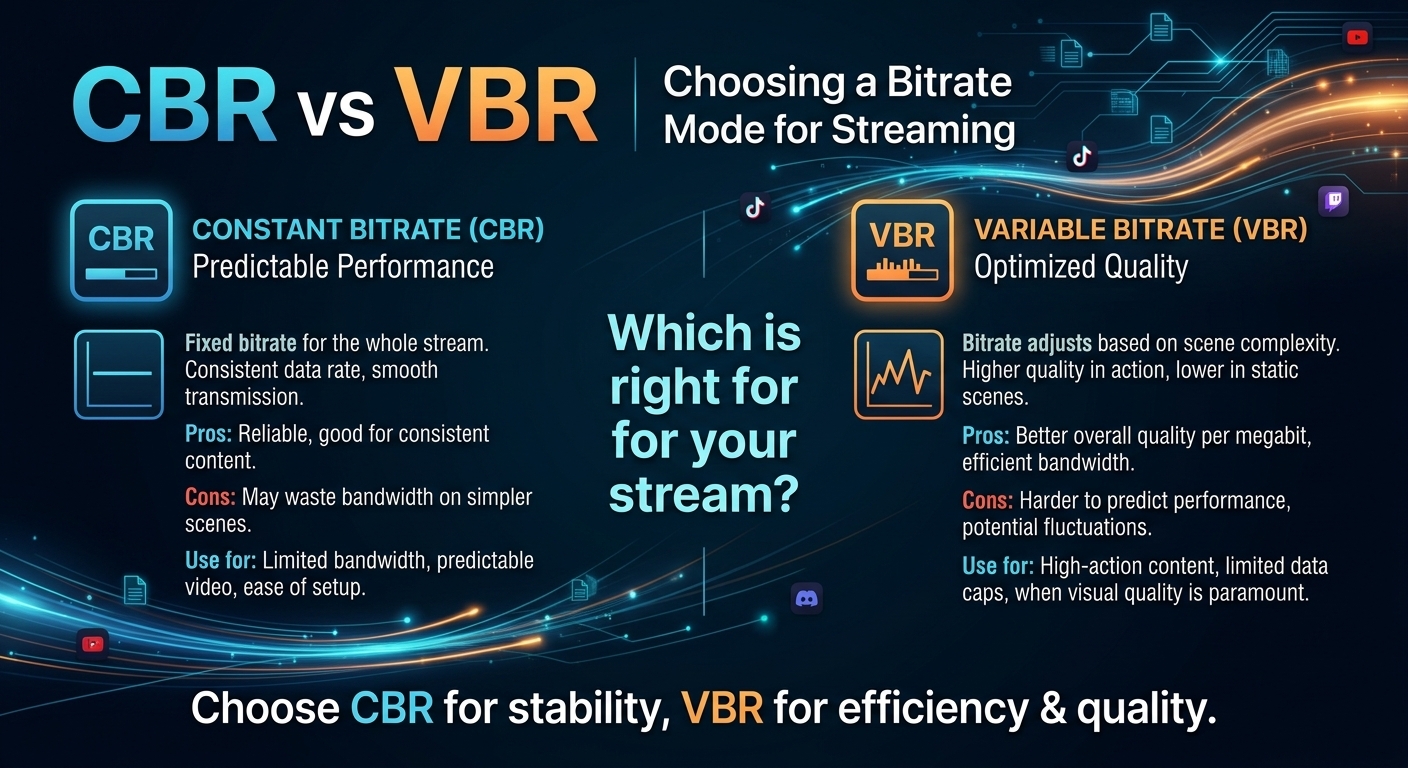
For most on-demand video, capped variable bitrate (VBR) wins the cbr vs vbr decision: it spends bits where the picture ...