Learn
What Is a Keyframe? GOP Size and Keyframe Interval
In answer to what is a keyframe: a keyframe, or I-frame, is a video frame encoded without reference to any other frame, ...
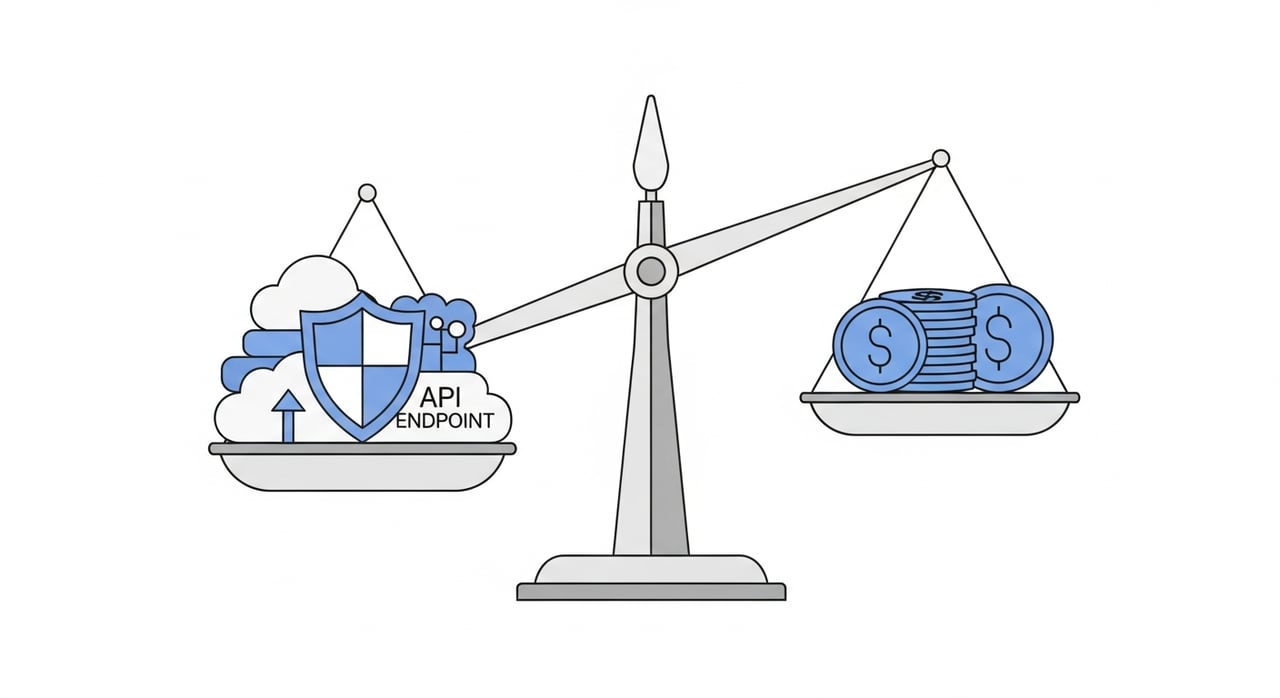
Cloudflare quietly restructured API Shield entitlements in early 2026, gating mTLS-based client verification behind the Business tier and pushing schema validation into add-on pricing for most non-Enterprise accounts. If you have not re-evaluated your Cloudflare API Shield pricing assumptions since 2025, you are likely either overpaying or under-protected. This article gives you three things: an updated, line-item cost breakdown across every Cloudflare plan as of Q2 2026, a workload-profile decision matrix you will not find in the docs, and a realistic look at where decoupling delivery from security saves real money at scale.
Cloudflare does not publish a single "API Shield" SKU. Instead, API security capabilities are distributed across their standard plan tiers and several paid add-ons. The confusion is intentional — it encourages Enterprise conversations. Here is where things actually land as of May 2026:
| Capability | Free | Pro ($25/mo) | Business ($250/mo) | Enterprise (custom) |
|---|---|---|---|---|
| mTLS client certificates | 10 certs | 10 certs | Unlimited | Unlimited + managed PKI |
| Schema Validation | — | — | Add-on | Included |
| Sequence Analytics | — | — | — | Included |
| API Discovery | — | — | — | Included |
| Volumetric abuse detection | — | — | — | Included |
| Rate Limiting (API-granular) | 1 rule | 2 rules | 5 rules | Unlimited |
| Bot Management | — | — | Add-on (~$3k+/yr) | Included or bundled |
Key change in 2026: Pro plan pricing moved from $20 to $25/month. The Business plan jumped from $200 to $250/month. Enterprise contracts for API-heavy organizations with schema validation, sequence analytics, and bot management bundled typically start around $5,000/month, though Cloudflare does not confirm this publicly. Expect wide variance based on request volume and negotiation.
API Shield is not a single product. It is a marketing umbrella over several distinct enforcement layers that operate at Cloudflare's edge. Understanding the decomposition matters because each layer has its own pricing and plan-availability constraints.
The foundation layer. Cloudflare issues client certificates and enforces mutual TLS at the edge, rejecting requests that lack a valid cert before they reach your origin. Free and Pro plans cap you at 10 certificates total — functional for internal tooling, unusable for customer-facing mobile or IoT APIs with thousands of clients. Business and Enterprise remove the cap.
Upload an OpenAPI 3.x spec and Cloudflare validates inbound requests against it, blocking payloads that deviate from your declared schema. This stops a class of injection and fuzzing attacks at the edge. As of 2026, this is only available as a paid add-on at the Business tier or included in Enterprise. If your API surface changes frequently, you will need automation around schema uploads — Cloudflare's API for managing schemas works, but versioning and rollback are your responsibility.
Enterprise-only. Cloudflare models expected API call sequences and flags anomalous patterns — credential stuffing flows, scraping ladders, enumeration attacks. This is the capability most often cited in Cloudflare's marketing, and it is completely unavailable below Enterprise.
The sticker price is misleading if you only look at the base plan. A realistic Cloudflare API security pricing estimate for a mid-market SaaS company running 50M API requests/month in 2026 looks like this:
Total realistic spend before Enterprise: $600–950/month. Once you cross into Enterprise for sequence analytics or discovery, you are typically committing $60,000–120,000/year. The jump from Business-with-add-ons to Enterprise is steep because Cloudflare bundles Enterprise as an all-or-nothing commitment with annual contracts.
This is the section nobody else publishes. Whether Cloudflare API Shield pricing makes sense depends entirely on your architecture and threat model. Use this matrix:
| Workload Profile | Recommended Tier | Estimated Annual Cost | Notes |
|---|---|---|---|
| Internal APIs, low client count | Free / Pro | $0–$300 | mTLS cert cap is fine; schema validation not critical |
| B2B SaaS, 10–100 API consumers | Business + add-ons | $7,200–$11,400 | Schema validation becomes essential; bot management recommended |
| Consumer-facing APIs, mobile/IoT | Enterprise | $60,000–$120,000+ | Sequence analytics and abuse detection are non-negotiable at scale |
| Delivery-heavy with light API security | Decouple: separate CDN + API gateway | Varies | Avoid paying Enterprise CDN rates for content that needs zero API protection |
The last row is where most teams leave money on the table. If 80% of your traffic is asset delivery and only 20% is API traffic requiring security enforcement, routing everything through Cloudflare Enterprise means you are paying API Shield pricing on bytes that never touch an API endpoint.
Architecturally, there is no reason your static assets, media streams, and software downloads need to traverse the same edge provider that handles API schema validation. Splitting delivery to a cost-optimized CDN while keeping API traffic on Cloudflare (or a dedicated API gateway) can cut total edge spend by 40–60% for delivery-heavy workloads.
For the delivery side, BlazingCDN's volume-based pricing starts at $5 per TB ($0.005/GB) and scales down to $2.50 per TB at volume (as of October 2026), with no request fees. It offers Anycast routing with built-in failover and flexible configuration, which matters when your delivery layer needs to absorb traffic bursts independently of your API security stack.
Cloudflare is not the only option. Here is how the competitive landscape looks as of Q2 2026:
Cloudflare's differentiator remains the integration of API security with L3/L4 DDoS mitigation and edge compute. If you already run Workers and need the full stack co-located, the pricing makes architectural sense. If you are stitching best-of-breed components, it may not.
The Business plan itself is $250/month as of Q2 2026. mTLS with unlimited certificates is included. Schema Validation is a paid add-on, typically $100–200/month depending on contract terms. Bot Management adds another $250–500/month. Total realistic cost for meaningful API security on Business sits between $600 and $950/month.
Partially. Business includes unlimited mTLS client certificates and up to 5 rate limiting rules. It does not include Schema Validation (add-on), Sequence Analytics (Enterprise only), API Discovery (Enterprise only), or Volumetric Abuse Detection (Enterprise only). The marketing materials call it "API Shield," but the operationally critical features require either add-ons or an Enterprise contract.
Enterprise bundles everything: mTLS with managed PKI, Schema Validation, Sequence Analytics, API Discovery, Volumetric Abuse Detection, unlimited rate limiting rules, and typically Bot Management. Contracts are annual with custom pricing, generally starting around $5,000/month and scaling with request volume and support tier. Exact pricing requires a sales conversation.
For internal or low-traffic APIs with fewer than 10 client identities, the Free or Pro tier provides adequate mTLS enforcement at minimal cost. You do not need API Shield's advanced features if your threat surface is a handful of known consumers calling well-documented endpoints. Spend the savings on origin-side security hardening instead.
They are fundamentally different pricing models. AWS charges per-request with no base fee; Cloudflare charges a flat monthly plan plus add-ons. Below ~50M requests/month, AWS is often cheaper for pure API management. Above that, Cloudflare's flat-rate model with bundled DDoS and edge enforcement becomes more cost-efficient, especially if you already use their network for other traffic.
Yes, but with significant feature restrictions. Free and Pro give you basic mTLS. Business adds schema validation as an add-on and raises rate limiting rules to 5. Everything involving behavioral analysis, discovery, or sequence-level enforcement requires Enterprise. If those capabilities are why you are evaluating API Shield, plan for Enterprise pricing from the start.
Pull your Cloudflare analytics for the last 30 days. Segment your traffic: what percentage is API requests that benefit from shield enforcement versus static delivery that needs nothing but cache and bandwidth? If delivery dominates, run the math on splitting your edge providers — API security on Cloudflare, delivery on a volume-optimized CDN. The difference at 100 TB/month is not incremental. It is structural. If you have already done this analysis, what split ratio did you land on, and did the operational complexity of two edge providers change the calculus?

Heavy traffic.
Light bill.
The CDN for video and large traffic
Learn
In answer to what is a keyframe: a keyframe, or I-frame, is a video frame encoded without reference to any other frame, ...
Learn
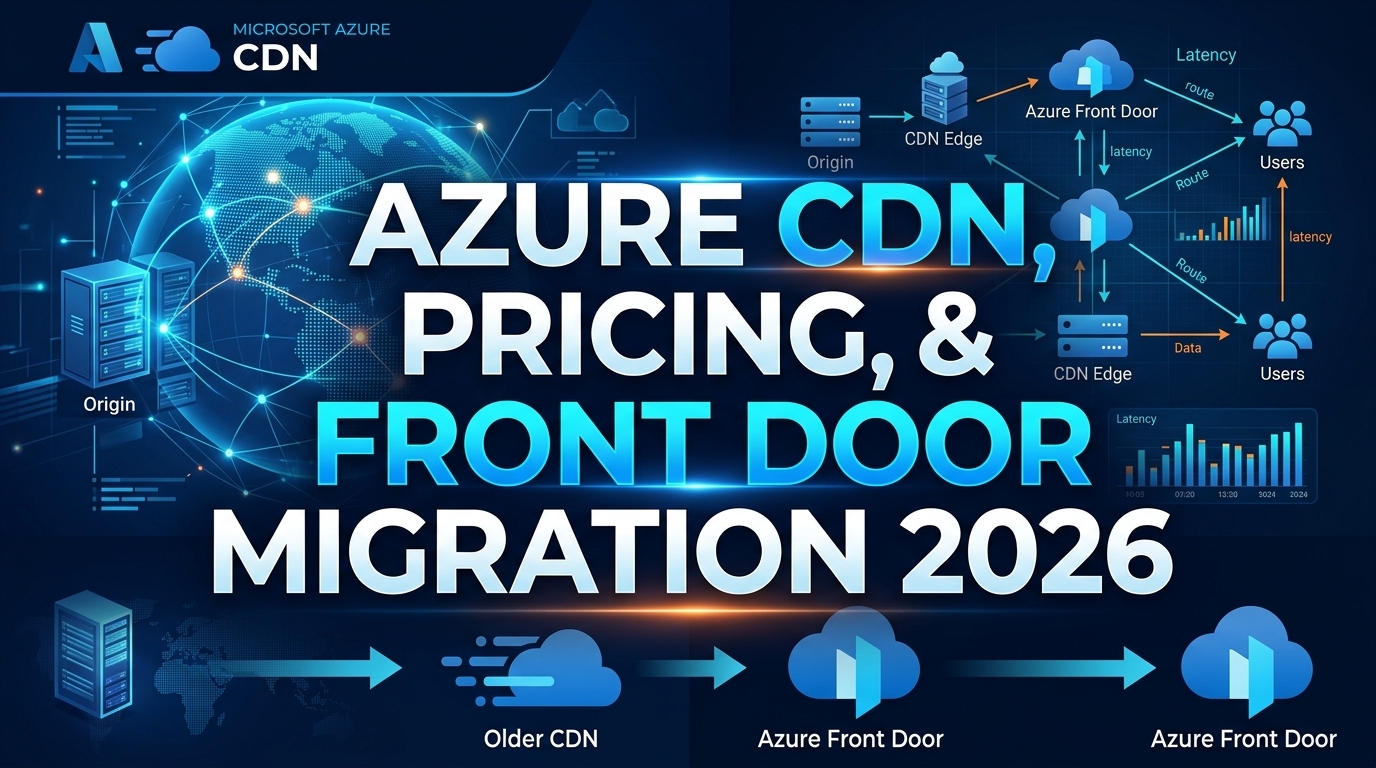
New Azure CDN deployments now go only one way: Microsoft stopped accepting new Azure CDN Standard from Microsoft ...
Learn
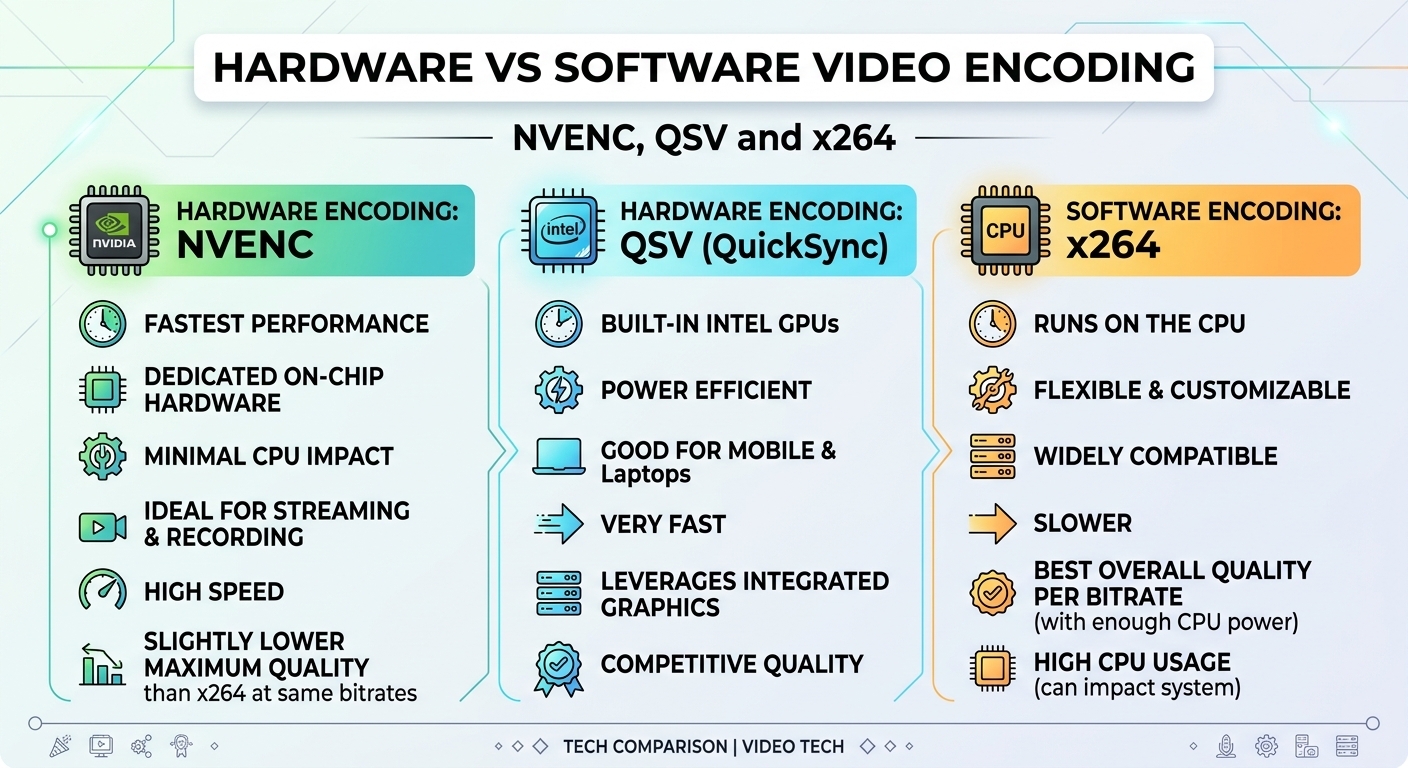
Evaluated October 2026: for live video, a modern GPU hardware encoder (NVIDIA NVENC on Turing or newer, Intel Quick ...