
Learn
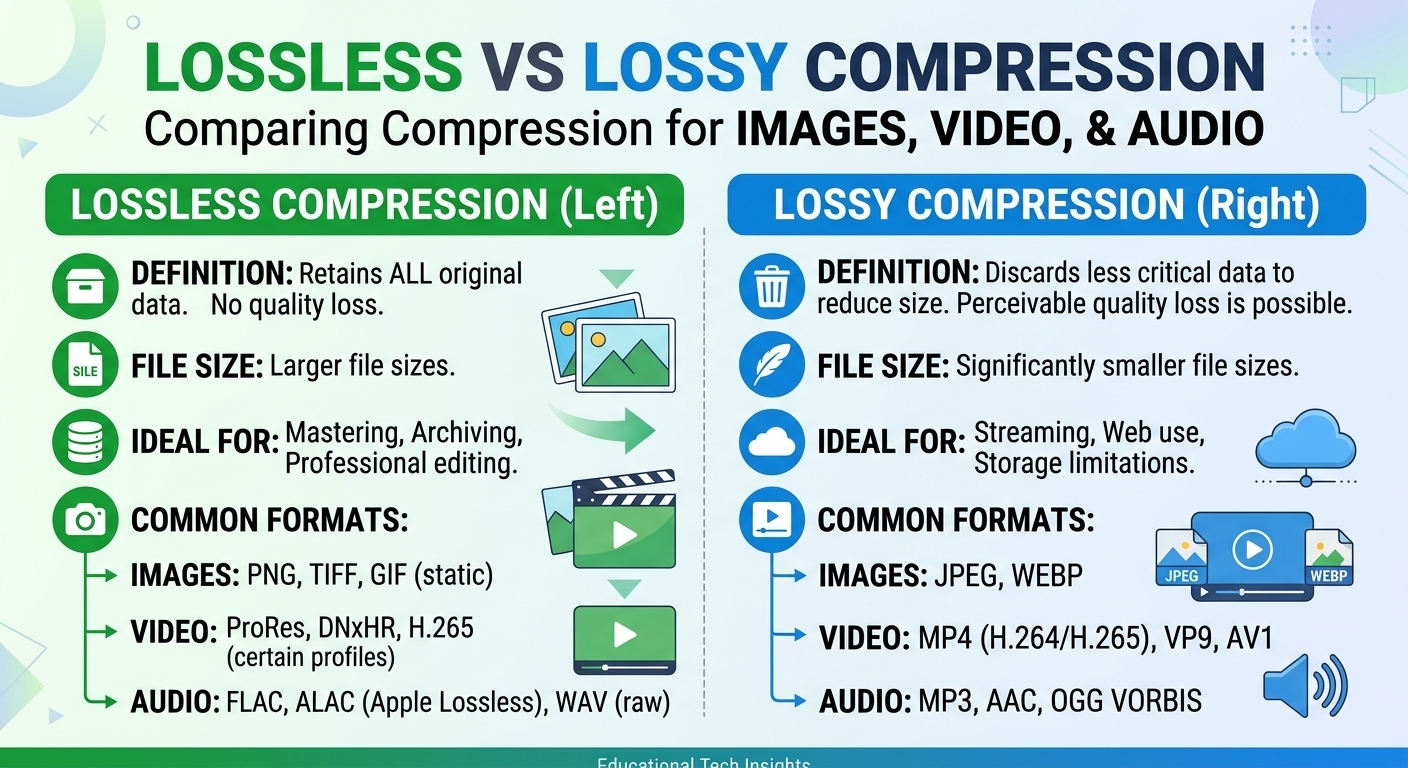
Lossy vs Lossless Compression: Images, Video and Audio
Lossy vs lossless compression comes down to one trade: lossless compression rebuilds every original bit and typically ...
Cloudflare's API gateway processed over 60 billion requests per day through Q1 2026, and more than 57% of all dynamic HTTP traffic it observed was API-driven. That figure was 53% when the 2024 API security report first dropped. The delta matters: every percentage point of growth represents millions of new endpoints, and the majority of them ship without security review. This article breaks down all 10 trends from Cloudflare's 2026 API Security and Management Report, adds a production-incident failure-mode analysis you will not find in competing coverage, and gives you a concrete framework for prioritizing which findings actually change your architecture this quarter.
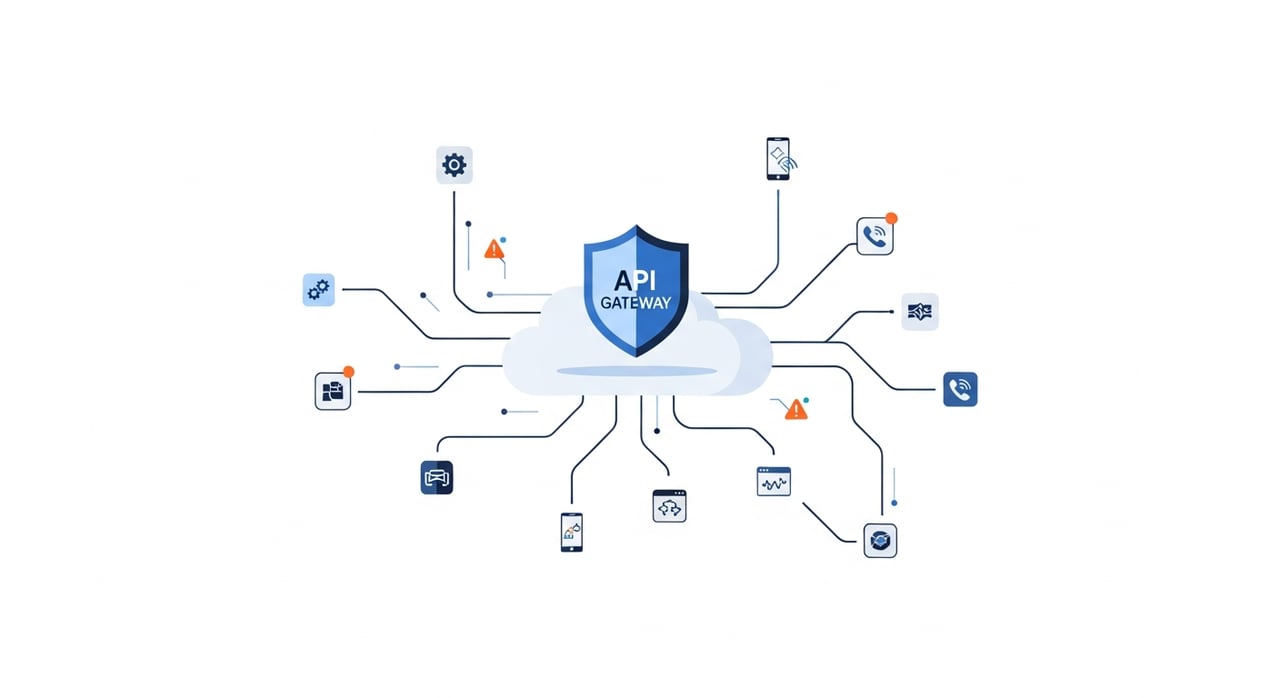
As of Q1 2026, Cloudflare reports that API calls account for 57% of dynamic traffic across its network. This is a sustained climb from 53% reported in the original 2024 API security report and roughly 55% observed in 2025 interim data. The implication is structural, not cyclical: frontends are thinner, backends are more fragmented, and API surfaces are expanding faster than teams can catalog them.
Traffic composition also shifted. Mobile-originated API calls now represent a larger share than browser-originated ones, driven by embedded SDK growth in fintech, health-tech, and streaming verticals. That matters because mobile SDKs frequently pin to older API versions, creating long-lived attack surfaces your deprecation schedule cannot easily reach.
In the 2024 API security report, Cloudflare's ML-based discovery found 31% more endpoints than customers had documented. By 2026, that gap has widened. Cloudflare now reports discovery deltas exceeding 40% for organizations running more than 500 microservices. The root cause is familiar: platform teams generate OpenAPI specs at build time, but runtime forks, canary deployments, and acquired-company integrations create endpoints that never make it into any spec.
Shadow APIs — endpoints that exist in production but are absent from any inventory — remain the single largest category of unmitigated risk. The 2026 report explicitly ties shadow API exposure to three compliance frameworks: PCI DSS 4.0 requirement 6.3.2, DORA Article 9 operational resilience mandates, and the SEC's amended cybersecurity disclosure rules. If an undocumented endpoint leaks PII, disclosure timelines start before you even know the endpoint exists. Discovery tooling is no longer optional; it is a regulatory prerequisite.
IP-based rate limiting was already brittle in 2024. The report now calls it an anti-pattern for any API behind a shared NAT, a mobile carrier, or a cloud egress gateway. The recommended approach is session-aware rate limiting: binding request budgets to authenticated session identifiers rather than source addresses. Cloudflare's data shows that session-based limits reduce false positives by 60% compared to IP-only policies, while catching credential-stuffing bursts 3x faster. Response code discipline matters too — the report reiterates that 429 Too Many Requests with a Retry-After header is the correct signal; returning 403 or 503 confuses both clients and observability pipelines.
The 2024 API security report positioned ML as a detection layer. In 2026, Cloudflare describes ML models that feed directly into enforcement decisions: anomaly scores now gate access in real time rather than generating alerts for a human to triage hours later. Specific examples include sequence-analysis models that flag requests arriving in impossible orders (e.g., checkout before add-to-cart) and volumetric models that detect slow-and-low exfiltration spread across thousands of endpoints. The shift from alerting to inline enforcement is the single largest architectural change in the report.
Negative security — blocking known-bad signatures — scales poorly when your attack surface changes daily. The 2026 Cloudflare API security report doubles down on positive security: define what a valid request looks like (method, path, schema, content type, parameter ranges), then reject everything else. This aligns with API gateway validation features that enforce OpenAPI 3.1 schemas at the edge. Teams still running negative-only models are, per the report's data, 4x more likely to experience undetected business logic abuse.
The 2024 report predicted this; 2026 data confirms it. LLM-powered agents now generate syntactically valid API requests at volumes that overwhelm traditional bot-detection heuristics. Cloudflare observed a 300% increase in automated API probing that passes basic validation checks — correctly formatted JSON, valid auth tokens obtained via credential stuffing, proper content-type headers. Defending against AI-generated abuse requires behavioral baselines, not signature matching.
Injection attacks still appear in the data, but business logic abuse — coupon stacking, loyalty-point manipulation, price-oracle exploitation, inventory-locking DoS — now accounts for a larger share of financially material API incidents. These attacks use legitimate endpoints in legitimate sequence with legitimate credentials; the only anomaly is intent. Detection requires understanding the application's state machine, not just its HTTP surface.
API traffic patterns still correlate with human activity: Black Friday, Cyber Monday, Singles' Day, and regional holidays produce predictable spikes. The 2026 report adds a new observation — generative-AI agent traffic does not follow these cycles, creating a bimodal distribution that complicates capacity planning. Teams need to model baseline separately for human-driven and agent-driven API traffic to set accurate alerting thresholds.
The report argues that split-brain architectures — API gateway for routing, separate WAF for security, separate analytics pipeline for observability — produce inventory drift. Cloudflare's recommendation is a single control plane that handles discovery, schema validation, rate limiting, and telemetry. This is where delivery infrastructure intersects directly with API security posture. If your CDN or edge platform handles both content delivery and API gateway functions, you eliminate an entire class of synchronization bugs between systems.
For teams running high-volume API workloads alongside media or software delivery, BlazingCDN's enterprise edge configuration offers an interesting cost lever. Pricing runs from $5 per TB down to $2.50 per TB depending on volume (as of October 2026), a meaningful advantage when API-adjacent content delivery costs compound at scale, and there is no long-term contract to renegotiate mid-incident.
Inventory creation is table stakes. The 2026 report defines maturity as continuous enforcement: every endpoint validated against its schema on every request, every session budget enforced in real time, every discovered shadow API either promoted to the inventory or killed within a defined SLA. The report introduces a four-tier maturity ladder — Discovery, Baseline, Enforcement, Autonomous — and estimates that fewer than 12% of organizations operate above the Baseline tier as of Q1 2026.
This section does not appear in competing coverage of the Cloudflare API security report. Here is what actually fails in production when teams defer action on these findings:
| Ignored Trend | Failure Mode | Blast Radius |
|---|---|---|
| Shadow APIs undiscovered | PII exfiltration via deprecated v1 endpoint | Regulatory disclosure, class-action exposure |
| IP-only rate limiting | Credential stuffing behind carrier-grade NAT passes unthrottled | Account takeover at scale |
| No positive security model | Novel parameter injection bypasses negative ruleset | Data breach via BOLA/BFLA |
| No behavioral baseline for AI agents | LLM-generated probing classified as legitimate traffic | Slow exfiltration undetected for weeks |
| Split-brain gateway/WAF | Schema update deployed to gateway, WAF still enforcing stale schema | Legitimate traffic blocked, false-positive incident |
Each of these has occurred in production environments in the past 12 months. The cost of remediation in every case exceeded the cost of proactive implementation by at least an order of magnitude.
The original 2024 API security report found that Cloudflare's discovery tools detected 31% more endpoints than organizations had documented. By 2026, that gap exceeds 40% for large microservice deployments. Shadow APIs are now explicitly linked to PCI DSS 4.0 and DORA compliance obligations.
As of Q1 2026, Cloudflare measures API calls at 57% of all dynamic HTTP traffic across its network. This is up from 53% in the 2024 report. Mobile-originated API calls now represent a growing majority of that share.
The report recommends session-based rate limiting over IP-based controls, positive security models enforcing OpenAPI schemas at the edge, ML-driven inline enforcement rather than alert-only detection, and unified control planes that combine gateway routing with security policy enforcement.
The original 2024 report and its 2026 update are available on Cloudflare's website under their resource library. Search for "API Security and Management Report" on cloudflare.com. No registration gate applies to the summary; the full PDF may require a business email.
LLM-powered agents generate syntactically valid, schema-compliant API requests at scale, bypassing traditional bot detection. Cloudflare observed a 300% increase in automated probing that passes basic validation. Defense now requires behavioral baselines and sequence analysis, not signature matching alone.
Run a discovery scan against your production API inventory. Compare discovered endpoints to your OpenAPI specs. If the delta exceeds 20%, you have a shadow API problem that compounds every sprint. Instrument session-level request budgets on your three highest-value endpoints and compare false-positive rates against your current IP-based limits over a 7-day window. Post your discovery delta in the comments or your team's engineering channel — the number itself is the forcing function for prioritization.

Heavy traffic.
Light bill.
The CDN for video and large traffic
Learn
Lossy vs lossless compression comes down to one trade: lossless compression rebuilds every original bit and typically ...
Pricing - Pricing & Costs
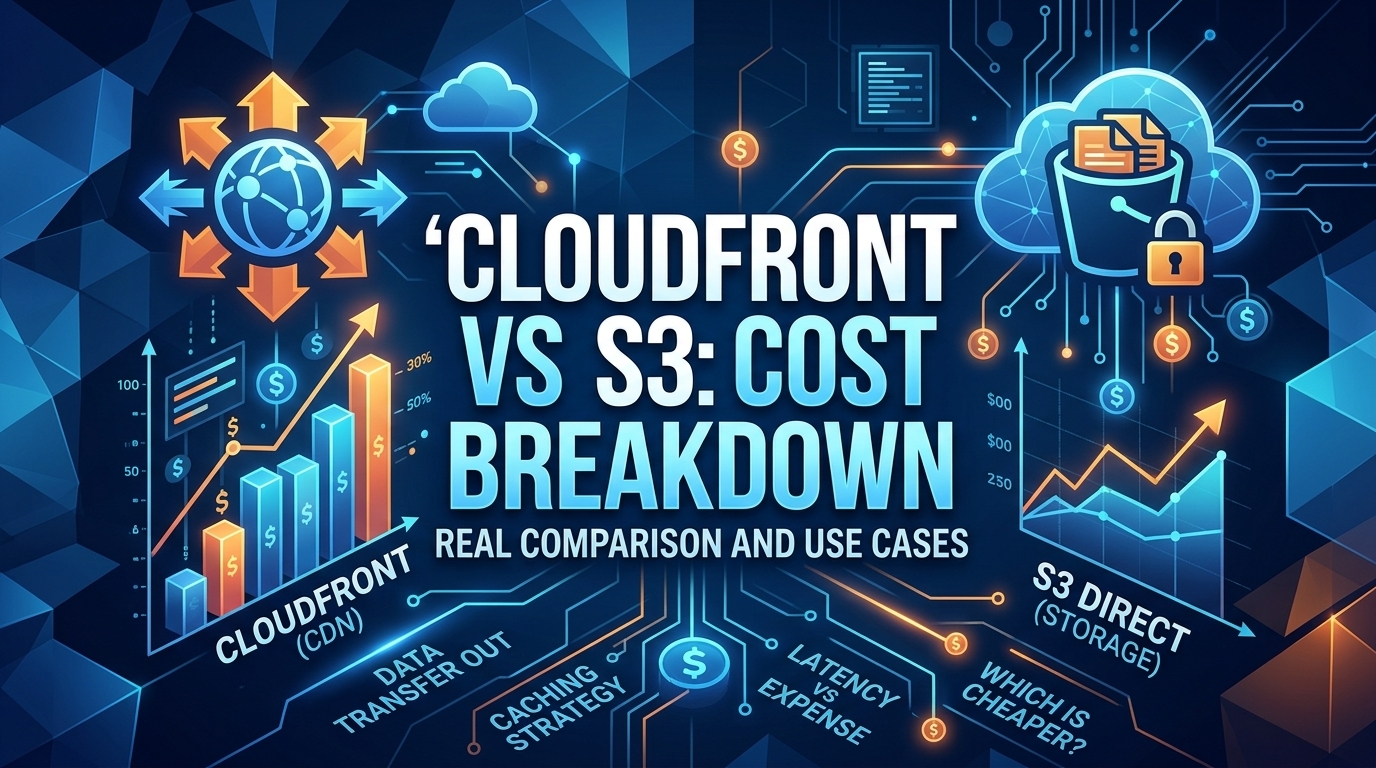
The CloudFront vs S3 decision depends more on object size than on traffic volume. At a 500 KB average response, 100 TB ...
Learn
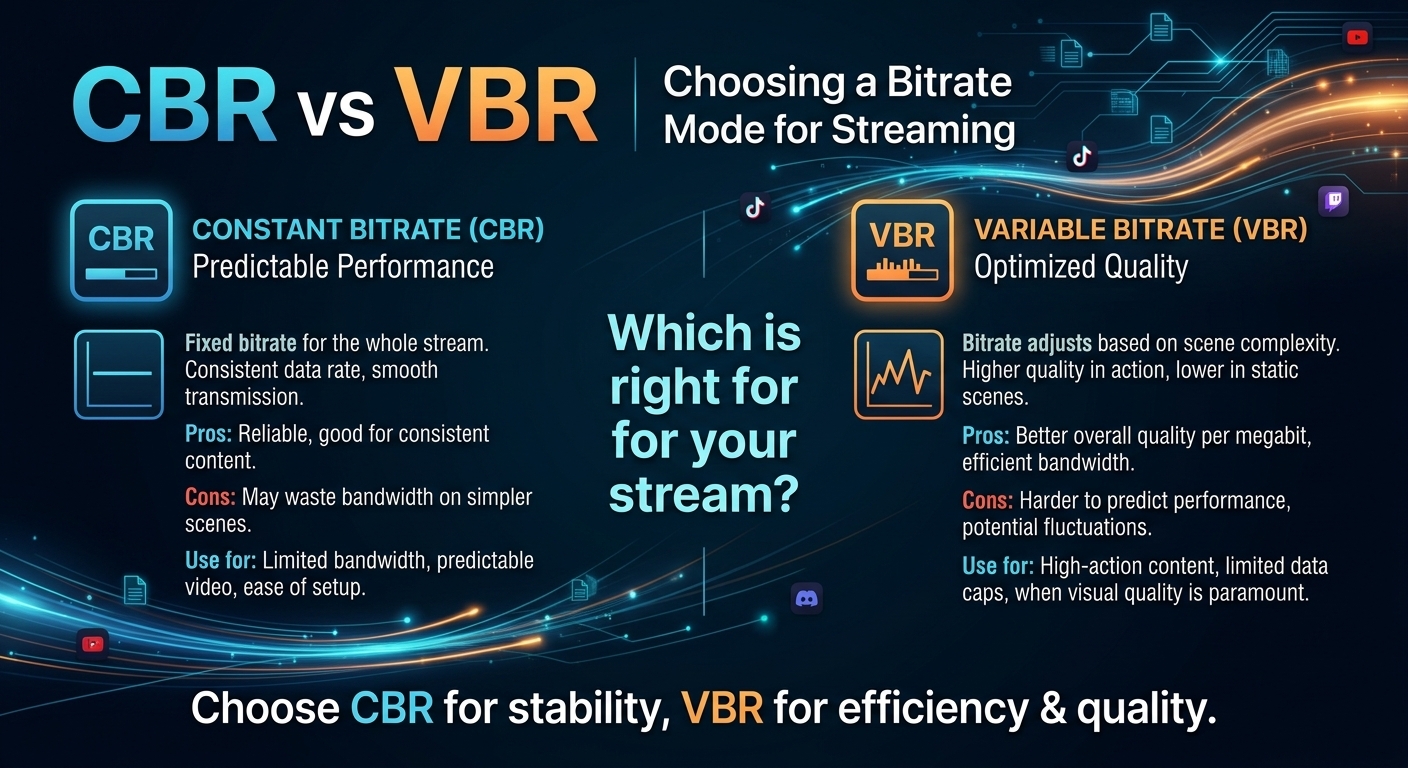
For most on-demand video, capped variable bitrate (VBR) wins the cbr vs vbr decision: it spends bits where the picture ...