
Learn
What Is a Keyframe? GOP Size and Keyframe Interval
In answer to what is a keyframe: a keyframe, or I-frame, is a video frame encoded without reference to any other frame, ...
In Q1 2026, cdnjs.cloudflare.com served over 85 billion requests per month across more than 4,800 open-source JavaScript libraries. That makes Cloudflare cdnjs the single largest public JavaScript CDN by request volume, ahead of jsDelivr and unpkg by a wide margin. Yet the question most engineering teams actually ask is not "how fast is it?" but "what breaks when it goes wrong, and what is my blast radius?" This article gives you a production-grade decision framework for Cloudflare cdnjs: when it is the correct choice, when self-hosting wins, how to harden your integration, and what failure modes to plan for in 2026.
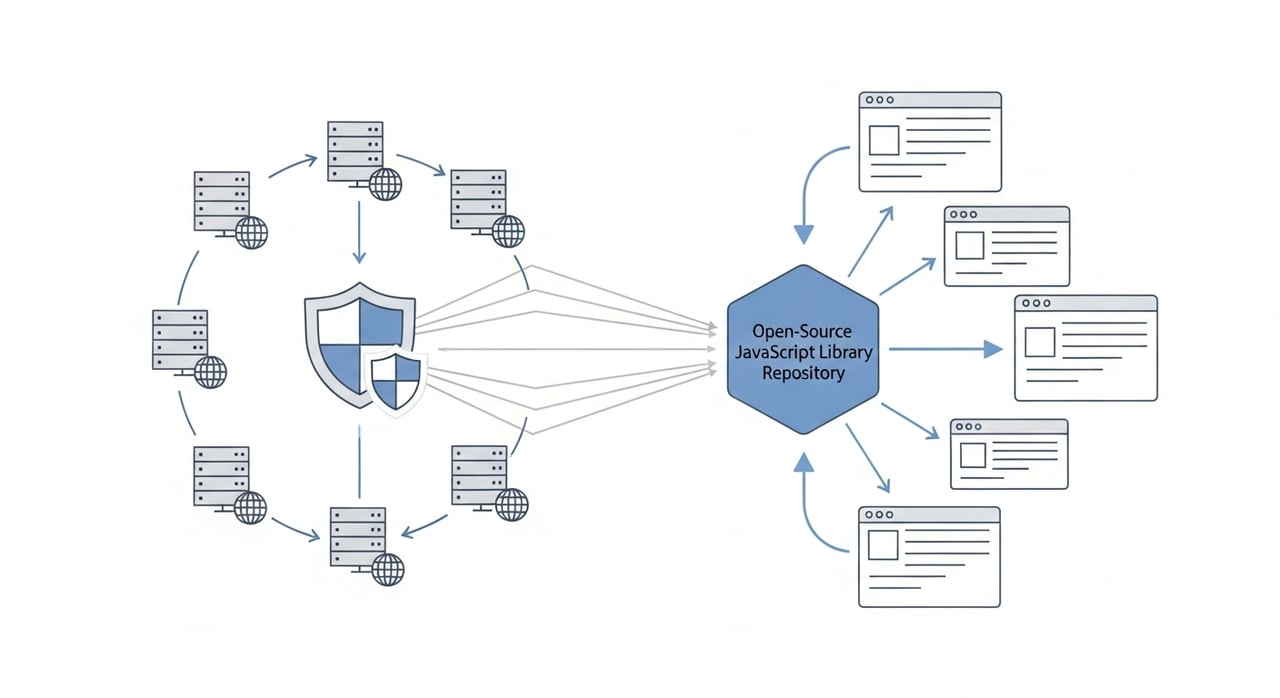
cdnjs is a community-driven project, maintained on GitHub, that mirrors popular JavaScript and CSS libraries and publishes them through Cloudflare's network. Cloudflare sponsors the infrastructure, meaning the service is free, with no authentication, no rate limits for normal usage, and no SLA. That last detail matters. It is an open-source project backed by enterprise infrastructure, not an enterprise service with open-source governance.
As of May 2026, the cdnjs repository auto-ingests libraries from npm using a bot-driven pipeline. Library authors can also submit packages directly via pull request. Cloudflare then distributes the assets across its 330+ edge locations, applying Brotli compression, HTTP/3, and aggressive cache TTLs. The median TTFB for a cdnjs asset from a cold edge cache sits around 18-25ms in major metros, based on 2026 synthetic monitoring data from independent performance benchmarks.
The security model for cdnjs rests on three layers, and understanding each is critical before you ship a production dependency on it.
cdnjs publishes SHA-256 and SHA-384 hashes for every file version. If you include the integrity attribute on your script tag, the browser will refuse to execute the file if a single byte has changed. This is your primary defense against supply-chain tampering. In 2026, cdnjs adopted automated SRI hash regeneration whenever a library version is re-published due to upstream corrections, closing a gap that previously left stale hashes in the API for hours.
After the 2021 incident where a compromised maintainer npm account led to a brief window of concern (no malicious code reached cdnjs, but the event triggered a full audit), Cloudflare locked down the bot that syncs from npm. As of 2026, every ingested package goes through automated static analysis, and new libraries require manual review before first inclusion. Updates to existing libraries are still automated but are subject to diff-size heuristics that flag anomalies.
All cdnjs traffic is served over TLS 1.3 with HSTS preload. Cloudflare's own network-layer protections absorb volumetric DDoS without intervention from the cdnjs project. Because the assets are fully cacheable and immutable per version, origin load is negligible. In practice, a cache purge event is the closest thing to an "outage" that most users would ever observe.
The conversation around public CDNs shifted in 2022 when browsers partitioned their HTTP caches by top-level site. The old argument that "everyone loads React from the same CDN, so the browser already has it cached" is dead. Cache partitioning in Chrome, Firefox, and Safari means your users fetch a fresh copy regardless of whether another site loaded the same library from the same URL. That changes the calculus significantly.
| Criterion | Cloudflare cdnjs | Self-Hosted (Own CDN) |
|---|---|---|
| Setup cost | Zero. Drop in a script tag. | Build pipeline + CDN config. Minutes to hours. |
| Cross-site cache benefit | None (cache partitioning, 2026). | None, but same-origin caching is optimal. |
| Connection overhead | Extra DNS + TLS handshake to cdnjs.cloudflare.com. | Served from same origin or preconnected domain. |
| SLA | None. Best-effort, no commercial guarantee. | Depends on your CDN provider's SLA. |
| Supply-chain control | SRI mitigates tampering. No control over availability. | Full control. Pin versions in your build. |
| Best for | Prototyping, open-source docs, low-stakes marketing pages, internal tools. | Production SaaS, e-commerce, anything with an SLA to your own customers. |
The honest recommendation for 2026: if your application has paying users or uptime commitments, self-host your JavaScript through a CDN you control. Use cdnjs for development, documentation sites, and environments where the zero-config advantage outweighs the lack of an SLA.
This section does not exist in most cdnjs guides, and it should. Here are the real failure modes engineering teams encounter in production with any public JavaScript CDN, including Cloudflare cdnjs.
Cloudflare's network is vast but not immune to regional routing anomalies. In March 2026, a brief BGP leak by a European transit provider caused cdnjs requests from parts of Germany and Poland to route through a congested path, adding 400ms+ of latency for roughly 12 minutes. If your frontend has no fallback, that is 12 minutes of degraded experience for every user in that region.
cdnjs occasionally removes library versions that violate licensing or contain known vulnerabilities. If you pin to a specific version without SRI and without a fallback, a removed version returns a 404 and your application breaks. This happened with several outdated jQuery plugins in early 2026.
When cdnjs re-publishes a corrected file under the same version number (rare, but it happens), your hardcoded SRI hash will reject the new file. The browser blocks execution silently. No console error unless you are actively monitoring the Security Policy violation report-uri. Most teams discover this through user complaints, not monitoring.
The standard defense is a local fallback script tag that fires if the cdnjs resource fails to load. Combine that with a CSP report-uri endpoint and synthetic monitoring against cdnjs URLs from multiple regions. If you are running at meaningful scale, this overhead often exceeds the cost of just bundling the library yourself.
For teams delivering large volumes of static assets beyond just a few third-party libraries, a purpose-built CDN provides the configuration control that a free public service cannot. BlazingCDN is worth evaluating in this context: its pricing starts at $5 per TB and scales down to $2.50 per TB at volume (as of October 2026). For enterprise workloads with SaaS, media, or gaming traffic, that pricing delta compounds fast. The platform also offers Anycast routing with built-in failover and flexible configuration.
cdnjs is a free, open-source JavaScript and CSS library CDN hosted on Cloudflare's network. It is used to serve popular front-end libraries like React, Vue, Lodash, and thousands of others without requiring developers to self-host those files. As of 2026, it indexes over 4,800 libraries.
cdnjs is reasonably safe when used with SRI hashes and a local fallback strategy. However, it carries no commercial SLA, and you have no control over version availability or re-publish events. For production applications with uptime commitments, self-hosting through a CDN you control is the safer architectural choice.
cdnjs has the largest request volume and is backed directly by Cloudflare's infrastructure. jsDelivr offers a multi-CDN architecture (Cloudflare + Fastly) for redundancy. unpkg is a single-origin service backed by Cloudflare Workers. In 2026 synthetic benchmarks, all three deliver sub-30ms TTFB in major metros; the meaningful differences are in governance, SLA posture, and fallback behavior during outages.
Cache partitioning eliminated the cross-site cache hit advantage that was the original selling point. The remaining benefits are zero-config convenience and geographic distribution. If you already operate a CDN for your own assets, bundling libraries into your build pipeline is now strictly better from a performance perspective because it avoids the additional DNS lookup and TLS handshake.
The cdnjs API and website both provide SRI hashes per file per version. Copy the integrity attribute value and add it to your script tag along with crossorigin="anonymous". Monitor for CSP violation reports to catch hash mismatches caused by upstream re-publishes.
Pick one production page that loads a library from cdnjs.cloudflare.com. Verify that every script tag includes an SRI hash and a local fallback. Set up a CSP report-uri endpoint if you do not have one. Then run a WebPageTest comparison: the cdnjs version versus the same library bundled from your own origin. Measure the connection overhead delta. If the difference exceeds 50ms at P75 for your key markets, you have your answer on whether to migrate. If it does not, keep cdnjs and tighten your fallback. Either way, you will have real data instead of assumptions.

Heavy traffic.
Light bill.
The CDN for video and large traffic
Learn
In answer to what is a keyframe: a keyframe, or I-frame, is a video frame encoded without reference to any other frame, ...

Learn
New Azure CDN deployments now go only one way: Microsoft stopped accepting new Azure CDN Standard from Microsoft ...
Learn
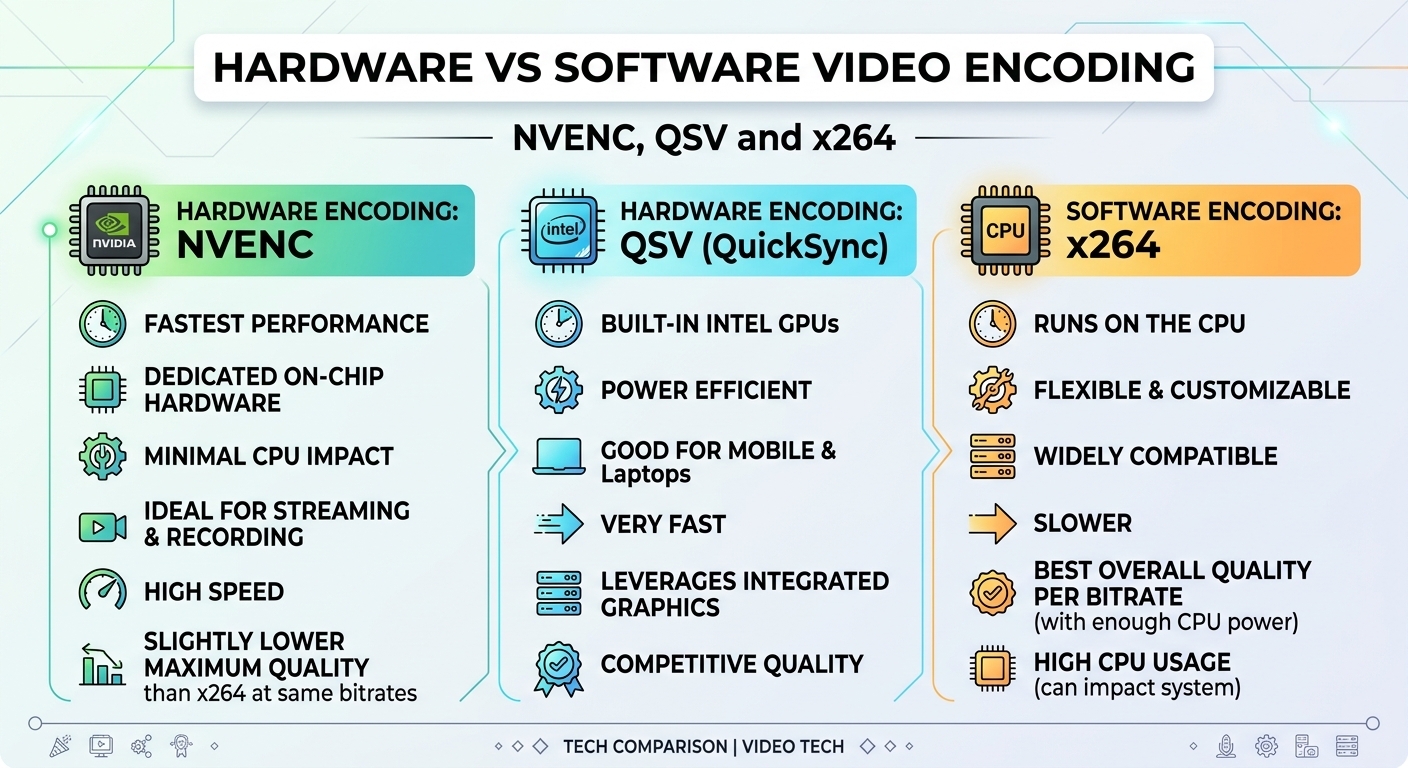
Evaluated October 2026: for live video, a modern GPU hardware encoder (NVIDIA NVENC on Turing or newer, Intel Quick ...