
Learn
Lossy vs Lossless Compression: Images, Video and Audio
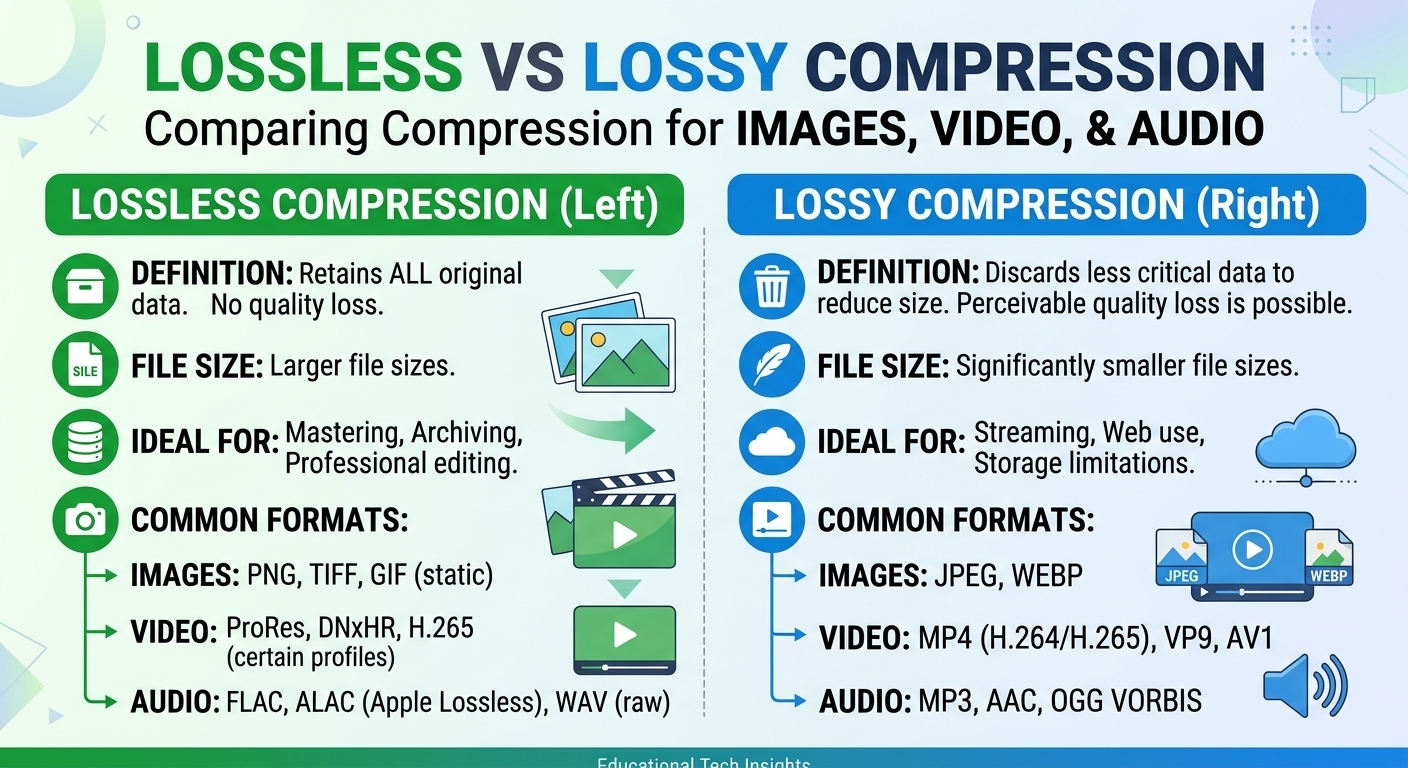
Lossy vs lossless compression comes down to one trade: lossless compression rebuilds every original bit and typically ...
In Q1 2026, median page weight crossed 2.8 MB, global mobile traffic exceeded 63% of all requests, and the 75th-percentile Largest Contentful Paint for sites without a content delivery network sat at 4.9 seconds. If you are still asking what is a CDN in operational terms rather than textbook terms, the real question is: what does a CDN need to do differently now versus even two years ago, when HTTP/3 adoption was half of what it is today and edge compute was still a conference-talk novelty? This article gives you seven concrete, measurable benefits of a modern CDN, a cost-per-TB decision framework you can use in your next architecture review, and a failure-mode analysis section that most CDN explainers skip entirely.
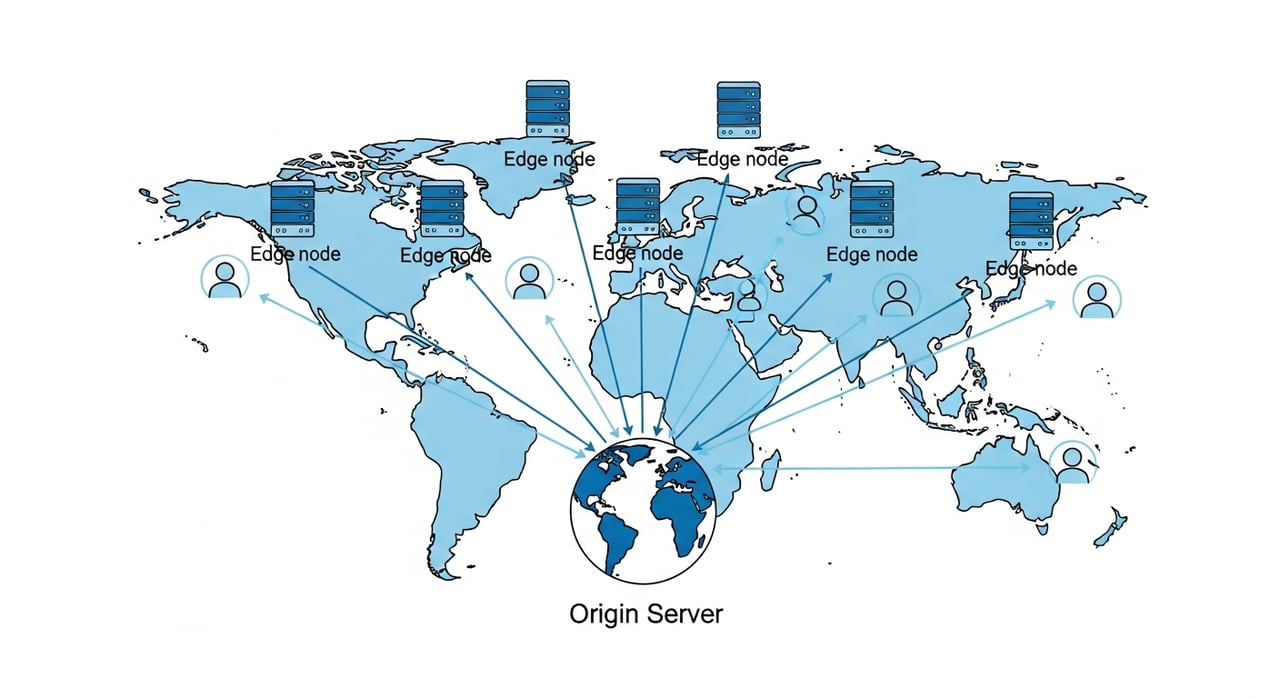
A content delivery network is a distributed system of edge servers that caches and serves content closer to the requesting client. That part has not changed. What has changed is the scope. As of 2026, a CDN is expected to handle TLS termination, HTTP/3 with QUIC, image and video transcoding at the edge, request-level routing logic, and real-time cache invalidation across thousands of nodes in under 500 ms. The CDN meaning has expanded from "geographic cache layer" to "programmable delivery platform." If your mental model is still "Varnish in a datacenter across the ocean," you are working with a 2018 definition.
The distinction between a content delivery network and a content distribution network is largely semantic. Some vendors use "distribution" to emphasize push-based workflows (software updates, firmware images), while "delivery" tends to imply pull-through caching. In practice, every major provider supports both models. The CDN full form remains Content Delivery Network, but the abbreviation now covers a far wider set of capabilities than the name suggests.
A request hits a CDN-managed hostname. DNS resolves to an anycast IP or a geographically steered CNAME. The edge node terminates TLS 1.3 (or QUIC 0-RTT on repeat visits), checks its local cache, and either serves the object or fetches it from a mid-tier shield or the origin. That is the baseline. In 2026, the interesting work happens in the decision layer between cache lookup and origin fetch.
Most CDNs now support lightweight compute at the edge, whether through V8 isolates, Wasm modules, or Lua-based scripting. This means A/B test assignment, geofenced content variants, token validation, and request coalescing all happen before a byte leaves the edge. The result: origin request volume drops by 40-70% on cache-heavy workloads compared to a naive pull-through configuration, based on published telemetry from major providers as of early 2026.
HTTP/3 adoption among CDN-served domains crossed 52% in Q1 2026. QUIC's 0-RTT connection resumption eliminates a full round trip for returning users, which translates to 80-150 ms savings on mobile networks. If your CDN does not support HTTP/3 by default, you are leaving measurable performance on the table.
Median latency improvements are well understood. The 2026-relevant metric is P99 latency. A well-configured CDN with regional shield tiers and connection keep-alive pools to the origin can cut P99 TTFB from 1,200 ms to under 300 ms for intercontinental requests. That tail matters because it is where your most latency-sensitive users — mobile, high-RTT regions, congested last-mile networks — actually live.
Flash traffic events — product launches, breaking news, viral campaigns — generate 10-50x normal request volume in minutes. A CDN absorbs this at the edge without requiring origin auto-scaling. In 2026, the threshold for "bursty" has shifted: with short-form video and live commerce, traffic spikes are more frequent and steeper than they were in 2024. Your origin should not see more than 1-2% of total request volume during a spike if your cache hierarchy is configured correctly.
Cloud egress pricing remains one of the largest line items in infrastructure budgets. As of May 2026, AWS charges $0.09/GB for the first 10 TB out of us-east-1. A CDN that charges $0.0025-$0.005/GB at volume represents an 18-36x cost reduction per byte served ($0.09 versus $0.005 to $0.0025). For a site pushing 100 TB/month, the difference is between $9,000 in raw cloud egress and $250-$500 through a cost-efficient CDN. This is the single largest financial argument for using a CDN at scale.
Google's page experience signals continue to weight LCP, INP, and CLS in 2026 ranking. A CDN directly improves LCP by reducing server response time and enables better INP by offloading static assets so the main thread is freed earlier. Sites that moved from origin-only serving to a properly tuned CDN have reported 15-30% improvements in LCP across their page corpus. Faster pages also correlate with lower bounce rates, which is an indirect but measurable CDN benefit for organic traffic.
If your origin goes down, a CDN with stale-while-revalidate and stale-if-error directives can continue serving cached content for hours. This is not a theoretical benefit. In 2026, multiple high-profile origin outages were masked entirely by CDN cache, and end users experienced zero downtime. The CDN becomes a resilience layer, not just a performance layer.
Distributing traffic across a CDN's edge network dilutes volumetric attack impact. TLS termination at the edge means your origin never handles raw TCP connections from the public internet. Rate limiting, bot detection, and request filtering at the edge reduce the blast radius of application-layer attacks before they reach your infrastructure.
Operating your own multi-region deployment to serve users in 40+ countries is expensive and operationally complex. A CDN gives you presence in those regions without the operational burden of managing instances, networking, and compliance in each geography. For teams that need to serve APAC and EMEA from a US-based origin, the CDN is the difference between 200 ms and 1,400 ms TTFB for those regions.
The question of CDN vs web hosting still generates confusion. Web hosting runs your application logic and stores your canonical data. A CDN caches and delivers the output of that application to end users. They are complementary, not interchangeable. However, with edge compute capabilities expanding, CDNs now handle work that previously required origin-side logic: geolocation-based redirects, personalization token injection, A/B routing, and even lightweight API responses. The boundary is blurring, but the origin remains the source of truth. A CDN is not a replacement for your hosting; it is the delivery and resilience layer in front of it.
This is the section most CDN explainers skip. When evaluating a content delivery network, raw per-GB pricing is only one variable. Here is a framework for comparing total cost of delivery:
| Factor | What to measure | Why it matters |
|---|---|---|
| Per-GB / per-TB price | Tiered pricing at your expected volume | The headline number; ranges from $0.0025 to $0.08/GB in 2026 |
| Origin shield / mid-tier | Whether shield requests incur extra cost | Some vendors charge separately for shield hits, inflating effective cost by 10-20% |
| Request pricing | Cost per 10K HTTP/HTTPS requests | High-request, low-byte workloads (APIs, small assets) can make request fees dominate |
| Cache hit ratio achievable | Measured CHR at your traffic patterns | A CDN with 95% CHR at lower cost beats one with 85% CHR at the same price |
| Commit vs. pay-as-you-go | Volume commitment discount structure | Annual commits can cut per-TB cost by 40-60% vs. on-demand |
| Overage penalty | What happens when you exceed your tier | Surprise bills on traffic spikes negate the savings from a low base rate |
For enterprise and high-volume workloads, BlazingCDN offers a pricing model worth benchmarking against. Starting at $5 per TB and scaling down to $2.50 per TB at volume (as of October 2026), it is built for teams that need predictable costs at scale. At 100 TB/month, BlazingCDN's $415 total compares with roughly $6,965 for Amazon CloudFront pay-as-you-go, about 17x less.
This is the section you will not find in most CDN explainers. Understanding failure modes is essential for anyone operating a CDN at production scale.
A global cache purge on a high-traffic object causes every edge node to simultaneously fetch from origin. If your origin is a single-region deployment, this can saturate its bandwidth or connection pool in seconds. Mitigation: use request coalescing (also called request collapsing) at the edge, and stagger purges by region where possible.
Automated certificate renewal at the edge fails silently. Users start seeing certificate warnings or hard failures. This is more common than vendors admit, especially with short-lived certificates (90-day or 30-day rotation). Mitigation: monitor certificate expiry across all edge nodes independently from the CDN's own reporting, and set alerts at 14 days before expiry.
The CDN's health check endpoint returns 200, but the origin is actually serving degraded responses (partial data, stale database reads). The CDN continues routing traffic to a sick origin. Mitigation: make your health check endpoint validate actual application state, not just process liveness.
If your CDN uses DNS-based failover to a secondary origin or provider, TTLs and resolver caching can delay failover by minutes. During that window, users hit a dead or degraded path. Mitigation: use low TTLs (30-60s) on CDN CNAMEs, and test failover timing quarterly under realistic conditions.
Yes, even for single-region traffic. A CDN offloads static asset serving from your origin, reduces your cloud egress bill, and provides a resilience layer if your origin fails. The latency benefit is smaller for co-located users, but the cost and resilience benefits remain significant.
For truly dynamic responses, the CDN still provides value through connection optimization: persistent keep-alive pools to your origin, TLS session resumption, TCP congestion window tuning, and HTTP/3 transport. These reduce round-trip overhead even when the response itself cannot be cached.
For video, the CDN handles adaptive bitrate segment delivery, reducing rebuffer rates. As of 2026, the industry benchmark for rebuffer ratio on CDN-served streams is under 0.3%, compared to 1.5-3% for origin-direct delivery. The CDN also enables multi-CDN strategies for live events, where failover between providers happens at the manifest level.
HTTP/3 improves the transport layer, but it does not reduce geographic distance to your origin. A user in Singapore hitting an origin in Virginia still faces 200+ ms RTT regardless of protocol. A CDN with an edge node in Singapore eliminates that distance. Server push, meanwhile, has been deprecated in Chrome since 2022 and is not a substitute for edge caching.
A reverse proxy sits in front of a single origin and handles request routing, caching, and TLS termination. A CDN is a globally distributed network of reverse proxies with coordinated cache management, anycast routing, and automated failover. Every CDN edge node is a reverse proxy; not every reverse proxy is a CDN.
Instrument three metrics: cache hit ratio (target above 90% for static assets), P75 and P99 TTFB split by geography, and origin request volume as a percentage of total requests. If your CHR is below 80%, the problem is likely cache key configuration or low TTLs, not the CDN itself.
Pull your CDN's cache hit ratio report for the last 30 days. Break it down by content type: images, scripts, fonts, API responses, video segments. If any category is below 85% CHR, inspect the cache key and response headers for that content type. Misconfigured Vary headers and overly short max-age values are the two most common causes of low CHR, and fixing them is the fastest way to reduce origin load and egress cost without changing providers. If you are evaluating CDN options and want a concrete cost comparison, run your monthly transfer volume through at least three providers' pricing calculators and apply the decision framework above. The numbers will speak for themselves.

Heavy traffic.
Light bill.
The CDN for video and large traffic
Learn
Lossy vs lossless compression comes down to one trade: lossless compression rebuilds every original bit and typically ...
Pricing - Pricing & Costs
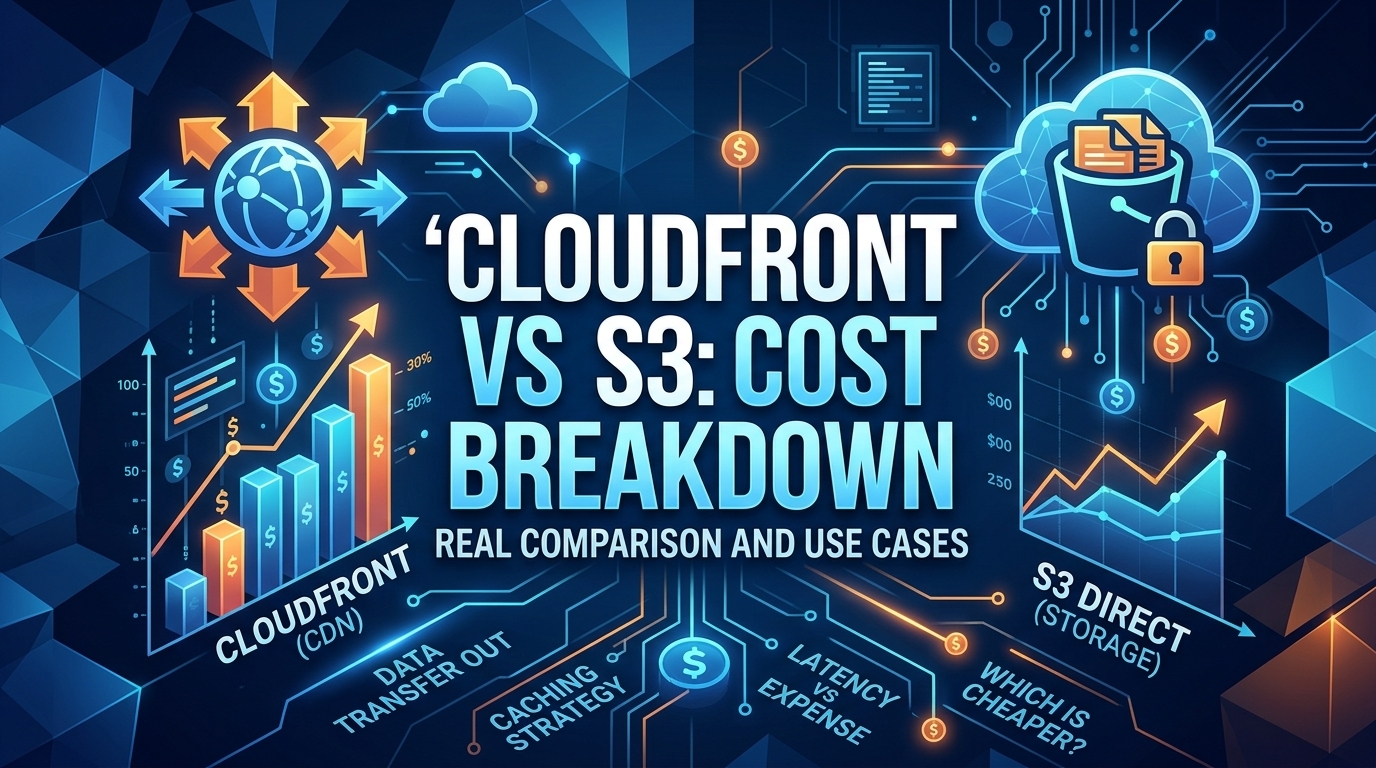
The CloudFront vs S3 decision depends more on object size than on traffic volume. At a 500 KB average response, 100 TB ...
Learn
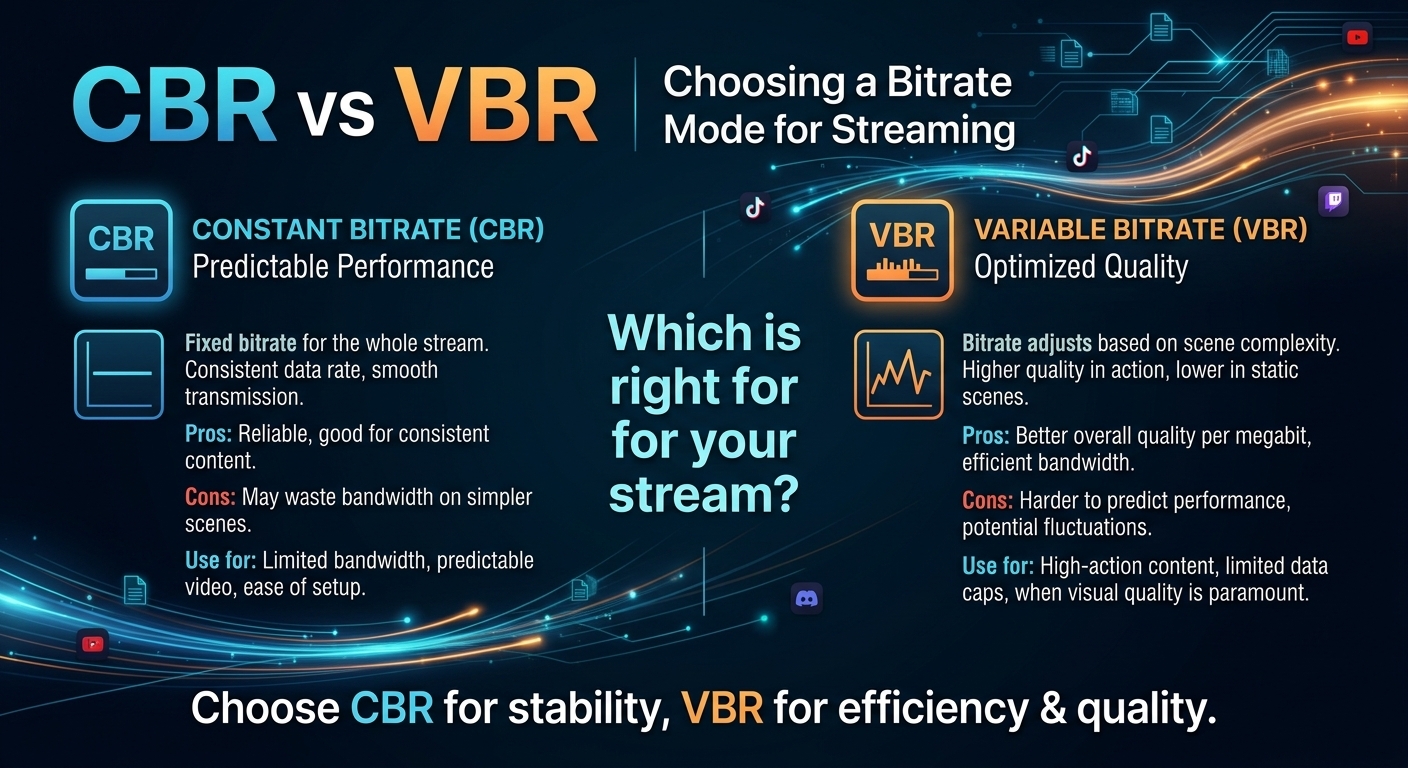
For most on-demand video, capped variable bitrate (VBR) wins the cbr vs vbr decision: it spends bits where the picture ...