Learn
Lossy vs Lossless Compression: Images, Video and Audio
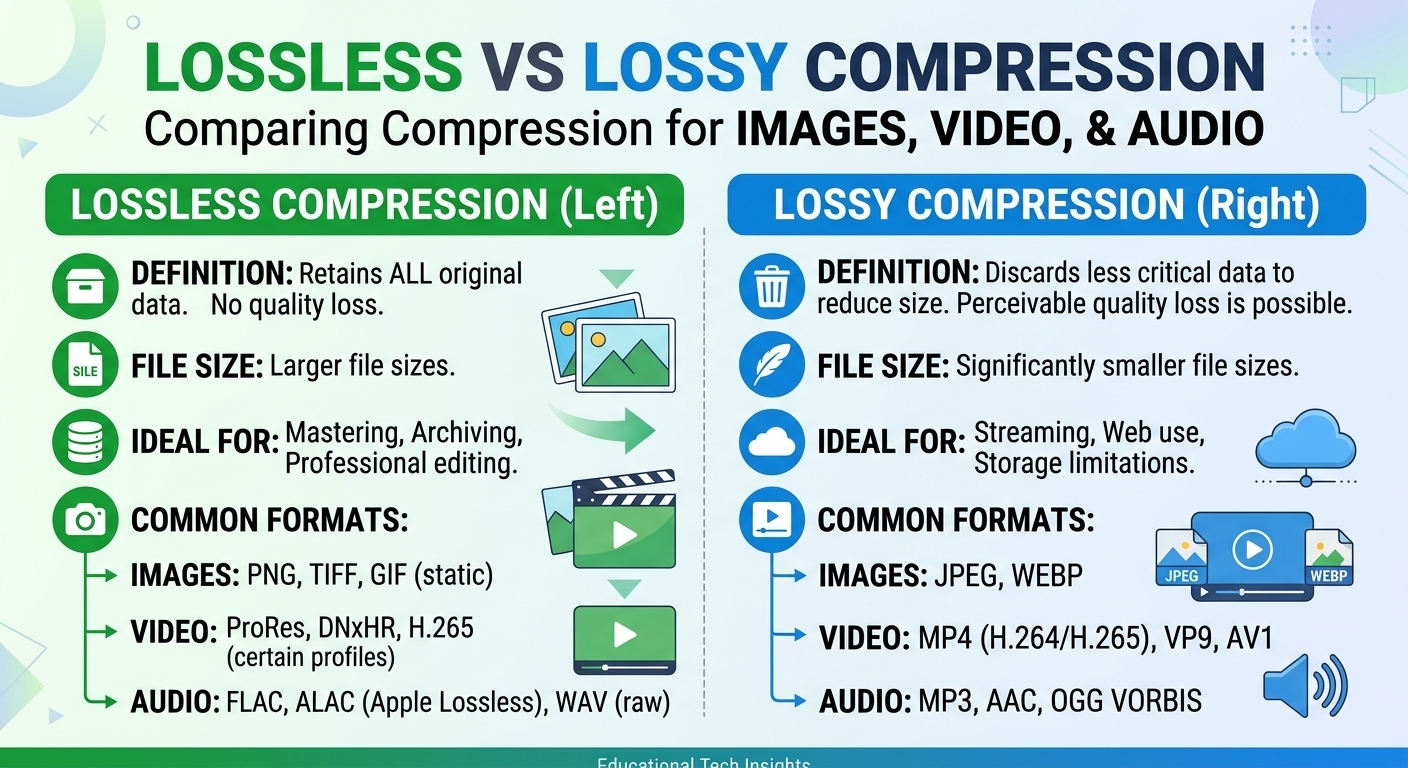
Lossy vs lossless compression comes down to one trade: lossless compression rebuilds every original bit and typically ...
In Q1 2026, the global internet backbone carried an estimated 5.2 exabytes of inter-AS traffic per day, up roughly 28% year-over-year. Yet a single misconfigured BGP announcement from a mid-tier European carrier in February 2026 rerouted traffic for over 1,400 prefixes through a congested path in Frankfurt, adding 90 ms of latency for millions of users for nearly 40 minutes. The incident is a reminder that the internet backbone is both staggeringly capable and alarmingly fragile. This article gives you the architectural playbook: how anycast, Internet Exchange Points, and Tier 1 transit networks combine to form the substrate your CDN actually rides on, what changed in 2026, where the failure modes hide, and what you should measure in your own stack this week.
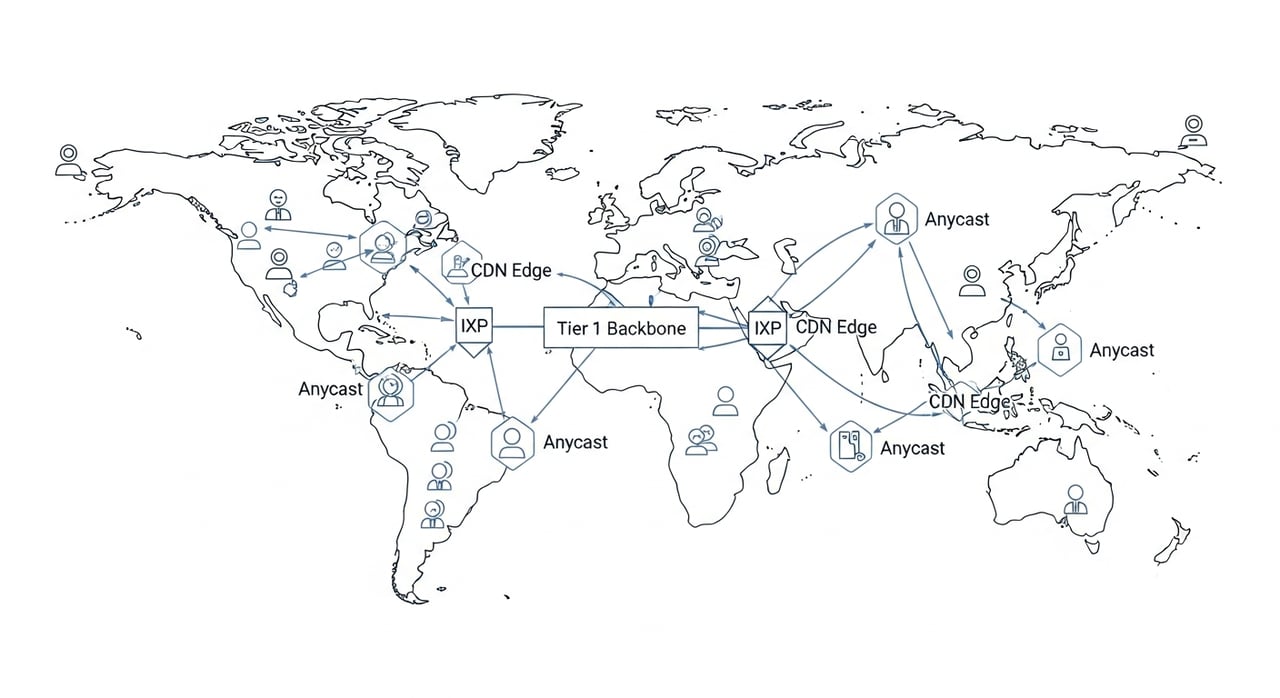
The backbone network is the set of high-capacity fiber paths and the BGP peering relationships that tie autonomous systems (ASes) together at continental and intercontinental scale. As of early 2026, roughly 80,000 ASes participate in the global routing table, but only around 20 networks qualify as Tier 1: they can reach every prefix on the internet without purchasing IP transit from anyone else. Everyone else either buys transit, peers at an IXP, or does both.
What makes 2026 different from even two years ago is density. The number of bilateral peering sessions at the world's top 30 IXPs grew 18% between January 2024 and January 2026. DE-CIX Frankfurt now regularly peaks above 16 Tb/s. AMS-IX, LINX, Equinix IX Ashburn, and IX.br São Paulo all posted record traffic volumes in Q4 2025 or Q1 2026. That density reshapes path selection, cost models, and failure blast radii in ways that matter to anyone operating a delivery network.
Anycast advertises the same /24 (or longer) prefix from multiple physical locations. The BGP best-path algorithm at every intermediate AS picks the "closest" announcement, usually by AS-path length, then by IGP metric and MED, then by tie-breakers that vary by implementation. The result is that a user's DNS query or HTTPS request lands on whichever node the routing topology considers nearest.
Two trends stand out. First, anycast catchment mapping has become operationally mainstream. Tools that perform active prefix probing from thousands of RIPE Atlas and equivalent vantage points let you see, per-prefix, which eyeball networks land on which site. If your Frankfurt site is attracting traffic from Johannesburg because a West African carrier peers in Europe, you now have the data to fix it. Second, anycast is increasingly combined with geofeed hints (RFC 8805, now widely adopted) so that CDN control planes can correct catchment anomalies without waiting for BGP convergence. If you run anycast and you are not reviewing catchment maps at least quarterly, you are flying blind on latency tail distributions.
Anycast's well-known weakness is mid-flow re-routing: if BGP converges during a long-lived TCP session, the new best path may land subsequent packets on a different node that has no connection state. With QUIC now handling over 35% of web traffic as of Q1 2026, the connection-ID-based migration in QUIC partially mitigates this. But "partially" matters. Connection migration depends on the server-side stack recognizing the CID and having access to the session state. Stateless reset still fires when it shouldn't. If you architect anycast for long-lived streaming or WebSocket workloads, you still need either session pinning at the edge or a shared state layer between anycast siblings.
An internet exchange point is a Layer 2 fabric where networks connect to exchange traffic directly. Peering at an IXP avoids the per-megabit cost of IP transit and eliminates intermediate hops. The economics in 2026 are compelling: a 100 GE port at a major European IXP costs in the range of €1,500–€4,000/month depending on the exchange. The equivalent committed rate purchased as IP transit from a Tier 1 carrier runs €0.15–€0.40/Mbps/month at scale, meaning a sustained 100 Gbps of transit costs roughly €15,000–€40,000/month. Peering the same volume at an IXP is an order of magnitude cheaper, provided you can attract enough bilateral or route-server sessions to cover the prefixes you need.
Most large IXPs now mandate RPKI ROV (Route Origin Validation) for route-server participants. As of March 2026, AMS-IX and DE-CIX both reject RPKI-invalid announcements by default on their route servers. If your ROAs are missing or stale, your prefixes silently vanish from the route-server RIB and you lose peering reach without any alarm firing. This is a real operational failure mode that catches teams who set up peering years ago and never revisited their RPKI posture.
| Factor | IP Transit (Tier 1) | Public IXP Peering | Private Peering (PNI) |
|---|---|---|---|
| Cost per Mbps (2026) | €0.15–€0.40 | Flat port fee; near-zero marginal | Cross-connect + flat fee; near-zero marginal |
| Prefix reach | Full table (all ~950k prefixes) | Only prefixes of peers present | Single peer's prefixes |
| Latency control | Carrier chooses path | Direct, single hop to peer | Direct, dedicated capacity |
| Setup complexity | Low (buy a port, get a full table) | Medium (negotiate peers, maintain ROAs) | High (bilateral contract, cross-connect) |
| Best for | Global reachability, low traffic volumes | Regional latency reduction, cost optimization at scale | High-volume, latency-sensitive flows to a single network |
Most mature CDN operators use all three simultaneously: transit for long-tail reachability, IXP peering for regional volume, and PNI for top eyeball networks. The ratio shifts as traffic grows.
A Tier 1 ISP reaches the entire internet routing table through settlement-free peering alone—no purchased transit. As of 2026, the commonly cited list includes Lumen (formerly CenturyLink/Level 3), Arelion (formerly Telia Carrier), NTT, Cogent, GTT, Liberty Global, Tata Communications, and a handful of others depending on whose methodology you trust. The practical implication for CDN operators: when you buy transit from a Tier 1 carrier, your traffic can reach any destination without hitting a paid intermediary. That reduces the number of autonomous systems in the path, which generally reduces latency and the surface area for route leaks.
In 2026, Tier 1 pricing continues its long decline. Committed 100 GE transit in North America has dropped below $0.20/Mbps/month for large buyers. But price is not the whole story. What distinguishes carriers now is congestion management and regional capacity. A Tier 1 with thin capacity on the Mumbai–Singapore segment will hurt your APAC P95 latency regardless of how cheap the blended rate looks. Ask for regional traffic-engineering SLAs, not just uptime commitments.
This section covers the production-incident patterns that the top-10 results for "internet backbone" consistently ignore. Understanding these failure modes is what separates a network that works from one that survives.
A downstream AS accidentally re-announces prefixes learned from one upstream to another, creating a more-specific or shorter-path route that attracts traffic it cannot handle. The February 2026 Frankfurt incident mentioned above followed this exact pattern. Mitigation: filter aggressively on customer cones, deploy RPKI, and monitor for unexpected AS-path changes with tools like BGPStream or your own BMP collectors.
When a large participant's session to the route server flaps, the route server withdraws and re-announces thousands of prefixes to every other participant. At a major IXP with 1,000+ peers, this generates millions of BGP updates in seconds. The downstream effect is router CPU spikes and delayed convergence across many networks simultaneously. Mitigation: tune BGP graceful-restart timers, implement route-server-specific dampening policies, and ensure your edge routers have adequate RIB/FIB capacity.
A remote peering arrangement changes, a transit provider adjusts local-pref, or a new IXP participant starts announcing your prefixes with a shorter path. Suddenly, traffic that belonged to your London site lands in New York. No alarm fires because the service is still up—just 80 ms slower for affected users. Mitigation: continuous catchment monitoring with active measurement, automated alerts on latency P95 shifts per region.
Submarine cable damage remains the highest-impact single-event failure for intercontinental backbone paths. The 2024 Red Sea cable cuts demonstrated that rerouting traffic around the Cape of Good Hope added 50–120 ms of latency to Europe–Asia paths. As of 2026, new cable systems (2Africa, Equiano) have improved diversity, but operators relying on a single transit provider for intercontinental reach remain exposed.
The interaction between anycast, IXP peering, and backbone transit determines your real-world delivery performance. Here is what to optimize in 2026:
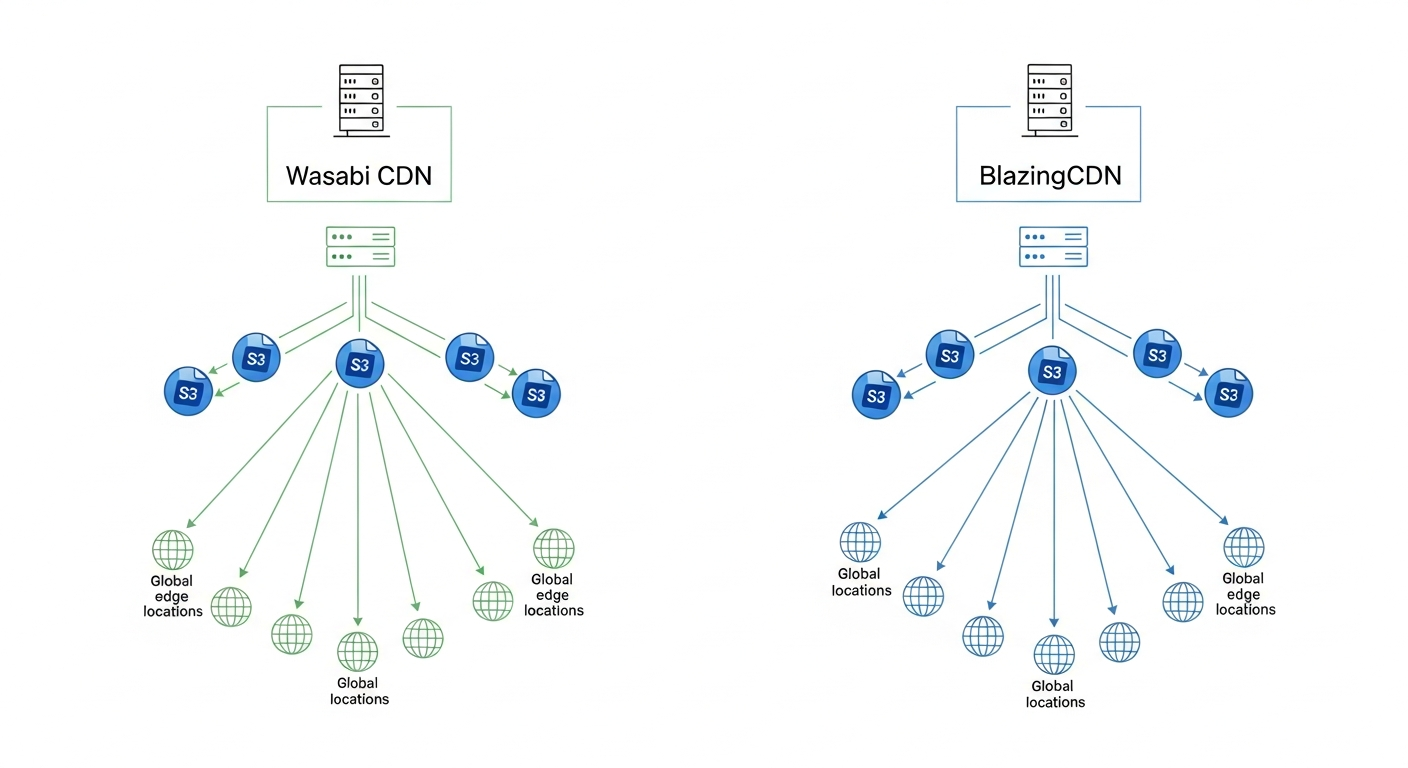
For teams evaluating CDN providers along these dimensions, BlazingCDN's comparison page is worth a look. BlazingCDN offers Anycast routing with built-in failover, starting at $5 per TB at lower volumes and scaling down to $2.50 per TB at volume (as of October 2026). For media and gaming workloads where bandwidth costs dominate the bill, that pricing compounds fast. The platform also offers flexible configuration.
The CDN announces the same IP prefix from every edge site via BGP. Each intermediate router forwards user traffic toward the topologically nearest announcement based on AS-path length and local policy. The user's request reaches the closest healthy node without any application-layer redirection. QUIC's connection ID mechanism offers partial resilience to mid-session rerouting, but stateful workloads still need session-affinity safeguards.
An IXP is a shared Layer 2 switching fabric, typically Ethernet, where multiple networks establish BGP sessions to exchange traffic directly. Participants connect via physical ports and peer either bilaterally or through the IXP's route server. The traffic never traverses a third-party transit network, which reduces latency and eliminates per-Mbps transit costs for those prefixes.
A Tier 1 ISP can reach every routable prefix on the internet through settlement-free peering alone—it buys no transit. For CDN operators, purchasing transit from a Tier 1 means your traffic has a path to any destination with minimal intermediary hops. As of 2026, committed 100 GE transit from Tier 1 carriers in North America costs below $0.20/Mbps/month for large-volume buyers.
Use all three. Transit gives you full-table reachability and is essential for long-tail prefixes. IXP peering offloads high-volume regional traffic at near-zero marginal cost. PNI (private peering) handles your largest single-network traffic concentrations with dedicated capacity. The optimal mix depends on your traffic profile, geographic distribution, and budget—see the decision matrix above.
Backbone path length and congestion directly influence TTFB for video segment requests, which in turn determines initial buffer fill time and adaptive bitrate ramp-up speed. Shorter paths with fewer intermediate ASes produce lower and more consistent latency, reducing rebuffer events. In 2026 measurements, each additional AS hop correlated with a measurable increase in P95 segment fetch time for live streams.
Despite widespread RPKI deployment, ROV is not universal—only about 40% of announced prefixes had valid ROAs as of Q1 2026. Networks that lack ROAs or do not filter based on customer-cone prefix limits remain vulnerable to accidental re-announcement. Tooling has improved, but adoption is uneven, particularly among smaller transit providers in regions with less regulatory pressure.
Pull your current anycast catchment map and overlay it against your actual user-latency telemetry by region. If you see a region where P95 latency is more than 30 ms higher than the geographic distance would predict, you likely have a catchment anomaly—traffic routing through the wrong site. Next, audit your RPKI ROAs: are all your announced prefixes covered, and are the max-length values correct? Finally, check your IXP route-server sessions. If any have been down for more than 24 hours without an alert, your monitoring has a blind spot. These three checks take a few hours and directly affect the backbone-level performance of every byte you deliver.

Heavy traffic.
Light bill.
The CDN for video and large traffic
Learn
Lossy vs lossless compression comes down to one trade: lossless compression rebuilds every original bit and typically ...
Pricing - Pricing & Costs
The CloudFront vs S3 decision depends more on object size than on traffic volume. At a 500 KB average response, 100 TB ...
Learn
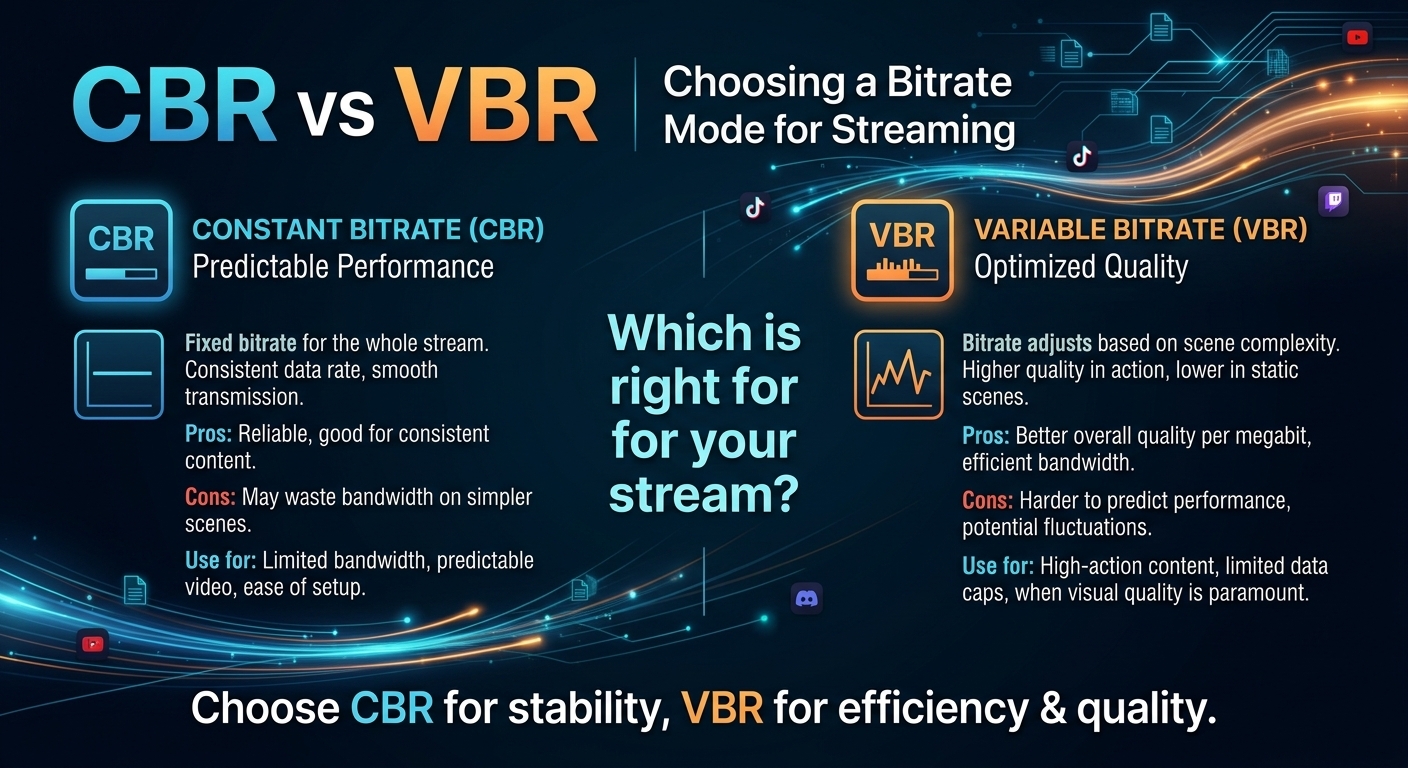
For most on-demand video, capped variable bitrate (VBR) wins the cbr vs vbr decision: it spends bits where the picture ...