Learn
Lossy vs Lossless Compression: Images, Video and Audio
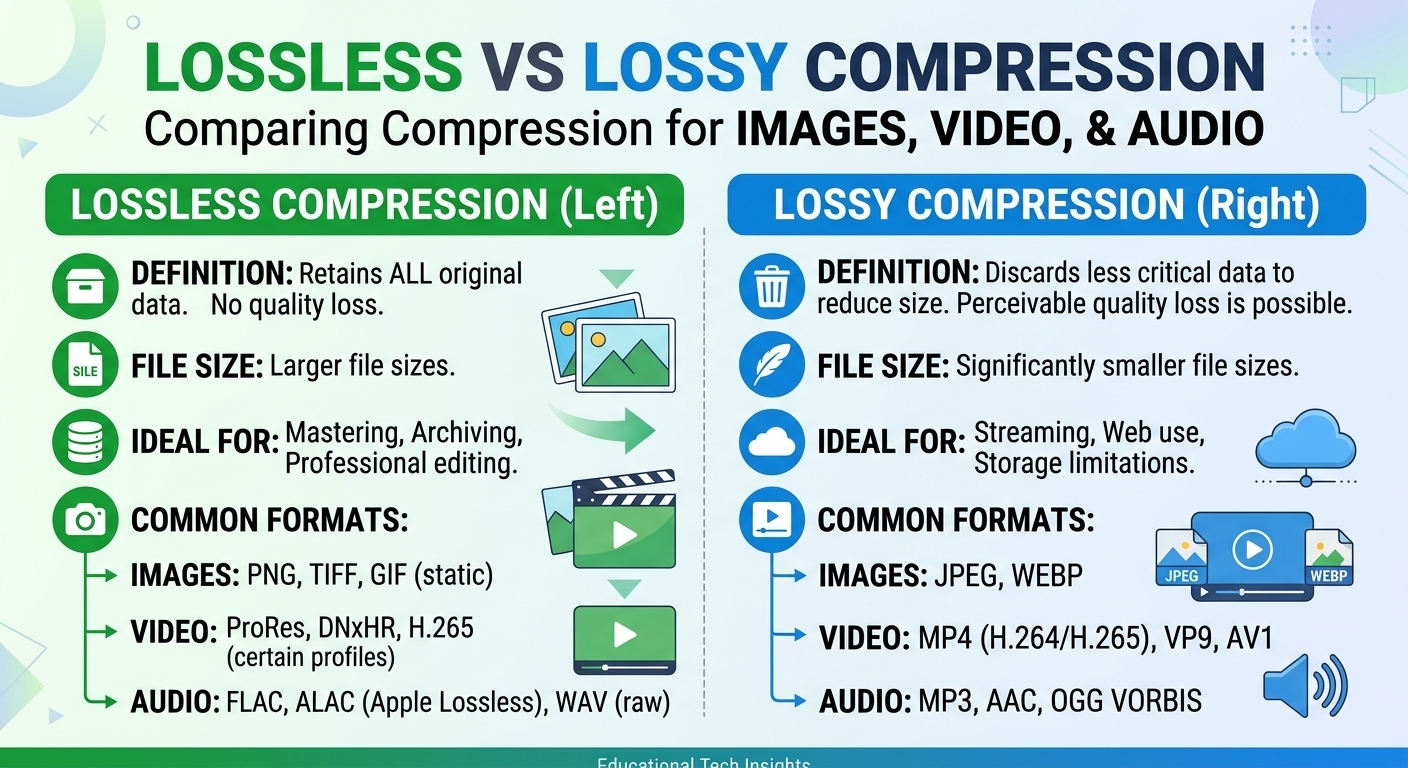
Lossy vs lossless compression comes down to one trade: lossless compression rebuilds every original bit and typically ...
In March 2026, a fleet management company pushed a 14 MB firmware patch to 1.2 million vehicle telematics units simultaneously. Without edge-aware delivery, their origin collapsed inside 90 seconds. With a CDN for IoT distribution in front, the rollout completed in under 11 minutes at a P99 latency of 38 ms. The difference between those two outcomes is the difference between an architecture that treats IoT traffic like web traffic and one purpose-built for machine-scale concurrency. This article gives you seven architectural patterns for using a CDN to deliver content, telemetry, and updates to IoT fleets in 2026 — plus a failure-mode analysis you will not find elsewhere.
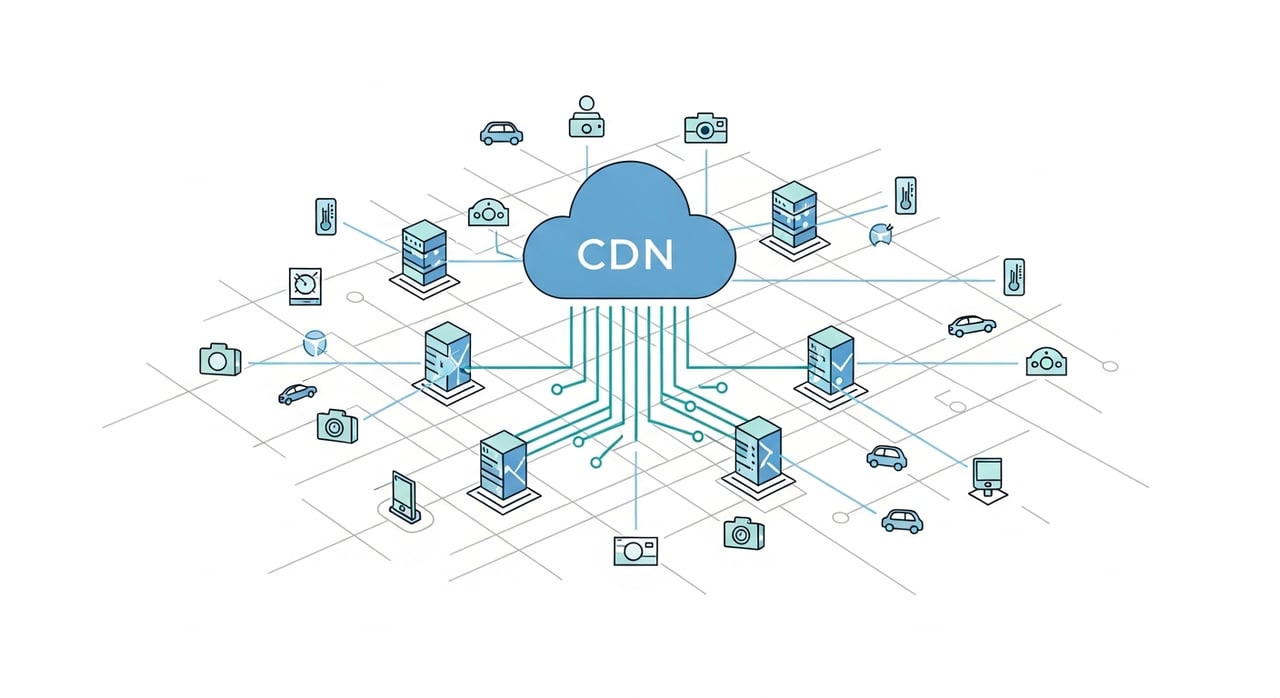
As of Q1 2026, the number of active connected IoT devices crossed 29.4 billion globally. That figure matters because IoT traffic patterns diverge sharply from the web workloads CDNs were designed for. Browser sessions are bursty, human-initiated, and relatively few per origin. IoT devices generate small, frequent, machine-initiated requests — firmware manifests, telemetry POSTs, config pulls, certificate rotations — at concurrency levels that look more like a sustained DDoS than normal traffic.
Three properties define IoT delivery in 2026 that did not apply even two years ago:
The single riskiest operation in any IoT fleet is a firmware update. How to use a CDN for IoT OTA updates without bricking devices: separate the manifest from the binary. Serve the manifest from the origin with a short TTL (30–60 s) so rollback is instant. Serve the binary from edge cache with content-addressable keys (SHA-256 hash in the URL). This guarantees every device pulling the same manifest version gets byte-identical firmware, regardless of which edge node serves it.
Routing millions of small POST requests back to a central cloud region wastes bandwidth and adds latency. Modern IoT content delivery network architectures place lightweight ingest endpoints at edge locations that batch, compress, and forward telemetry upstream. This cuts origin bandwidth by 60–80% and keeps round-trip times under 50 ms for time-sensitive sensor data — think patient monitors or grid-frequency sensors.
Many IoT devices run on microcontrollers with limited TLS session memory. Holding open thousands of TLS 1.3 sessions per edge node is cheap for the CDN but expensive for the device fleet. Pattern: use connection coalescing at the edge — one persistent HTTP/2 or MQTT session per device class, multiplexed across individual device requests. This reduces device-side memory pressure and handshake overhead by up to 4×.
Regulatory requirements (EU MDR for medical devices, UNECE R155 for automotive) increasingly demand that certain IoT data and firmware remain within jurisdictional boundaries. Edge CDN for IoT setups in 2026 must support cache partitioning by region — not just routing, but actual storage isolation. This means configuring cache keys that include a region identifier and enforcing purge policies per partition.
Devices on LTE-M or NB-IoT have highly variable throughput. Pushing a 20 MB update at full speed saturates the radio and causes retransmissions. The pattern borrowed from video streaming: chunk the update into range-request segments and let the device pull at its measured throughput. The CDN serves byte-range requests from cache without hitting origin, and the device controls pacing. Completion rates on constrained cellular links improve 30–40% versus naive full-file downloads.
IoT device certificates rotate more frequently in 2026 as NIST post-quantum migration timelines tighten. Distributing new root certificates or config bundles to millions of devices is a CDN-shaped problem. Cache the bundle at edge with a 5-minute TTL, sign it with an ECDSA or ML-DSA signature the device validates locally, and use conditional GETs (If-None-Match) to minimize transfer when nothing has changed.
When a million devices check for updates within the same 60-second window — common with cron-aligned polling — the request fan-out can overwhelm even a well-provisioned origin. An origin shield layer collapses those million edge-to-origin requests into one. For IoT workloads, configure the shield TTL to match the manifest TTL and set request collapsing (coalescing) aggressively. This is the single highest-leverage CDN vs edge computing for IoT scalability optimization available.
This section covers production failures that teams discover only under real fleet load. These are not theoretical — they map to outage patterns observed across smart city, automotive, and medical IoT platforms in 2025–2026.
| Failure Mode | Root Cause | Mitigation |
|---|---|---|
| Stale manifest served after rollback | Long TTL on manifest cache; purge propagation delay across edge nodes | Keep manifest TTL ≤ 60 s; use versioned URL paths; implement instant purge API with confirmation |
| Thundering herd on origin after cache expiry | All devices poll on identical cron schedule; cache expires simultaneously | Add jitter to device poll interval (±15%); enable request coalescing at shield; use stale-while-revalidate |
| Partial firmware delivered after mid-transfer eviction | Cache eviction policy prioritizes recency over completeness; large binary evicted before device finishes download | Pin OTA binaries in cache for update window duration; use chunked range requests with device-side integrity checks |
| TLS handshake storm from constrained devices | Devices lack session ticket support; every request triggers full handshake | Enable 0-RTT where safe; extend session ticket lifetime; use connection coalescing per device class |
| Geo-fence violation during failover | CDN health check routes traffic to out-of-region PoP during regional outage | Configure failover policy to prefer degraded-but-compliant over fast-but-non-compliant; enforce region-locked DNS |
If you are deploying secure content delivery for connected IoT devices and have not tested at least three of these failure scenarios in staging, your architecture has uncharacterized risk.
IoT CDN economics differ from web delivery. Request counts are high, but individual payloads are tiny (often under 10 KB for telemetry, 5–50 MB for OTA). The cost driver is requests, not bandwidth — until OTA day, when bandwidth spikes 100×. This bimodal pattern makes flat-rate pricing unpredictable and per-GB pricing punitive during idle periods.
For teams evaluating best edge CDN for IoT telemetry delivery, the math favors volume-committed plans. BlazingCDN's enterprise edge infrastructure offers a useful reference point: pricing starts at $5 per TB and drops to $2.50 per TB at volume (as of October 2026). For a fleet of 500,000 devices pushing 2 KB telemetry every 30 seconds plus a monthly 20 MB OTA, that works out to roughly 12 TB/month — well within the entry tier. At that volume the bill stays small, which is a material advantage when margins on connected hardware are already thin.
Yes. Edge caching eliminates the round trip to origin, and connection reuse (HTTP/2 multiplexing or persistent MQTT) avoids repeated TLS handshakes. On NB-IoT links with 200+ ms baseline RTT, this typically saves 300–500 ms per request cycle. Chunked range-request delivery further reduces timeout-induced retransmissions.
Separate the manifest (short TTL, origin-authoritative) from the binary (content-addressed, long TTL). To roll back, update the manifest to point to the previous binary hash. Devices fetch the new manifest within one TTL cycle and pull the old binary — which is still in edge cache because it is keyed by hash, not version label.
They solve different halves of the problem. CDN handles content distribution (firmware, configs, certificates) and request fan-out collapse. Edge compute handles real-time data processing (anomaly detection, local inference). Most production IoT architectures in 2026 use both: CDN for delivery, edge compute for logic. The question is where each function runs, not which one to choose.
Every binary must be signed at the origin and validated on-device. The CDN is an untrusted transport layer. Use code-signing with ECDSA P-256 or, for post-quantum readiness, ML-DSA (FIPS 204). Serve manifests over mutually authenticated TLS where device certificate infrastructure supports it. Never rely on the CDN's TLS termination alone as your integrity guarantee.
With origin shield, request coalescing, and device-side jitter, a well-configured CDN can serve OTA updates to tens of millions of devices within a single maintenance window. The bottleneck is rarely the CDN edge layer — it is origin capacity during cache misses and device-side download throughput on constrained links.
Pick one fleet — your largest or your most latency-sensitive — and instrument three metrics: cache hit ratio on OTA manifests, P99 time-to-first-byte for telemetry POST acknowledgments, and origin request volume during your next scheduled update window. If your manifest cache hit ratio is below 95%, your shield configuration needs work. If origin requests during OTA exceed 1% of fleet size, you are missing request coalescing. Run the numbers, then decide whether your current CDN architecture is actually built for IoT or just tolerating it.

Heavy traffic.
Light bill.
The CDN for video and large traffic
Learn
Lossy vs lossless compression comes down to one trade: lossless compression rebuilds every original bit and typically ...
Pricing - Pricing & Costs
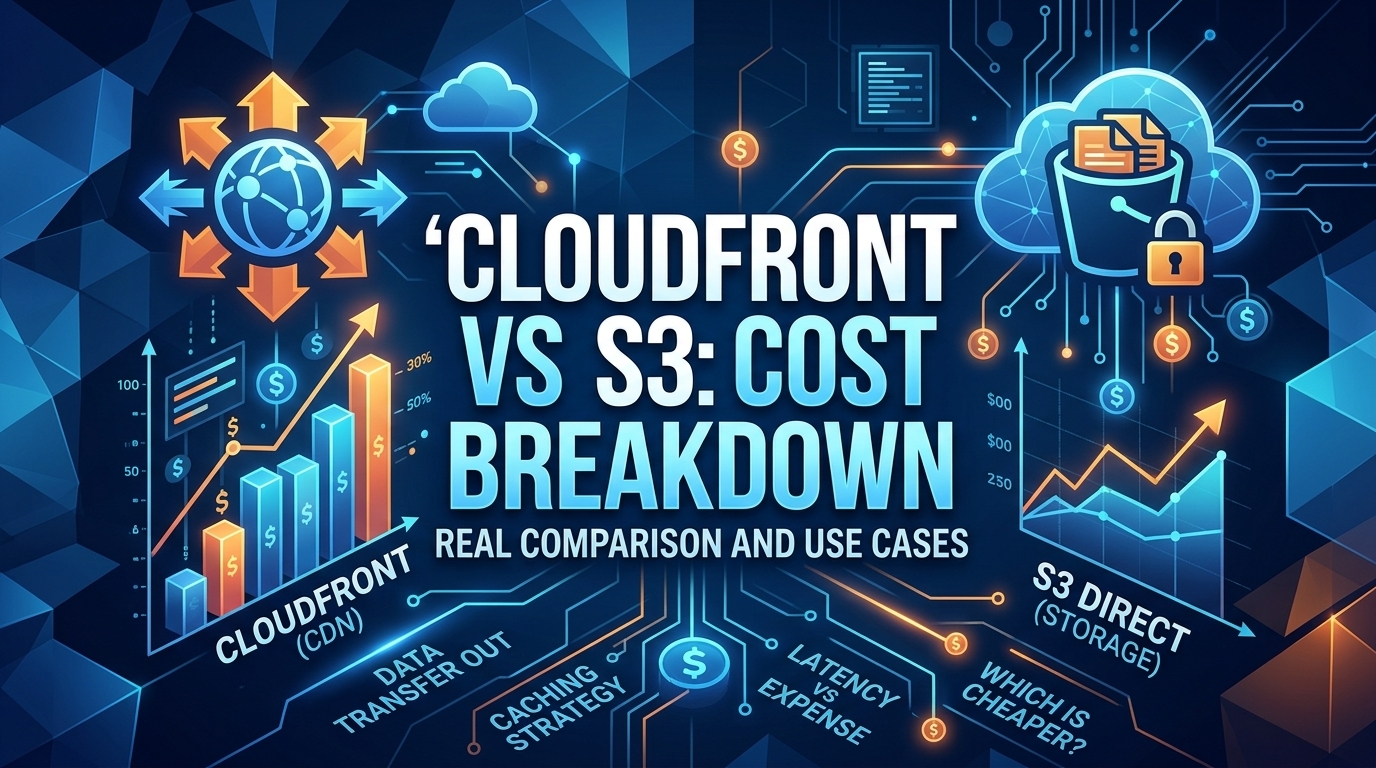
The CloudFront vs S3 decision depends more on object size than on traffic volume. At a 500 KB average response, 100 TB ...
Learn
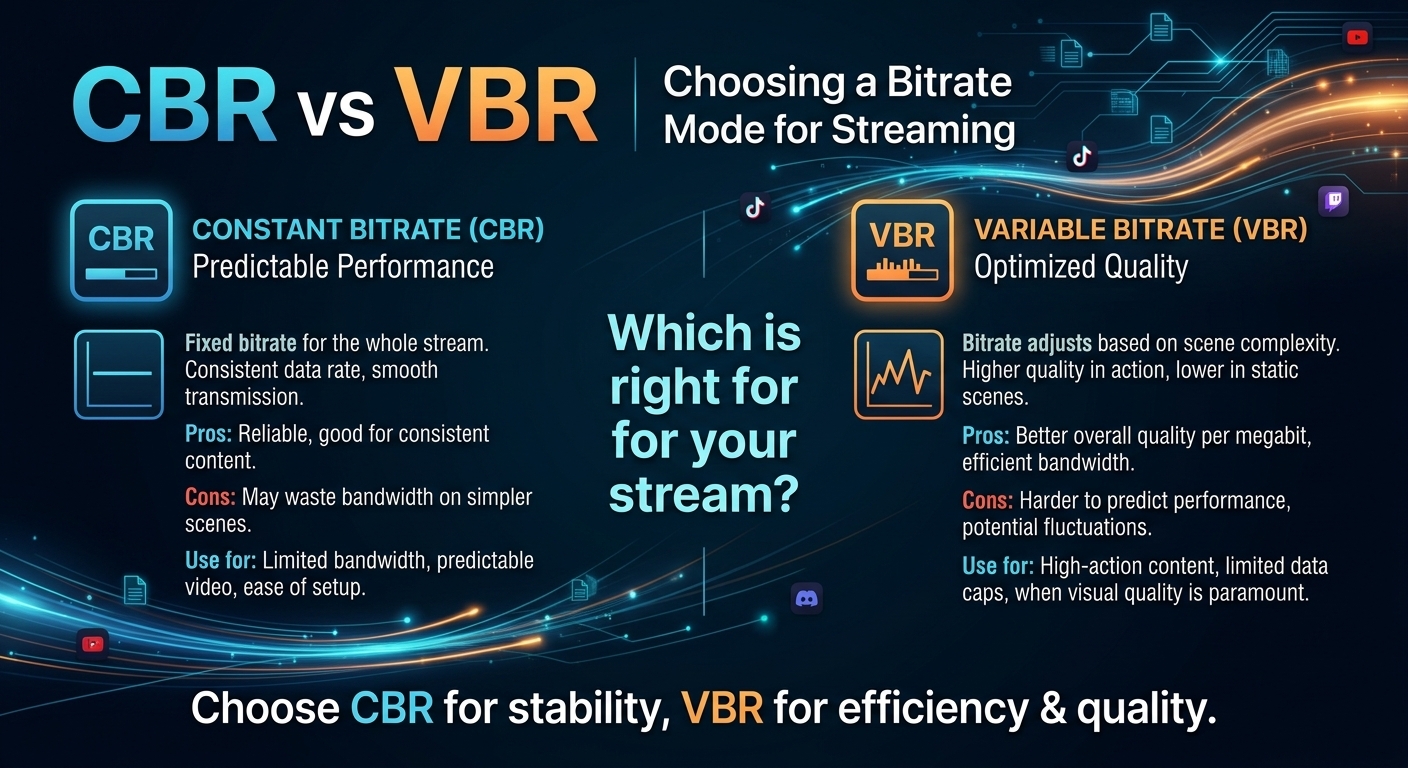
For most on-demand video, capped variable bitrate (VBR) wins the cbr vs vbr decision: it spends bits where the picture ...