
Learn
Lossy vs Lossless Compression: Images, Video and Audio
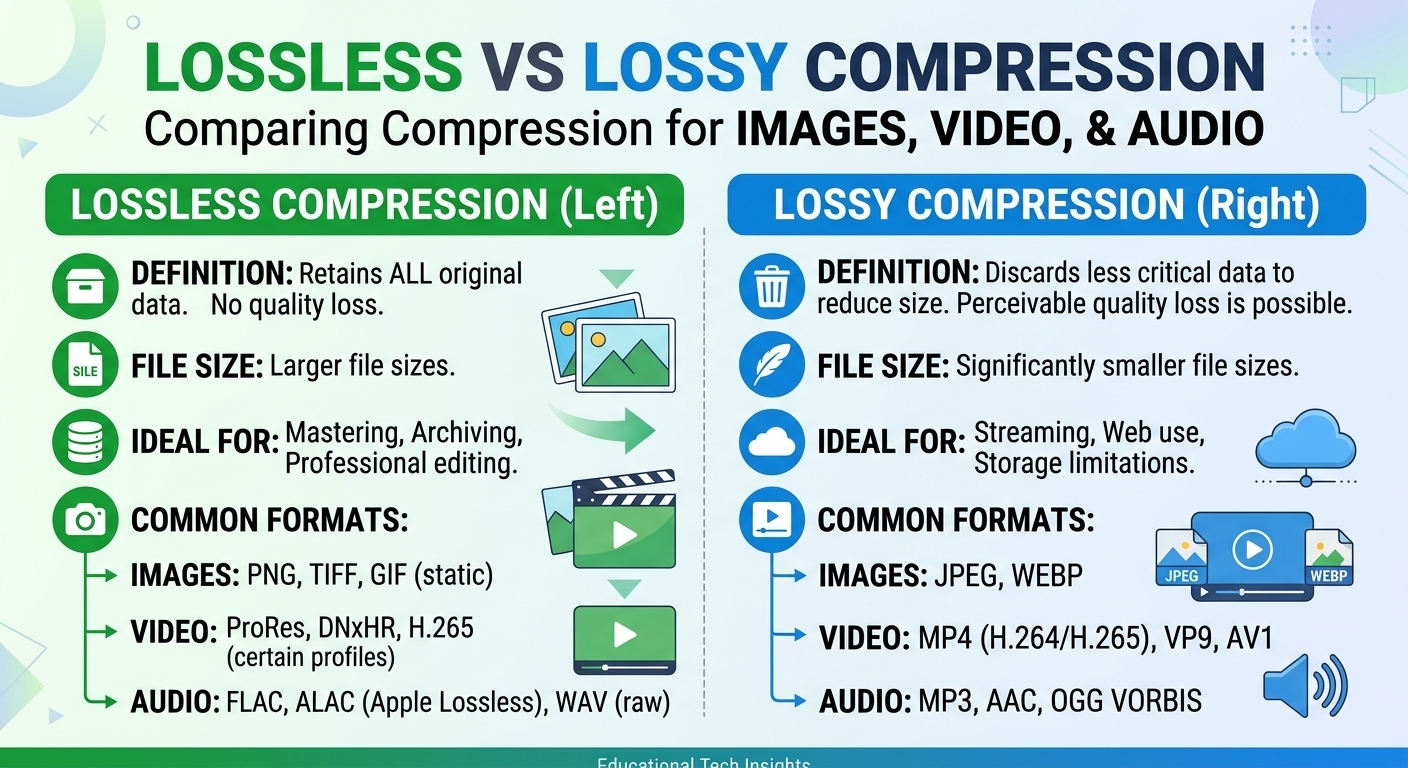
Lossy vs lossless compression comes down to one trade: lossless compression rebuilds every original bit and typically ...
A 120 ms increase in Time to First Byte cost one mid-market retailer 1.3% in checkout completions during Q1 2026 testing — roughly $400K in annualized revenue on a $30M run rate. That number is not hypothetical; it came from an A/B test where the only variable was origin-shield placement. If you are evaluating the best CDN for ecommerce sites this year, the margin between providers is no longer about who has more PoPs on a map. It is about cache-hit ratio on dynamic catalog pages, purge propagation under sub-second SLAs, and what happens to your TTFB at 3 AM UTC when a flash sale hits APAC while your origin sits in us-east-1. This article gives you a workload-profile decision matrix, current 2026 pricing across nine CDN providers, and the specific architectural criteria that separate a CDN that accelerates revenue from one that just serves bytes.
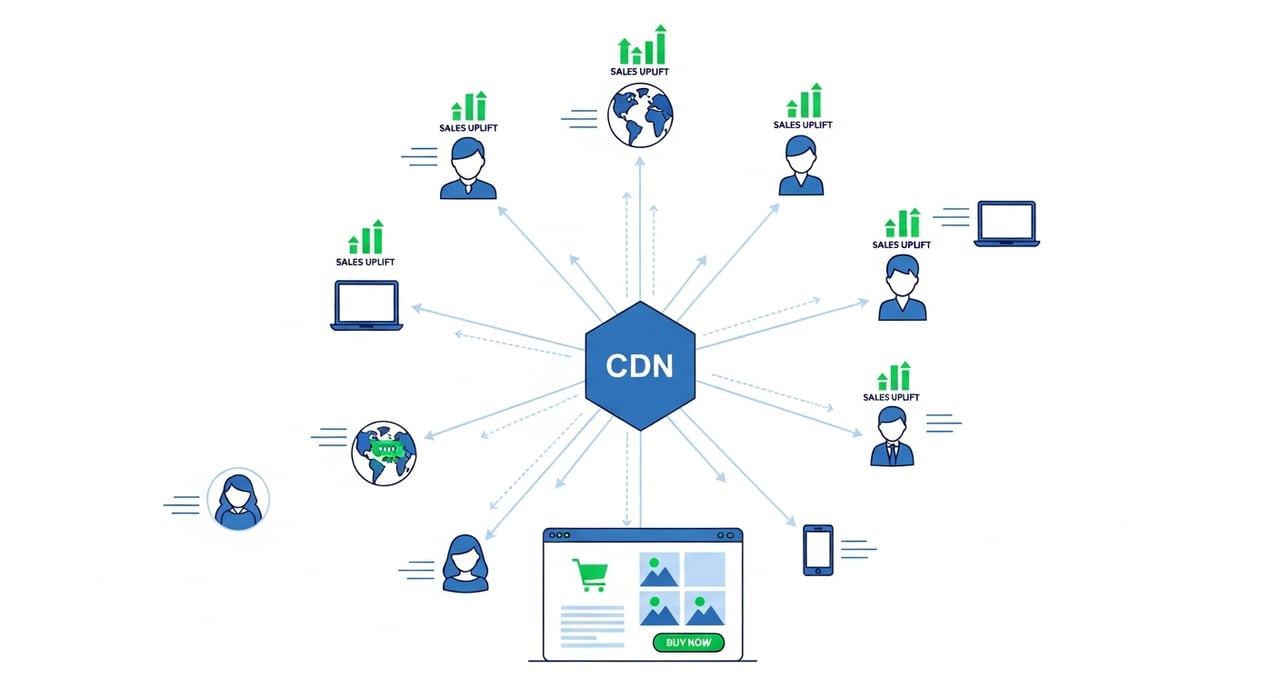
Google's 2026 Core Web Vitals thresholds tightened Interaction to Next Paint (INP) scoring, and the correlation between page-speed ranking signals and organic traffic share has only strengthened. As of Q1 2026, mobile commerce accounts for over 72% of global ecommerce transactions. A CDN misconfiguration that adds 200 ms on a 4G connection in São Paulo or Jakarta is not a performance footnote — it is a conversion-rate problem compounding across every session.
The relationship between load time and bounce probability remains steep: research consistently shows bounce rates climbing 30–40% when page loads cross the 3-second mark, and exceeding 5 seconds can more than double abandonment versus a sub-1-second baseline. For ecommerce specifically, every 100 ms of added latency maps to measurable drops in add-to-cart rate, particularly on product detail pages where high-resolution imagery dominates the critical rendering path.
Generic CDN feature lists do not help architects make decisions. Here are the six dimensions that actually differentiate providers for ecommerce workloads in 2026.
P50 TTFB is marketing. P99 TTFB during a traffic spike is engineering reality. Evaluate providers under synthetic load that simulates your actual traffic shape: geographic distribution, request mix (catalog browsing vs. checkout API calls), and concurrency levels matching your peak events. The best ecommerce CDN keeps P99 TTFB under 150 ms at the edge for cached assets, even during 10× traffic surges.
Ecommerce catalogs are not static. Prices change, inventory flags flip, A/B test variants rotate. You need a CDN that supports fine-grained cache keys (Vary on custom headers, cookie-based segmentation without full bypass), stale-while-revalidate semantics, and sub-second purge propagation. If purge takes 5–15 seconds globally, a shopper sees a stale price during a flash sale — and you eat the margin or break trust.
As of 2026, AVIF adoption among ecommerce storefronts has crossed 40%, and edge-side image transformation (resize, compress, format-negotiate) is table stakes. The differentiator is whether the CDN handles responsive image generation on the fly via URL parameters or query strings, or whether you need to pre-generate and push every variant. On-the-fly wins for catalogs with tens of thousands of SKUs.
Uptime SLAs on paper are one thing. The question is what happens when a single edge region degrades. Does the CDN reroute automatically? Does it support multi-origin failover with health checks? For ecommerce, a 10-minute regional outage during peak hours can cost six figures. Evaluate providers on their actual incident history over the past 12 months, not just their published SLA percentage.
You need real-time cache-hit ratio by URL pattern, per-region latency breakdowns, origin offload percentage, and error-rate dashboards — not just aggregate bandwidth charts. Bonus if the CDN exposes structured logs (JSON, compatible with your existing SIEM or observability stack) with sub-minute granularity.
Ecommerce traffic is bursty. Black Friday, Prime Day equivalents, flash sales, influencer drops. If your CDN charges steep overage fees or has opaque per-request pricing, your infrastructure cost spikes exactly when revenue spikes — eroding margin at the worst possible moment. Flat or volume-tiered pricing models are significantly more predictable for ecommerce workloads.
| Provider | Starting Price (per TB) | Best For | Key Tradeoff |
|---|---|---|---|
| Cloudflare | Free tier; Enterprise custom | SMB stores on tight budgets; broad edge coverage | Advanced cache rules and image optimization require Pro/Business plans; enterprise pricing is opaque |
| Amazon CloudFront | ~$85/TB (standard, as of 2026) | AWS-native shops needing deep Lambda@Edge integration | Cost adds up fast at high volume; per-request fees on top of bandwidth |
| Fastly | ~$120/TB (metered) | Teams needing instant purge and VCL/Compute@Edge logic | Premium pricing; smaller edge footprint than hyperscaler CDNs |
| Akamai | Custom (typically $40–80/TB at volume) | Large enterprises needing maximum global reach and compliance features | Complex configuration; long sales cycles; minimum commitments |
| Bunny CDN | ~$5/TB (volume tier) | Small to mid-size stores prioritizing cost efficiency | Fewer advanced edge-compute capabilities; limited enterprise SLA options |
| KeyCDN | ~$40/TB (pay-as-you-go) | Developer-centric teams wanting simple HTTP/2 push and instant setup | No edge compute; limited image optimization pipeline |
| Google Cloud CDN | ~$80/TB (standard tier) | GCP-native stacks leveraging Cloud Armor and global LB | Tightly coupled to GCP; less flexible for multi-cloud origins |
| Azure Front Door | ~$80/TB (Standard tier) | Microsoft ecosystem shops on Azure App Service or AKS | Routing rules and caching config can be unintuitive; cost layering with other Azure services |
| BlazingCDN | $5/TB ($0.005/GB); down to $2.50/TB at volume | High-volume ecommerce needing low per-TB cost | Smaller brand recognition vs. hyperscalers; evaluate against your specific regional needs |
Pricing is as of Q2 2026 and reflects publicly listed or commonly negotiated rates. Actual costs vary by contract terms, region, and traffic shape.
Feature tables are useful but insufficient. CDN selection for ecommerce should start with your workload profile, not a checkbox comparison. Here is a decision framework based on real architectural patterns.
Your bottleneck is image transformation throughput and cache efficiency across thousands of unique URLs. Prioritize CDNs with on-the-fly image optimization, high cache-hit ratios on long-tail product URLs, and aggressive stale-while-revalidate support. Fastly and Cloudflare (Business+) are strong here. BlazingCDN fits if your origin already handles image transformation and you need cost-efficient delivery at high volume.
Your bottleneck is scaling from baseline to 10–50× traffic within minutes, without origin collapse. You need a CDN with strong origin shielding, connection coalescing, and no punitive overage pricing. Volume-tiered pricing (BlazingCDN, Bunny CDN) is materially better here than per-GB metered models that spike your bill exactly when revenue spikes. Test P99 TTFB under synthetic burst, not just steady state.
Your bottleneck is geographic latency consistency and multi-origin failover. Akamai and CloudFront have the deepest edge networks for this. Google Cloud CDN and Azure Front Door make sense if you are already running multi-region origins on their respective clouds. Evaluate regional P99 TTFB, not global averages — a CDN that is excellent in North America and Europe but adds 300 ms in Southeast Asia is not "global."
If your storefront runs on Shopify Plus, BigCommerce, or a headless framework with a managed backend, the CDN's job is primarily static asset acceleration and image delivery. You do not need edge compute. Bunny CDN, KeyCDN, and BlazingCDN all serve this profile well at a fraction of hyperscaler cost.
If your procurement process requires contractual uptime SLAs with financial penalties, SOC 2 Type II attestation from the CDN provider, and dedicated support engineers, your realistic options narrow to Akamai, CloudFront, and Fastly. BlazingCDN does not publish an uptime SLA percentage.
Consider a mid-size ecommerce store delivering 80 TB/month. At CloudFront's standard rate (~$85/TB), that is roughly $6,800/month in CDN costs alone. At Fastly's metered rate, closer to $9,600/month. At BlazingCDN's volume pricing, the same 80 TB comes to $335 per month (as of October 2026), a 95% cost reduction versus CloudFront ($335 versus $6,800).
That delta is not trivial. It is the difference between CDN cost being a rounding error in your infrastructure budget and a line item that competes with engineering headcount. For ecommerce brands scaling delivery volume through video-rich product pages, 360-degree product views, and localized storefronts, CDN cost scales linearly with success. Choosing a provider where that scaling curve is flat — without sacrificing uptime or TTFB consistency — is a structural advantage.
BlazingCDN offers Anycast routing with built-in failover, flexible configuration, and pay-as-you-go pricing with no long-term contract, so demand spikes do not require renegotiation. At volume, pricing drops to $2.50 per TB (as of October 2026), which is worth testing for high-volume retail ecommerce CDN workloads.
Yes, measurably. Faster page loads reduce bounce rates and increase the probability of add-to-cart and checkout completion. The effect is most pronounced on mobile, where network conditions are variable. As of 2026, retailers consistently report 1–3% conversion lifts from sub-100 ms TTFB improvements on product detail pages, with compounding effects across the full funnel.
Prioritize origin shielding, connection coalescing, and volume-based or flat-rate pricing. Run synthetic load tests that match your expected spike profile (concurrency, geographic distribution, request mix). Evaluate P99 TTFB under burst, not just P50 at steady state. Avoid providers whose pricing model penalizes you for successful traffic events.
If your store serves customers in more than one geographic region — and virtually all do — a CDN improves load time for every session that is not co-located with your origin. Even at low traffic volumes, the impact on Core Web Vitals scores (and therefore organic search ranking) makes a CDN a net-positive investment. Free tiers from Cloudflare or low-cost providers like Bunny CDN and BlazingCDN make the entry cost negligible.
Headless storefronts (Next.js, Nuxt, Remix, Hydrogen) generate static or ISR pages that are highly cacheable. The CDN needs strong cache-key customization, support for stale-while-revalidate, and fast global purge. Fastly, Cloudflare, and BlazingCDN all handle this well. The differentiator is usually cost at volume and whether you need edge compute for personalization logic.
A CDN addresses the network-layer component of page speed: TTFB, asset delivery latency, and image optimization. It does not fix render-blocking JavaScript, excessive DOM size, or slow third-party tags. Effective ecommerce page speed optimization requires both a performant CDN and disciplined front-end engineering. The CDN handles the miles; your code handles the last milliseconds.
For static assets (CSS, JS, images), target 95%+ cache-hit ratio. For HTML pages with moderate personalization, 70–85% is realistic with proper Vary header configuration and segmented caching. Below 60% on product pages means your cache-key strategy needs rework — you are likely passing cookies or query parameters that fragment the cache unnecessarily.
Before committing to any CDN, run a 72-hour synthetic benchmark against your actual origin. Use a tool like k6 or Locust to simulate your geographic traffic distribution, peak concurrency, and request mix. Measure P50, P95, and P99 TTFB at the edge. Measure origin offload percentage. Measure purge propagation time with a stopwatch, not a vendor's claim. If your current CDN cannot keep P99 TTFB under 200 ms during a 5× traffic burst, you are leaving revenue on the table every time a campaign succeeds. Run the numbers this week. The data will make the decision for you.

Heavy traffic.
Light bill.
The CDN for video and large traffic
Learn
Lossy vs lossless compression comes down to one trade: lossless compression rebuilds every original bit and typically ...
Pricing - Pricing & Costs
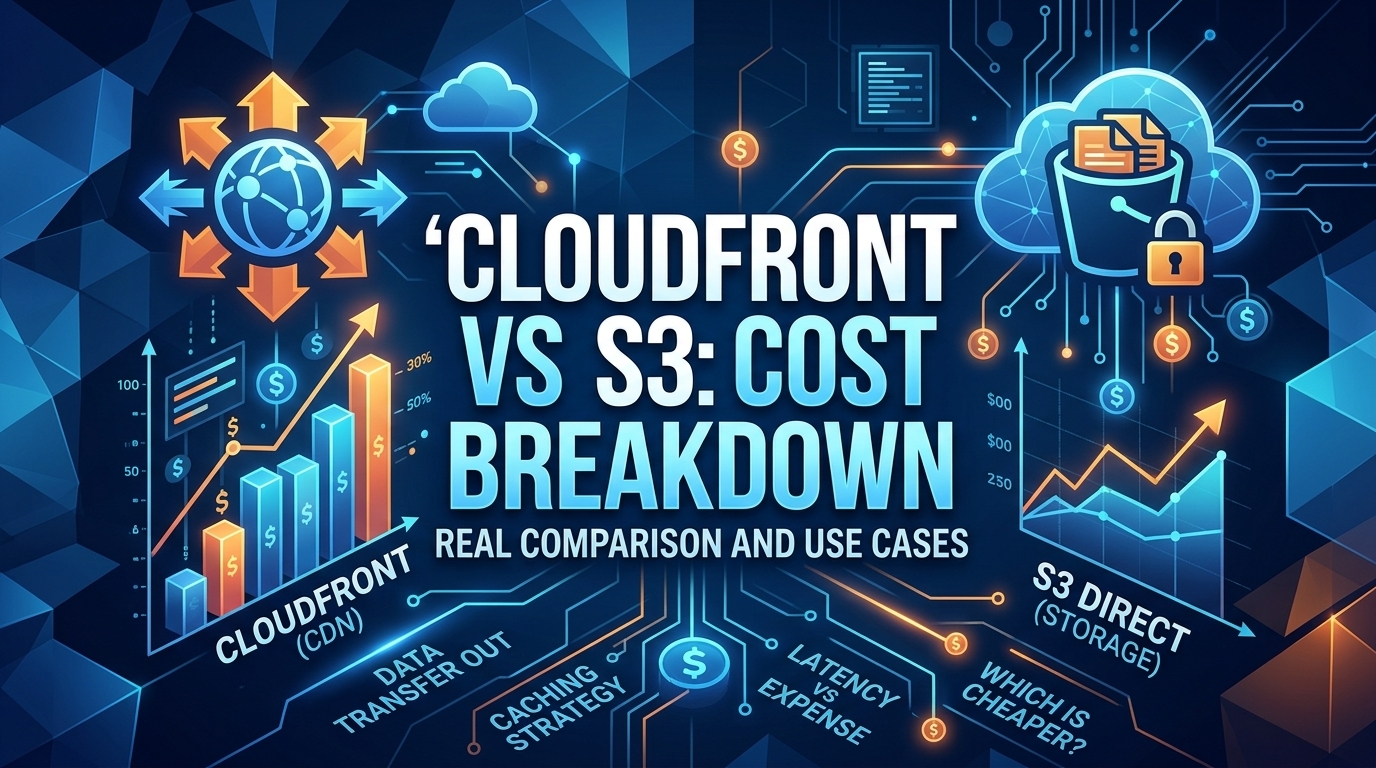
The CloudFront vs S3 decision depends more on object size than on traffic volume. At a 500 KB average response, 100 TB ...
Learn
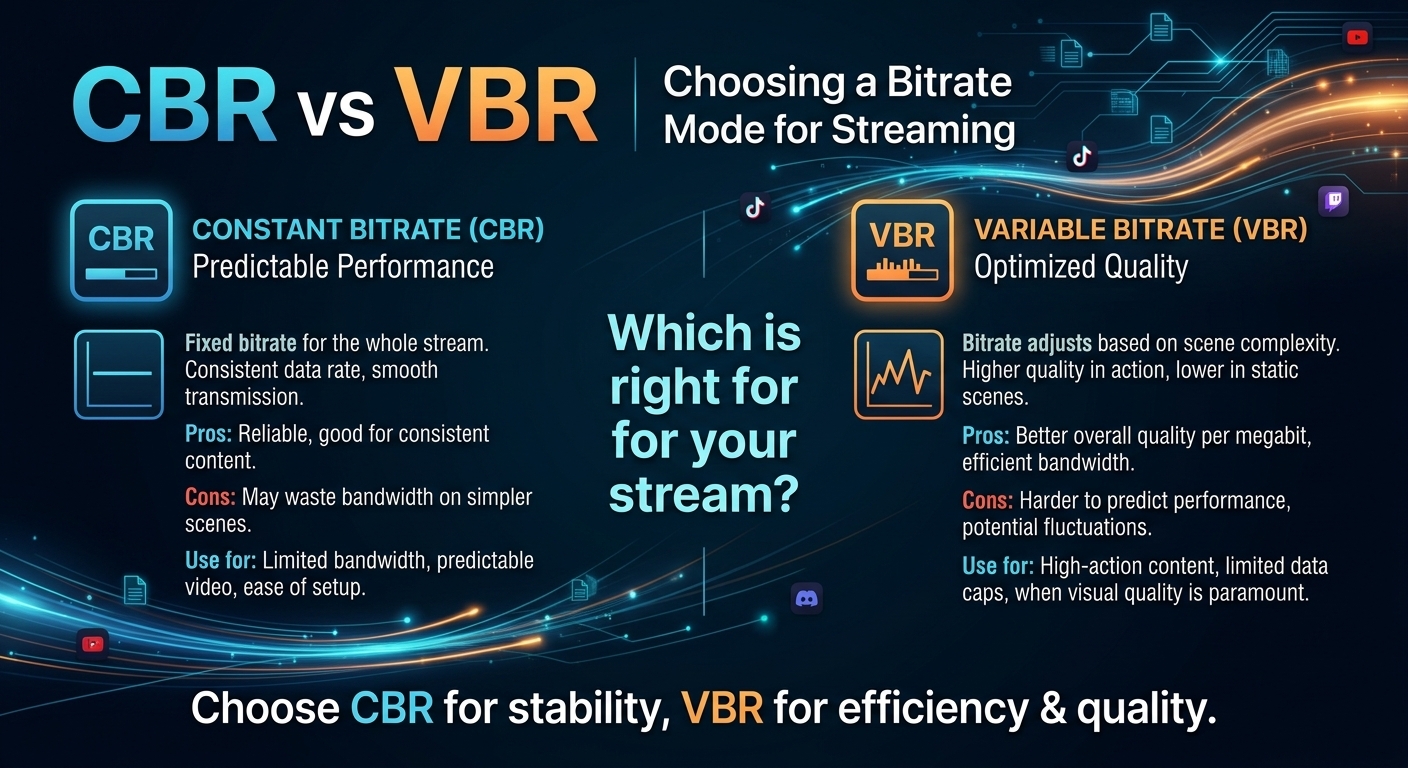
For most on-demand video, capped variable bitrate (VBR) wins the cbr vs vbr decision: it spends bits where the picture ...