Learn
Lossy vs Lossless Compression: Images, Video and Audio
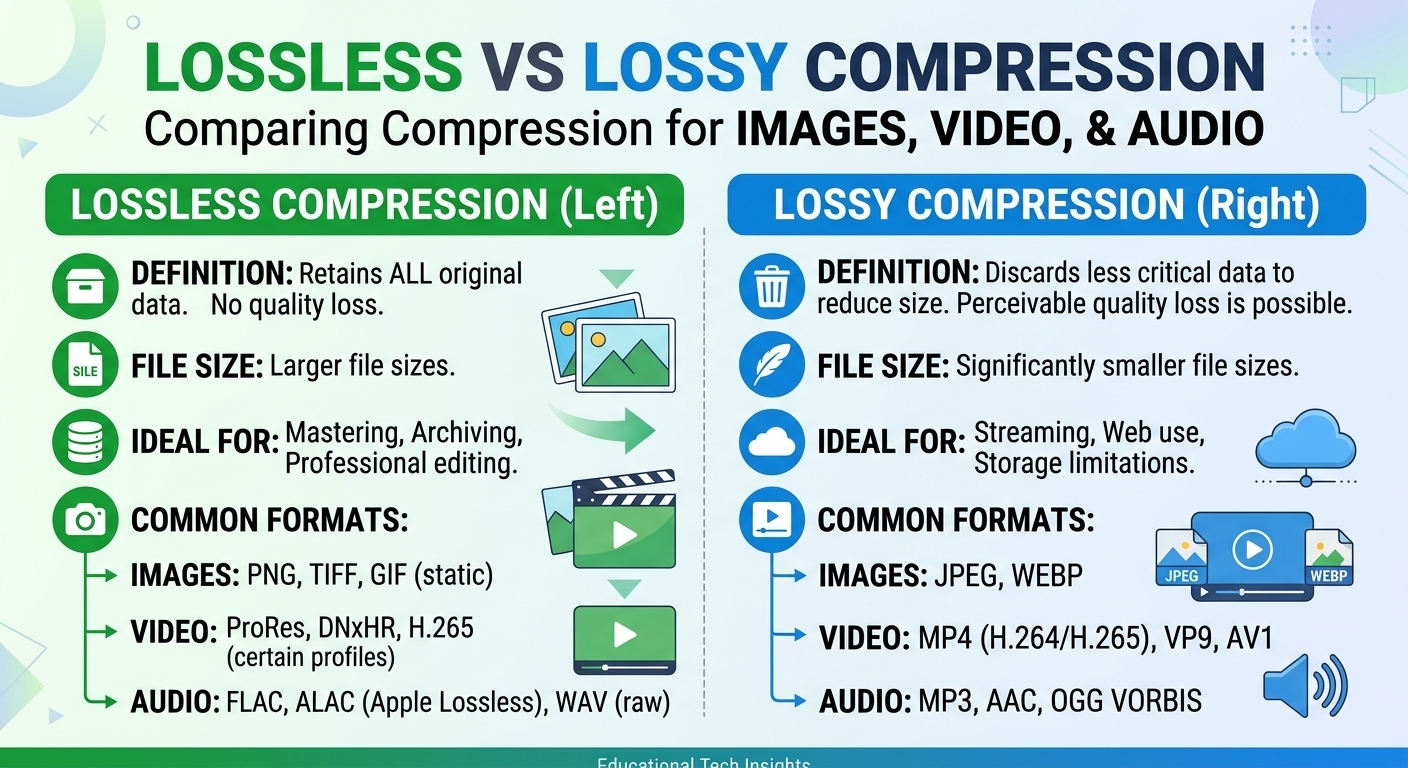
Lossy vs lossless compression comes down to one trade: lossless compression rebuilds every original bit and typically ...

Akamai reported 345,000+ edge servers across 4,200+ locations at the start of Q2 2026, making its content delivery network architecture the largest single-operator footprint on the public internet. That scale is impressive. It also makes the system harder to reason about when you are the one writing the check. This article gives you the structural breakdown: how Akamai's request path actually works in 2026, where its architecture creates real engineering advantages, where it introduces cost or operational friction, and a workload-profile decision matrix you can hand to your team before your next CDN contract renewal.
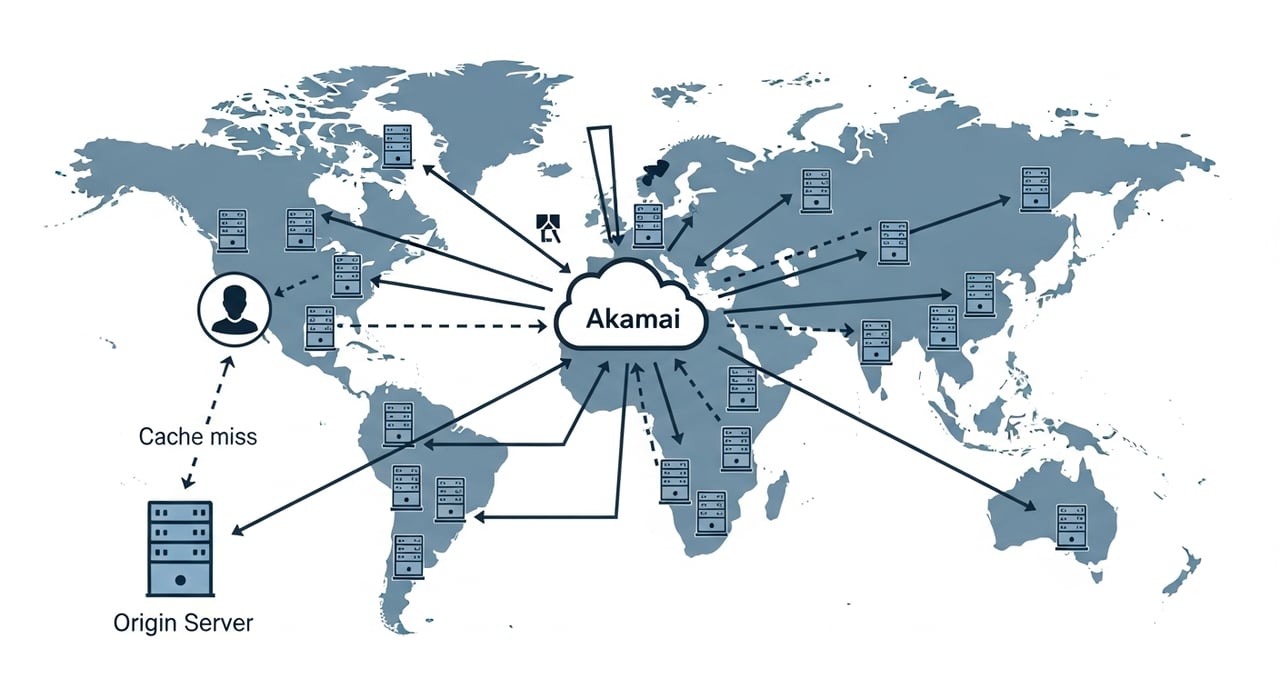
The request path through Akamai's network is a three-tier model: edge, midgress (parent/grandparent caches), and origin. Understanding each tier matters because performance tuning and cost optimization happen at different layers.
Every request begins with Akamai's authoritative DNS, which resolves the end user to an optimal edge node. As of 2026, Akamai's mapping system factors in BGP path length, server load, real-time loss and latency telemetry, and geographic proximity. The resolution itself targets sub-30ms in most metro areas. This is where SureRoute—Akamai's proprietary overlay routing—begins its work, probing multiple midgress paths and selecting the fastest before the first byte of content moves.
At the edge, Akamai runs a two-layer cache: hot objects in RAM, warm objects on NVMe. Cache keys are highly configurable through Property Manager rules, supporting vary-by-header, vary-by-cookie, and vary-by-query-string with fine-grained precedence. EdgeWorkers, Akamai's serverless compute layer at the edge, now supports JavaScript with expanded API surface area as of the 2026 platform update—including KV store access, fan-out sub-requests, and stream transformation. EdgeKV read latency sits around 10–15ms p99 within the same region, which makes it viable for personalization tokens and feature flags but still too slow for hot-path auth decisions.
Cache misses at the edge propagate to parent caches. Akamai's tiered distribution model collapses thousands of edge misses into a small number of origin-facing requests. The SiteShield product restricts origin exposure to a known set of midgress IPs, reducing attack surface. For large media catalogs, this tier is where the economics shift: a well-tuned midgress layer with aggressive TTLs can keep origin offload above 95%, which directly controls your origin compute and egress spend.
Akamai maintains persistent connections to origins, negotiating HTTP/2 or HTTP/3 (QUIC) where supported. Origin retry logic, failover to secondary origins, and conditional request handling (If-None-Match, If-Modified-Since) are all configurable per property. As of Q1 2026, Akamai's Adaptive Media Delivery product supports CMCD (Common Media Client Data) header forwarding natively, allowing origin-side ABR logic to factor in CDN-observed throughput.
How BlazingCDN compares: BlazingCDN lists its prices publicly: from $5 per TB down to $2.50 per TB, the same in the US, Europe and Asia, with 100 TB costing $415 a month (as of October 2026) and no long-term contract. The side-by-side view is on the BlazingCDN vs Akamai page.
Akamai's 2024 acquisition of Guardicore and its integration into the Akamai Guardicore Segmentation platform changed how the network handles east-west traffic. As of 2026, microsegmentation policies deploy alongside CDN delivery rules—meaning a single property configuration can enforce both cache behavior and zero-trust network policy. App & API Protector, Akamai's consolidated WAF and bot management product, processes over 7 billion attack detections daily according to Akamai's Q1 2026 threat report. The architectural insight here is that security processing happens at the edge tier before requests reach your origin, which means mitigation does not consume your infrastructure budget.
Prolexic, Akamai's dedicated DDoS scrubbing platform, operates on a separate backbone with 20+ Tbps of scrubbing capacity as of 2026—enough to absorb volumetric attacks without impacting CDN delivery performance on the shared edge.
Three changes matter for architects evaluating or renegotiating Akamai contracts this year:
No architecture review is complete without understanding failure boundaries. These are the production-relevant failure scenarios that Akamai's architecture introduces or amplifies:
If an edge node degrades between DNS TTL intervals, users continue routing to it until the next resolution cycle. Akamai mitigates this with low TTLs (often 20–60 seconds), but recursive resolver caching in ISP networks can extend effective staleness to several minutes. For latency-sensitive workloads, this means you should monitor edge-level performance from synthetic probes, not just origin-side metrics.
Overly permissive cache keys—especially when vary-by-cookie is enabled without exclusion lists—can cause user-specific content to be cached and served to other users. This is an operator error, not a platform bug, but the complexity of Property Manager rules makes it a recurring incident pattern. Akamai's mPulse RUM and Cache Inspector tool help diagnose this, but the blast radius of a cache poisoning event on a CDN with 345,000 servers is significant.
EdgeWorkers enforce per-execution CPU and memory limits. A function that works at low traffic can hit quota limits under load, causing 503 responses. The fix is pre-warming or splitting logic across multiple EdgeWorker event handlers, but this adds deployment complexity that teams accustomed to centralized compute may underestimate.
When Akamai rotates SiteShield IPs (which happens on a scheduled but variable cadence), your origin firewall rules must update before the old IPs are decommissioned. Failure to automate this update is one of the most common causes of self-inflicted origin outages on Akamai.
The table below maps workload profiles to architectural fit. Akamai pricing is negotiated per contract, but published estimates and industry benchmarks as of Q1 2026 place Akamai's effective rate between $0.01 and $0.04 per GB for enterprise commitments, depending on volume and term length.
| Workload Profile | Akamai Fit | Key Consideration |
|---|---|---|
| Global media streaming, 500TB+/mo | Strong | Adaptive Media Delivery + CMCD support; negotiate committed volume rates |
| SaaS app with API-heavy traffic | Moderate | API Gateway + Bot Manager add value; EdgeWorkers add complexity vs. origin-side logic |
| E-commerce, 50–200TB/mo | Strong | Image Manager + mPulse RUM; cost premium justified by conversion-rate sensitivity |
| Game distribution, large binary payloads | Moderate to Weak | High per-GB cost for bulk transfer; multi-CDN or cost-focused alternatives often win on unit economics |
| Video-on-demand, 100–500TB/mo | Strong | Tiered distribution + prefetch keeps origin offload high; Connected Cloud reduces egress if origin co-located |
| Startup/scale-up, 10–50TB/mo, cost-constrained | Weak | Minimum commits and per-feature pricing create overhead; simpler providers offer better unit economics |
For the workload profiles where Akamai's per-GB economics are hardest to justify—game distribution, bulk software delivery, and high-volume video—BlazingCDN is worth evaluating directly. It prices at $5/TB at entry and scales down to $2.50/TB at volume (as of October 2026). For organizations moving 100TB+ monthly, BlazingCDN's volume pricing materially changes the cost curve: 100 TB costs $415 a month.
Running Akamai as one of two or three CDN providers is now the default pattern at scale. The architecture supports this through Akamai's Traffic Management (GTM) product for DNS-level steering, or via external multi-CDN orchestrators like Cedexis (now part of Citrix) or NS1. The key architectural constraint: if you use SiteShield and your secondary CDN also requires origin IP allowlisting, firewall rule management becomes a non-trivial automation problem. Plan for it in your IaC pipeline from day one.
A practical multi-CDN split for a media company in 2026 might route live event traffic through Akamai (for its anycast capacity and SureRoute optimization under load) while sending long-tail VOD catalog traffic through a cost-optimized provider. The savings on long-tail content often fund the Akamai premium for peak events, resulting in a net-neutral or net-positive cost outcome with better aggregate performance.
Akamai operates its own physical network infrastructure, including dedicated interconnects and a proprietary overlay routing system (SureRoute). Hyperscaler CDNs typically rely on the parent cloud provider's backbone. This gives Akamai finer control over midgress path selection and allows independent peering decisions, but it also means Akamai's egress pricing does not benefit from the "free egress to own CDN" models that AWS and GCP offer when your origin is already on their cloud.
Tiered distribution (parent/grandparent cache hierarchy), configurable cache keys in Property Manager, and SureRoute's path optimization are the three highest-impact components. Getting origin offload above 95% typically requires tuning cache key normalization, setting appropriate TTLs per content type, and enabling NetStorage or Connected Cloud for static asset origins to keep midgress-to-origin latency low.
For most organizations under 100TB/month, Akamai's minimum commit structure and per-feature pricing (separate SKUs for Image Manager, Bot Manager, API Gateway, etc.) result in a higher effective per-GB rate than simpler providers. If your workload does not require advanced edge compute or integrated security features, a dedicated delivery-focused CDN will typically deliver better unit economics at this tier.
EdgeWorkers V2 (2026) supports JavaScript and Wasm, similar to Cloudflare Workers and Fastly Compute. The key differences are execution limits (EdgeWorkers enforces per-invocation CPU quotas more aggressively), integration depth with Akamai's security stack (direct access to Bot Manager scores), and the deployment model (EdgeWorkers are tied to Property Manager configurations, not standalone routes). For teams already on Akamai, EdgeWorkers avoids a second vendor for edge compute. For greenfield projects, Cloudflare or Fastly offer faster iteration cycles.
Configuration complexity. Property Manager rules, combined with EdgeWorker logic, SiteShield IP management, and certificate automation, create a large surface area for operator error. Cache key misconfiguration and SiteShield IP rotation failures are the two most common self-inflicted outage patterns. Automated testing of property configurations in a staging environment before production activation is essential.
Yes. Akamai has supported QUIC for client-to-edge connections since 2023 and expanded HTTP/3 support to midgress and origin tiers through 2025–2026. Enabling HTTP/3 requires toggling the protocol in Property Manager and verifying that your origin or origin shield supports QUIC. Performance gains are most measurable on high-loss mobile networks, where QUIC's zero-RTT handshake and loss recovery outperform TCP+TLS 1.3.
If you are on Akamai today and approaching a renewal, run this diagnostic before the negotiation: pull your DataStream 2 logs for the past 30 days and compute your actual origin offload ratio per content type, your p95 and p99 edge-to-client TTFB, and your EdgeWorker error rate under peak load. Compare your effective per-GB cost (total Akamai spend divided by total delivered bytes) against alternatives at your volume tier. That single number—your effective per-GB cost—is the anchor for every CDN decision you make this year. If it is above $0.02/GB at 200TB+ monthly volume, you are leaving budget on the table.

Heavy traffic.
Light bill.
The CDN for video and large traffic
Learn
Lossy vs lossless compression comes down to one trade: lossless compression rebuilds every original bit and typically ...
Pricing - Pricing & Costs
The CloudFront vs S3 decision depends more on object size than on traffic volume. At a 500 KB average response, 100 TB ...
Learn
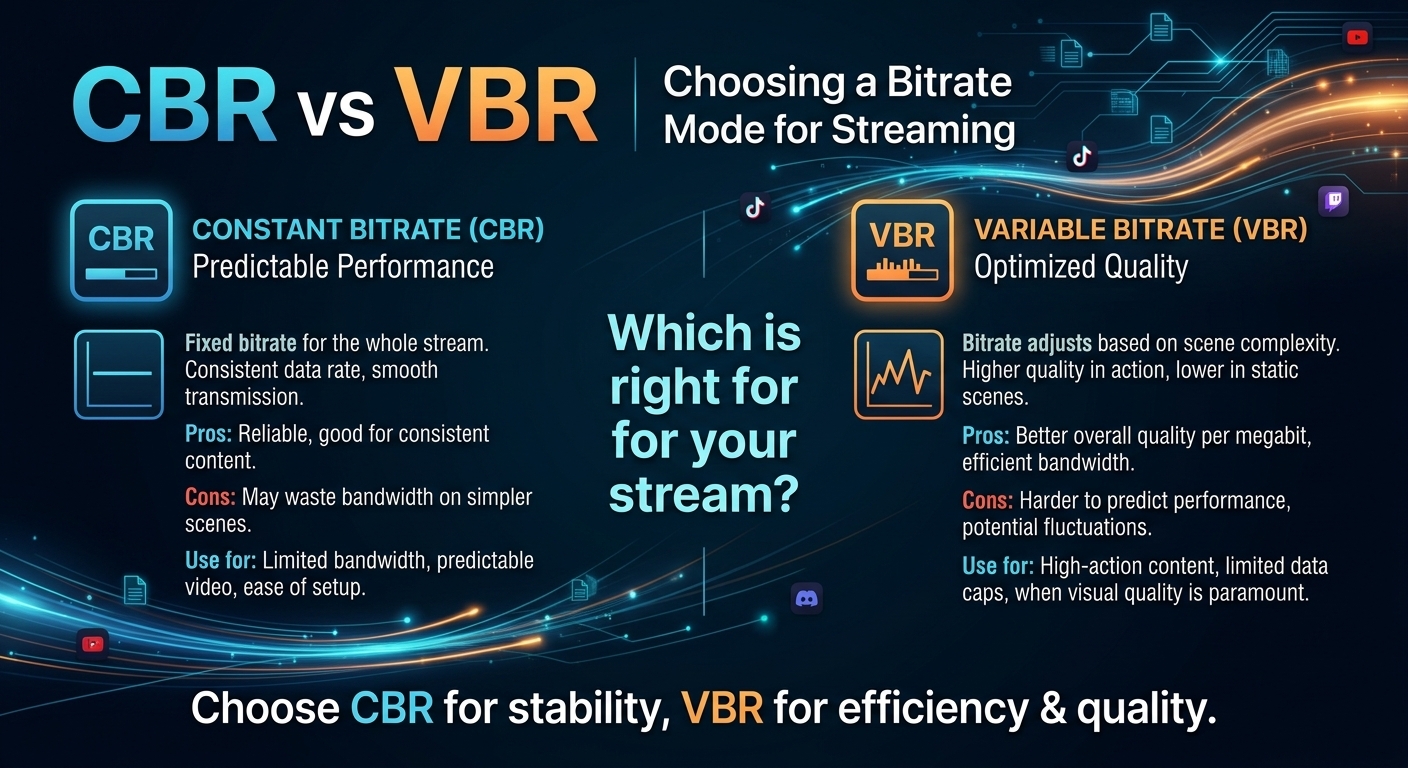
For most on-demand video, capped variable bitrate (VBR) wins the cbr vs vbr decision: it spends bits where the picture ...