
Learn
Lossy vs Lossless Compression: Images, Video and Audio
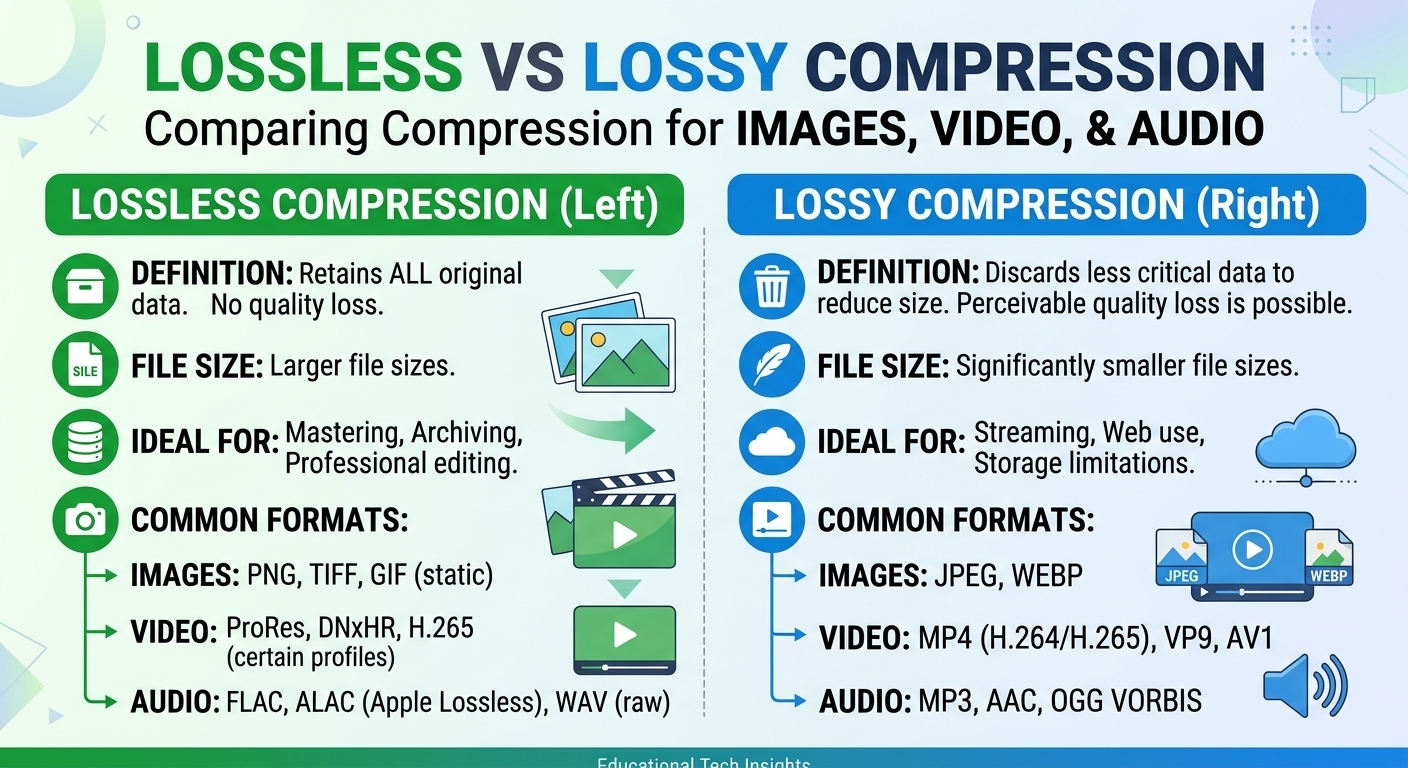
Lossy vs lossless compression comes down to one trade: lossless compression rebuilds every original bit and typically ...
A single misconfigured cache-control header on a high-traffic API endpoint can add 120–180 ms of round-trip latency per request. Multiply that by ten million daily calls and you are burning hours of cumulative user wait time and thousands of dollars in unnecessary origin compute. API gateway performance optimization is no longer a tuning exercise reserved for launch week. As of Q2 2026, the median enterprise API serves 40–60% more traffic than it did two years ago, driven by AI-agent orchestration, real-time personalization, and client-side rendering patterns that fire dozens of fetch calls per page load. The gateway itself is rarely the bottleneck. The bottleneck is what sits—or fails to sit—between the gateway and the caller. This article gives you seven specific, costly mistakes engineers make at that boundary, a decision matrix for choosing between edge-optimized and regional gateway topologies, and the CDN-layer patterns that fix each mistake.
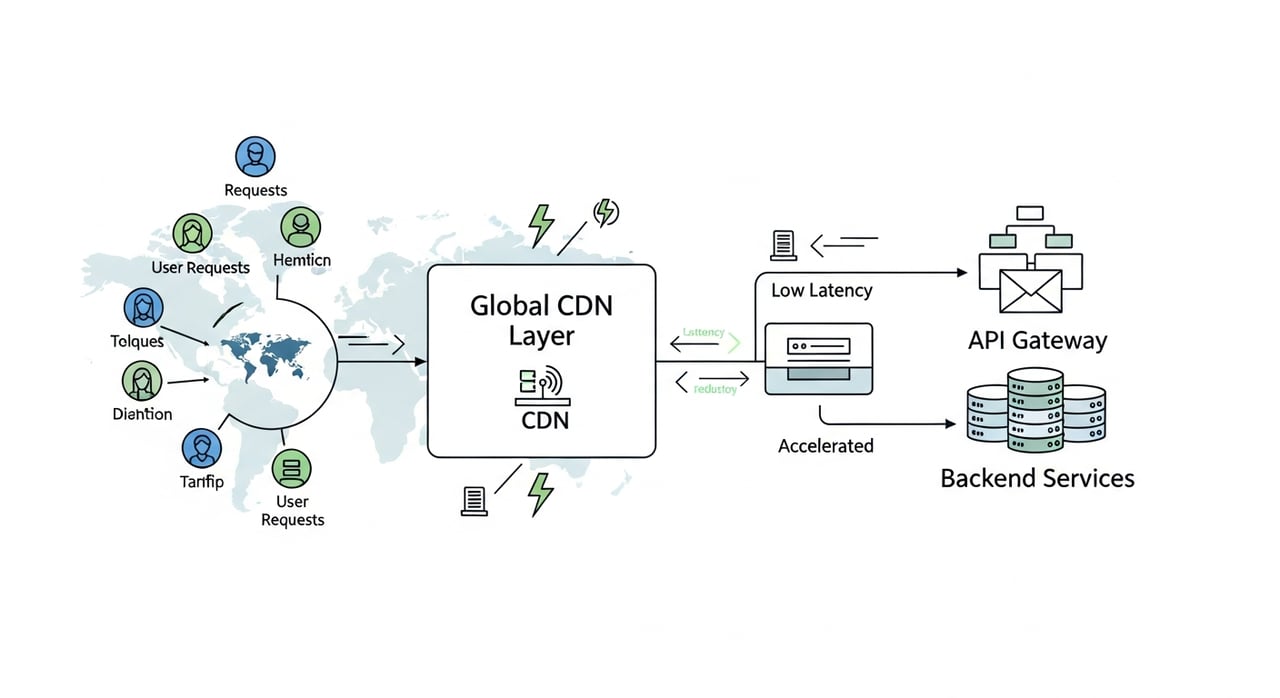
Placing a CDN in front of an API gateway is not the same as caching static assets. API responses are often personalized, short-lived, or uncacheable by default. The value of the CDN layer comes from three mechanisms that operate independently of cache hit ratio: TLS termination at the edge (eliminating a full round trip to a regional gateway), connection reuse via persistent keep-alive pools to the origin, and response compression negotiated once per edge node rather than per client. In 2026 measurements across major cloud providers, edge TLS termination alone shaves 40–90 ms for intercontinental callers. Connection pooling reduces origin connection setup overhead by 60–75% under sustained load.
The mistake most teams make is treating CDN-layer API acceleration as a binary: cache or don't cache. The real gains come from configuring the edge to act as a protocol optimizer and traffic shaper even when cache hit ratio is zero.
AWS edge-optimized API Gateway routes through CloudFront by default, but it forces every request through Amazon's edge network even when 80% of your callers sit in the same region as your origin. For intra-region traffic, this adds 10–30 ms of unnecessary routing. Regional gateways paired with an explicit CDN distribution give you control over cache behavior, header manipulation, and origin failover that the default edge-optimized path does not expose. As of 2026, Google Cloud API Gateway and Azure API Management both default to regional deployments, making this primarily an AWS-specific trap—but a common one.
APIs that return different payloads based on Accept-Language, Authorization, or custom headers need precise Vary configurations. A missing Vary header serves the wrong cached response to the wrong caller. An overly broad Vary (e.g., Vary: *) makes every response uncacheable. Neither failure produces an error. Both produce silent correctness or performance bugs that surface only under load.
A product catalog endpoint and a user session endpoint have fundamentally different freshness requirements, yet teams routinely apply a blanket Cache-Control: max-age=60 across all routes. The catalog could tolerate 300 seconds. The session endpoint should be no-store. Differentiated TTL policies per route group typically improve aggregate cache hit ratios by 15–25% with no correctness trade-off.
Without an origin shield, every edge node that experiences a cache miss sends its own request to your gateway. During a cache expiration storm—common when TTLs align—this collapses into a thundering herd. An origin shield collapses those parallel misses into a single origin fetch. In Q1 2026 load tests on a 50-node CDN distribution, enabling origin shield reduced peak origin request volume by 82% during simultaneous TTL expiry events.
JSON payloads compress well—typically 70–85% reduction with Brotli. Yet many API gateways serve uncompressed responses because compression is disabled by default or because the gateway lacks CPU budget under load. Offloading compression to the CDN edge removes that CPU tax from the gateway and delivers smaller payloads to callers over last-mile connections where bandwidth is constrained.
Aggregate cache hit ratio is a vanity metric. A 90% hit ratio means nothing if your highest-latency, highest-cost endpoint is the 10% that always misses. Per-route cache analytics reveal which endpoints are cacheable but misconfigured, which need stale-while-revalidate patterns, and which are genuinely uncacheable and need origin-side optimization instead.
When rate limiting happens only at the gateway, cached responses still count against caller quotas on some configurations—or worse, cache hits bypass rate limiting entirely, allowing callers to read stale data at unlimited throughput. The CDN and gateway rate-limiting policies must be designed together. Edge-layer rate limiting (token bucket per IP or API key at the CDN) protects the gateway from volumetric abuse. Gateway-layer rate limiting enforces business-logic quotas on cache misses that actually reach origin.
This is the section the top-10 results do not provide. Most articles describe the two topologies; none give you a workload-profile matrix for choosing between them. The following table reflects 2026 configurations across AWS, GCP, and Azure.
| Workload Profile | Recommended Topology | Why |
|---|---|---|
| Global consumer app, read-heavy, cacheable responses (catalogs, feeds) | Regional gateway + explicit CDN with aggressive TTLs | Full control over cache keys, Vary, origin shield; 50–80% hit ratios achievable |
| B2B SaaS, callers concentrated in 1–2 regions, mostly authenticated writes | Regional gateway, no CDN cache, CDN for TLS termination and connection pooling only | Cache hit ratio will be near zero; edge value is protocol optimization, not caching |
| Real-time gaming or streaming, latency-critical, mixed read/write | Regional gateway + CDN with stale-while-revalidate and short TTLs (5–15 s) | Short TTLs with background revalidation serve near-fresh data without blocking on origin |
| Internal microservice mesh, all callers in-region | Regional gateway, no CDN | CDN adds a hop with no benefit; use service mesh sidecar caching if needed |
| AI-agent orchestration, bursty traffic, unpredictable caller distribution | Regional gateway + CDN with origin shield and adaptive rate limiting at edge | Agent traffic is spiky and geographically unpredictable; origin shield prevents thundering herd |
In March 2026, a large SaaS platform experienced a 12-minute API outage caused entirely by cache configuration. Every API response carried the same 300-second TTL. At minute zero, a deployment invalidated the CDN cache globally. Three hundred seconds later, every edge node simultaneously expired its cache and sent a miss to the origin. The gateway auto-scaled, but the database connection pool behind it did not. The cascade took down the API for all callers.
The fix was three changes: jittered TTLs (base TTL ± 10% randomization applied at the CDN edge), origin shield to collapse concurrent misses, and stale-while-revalidate to serve slightly stale data while background fetches completed. Total implementation time was under a day. The failure was entirely preventable and is documented in enough post-mortems that it should be a standard checklist item for any CDN-fronted API deployment.
The economics of CDN API acceleration shift dramatically at high volume. Major cloud-native CDNs charge $0.02–$0.085 per GB depending on region and commitment, which becomes a significant line item when API traffic exceeds 100 TB/month. For teams running latency-sensitive API workloads at that scale, BlazingCDN offers volume-based pricing that starts at $5 per TB and drops to $2.50 per TB at volume (as of October 2026), against roughly $6,965 for 100 TB on CloudFront pay-as-you-go versus $415 on BlazingCDN. It offers Anycast routing with built-in failover, flexible edge configuration, and fast scaling under demand spikes.
A CDN reduces API latency through edge TLS termination, persistent connection pooling to the origin, and response caching where TTLs permit. Even with a zero cache hit ratio, the protocol-level optimizations alone can reduce p50 latency by 40–90 ms for geographically distributed callers. The CDN also absorbs volumetric traffic spikes before they reach the gateway's rate limiter or auto-scaler.
Yes, if any callers are outside the gateway's region or if traffic is bursty. The exception is purely internal service-to-service traffic within the same region, where the CDN hop adds latency without benefit. For everything else, the edge layer provides measurable latency reduction and origin protection even without caching.
An edge-optimized gateway (AWS-specific) routes requests through CloudFront's edge network automatically but offers limited control over cache behavior and header manipulation. A regional gateway handles requests in its deployed region and lets you attach your own CDN distribution with full configuration control. As of 2026, regional + explicit CDN is the recommended pattern for most production workloads.
Use both, but for different purposes. Gateway-level caching (e.g., AWS API Gateway's built-in cache) reduces redundant calls to backend integrations and respects authorization context. CDN caching reduces redundant calls to the gateway itself and operates closer to callers. Gateway caches are typically smaller (0.5–237 GB on AWS) and more expensive per GB than CDN edge caches, so push cacheable public responses to the CDN and reserve gateway caching for authenticated, low-cardinality responses.
Deploy a regional API Gateway, create a CloudFront distribution with the gateway's regional endpoint as origin, configure cache policies per route group with appropriate TTLs and Vary headers, enable origin shield in the region closest to your gateway, and enable Brotli compression at the edge. This combination typically reduces p99 latency by 30–50% for global callers compared to a standalone regional gateway.
Pull your CDN analytics for the past 30 days and break down cache hit ratio by API route, not in aggregate. Identify the three highest-traffic routes with hit ratios below 10% and audit their Cache-Control and Vary headers. Run a before/after latency comparison at p50, p95, and p99 after fixing the headers. If you are not measuring per-route hit ratios today, that single instrumentation change will tell you more about your API gateway performance optimization gaps than any architecture diagram. Share what you find—the patterns are surprisingly consistent across stacks.

Heavy traffic.
Light bill.
The CDN for video and large traffic
Learn
Lossy vs lossless compression comes down to one trade: lossless compression rebuilds every original bit and typically ...
Pricing - Pricing & Costs
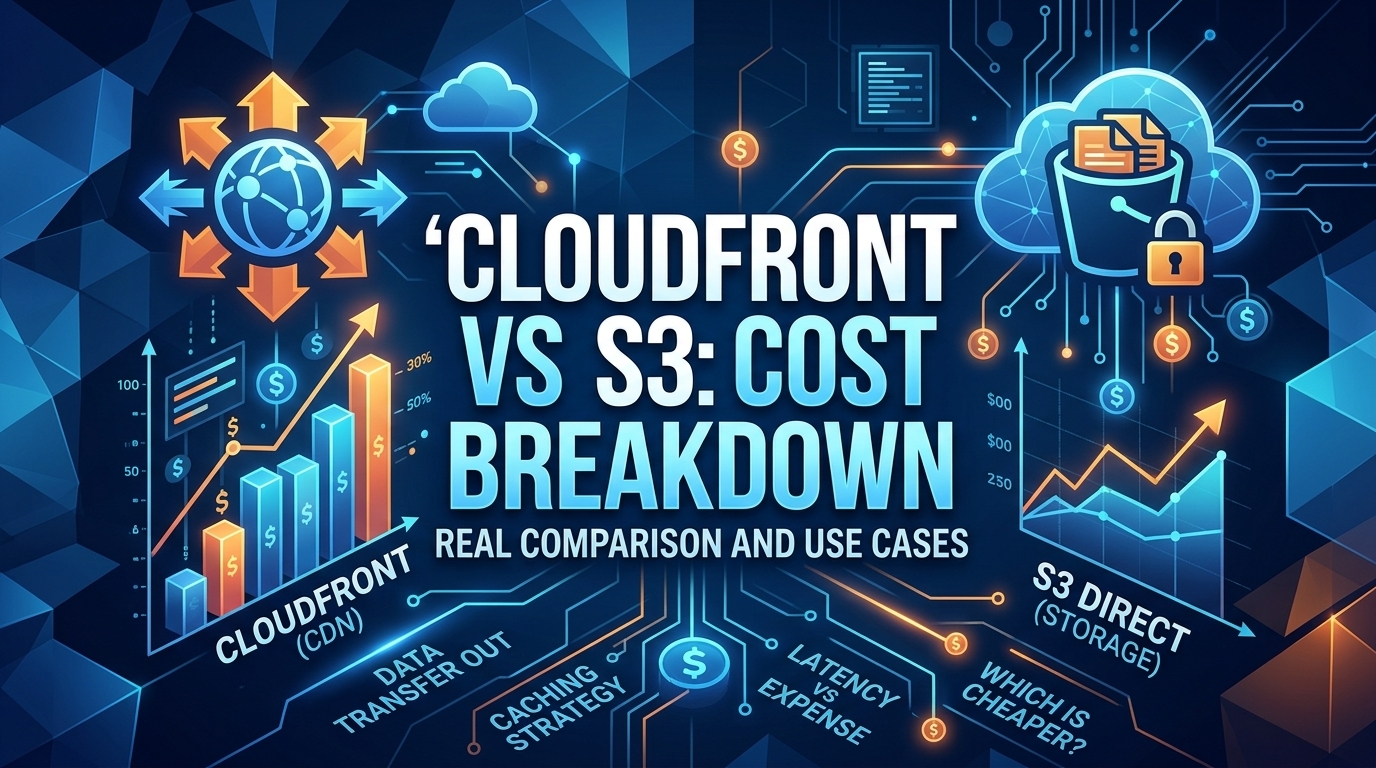
The CloudFront vs S3 decision depends more on object size than on traffic volume. At a 500 KB average response, 100 TB ...
Learn
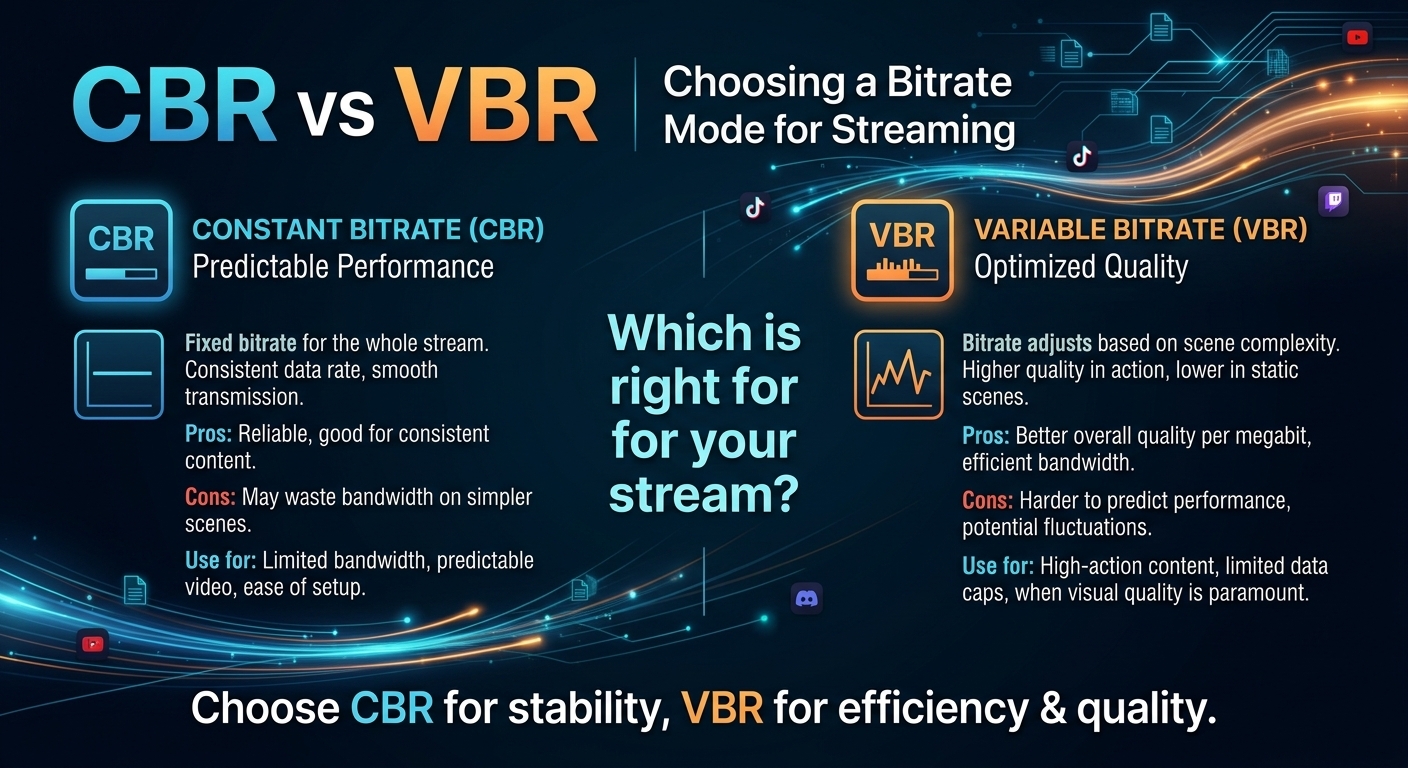
For most on-demand video, capped variable bitrate (VBR) wins the cbr vs vbr decision: it spends bits where the picture ...