
Learn
Lossy vs Lossless Compression: Images, Video and Audio
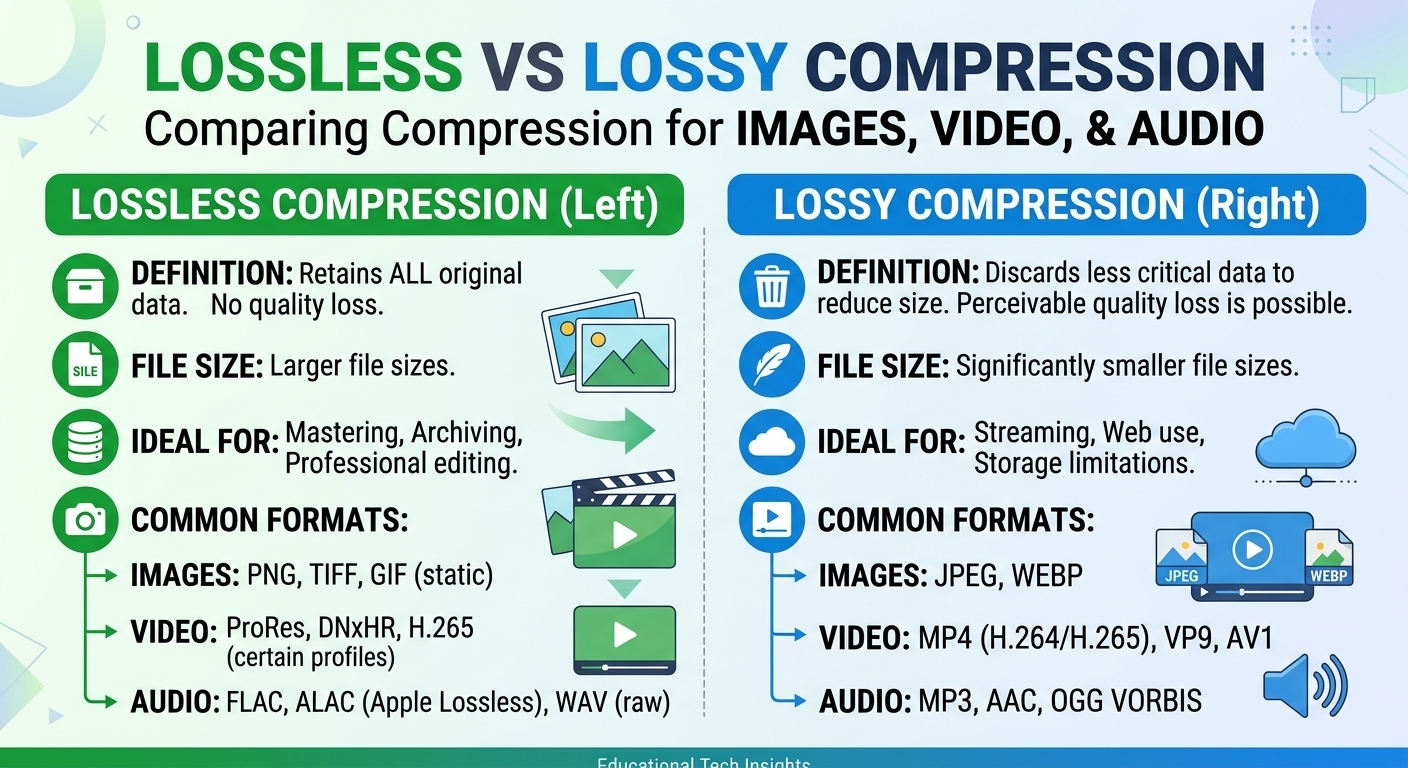
Lossy vs lossless compression comes down to one trade: lossless compression rebuilds every original bit and typically ...

More than 53% of mobile users abandon a site that takes longer than three seconds to load, according to research from Google. For many brands, three seconds is the difference between a new customer and a lost opportunity — and your users make that judgment before they’ve even seen your product, content, or app UI.
This is why the quality of your digital customer experience is no longer defined only by design, features, or content. It starts much earlier, at the infrastructure level — with how fast, stable, and consistent your delivery is across every device and region. In other words: it starts with your CDN.
In this article, you’ll see how a modern CDN underpins digital customer experience for e‑commerce, media, SaaS, gaming, and enterprise apps. We’ll look at hard data, real incidents, and pragmatic tactics you can apply today — and why many enterprises are rethinking legacy CDNs in favor of faster, more cost-effective platforms.
As you read, keep a simple question in mind: if your biggest product launch went viral tonight, would your current delivery stack keep your customers delighted — or just keep them waiting?

This section reframes customer experience as an end-to-end journey, not a single page view, and shows how every micro-delay reshapes user perception. Next, we’ll connect those expectations to the specific capabilities of a modern CDN.
Customer experience used to be about “Is the site up?” and “Does it look good?”. Today, it’s about a continuous, multi-step journey that might span:
Every one of those steps is a chance either to reinforce trust — or to introduce friction. A single stutter in a live stream, a blank spinner during checkout, or a slow dashboard in a SaaS product can unravel hours of marketing, development, and sales work.
PwC found that 32% of customers would walk away from a brand they love after just one bad experience, and 43% would pay more for greater convenience.1 In digital terms, “convenience” usually means instant response, smooth interactions, and reliability under stress.
Practical reflection: Map your key customer journeys (discovery → engagement → conversion → retention). For each step, ask: “If this page or API call slowed down by two seconds, how many users would we lose here?” Then hold that thought as we look at where those seconds usually go.
If the journey is what matters, what piece of infrastructure quietly sits behind every step of that journey? That’s where a modern CDN comes in.
This part focuses on the measurable link between performance and business outcomes — conversions, revenue, engagement — and sets up why traditional hosting alone can’t keep up. Next, we’ll break down what specifically makes a CDN “modern”.
Users don’t see your servers, TLS settings, or routing choices. They only see the result: how fast the content appears and how smoothly it behaves.
A few data points make the stakes clear:
Performance isn’t a “developer metric” anymore; it’s a revenue and loyalty metric. If your site or app is slow, users don’t think “this CDN is misconfigured” — they think “this brand doesn’t respect my time”.
At the same time, expectations keep rising. Users assume:
Meeting those expectations at global scale — on everything from low-end Android devices to fiber-connected desktops — is impossible with origin servers alone. The physics of distance, network congestion, and traffic spikes will catch up with you.
Modern CDNs exist precisely to neutralize those physics: bringing content closer to users, optimizing protocols, and dynamically routing around congestion to keep experiences consistent.
Practical tip: Track user-facing KPIs like Largest Contentful Paint (LCP), Time to First Byte (TTFB), and error rates by region and device. If you see wildly different experiences by geography or network type, you’re feeling the limits of your current delivery strategy.
If performance is now a proxy for trust, what should you actually demand from the CDN that powers it?
Here we’ll define the capabilities that distinguish a modern CDN from legacy or basic offerings. This will help you audit your current provider and spot gaps that quietly degrade your digital customer experience.
Not all CDNs are equal. Many enterprises still rely on contracts signed years ago, with architectures designed for a web that looked very different: fewer devices, less video, smaller assets, and lower expectations.
A modern CDN typically offers:
By contrast, legacy or “bare minimum” CDNs might only cache simple static files with limited control and visibility.
| Capability | Legacy CDN | Modern CDN |
|---|---|---|
| Caching strategy | Basic static file caching, manual rules | Smart caching with fine-grained rules, cache keys, and dynamic TTLs |
| Protocol optimization | HTTP/1.1, limited tuning | HTTP/2 & HTTP/3, TCP/TLS tuning, connection reuse |
| Traffic management | Simple DNS-based routing | Real-time routing, health-aware failover, latency-based decisions |
| Edge logic | Static configuration via tickets | Programmable rules, API-driven configuration, CI/CD integration |
| Observability | Daily reports, limited metrics | Real-time logs, per-request analytics, alerting, exports |
| Cost model | Opaque contracts, add-on fees | Transparent pricing per TB, predictable at scale |
Practical reflection: Take your current CDN provider and honestly score each row above. Where do you have configuration agility, and where are you still opening tickets and waiting days for changes?
If a modern CDN can do so much more than basic caching, how does that translate into real business impact — in dollars, not just milliseconds?
This section connects CDN performance improvements to concrete financial outcomes across different digital business models. After this, we’ll explore how these dynamics play out in specific industries like e‑commerce, streaming, gaming, and SaaS.
Consider just a few well-documented examples:
Even if your numbers are less dramatic, the compounding effect is powerful. A 5% lift in conversions here, 3% reduction in churn there, 10% improvement in trial-to-paid upgrades — all unlocked simply by delivering faster, more reliable experiences.
For e‑commerce, the path from impression to purchase is filled with potential friction points: home page, category pages, product detail pages, cart, and checkout. Each extra second at any of these steps raises abandonment risk.
In streaming, rebuffering is brand damage in real time. Studies show that abandonment rises sharply once rebuffering exceeds just a few seconds, and users are less likely to return after a bad stream experience.
For SaaS platforms, a “slow” dashboard feels like a broken product. Latency on core API endpoints, dashboards, and reports directly affects perceived product quality and user satisfaction.
Practical tip: Pick one journey — for example, product page → cart → checkout — and run A/B tests where only performance differs (e.g., serving via a modern CDN versus directly from origin). Measure conversion impact; that data will be your internal business case for deeper CDN investment.
If performance is so critical across sectors, how exactly does a modern CDN change the experience for specific industries?
In this part, we’ll zoom into real-world scenarios: e‑commerce high-traffic events, global streaming launches, massive game updates, and SaaS customer rollouts. You’ll see how the same underlying CDN principles surface as smoother CX in very different contexts.
Think of global shopping events like Black Friday, Cyber Monday, or Singles’ Day. Major retailers routinely see traffic spikes of 10x or more. When a large European retailer saw site slowdowns and cart errors during promotion peaks a few years ago, the backlash on social media and press coverage was instant — users didn’t care about technical reasons; they just felt let down.
A modern CDN helps by:
Ask yourself: If you tripled your current peak traffic tomorrow, would your customer experience remain consistent — or would your origin (and users) suffer?
Streaming platforms — from news broadcasters to sports leagues and entertainment giants — live and die by their ability to deliver smooth playback. Large-scale outages or buffering during high-profile sports events over the past decade have repeatedly shown how fragile user trust can be when streams falter mid-game or mid-show.
A modern CDN supports better streaming CX through:
Ask yourself: Could your current delivery platform handle a sudden surge in live viewers without turning your flagship event into a public performance incident?
Game studios and software vendors now push updates that can weigh tens of gigabytes. When a major AAA title launches an update globally, millions of users may try to download the patch within hours. We’ve all seen forums and social feeds filled with complaints about “stuck at 99%” or painfully slow download speeds.
A modern CDN improves that experience by:
Ask yourself: When your next big release hits, will your users praise how “buttery-smooth” the update felt — or will they be venting on social media about slow downloads?
For SaaS providers, your product is your experience. Slow dashboards, laggy charts, or timeouts during reporting windows all feel like product defects, even if the root cause is far down in the network stack.
With a modern CDN, SaaS and software companies can:
Ask yourself: How many of your support tickets or NPS detractors are really performance issues in disguise?
Seeing how a modern CDN changes the game across verticals, let’s look under the hood at how it actually protects your customer experience.
This section demystifies the technical mechanisms — caching, routing, protocol optimization, and more — that keep experiences resilient under real-world conditions. That context will help you ask better questions of your current or future CDN provider.
At its core, a CDN reduces distance between users and content. But effective caching is more nuanced than “store everything everywhere”. A modern CDN can:
Done right, this dramatically lowers origin load, reduces tail latencies, and smooths out spikes — all of which users experience as “fast and stable”.
Technologies like HTTP/2 and HTTP/3 allow multiple requests to share single connections more efficiently, reducing the cost of round trips and handshakes. TLS session reuse and fine-tuned TCP parameters further shrink latency.
A modern CDN terminates connections close to the user, speaks the most efficient protocols, and maintains optimized long-lived connections back to your origin infrastructure. The result: users get faster responses, even when talking to “slow” origins.
Networks are noisy. Links fail, congestion appears, and regional disruptions happen. A modern CDN constantly measures performance across paths and automatically routes traffic over the best available routes.
When parts of the infrastructure have issues, the CDN shifts traffic seamlessly so that users rarely notice. This is how brands maintain high availability even during localized outages or sudden surges — what your users experience as “it just works”.
Practical reflection: Ask your CDN provider what happens if a regional infrastructure issue appears during your biggest campaign. How quickly do they detect it? How is traffic rerouted? How much of that process is automated versus manual?
Now that we’ve looked at the internals, how do you evaluate whether your current or prospective CDN is doing enough for your customer experience?
This part gives you a practical framework for evaluating CDNs, not just by feature lists but by their direct impact on your digital experience metrics. We’ll also outline the KPIs that matter most.
Rather than getting lost in low-level benchmarks, focus on metrics that correlate with user happiness and revenue:
| Metric | What It Tells You | Why It Matters |
|---|---|---|
| Time to First Byte (TTFB) | How quickly the first response arrives | Strong early indicator of perceived speed |
| Largest Contentful Paint (LCP) | When the main content is visible | Core Web Vital directly tied to user satisfaction |
| Error rate / failed requests | How many requests fail or time out | Impacts trust, transactions, and streaming continuity |
| Rebuffering ratio (for video) | Percentage of playback spent buffering | Key driver of viewer abandonment |
| Availability / uptime | How often service is reachable | Critical for all high-value transactions and content |
| Cost per TB (delivered) | Your effective delivery cost | Determines scalability and ROI at high volumes |
Practical tip: Run side-by-side tests: route a portion of your traffic through a new CDN while keeping the rest on your current one. Compare TTFB, LCP, rebuffering, and error rates over a few weeks — and let real user monitoring guide your decision.
Once you start benchmarking, you’ll likely notice a second dimension of experience: not just speed and stability, but the economics of delivering them at scale.
This section connects performance to cost efficiency. You’ll see why many enterprises are replacing older, expensive CDNs with modern platforms that match or exceed reliability while dramatically reducing delivery bills.
Traditional CDN contracts were often negotiated when only a handful of providers dominated the market. Pricing reflected that: complex tiers, region multipliers, and expensive add-ons. As video volumes exploded and software and game downloads grew, many enterprises saw CDN spend become one of their largest infrastructure line items.
Modern, lean CDNs have changed the equation by combining:
This is where platforms like BlazingCDN stand out. Enterprises that care about both experience and cost-efficiency are increasingly turning to BlazingCDN as a modern alternative that offers Anycast routing with built-in failover and pay-as-you-go pricing. With pricing starting at $5 per TB, down to $2.50 per TB at volume (as of October 2026), BlazingCDN is particularly attractive for high-volume media, gaming, SaaS, and software delivery use cases where every TB matters.
Large corporate clients choose BlazingCDN because it lets them reduce infrastructure costs, scale quickly to meet high demand, and leverage flexible configurations without sacrificing performance — a combination that has helped position it as a forward-thinking choice for brands that value both reliability and efficiency. You can see how it stacks up against older providers using the BlazingCDN CDN comparison overview.
Practical reflection: When was the last time you benchmarked the cost per TB and real-world uptime of your CDN? If your contract is older than a few years, there’s a good chance you’re paying legacy prices for performance modern providers can deliver more efficiently.
So where do you go from here if you want to turn your CDN from a commodity into a strategic differentiator for customer experience?
Now that you’ve seen how central a modern CDN is to digital customer experience, the next move is yours. Here’s a practical roadmap you can follow over the coming weeks.
Practical tip: Treat your CDN not as “invisible plumbing” but as a visible, measurable part of your customer experience stack. Put it on your product roadmap and your leadership dashboards.
Your customers don’t care whether their content comes from an origin server, an edge cache, or a finely tuned routing algorithm. They care that pages appear instantly, streams play without buffering, downloads finish quickly, and apps feel responsive every single time.
A modern CDN is the quiet force that makes that possible — or the hidden bottleneck that holds you back.
If you’re serious about digital customer experience, now is the time to:
Have you recently migrated to a new CDN or optimized your delivery stack? What impact did you see on engagement, churn, or conversions? Share your experiences, lessons, and questions — your story could help another team avoid a painful outage or unlock the next big lift in customer satisfaction.
And if you’re ready to explore how a modern, cost-effective CDN can power your next launch, campaign, or global rollout, start by evaluating where your current delivery is holding your experience back — then take the step that your users will feel instantly: make your CDN as modern as the products you’re building.
Sources:
1. PwC, “Future of Customer Experience Survey”
2. Google / SOASTA Research on mobile page speed and bounce rates – see Think with Google’s mobile benchmarks for more details.

Heavy traffic.
Light bill.
The CDN for video and large traffic
Learn
Lossy vs lossless compression comes down to one trade: lossless compression rebuilds every original bit and typically ...
Pricing - Pricing & Costs
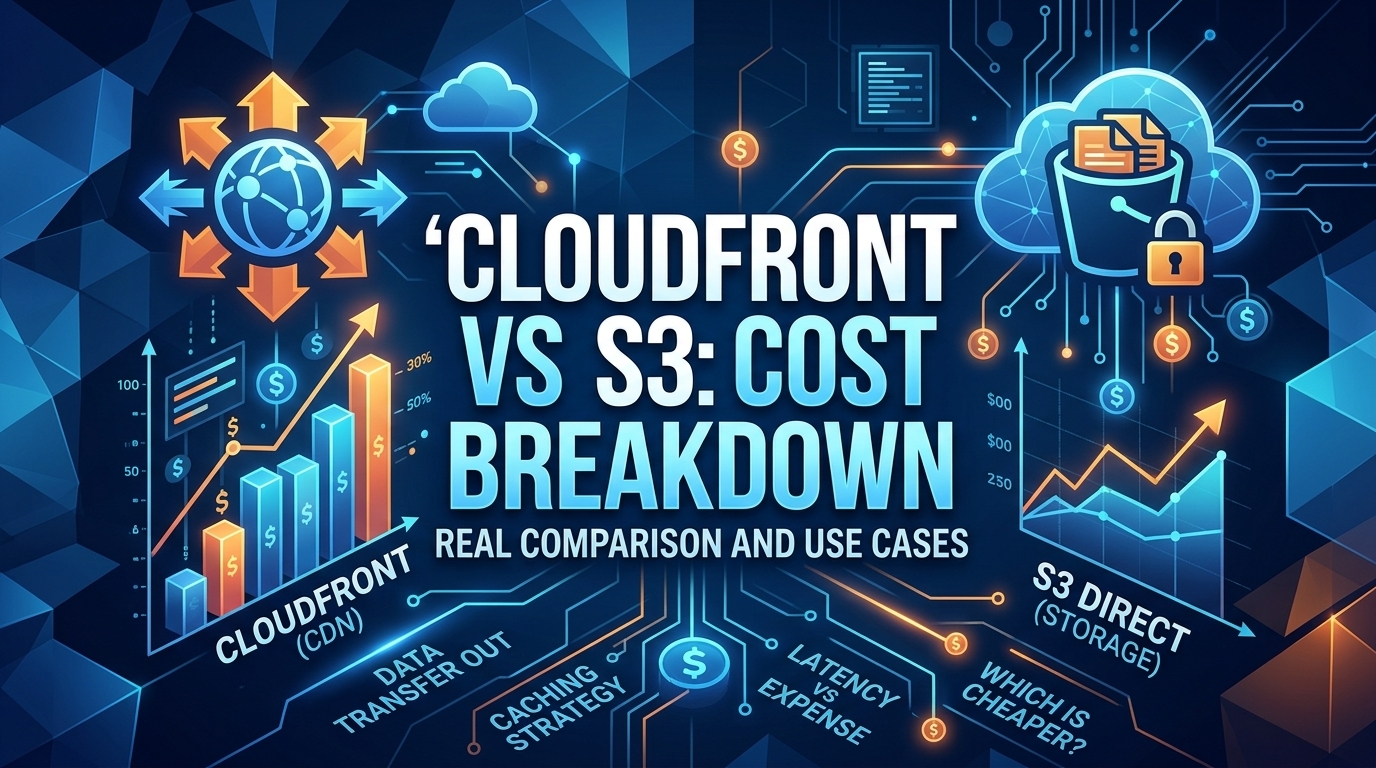
The CloudFront vs S3 decision depends more on object size than on traffic volume. At a 500 KB average response, 100 TB ...
Learn
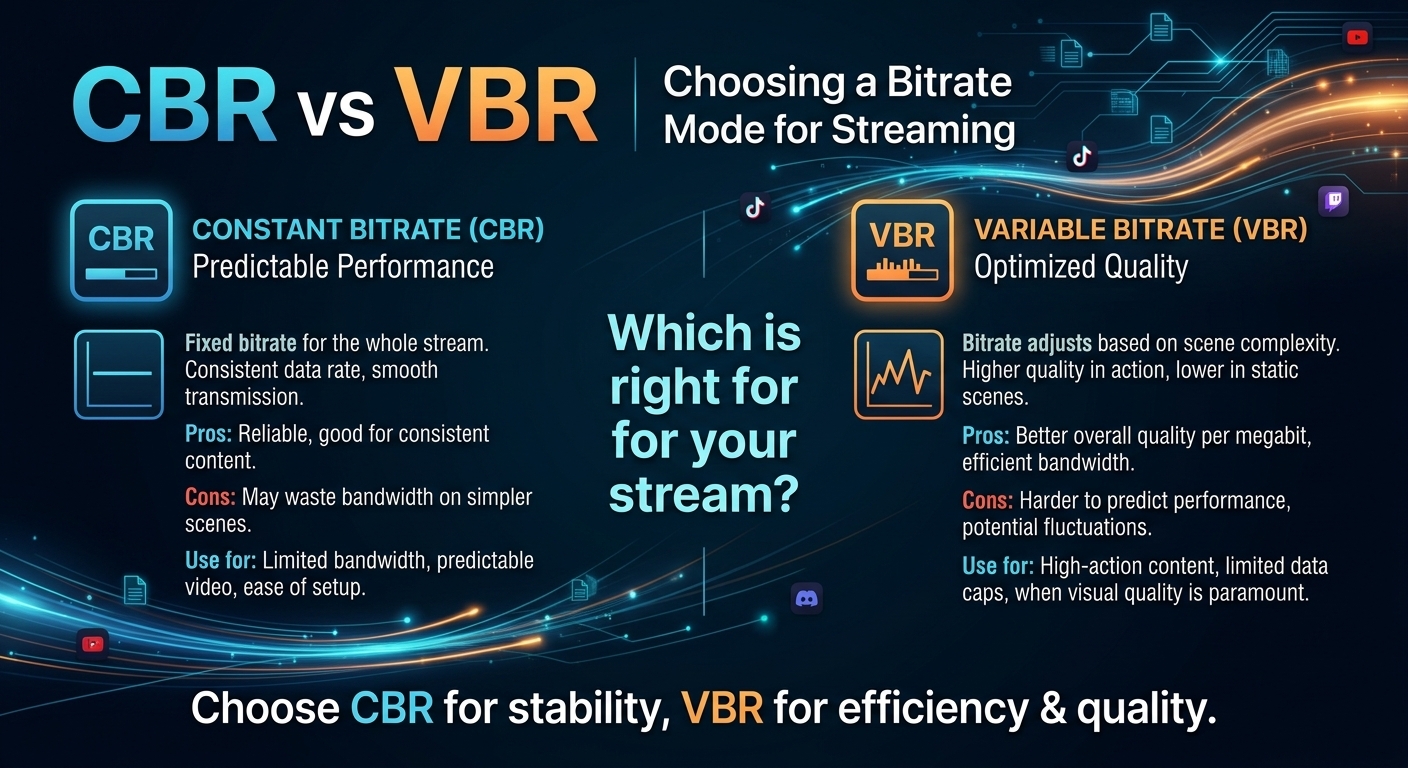
For most on-demand video, capped variable bitrate (VBR) wins the cbr vs vbr decision: it spends bits where the picture ...