
Learn
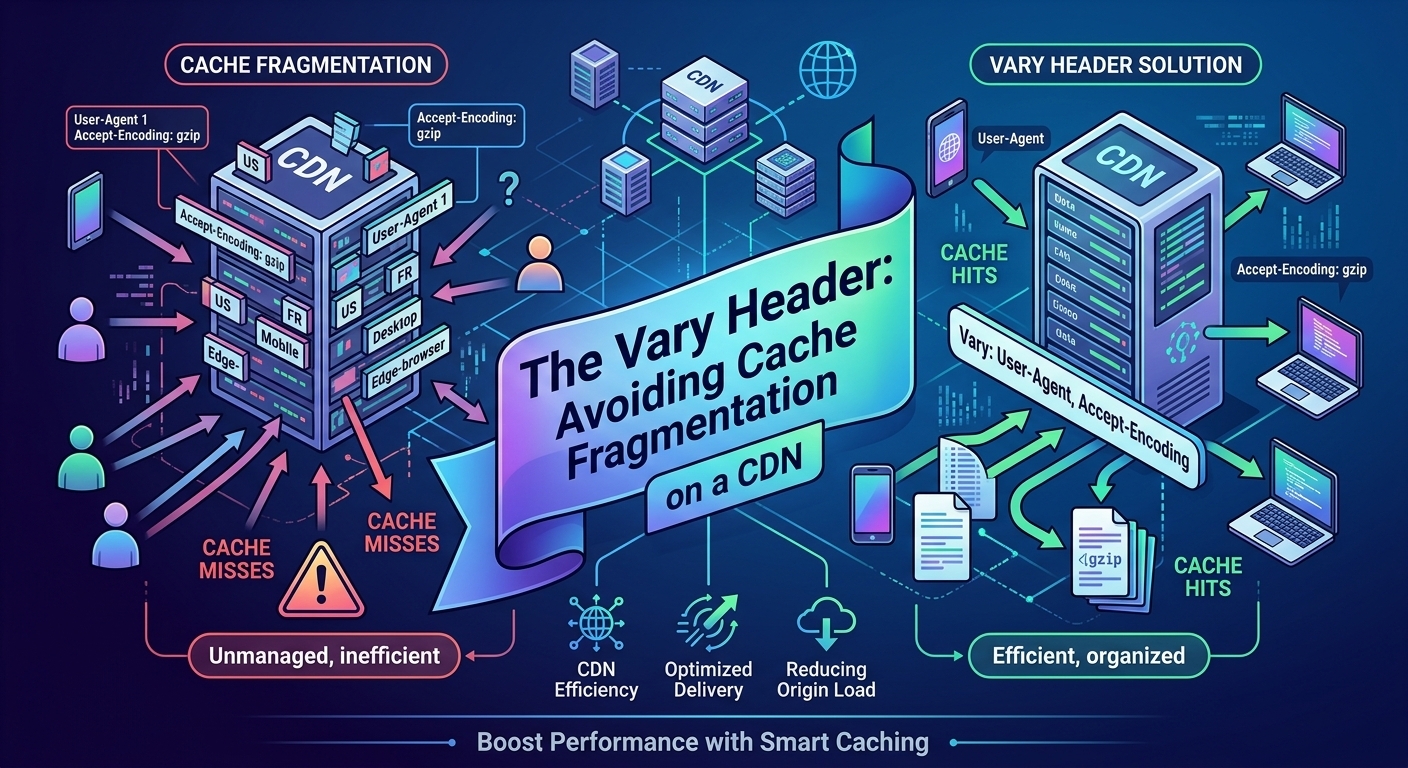
The Vary Header: Avoiding Cache Fragmentation on a CDN
The Vary header is a multiplier on your cache key. A CDN edge stores one copy of an object per distinct combination of ...

The number that ends most Akamai renewal conversations is not the per-GB rate. It is the commit. Mid-market buyers in 2026 routinely report annual minimums in the $50,000–$150,000 range before a single byte moves, with effective blended rates landing somewhere between $0.02 and $0.08 per GB in North America and Europe once traffic actually flows. If your delivery volume sits under roughly 500 TB per month and your traffic is mostly cacheable static objects, that structure is doing you no favors. This piece gives you the cost model, the commit-structure math, a workload-profile decision matrix for choosing Akamai alternatives, and the honest cases where Akamai is still the correct answer.
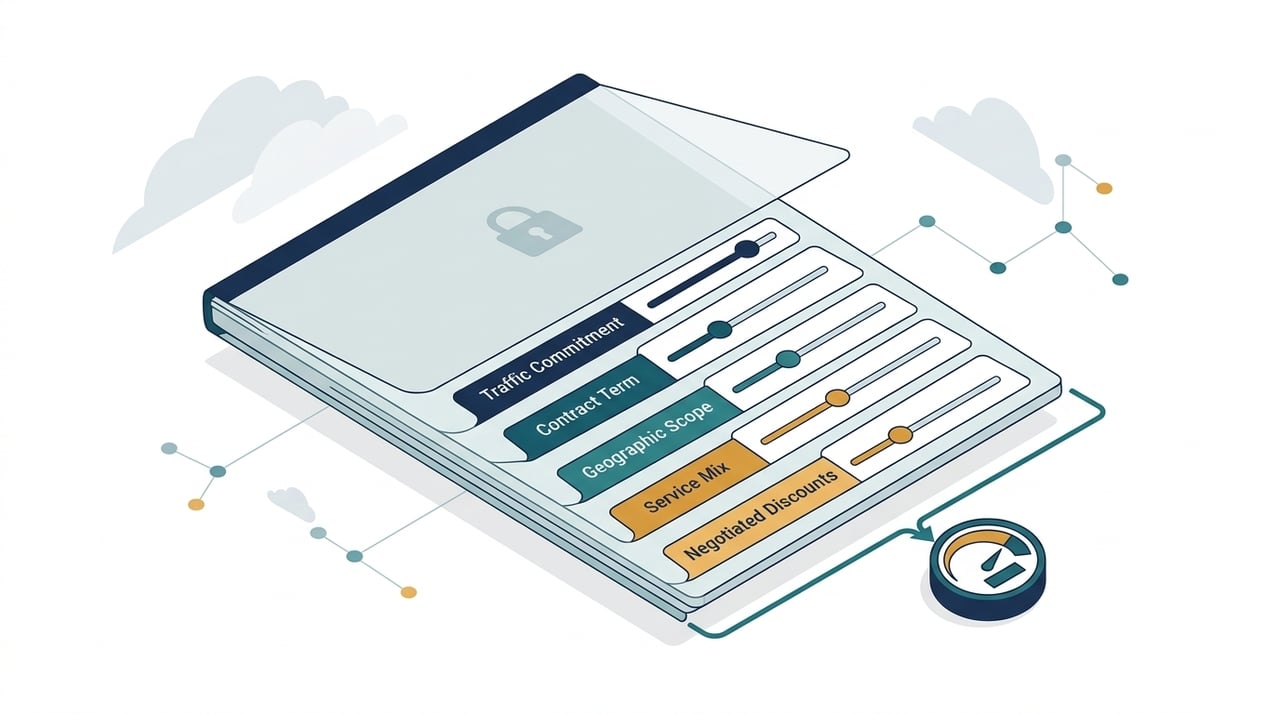
Akamai's list economics are not unreasonable for what they deliver. The friction is structural, and it shows up in four places.
Public financials give a rough sanity anchor: Akamai's delivery segment has been shrinking as a share of revenue for several years while security and compute grow. That is a deliberate portfolio shift, and it means commodity byte delivery is not where the company competes on price. If you are buying commodity bytes, you are buying from a vendor that has decided not to optimize for you.
Before comparing Akamai alternatives, compute four numbers from your own logs. They determine everything downstream.
Run those four and the comparison stops being a feature checklist. It becomes arithmetic.
Indicative public and street pricing as of Q1–Q2 2026. Negotiated enterprise rates land lower; treat these as an order-of-magnitude guide, not a quote.
| Provider | Indicative cost (NA/EU) | Commit model | Strongest fit |
|---|---|---|---|
| Akamai | ~$0.02–$0.08/GB blended | Annual commit, per-SKU | Regulated industries, global tier-1 events, deep edge compute |
| BlazingCDN | $5/TB ($0.005/GB) entry, down to $2/TB at 2 PB | Volume tiers, no annual lock | High-volume cacheable delivery, VOD, game patches, software updates |
| Bunny.net | ~$0.01/GB NA/EU, higher in APAC/LATAM | Pay-as-you-go | Small-to-mid sites, image optimization, fast self-serve |
| CDN77 | ~$0.005–$0.03/GB by volume | Volume commit | OTT streaming, EU-centric delivery |
| Gcore | from ~$0.018/GB, tiered down | Tiered / commit | Gaming, CIS and APAC reach, bundled edge compute |
| Fastly | ~$0.08–$0.12/GB list NA, lower on commit | PAYG or commit | Dynamic acceleration, instant purge, VCL/Compute logic |
| Amazon CloudFront | $0.085/GB first 10 TB NA, ~$0.02 at PB scale | PAYG, private pricing above 10 TB/mo | AWS-native stacks, S3 origin, free origin egress |
| Cloudflare | Bundled ($25–$250/mo tiers, Enterprise custom) | Seat/plan based | Security-first platforms, unpredictable traffic, Workers |
Two honest caveats. Cloudflare's non-metered bandwidth is genuinely attractive until you hit their acceptable-use boundary on large-file and video delivery, at which point you are negotiating Enterprise anyway. And CloudFront's headline rate looks bad next to specialist CDNs, but if your origin is S3, the zeroed origin-fetch egress can swing the total cost of ownership by 20–30%.
This is the section most comparison pages skip. Vendor choice is a function of workload shape, not brand.
| Workload profile | Dominant cost driver | Where to look first |
|---|---|---|
| VOD library, 200 TB+/mo, 95%+ CHR | Egress bytes | BlazingCDN, CDN77 — cost-per-TB is the whole game |
| Game patch / software update bursts | Peak Gbps, overage penalties | BlazingCDN, Gcore — burst headroom without commit cliffs |
| Low-latency live, sub-3s glass-to-glass | Manifest request rate, purge speed | Fastly, CDN77, Akamai AMD |
| API-heavy SaaS, low CHR, high RPS | Requests, not bytes | Cloudflare, Fastly — edge logic beats raw bandwidth price |
| Regulated / PCI / FedRAMP delivery | Compliance attestations | Stay on Akamai. This is what you are paying for. |
| Heavy APAC/LATAM/Africa audience | Regional rate multipliers | Multi-CDN split by geo; test regional RTT before committing |
A worked example. 400 TB/month, 92% of it cacheable video segments, audience 70% EU / 30% NA. On a mid-market Akamai commit at a blended $0.025/GB that is roughly $10,000/month. The same volume on volume-tiered pay-as-you-go pricing at $3/TB lands near $1,200–$1,500. Even after adding a secondary provider for failover and keeping a small Akamai footprint for the regulated subset, the annual delta is six figures. That is the arbitrage most mid-market teams are sitting on and not measuring.
For byte-dominated, high-cacheability delivery — VOD catalogs, game patches, installer distribution, large static libraries — the economics favor providers built around cost-per-TB rather than bundled platform SKUs. BlazingCDN runs NVMe SSD edge storage with volume pricing from $100/month for 25 TB down to $2 per TB at 2 PB+, offers 100% uptime with stability and fault tolerance comparable to Amazon CloudFront, and scales under demand spikes without commit-cliff penalties. Onboarding is typically about an hour, which matters when you are running a parallel A/B against an incumbent rather than a full migration. Full tier breakdown is on BlazingCDN's pricing page.
The honest trade-off: if your workload is dominated by edge compute, bot management, or WAF policy rather than bytes, a delivery-optimized CDN is the wrong tool and Cloudflare or Akamai will serve you better.
Nobody should move 100% of production on a rate card alone. The pattern that works:
The overlap period is also your best leverage. Walking into an Akamai renewal with four weeks of production RUM from a challenger changes the conversation materially.
Mostly the latter. Akamai's pricing is calibrated for enterprises buying compliance, global event capacity, and edge compute as a bundle. If you are buying commodity cacheable bytes under roughly 500 TB/month, you are paying for a portfolio you are not using.
For byte-dominated workloads with high cache hit ratios, 60–85% on delivery line items is typical in 2026, based on the gap between mid-market commit rates and volume-tiered pay-as-you-go pricing. For request-dominated or security-heavy workloads the saving is much smaller and can be negative once you re-buy WAF and bot management separately.
Not automatically, but the variance is regional. Specialist cost-optimized CDNs are usually competitive on p50 TTFB in NA and EU and more variable in emerging markets. Test with real-user measurement segmented by ASN before drawing conclusions, and never rely on a single synthetic vantage point.
If you exceed roughly 100 TB/month, yes. Multi-CDN gives you failover, per-geo cost optimization, and permanent negotiating leverage. The operational cost is real — dual configuration, dual purge, dual log pipelines — so below that volume a single well-chosen provider is usually the better call.
Normalize everything to cost per TB delivered, per region, including request fees, TLS certificate charges, log delivery, and origin egress avoided through cache hits. Then re-run the model at 0.5×, 1×, and 3× your current volume. Contracts that look cheap at current volume frequently invert at scale.
Cache key configuration and Vary handling. Providers normalize query strings, cookies, and headers differently, so a config that yielded 96% CHR on one CDN can drop to the low 80s on another, which quietly inflates origin egress. Audit cache keys and validate hit ratios before you shift meaningful traffic.
Pick your single highest-volume cacheable asset class. Put it behind a challenger CDN on a parallel hostname this week. Instrument client-side TTFB p95 and cache hit ratio, segment by country and ASN, and let it run for four weeks through at least one traffic peak. Then compute cost per TB delivered including origin egress on both paths.
If the delta is under 20%, stay where you are — migration risk is not worth it. If it is over 50%, you have a business case that writes itself. What is your current requests-per-TB ratio, and did anyone model it before you signed?
Learn
The Vary header is a multiplier on your cache key. A CDN edge stores one copy of an object per distinct combination of ...
Learn
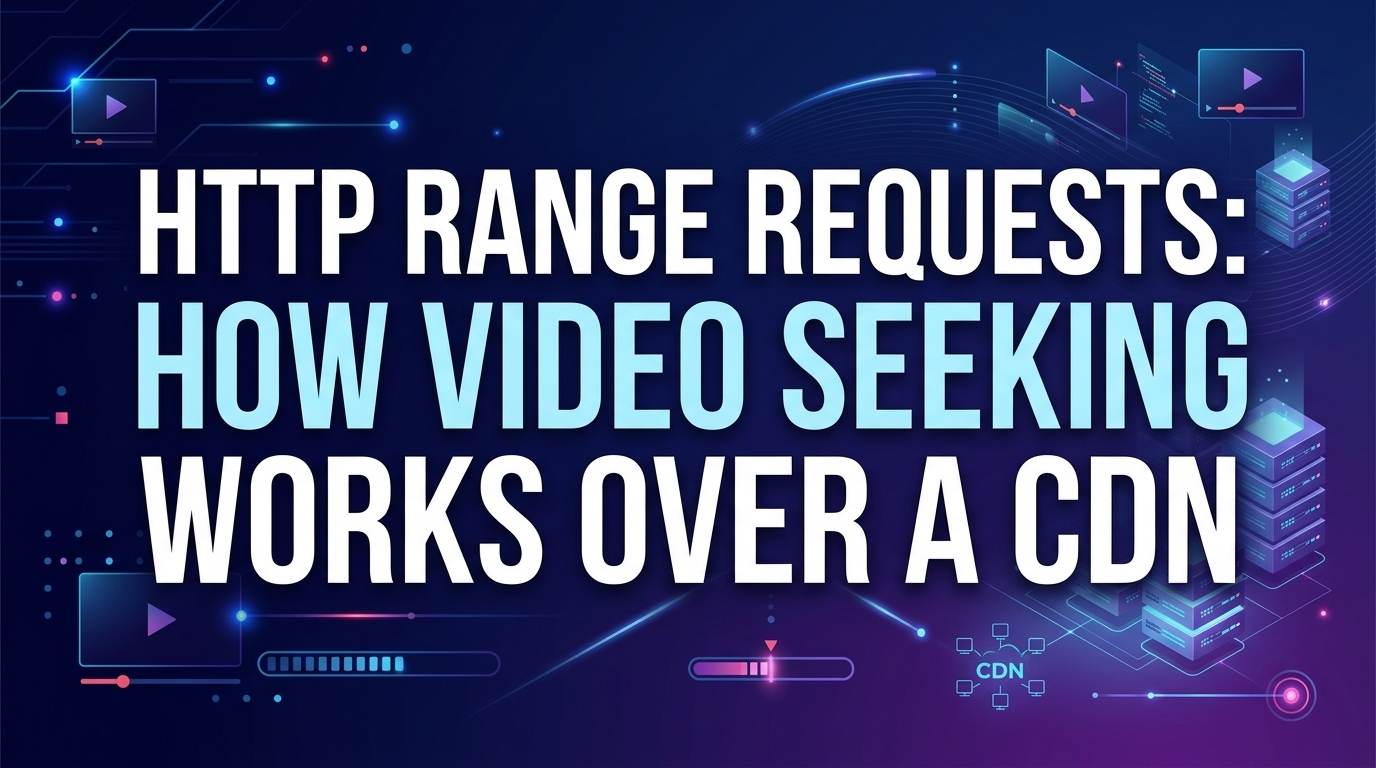
A player seeking to minute 40 of a 4 GB MP4 sends one byte range request for roughly 1 MB. If your CDN caches whole ...