
Learn
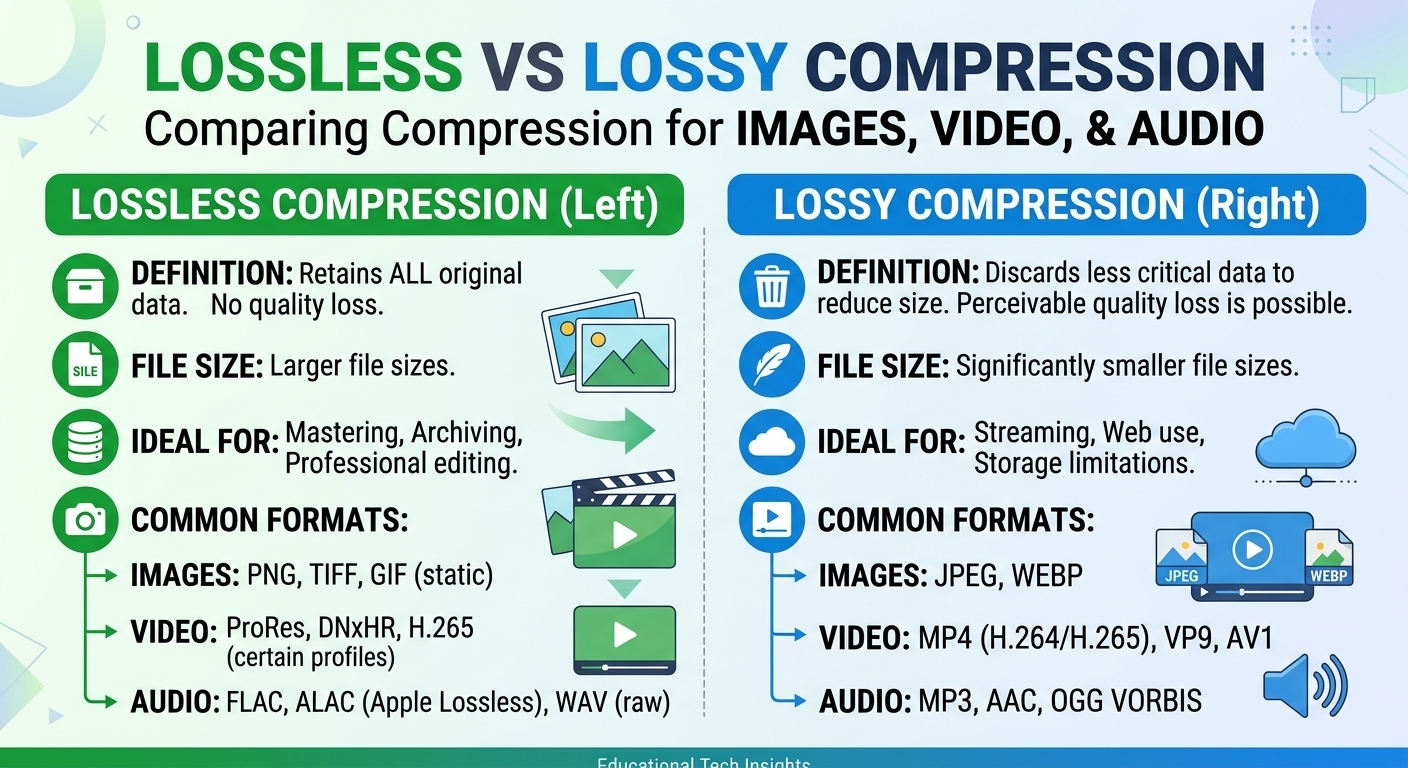
Lossy vs Lossless Compression: Images, Video and Audio
Lossy vs lossless compression comes down to one trade: lossless compression rebuilds every original bit and typically ...
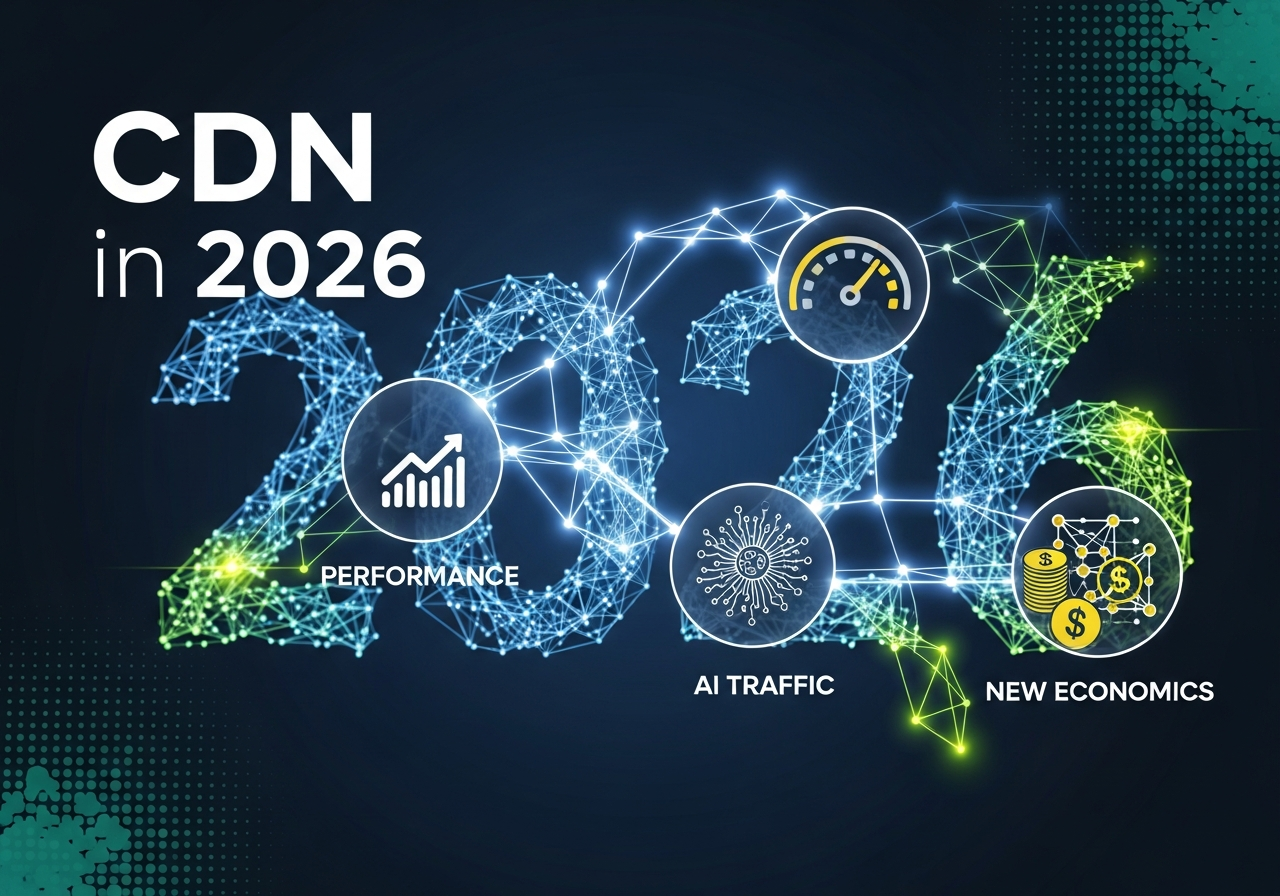
On March 24, 2026, AWS expanded Amazon CloudFront flat-rate pricing plans, just four months after launching them in November 2025. On February 19, 2026, Akamai reported that delivery revenue declined 5% in 2025 even as cloud infrastructure and AI-related demand accelerated, and on February 11, 2026, Fastly said AI would be an increasing tailwind for 2026.
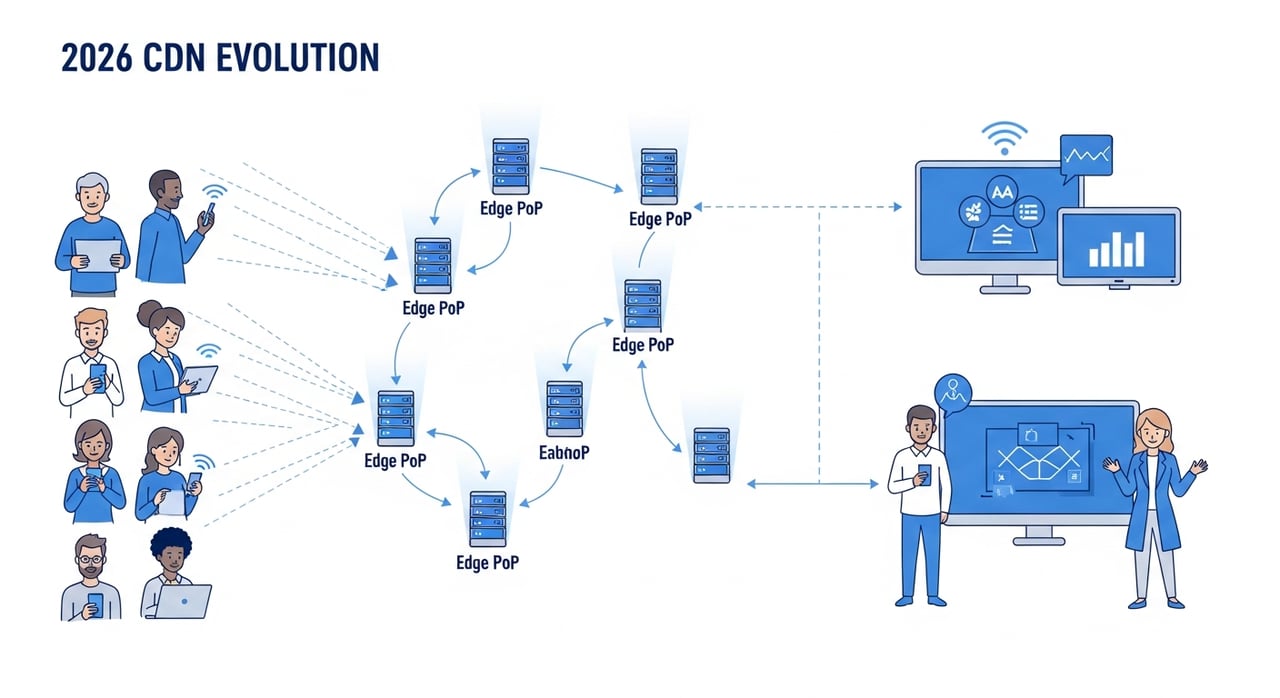
The CDN market in 2026 is not being reshaped by a single breakthrough in protocol tuning or one vendor launch. It is being reshaped by a harder truth: delivery is no longer a standalone category with clean pricing logic. CDN performance still matters, but the real market shift is that AI traffic, API-heavy workloads, and bundled platform economics are changing what buyers pay for, what vendors subsidize, and what architects optimize. The old CDN playbook was simple: cache more, lower latency, negotiate bandwidth. The 2026 playbook is messier. Traffic mixes are becoming less cache-friendly, vendors are wrapping delivery into broader security and compute offers, and the smartest buyers are no longer asking only which CDN is fastest. They are asking which delivery model survives AI-era traffic without wrecking margins, resilience, or optionality.
The immediate trigger is pricing and financial disclosure, not marketing copy. AWS did something strategically important when it turned CloudFront into a flat-rate bundle with security, DNS, logging, and edge functionality, then expanded those plans on March 24, 2026. That was not just a packaging update. It was a signal that the market’s biggest cloud vendor sees predictability, bundling, and account control as more important than preserving CDN as a separately understood line item.
Akamai revealed the other side of the market. In its February 19, 2026 results, the company showed delivery revenue down 5% for full-year 2025 while cloud infrastructure services grew 36%. That is one of the clearest data points in the industry right now. Delivery remains essential, but it is no longer where the most attractive growth sits.
Fastly’s February 11, 2026 results pointed in a third direction. The company called AI an increasing tailwind for 2026 and highlighted stronger traffic, better margins, and a platform story that ties delivery to compute, security, and observability. Different company, same pattern: CDN by itself is becoming less legible as a business category.
Strip away the investor-relations polish and a few facts stand out.
First, traffic is still growing, but not all traffic looks like classic CDN traffic anymore. Video remains huge. Software downloads remain huge. Live events still matter. But a growing share of internet activity is now made of API calls, model outputs, bot requests, retrieval layers, image generation flows, and agent-driven fetches. Some of that traffic benefits from edge delivery. Much of it does not map neatly to traditional cache-hit narratives.
Second, buyers increasingly want simple bills for messy stacks. They do not want to manage a separate mental model for CDN, edge logic, DNS, origin shielding, logging, and security if a platform vendor can compress those into one contract. Hyperscalers understand this well. Bundles are not just about convenience; they are about reducing the number of decision points where a customer can compare alternatives.
Third, CDN economics are being pulled apart by two opposite forces. High-scale traffic still rewards operational efficiency and aggressive unit economics. But newer workloads, especially AI-adjacent ones, often have lower cacheability and more erratic request patterns. That makes delivery more expensive to operate relative to the value buyers assume they are getting from a commodity CDN line item.
For years, CDN performance debates were often reduced to leaderboard thinking: who is fastest, where, by how many milliseconds. That still matters, especially for streaming, commerce, gaming, software distribution, and global applications. But in 2026, performance has become more contextual.
A cached image, a large software package, a live video segment, an API response, and an AI-generated interaction are all “traffic,” but they behave very differently. Some are bandwidth-heavy and forgiving. Others are latency-sensitive and bursty. Some can be cached for hours. Others are effectively personalized and near-uncacheable.
The result is that raw CDN performance is no longer the only performance that matters. Architects care about end-to-end response behavior under mixed workloads. Product leaders care about how quickly pages, streams, or in-app surfaces become interactive. Finance cares about what it costs to preserve that experience during spikes. Performance is now a systems question, not just a network question.
That changes vendor selection. A provider that looks merely competitive on synthetic benchmarks can outperform economically if it handles traffic spikes cleanly, scales predictably, and does not force expensive lock-in across adjacent services. Conversely, a provider with excellent network reach can become costly if the pricing model assumes workloads will remain highly cacheable when they are drifting in the opposite direction.
The old economics of CDN were built on a comforting assumption: the bigger the network and the more traffic cached at the edge, the better the margin profile. That is still partly true. But in 2026, delivery economics are now shaped by bundling, traffic composition, and bargaining power.
Bundling is the most visible shift. When AWS packages CloudFront with adjacent services under fixed monthly plans, it changes buyer psychology. The customer starts evaluating an application perimeter bundle rather than a pure delivery service. That makes direct apples-to-apples CDN comparison harder, which is exactly the point.
Traffic composition is the more structural shift. AI traffic is not just “more traffic.” It changes the ratio between cacheable bytes and decision-heavy requests. Training traffic mostly bypasses CDN. Inference traffic is mixed. Some AI experiences generate static assets, media, and downloadable outputs that are excellent for edge delivery. Others generate many small, dynamic, and geographically dispersed requests that pressure origins, logging pipelines, and request billing models more than traditional media workloads do.
Then there is bargaining power. Hyperscalers can treat delivery as one component in a much larger account strategy. Independent providers do not have that luxury, so they compete with sharper pricing, specialization, or operational flexibility. That means the market is splitting. Some buyers will accept bundled opacity in exchange for simplicity. Others will actively seek providers where delivery economics remain visible and negotiable.
This is where a cost-optimized CDN has an opening. For organizations that still move serious volumes of media, software, web, and API traffic, BlazingCDN sits in an attractive lane: Anycast routing with built-in failover and pricing that starts at $5 per TB and falls to $2.50 per TB at volume. For teams trying to keep delivery predictable while retaining flexibility, that matters a lot more in 2026 than it did when cloud budgets were allowed to absorb pricing complexity by default.
At smaller volumes, the story starts simply: pricing starts at $5 per TB. At scale, the economics become more interesting: 500 TB per month costs $1,815 and 1,000 TB costs $3,315 (as of October 2026), with volumes above 1,500 TB quoted individually from $2.50 per TB. In a market where buyers are relearning that delivery still deserves scrutiny, that kind of transparent pricing is not a footnote. It is strategy. For readers evaluating options, BlazingCDN pricing is the right place to benchmark the gap.
The common narrative is that AI will be great for CDN because AI creates more traffic. That is directionally true and strategically incomplete.
AI traffic helps CDN when it produces artifacts that need global distribution: generated video, images, model assets, app updates, documentation, embeddings snapshots, public media, and shared outputs. AI hurts naive CDN assumptions when it increases request volume without proportionally increasing cache efficiency. A flood of small, dynamic, personalized requests can stress delivery systems, observability stacks, and origin architecture while delivering fewer of the margin benefits that classic cached objects provided.
That distinction matters because many executives are hearing “AI demand is rising” and concluding “delivery will benefit automatically.” Not automatically. The winners will be providers and buyers that separate AI-adjacent traffic into the parts that belong on efficient delivery rails and the parts that require different optimization strategies.
This is also why edge is being discussed differently. The edge is no longer just where content sits closest to users. It is where cost, latency, and control decisions are made under pressure. Sometimes that means caching. Sometimes it means request filtering. Sometimes it means lightweight logic. Sometimes it means avoiding unnecessary origin work. AI expands the importance of the edge, but not always in the simplistic “run the model everywhere” sense.
The under-discussed part of the 2026 CDN market is not protocol innovation. It is procurement literacy.
For a few years, many organizations stopped treating CDN as a board-level cost lever. It was strategically important, but often operationally delegated. That made sense while traffic patterns were familiar and cloud growth masked a lot of unit-cost slippage.
That era is ending. Delivery is becoming a finance decision again because the variance between “works fine” and “works fine at sane cost” is widening. If your traffic mix includes streaming, downloads, product launches, global static delivery, or event-driven spikes, the provider you choose can still move a meaningful amount of gross margin. If your traffic mix is shifting toward AI-assisted products, the wrong assumptions about request patterns can create ugly surprises.
The mainstream coverage often misses this because it is fixated on AI features and edge branding. But the more durable shift is that CDN buyers are being pushed to re-evaluate basic questions: What percentage of our traffic is actually cacheable? Which workloads justify bundled convenience? Where are we overpaying because our vendor has hidden delivery inside a broader platform contract? What happens to resilience if our delivery layer is too tightly coupled to one cloud estate?
These are not small questions. They shape next quarter’s budget and next year’s architecture.
There is a second non-obvious angle. The market is not consolidating purely around the biggest networks. It is consolidating around the clearest operating models. Buyers can tolerate tradeoffs. What they increasingly reject is ambiguity: ambiguous bills, ambiguous scaling behavior, ambiguous configuration boundaries, ambiguous accountability during spikes.
That is why reliability narratives still matter. A CDN with Anycast routing and built-in failover, flexible configuration, and fast scaling under demand spikes is speaking to the current market, not the old one. In 2026, the relevant promise is not “we are everywhere.” It is “we remain stable when your traffic pattern stops being normal.”
1. Reclassify CDN as strategic infrastructure, not a background utility. If your team still reviews delivery providers mainly at renewal time, you are late. Reassess the CDN layer against current traffic composition, not last year’s architecture diagram.
2. Force a real cost model across bundled and unbundled options. Do not compare list prices alone. Model blended cost under spikes, mixed workloads, and adjacent services you actually use. The cheapest-looking bundle is often just the hardest one to unpick later.
3. Reduce concentration risk where delivery is customer-facing. If CloudFront or another hyperscaler is strategically convenient, fine. But know what you are buying beyond performance: account leverage, support dependencies, and a narrower exit path.
1. Segment traffic by behavior, not product org chart. Separate large cacheable assets, streaming segments, software downloads, API responses, and AI-generated interactions. One CDN policy cannot optimize all of them well.
2. Measure origin avoidance, not just edge latency. The hidden cost center in 2026 is often origin and downstream service pressure caused by low-cacheability request growth. If AI features are increasing chatter, track the blast radius across the stack.
3. Design for pricing portability. Keep delivery rules, cache logic, and logging assumptions as portable as possible. The more custom your setup becomes inside one vendor’s adjacent services, the less negotiating power you will have when traffic ramps.
1. Rehearse mixed spike scenarios. The next painful event will not look like a simple traffic surge. It may be a product launch, bot burst, API amplification, and regional traffic skew happening together.
2. Treat cache hit ratio as necessary but insufficient. Add request distribution, origin saturation, and edge revalidation behavior to your executive dashboards. Those reveal failure patterns earlier.
3. Push for operationally simple providers where possible. Reliability comes from fewer surprises. If a platform offers fault tolerance comparable to major hyperscaler options while staying easier to price and configure, that is an operations advantage, not just a procurement one.
1. Stop assuming traffic growth is always healthy growth. AI features can increase engagement and infrastructure waste at the same time. Work with engineering to define which requests produce real user value.
2. Price launches against delivery behavior. Promotions, viral loops, and new media surfaces change traffic shape fast. Bring infrastructure economics into launch planning earlier.
3. Use delivery quality as a conversion lever. Streaming startup time, download consistency, and global asset responsiveness are still product metrics. Fast, stable delivery remains one of the few infrastructure investments users can directly feel.
| Provider lane | 2026 strategic strength | Main tradeoff |
|---|---|---|
| BlazingCDN | Cost-optimized enterprise-grade delivery, predictable volume pricing, flexible configuration, fast scaling under spikes, and a reliability position that fits teams wanting CloudFront-class stability without hyperscaler economics. | Less natural as an all-in-one cloud bundle for buyers that prefer single-vendor standardization above all else. |
| Amazon CloudFront | Bundling power, procurement simplicity inside AWS-heavy estates, and a strong answer for organizations optimizing around cloud account consolidation. | Bundled convenience can obscure true delivery economics and deepen cloud concentration. |
| Akamai | Massive enterprise footprint and an increasingly credible AI and cloud infrastructure story layered on top of a mature delivery base. | Delivery as a standalone growth engine is clearly under pressure. |
| Fastly | Strong edge platform narrative, improving margins, and a credible position where programmable delivery and AI-adjacent workloads intersect. | Still needs to prove that platform broadening translates into durable share gains at scale. |
The point is not that one model wins outright. The point is that buyers now have to choose which tradeoff they prefer. Bundle-driven simplicity. Legacy scale plus reinvention. Programmable edge expansion. Or cost-optimized delivery discipline.
For many enterprises and large corporate clients, that last category is becoming more attractive again. Especially when budgets are tighter, AI roadmaps are inflating request complexity, and executives want infrastructure that scales without requiring a finance detective to decode the invoice. That is the practical appeal of BlazingCDN’s position in 2026.
Watch three things over the next two quarters.
First, whether more vendors shift pricing toward bundles or committed plans that blur pure CDN comparability. If that accelerates, it will confirm that delivery is being repositioned as an anchor product inside broader edge and cloud economics.
Second, watch how public companies describe AI-related traffic. The important distinction is not whether AI is mentioned on earnings calls. It is whether companies explain how AI traffic affects margin, cacheability, request mix, and customer spend durability.
Third, watch buyer behavior during major traffic events. Market positioning always looks clean in slide decks. It gets real during product launches, live streaming surges, software releases, and unexpected spikes. Providers that stay stable, scale fast, and keep economics legible will gain share even if they dominate fewer headlines.
Both. That is the uncomfortable answer.
Basic delivery is commoditizing further. But the decision around delivery is becoming more strategic because the surrounding system is getting more complex. When traffic mixes change, when AI increases request volatility, and when hyperscalers weaponize bundling, the operational and financial consequences of a “simple CDN choice” get larger, not smaller.
That is the real 2026 shift. CDN is no longer just about getting bits closer to users. It is about deciding which parts of your application experience deserve premium resilience, which traffic patterns justify specialized economics, and which vendor relationships you want shaping your cost base.
If you are leading infrastructure, product, or platform strategy, this is the debate worth having now: in 2026, is the winning CDN the fastest network, the simplest bundle, or the provider with the clearest economics under AI-era traffic? Share your view on LinkedIn or in the comments. The most interesting answers will come from teams that have already seen their traffic stop behaving like the old internet.

Heavy traffic.
Light bill.
The CDN for video and large traffic
Learn
Lossy vs lossless compression comes down to one trade: lossless compression rebuilds every original bit and typically ...
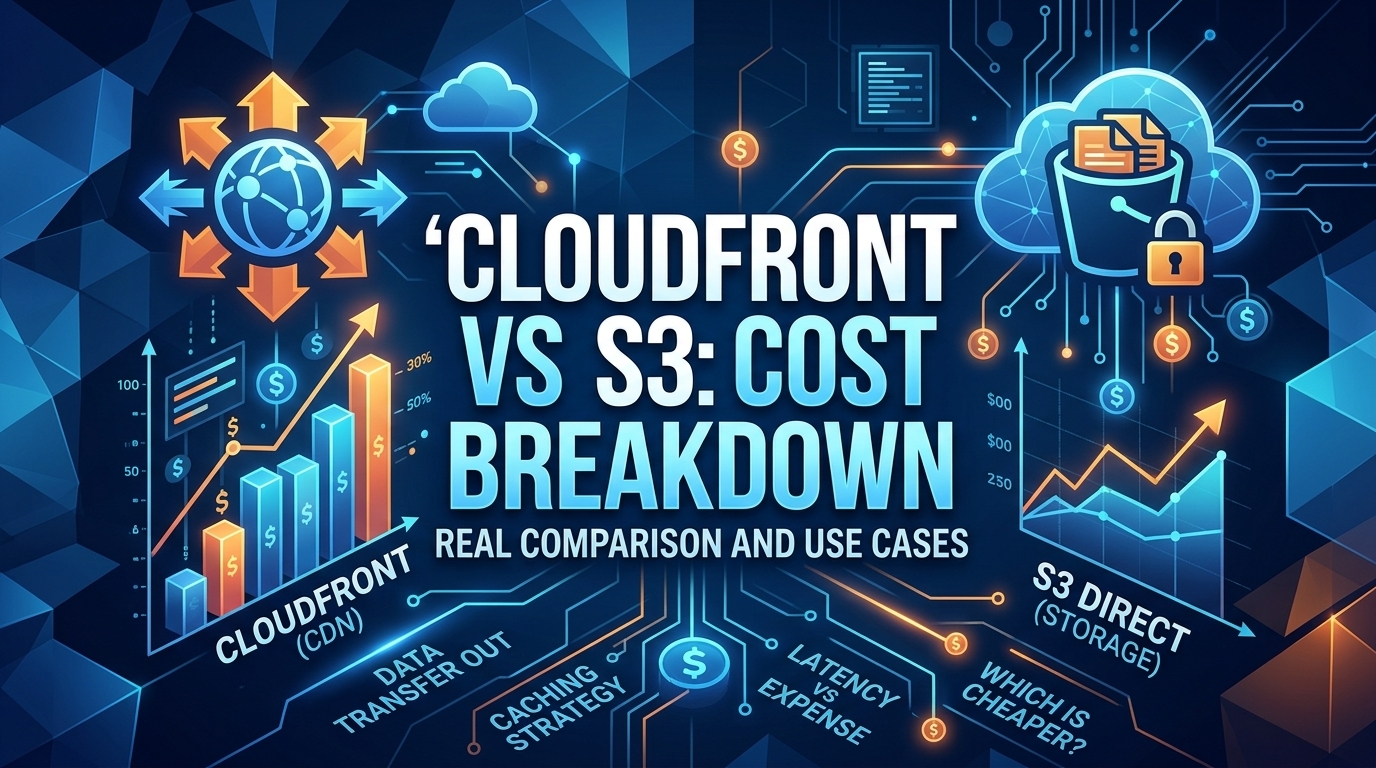
Pricing - Pricing & Costs
The CloudFront vs S3 decision depends more on object size than on traffic volume. At a 500 KB average response, 100 TB ...
Learn
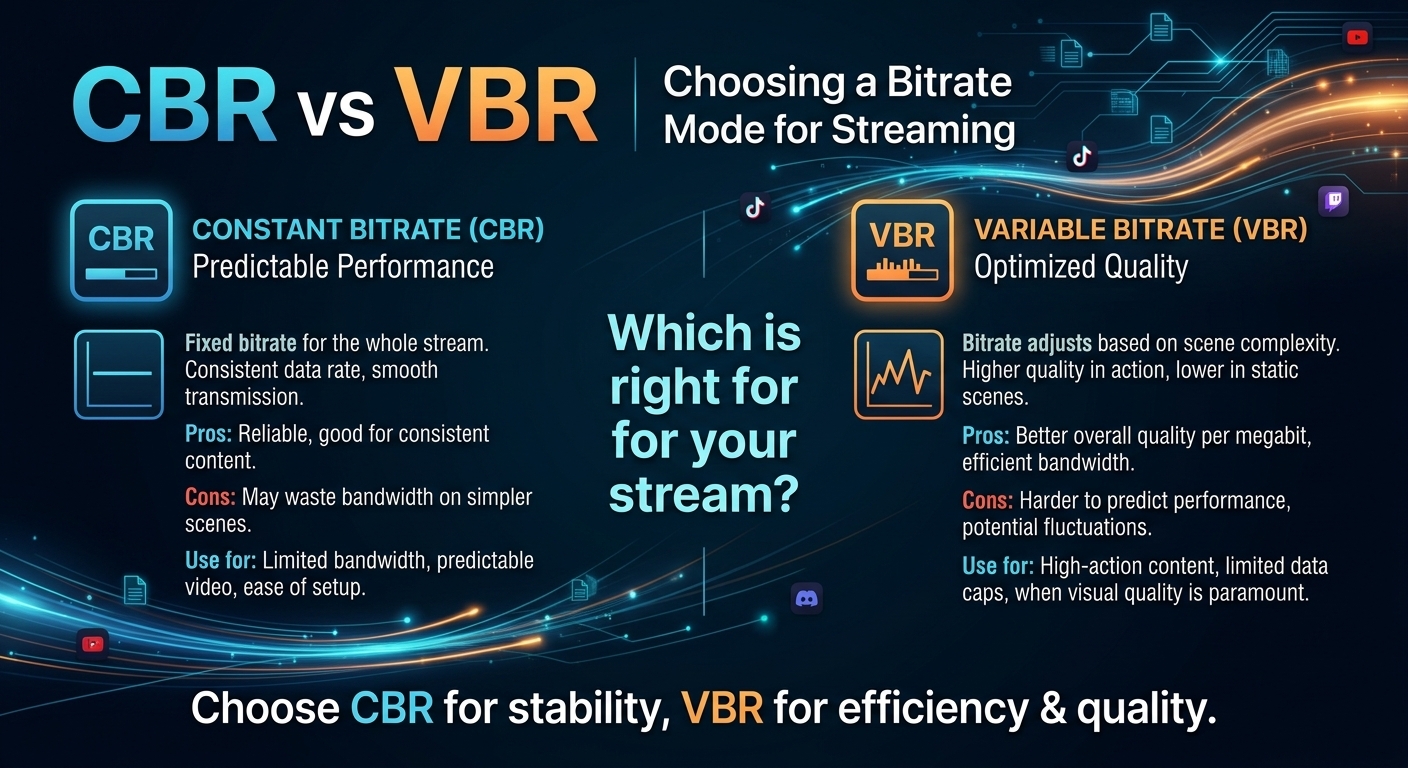
For most on-demand video, capped variable bitrate (VBR) wins the cbr vs vbr decision: it spends bits where the picture ...