
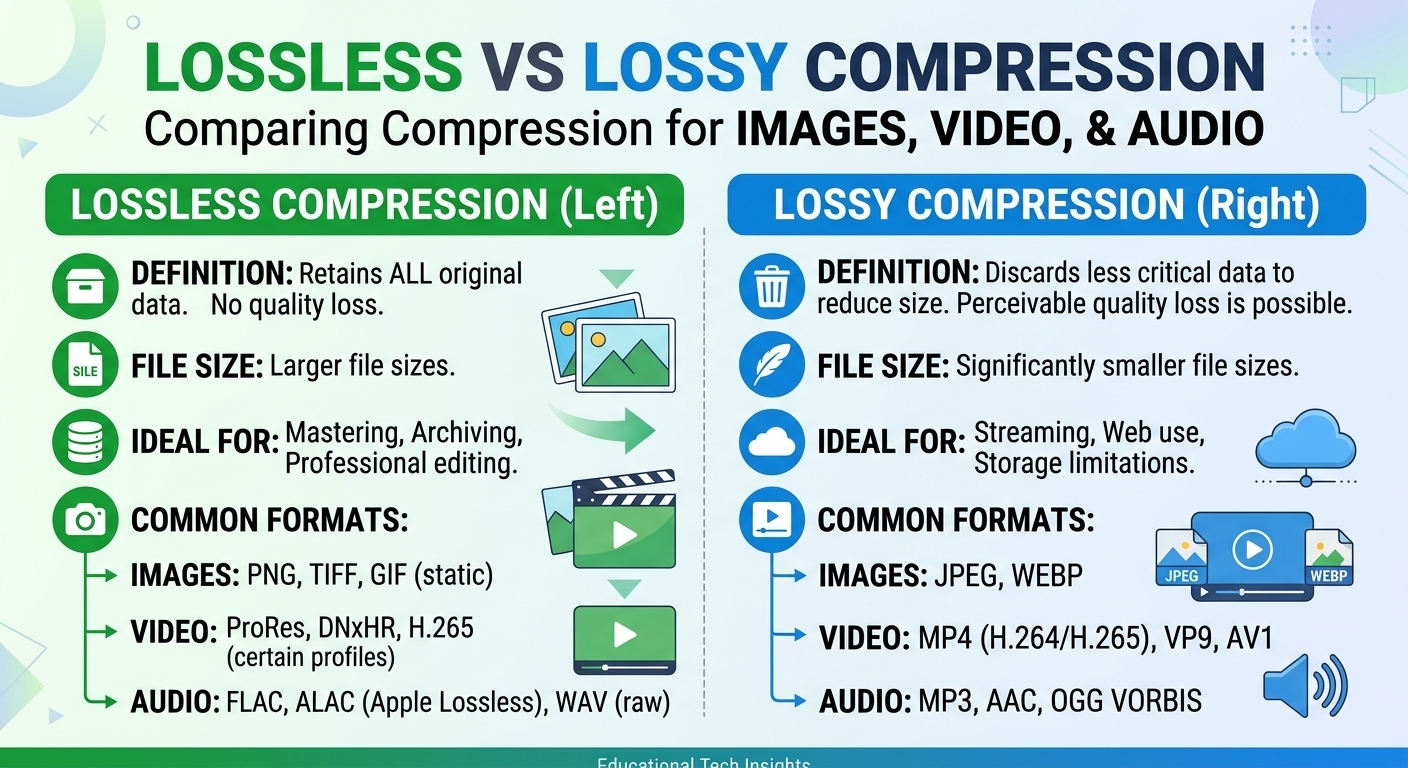
Learn
Lossy vs Lossless Compression: Images, Video and Audio
Lossy vs lossless compression comes down to one trade: lossless compression rebuilds every original bit and typically ...
As of Q1 2026, Baidu Cloud CDN pricing for standard traffic lands near ¥0.21–¥0.24 per GB inside mainland China on pay-as-you-go billing, which converts to roughly $0.029–$0.033 per GB — about $30 per TB at the entry tier. That number alone tells you almost nothing useful, because Baidu bills China traffic and overseas traffic on entirely separate meters, and the effective rate swings hard once you cross the 10 TB and 50 TB monthly thresholds. This article gives you the actual tier table, the cost model to compute your blended rate, the ICP filing constraint that breaks most foreign deployments, and a comparison against CloudFront and a lower-cost alternative so you can decide before you sign a commitment.
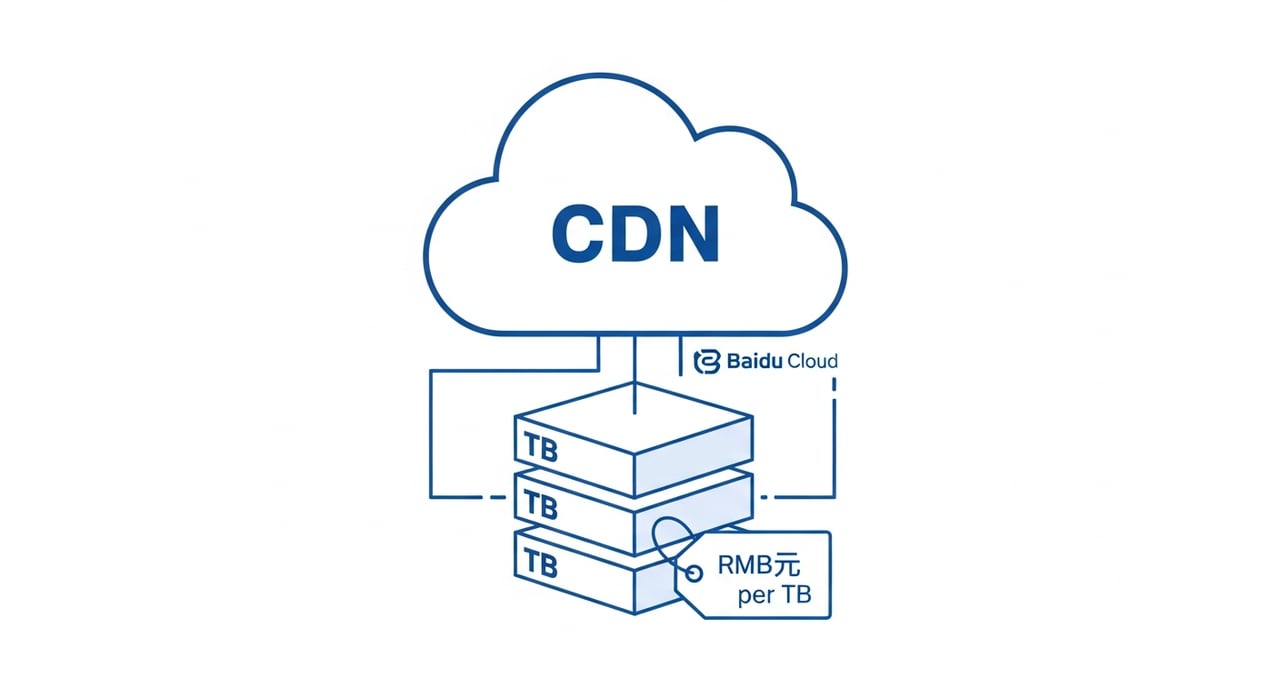
Baidu AI Cloud CDN pricing runs on two independent billing modes, and you pick one per domain. The first is traffic-based, where you pay per GB delivered. The second is peak-bandwidth-based (95th percentile or peak Mbps), which only makes sense for sustained, high-floor workloads like 24/7 linear video. Most teams default to traffic billing, so that is where the cost-per-TB conversation lives.
The critical structural detail: mainland China traffic and overseas (海外) traffic are metered separately, with different rate cards. China rates are quoted in RMB; overseas rates are region-banded and generally higher per GB. If you serve a global audience from a single Baidu CDN domain, your invoice splits across both meters automatically. Engineers who model only the China rate get surprised on the first overseas-heavy month.
Baidu uses graduated monthly tiers — each band applies only to the volume that falls inside it, not retroactively to your whole bill. Converted at roughly ¥7.2 to the dollar (Q1 2026), the tiered China traffic schedule approximates:
| Monthly volume band | Approx. price per GB | Effective cost per TB |
|---|---|---|
| 0 – 10 TB (Basic) | ~$0.030 | ~$30 |
| 10 – 50 TB (Standard) | ~$0.028 | ~$28 |
| 50 – 100 TB | ~$0.026 | ~$26 |
| 100 TB+ (Premium) | Custom / negotiated | Below $26 |
Overseas traffic sits higher, typically in the $0.04–$0.12 per GB range depending on region band, with Latin America and India banding most expensive. Treat the China numbers as the floor, not the average, for any global property.
Three shifts matter to a returning reader. First, Baidu has folded more of its edge stack under the "AI Cloud" brand, and Baidu AI Cloud CDN pricing now bundles edge logic and request-level controls that previously billed as add-ons — useful if you were already paying for them, neutral if you weren't.
Second, the tier breakpoints tightened. The old two-tier "10 TB then 50 TB" model now has a clearer 50–100 TB band, which lowers the marginal cost slightly for mid-volume properties pushing 60–90 TB monthly. Third, request fees (per 10,000 HTTPS requests) remain a separate line item and have not dropped, so high-RPS, small-object workloads still pay a meaningful surcharge on top of traffic. Model both, or your cost-per-TB estimate undershoots reality.
This is the angle most pricing pages skip, and it determines whether Baidu Cloud CDN cost is even relevant to you. To serve cached content from Baidu's mainland China edge, your domain needs a valid ICP filing (备案). No filing means no China acceleration, full stop. The cheap ¥0.21/GB rate is gated behind a regulatory process that can take weeks and requires a China-registered business entity.
Without an ICP license you fall back to Baidu's overseas nodes, where you pay the higher banded rate and lose the in-country latency advantage that was the reason to choose a Chinese provider. So the honest decision tree is: if you have a China entity and an ICP filing, Baidu Cloud CDN price per GB is genuinely competitive inside the mainland. If you don't, the "$30 per TB" headline simply doesn't apply to you, and a global provider is the cleaner path.
Here is how the per-GB economics stack up at the entry tier, as of 2026. Numbers are list/standard rates before commitments.
| Provider | Entry price/GB | Cost per TB | Best fit |
|---|---|---|---|
| Baidu Cloud CDN (China) | ~$0.030 | ~$30 | ICP-filed China delivery |
| Amazon CloudFront (US/EU) | ~$0.085 down to ~$0.020 | ~$85 down to ~$20 | AWS-native stacks |
| Cloudflare | ~$0.040 (paid tiers) | ~$40 | Bundled security + DNS |
| BlazingCDN | from $0.005 | from $5 down to $2.50 | Global high-volume delivery |
The gap is not subtle. Baidu's value is regulatory and geographic: it is the right tool when your traffic terminates inside ICP-filed China domains. For everything outside that boundary, the per-TB math favors a global provider by a wide margin.
Don't trust a single headline rate. Compute your blended cost per TB with four inputs: (1) split your monthly egress into China vs overseas percentages, (2) apply the correct banded rate to each volume slice, (3) add request fees using your average object size to estimate requests per GB, and (4) add SSL, log delivery, and any security add-ons as flat monthly lines. A property pushing 60 TB monthly that is 70% overseas will see a blended rate far above the ¥0.21 China figure — often 1.5–2× higher than the number that drew you in.
Once you have that blended number, benchmark it against a flat global rate. This is where pricing predictability changes the decision. BlazingCDN's volume-based pricing starts at $5 per TB ($0.005 per GB) and scales down to $2.50 per TB ($0.0025 per GB) at volume (as of October 2026), with one global rate rather than a region-banded matrix. It offers flexible configuration and Anycast routing with built-in failover. For enterprises modeling multi-PB egress, that flat structure removes the overseas-band surprise entirely.
As of Q1 2026, mainland China traffic runs roughly $30 per TB at the entry band (~$0.030/GB), dropping toward $26 per TB above 50 TB monthly. Overseas traffic is metered separately and costs more, so your effective per-TB rate depends on your China-versus-overseas traffic split.
A single TB of China-served traffic on pay-as-you-go is approximately $30 in 2026, plus separate HTTPS request fees based on object count. One TB of overseas traffic can cost $40–$120 depending on the region band, which is why mixed-geography workloads need a blended estimate rather than a flat figure.
Baidu's lowest rates apply to its mainland China edge, which requires an ICP filing to use. Without that filing you fall back to overseas nodes priced in higher regional bands, losing both the cost advantage and the in-country latency benefit.
Inside ICP-filed China, Baidu's ~$30 per TB undercuts CloudFront's standard US/EU entry rate of ~$85 per TB. For global delivery outside China, the comparison narrows and other providers can come in well below both.
To get the cheap China rates and serve cached content from mainland nodes, yes — a valid ICP filing tied to a China-registered entity is mandatory. Without it you can only use overseas nodes at higher banded pricing.
Pull last month's egress logs and split them by client geography. Apply the China and overseas bands from the tables above to compute your true blended cost per TB, then add request fees using your real average object size. Compare that blended number against a flat $4-per-TB global baseline. If more than half your traffic terminates outside ICP-filed China, the math will likely tell you a single-rate global provider is cheaper and simpler to forecast. What does your blended rate actually come out to — and how far is it from the headline number that first drew you in?

Heavy traffic.
Light bill.
The CDN for video and large traffic
Learn
Lossy vs lossless compression comes down to one trade: lossless compression rebuilds every original bit and typically ...
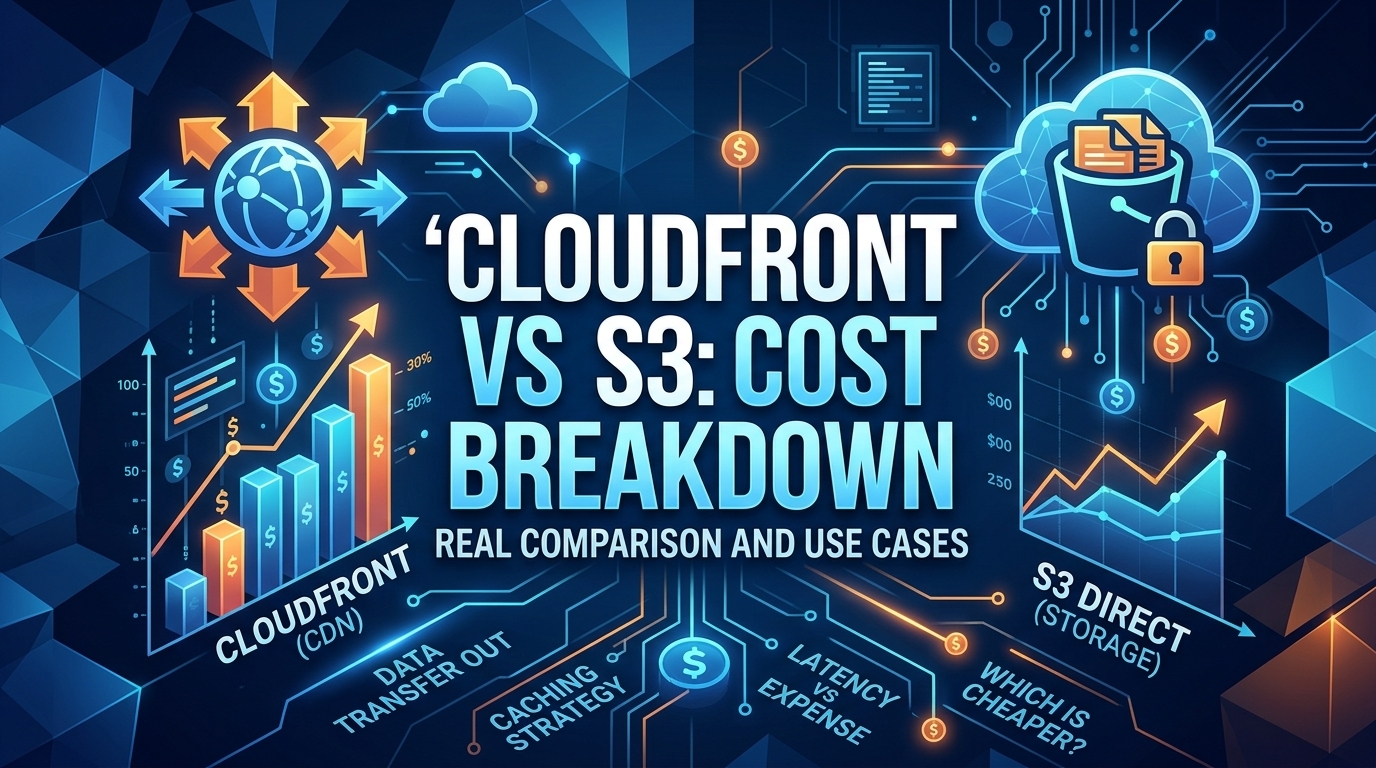
Pricing - Pricing & Costs
The CloudFront vs S3 decision depends more on object size than on traffic volume. At a 500 KB average response, 100 TB ...

Learn
For most on-demand video, capped variable bitrate (VBR) wins the cbr vs vbr decision: it spends bits where the picture ...