
Learn
Lossy vs Lossless Compression: Images, Video and Audio
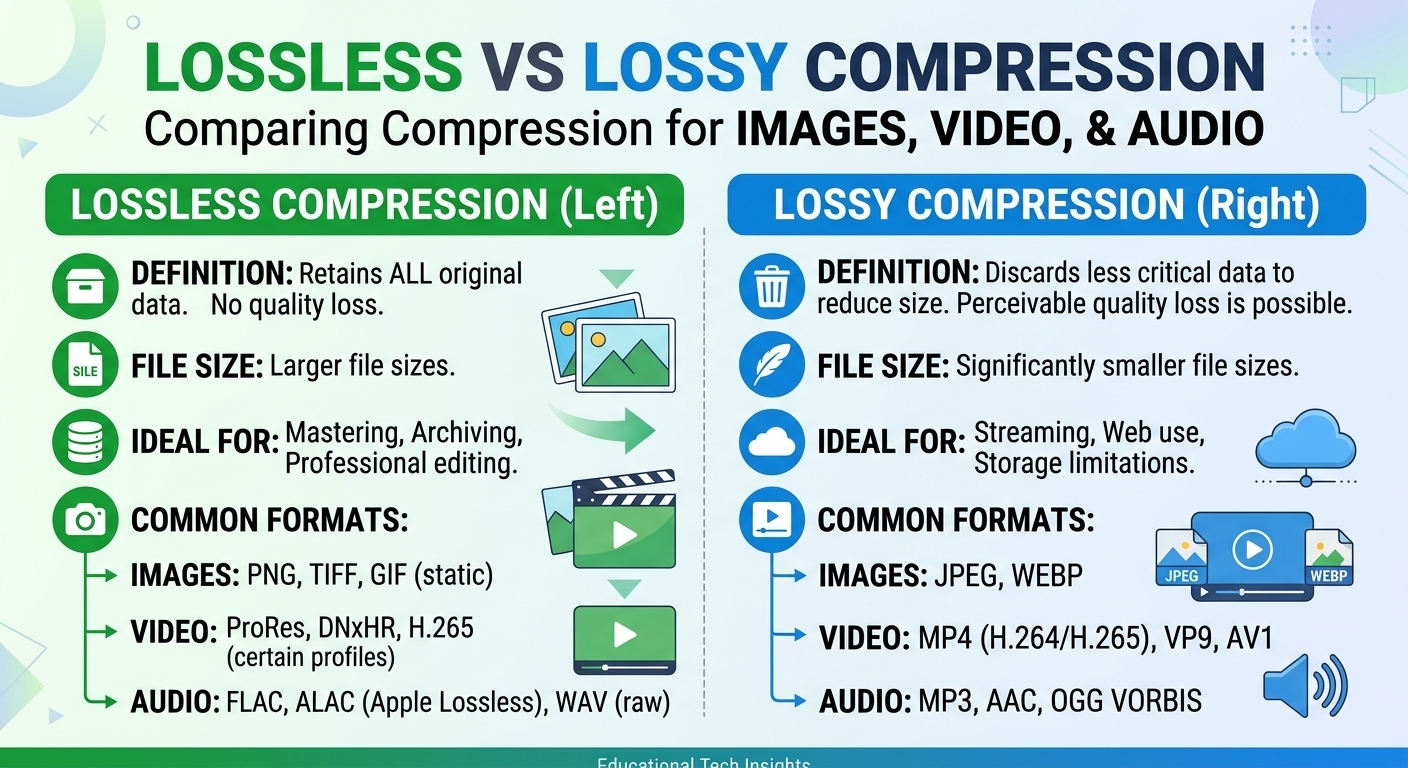
Lossy vs lossless compression comes down to one trade: lossless compression rebuilds every original bit and typically ...
A single misconfigured Azure CDN profile delivering 500 TB/month out of Zone 3 will run you over $100,000 annually at list rates. That number surprises teams who model their azure cdn pricing on Zone 1 defaults and only discover the delta when Finance flags the invoice. This article gives you three things: current per-TB rates across all Azure CDN SKUs as of Q2 2026, a head-to-head cost comparison against the providers most likely on your shortlist, and a workload-profile decision matrix you can drop straight into a vendor-selection document.
Microsoft currently ships three CDN SKUs under the Azure umbrella: Azure CDN Standard from Microsoft (now essentially folded into Azure Front Door Standard), Azure CDN Standard from Edgio, and Azure Front Door Premium. Since Edgio's bankruptcy proceedings in late 2024, Microsoft has been migrating customers toward Front Door tiers, which changes the pricing landscape materially.
As of Q2 2026, published list rates for Azure Front Door Standard (the de facto replacement for Azure CDN Standard from Microsoft) break down as follows:
| Zone | Regions | First 10 TB (per TB) | 10–50 TB (per TB) | 50–150 TB (per TB) | 150–500 TB (per TB) |
|---|---|---|---|---|---|
| Zone 1 | N. America, Europe | ~$82 | ~$72 | ~$57 | ~$40 |
| Zone 2 | Asia Pacific, Japan, Australia | ~$112 | ~$92 | ~$72 | ~$57 |
| Zone 3 | South America, Africa, Middle East | ~$210 | ~$175 | ~$140 | ~$100 |
These are transfer-out rates only. They exclude request fees (charged per 10,000 HTTP/HTTPS requests), WAF policy costs on the Premium tier, and private link origin fees. For teams running Azure Front Door Premium with managed rule sets, add roughly $20/month per WAF policy plus $1 per million requests processed by the rule engine. Those line items compound fast at scale.
The most common confusion in 2026 is whether "azure cdn pricing" even refers to a standalone product anymore. Microsoft's migration path is clear: Azure CDN profiles created through Edgio SKUs are being retired, and new deployments default to Azure Front Door Standard or Premium. The pricing models differ in two important ways.
First, Front Door charges a base fee per profile (~$35/month for Standard, ~$330/month for Premium) that the legacy CDN SKUs did not. Second, Front Door bundles routing, caching, and L7 load balancing into one resource, which may eliminate separate Traffic Manager or Application Gateway costs. Whether that nets out cheaper depends entirely on your existing architecture. If you were running Azure CDN purely as a static-asset cache with no WAF, the move to Front Door Standard likely increases your bill by the base fee alone. If you were stacking CDN + Application Gateway + WAF + Traffic Manager, Front Door Premium may actually consolidate and reduce total spend.
Comparing azure cdn bandwidth pricing against other major providers requires normalizing to the same regions and volume tiers. Here is how the landscape looks in Q2 2026 for a workload delivering 100 TB/month primarily to North American and European end users:
| Provider | Effective Cost per TB (100 TB/mo, Zone 1) | Includes Request Fees? | Base / Profile Fee |
|---|---|---|---|
| Azure Front Door Standard | ~$57–72 | No (separate) | ~$35/mo |
| Amazon CloudFront | ~$60–80 | No (separate) | None |
| Cloudflare (Enterprise) | ~$0 (unmetered on contract) | N/A | Custom contract |
| BlazingCDN | ~$4.15 | Yes (included) | $415/mo (100 TB) |
The spread is enormous. At 100 TB/month, Azure Front Door Standard costs roughly $5,700–7,200 in transfer alone before request charges. CloudFront lands in a similar band. Cloudflare Enterprise eliminates bandwidth metering but requires annual contract negotiation that makes small-to-mid volume use cases impractical. BlazingCDN's tiered pricing of $415/month for 100 TB (as of October 2026) delivers an effective per-TB cost of $4.15, roughly 14–17x lower than Azure at list rates ($5,700–7,200 versus $415). For teams processing large volumes of video, software distribution, or game patches, that delta is hard to ignore. BlazingCDN offers flexible configuration and Anycast routing with built-in failover. See BlazingCDN's current volume pricing for a full breakdown at higher commitment tiers, where rates drop toward $2.50/TB.
Cost per TB is necessary but not sufficient for a vendor decision. The right CDN depends on your workload shape, your origin ecosystem, and your operational requirements. Use this matrix to shortlist.
| Workload Profile | Primary Concern | Best Fit (as of 2026) | Why |
|---|---|---|---|
| Azure-native SaaS with WAF + L7 routing | Integration, single pane of glass | Azure Front Door Premium | Consolidated billing, native Private Link to Azure origins, managed rule sets |
| Multi-cloud API delivery with edge compute | Programmability at edge | Cloudflare Workers / CloudFront Functions | Mature edge-compute runtimes, global anycast |
| High-volume video VOD / software distribution | Cost per delivered TB | BlazingCDN | 15–20x cheaper per TB than Azure/CloudFront at 100 TB+; flat-rate model eliminates bill shock |
| AWS-native with S3 origins | Origin-fetch cost elimination | Amazon CloudFront | Zero-cost origin fetch from S3, OAC, integrated with Shield Advanced |
| Low-traffic marketing sites | Simplicity | Cloudflare Free/Pro | Unmetered bandwidth, zero config for basic caching |
The matrix intentionally omits edge cases like China-mainland delivery, which requires ICP licensing regardless of CDN, and live streaming ingest, where encoder-to-origin topology matters more than edge delivery pricing.
Most teams underestimate azure cdn cost because they model only transfer-out. A realistic monthly estimate for Azure Front Door Standard requires four inputs:
Microsoft's azure cdn pricing calculator is useful for ballpark estimates but defaults to optimistic assumptions about cache-hit ratios and request distribution. Build your own spreadsheet. Pull actual traffic telemetry. Model three scenarios: current baseline, projected 2x growth, and a spike event at 5x baseline. If the spike scenario produces a number that makes your finance team uncomfortable, you need either a committed-use discount from Microsoft or a provider with flat-rate pricing.
As of Q2 2026, Azure Front Door Standard (the successor to Azure CDN Standard from Microsoft) charges approximately $82 per TB for the first 10 TB in Zone 1 (North America/Europe). Rates decrease at higher volume tiers and vary significantly by zone, reaching ~$210/TB in Zone 3 at the lowest tier.
In Zone 1 at the entry tier, the effective rate is approximately $0.08 per GB. At higher volume commitments (150–500 TB/month), this drops to roughly $0.04 per GB. These rates exclude request fees, WAF charges, and profile base fees.
Not exactly. Azure CDN Standard from Microsoft has been effectively merged into Azure Front Door Standard since the Edgio deprecation. Front Door adds a monthly profile base fee ($35 Standard / $330 Premium) that legacy CDN SKUs did not have, but it consolidates routing, caching, and L7 load balancing into a single resource that may replace other services in your stack.
Split your monthly transfer volume by the billing zone where each end user is served, not where your origin sits. Apply the per-TB tiered rate for each zone independently. Add request charges and any WAF/rules-engine fees. Use Azure Monitor's BandwidthOut metric segmented by geography for actual data rather than relying on estimates.
Yes. At 100 TB/month and above, several providers undercut Azure on per-TB cost by an order of magnitude. BlazingCDN, for example, charges $415/month for 100 TB (as of October 2026) with no request fees, an effective rate of $4.15/TB versus Azure's $57–72/TB in Zone 1 at the same volume.
Microsoft offers committed-use discounts through Enterprise Agreements (EAs) and Azure Reserved Capacity. Discounts vary, but teams spending over $10,000/month on CDN/Front Door egress typically negotiate 20–35% off list rates. The negotiated price still tends to be higher than dedicated CDN providers at equivalent volume.
Pull your last three months of Azure CDN or Front Door invoices. Break out transfer-out by zone, request charges, and WAF fees. Divide total spend by total TB delivered to get your real effective per-TB rate—not the list price, the number you actually paid. Then run that same traffic profile through two alternative providers' pricing models. If the delta exceeds 30%, you have a business case for a multi-CDN strategy or a full migration. That analysis takes an afternoon. The savings compound every month you delay it.

Heavy traffic.
Light bill.
The CDN for video and large traffic
Learn
Lossy vs lossless compression comes down to one trade: lossless compression rebuilds every original bit and typically ...
Pricing - Pricing & Costs
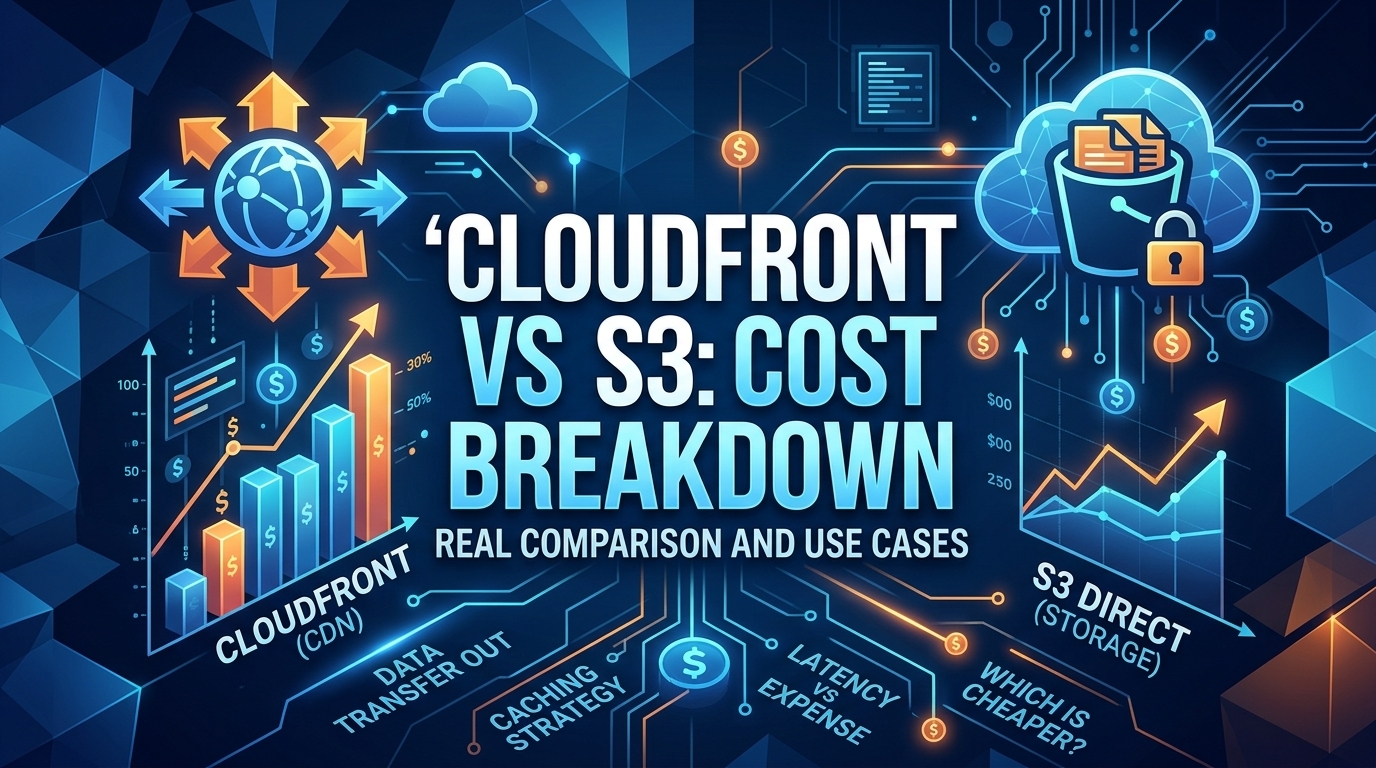
The CloudFront vs S3 decision depends more on object size than on traffic volume. At a 500 KB average response, 100 TB ...

Learn
For most on-demand video, capped variable bitrate (VBR) wins the cbr vs vbr decision: it spends bits where the picture ...