

Learn
What Is a CDN Edge Location? Definition and How It Works
CDN Point of Presence in 2026: Architecture and Selection Framework In Q1 2026 measurements across major commercial ...

By 2028, online video is projected to account for more than 80% of all consumer internet traffic, yet over 40% of viewers say they will abandon a stream after just one buffering incident. That gap between massive demand and near-zero patience is exactly why video CDNs exist—and why understanding how they work has become a strategic necessity, not a technical detail.
This article breaks down what a video CDN is, how it actually delivers smooth video at scale, and what you need to look for if you’re running a streaming platform, OTT service, e-learning portal, gaming platform, or any business where video quality drives revenue and brand perception.
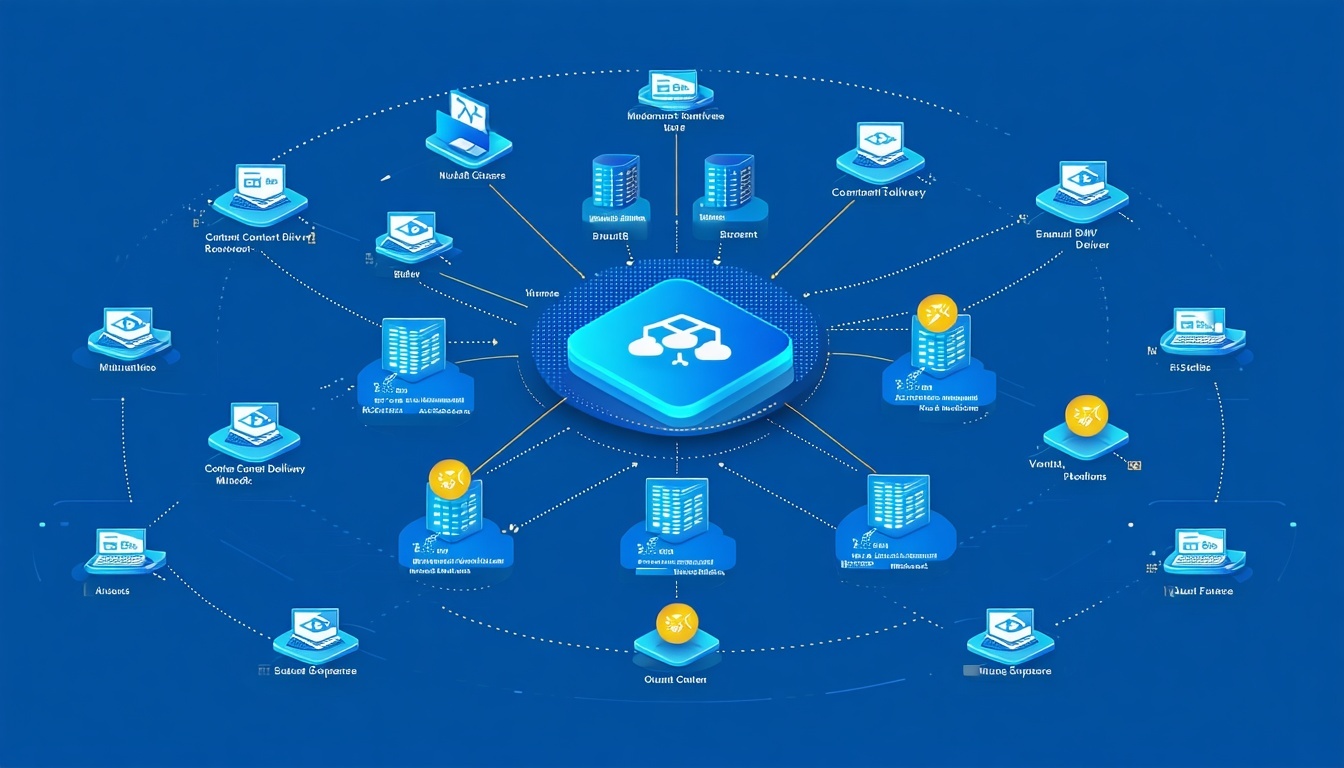
A video CDN (Content Delivery Network) is a distributed infrastructure of servers that stores and delivers video content from locations geographically closer to end users. Instead of every viewer fetching your video directly from a single origin server (for example, your data center or cloud bucket), a video CDN caches video segments on multiple edge servers worldwide and serves users from the nearest and least congested node.
The goal is simple: minimize latency, avoid bottlenecks, and keep video streaming smoothly even when thousands or millions of users hit “play” at the same time.
When a platform relies only on a single origin server, three core problems appear quickly:
A video CDN spreads this load globally, turns distance into an advantage, and lets you scale elastically without redesigning your whole backend.
Ask yourself: if 10x more viewers press play tonight than your average, can your current infrastructure keep the same quality of experience without failing or exploding your cloud bill?
To understand how a video CDN works, it’s useful to follow the path of a single stream—from raw video at your origin to pixels on a viewer’s screen. At each stage, the CDN plays a different role.
Most modern video workflows start with:
Next comes encoding and transcoding—transforming raw or high-bitrate video into multiple versions at different resolutions and bitrates (e.g., 1080p at 6 Mbps, 720p at 3 Mbps, 480p at 1 Mbps). This is essential for adaptive bitrate streaming (ABR), which lets the player switch up or down in quality depending on the user’s real-time bandwidth and device capabilities.
Once transcoded, the video is “packaged” into streaming formats such as:
The key idea: your video is chopped into small segments (often 2–6 seconds long) and served over standard HTTP/HTTPS. Instead of one giant file, a user effectively downloads a continuous chain of small video chunks.
At this point, you usually generate:
These files live on your origin or object storage and are the raw material your video CDN will distribute.
When a user hits play, their video player requests the manifest file first, then subsequent segments. The CDN sits between the player and your origin:
Over time, frequently accessed content (e.g., trending episodes, highlight reels, training modules) lives almost entirely on the CDN edges, dramatically reducing origin load and improving response times.
As the stream plays, the player monitors:
Based on these inputs, it continuously switches between different video bitrates. A robust video CDN, with low latency and consistent throughput, allows the player to stay at higher bitrates more often—translating directly to better perceived quality.
Each time the player jumps to a higher or lower bitrate, it simply requests different segment URLs from the manifest, and the CDN delivers the corresponding files.
Finally, you collect analytics from both the CDN and the player: start-up time, rebuffering ratio, average bitrate, and error rates. This data feeds back into:
The more you close this loop, the more you can shape your video CDN behavior around real-world audience patterns.
Looking at your current streaming pipeline, where do you suspect the biggest bottleneck: origin capacity, encoding strategy, or last-mile delivery?
For many organizations, the business case for a video CDN becomes obvious when you connect performance metrics to measurable outcomes like churn, engagement, and revenue.
Multiple studies highlight how unforgiving users are with poor streaming quality. Research by Akamai and others has shown that even a 1-second delay in start-up time can reduce viewer engagement and satisfaction, and increased buffering dramatically raises abandonment rates. In streaming-heavy industries such as OTT and sports, a few seconds of delay can mean thousands of concurrent users dropping off at once.
By serving content from geographically closer locations, a video CDN reduces latency and packet loss—two primary drivers of buffering. That improved Quality of Experience (QoE) translates directly into more minutes watched, higher ad inventory fill, and better subscriber retention.
Think about traffic patterns for:
These are not linear growth curves. They are spikes—often 5–20x above normal traffic in specific time windows and locations. A video CDN absorbs those spikes across its distributed infrastructure, instead of funneling them all into a single origin.
Without a CDN, you’d need to massively over-provision your infrastructure just to survive those peaks. With a CDN, much of that traffic is absorbed at the edge, turning unpredictable spikes into manageable load patterns.
Bandwidth and egress fees are usually among the top cost line items for streaming platforms. A well-tuned CDN significantly reduces origin egress by serving the majority of segments from cache, especially for popular content.
As your scale grows, even single-digit percentage improvements in cache hit ratio can equate to tens of thousands of dollars saved annually. This is especially relevant for video, where each viewer session can involve hundreds or thousands of segment requests.
Video audiences are increasingly global, yet network quality, peering arrangements, and local ISPs vary widely. A video CDN acts as a unifying layer, normalizing delivery quality across regions by intelligently routing traffic and maintaining multiple copies of content across geographically diverse servers.
For platforms expanding into new markets—Latin America, Southeast Asia, Eastern Europe—this often means the difference between “usable but laggy” and “premium-like” experiences.
If you’re mapping your growth targets for the next 2–3 years, does your delivery strategy fully account for the performance realities of each new region you plan to enter?
Not all CDNs are created equal, and not all are optimized for video workloads. To choose and configure a video CDN correctly, it’s important to understand the building blocks behind the scenes.
Origin shielding designates a specific CDN node as a protective “shield” in front of your origin. Instead of thousands of edge servers pulling content directly from your origin, they pull from the shield, which drastically reduces origin fetches.
Advanced setups may use:
Video can be tricky to cache compared with static images or HTML pages. Best practices include:
Additionally, you’ll want to plan for cache pre-warming before big scheduled events or premieres—pre-fetching popular content into the CDN near viewers based on expected demand.
Modern video CDNs rely heavily on protocol-level optimizations:
These details may seem esoteric, but for end users they translate into faster start times and lower buffering—particularly on flaky mobile or Wi-Fi networks.
Most enterprise-grade video platforms need robust access control:
The CDN is the enforcement point for many of these rules, validating tokens, headers, and IP-based policies before serving content.
Thinking about your own setup: are you currently optimizing your CDN primarily for cost, for performance, or for control? And does that align with your actual business risk profile?
Any CDN can technically deliver video files, but a video-optimized CDN pays special attention to characteristics unique to streaming workloads.
Video traffic has distinct behavior:
A video CDN is tuned for these patterns with segment-aware caching, efficient handling of many concurrent small requests, and careful TCP/UDP optimizations.
Live streaming adds extra complexity: new segments are being generated constantly, and viewers often join at different points in the timeline. A live-optimized CDN must:
VOD, in contrast, benefits heavily from long-term caching of “catalog” content. The same architecture must gracefully handle both if you’re running a hybrid platform with live channels and on-demand libraries.
Video-centric analytics go beyond simple hit counters. Mature video CDNs expose metrics like:
These metrics let you tune bitrates, track the impact of new releases, and identify problem regions or ISPs quickly.
If you compare your current CDN reporting to your product KPIs, where are the blind spots that make it hard to link delivery quality to user behavior or revenue?
Different sectors leverage video CDNs in distinct ways, but the underlying pain points—scale, performance, and cost—are consistent.
OTT platforms, broadcasters, and sports streamers live and die by stream reliability. A few seconds of buffering during a critical moment can ignite social backlash and erode brand trust overnight.
For these businesses, a video CDN enables:
Choosing a provider that can match the stability of hyperscale players while offering more predictable and lower costs becomes a competitive advantage in itself.
Universities, massive online course platforms, and enterprises running global training programs increasingly rely on video-first instruction. Here, buffering issues don’t just cause frustration—they directly reduce learning outcomes and course completion rates.
A video CDN helps e-learning platforms:
Game companies use video at multiple touchpoints: trailers, in-game replays, esports events, and tutorial content. Latency sensitivity is extremely high—gamers are among the least tolerant of performance issues across any digital audience segment.
Video CDNs support gaming ecosystems by delivering low-latency live streams, highlight reels, and VOD content around the clock, aligning with global launch timelines and promotional campaigns.
SaaS platforms increasingly embed video tutorials, product walkthroughs, and in-app help. B2B marketers run webinars and virtual events as core parts of their pipeline. For both, a single poor event experience can damage perceived brand quality with key accounts.
A robust video CDN helps ensure:
Which of these patterns most closely matches your own business—and do your current delivery choices align with the expectations of that audience?
Enterprises evaluating video CDNs often face a trade-off: pay premium prices for hyperscale providers, or compromise on performance and stability with budget options. BlazingCDN essentially rewrites that equation.
Designed as a high-performance, modern CDN for demanding workloads, BlazingCDN delivers stability and fault tolerance on par with Amazon CloudFront while remaining significantly more cost-effective. For large enterprises and corporate clients whose traffic patterns are dominated by video—media, software, gaming, SaaS—this difference compounds quickly as audience sizes grow.
With 100% uptime and a starting cost of just $4 per TB ($0.004 per GB), streaming platforms can drastically reduce delivery costs without downgrading user experience. Flexible configuration options, granular cache controls, and tailored support make it a strong fit for businesses that need to move fast, scale globally, and still maintain tight control over their infrastructure spending.
As a result, BlazingCDN has gained traction among forward-thinking companies that value both reliability and efficiency in their video delivery stack. To explore how those capabilities translate into real-world performance for media organizations, you can review the offering for broadcasters and streaming platforms at BlazingCDN solutions for media companies.
Looking at your own roadmap, where could a more cost-efficient yet hyperscale-grade CDN free budget for content, marketing, or product development instead of raw infrastructure?
When selecting or re-evaluating a video CDN, go beyond marketing claims and check for concrete technical capabilities that directly affect streaming quality and operational fit.
You should be able to:
These options let you adapt the CDN behavior to your specific workflow instead of being forced into generic defaults.
Ensure the CDN works smoothly with:
For paid or restricted content, look for:
Analytics can make or break your ability to react to issues quickly. A good video CDN provides:
For engineering teams practicing SRE or DevOps, this visibility is essential for fast incident response and continuous optimization.
Video workloads can spike unpredictably, and opaque pricing models make budgeting difficult. Transparent, predictable per-TB pricing lets finance and infrastructure teams plan realistically for growth scenarios and major events.
That’s where BlazingCDN’s straightforward, aggressive pricing structure is attractive for enterprises with large or volatile traffic patterns. Instead of puzzling through multi-layered pricing calculators, you can quickly estimate delivery costs based on expected usage and confirm with a simple rate card at BlazingCDN pricing.
When you audit your current CDN contract, how confident are you that you can predict monthly costs if your audience doubles or a single event goes viral?
Technology choices alone aren’t enough—implementation details matter. Here are practical recommendations to get more from any video CDN, whether you’re building from scratch or optimizing an existing setup.
A classic mistake is to overemphasize very high resolution profiles (4K, very high bitrate 1080p) when most of your audience watches on mobile or constrained networks.
Treat live and on-demand content differently:
This helps maintain a high cache hit ratio even as your content library evolves.
Even if your current traffic is moderate, setting up origin shielding early creates a more resilient architecture. It simplifies origin protections, centralizes cache logic, and prepares you for future scale without disruptive redesigns.
Combine CDN metrics with player-side QoE data:
Many mature platforms operate multi-CDN setups and route traffic dynamically based on performance or cost. Even if you start with a single CDN, consider:
Experiments grounded in data give you leverage when negotiating contracts and help you avoid vendor lock-in.
Which of these optimization levers could you implement in the next 30 days to meaningfully improve streaming quality or reduce costs?
| Aspect | Single Origin / Traditional Hosting | Video CDN-Backed Delivery |
|---|---|---|
| Latency | High for distant users; round-trips to central server | Low; served from nearby edge servers |
| Scalability | Requires heavy over-provisioning for peaks | Distributed load across many edge locations |
| Buffering Risk | High during spikes or in weak network regions | Reduced due to lower latency and optimized protocols |
| Bandwidth Costs | High origin egress and concentrated traffic | Lower origin egress thanks to edge caching |
| Global Consistency | Uneven; variable by distance and ISP peering | More uniform experience across regions |
| Operational Flexibility | Limited knobs for caching and routing | Rich policies, routing, and analytics options |
Seeing your current delivery model in this light, where does it fall on the spectrum—and what’s the impact on both user satisfaction and your infrastructure budget?
For many organizations, video has shifted from a side channel to a core product surface: it’s how customers learn, get entertained, attend events, and experience your brand. That makes your choice of video CDN—and the way you implement it—a strategic decision with direct implications for revenue, churn, and long-term growth.
Modern CDNs like BlazingCDN give you an opportunity to combine hyperscale-grade reliability with aggressive cost efficiency: 100% uptime, stability and fault tolerance comparable to Amazon CloudFront, and pricing starting at $4 per TB that makes large-scale streaming sustainable rather than a financial risk. For media companies, SaaS providers, game platforms, and any enterprise leaning heavily on video, that combination means you can invest more in content and product while still delivering a premium viewing experience worldwide.
If you’re responsible for infrastructure, product, or growth, now is an ideal moment to pressure-test your current setup. Map your user expectations, examine your streaming metrics, and ask: could a more modern, focused CDN approach give you faster streams, fewer incidents, and a leaner cost base?
Start by benchmarking your current delivery performance, then explore how an optimized video CDN strategy can transform your platform. Share this article with your team, challenge your existing assumptions, and open a conversation internally about what “good” should look like for your streams in the next 12–24 months.
And if you’re ready to see what a high-performance, cost-effective CDN could do for your video workloads in practice, take the next step: evaluate, test, and experiment. The organizations that treat video delivery as a product advantage, not just a technical necessity, will be the ones whose streams users never think about—because they simply work.
Learn
CDN Point of Presence in 2026: Architecture and Selection Framework In Q1 2026 measurements across major commercial ...
Learn
CDN Providers Comparison 2026: Latency Benchmarks, PoP Maps, Decision Matrix A single millisecond of added round-trip ...

Learn
11 Best Bunny.net Alternatives With Custom PoPs (2026) A single-digit millisecond reduction in P99 edge latency can ...