
Learn
Lossy vs Lossless Compression: Images, Video and Audio
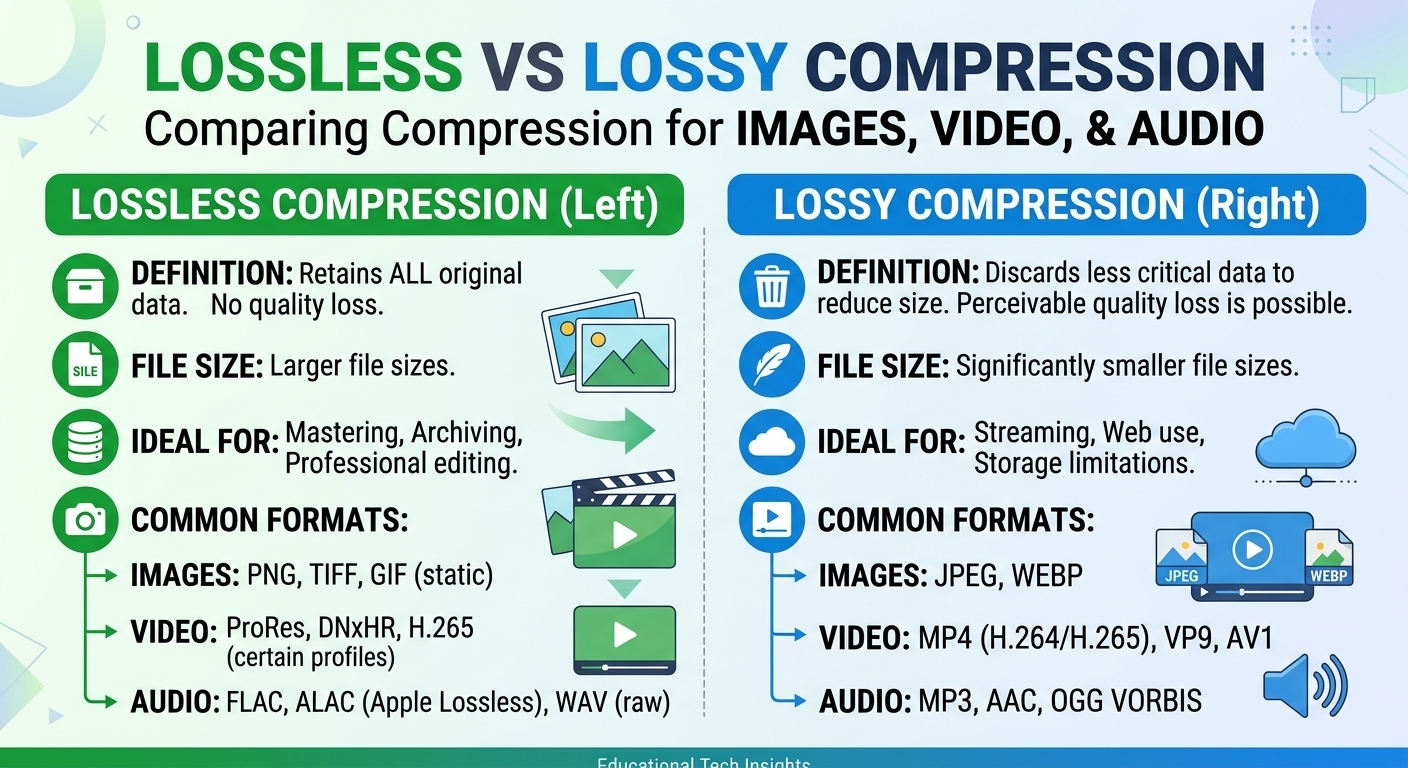
Lossy vs lossless compression comes down to one trade: lossless compression rebuilds every original bit and typically ...
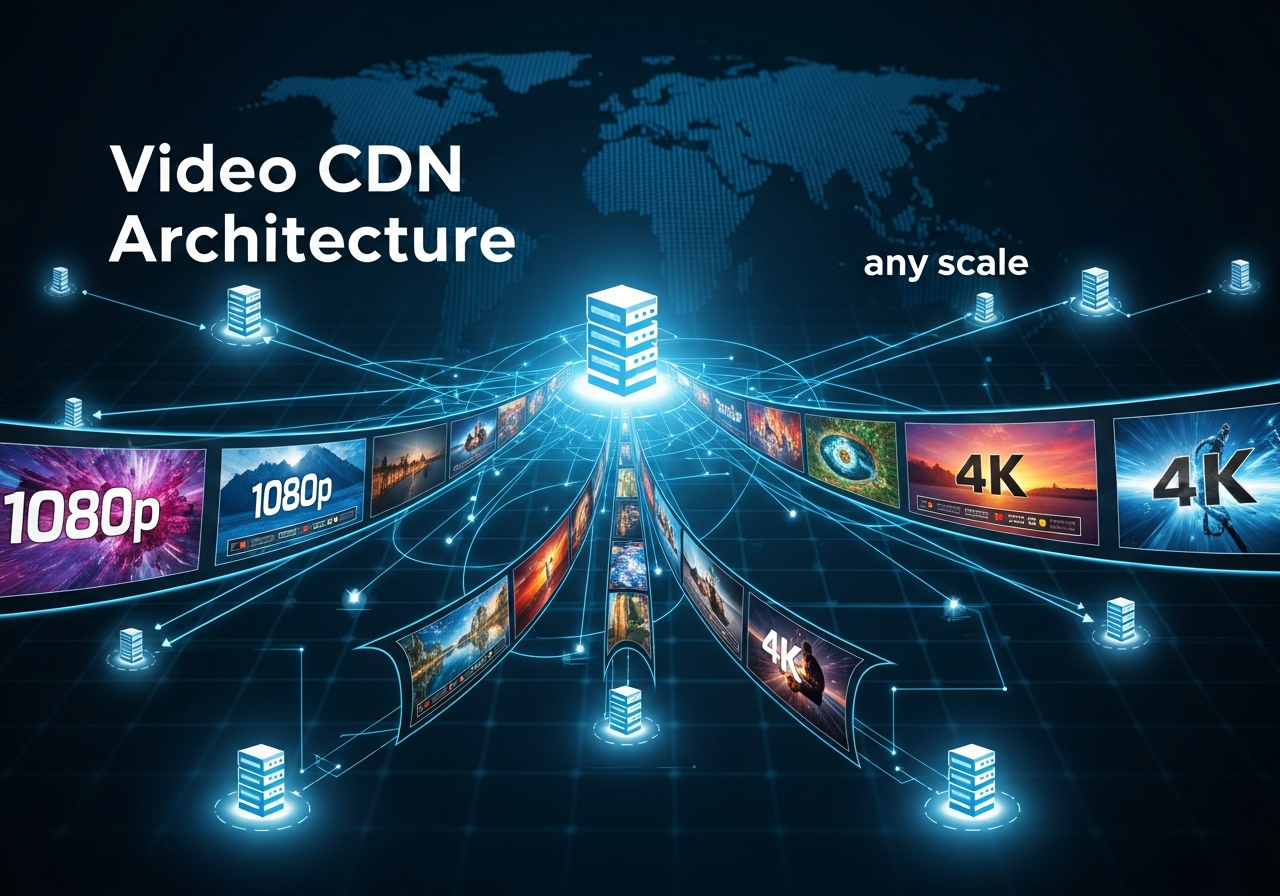
A 4K stream at 18 Mbps looks harmless until 400,000 viewers all ask for the same six-second segment inside the same refill window. That is not a bandwidth problem first. It is a request fan-out, cache admission, manifest churn, and tail-latency problem. Most video delivery incidents at scale show up as bitrate collapse, rising join time, and sudden origin amplification even when aggregate backbone capacity still looks comfortable.
The naive fix is to add more edge capacity or to lower segment TTLs until live playlists feel fresh. Both help right up to the point where they destroy cache efficiency, increase shield miss pressure, and turn a stable ABR ladder into oscillation. A production-grade video streaming CDN has to be designed around object cadence, variant multiplicity, and failure containment, not only around raw egress.

Two facts matter more than most architecture diagrams admit. First, video still dominates fixed-network traffic. Sandvine reported that video accounted for 39% of fixed internet traffic in its 2024 Global Internet Phenomena Report, with on-demand streaming generating the largest share of downstream volume as of 2024. That means your video CDN architecture is competing inside an ecosystem already shaped by persistent streaming load, not bursty web traffic. ([sandvine.com](https://www.sandvine.com/hubfs/Sandvine_Redesign_2019/Downloads/2024/GIPR/GIPR%202024.pdf?utm_source=openai))
Second, transport behavior under loss still punishes bad assumptions. HTTP/3 removes TCP head-of-line blocking across multiplexed requests, which matters for segment and manifest concurrency, but RFC 9114 is explicit that HTTP/2 over TCP can stall all active transactions when a packet is lost or reordered. That is directly relevant for players pulling manifests, keys, init segments, and media chunks over the same connection. ([rfc-editor.org](https://www.rfc-editor.org/rfc/rfc9114?utm_source=openai))
Live packaging adds its own hard timing constraints. RFC 8216 requires each segment in an HLS media playlist to carry EXTINF, requires live playlists without ENDLIST to publish new versions on a cadence tied to target duration, and warns that shrinking a live playlist below three times the target duration can trigger playback stalls. In other words, low-latency tuning has protocol guardrails. Ignore them and the player will punish you. ([rfc-editor.org](https://www.rfc-editor.org/rfc/rfc8216.html?utm_source=openai))
Vendor guidance lines up with field behavior. Fastly recommends manifest TTLs below half the segment duration for live HLS, typically 1 to 2 seconds for 5-second segments. Akamai notes that handling smaller segment sizes, down to 2 seconds, improves the player's ability to switch down quickly on bandwidth drops and reduce client-side buffering, but it also increases request rate and cache turnover. ([fastly.com](https://www.fastly.com/documentation/guides/full-site-delivery/video/streaming-configuration-guidelines?utm_source=openai))
There is also a less convenient result for teams standardizing on HTTP/3 everywhere. A 2023 measurement study found that on fast internet paths, QUIC plus HTTP/3 could reduce data rate by up to 45.2% versus TCP plus TLS plus HTTP/2, with up to 9.8% video bitrate reduction in the tested conditions, due largely to receiver-side processing overhead. That does not invalidate HTTP/3 for a 4K video streaming CDN, but it does mean transport choice should be measured by device class, throughput tier, and CPU budget instead of adopted as doctrine. ([arxiv.org](https://arxiv.org/abs/2310.09423?utm_source=openai))
| Metric | Practical target | Why it matters |
|---|---|---|
| Player startup time | < 2.5 s for VOD, < 3.5 s for live | Startup inflation is usually the first visible symptom of shield stress or cold-cache segments |
| Rebuffer ratio | < 0.2% watch time for premium service tiers | Above this, QoE degradation is usually visible in session abandonment |
| Edge cache hit ratio | > 95% VOD, > 80 to 90% live | Below this, origin egress and tail latency rise together |
| Manifest TTL | About 0.3x to 0.5x segment duration for live | Too long causes drift, too short causes manifest thundering herd |
| Segment duration | 2 to 6 s live, 4 to 8 s VOD | Smaller segments reduce recovery time but increase request rate and metadata overhead |
| Origin shield miss budget | Single-digit percent of total requests | Once this climbs during an event, the rest of the stack follows |
Those targets are not universal constants. They are operating bands derived from protocol guidance, vendor delivery recommendations, and observed large-scale streaming patterns. If your workload is sports, betting, auctions, or synchronized second-screen experiences, you will likely trade cache efficiency for lower glass-to-glass latency. RFC 9317 makes that tension explicit in its discussion of streaming latency and operational trade-offs. ([rfc-editor.org](https://www.rfc-editor.org/rfc/rfc9317.html?utm_source=openai))
The shortest useful answer is this: a 4K-capable video CDN architecture is a segmented-object delivery system optimized around high request concurrency, predictable cache locality, and ABR stability under partial failure. The architecture that scales best is usually not the one with the most knobs. It is the one that separates concerns cleanly.
| Layer | Primary job | Design notes |
|---|---|---|
| Ingest and transcode | Produce aligned renditions and deterministic segment naming | Per-title ladders help, but alignment across renditions matters more for clean switching |
| Packager | Emit HLS and DASH manifests, segments, partials if low latency | Keep manifest mutation isolated from large-object storage paths |
| Origin storage | Durable backing store for segments and manifests | Cheap, durable, and boring beats clever here |
| Origin shield | Collapse miss storms, normalize fetch behavior | Mandatory for live events and large libraries with spiky hot sets |
| Edge cache tier | Deliver hot manifests and segments with minimal tail latency | Separate manifest policy from segment policy |
| Steering plane | Route requests across one or more CDNs | Use QoE and regional telemetry, not vanity latency averages |
| Player telemetry | Close the loop on startup, rebuffer, bitrate, exit rate | CMCD is the right bridge between client and CDN logs |
The most important design choice is object taxonomy. Treat manifests, init segments, keys, and media segments as different species. They have different volatility, different cacheability, different miss costs, and different tolerance for staleness. Teams that apply one caching policy to all four usually rediscover this the painful way during a live event.
For VOD, the happy path is straightforward: player requests master manifest, selects a rendition, pulls init segment if needed, then fetches media segments with long-lived cacheability and immutable naming. For live, the system needs more discipline. Manifest requests should be cheap, fresh, and shield-collapsed. Segment requests should be aggressively cacheable by unique path and largely immune to player churn once published. If low-latency mode is enabled, partial object delivery must be handled without forcing the edge to revalidate large state on every chunk.
A good CDN for video streaming also enforces rendition alignment. If segment boundaries drift across bitrate ladders, the player's ABR switch points stop being clean, discontinuity handling becomes fragile, and cache reuse across adjacent viewers degrades. This is where packaging discipline beats transport micro-optimizations.
ABR is not just a player algorithm. It is a distributed control loop spanning encoder, packager, CDN cache, transport, and client heuristics. The player estimates available throughput and buffer health, then requests a higher or lower rendition. The CDN determines whether that request is a fast local hit, a shield hit, or an expensive origin fetch. That means CDN latency variance directly shapes bitrate selection.
If your p50 is excellent and your p99 is ugly, ABR will still oscillate. The player does not care that most users saw a fast segment if enough sessions saw delayed manifests or a couple of late chunks. One lost or late segment can force a downshift, and the recovery path may take several segments. That is why a video streaming CDN should be optimized for tail stability, not only median throughput. RFC 9218 also matters here because prioritization becomes useful when manifests, keys, and media contend on the same connection. ([rfc-editor.org](https://www.rfc-editor.org/rfc/rfc9218.html?utm_source=openai))
If you only change three things, change these: isolate cache policy by object type, normalize the cache key, and instrument CMCD so you can join client decisions to CDN behavior. CMCD gives you the missing bridge between player state and delivery logs, which is especially important in multi-CDN video streaming environments. ([mux.com](https://www.mux.com/blog/tie-together-your-client-and-cdn-logs-using-mux-data-with-cmcd?utm_source=openai))
proxy_cache_path /var/cache/nginx/hls levels=1:2 keys_zone=hls_cache:2g max_size=500g inactive=30m use_temp_path=off;

map $uri $cache_ttl
{
    ~*\.m3u8$ 2s;
    ~*\.mpd$ 2s;
    ~*\.m4s$ 1h;
    ~*\.ts$ 1h;
    ~*init\.mp4$ 24h;
    default 10m;
}

map $uri $cache_bypass
{
    ~*token= 1;
    default 0;
}

server
{
    listen 443 ssl http2;
    server_name video.example.net;

    location /
    {
        proxy_cache hls_cache;
        proxy_cache_lock on;
        proxy_cache_lock_timeout 10s;
        proxy_ignore_headers Set-Cookie;
        proxy_hide_header Set-Cookie;
        proxy_cache_bypass $cache_bypass;
        proxy_no_cache $cache_bypass;
        proxy_cache_valid 200 206 $cache_ttl;
        add_header X-Cache-Status $upstream_cache_status always;
        add_header Cache-Control public always;
        proxy_pass https://origin_shield;
    }
}
The point of the snippet is not that NGINX is special. The point is policy separation. Manifests should be fresh and cheap to re-fetch. Segments should be immutable and boring. If your current configuration cannot express those as different behaviors, your video CDN architecture is underpowered for live and 4K workloads.
For 4K, fewer well-chosen renditions often outperform an overgrown ladder. Every additional rendition multiplies object cardinality and reduces per-object request density, which hurts cache warmth. Per-title encoding helps prune the ladder, but only if you keep GOP and segment alignment consistent across renditions. Mux has written about content-adaptive encoding in terms of following the convex hull of bitrate, resolution, and quality. That framing is useful because the CDN benefit is not just lower average bitrate. It is higher request concentration on the renditions that survive. ([mux.com](https://www.mux.com/blog/instant-per-title-encoding?utm_source=openai))
For live HD and 4K, I would usually start with 2-second to 4-second segments, test partial delivery only where end-to-end latency justifies the extra request pressure, and make manifest TTL less than half the segment duration. That lines up with HLS protocol behavior and current CDN guidance. ([rfc-editor.org](https://www.rfc-editor.org/rfc/rfc8216.html?utm_source=openai))
Multi-CDN video streaming is not an advanced badge. It is a control-plane problem. Mux's glossary describes the basic idea well: use multiple CDNs to improve reliability, performance, and cost, favoring the best-performing or most economical provider by region and time, with failover when needed. That is directionally right, but most deployments fail because the steering signal is too coarse. ([mux.com](https://www.mux.com/video-glossary/multi-cdn?utm_source=openai))
If you steer only on synthetic latency, you will move traffic to the CDN with the nicest ICMP-adjacent story, not the one with the best QoE. What you actually want is a weighted model built from startup failure rate, rebuffer ratio, delivered bitrate, and origin-miss stress, sliced by ASN, metro, device class, and stream type. A live video CDN and a VOD-heavy CDN can produce very different rankings for the same geography.
There is a practical middle ground here. For many teams, a single well-tuned provider plus regional failover is operationally superior to full session-by-session steering. If you are evaluating cost and resilience together, BlazingCDN's enterprise edge configuration is interesting precisely because the economics make single-provider primary delivery viable for more workloads before you need complex steering. For enterprises and large corporate clients, the relevant point is not marketing language but the combination of Anycast routing with built-in failover and materially lower delivery cost, starting at $5 per TB and reaching $2.50 per TB at volume (as of October 2026), while still supporting flexible configuration and fast scaling during demand spikes.
That cost shape matters in video because architecture decisions amplify egress bills. A service delivering 1 PB per month feels every tenth of a cent per GB. For teams that need reliable HD and 4K distribution without building an elaborate steering layer on day one, volume pricing of $415 for 100 TB, $1,815 for 500 TB, and $3,315 for 1,000 TB per month changes the break-even point on whether you optimize first for simplicity or for multi-CDN arbitrage.
This is the part vendor pages usually skip.
Two-second segments can improve live latency and ABR reaction time. They also increase request rate, header overhead, manifest reload frequency, cache metadata churn, and shield pressure. Once you add multiple renditions, subtitles, alternate audio, DRM artifacts, and ad markers, the object graph becomes much noisier than most cache models assume. Akamai and Fastly both hint at this in different ways: small segments are good for responsiveness, but they demand tighter caching and prefetch behavior. ([fastly.com](https://www.fastly.com/documentation/guides/full-site-delivery/video/streaming-configuration-guidelines?utm_source=openai))
On lossy or mobile paths, HTTP/3 often helps because it avoids TCP-level head-of-line blocking across requests. On high-throughput paths or weaker client CPUs, user-space QUIC processing can become a real tax. Test by device family and access network. Do not force one transport policy across smart TVs, mobile handsets, and desktop browsers because the same 4K video streaming CDN can behave very differently on each. ([rfc-editor.org](https://www.rfc-editor.org/rfc/rfc9114?utm_source=openai))
Request collapsing at shield is essential. It also creates a dangerous blind spot: a shield that looks healthy at average load can still serialize too many hot misses during a live edge cold start. When that happens, startup time climbs before origin alarms fire. Instrument queue depth, fetch concurrency, collapse efficiency, and per-object wait time at the shield. If you only watch origin CPU and edge hit ratio, you will miss the pre-failure shape.
Signed URLs, tokenized manifests, personalized ad markers, and per-user entitlement checks all fragment the cache key. The architectural fix is to separate the parts that must vary from the parts that should not. Personalized manifests can still reference shared immutable segments. If every tokenized request lands on a unique segment path, your CDN for video streaming turns into a pass-through tax collector.
Most teams can tell you edge hit ratio. Fewer can tell you which ASN-device-region tuple saw bitrate collapse after a steering change. CMCD helps, but only if it is carried into CDN logs and joined with player analytics. Without that, multi-CDN video streaming becomes anecdote-driven operations. ([mux.com](https://www.mux.com/blog/tie-together-your-client-and-cdn-logs-using-mux-data-with-cmcd?utm_source=openai))
This architecture fits subscription VOD libraries, live sports and events with large fan-out, media companies shipping premium 1080p and 4K, and enterprise video platforms where bitrate stability and predictable egress cost matter. It also fits teams that want to run a disciplined single-CDN strategy first and add steering later once they have enough QoE telemetry to justify the operational overhead.
It is a poor fit for workloads chasing ultra-low-latency interaction where even chunked HTTP delivery is too slow, for teams without player telemetry, and for organizations that cannot enforce packaging consistency across renditions. If your stack cannot guarantee aligned segments, stable cache keys, and per-session QoE visibility, a more elaborate video CDN architecture will mostly give you more expensive incidents.
If you have a small platform team and moderate geographic spread, simplify aggressively: one provider, shielded origin, immutable segments, short-lived manifests, and client telemetry first. If you operate at very high scale, across many ASNs, with contractual delivery commitments and large live audiences, then multi-CDN video streaming starts to pay for its own complexity. The dividing line is not theoretical scale. It is whether you can measure steering outcomes better than random chance.
Run one benchmark that most teams postpone too long: hold your encoded ladder constant, then compare 2-second versus 6-second segments on the same title set and one live event replay. Measure p50, p95, and p99 segment fetch time, manifest fetch rate, edge hit ratio, shield collapse efficiency, startup time, and rebuffer ratio by device class. If you support HTTP/3, run the same matrix with HTTP/2 and HTTP/3 split by smart TV, desktop, and mobile.
If you want a sharper question for your next architecture review, use this one: is your current video streaming CDN optimized for average throughput, or for the exact moment 300,000 players request the same next segment within one target-duration window? The answer usually tells you more than another generic capacity chart.

Heavy traffic.
Light bill.
The CDN for video and large traffic
Learn
Lossy vs lossless compression comes down to one trade: lossless compression rebuilds every original bit and typically ...
Pricing - Pricing & Costs
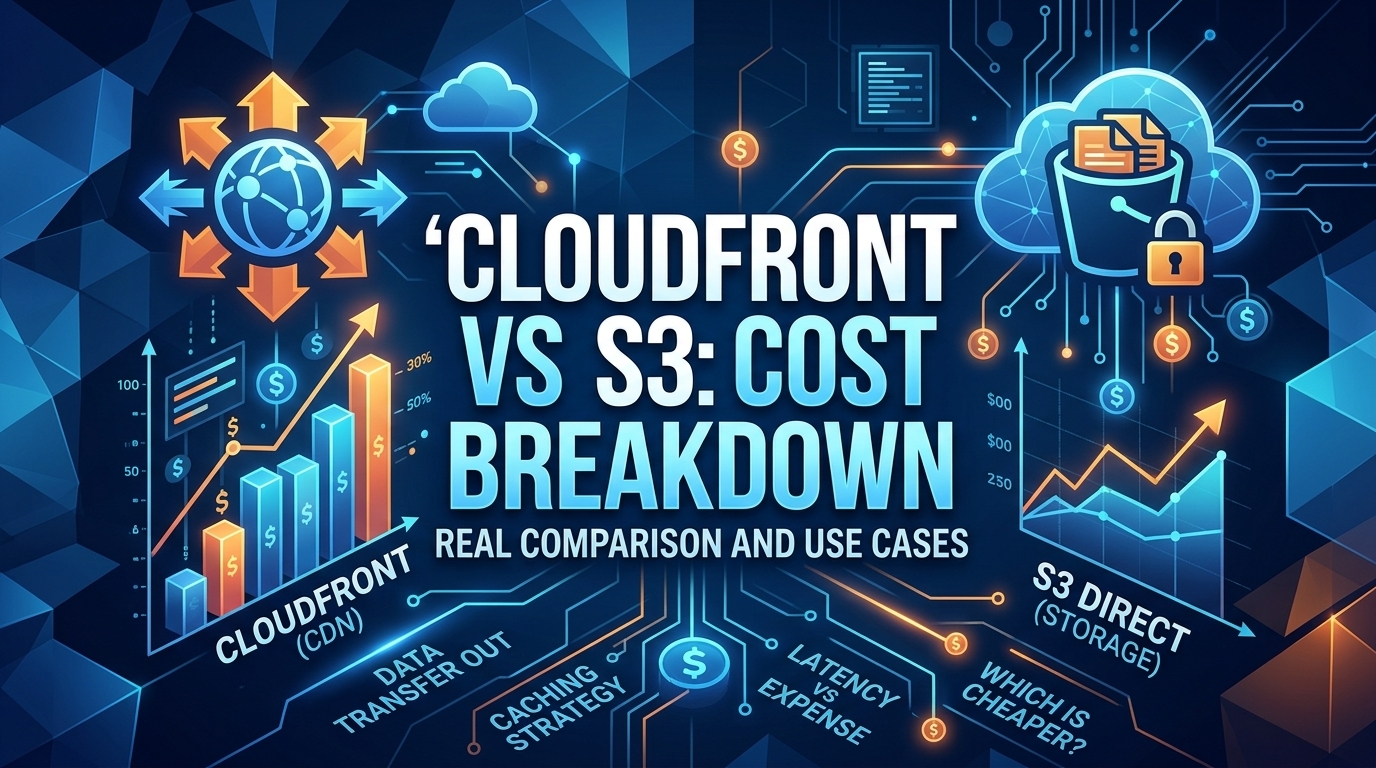
The CloudFront vs S3 decision depends more on object size than on traffic volume. At a 500 KB average response, 100 TB ...
Learn
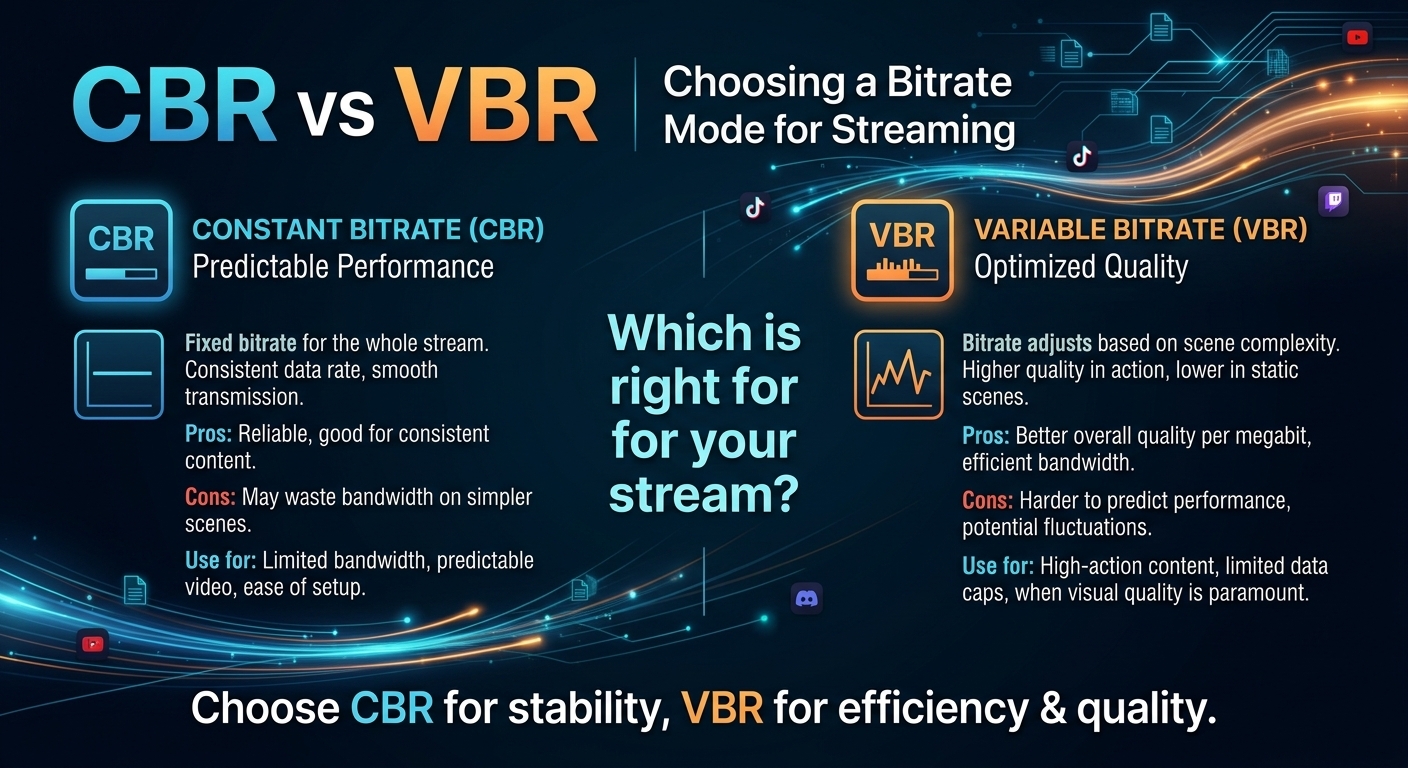
For most on-demand video, capped variable bitrate (VBR) wins the cbr vs vbr decision: it spends bits where the picture ...