
Learn
Lossy vs Lossless Compression: Images, Video and Audio
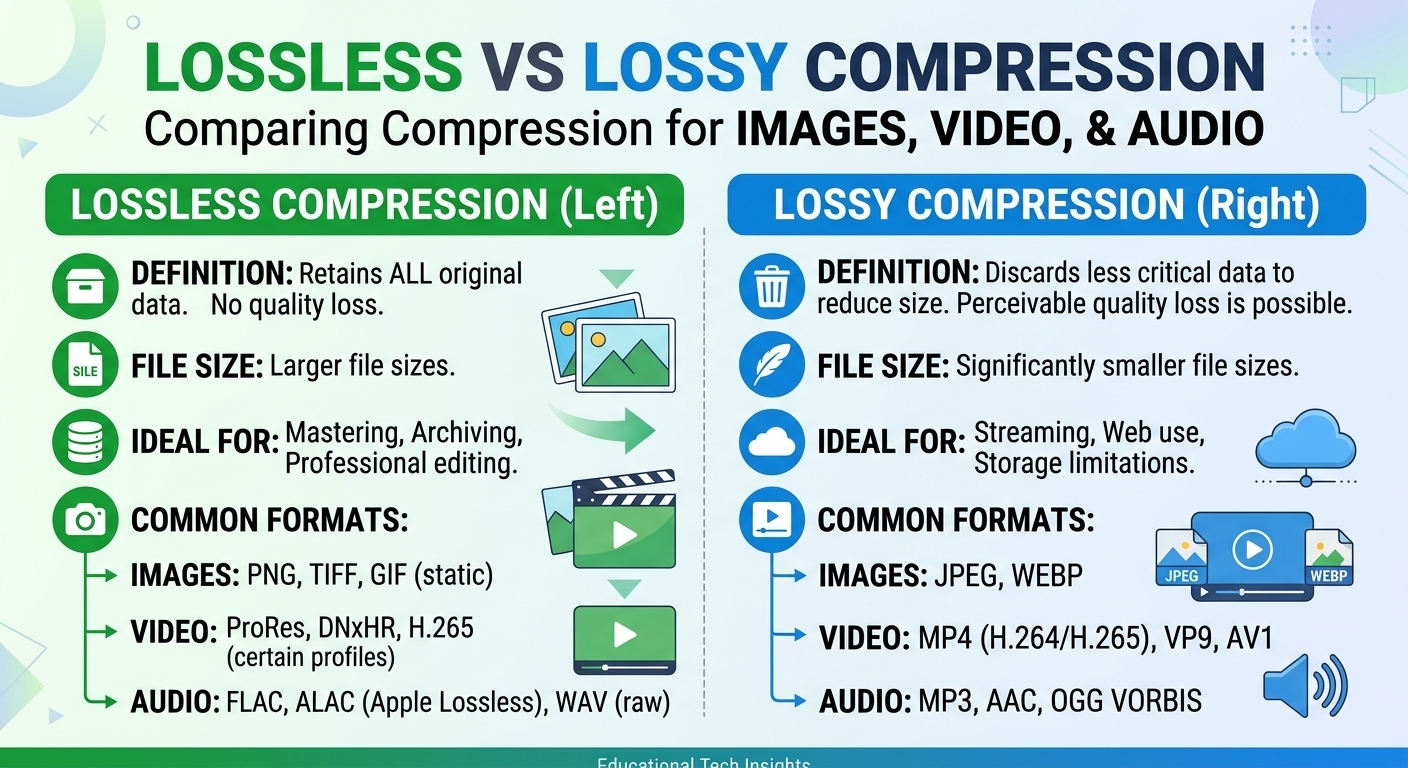
Lossy vs lossless compression comes down to one trade: lossless compression rebuilds every original bit and typically ...

A mid-size SaaS platform serving 40 TB/month through Cloudflare recently discovered that Argo Smart Routing alone was adding $4,000 to their monthly invoice, a cost invisible until they audited per-feature line items. Cloudflare bandwidth costs remain one of the most misunderstood line items in infrastructure budgets as of 2026. The base CDN transfer is technically unmetered on paid plans, yet the real bill hides in add-on services, origin egress, and architectural decisions that silently multiply data transfer. This article gives you a nine-point cost-reduction playbook, a per-TB decision matrix comparing Cloudflare tiers against alternatives, and a diagnostics workflow to identify where your money is actually going.
Cloudflare's marketing emphasizes "unmetered bandwidth" across all plans. That statement is accurate for edge-to-client delivery on proxied DNS records. It is also incomplete. Here is where Cloudflare bandwidth costs materialize in 2026:
| Plan | Base Price (2026) | Edge Bandwidth | Hidden Cost Vectors |
|---|---|---|---|
| Free | $0 | Unmetered* | Aggressive cache purging, limited Page Rules, origin egress on every miss |
| Pro | $20/mo | Unmetered* | Argo ($0.10/GB), Images ($0.50/100K variants), origin cloud egress |
| Business | $200/mo | Unmetered* | Same as Pro, plus Load Balancing ($5/mo + $0.50/500K DNS queries) |
| Enterprise | Custom (typically $5K+/mo) | Unmetered* | Negotiated Argo rates, Cache Reserve ($5/mo + $0.36/GB stored), Spectrum per-GB metering |
The asterisk matters. "Unmetered" applies to HTTP/HTTPS traffic served from edge cache. The moment a request misses cache and pulls from your origin, your cloud provider charges full egress. For workloads on AWS us-east-1 that means $0.09/GB. A 60% cache hit ratio on 100 TB/month means 40 TB of origin egress, or roughly $3,600/month to AWS alone, none of which appears on your Cloudflare invoice.
How BlazingCDN compares: BlazingCDN publishes one rate for the US, Europe and Asia, from $5 per TB down to $2.50 per TB, so 100 TB of delivery costs $415 a month (as of October 2026) with no request fees. The plan-by-plan breakdown is on the BlazingCDN vs Cloudflare page.
Most teams fixate on the Cloudflare dashboard while ignoring the origin cloud bill. Every cache miss, every BYPASS cache status, every request to an uncacheable API endpoint generates origin egress at your cloud provider's rate. As of Q1 2026, AWS charges $0.09/GB, GCP $0.08–0.12/GB by region, and Azure $0.087/GB for the first 10 TB. These costs dwarf Cloudflare's plan fee for any workload above 5 TB/month.
Argo reroutes requests through Cloudflare's private backbone, reducing TTFB by 30% on average. It also costs $0.10/GB of data transferred. On a 50 TB/month workload, that is $5,000/month for Argo alone. The performance gain is real, but you should measure whether your P95 latency actually benefits before enabling it globally.
Cloudflare does not meter bandwidth by region on standard plans, but your origin provider does. Serving 20 TB/month to APAC from a us-east-1 origin generates cross-region cloud networking fees. Enterprise contracts sometimes include bandwidth allocation tiers where specific regions cost more.
Cache Reserve, introduced to keep long-tail content in Cloudflare's R2-backed persistent cache, charges $0.36/GB/month for stored data plus $5/month base as of 2026. For a 500 GB catalog of infrequently accessed assets, that is $185/month. It reduces origin pulls, but you need to model whether the storage cost exceeds the egress savings.
Audit your cf-cache-status headers. Every HIT avoids an origin pull. Use Cache Rules (which replaced Page Rules for caching in 2024) to set edge TTLs of 7+ days on static assets. Target a cache hit ratio above 90%; below 85%, you are bleeding egress.
Tiered Cache routes cache misses through upper-tier data centers before hitting origin. Smart Tiered Cache Topology, available on all paid plans as of 2026, automatically selects optimal upper tiers. This alone can reduce origin pulls by 60–80% on geographically distributed traffic.
Cache Reserve eliminates origin fetches for long-tail content. The breakeven calculation: if your origin egress cost per GB exceeds $0.36/month for a given asset's storage duration, Cache Reserve saves money. For a 200 GB asset catalog pulled from AWS at $0.09/GB with monthly re-fetches, Cache Reserve saves approximately $0.54/GB/month net.
Cloudflare applies Brotli or gzip on the edge, but if your origin sends uncompressed responses, the origin-to-edge transfer is full-size. Configure your origin to serve pre-compressed Brotli (content-encoding: br) for all compressible MIME types. This reduces origin egress volume by 60–80% on HTML, JSON, and CSS.
Serving a 4 MB hero image that gets resized client-side wastes bandwidth on every cache miss. Use build-time or upload-time processing to generate appropriately sized WebP/AVIF variants. Cloudflare Images can do this, but at $0.50 per 100K unique transformations, high-volume sites should benchmark against origin-side pipelines.
Instead of enabling Argo site-wide, use configuration rules to activate it only on critical paths: API endpoints, checkout flows, real-time dashboards. Static assets served from edge cache gain nothing from Argo. This can cut Argo spend by 70%+ on content-heavy sites.
Cloudflare's Bandwidth Alliance eliminates or discounts egress from partnered cloud providers including Backblaze B2 (free egress to Cloudflare), Oracle Cloud, and DigitalOcean. Migrating cold storage or static asset origins to Backblaze B2 makes origin egress effectively $0.
Cloudflare's GraphQL Analytics API exposes httpRequestsAdaptiveGroups with bytes served, cache status, and content type per zone. Build a weekly dashboard that surfaces your top 10 bandwidth-consuming URLs and their cache statuses. Most teams find 5–10 URLs account for 40%+ of total transfer.
Cloudflare Workers that fetch from origin, transform content, and return larger responses create data multiplication. A Worker that assembles a page from three origin fetches triples your effective origin egress for that request. Profile subrequest volume using wrangler tail and consolidate where possible.
This matrix compares effective cost per TB for a workload serving 100 TB/month with an 85% cache hit ratio, meaning 15 TB of origin egress. Prices reflect publicly available rates as of Q1 2026.
| Provider | CDN Fee / mo | Origin Egress (15 TB) | Add-ons (Argo equiv.) | Total Effective / mo | Effective $/TB |
|---|---|---|---|---|---|
| Cloudflare Pro | $20 | ~$1,350 (AWS) | $10,000 (Argo on 100 TB) | ~$11,370 | $113.70 |
| Cloudflare Enterprise | ~$5,000+ | ~$1,350 (AWS) | Negotiated | ~$6,500+ | $65+ |
| CloudFront (AWS) | $8,500 (100 TB at $0.085) | $0 (same provider) | $0 | ~$8,500 | $85 |
| BlazingCDN | $415 | Provider-dependent | $0 | ~$415 + origin egress | $4.15 + egress |
The disparity is stark at scale. For teams running 100 TB+ workloads where Cloudflare bandwidth costs compound through Argo and origin egress, the CDN layer alone can become a six-figure annual expense. BlazingCDN offers volume-based pricing from $5 per TB down to $2.50 per TB at volume (as of October 2026). It is purpose-built for high-volume delivery, with flexible configuration and no request fees.
Before optimizing, you need to know where the money goes. This diagnostic sequence takes under an hour and produces an actionable cost map.
Pull httpRequestsAdaptiveGroups from the GraphQL Analytics API, grouped by cacheStatus and clientRequestHTTPHost. Calculate bytes served per cache status (HIT, MISS, BYPASS, DYNAMIC, EXPIRED). Any zone where MISS + BYPASS exceeds 20% of total bytes needs immediate attention.
Map the MISS + BYPASS byte volume to your cloud provider's egress charges. This gives you the true origin bandwidth cost Cloudflare's dashboard does not show. On AWS, check the Data Transfer line in Cost Explorer filtered to your origin's region.
Filter for DYNAMIC or BYPASS statuses on content types that should be cacheable: images, fonts, JS, CSS, video segments. These are usually caused by missing Cache-Control headers, Set-Cookie headers on static responses, or overly broad cache bypass rules.
For each identified leak, estimate the monthly egress savings if the cache status flipped to HIT. Rank fixes by savings-per-engineering-hour. The top three fixes typically capture 80% of the available savings.
Cloudflare does not meter edge-to-client bandwidth on HTTP/HTTPS proxied traffic across any plan tier as of 2026. However, add-on services like Argo Smart Routing ($0.10/GB), Spectrum (per-GB on TCP/UDP), and Cache Reserve ($0.36/GB stored) are metered. Your origin cloud provider also charges egress on every cache miss, which is often the largest bandwidth cost component.
Start by pushing your cache hit ratio above 90% using Cache Rules with long edge TTLs and enabling Smart Tiered Cache Topology. Scope Argo to latency-sensitive paths only. Pre-compress responses at the origin with Brotli. For the largest wins, audit your origin egress bill and consider moving static asset origins to Bandwidth Alliance partners like Backblaze B2.
Cache Reserve persists content in R2-backed storage at $0.36/GB/month plus a $5/month base fee. It eliminates origin fetches for long-tail assets that would otherwise be evicted from edge cache. The feature pays for itself when your per-asset monthly origin egress cost exceeds the $0.36/GB storage cost. Model this per content category before enabling it broadly.
Basic Tiered Cache is included on all paid plans at no additional cost. Smart Tiered Cache Topology, which dynamically selects optimal upper-tier data centers, is also included on paid plans as of 2026. Both significantly reduce origin pulls and should be enabled as a default on every zone.
Cloudflare's edge delivery is unmetered, but total cost includes origin egress and add-ons. CloudFront charges $0.085/GB at the 100 TB tier but eliminates cross-provider egress for AWS origins. At 100 TB/month, Cloudflare Pro with Argo and AWS origin egress can exceed CloudFront's all-in cost. Enterprise Cloudflare contracts may close that gap through negotiated Argo rates.
Volume-optimized CDN providers offer the lowest per-GB rates at this scale. BlazingCDN prices 100 TB at $415/month ($0.00415/GB), with rates down to $2.50 per TB at volume (as of October 2026). Cloudflare Enterprise pricing varies by contract. CloudFront committed-use pricing reaches approximately $0.06/GB with savings plans. The optimal choice depends on your origin location, required feature set, and whether you need Cloudflare-specific capabilities like Workers.
Run the diagnostics workflow above this week. Pull 30 days of cache analytics, cross-reference your origin egress bill, and calculate your true cost per TB delivered. Most teams discover that 70% of their Cloudflare bandwidth costs originate from five or fewer misconfigured cache rules or uncacheable endpoints that should be cacheable. Fix those first. Then model whether your traffic volume justifies a provider switch, an Enterprise negotiation, or an architectural change like moving origins to a Bandwidth Alliance partner. The data will make the decision obvious.

Heavy traffic.
Light bill.
The CDN for video and large traffic
Learn
Lossy vs lossless compression comes down to one trade: lossless compression rebuilds every original bit and typically ...
Pricing - Pricing & Costs
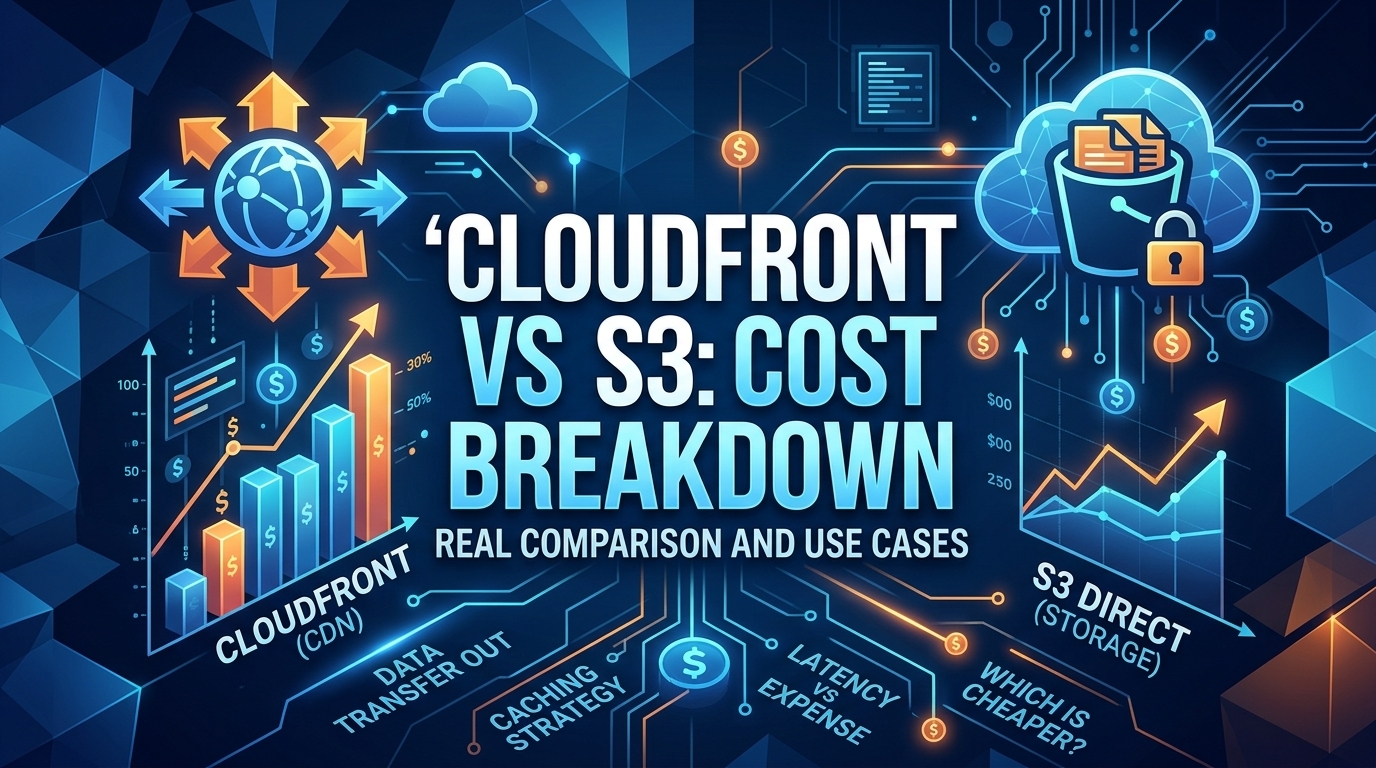
The CloudFront vs S3 decision depends more on object size than on traffic volume. At a 500 KB average response, 100 TB ...

Learn
For most on-demand video, capped variable bitrate (VBR) wins the cbr vs vbr decision: it spends bits where the picture ...