
Learn
Lossy vs Lossless Compression: Images, Video and Audio
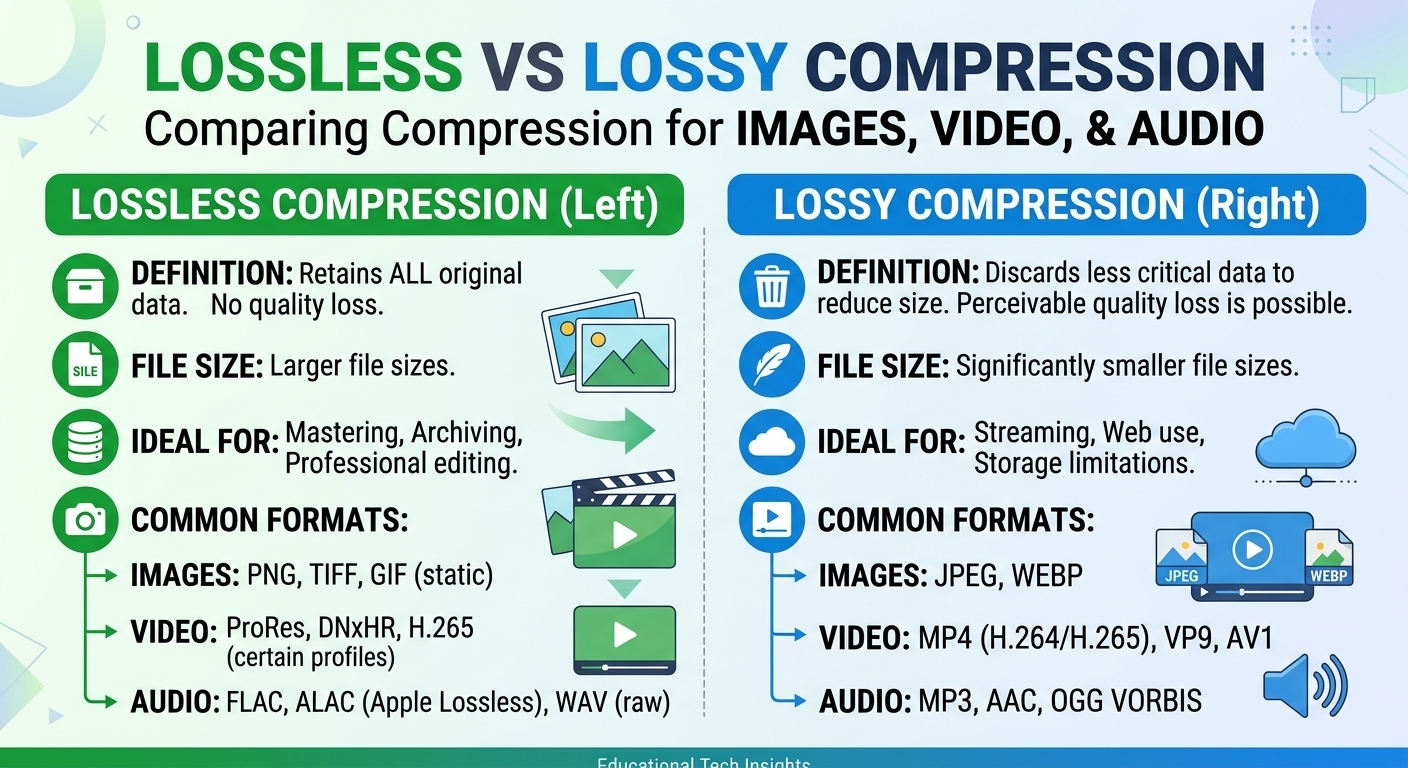
Lossy vs lossless compression comes down to one trade: lossless compression rebuilds every original bit and typically ...

In Q1 2026, a mid-market B2B SaaS company migrated its CDN from a US-headquartered hyperscaler to a provider with dense EU peering. Median TTFB for authenticated dashboard loads in Frankfurt dropped from 142 ms to 38 ms. Renewal rates for their DACH cohort ticked up 4.3% within one quarter. The cause wasn't magic — it was choosing the best CDN providers in Europe with the right peering topology for their actual traffic shape, not the biggest global map. This article gives you the framework to make that choice yourself: seven providers compared on latency, GDPR data residency, edge compute capabilities, and effective cost per GB as of May 2026, plus a workload-profile decision matrix you won't find in any vendor's marketing deck.
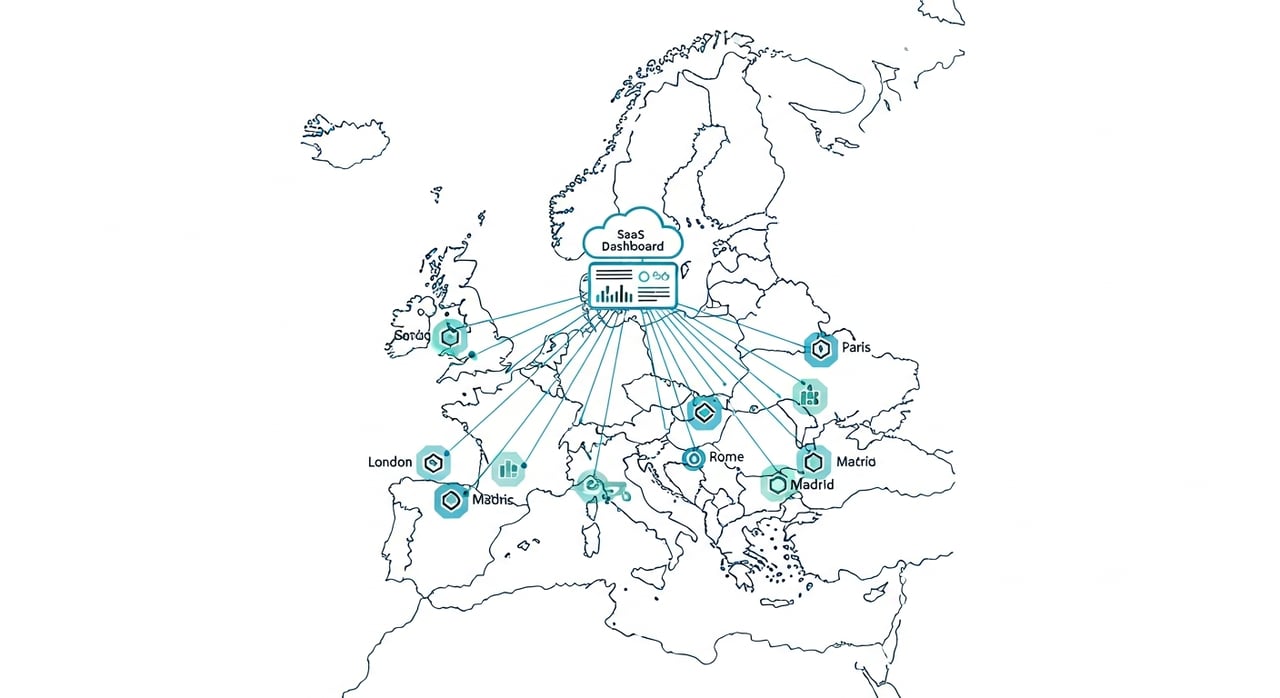
Two structural shifts matter this year. First, the EU Data Act enforcement deadlines arrived in September 2025, adding new transparency obligations around data processing at the edge — obligations that sit on top of GDPR and Schrems II. If your CDN caches personalized API responses or session tokens at edge nodes, you now have explicit reporting duties about where that processing happens. Second, the hyperscaler price wars of 2024–2025 stabilized. AWS CloudFront, Google Cloud CDN, and Azure Front Door all raised or restructured EU egress pricing between Q3 2025 and Q1 2026, narrowing the gap between their introductory tiers and their real effective rates at scale. The result: independent European CDN providers are more cost-competitive relative to hyperscalers than at any point in the past three years.
Price per GB is table stakes. Here is what actually differentiates providers for SaaS workloads in 2026:
The default pick for many SaaS teams, and for good reason. Workers cold starts sit below 5 ms as of early 2026. EU-only data residency is available via the Data Localization Suite, but it requires an Enterprise contract — a meaningful cost jump from Pro or Business tiers. Cache purge propagation is sub-second globally. Effective pricing on Enterprise plans typically lands between $0.01–$0.02/GB for EU traffic depending on commit size, though negotiated deals vary widely.
Strongest real-time purge (150 ms globally, often faster intra-EU) and the most expressive edge logic via VCL and Compute@Edge (now Wasm-based). Excellent for SaaS products that need instant cache invalidation on user-generated content or config changes. EU presence is solid in Western Europe; thinner in the Nordics and Baltics. Published pricing starts at $0.12/GB for EU with volume discounts bringing it to roughly $0.01–$0.02/GB at scale.
Unmatched breadth of EU edge presence — strong even in secondary markets like Greece, Romania, and the Baltics where other providers rely on upstream transit. The 2025 acquisition of Neosec strengthened their API security posture, relevant for SaaS API delivery. Pricing remains opaque and contract-heavy; expect $0.02–$0.04/GB at moderate EU volumes, lower with large commits.
Best integration story if your origin is in AWS. Regional Edge Caches in EU reduce origin fetches effectively. The 2026 pricing restructure introduced a new "EU-only" pricing class that's slightly cheaper than the global default, landing around $0.085/GB at the first 10 TB tier and dropping to roughly $0.02/GB past 500 TB. Data residency is achievable via careful configuration but not a first-class product feature — you manage it through cache behaviors and Lambda@Edge region constraints.
The darling of cost-conscious SaaS teams. EU-only zones are a checkbox in the dashboard. Pricing is transparent and low: $0.01/GB for EU volume zones as of 2026. Image optimization (Bunny Optimizer) and a basic edge scripting runtime round out the feature set. Weaker on advanced observability and enterprise SLAs compared to Cloudflare or Akamai, but excellent value for early-to-mid-stage SaaS under 100 TB/month.
Strong presence in Eastern Europe and CIS, making it a standout if your SaaS user base extends beyond the EU-15 into Ukraine, Kazakhstan, or Turkey. Edge GPU inference support is a differentiator for AI-augmented SaaS products. EU pricing starts around $0.025/GB with volume tiers. The managed Kubernetes edge platform is maturing fast but remains less battle-tested than Cloudflare Workers or Fastly Compute for complex edge logic.
For SaaS companies running heavy delivery workloads — video-embedded help centers, large file distribution, software update delivery — BlazingCDN's SaaS-optimized infrastructure delivers Anycast routing with built-in failover on NVMe SSD servers. Pricing starts at $5 per TB, down to $2.50 per TB at volume (as of October 2026); 100 TB costs $415, versus about $6,965 on CloudFront pay-as-you-go. The configuration layer is straightforward — —. For teams where egress cost is a line-item the CFO actually reads, this is where the math gets interesting.
| Provider | EU Pricing (Low Volume) | EU Pricing (High Volume) | EU Data Residency | Edge Compute |
|---|---|---|---|---|
| Cloudflare | ~$0.02/GB (Enterprise) | ~$0.01/GB (negotiated) | Yes (Enterprise DLS) | Workers (V8 isolates) |
| Fastly | ~$0.12/GB (list) | ~$0.01–0.02/GB | Configurable | Compute (Wasm) |
| Akamai | ~$0.04/GB | ~$0.02/GB | Yes (contract) | EdgeWorkers (JS) |
| CloudFront | ~$0.085/GB (first 10 TB) | ~$0.02/GB (500 TB+) | Manual config | Lambda@Edge / Functions |
| Bunny.net | $0.01/GB | $0.01/GB (flat) | Yes (zone select) | Basic scripting |
| Gcore | ~$0.025/GB | ~$0.015/GB | Configurable | Edge containers + GPU |
| BlazingCDN | $0.005/GB (entry) | $0.0025/GB (at volume) | Not published | No |
This is the section most CDN comparisons skip. Your optimal provider depends less on who has the most nodes and more on what your traffic actually looks like. Use this matrix as a starting filter, then validate with a two-week dual-CNAME trial.
| SaaS Workload Profile | Critical Requirement | Best Fit (2026) | Runner-Up |
|---|---|---|---|
| API-heavy B2B (auth, config, webhooks) | Sub-50 ms dynamic TTFB, instant purge | Fastly | Cloudflare |
| Dashboard/SPA with global EU users | Edge compute for SSR, strong security | Cloudflare | Akamai |
| Heavy static asset delivery (video, docs, updates) | Lowest cost/GB, burst handling | BlazingCDN | Bunny.net |
| FinTech / regulated SaaS | Contractual EU data residency, audit trail | Akamai | Cloudflare Enterprise |
| Eastern Europe / CIS-heavy user base | Strong Eastern EU peering, low jitter | Gcore | Akamai |
| AWS-native stack, minimal ops overhead | Native integration, single bill | CloudFront | Cloudflare |
Measure before you move. Instrument your current P50 and P99 TTFB from at least three EU cities using synthetic monitors (Catchpoint, Checkly, or even a cron'd curl from EC2 instances in eu-west-1, eu-central-1, and eu-north-1). Capture one full week of baseline data.
Set up a dual-CNAME weighted routing test. Send 10% of traffic to the candidate CDN. Compare not just latency but cache-hit ratios, origin offload percentage, and error rates under real load. If your SaaS serves authenticated content, pay close attention to how each provider handles Vary headers and cookie-based cache segmentation — this is where many CDN trials break down.
Model egress cost at your actual traffic volume, not the vendor's example tier. A SaaS serving 50 TB/month from EU origins will pay vastly different effective rates across these seven providers. At that volume, the spread between BlazingCDN (from $5 per TB, $215/month total (as of October 2026)) and CloudFront (~$0.04/GB effective, ~$2,000/month) is about 9x ($2,000 versus $215).
Akamai and Cloudflare (Enterprise with Data Localization Suite) provide the strongest contractual guarantees for EU-only data processing, including cache content and request metadata. Bunny.net offers practical EU-zone pinning at a lower price point but with fewer audit-trail features. Always verify that log shipping and analytics pipelines also stay within EU boundaries — the CDN cache layer alone is not the full picture.
Run synthetic tests against an uncacheable endpoint (a health check behind your auth layer, for example) from multiple EU vantage points. Measure TLS handshake time, TTFB, and full response time separately. Static cache-hit benchmarks are misleading for SaaS workloads where 40–70% of requests hit origin or require edge compute processing.
At scale, yes. Multi-CDN gives you failover resilience and the ability to route by geography or cost tier. Below 50 TB/month, the operational overhead of maintaining two CDN configs, two sets of cache rules, and two monitoring integrations usually outweighs the marginal latency gains. A single well-chosen provider with origin shielding is simpler and often faster.
AWS CloudFront introduced an EU-specific pricing class in early 2026, slightly lowering its EU rates. Google Cloud CDN raised minimum commit thresholds. Independent providers like Bunny.net and BlazingCDN held or reduced pricing. The net effect: the cost gap between hyperscaler CDNs and independent European CDN providers widened at the 25–500 TB volume range.
Peering density in secondary EU markets matters more than total global node count. Test specifically from Warsaw, Bucharest, and Helsinki. Gcore and Akamai consistently outperform other providers in Eastern European latency benchmarks as of Q1 2026. If your Eastern EU traffic is below 20% of total, a Western-EU-optimized provider with good upstream transit will likely suffice.
Pick your two highest-traffic EU regions. Deploy a synthetic monitor hitting a dynamic, uncacheable endpoint through your current CDN. Record P50 and P99 TTFB over five days. Then repeat the same test through a candidate provider using a parallel CNAME. The numbers will tell you more in one week than any vendor comparison page — including this one. If your egress bill is the bottleneck, start the math at your actual monthly volume against the pricing table above. The differences are large enough to fund the engineering time for the migration itself.

Heavy traffic.
Light bill.
The CDN for video and large traffic
Learn
Lossy vs lossless compression comes down to one trade: lossless compression rebuilds every original bit and typically ...
Pricing - Pricing & Costs
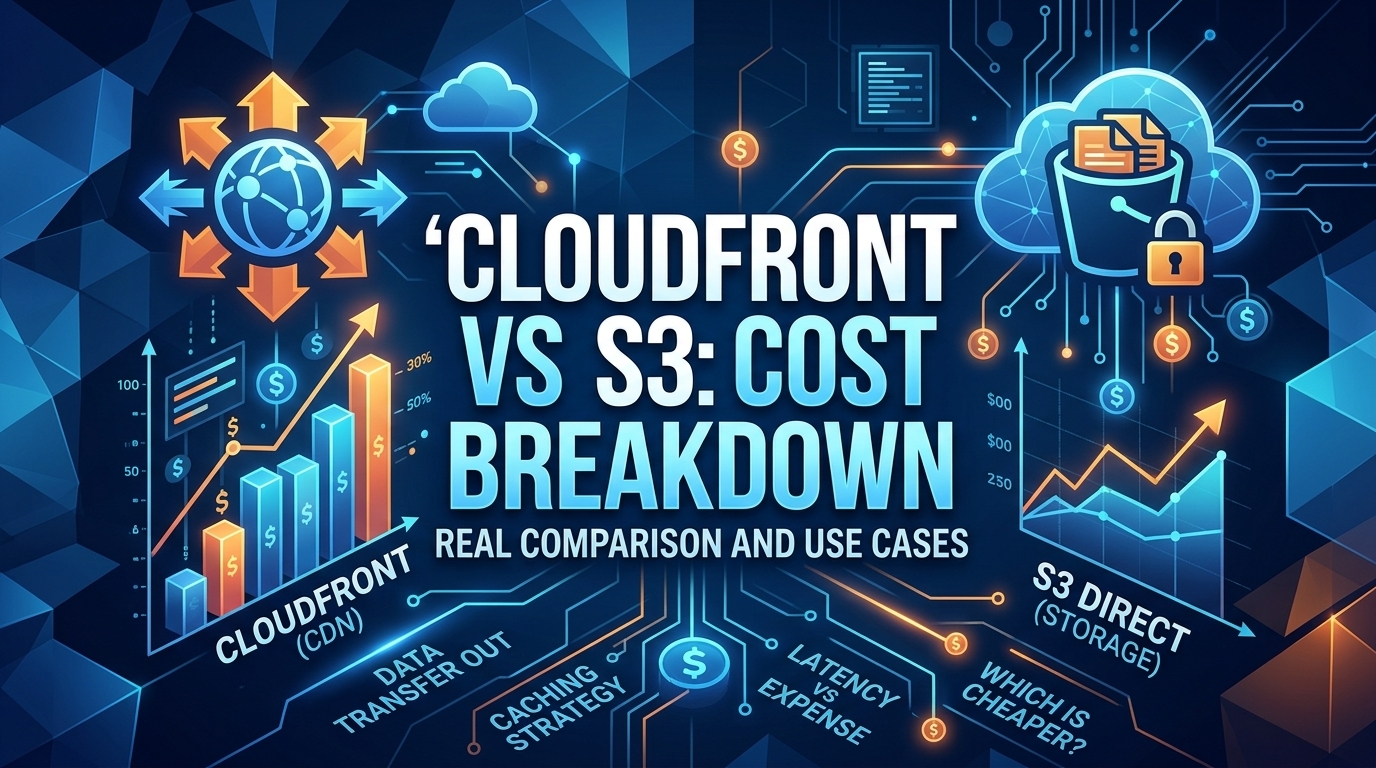
The CloudFront vs S3 decision depends more on object size than on traffic volume. At a 500 KB average response, 100 TB ...
Learn
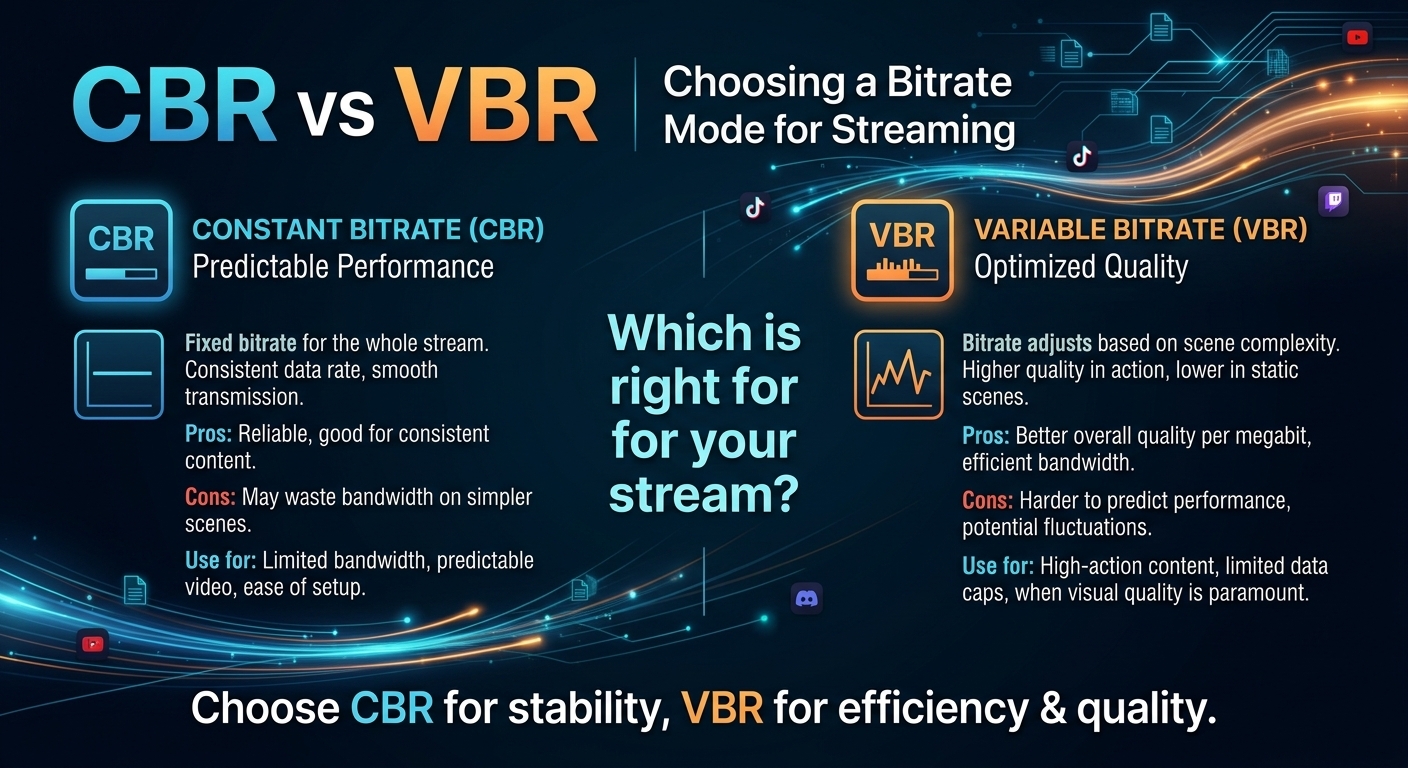
For most on-demand video, capped variable bitrate (VBR) wins the cbr vs vbr decision: it spends bits where the picture ...