Learn
Lossy vs Lossless Compression: Images, Video and Audio
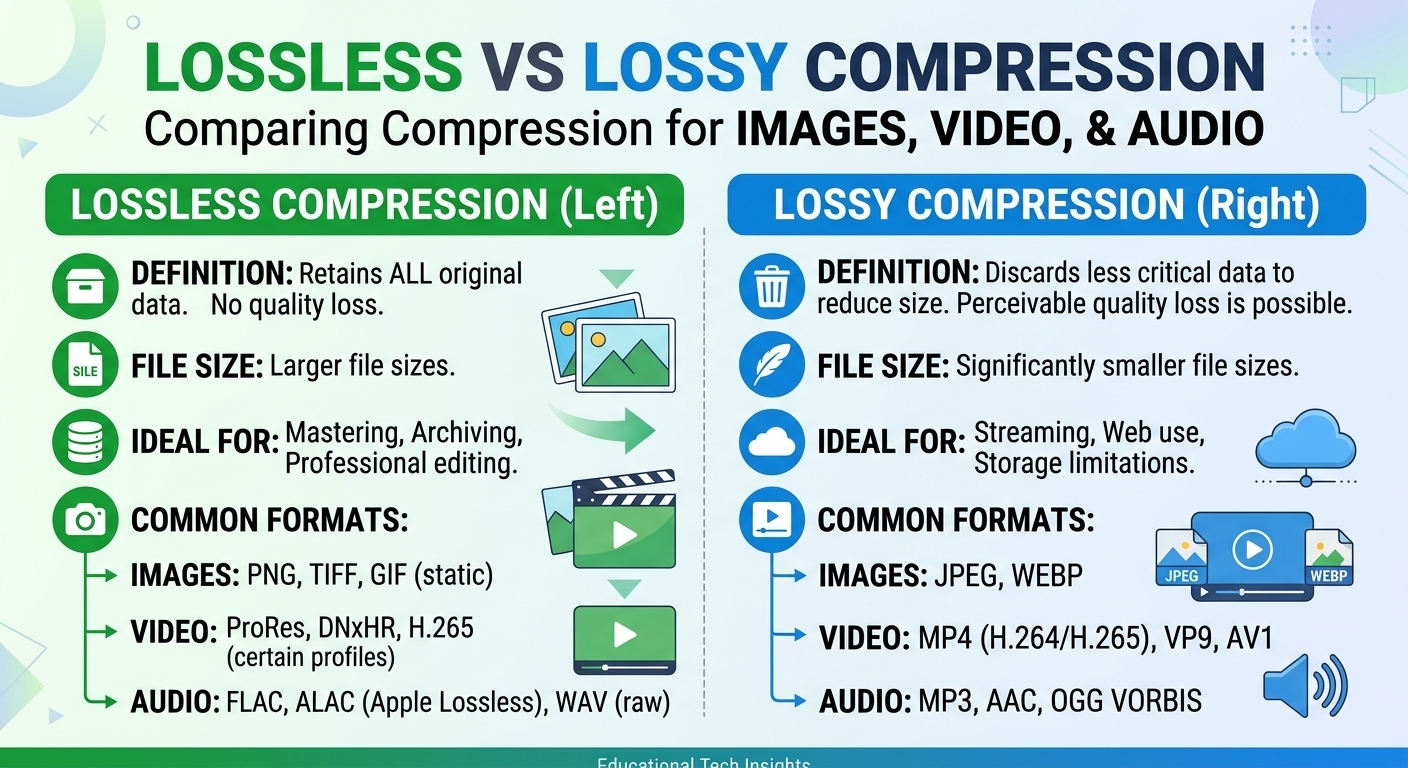
Lossy vs lossless compression comes down to one trade: lossless compression rebuilds every original bit and typically ...
A single misconfigured origin shield rule cost a mid-market streaming platform 14 minutes of full-region cache misses last March, spiking origin load by 9× before anyone noticed. The post-mortem found the root cause in under two minutes. The detection gap? Twelve minutes of flying blind because their CDN monitoring tools reported at five-minute granularity and lacked origin-pull correlation. That gap is the difference between an incident and an outage. This article gives you 11 CDN analytics tools evaluated against 2026-era workloads, a workload-profile decision matrix you will not find in competing roundups, and the specific metrics and thresholds that separate useful CDN observability from dashboard theater.
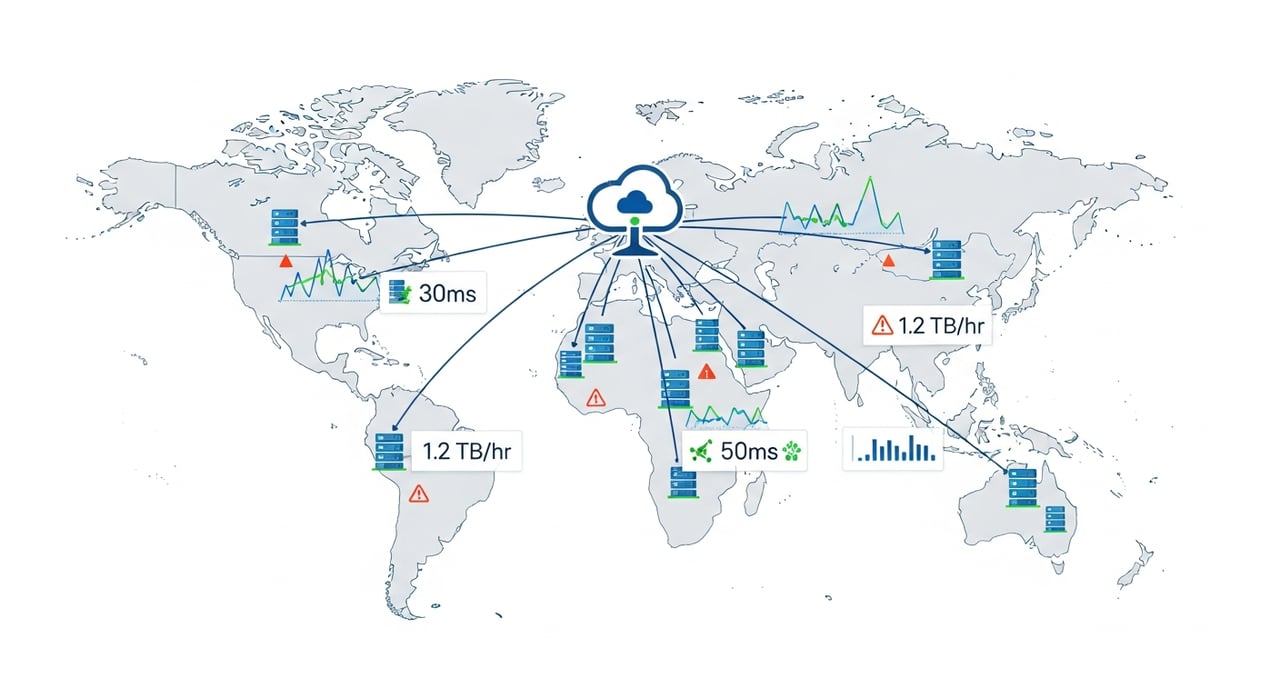
Two shifts define the 2026 CDN monitoring landscape. First, the move to HTTP/3 with QUIC as default transport on most major browsers (Chrome, Edge, and Firefox all ship QUIC-first as of Q1 2026) means connection-level metrics like TCP retransmit rate are no longer universal proxies for user experience. Your CDN monitoring tools need QUIC-aware telemetry, or you are measuring the wrong protocol for 60%+ of your traffic. Second, multi-CDN architectures are now standard for any property above 50 Gbps sustained. The 2025 wave of regional outages at major providers made single-vendor risk unacceptable for production video and SaaS workloads. That means your observability stack must correlate across providers, not just within one.
Real-time analytics with sub-minute granularity, covering per-POP cache hit ratios, origin pull rates, bandwidth-per-asset breakdowns, and security event correlation. The API-first design lets teams pipe data into Grafana, Datadog, or custom TSDB stacks. As of 2026, it also surfaces HTTP/3 vs. HTTP/2 traffic splits and QUIC handshake failure rates, which most mid-tier CDN dashboards still lack.
Synthetic monitoring from 2,500+ backbone and last-mile nodes. Strength is in multi-CDN performance comparison with controlled test conditions. The Q1 2026 release added QUIC-over-UDP path analysis. Weakness: no native log ingestion, so you need a separate pipeline for real-user metrics.
Full-stack APM that layers CDN edge telemetry over application traces. The 2026 CDN integration covers Cloudflare, Fastly, AWS CloudFront, and Akamai natively. Strong for SRE teams that need a single pane across CDN, origin, and database. Pricing scales steeply past 100 hosts.
First-party analytics for Cloudflare properties. The 2026 GraphQL Analytics API exposes per-colo, per-ASN performance data at one-minute resolution. Excellent for Cloudflare-only stacks. Limited value in multi-CDN setups since it reports only on Cloudflare-served traffic.
CloudFront's real-time logs (delivered to Kinesis Data Streams) enable sub-second analysis when paired with a downstream processor. As of 2026, CloudWatch Internet Monitor adds reachability and latency scoring per client ASN. The operational overhead of wiring Kinesis, Lambda, and S3 is nontrivial, but the depth of data is unmatched in the AWS ecosystem.
DataStream 2 delivers raw CDN logs in near-real-time to Splunk, S3, or custom endpoints. mPulse provides RUM-grade performance telemetry. In 2026, Akamai added edge-compute-level tracing for EdgeWorkers, useful if you run logic at the edge. The platform's complexity reflects its breadth.
Second-by-second dashboards and a streaming log API that pushes every request-level record to your SIEM or data lake. VCL and Compute@Edge metrics are integrated. As of 2026, Fastly's QUIC analytics are among the most granular available. The trade-off: Fastly's analytics only cover Fastly-served traffic.
Radar RUM data from a massive opt-in measurement network. Core value is multi-CDN performance benchmarking with real-user data across providers. The 2026 integration with NetScaler Intelligent Traffic Management makes it a combined monitoring and switching layer. Works best when you operate three or more CDN vendors.
Internet-path-aware monitoring that traces degradation from eyeball network through transit to CDN edge. The 2026 platform covers BGP route analytics alongside HTTP-layer metrics, which is critical for diagnosing problems that aren't the CDN's fault. Expensive, but irreplaceable for network-layer root-cause analysis.
Not a CDN monitoring product per se, but the 2026 OTel ecosystem now includes exporters for CloudFront, Cloudflare, and Fastly logs. If your team already runs Grafana Cloud, you can build a multi-CDN observability stack without another vendor. The effort is in the integration; the payoff is full customization.
Integrated with Google's load balancer metrics. The 2026 additions include per-backend-service cache-fill latency and automatic anomaly detection for error rate spikes. Strong if your origin is in GCP. Cross-cloud monitoring requires manual export.
Most comparison articles list features. Engineers need workload fit. The matrix below maps common delivery profiles to the tools that serve them best, based on 2026 capabilities.
| Workload Profile | Primary Monitoring Need | Best-Fit Tools (2026) |
|---|---|---|
| High-bitrate live video (50+ Gbps) | Multi-CDN switching, rebuffer correlation | Cedexis, Catchpoint, BlazingCDN Insights |
| Global SaaS (API-heavy, latency-sensitive) | Per-endpoint P99 latency, error-rate alerting | Datadog, ThousandEyes, Fastly Analytics |
| E-commerce (flash sales, cache-bust spikes) | Cache hit ratio by SKU path, origin shielding | Cloudflare Analytics, AWS CloudFront + CW |
| Software distribution (large objects, global) | Throughput per region, download completion rate | BlazingCDN Insights, Grafana + OTel, Google Cloud CDN |
| Multi-CDN with traffic steering | Cross-provider normalization, failover latency | Cedexis, Catchpoint, ThousandEyes |
| Budget-conscious high-volume delivery | Cost-per-GB tracking, overage alerting | BlazingCDN Insights, Grafana + OTel |
An overall 95% CHR can hide a 40% miss rate on your highest-traffic asset class. Break cache hit ratios down by response status (HIT, MISS, EXPIRED, STALE, REVALIDATED) and by content type. A healthy 2026 target for static assets is 97%+ HIT at the edge. Anything below 92% warrants an immediate audit of TTL policy and Vary header behavior.
This is the metric that catches the streaming incident described in the opening. Track origin pulls as a percentage of total requests and as absolute bandwidth. Set alerts on rate-of-change, not just absolute thresholds. A 3× increase in origin pulls over 60 seconds almost always means a cache invalidation mistake or a new deployment pushing uncacheable responses.
As of Q1 2026, roughly 65% of browser-initiated CDN requests use QUIC. Monitor QUIC handshake failure rates and 0-RTT acceptance rates separately from H2. Networks that block UDP on nonstandard ports can silently force fallback to TCP, inflating TTFB for affected users without surfacing in aggregate latency dashboards.
Averages lie. P99 TTFB segmented by autonomous system number reveals ISP-level routing problems that affect real users but vanish in global medians. Set a 2026 baseline: P99 TTFB under 150 ms for static assets in your top-20 client ASNs.
Step one: query your CDN analytics for the top 50 URLs by origin pull count over the last seven days. Step two: classify each URL as either genuinely uncacheable (personalized API response, real-time price) or accidentally uncacheable (missing Cache-Control, overly broad Vary, Set-Cookie on static assets). Step three: fix the accidental misses. In practice, 60-70% of excess origin traffic comes from fewer than 20 URL patterns. Step four: re-check after one TTL cycle. If your CHR does not improve by at least 3 points, the problem is upstream (application-level cache-bust headers, deployment pipeline setting no-store).
The hardest problem in multi-CDN monitoring is metric normalization. Cloudflare measures TTFB from edge receipt of request to first byte sent to the client. Akamai measures from client request arrival at the edge. AWS CloudFront includes TLS negotiation in its latency metric. If you compare these numbers raw, you get meaningless deltas.
The fix, as of 2026, is either synthetic RUM from a neutral party (Catchpoint, ThousandEyes) or standardized OTel exporters feeding a common schema in Grafana. Both approaches add cost and operational overhead, but without normalization you cannot make data-driven failover decisions.
For teams running high-volume delivery across multiple providers, cost becomes a normalization dimension too. BlazingCDN's comparison and pricing model is worth evaluating here: one published rate for the US, Europe and Asia, from $5 per TB down to $2.50 per TB at volume, with a $25 monthly minimum (as of October 2026). For organizations pushing 500 TB a month, BlazingCDN costs $1,815, so the differential against per-region pricing compounds over a year.
Prioritize cache hit ratio broken down by response status, origin pull rate-of-change, P99 TTFB segmented by client ASN, QUIC handshake failure rate, and error rates by HTTP status code. Aggregate averages hide the problems that actually cause user-facing incidents.
Use a provider-neutral synthetic monitoring tool (Catchpoint or ThousandEyes) alongside RUM telemetry normalized to a common schema. Feed both into a unified TSDB like Grafana Cloud. The key is metric normalization: each CDN defines TTFB and latency differently, so raw numbers from different providers are not directly comparable.
For static assets (images, JS, CSS, video segments), target 97%+ at the edge. For dynamic or semi-cacheable content with short TTLs, 80-85% is realistic. Below 92% on static assets almost always indicates a configuration problem, not a traffic pattern problem.
Pull the top 50 URLs by origin request volume from your analytics tool. Classify each as genuinely uncacheable or accidentally uncacheable. Fix Cache-Control headers, eliminate unnecessary Vary values, and strip Set-Cookie from static responses. Re-measure after one full TTL cycle to confirm improvement.
As of Q1 2026, Fastly, Cloudflare, and BlazingCDN Insights provide QUIC-specific metrics including handshake failure rates and 0-RTT usage. Catchpoint added QUIC path analysis in early 2026. Datadog supports QUIC telemetry through its Cloudflare and Fastly integrations. Akamai's DataStream 2 logs include protocol version but not QUIC-specific error breakdowns yet.
Pull your CDN's top-50-by-origin-pulls report for the last seven days. Classify each URL. Fix the accidental misses. Measure the CHR delta after one TTL cycle. If you are running multi-CDN, run the same query across all providers and compare the origin-pull ratios. The provider with the highest miss rate on the same content is either misconfigured or serving from a less optimal cache topology. That single diagnostic will tell you more about your delivery stack's health than any dashboard you can stare at. If you have a normalization trick that works across three or more CDN vendors, share it — that knowledge is still scarce.

Heavy traffic.
Light bill.
The CDN for video and large traffic
Learn
Lossy vs lossless compression comes down to one trade: lossless compression rebuilds every original bit and typically ...
Pricing - Pricing & Costs
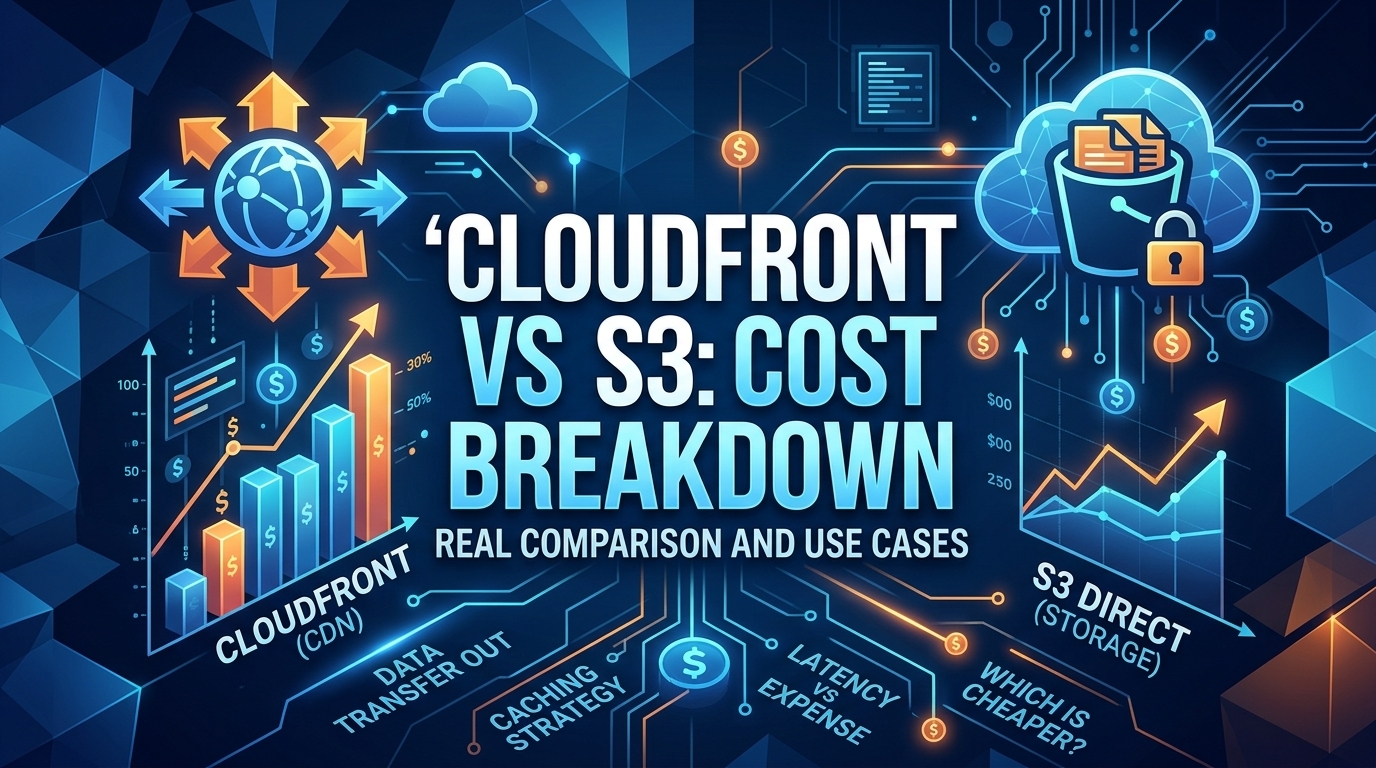
The CloudFront vs S3 decision depends more on object size than on traffic volume. At a 500 KB average response, 100 TB ...
Learn
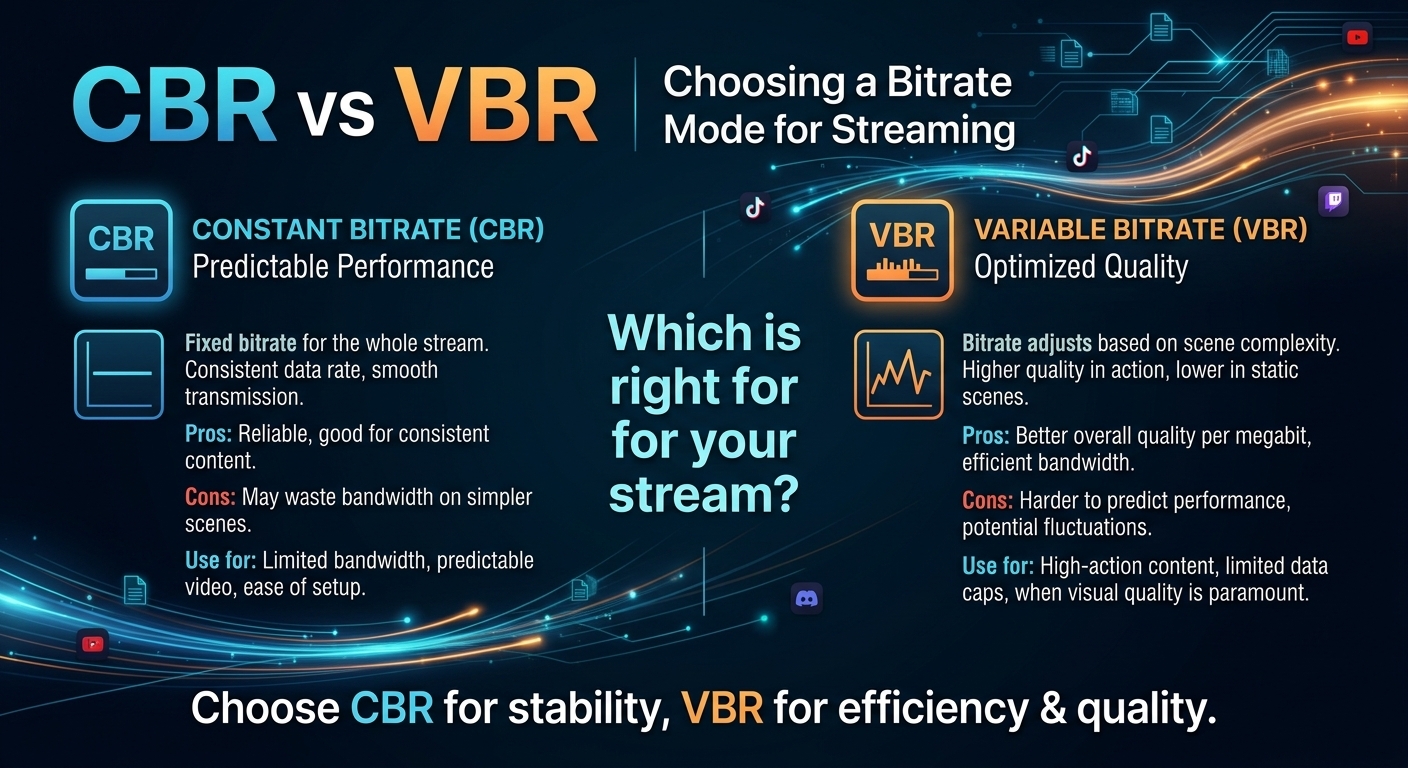
For most on-demand video, capped variable bitrate (VBR) wins the cbr vs vbr decision: it spends bits where the picture ...