
Learn
Lossy vs Lossless Compression: Images, Video and Audio
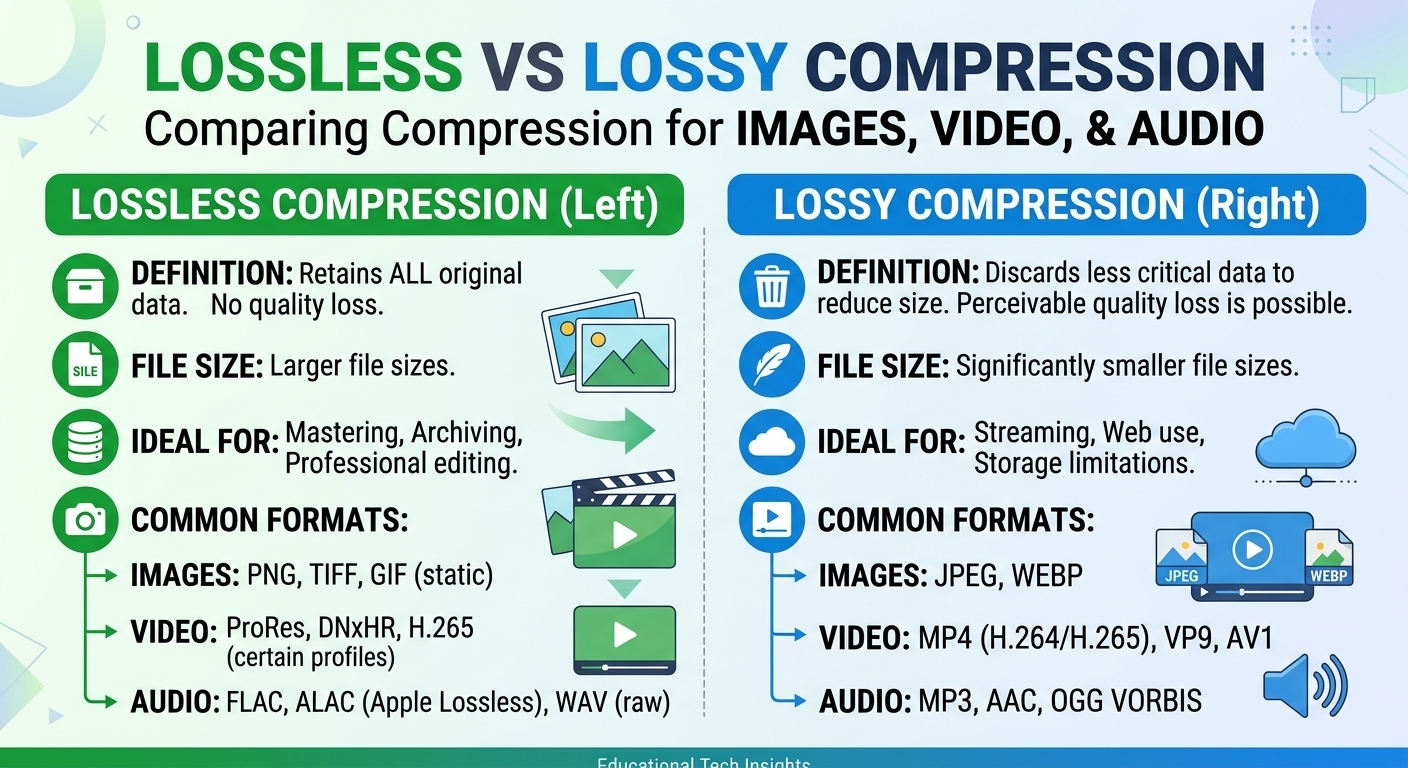
Lossy vs lossless compression comes down to one trade: lossless compression rebuilds every original bit and typically ...
An audio streaming CDN lives or dies on time-to-first-byte and cache-hit ratio, not raw throughput. A 4 MB podcast segment and a 320 kbps live music stream punish edge networks in completely different ways: one rewards aggressive long-tail caching, the other rewards tight buffer math and low rebuffer ratio under jitter. As of Q1 2026, the gap between a well-tuned audio delivery path and a default-config one shows up as roughly 200–400 ms of added join time for global listeners — enough to spike your abandonment curve before the first beat plays.
This article gives you a current comparison of six CDNs for audio delivery, year-stamped pricing where it exists, the two metrics that actually predict listener experience, and a workload decision matrix so you can match provider to use case instead of guessing.
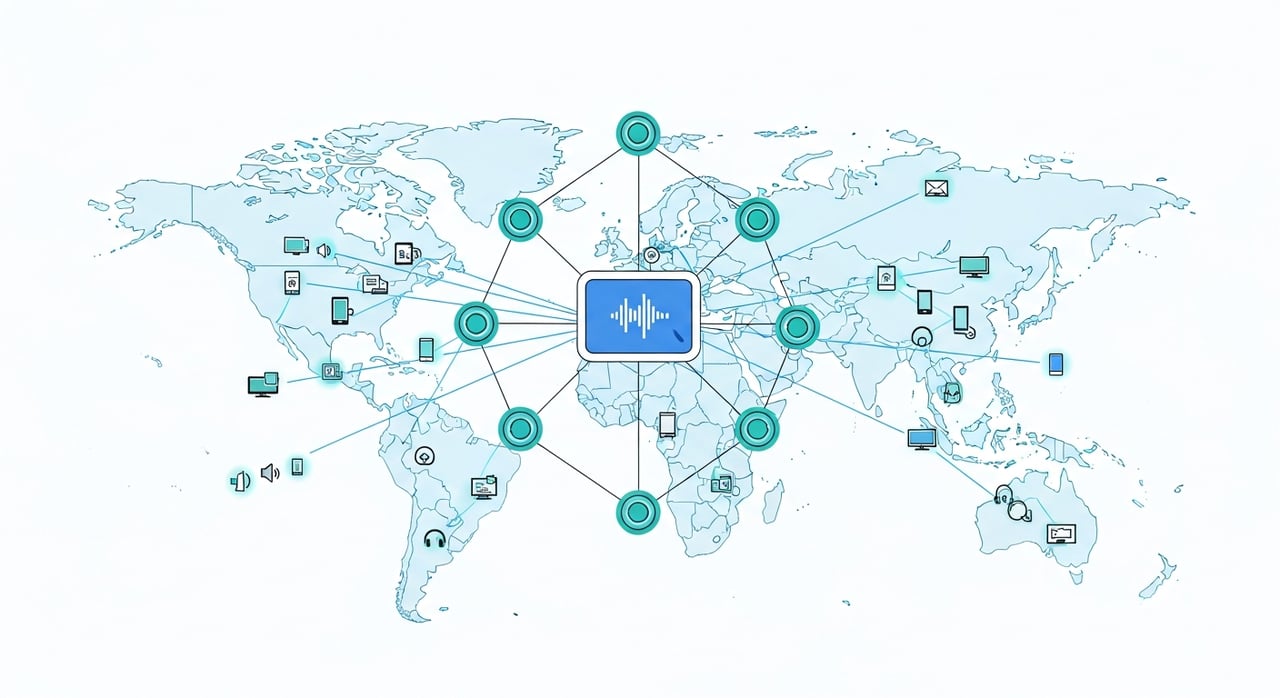
Audio is small-object, high-frequency traffic. The dominant variable is not bandwidth headroom — it is how predictably the edge serves cache hits and how cleanly it handles range requests for seekable files. Two numbers predict listener experience better than any marketing tier:
For live audio streaming CDN paths, chunked transfer and LL-HLS or low-latency CMAF have become table stakes in 2026. Sub-3-second glass-to-glass is achievable on every provider below; the differentiator is how that holds up at the 95th percentile, not the median.
Where BlazingCDN fits: BlazingCDN serves HLS segments and media files from NVMe SSD servers at one rate for the US, Europe and Asia, from $5 per TB down to $2.50 per TB; 100 TB costs $415 a month (as of October 2026). Setup details are on the HLS streaming CDN page.
BlazingCDN targets media workloads where per-GB cost compounds fast. For audio catalogs and podcast delivery, the economics matter as much as the edge: small objects mean you pay for request volume and egress, not peak bitrate. Pricing is volume-based and scales down with commitment — starting at $5 per TB at the entry tier, dropping to $2.50 per TB at volume (as of October 2026). It runs on NVMe SSD servers with Anycast routing and built-in failover, which helps during demand spikes such as a live event or a new album drop. For teams weighing cost against reliability, the media delivery configuration is the natural starting point.
CloudFront remains the path of least resistance if your audio assets sit in S3 and your transcoding runs on MediaConvert. As of 2026, pricing is pay-as-you-go and regionally tiered, with North America and Europe egress in the rough range of $0.085 per GB at low volume, falling under committed-use discounts. Origin Shield reduces origin fetches for cold catalog items. The trade-off is cost: at podcast or music-catalog scale, per-GB egress dominates the bill quickly.
Akamai's footprint and adaptive media delivery stack still lead on consistency for large live audiences. For a national radio simulcast or a global sports-audio feed, its tail latency behavior is hard to beat. Pricing is contract-negotiated and opaque; expect enterprise minimums that rule it out for indie and mid-market streamers. You pay for predictability under load.
Cloudflare's free tier still attracts early-stage streaming projects, and Workers let you rewrite manifests, sign URLs, or do per-listener logic at the edge without a separate origin hop. For audio, its R2 object storage pairs well by removing egress fees between storage and edge. The catch: bandwidth-heavy media on consumer plans sits in a policy gray zone, so high-volume audio delivery typically pushes you onto enterprise terms.
Fastly's sub-150ms global purge and VCL-level control make it the developer favorite for streaming audio CDN setups that need surgical cache manipulation — think dynamic ad insertion into podcast streams or per-region content swaps. Real-time log streaming gives you per-request observability that most providers gate behind add-ons. Pricing starts around $0.12 per GB in North America before commitment, which is premium positioning for raw egress.
jsDelivr is multi-CDN-backed and free, which makes it viable for serving public, static audio files — sample packs, open-source notification sounds, small podcast archives. It is not built for authenticated streams, signed URLs, or live delivery, and it carries no SLA. Treat it as a distribution layer for open assets, not as production infrastructure for a paid streaming product.
The original framing of "pick the cheapest or the biggest network" misses how differently each workload stresses an edge. Use the matrix below to map your delivery profile to a starting candidate.
| Workload profile | Dominant constraint | Best-fit starting point |
|---|---|---|
| High-volume podcast / music catalog | Per-GB egress cost, long-tail cache-hit | BlazingCDN |
| Already AWS-native pipeline | Integration overhead | Amazon CloudFront |
| Broadcast-grade global live audio | Tail latency under massive concurrency | Akamai |
| Edge logic / dynamic ad insertion | Per-request programmability | Fastly or Cloudflare Workers |
| Public static assets, no SLA needed | Cost = zero | jsDelivr |
The failure modes are predictable, and most are config problems rather than provider problems. A short field guide for tuning an audio streaming CDN in 2026:
For glass-to-glass latency under three seconds, any provider supporting LL-HLS or low-latency CMAF with chunked transfer qualifies. Akamai leads on tail-latency consistency for very large concurrent audiences, while Fastly offers the tightest real-time control for dynamic streams. For cost-sensitive low-latency delivery, BlazingCDN provides comparable stability to CloudFront at a fraction of the egress price.
Podcast delivery is dominated by per-GB egress cost and long-tail cache efficiency on large back catalogs. A provider with low per-GB pricing and strong range-request handling wins here, which is why volume-priced options like BlazingCDN are attractive at scale. Avoid premium per-GB providers unless you need their specific edge-compute features.
Use content-hashed filenames with long TTLs for immutable assets, verify the edge honors HTTP range requests for seeking, and set a cache key that ignores irrelevant query parameters. For live audio, use short TTLs with stale-while-revalidate so transient origin failures do not stall playback.
Only for public, static, non-critical assets with no authentication or SLA requirements. It cannot sign URLs, gate access, or guarantee uptime, so any paid or live streaming product should run on a CDN with a contractual SLA and access controls.
Per-GB egress ranges widely: premium providers sit around $0.085–$0.12 per GB at low volume, while volume-based options start near $0.005 per GB and fall to $0.0025 per GB at volume. At catalog scale, this difference can mean 20–40× variance on the same delivered bytes.
Pick your three largest listener regions. Pull a representative on-demand file and a live segment from each candidate edge, and measure p50 and p95 TTFA plus cache-hit ratio over a full week — weekday peak and weekend included. Then divide your projected monthly egress by each provider's real per-GB rate at your committed volume. The provider that holds p95 TTFA under 300 ms while staying inside your cost ceiling is your answer, not the one with the loudest network map. Want a second data point on the cost side? Model your current monthly bytes against volume-based pricing and see where the curve crosses — the gap at scale is usually larger than teams expect.

Heavy traffic.
Light bill.
The CDN for video and large traffic
Learn
Lossy vs lossless compression comes down to one trade: lossless compression rebuilds every original bit and typically ...
Pricing - Pricing & Costs
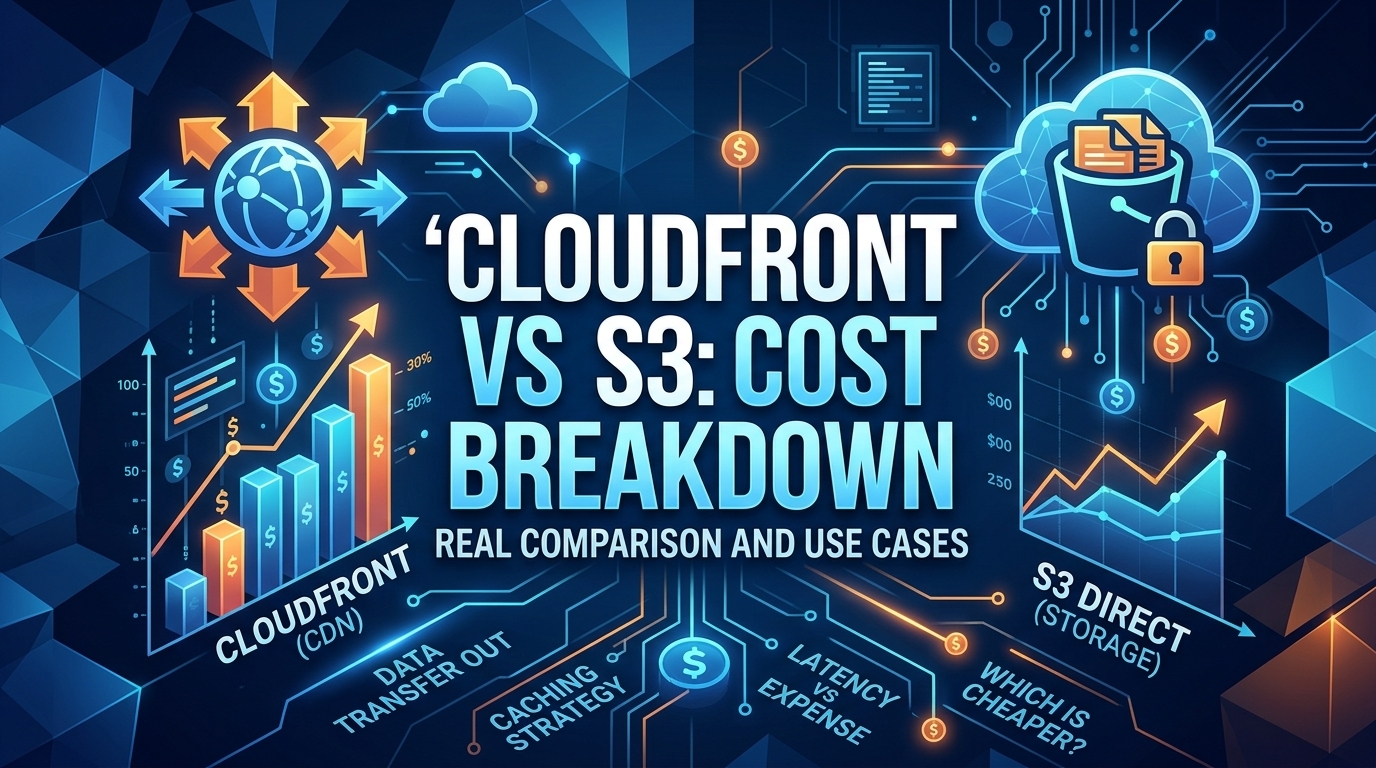
The CloudFront vs S3 decision depends more on object size than on traffic volume. At a 500 KB average response, 100 TB ...
Learn
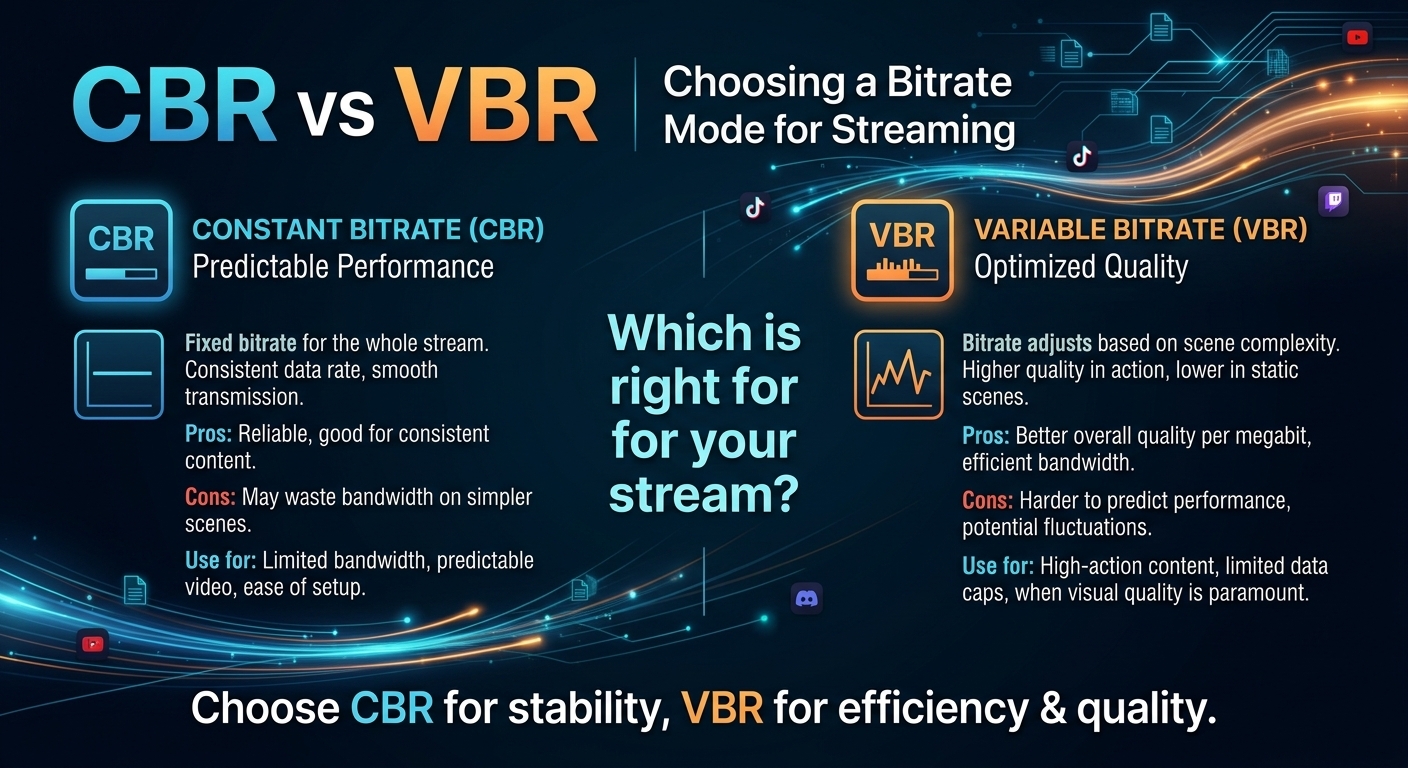
For most on-demand video, capped variable bitrate (VBR) wins the cbr vs vbr decision: it spends bits where the picture ...