
Learn
Lossy vs Lossless Compression: Images, Video and Audio
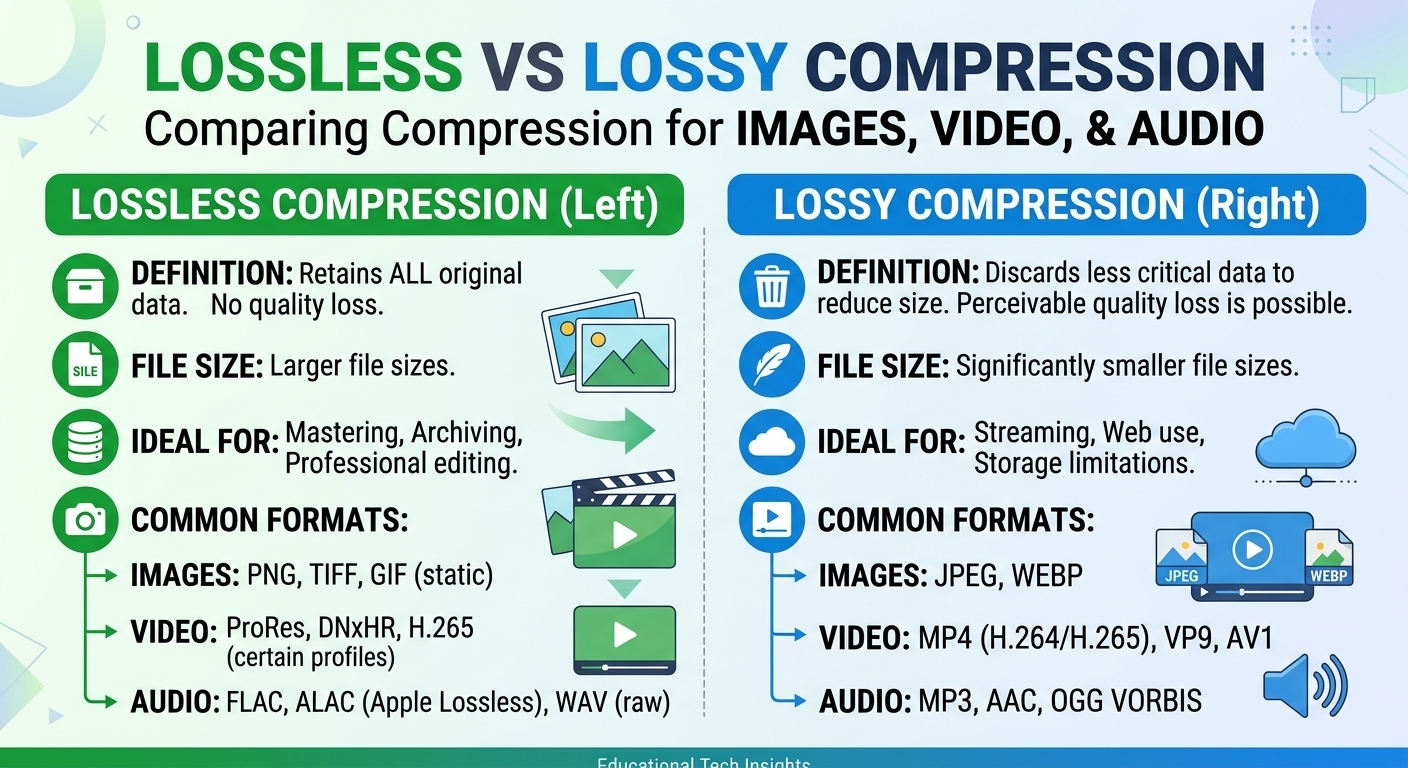
Lossy vs lossless compression comes down to one trade: lossless compression rebuilds every original bit and typically ...
In Q1 2026, Akamai reported that its ML-driven prefetch pipeline reduced origin pulls by 38% across its top-50 media customers. That number matters because it quantifies something CDN engineers have felt for two years: the gap between a traditional rule-based cache hierarchy and an AI-powered CDN is no longer incremental — it is architectural. This article gives you seven concrete benefits, each grounded in 2026-era data, plus a failure-mode analysis you will not find in competing guides. If you operate at multi-TB scale, this is the decision framework for evaluating whether ML integration justifies the operational complexity it introduces.
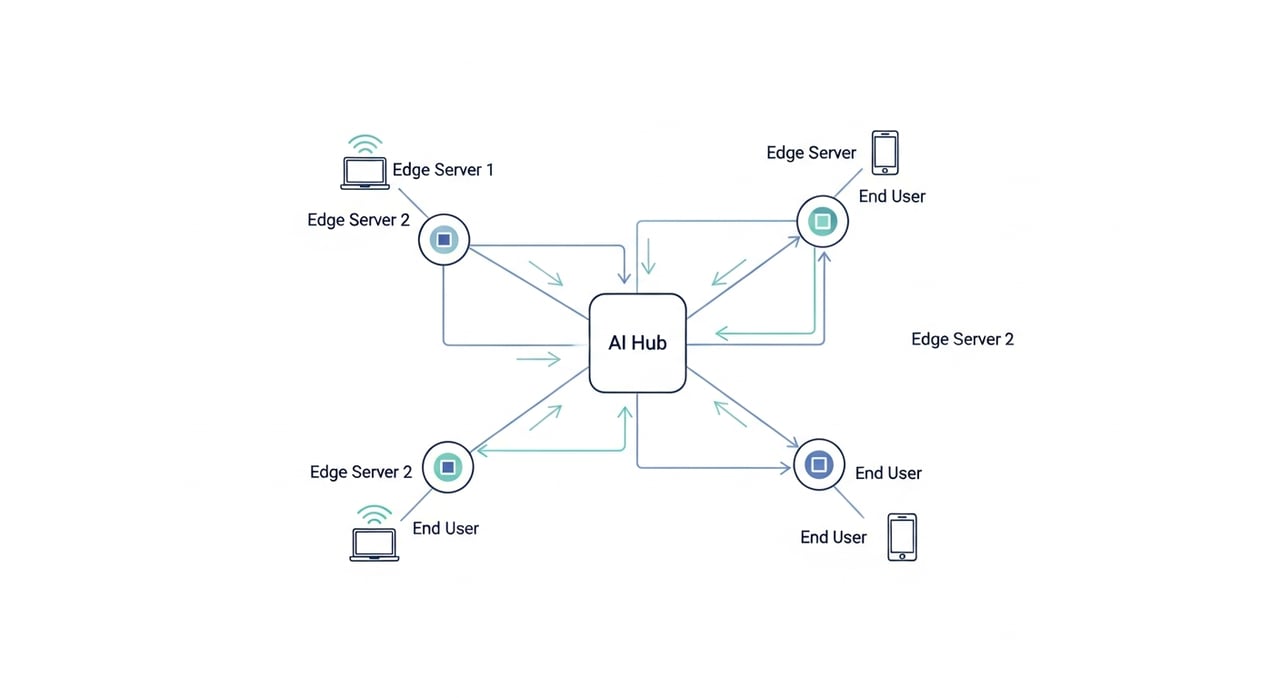
Traditional LRU and LFU eviction policies react to what already happened. An AI-powered CDN replaces that loop with time-series models that forecast request distributions 5–15 minutes ahead. As of mid-2026, production deployments from major vendors show cache-hit ratios climbing from the 85–89% range to 93–96% on catalog-heavy workloads (VOD libraries, e-commerce product pages, news feeds). The operational impact is straightforward: fewer origin fetches, lower egress bills, and reduced tail latency at p99.
The critical nuance: predictive caching is only as good as the feature set you feed it. Time-of-day, geo-cluster, referrer chain, and device class all matter. Teams that expose richer request metadata to the ML layer consistently outperform those running vendor defaults.
Anycast plus static latency tables got us far. ML-driven routing gets us further. Modern AI-powered content delivery systems ingest real-time signal — BGP path instability, regional congestion events, upstream packet loss — and re-route mid-session. Cloudflare's Argo Smart Routing published 2026 numbers showing a median 32% reduction in TTFB versus its own non-ML baseline. Fastly's similar system reports 25–30% improvements on long-haul intercontinental paths.
Predictive load balancing in content delivery networks operates on a different time horizon. Instead of reacting to a saturated node, the model anticipates load curves and pre-warms capacity. This matters most during traffic spikes — product launches, live sports, breaking news — where even 90 seconds of reactive scaling causes measurable user impact.
Serving AVIF to a 2026 Chrome user and JPEG to an embedded WebView should not require a manual mapping table updated quarterly. ML classifiers now evaluate client capabilities, network throughput estimates, and image complexity in real time, selecting codec and quality factor per-request. Measured results from production A/B tests in early 2026 show 18–25% byte savings over static format rules, with no perceptible quality loss as scored by SSIM.
For video, per-title encoding has evolved into per-scene, per-bitrate-ladder optimization driven by neural quality models. Netflix's VMAF-based pipeline is the reference implementation, but lighter-weight variants now ship in several CDN platforms accessible to teams without dedicated video science groups.
Signature-based WAF rules will always lag behind novel attack vectors. Machine learning in content delivery networks adds a behavioral layer: request-rate modeling per client fingerprint, entropy analysis on URI paths, and clustering of unusual geographic access patterns. In 2026, the median detection-to-mitigation time for credential-stuffing attacks on ML-augmented CDNs sits under 800 ms, compared to 3–5 seconds for purely rule-based systems.
Bot management has shifted from IP reputation lists to real-time interaction scoring. Models trained on pointer kinematics, TLS fingerprint drift, and JavaScript execution timing now classify traffic with 97%+ accuracy on well-tuned deployments. The cost tradeoff is real — inference at edge adds 1–3 ms of processing latency — but for commerce and media verticals, the ROI is clear.
Three cost levers move when you integrate AI into your delivery stack:
For teams evaluating cost at scale, the delivery layer itself matters as much as the intelligence layer. BlazingCDN offers volume-based pricing that scales down to $2.50 per TB at volume (as of October 2026). At 500 TB/month the cost is $1,815, which gives enterprises headroom to invest savings into ML tooling without blowing the delivery budget. The platform runs on NVMe SSD servers with Anycast routing, built-in failover and flexible configuration.
Raw access logs are table stakes. What AI adds is pattern extraction at a scale no human team can match. Anomaly detection on latency distributions, automatic root-cause clustering when error rates spike, and predictive alerting ("your CHR for this asset class will drop below 90% in ~20 minutes based on current request drift") — these are shipping features in 2026, not roadmap items.
The architecturally interesting development: several CDN providers now export ML-derived metrics via OpenTelemetry-compatible pipelines, meaning you can correlate CDN intelligence with your own application-level traces without building custom glue.
Static capacity planning assumes you can predict your traffic envelope. AI flips the model: the network continuously re-evaluates its own capacity allocation against incoming signal. During the 2026 Super Bowl, CDNs running ML-based burst prediction pre-positioned content to regional caches 12–18 minutes before halftime traffic surges, avoiding the origin stampede that historically degrades stream starts.
For businesses with unpredictable traffic — flash sales, viral content, global product drops — this is the difference between a smooth delivery curve and a P0 incident.
No honest engineering discussion omits failure cases. Here are the three most common AI-CDN failure modes observed in production as of 2026:
| Failure Mode | Root Cause | Mitigation |
|---|---|---|
| Cache poisoning via model drift | Predictive model caches stale content after a catalog schema change the model was not retrained on. | Implement hard TTL ceilings that override ML predictions. Monitor staleness metrics independently. |
| Routing oscillation | Two or more edge nodes alternately identified as "optimal" due to noisy latency signal, causing TCP connection churn. | Add hysteresis thresholds — require a sustained delta (e.g., 15 ms for 30 seconds) before re-routing. |
| False-positive bot blocking | Aggressive behavioral model misclassifies legitimate API clients (monitoring agents, CI runners) as bots. | Maintain an allowlist keyed on TLS client-cert fingerprint or mTLS identity, not IP. |
Treating AI as a black box that "just works" is how you end up debugging a CDN-induced outage at 2 AM. Instrument your ML layer with the same rigor you apply to your application tier.
AI models ingest real-time network telemetry — congestion, path loss, BGP instability — and re-route requests mid-session, whereas traditional systems rely on static latency maps updated on slower intervals. The result is measurable TTFB improvements of 25–35% on intercontinental paths as of Q1 2026 benchmarks.
It depends on the feature richness of the model. For head-of-catalog content, prediction accuracy is high. For true long-tail (content requested fewer than 5 times per day per region), most production models in 2026 fall back to standard eviction policies. The net effect is still positive because freeing cache space from mis-predicted head content improves long-tail availability indirectly.
Lightweight inference (decision trees, small neural nets) adds 1–3 ms per request on modern edge hardware. Heavier models used for video quality optimization may add 5–10 ms but run asynchronously. The overhead is negligible compared to the latency saved by smarter routing and higher cache-hit ratios.
No. AI at the CDN layer complements signature-based WAFs and dedicated bot management platforms. It adds a behavioral detection layer that catches novel attacks faster, but it does not replace rule sets tuned for compliance requirements (PCI DSS, specific OWASP rules). Run both.
Track three metrics before and after deployment: cache-hit ratio (target delta: +5–10 points), origin egress volume (target: 15–25% reduction), and p99 TTFB. Multiply origin egress savings by your per-GB origin cost, add avoided over-provisioning spend, and compare against the ML platform licensing or compute cost. Most teams at 100+ TB/month see payback within one quarter.
If you are evaluating intelligent content delivery for your stack, start with a controlled experiment: isolate one asset class (e.g., product images, VOD manifests), enable your CDN's ML-driven caching or routing on that class only, and measure CHR delta, p99 latency delta, and origin bytes saved over 7 days. Compare against your baseline with statistical significance, not eyeball charts. That data will tell you whether the AI layer earns its complexity for your specific traffic profile — or whether you should invest engineering time elsewhere first.

Heavy traffic.
Light bill.
The CDN for video and large traffic
Learn
Lossy vs lossless compression comes down to one trade: lossless compression rebuilds every original bit and typically ...
Pricing - Pricing & Costs
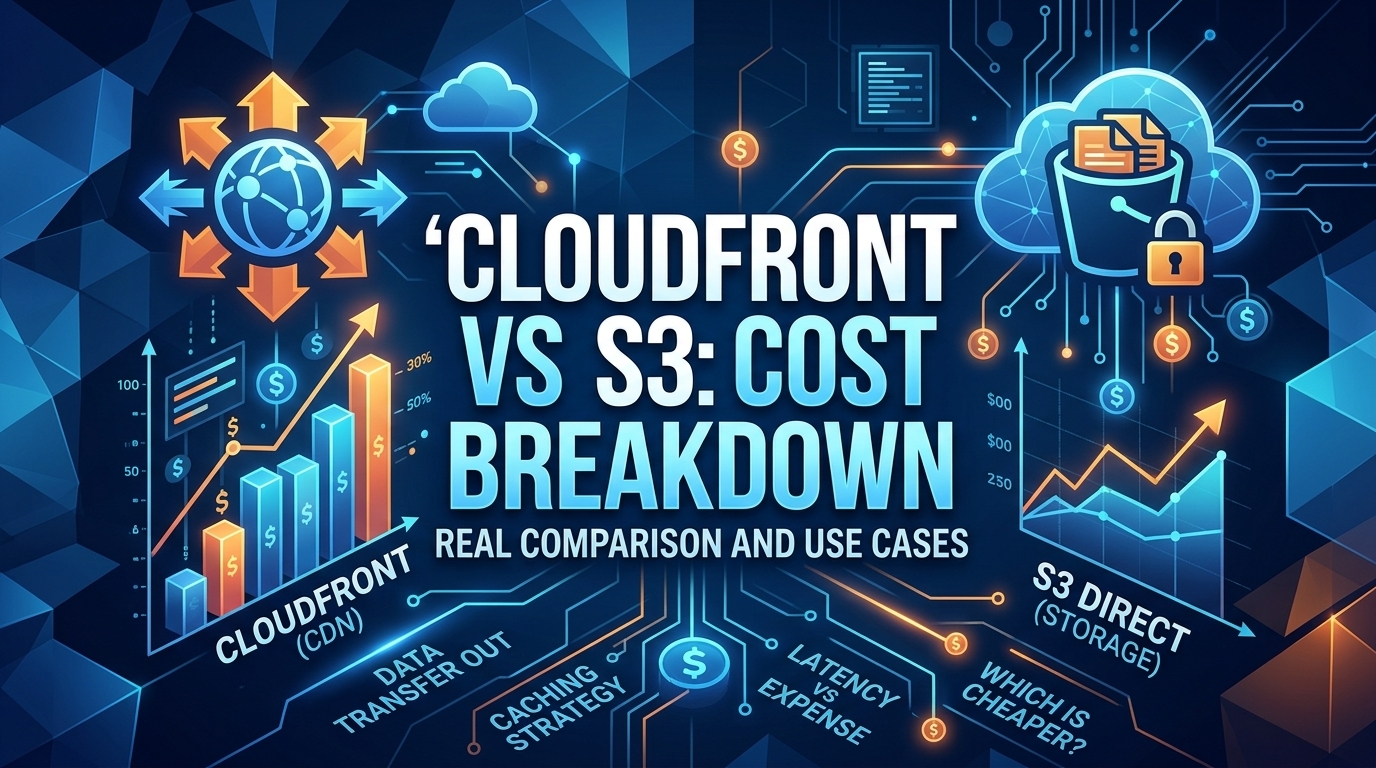
The CloudFront vs S3 decision depends more on object size than on traffic volume. At a 500 KB average response, 100 TB ...
Learn
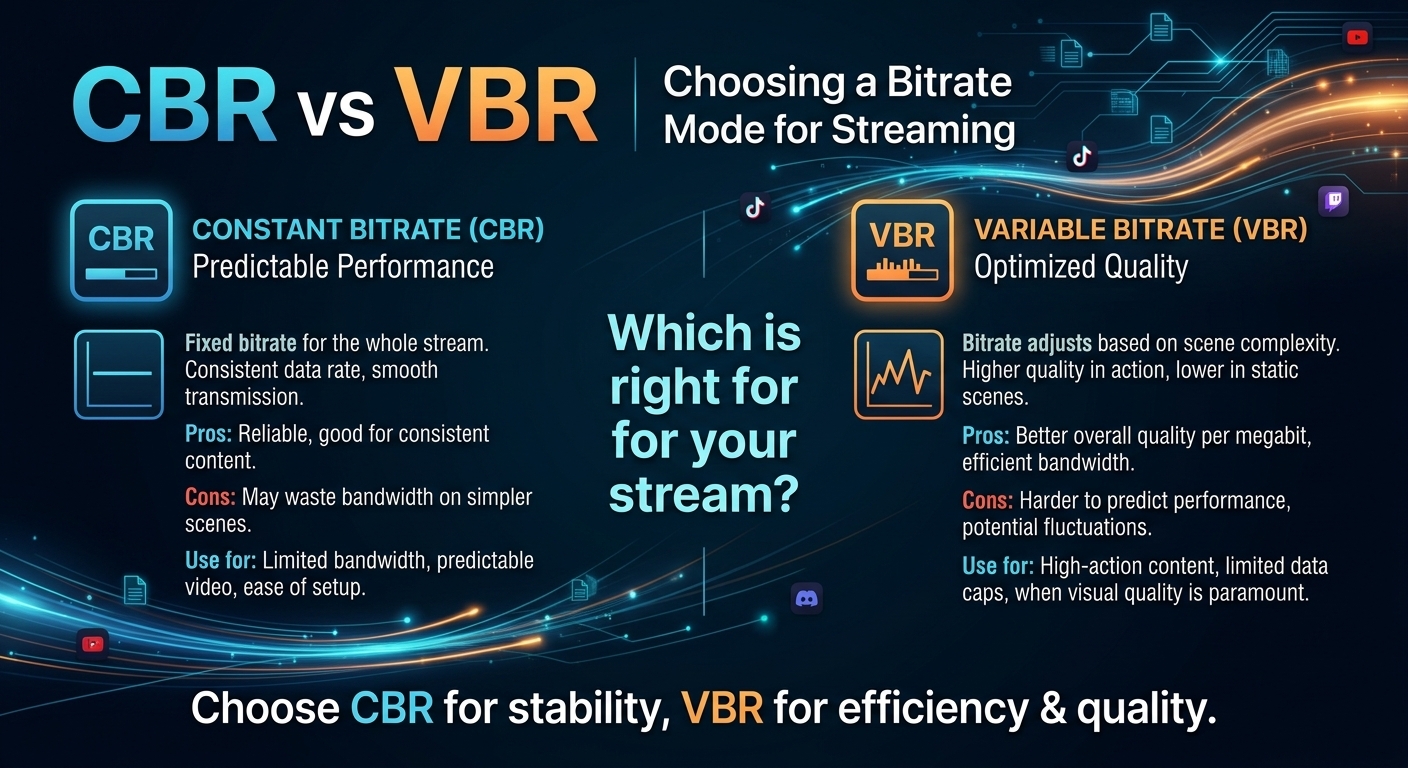
For most on-demand video, capped variable bitrate (VBR) wins the cbr vs vbr decision: it spends bits where the picture ...