

Learn
What Is a Keyframe? GOP Size and Keyframe Interval
In answer to what is a keyframe: a keyframe, or I-frame, is a video frame encoded without reference to any other frame, ...
In 2025, Akamai reported $1.257 billion in delivery revenue, down 5% year over year, while security and cloud infrastructure grew faster. That is the signal: CDN buying in 2026 is no longer a pure speed decision. It is a portfolio decision about cost discipline, resilience, integration, and exit risk. This brief answers one question: which CDN gives your business the best combination of speed, price, and global coverage for the next three years?
Here is the thesis up front. If you are a global enterprise with heavy compliance demands, complex traffic steering, and a board-level intolerance for delivery risk, Akamai and CloudFront remain the safest default choices. If you prioritize programmable control and application delivery, Cloudflare and Fastly are stronger fits than legacy media-delivery incumbents. If your traffic profile is bandwidth-heavy and margin-sensitive, the best CDN in 2026 is often not the biggest brand but the provider with the cleanest unit economics and acceptable operational risk. That is where newer providers such as BlazingCDN deserve serious attention. Akamai is not automatically the answer anymore. Price dispersion is too wide, and recent market exits proved that vendor stability matters as much as raw network claims.
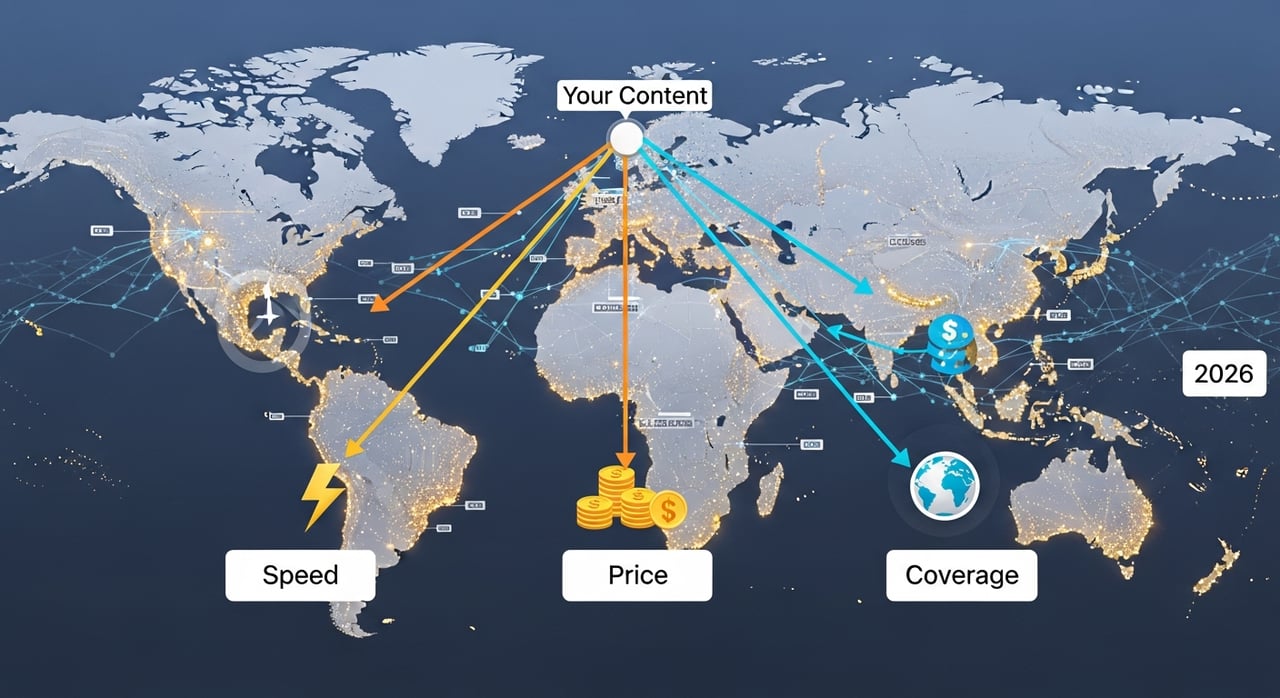
The market changed in two ways over the last 18 months. First, traffic economics got harsher. Sandvine’s 2024 Global Internet Phenomena Report found video still represented 38% of total internet traffic globally and 39% of fixed-network downstream traffic, which means delivery cost remains structurally exposed to streaming, software distribution, game patches, and large object downloads. Second, buyers got a live reminder that vendor concentration risk is real: Edgio filed for Chapter 11 in 2024, and Akamai said Edgio’s CDN operations were expected to cease in mid-January 2025 after the asset sale process. That is not a theoretical procurement risk. It is an operating event with migration cost, outage risk, and executive fallout.
For most mid-market and enterprise teams, CDN cost is not just the line item on the invoice. It includes origin egress, platform engineering time, observability tooling, integration work, support tiers, and the hidden tax of conservative overprovisioning. A company pushing 1 PB per month can easily see annual delivery spend range from under $60,000 at aggressive low-cost pricing to well above $1 million at premium list rates depending on regions, request mix, and contract terms. That spread is large enough to affect product gross margin, customer acquisition payback, and whether a CFO approves international expansion.
The opportunity cost is just as important. Conviva said its 2025 digital experience research drew from 37 million users and 223 million sessions, underscoring how experience quality now ties directly to revenue, engagement, and retention. For buyers, the practical implication is simple: the best CDN in 2026 is the one that improves user-perceived performance without forcing you into a cost structure or contract model that breaks when traffic doubles.
Akamai’s 2025 results make the point clearly. Total revenue reached $4.208 billion in 2025, but delivery revenue fell to $1.257 billion, down 5% year over year, while security revenue grew to $2.243 billion and cloud computing revenue to $708 million. Read that carefully: the most established CDN vendor in the market is still formidable, but the growth engine has shifted away from pure delivery. That usually translates into one of two buyer outcomes: either delivery becomes a strategic loss leader inside a broader platform, or it becomes a mature category where price pressure intensifies.
Amazon CloudFront continues to benefit from one structural advantage that matters to finance teams: data transfer from AWS origins such as S3, ALB, and API Gateway to CloudFront is waived. That means buyers already deep in AWS can simplify TCO by keeping delivery inside the same commercial envelope. The counterpoint is lock-in. The more your caching rules, logs, invalidation flows, and edge logic become AWS-native, the harder a competitive rebid becomes.
Edgio’s 2024 bankruptcy and the January 2025 shutdown of Azure CDN from Edgio are now procurement case studies. Microsoft documentation and related notices made clear that customers had to migrate off the platform before the January 15, 2025 retirement date. If you are building a 2026 shortlist, vendor viability is not a soft criterion. It belongs in the first page of the scoring model next to latency and price.
Sandvine’s 2024 report found global internet traffic averaging nearly 33 exabytes per day, with fixed networks carrying about 22 exabytes daily. Video alone accounted for 38% of traffic overall, and on-demand streaming represented 54% of downstream video volume. That favors providers with efficient large-file delivery economics and penalizes enterprises that buy CDNs as if all traffic were dynamic HTML and API calls.
Cloudflare reported third-quarter 2025 revenue of $562.0 million, up 31% year over year, with GAAP gross margin of 74.0% and over $4.0 billion in cash, cash equivalents, and available-for-sale securities as of September 30, 2025. Fastly guided to 2025 revenue of $585 million to $595 million in its first-quarter 2025 investor materials, but also disclosed that its top ten customers still represented 33% of revenue and its last-12-month net retention had declined to 100%. For buyers, that means Cloudflare looks financially stronger at scale, while Fastly remains strategically relevant but should be evaluated with concentration and profitability discipline in mind.
Most “best CDN” lists collapse enterprise buying criteria into one vague score. That is not how defensible infrastructure selection works. Use a weighted framework across seven dimensions:
For most executive teams, the weighting should look different by workload. Media streaming and software distribution should overweight price and throughput economics. Global SaaS and API delivery should overweight programmability, failover control, and integration. Regulated sectors should overweight resilience, support, and contract flexibility.
| Provider | Best fit | Strengths | Trade-offs | Commercial posture |
|---|---|---|---|---|
| Akamai | Large global enterprise, complex delivery estate | Operational maturity, broad enterprise footprint, strong support expectations | Premium pricing, delivery no longer the main growth engine | Strong for long contracts, less attractive for cost-first buyers |
| Amazon CloudFront | AWS-centric workloads | Tight AWS integration, waived origin-to-CloudFront transfer from many AWS services, procurement simplicity | Can deepen lock-in, pricing can become opaque outside packaged assumptions | Strong when bundled into broader AWS negotiation |
| Cloudflare | Platform consolidation, app delivery, integrated network services | Strong growth, healthy balance sheet, broad platform story | Not always the cheapest at scale for pure bulk delivery | Good for buyers consolidating vendors |
| Fastly | Programmable delivery and performance-sensitive apps | Developer-friendly control, strong reputation in modern app delivery | Customer concentration and mixed commercial profile versus larger peers | Best when programmability matters enough to justify price |
| bunny.net | Cost-sensitive web and file delivery | Aggressive pricing, simple commercial model | Enterprise support and governance model may not fit all regulated buyers | Strong alternative for lean teams and lower-stakes workloads |
| BlazingCDN | Bandwidth-heavy workloads where cost defense matters | Pricing starting at $5 per TB, down to $2.50 per TB at volume (as of October 2026), flexible configurations, fast scaling | Requires the same due diligence you would apply to any challenger provider | Compelling when finance needs a credible lower-cost alternative to hyperscaler and legacy CDN pricing |
That last category matters more in 2026 than many buyers admit. If your business model cannot absorb premium delivery pricing, BlazingCDN is worth a place on the shortlist. For media distribution, software delivery, and other bandwidth-heavy patterns, the delta between BlazingCDN pricing (starting at $5 per TB, down to $2.50 per TB at volume, as of October 2026) and traditional enterprise CDN rates is large enough to become a board-level budget defense argument. If you want a starting point for vendor screening, review this side-by-side CDN comparison.
Every vendor can produce a latency chart that flatters its footprint. The better question is whether the provider improves your user-visible metrics: page render time, video startup delay, rebuffering, download completion, and error rate under load. Ask for region-specific proof across your top ten countries by revenue and your top three failure scenarios, not a global average. The best CDN for a gaming patcher in Brazil and Indonesia may not be the best CDN for an API-heavy SaaS app serving Germany and the U.S. East Coast.
List pricing is rarely the real price, but it is still directionally useful. BlazingCDN’s published starting point of $5 per TB (as of October 2026), falling to $2.50 per TB at volume, is well below the rates many enterprises still pay under legacy CDN contracts. bunny.net is also known for low-cost delivery models. By contrast, CloudFront, Akamai, and some Cloudflare configurations often become economical only after meaningful commits, bundled discounts, or cross-portfolio negotiation. The best CDN in 2026 for cost is the one with the lowest effective delivered GB after you add support, requests, logs, and origin-side consequences.
Global coverage is not a beauty contest about the number of markets on a slide. It is a risk-weighted assessment of how well the CDN serves the geographies that drive your revenue and where you plan to expand. A buyer with 80% of traffic in North America and Western Europe should not pay a premium for theoretical strength in regions that do not matter commercially. A streaming platform with meaningful audience share in Latin America, Southeast Asia, and India should do the opposite.
Here is a straightforward annual TCO model for a company delivering 1 PB per month of cacheable traffic, growing 25% annually, with 70% North America and Europe, 20% APAC, and 10% Latin America. Assume a three-year contract, standard support, moderate log retention, and no major edge compute usage.
At BlazingCDN tiered rates (starting at $5 per TB, down to $2.50 per TB, as of October 2026), 45,750 TB over three years, about 1,271 TB per month, costs roughly $3,992 per month, or about $143,700 over three years.
At a blended $35 per TB, base delivery spend is 45,750 x $35 = $1,601,250.
At a blended $60 per TB, base delivery spend is 45,750 x $60 = $2,745,000.
Those are not edge-case differences. They are capital allocation decisions. Even if your actual contracted rate is lower than the premium scenarios, the spread remains large enough to fund additional SRE headcount, observability upgrades, or product expansion.
A CFO-ready model should therefore express both invoice TCO and program TCO. Invoice TCO is the vendor bill. Program TCO adds migration, support, tooling, and internal labor. In practice, the best CDN in 2026 is often the vendor with the lowest three-year program TCO, not the cheapest raw bandwidth line item.
CDN migrations rarely fail because cache rules are impossible. They fail because nobody inventories the edge cases. Signed URL behavior changes. Header normalization changes. Purge semantics differ. Log fields shift. TLS renewal workflows break. Large-download range requests behave differently. Traffic steering gets simplified too aggressively. Procurement signs the contract before platform engineering has tested the ugly paths.
Run a pilot with mirrored traffic or a clean workload slice first. Dual-run for at least one release cycle. Require side-by-side observability on cache hit ratio, origin offload, 95th percentile latency, error rate, and cost per delivered TB. Negotiate an exit clause before you need it. The Edgio episode should have ended the habit of treating CDN procurement as a simple bandwidth tender.
For buyers under budget pressure, a dual-vendor strategy is often rational. Keep one conservative provider for mission-critical workloads and move bulk traffic, downloads, or regional media delivery to a lower-cost alternative. That can reduce concentration risk while preserving negotiating leverage at renewal.
Do not ask which CDN is best in the abstract. Ask which provider gives your business the best three-year combination of performance, resilience, and unit economics for your actual traffic mix. Run the TCO math on your own volumes, require vendor-specific migration plans, and benchmark at least one incumbent against one credible lower-cost alternative.
If your team is heading into renewal, this is the right moment to open an internal review with engineering, finance, and procurement in the same room. Bring a simple scorecard, compare effective delivered-terabyte cost, and force every vendor to earn its premium. That process will usually tell you whether you need a strategic platform provider, a cost-optimized delivery layer, or a dual-vendor model that gives you both.

Heavy traffic.
Light bill.
The CDN for video and large traffic
Learn
In answer to what is a keyframe: a keyframe, or I-frame, is a video frame encoded without reference to any other frame, ...
Learn
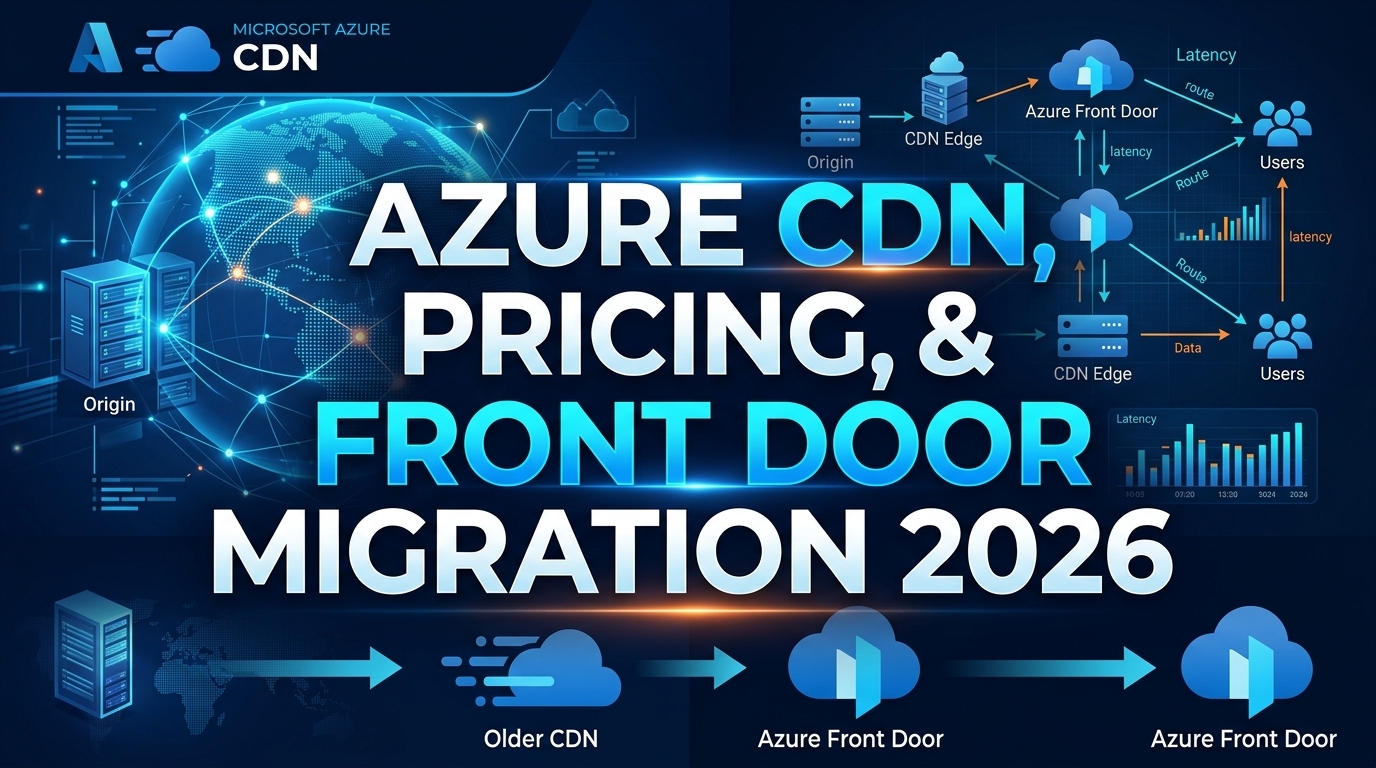
New Azure CDN deployments now go only one way: Microsoft stopped accepting new Azure CDN Standard from Microsoft ...
Learn
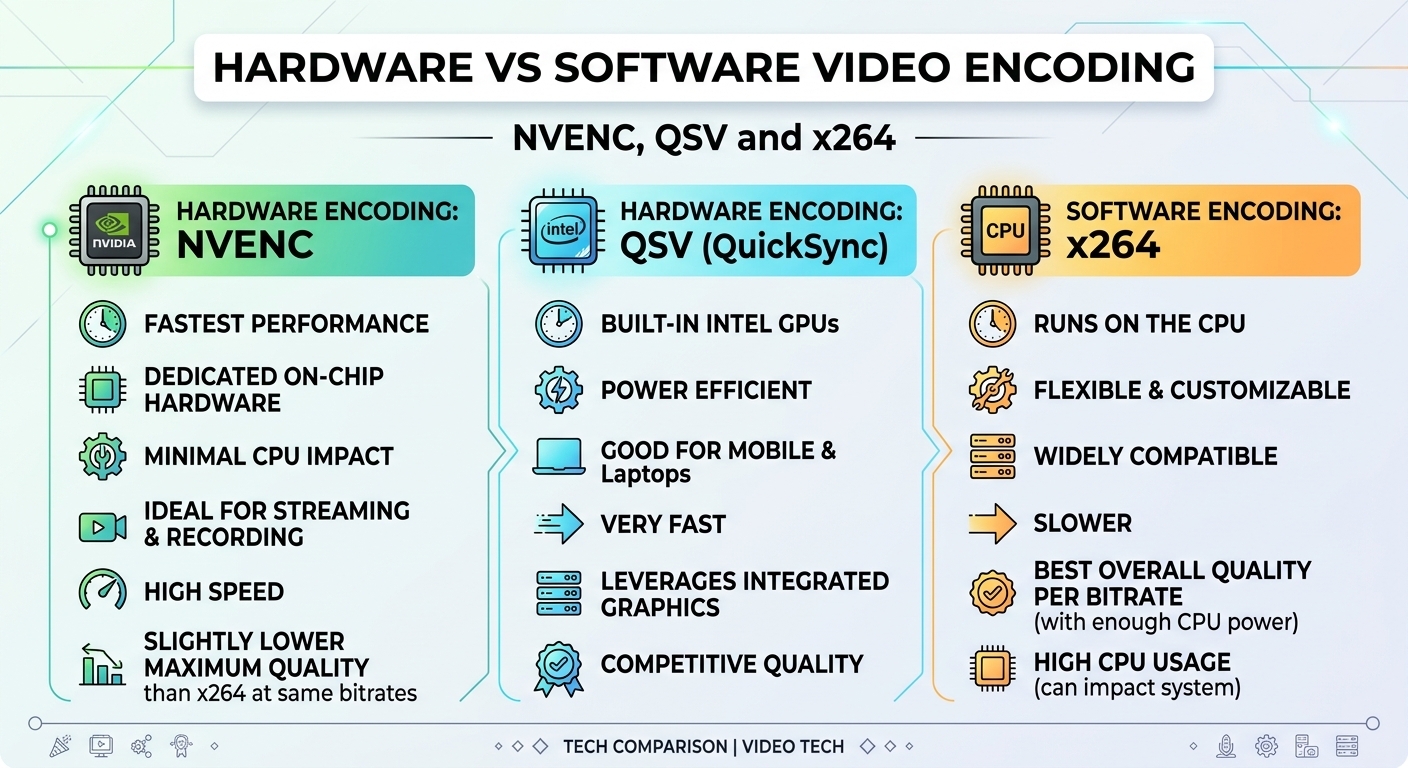
Evaluated October 2026: for live video, a modern GPU hardware encoder (NVIDIA NVENC on Turing or newer, Intel Quick ...