
Learn
Best Tech Conferences 2026: 17 Events Worth Your Travel Budget
Best Tech Conferences 2026: 17 Events Worth Your Travel Budget In Q1 2026 alone, global tech conference attendance ...
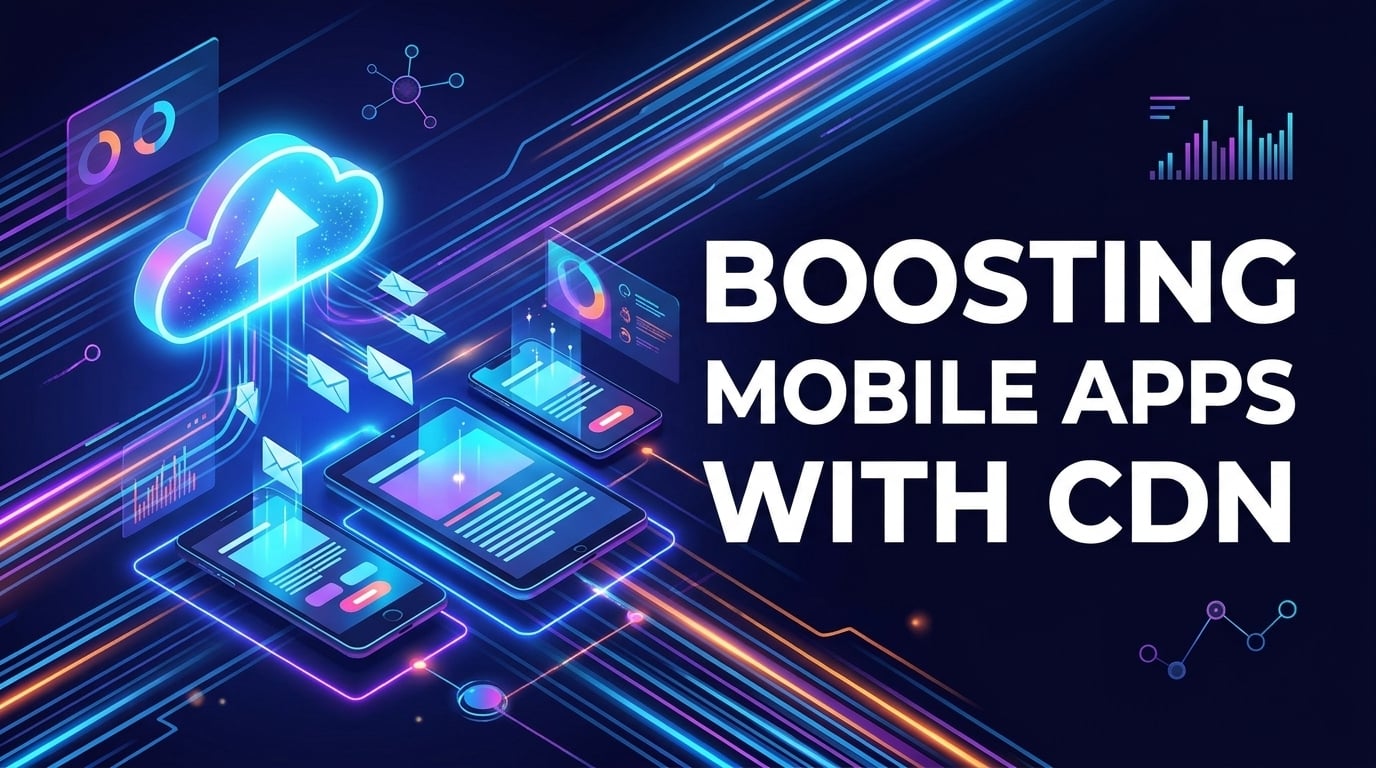
Mobile content delivery is the practice of serving app assets, images, video segments, SDK binaries and cacheable API responses from servers close to the cellular network edge, so each request spends fewer round trips crossing the internet. On mobile the round trip is the unit of cost. A cold HTTPS request over TCP and TLS 1.3 needs three round trips before the first response byte arrives, and the radio adds latency to every one of them. This article gives you a worked latency budget, a decision matrix for what belongs on a mobile CDN, and the failure modes that quietly cancel the gains.
In 2026, a cold HTTPS request over TCP and TLS 1.3 costs three round trips before the first byte, so a phone with 50 ms of radio latency talking to an origin 150 ms away spends about 600 ms on setup alone. Terminating the same request at a CDN edge 15 ms beyond the radio cuts setup to about 195 ms, a 405 ms saving before any caching benefit.
Bandwidth on modern LTE and 5G links is rarely the bottleneck for the small objects that dominate app traffic: JSON payloads, thumbnails, config files. Latency and variance are. Typical last-mile round-trip times from public traffic measurements in 2025 and 2026 fall around 30 to 70 ms on LTE and 15 to 40 ms on 5G non-standalone deployments (our estimate, and congested cells routinely double these).
Three cellular behaviors make it worse than the averages suggest:
Every round trip removed from the critical path is therefore worth more on a phone than on a desktop, and a CDN removes them in two ways: shorter physical distance for every handshake, and cache hits that never travel to origin at all.
The budget below models a cold screen load that needs one API call and one 120 KB image, with the user in Europe and the origin in the US. Assumptions: 50 ms radio RTT, 150 ms transatlantic path, 15 ms from the radio network to a nearby edge, TLS 1.3 over TCP, 40 ms of origin processing for the API.
| Path | Setup (3 RTT) | API response | Image (cache hit at edge) | Estimated total |
|---|---|---|---|---|
| Direct to origin | 600 ms | 40 ms processing, included in setup's last RTT | 200 ms extra RTT on the same connection | about 840 ms |
| Edge, API forwarded over warm origin connection | 195 ms | 150 ms edge to origin plus 40 ms | 65 ms | about 450 ms |
| Edge, API response cached for 30 s | 195 ms | served from cache | 65 ms | about 260 ms |
Edge termination alone roughly halves cold-load latency in this model, and caching even a 30-second API response cuts it to about a third.
The middle row is the one teams underestimate. Even an uncacheable API call gets faster through a CDN, because the expensive handshakes happen over the short hop and the edge reuses a long-lived connection to origin.
Not every byte an app moves is cacheable, and forcing personalized responses through a shared cache is how data leaks happen. The matrix below is this blog's classification of typical mobile traffic, with the cache key and TTL pattern that works for each class.
| Traffic class | Cache at edge? | TTL pattern | Cache key notes |
|---|---|---|---|
| Images and thumbnails | Yes | Months, versioned URLs | Path plus width and format only |
| Video segments (HLS, DASH) | Yes | Long for segments, seconds for live playlists | Strip session parameters |
| Asset bundles, ML models, OTA code bundles | Yes | Immutable per version | Content hash in the path |
| SDK binaries | Yes | Immutable; index files short | Version in path |
| Public API GETs (catalog, feeds, remote config) | Yes, briefly | 5 to 60 s plus stale-while-revalidate | Locale and app version, never device ID |
| Personalized or authenticated API | No | private, no-store | Pass through, keep warm origin connections |
| Realtime channels (WebSockets) | No | Not applicable | Needs a provider that proxies them |
By volume, most mobile bytes sit in the first four rows, which are fully cacheable with immutable, versioned URLs.
Cache only responses that are identical for every user who shares the cache key. Send Cache-Control with a short max-age and stale-while-revalidate (RFC 5861) so the edge serves instantly while refreshing in the background. Never vary on Authorization; split public and personalized data into separate endpoints instead, so the home feed skeleton caches and only the user overlay hits origin.
Native apps control their requests, so the client should ask for exactly what it renders: a 390-point-wide view on a 3x display needs a 1,170-pixel image, not the 4,000-pixel original. Request AVIF or WebP where the OS decodes it; savings against JPEG at similar visual quality typically land between 25 and 50 percent (estimate, content-dependent). Resize at the edge rather than storing every variant at origin, and keep the variant parameters in a fixed, small set so the cache key does not fragment.
Stores deliver the app binary, but everything fetched after install is yours: asset packs, models, OTA bundles and, for SDK vendors, the frameworks your customers' builds download. Serve these from immutable, versioned paths with a year-long TTL and support byte-range requests so interrupted downloads resume after a network handoff. Swift Package Manager binary targets require a checksum, so the artifact at a URL must never change; publish a new version instead. For Maven repositories, cache artifacts indefinitely but give metadata index files a TTL of minutes.
Mobile traffic spikes are self-inflicted more often than viral. A push notification sent to two million devices can produce hundreds of thousands of requests for the same deep-linked content within seconds. Origin shield with request coalescing collapses those into a handful of origin fetches, which is the difference between a flat origin graph and a pager alert.
On security, a CDN for mobile apps typically provides HTTPS everywhere, signed URLs or tokens for paid content, and rate limiting. DDoS mitigation and WAF are separate product categories; some CDNs bundle them, others leave them to a dedicated security layer.
Integration is usually a hostname change plus disciplined headers: point asset and API base URLs at the CDN hostname, consolidate to one or two hostnames so HTTP/2 multiplexes over a single connection, and enable TLS session resumption. No vendor SDK is required. The engineering work sits in cache-key design and versioning, not in client code.
Data usage costs users twice: on their plan and in battery spent keeping the radio active. Brotli or zstd typically shrinks JSON 15 to 25 percent beyond gzip (estimate), and right-sized images often remove more bytes than every other optimization combined. On the operator side, offloading cacheable bytes to the edge cuts origin egress roughly in line with the cache hit ratio.
As of November 2026, BlazingCDN prices delivery from $5 per TB down to $2.50 per TB at volume on progressive tiers, with one rate for the US, Europe and Asia and no request fees, so 50 TB a month costs $215 and 200 TB costs $765; current rates are on the BlazingCDN pricing page for mobile CDN traffic. Image crop and resize run at the edge at no extra charge, and a June 2026 measurement on a 100 MB HTTPS download recorded 24 ms and 1.11 Gb/s in North America. The honest limits matter for mobile: BlazingCDN does not support HTTP/3 or WebSockets and does not sell WAF or DDoS mitigation, so it fits the heavy, cacheable rows of the matrix while realtime and API security stay on your existing stack. Below about 46 TB a month, flat plans such as Amazon CloudFront Business or Cloudflare Pro can cost less.
Most mobile CDN rollouts that disappoint fail in one of five ways. Each has a distinct signature.
Read the cache status and Age response headers on image and config URLs, compare Content-Encoding on JSON against your expectation, and track p95 time to first byte from real devices split by network type, not by synthetic tests on office Wi-Fi.
Mobile content delivery is serving app assets, images, video and cacheable API responses from edge servers close to cellular users. It shortens every round trip on high-latency radio links. Because a cold TLS 1.3 request needs three round trips, moving termination from a distant origin to a nearby edge often saves hundreds of milliseconds per screen.
A mobile CDN is usually a regular CDN configured for mobile traffic patterns. The differences are in configuration: tight cache keys for resized images, short TTLs with stale-while-revalidate for API responses, byte-range support for resumable downloads, and rate limits keyed on tokens rather than IPs because carrier-grade NAT puts many users behind one address.
A CDN for mobile apps can cache API responses that are identical for every user sharing a cache key, such as catalogs, feeds and remote config. Use TTLs of 5 to 60 seconds with stale-while-revalidate. Personalized responses should be marked private and passed through, where the edge still saves handshake time over a warm origin connection.
A CDN app integration does not require a vendor SDK for content delivery. You change asset and API base URLs to the CDN hostname, consolidate hostnames for HTTP/2 connection reuse, and set correct Cache-Control headers at origin. The real work is versioning assets and designing cache keys so the hit ratio stays high.
A CDN saves mobile data mainly through edge image resizing, modern formats and compression rather than through caching itself. Serving a correctly sized AVIF or WebP instead of a full JPEG typically removes 25 to 50 percent of image bytes (estimate), and Brotli or zstd shrinks JSON further than gzip, reducing both data plan usage and radio-on time.
Pick your three highest-traffic screens and log, from real devices, the number of new connections, total round trips and bytes per screen, split by LTE, 5G and Wi-Fi. Then rerun the latency table above with your own RTTs and origin distance. If cold connections exceed one per screen, consolidate hostnames first. If image bytes dominate, resize at the edge before touching anything else. Both changes show up in p95 time to first byte within a release.
If images are your largest mobile payload, BlazingCDN performs crop and resize at the edge as part of delivery with no separate processing fee, and the BlazingCDN image processing for mobile apps page lists the supported operations.

Heavy traffic.
Light bill.
The CDN for video and large traffic
Learn
Best Tech Conferences 2026: 17 Events Worth Your Travel Budget In Q1 2026 alone, global tech conference attendance ...

Learn
Cloudflare Bandwidth Costs in 2026: A Cost-Reduction Playbook A mid-size SaaS platform serving 40 TB/month through ...

Learn
WebP is a raster image format Google released in 2010 that packs lossy and lossless compression, alpha transparency, ...
Learn
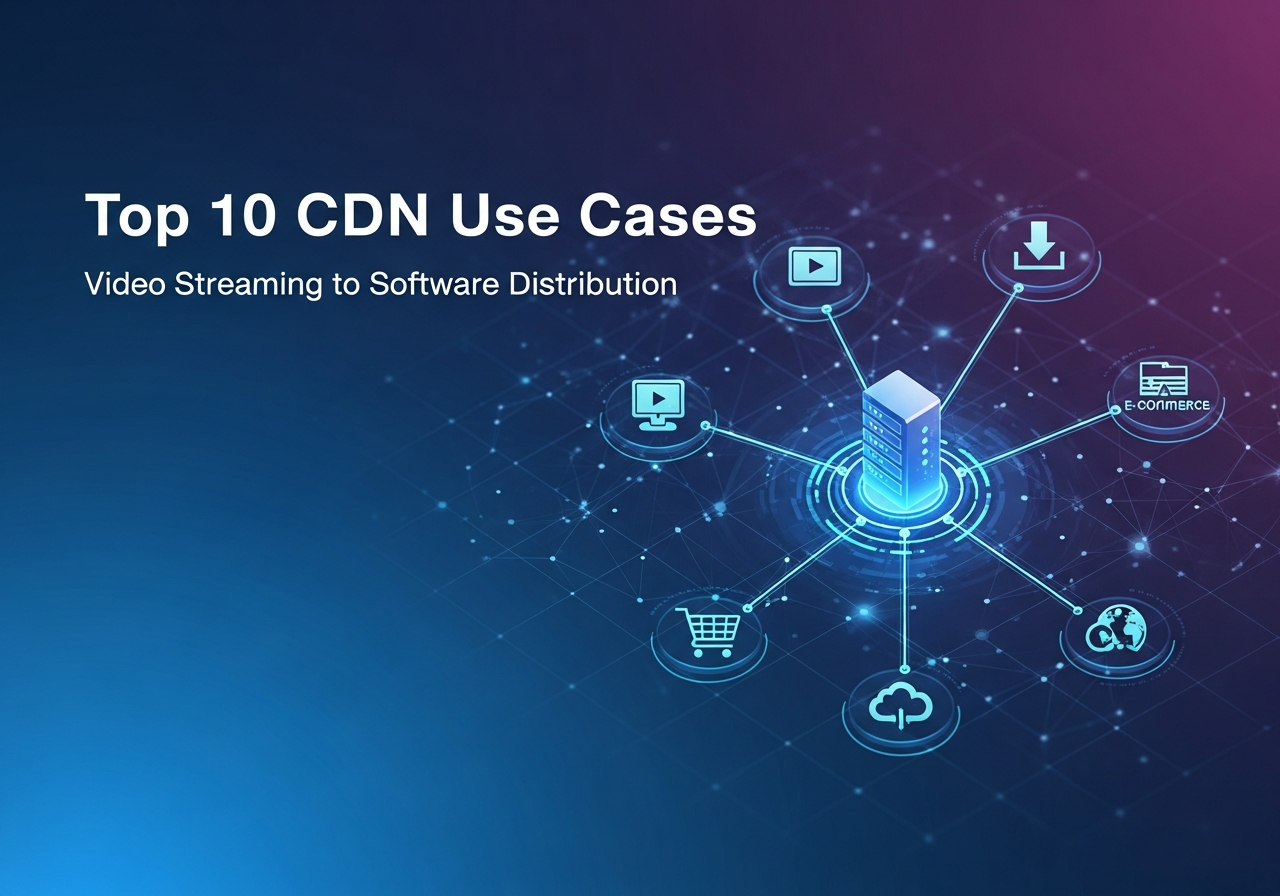
Top 10 CDN Use Cases: From Video Streaming to Software Distribution Conviva reported that video startup failures rise ...