Learn
Lossy vs Lossless Compression: Images, Video and Audio
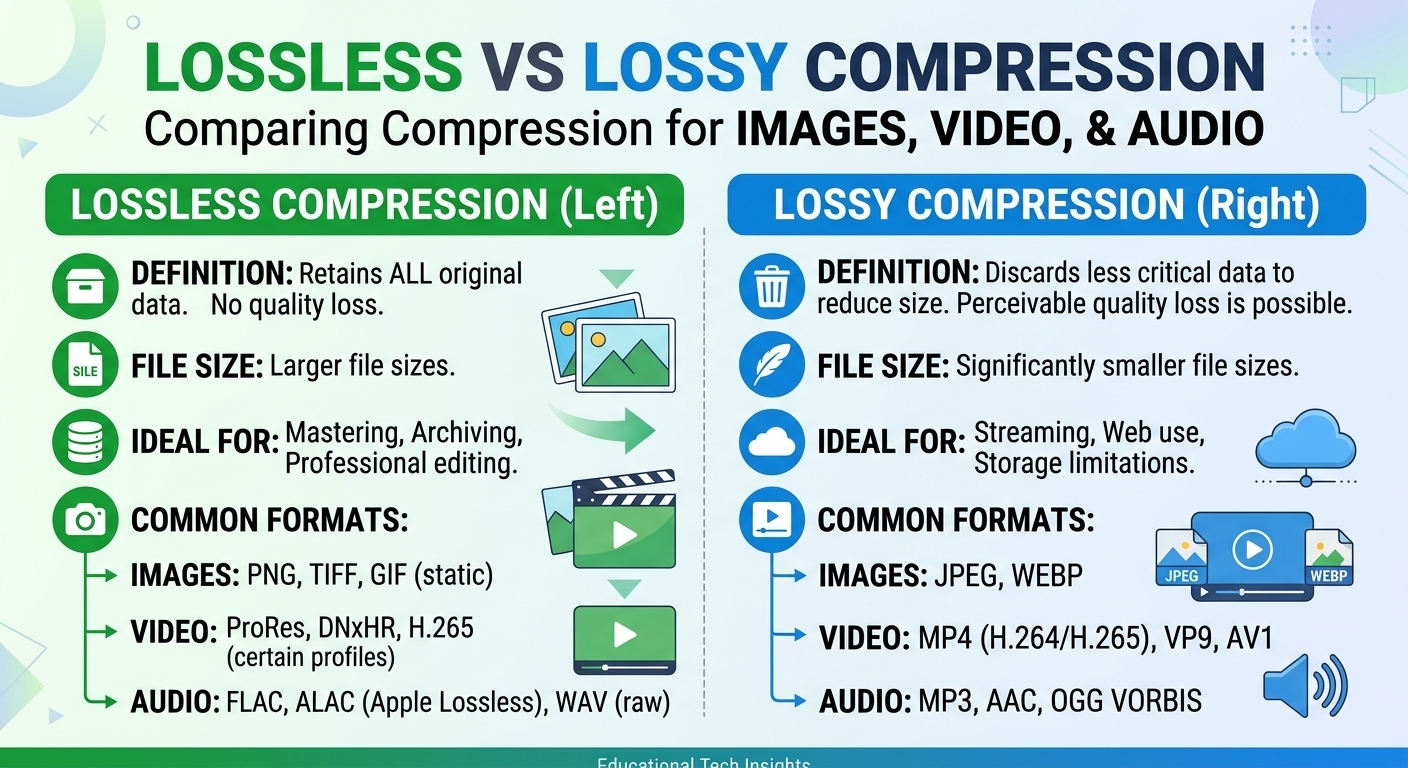
Lossy vs lossless compression comes down to one trade: lossless compression rebuilds every original bit and typically ...
Most CDN evaluations fail before the first benchmark runs. The failure mode is organizational, not technical: procurement optimizes commit structure, security optimizes control coverage, platform optimizes operability, media teams optimize throughput and rebuffering, and nobody writes down which metric has veto power. The result is predictable: a vendor that wins the RFP but loses in production with p95 latency regressions, cache-hit instability, origin egress surprises, or controls that break deployment velocity.
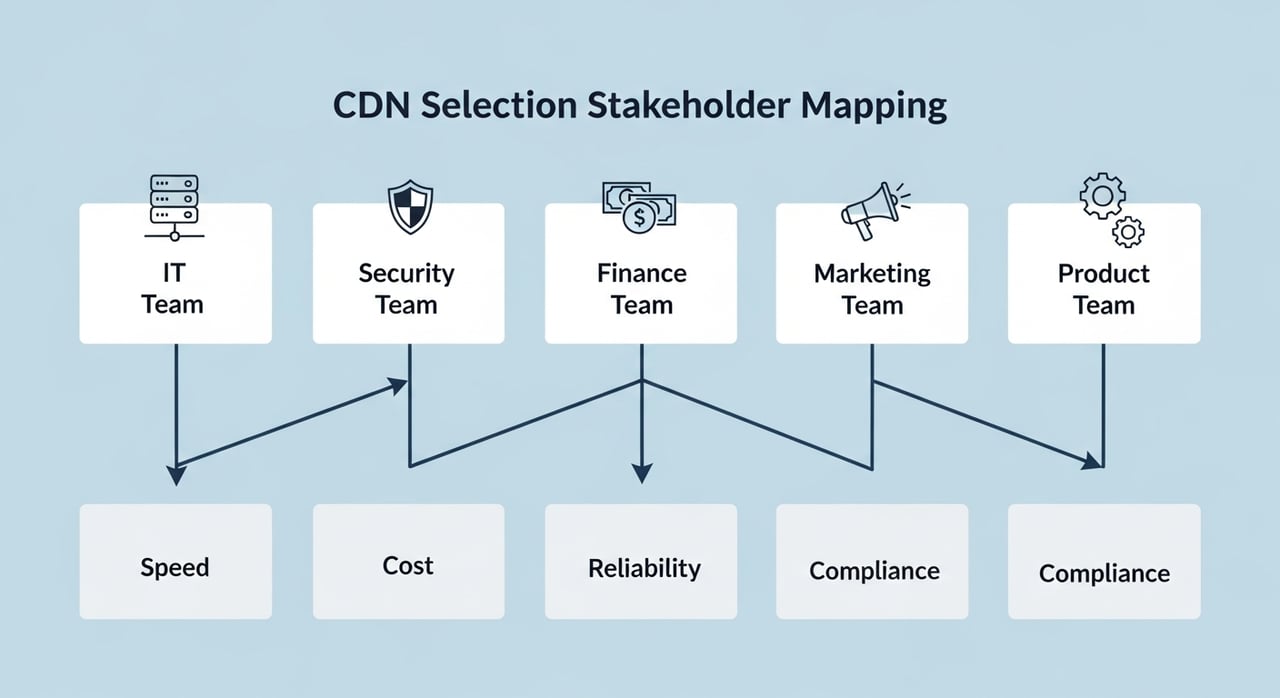
If you are working through CDN selection criteria for an enterprise estate, the hard part is not building a feature checklist. It is deciding who gets input, who gets a vote, and who gets a veto. Teams that skip that mapping usually discover the gap during incident review, not vendor review.
The useful framing is simple: a CDN is one control plane bought by many constituencies. Performance, security, network, SRE, web platform, video delivery, legal, finance, and procurement all consume different parts of the same decision. Your job is to force those concerns into one evaluation model before the first vendor workshop.
As of 2026, public internet telemetry still shows large regional variance in RTT, packet loss, and path quality across eyeball networks. Under those conditions, median performance numbers are weak selectors. For global web applications, the difference between two providers often appears in p95 and p99 object fetch latency, handshake failure rate, cache fill behavior under burst, and the operator overhead required to keep those numbers stable.
The obvious approach is to ask each team for requirements, combine them into a spreadsheet, and score vendors 1 through 5. That usually breaks for three reasons.
First, teams submit incompatible units. Finance asks for blended $/GB and commit flexibility. Security asks for named controls and audit evidence. SRE asks for alertability and rollback behavior. Product asks for launch speed. None of those are directly comparable without a decision model.
Second, architects overweight nominal capability and underweight operational fit. A feature that exists but requires ticket-driven changes, split consoles, or provider intervention is not equivalent to a feature the platform team can safely automate.
Third, no one defines the conditions under which a team can block the decision. That is how a legal redline or a logging export limitation appears in week seven and resets the process.
Good CDN evaluation criteria use tail behavior and cost under realistic traffic shape, not brochure averages. For enterprise websites and global applications, the metrics below matter more than a generic “faster CDN” claim.
| Metric | Why it matters in CDN vendor selection | Normal range to expect | Red flag threshold |
|---|---|---|---|
| p50 TTFB by region | Baseline edge responsiveness for hot objects and cacheable HTML | Static objects often land under 50 to 150 ms depending on geography and connection quality | Regional median above your current baseline by 20 percent or more |
| p95 and p99 TTFB | Exposes congestion, cold fill behavior, and routing variance hidden by medians | Tail commonly 2 to 5 times p50 on healthy global paths | Tail above 6 times p50 or unstable hour to hour |
| Cache hit ratio by content class | Separates pricing wins from origin egress losses | Static bundles often exceed 95 percent, large objects 80 to 95 percent, API traffic varies widely | More than 5 point drop from expected steady state |
| Handshake failure rate | Surfaces certificate, protocol negotiation, and path problems that users experience as page failure | Low basis-point territory on healthy estates | Step increases correlated with cert rotations or regional incidents |
| Origin offload ratio | Connects edge efficiency to origin CPU, memory, and egress cost | Should rise with cacheability and stable object versioning | Offload falls during launches, invalidations, or path changes without recovery plan |
| Effective blended delivery cost | True cost after commits, overages, log export, support, and origin egress impact | Varies by geography, traffic shape, and contract structure | A low unit price offset by poor cache efficiency or add-on charges |
The mental model to keep: tail latency and hit ratio are not separate categories. They interact. Cold misses and poor cache key design amplify p95 and p99, inflate origin load, and turn a nominally cheap contract into a more expensive system.
If you are asking who should be involved in CDN selection, the answer is not “everyone.” It is a defined set of stakeholders with explicit scope. The playbook below works for most enterprise CDN requirements because it separates input from authority and ties both to measurable outcomes.
What to do: Assign one technical owner, usually the platform architect, principal SRE, or network architect operating the edge and origin path. Then define which teams have advisory input, approval rights, or hard veto rights.
Why this approach: CDN procurement drifts when six teams think they own the decision and none of them own the rollout. You need one person accountable for turning evaluation into an implementable operating model.
Signal you got it right: You can answer three questions in one page: who signs off on architecture fit, who signs off on commercial terms, and which exact conditions trigger a no-go.
| Stakeholder | Role in decision | Primary concerns | Typical veto condition |
|---|---|---|---|
| Platform or edge owner | Decision owner | Operability, automation, migration risk, rollback path | Provider cannot be run safely by existing team |
| Security engineering | Approval or veto | Cert lifecycle, logging fidelity, policy enforcement, compliance evidence | Missing controls or unusable telemetry |
| SRE or operations | Approval | Incident handling, status transparency, alertability, support escalation | No workable runbook or poor incident visibility |
| Application or web performance team | Advisory with measured input | Core Web Vitals impact, cache key behavior, image and asset delivery patterns | Usually no veto unless tied to revenue SLA |
| Media or streaming engineering | Approval for media workloads | Startup delay, rebuffer ratio, segment throughput, large-object delivery | Poor sustained throughput at peak concurrency |
| Network engineering | Advisory or approval | DNS, failover patterns, traffic steering, origin connectivity model | Conflict with existing network control architecture |
| Finance and procurement | Commercial approval | Commit risk, overage exposure, term flexibility, support structure | Unbounded spend or poor contractual flexibility |
| Legal and privacy | Approval | DPA terms, log retention, regional processing constraints | Unacceptable data handling or liability terms |
What to do: Create five domains and force every requirement into one of them: delivery performance, security and governance, operability, commercial model, and migration complexity.
Why this approach: It stops requirement sprawl and lets you compare unlike concerns with a common weight model. This is the point where CDN selection criteria become testable rather than aspirational.
Signal you got it right: Every stakeholder requirement is assigned a metric, an owner, and an acceptance threshold.
| Domain | Questions to answer | Primary owner |
|---|---|---|
| Delivery performance | How does p95 latency, throughput, and cache efficiency behave by region and content class? | Platform plus application performance or media team |
| Security and governance | Can you enforce policy, audit changes, export useful logs, and satisfy internal control reviews? | Security engineering |
| Operability | Can the team automate config, stage changes, roll back safely, and observe incidents end to end? | SRE or platform |
| Commercial model | What is the true blended cost under normal and burst traffic, including commits and support? | Finance and procurement with platform input |
| Migration complexity | How much application change, DNS choreography, certificate handling, and cache policy remapping is required? | Platform plus network |
What to do: Tie each decision area to the team that will carry pager pain when it fails. The team that absorbs the operational blast radius should have stronger influence than a team that only consumes the invoice.
Why this approach: It aligns authority to consequences. If origin overload during cache miss storms lands on SRE, SRE should shape cache policy and observability requirements.
Signal you got it right: Every major failure mode has an assigned owner before vendor selection completes.
What to do: Ask each vendor to walk through the same six operational scenarios: sudden global traffic spike, mass invalidation, certificate rotation, origin partial outage, regional latency regression, and controlled rollback from a bad edge config.
Why this approach: Static questionnaires hide the difference between nominal support and practiced response. Scenario review exposes where a provider has clear control surfaces and where you are expected to improvise.
Signal you got it right: The provider answers in concrete operational terms: expected propagation windows, log availability, support engagement path, and measurable recovery indicators.
What to do: Score each domain against workload risk, not general importance. For an ecommerce frontend, p95 HTML TTFB and config safety might dominate. For software downloads, large-object throughput and commit economics matter more. For streaming, segment delivery consistency and startup delay dominate.
Why this approach: Generic weighting creates generic decisions. Workload-shaped weighting is how to choose a CDN without overpaying for features you will not operationalize.
Signal you got it right: Two applications in the same company can rationally choose different preferred vendors or different rollout patterns under one procurement umbrella.
The table below is not a universal ranking. It is a template for how to compare providers against enterprise CDN requirements. Replace placeholder judgments with your measured results and contractual terms.
| Vendor | Price or TB and commercial flexibility | Uptime SLA and operational stability | Enterprise flexibility | Best fit |
|---|---|---|---|---|
| BlazingCDN | Starts at $5 per TB, down to $2.50 per TB at volume (as of October 2026); no request fees or setup fee; onboarding about one hour | Not published; Anycast routing with built-in failover | Flexible configuration and fast scaling under demand spikes | Enterprises that want cost-optimized delivery without giving up operational predictability |
| Amazon CloudFront | Can become expensive under high egress and complex support requirements | Strong enterprise familiarity and mature operating model | Deep fit for AWS-centric estates, sometimes at the cost of pricing simplicity | Organizations standardizing on AWS control planes |
| Cloudflare | Commercial model varies by plan and feature bundle | Strong operational profile for many web workloads | Attractive where edge services and application platform features matter | Teams seeking broad edge platform convergence |
| Fastly | Often attractive for teams that value programmability but cost must be modeled carefully | Well suited to engineering-led edge control | Good fit where delivery logic is part of application architecture | Performance-focused teams with strong edge engineering practice |
| Akamai | Commercial structure can be complex, especially across large enterprise estates | Mature operational profile for large organizations | Common in heavily governed enterprises with broad stakeholder requirements | Large enterprises prioritizing broad organizational fit and incumbent processes |
In practice, many teams doing a content delivery network provider comparison discover that procurement started with unit price while engineering should have started with cache efficiency, config safety, and tail behavior. If your workload is high-volume software distribution, media, or a global enterprise website, the commercial delta becomes material very quickly. BlazingCDN is worth looking at in that context because of its pricing. Starting at $5 per TB and scaling down to $2.50 per TB at volume (as of October 2026), with flexible configuration, fast scaling under demand spikes, and no request fees or setup fee, it maps well to teams trying to improve economics without increasing operational burden. For deeper evaluation, see BlazingCDN's enterprise edge configuration.
Ask: Can we audit changes, export logs with the fields we need, manage certificate lifecycle cleanly, and enforce policy without provider tickets?
Measure: Time from config change to audit visibility, percentage of requests with complete security-relevant log fields, failed handshake rate before and after certificate events, and exception handling process for urgent changes.
Good signal: Security can review the platform as a control system, not a black box.
Ask: Can we detect a bad rollout in minutes, not hours, and can we reverse it without vendor dependence?
Measure: Config propagation time, rollback time, alert latency, ratio of incidents diagnosable from your own telemetry, and support response path for severity-one events.
Good signal: The provider supports your incident model instead of replacing it with theirs.
Ask: Does the CDN fit our cache key model, release process, origin topology, and automation strategy?
Measure: Hit ratio by content type, origin offload percentage, invalidation frequency, deployment coupling, and time to add a new application or hostname.
Good signal: Adding the CDN reduces platform toil instead of introducing a second operations plane.
Ask: What happens to startup delay, sustained throughput, and tail segment fetch time under burst concurrency?
Measure: Startup delay, rebuffer ratio, p95 segment download time, p99 large-object throughput, and origin fetch amplification during popular release windows.
Good signal: Delivery stays stable under launch-day shape, not just steady-state traffic.
Ask: What will we actually pay after overages, support, logging, and origin-side effects?
Measure: Effective cost per delivered TB, commit utilization, burst overage exposure, egress avoided through improved hit ratio, and term flexibility.
Good signal: The commercial model tracks with traffic reality rather than punishing variability.
A serious answer to what stakeholders need to weigh in on CDN procurement includes observability before contract signature. If you cannot measure your current edge behavior, you will not know whether a trial improved it.
At minimum, collect request volume, cache status, TTFB, total response time, bytes transferred, handshake outcome, response code, origin fetch time, and region or ASN dimension where possible. Split all of it by content class: HTML, static assets, APIs, software packages, and streaming segments.
Track p50, p95, and p99 separately. Engineers routinely over-focus on medians. In CDN evaluation criteria for security performance and cost, p95 and p99 are where hidden provider differences appear.
First: establish a two-week baseline on the incumbent path. Record p50, p95, p99 TTFB per major geography, cache hit ratio per content class, origin egress per day, and error-rate distribution by response category.
Second: run a mirrored or staged trial with identical cache headers and origin behavior. Compare hot-cache and cold-cache behavior separately. A vendor that looks strong on hot objects but collapses under cold fills is not equivalent for launch-day traffic.
Third: inspect tail behavior during controlled invalidation or version rollovers. Normal means p95 rises briefly and recovers within your planned refill window. Problem means origin fetch concurrency spikes, hit ratio remains depressed, and p99 stays elevated long after cache warmup should have completed.
Fourth: test regional asymmetry. Pick three strong markets, three weak markets, and at least one long-haul path. Normal means relative ordering is stable across time windows. Problem means a region alternates between excellent and poor without an obvious traffic-shape explanation.
Fifth: force an operational drill. Change a routing or caching policy in staging or a narrow slice of production, then roll it back. Normal means change visibility, propagation, and rollback are all observable within the expected window. Problem means you cannot tell what version is live where, or recovery depends on manual provider escalation.
Alert when p95 TTFB rises 30 percent above the seven-day regional baseline for 10 minutes, when cache hit ratio drops 5 points below expected steady state for a content class, when handshake failures double relative to baseline, or when origin fetch volume rises 20 percent without a matching demand increase. Those thresholds are not universal, but they are sane starting points for identifying CDN-induced regressions early.
More stakeholders improve risk coverage and slow the decision. That is the first trade-off. If you let every team optimize independently, you get the worst of both worlds: a long process and a weak decision.
The second trade-off is between provider flexibility and operator cognitive load. Highly programmable platforms can fit complex workloads well, but they also move more edge logic into your blast radius. Teams without a strong platform engineering bench often underestimate this.
The third trade-off is between low nominal delivery cost and operational externalities. A cheaper per-GB contract can cost more if cache controls are weak, logs are incomplete, or rollback is awkward. This is why how to choose a CDN provider for global web applications cannot be reduced to a rate card.
Edge cases matter. Multi-brand enterprises may need different cache policies, certificate workflows, or log retention patterns across business units. Heavily personalized applications may derive little value from classic cache-hit targets and should instead focus selection on connection behavior, request coalescing, and operational control. Streaming workloads with abrupt demand spikes should model refill pressure and long-tail segment fetch times, not just average throughput.
There is also an observability gap that appears in many migrations: the vendor exposes aggregate dashboards, while your SRE team needs raw logs and dimensions aligned with internal incident management. If that mapping is weak, incidents get slower even if median performance improves.
Fits when:
Does not fit when:
Pick one production hostname and write down the actual stakeholder map behind it: decision owner, approval roles, veto roles, and the top two metrics each team cares about. Then run a baseline report for the last 14 days with p50, p95, and p99 TTFB by region, cache hit ratio by content class, and origin egress by day. If those numbers do not already exist in one place, your CDN selection process is not ready yet.
If you already have vendors in flight, ask each one the same operational question: during a mass invalidation followed by a 5x traffic spike, what metrics should move first, what recovery curve is considered normal, and how does rollback work? The quality of that answer tells you more than a feature matrix ever will.

Heavy traffic.
Light bill.
The CDN for video and large traffic
Learn
Lossy vs lossless compression comes down to one trade: lossless compression rebuilds every original bit and typically ...
Pricing - Pricing & Costs
The CloudFront vs S3 decision depends more on object size than on traffic volume. At a 500 KB average response, 100 TB ...
Learn
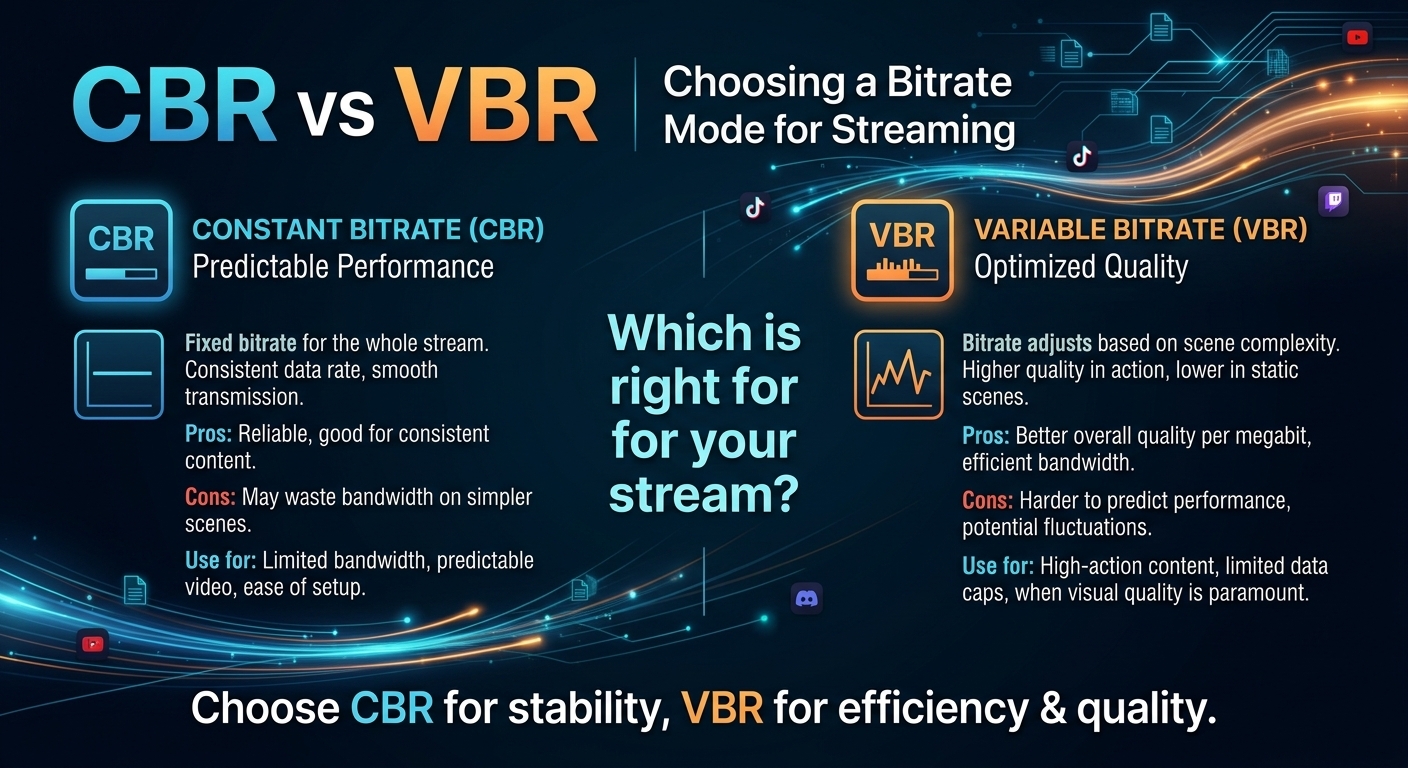
For most on-demand video, capped variable bitrate (VBR) wins the cbr vs vbr decision: it spends bits where the picture ...