
Learn
Lossy vs Lossless Compression: Images, Video and Audio
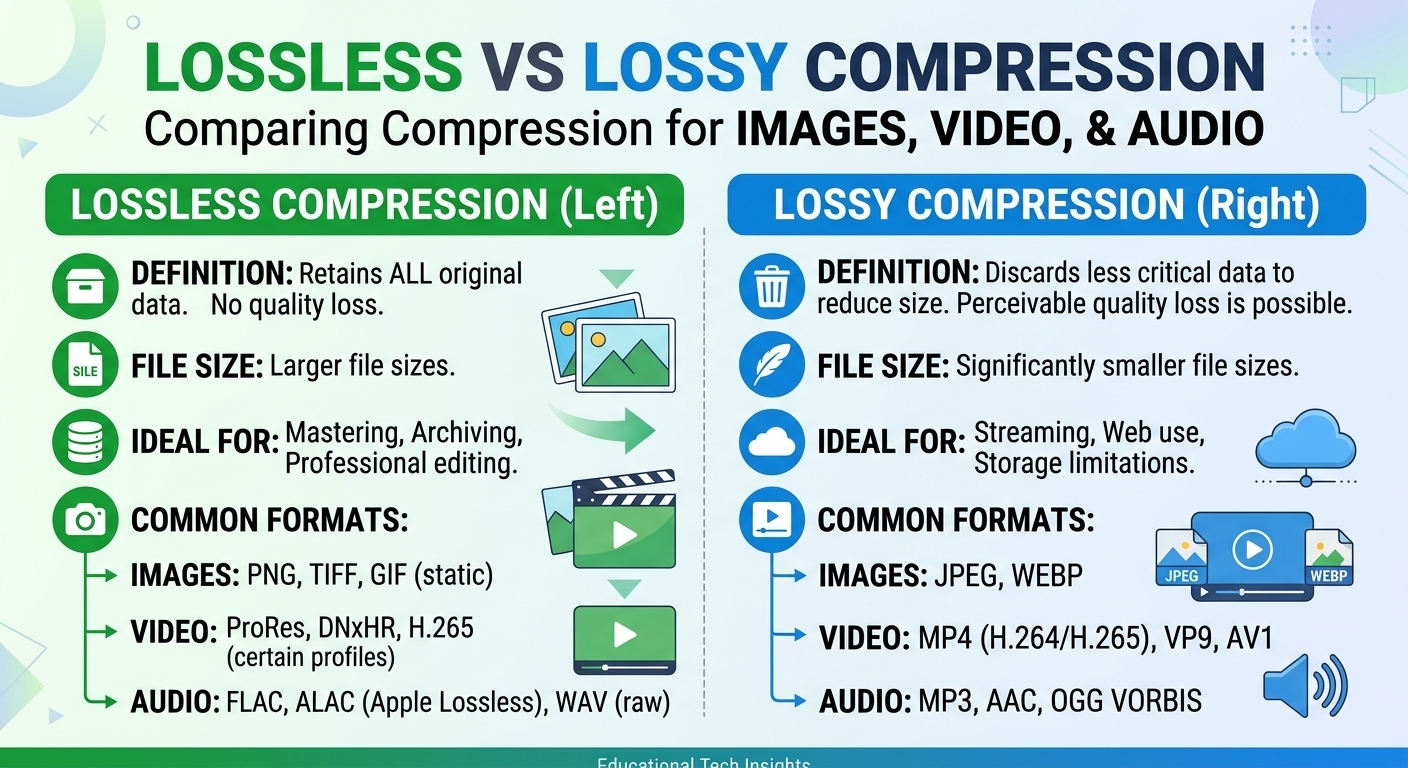
Lossy vs lossless compression comes down to one trade: lossless compression rebuilds every original bit and typically ...
In Q1 2026, global video traffic crossed 72% of all downstream internet bytes. Yet the median time-to-first-frame for live streams still hovers around 2.8 seconds on mobile networks, and rebuffer ratios above 1% correlate directly with 12–18% viewer abandonment per incident. The gap between "we have a CDN" and "we have a video streaming CDN architecture that actually works under load" is where revenue leaks. This article gives you a concrete framework: serverless CDN architecture for video streaming, from ingest through edge delivery, with the cost math, the failure modes nobody talks about, and a decision matrix for choosing between serverless and traditional CDN topologies based on your actual workload profile.
The economics shifted. As of early 2026, three converging trends make serverless CDN architecture the default choice for new video platforms rather than an experiment:
If your platform still runs a static CDN config with origin-side transcoding and manual scaling rules, you are carrying technical debt that directly impacts QoE during every traffic spike.
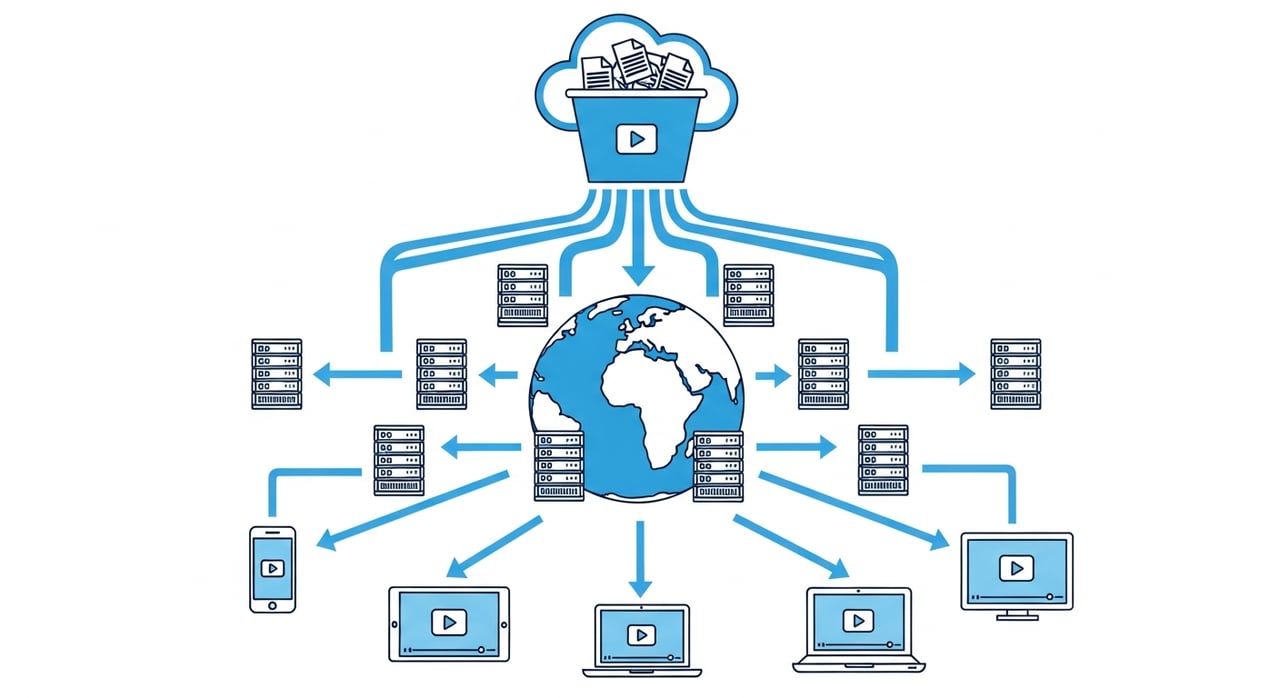
Ingest starts with RTMP, SRT, or increasingly RIST for contribution feeds. The encoding tier, running as event-triggered containers or serverless functions, produces an ABR ladder. In 2026, the practical standard for VOD is per-title encoding with content-aware bitrate selection; for live, hardware-accelerated instances spin up on demand and terminate when the stream ends. You pay for encode-minutes, not reserved GPU capacity.
Object storage serves as the canonical origin for VOD segments and manifests. For live, origin-shield nodes front ephemeral packager outputs. A critical 2026 pattern: decouple packaging from encoding. Packagers run as stateless serverless containers that read encoded mezzanine chunks and emit HLS, DASH, or CMAF segments on request. This eliminates packaging as a scaling bottleneck during simultaneous multi-format delivery.
The CDN edge layer handles the bulk of viewer-facing traffic. For VOD, cache-hit ratios above 95% are standard with proper TTL tuning. Live streaming is harder: segment TTLs of 1–4 seconds mean cache fill races between edge nodes. The serverless pattern here is edge functions that perform request coalescing, so a thousand simultaneous requests for the same not-yet-available segment result in a single origin fetch rather than a thundering herd. This alone can cut origin load by 40–60x during peak concurrency.
This is where the architecture diverges most from traditional CDN setups. Edge functions handle:
Not every video workload benefits equally from a serverless CDN architecture. The matrix below maps workload characteristics to the topology that delivers better cost-efficiency and QoE outcomes, based on 2026-era pricing and capabilities.
| Workload Characteristic | Serverless CDN | Traditional CDN | Best For |
|---|---|---|---|
| Spiky live events (10x baseline) | Auto-scales, pay per invocation | Requires pre-provisioning or burst contracts | Serverless |
| Steady-state VOD catalog (predictable) | May overpay per-request at high volume | Committed pricing is cheaper at flat throughput | Traditional or hybrid |
| Per-viewer manifest personalization | Native edge-function support | Requires origin-side logic or middleware | Serverless |
| Ultra-low-latency (sub-3s glass-to-glass) | Edge coalescing + short TTL functions | Dedicated low-latency edge configs | Either, depending on vendor |
| Multi-region DRM enforcement | Token validation at edge with no origin call | Origin-based license servers, higher latency | Serverless |
| Budget-constrained high-volume egress | Per-GB cost can be optimized with right provider | Committed bandwidth contracts | Evaluate per-TB pricing |
The takeaway: serverless wins on burst handling and edge-side logic. Traditional wins on flat, predictable throughput where committed rates apply. Most production systems in 2026 are hybrid, routing spiky or logic-heavy traffic through serverless paths while keeping bulk VOD egress on volume-committed CDN tiers.
Architectures look great in diagrams. They prove themselves in failure. Here are the failure modes specific to serverless CDN video streaming that your runbooks should cover.
When a new live segment becomes available, thousands of edge nodes may simultaneously request it from origin. Without request coalescing, your origin packager gets hammered. Diagnostic: monitor origin request rate per unique segment URI. If it exceeds your edge-node count, coalescing is broken or misconfigured. Mitigation: enable origin-shield with collapse-forwarding, and verify that your edge function awaits an in-flight fetch rather than spawning a parallel one.
Serverless edge functions that validate tokens can exhibit cold-start delays of 5–50ms depending on the runtime. For a manifest request that gates playback start, this adds directly to time-to-first-frame. Diagnostic: track p99 latency on your auth function separately from cache-hit latency. If the delta exceeds 20ms, implement keep-alive pings or pre-warm the function on a schedule aligned with known audience ramp-up windows.
Edge functions that rewrite manifests per-viewer can accidentally cache a personalized response as a generic one if the cache key does not include the relevant vary dimensions. One misconfigured header and every viewer gets the ad-insertion markers intended for a single geo. Diagnostic: audit cache keys for manifest endpoints. Every dimension your edge function branches on must be represented in the cache key or the response must be marked uncacheable.
During a live encoder failover, segment numbering may reset or gap. If the CDN continues serving stale segments from the old encoder because TTLs have not expired, viewers see frozen frames or playback errors. Mitigation: on encoder failover, issue a targeted purge for the affected stream's segment prefix, and have the edge function add a short no-cache window until the new encoder's segments are confirmed in cache.
Egress pricing remains the dominant cost line. As of Q2 2026, major hyperscaler CDN egress ranges from $0.05–0.08 per GB at moderate volumes, dropping to $0.02–0.04 per GB with enterprise commits. Serverless function invocations at the edge add $0.30–0.60 per million requests depending on compute duration.
For platforms delivering 100 TB/month of video, the math is instructive. At a hyperscaler rate of $0.04/GB, egress alone runs $4,000/month before function invocations, storage, or encoding costs. Providers that specialize in media delivery and offer volume-based pricing can cut that significantly. BlazingCDN's media delivery infrastructure, for instance, prices 100 TB at $415/month (as of October 2026). At 500 TB, the total is $1,815/month, and at 1 PB it reaches $3,315/month. For enterprises pushing 2 PB or more, pricing starts from $2.50 per TB and is quoted individually. That kind of pricing delta, about 10x cheaper than the hyperscaler rate above ($4,000 versus $415 at 100 TB), changes the unit economics of ad-supported and subscription VOD platforms entirely.
Serverless functions and edge compute scale with incoming requests, so there is no capacity ceiling to pre-provision. The CDN layer absorbs viewer concurrency through edge caching of segments with short TTLs, while serverless functions handle per-request logic like auth and manifest rewriting. The key constraint is origin-shield throughput during segment fill; request coalescing at the shield layer prevents origin overload.
In 2026, most edge runtimes execute WASM or V8 isolate functions in 1–5ms after warm-up. Cold starts range from 5–50ms depending on function size and runtime. For video manifest requests, the practical overhead is under 10ms p95 on warm functions, which is negligible compared to segment download times. Cold-start mitigation strategies include pre-warming and minimum instance counts.
Yes. Edge functions validate DRM license tokens and enforce geo-restrictions before serving encrypted segments. The segments themselves are stored encrypted at origin and cached encrypted at the edge. License acquisition still requires a round-trip to the DRM license server, but manifest-level access control and token validation happen entirely at the edge, reducing unauthorized request load on license infrastructure.
Instrument three layers: client-side QoE (rebuffer ratio, TTFF, bitrate), edge-function telemetry (invocation count, latency percentiles, error rate), and origin metrics (request rate per segment, cache-fill latency). Correlate client-side QoE drops with edge or origin anomalies. In 2026, most teams ship edge-function logs to a centralized observability platform and build alerts on p99 latency and error-rate thresholds per stream.
It depends on traffic shape. For steady-state high-volume VOD with predictable throughput, committed-rate traditional CDN contracts can be cheaper per GB. The serverless advantage is eliminating idle-capacity costs and handling burst traffic without overpayment. Most cost-optimized platforms in 2026 use a hybrid: serverless edge functions for logic-heavy paths and volume-committed CDN tiers for bulk segment delivery.
CMAF with low-latency extensions is the practical default for new deployments, offering compatibility with both HLS and DASH players from a single set of segments. HLS with TS segments remains necessary for legacy device reach. For ultra-low-latency use cases, HESP adoption is growing but still niche. Support at minimum CMAF-LL and HLS; add HESP only if your latency requirements are sub-2 seconds glass-to-glass.
If you are running a serverless CDN video streaming architecture, or planning to build one, here is the single highest-value diagnostic you can run this week: simulate a live segment publish with 10,000 concurrent edge requests for a segment that is not yet in cache. Measure how many requests actually reach your origin. If the answer is more than one per edge node, your request coalescing is broken, and your origin is absorbing load it should never see. Fix that before you optimize anything else. If you have run this test and have numbers to share, the engineering community benefits from real data. What origin fan-out ratios are you seeing in production?

Heavy traffic.
Light bill.
The CDN for video and large traffic
Learn
Lossy vs lossless compression comes down to one trade: lossless compression rebuilds every original bit and typically ...
Pricing - Pricing & Costs
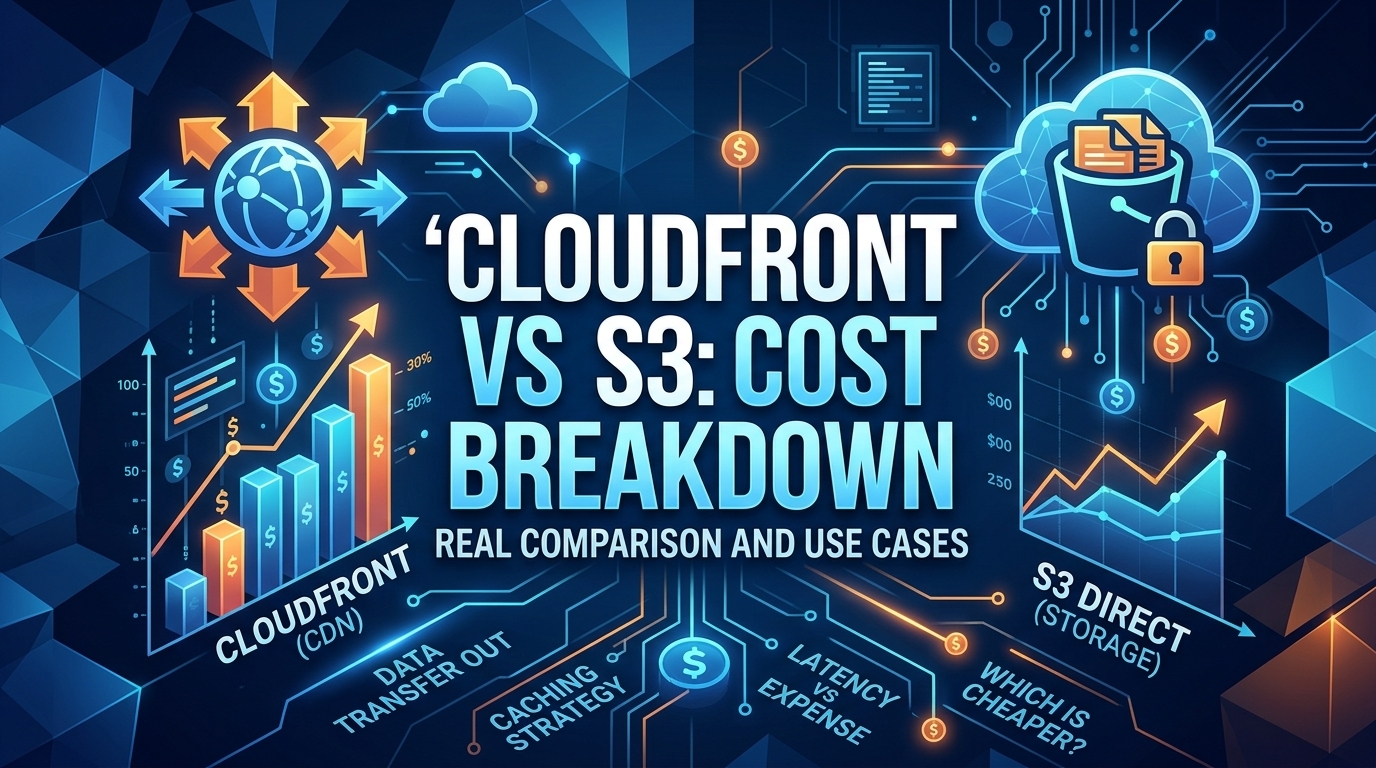
The CloudFront vs S3 decision depends more on object size than on traffic volume. At a 500 KB average response, 100 TB ...
Learn
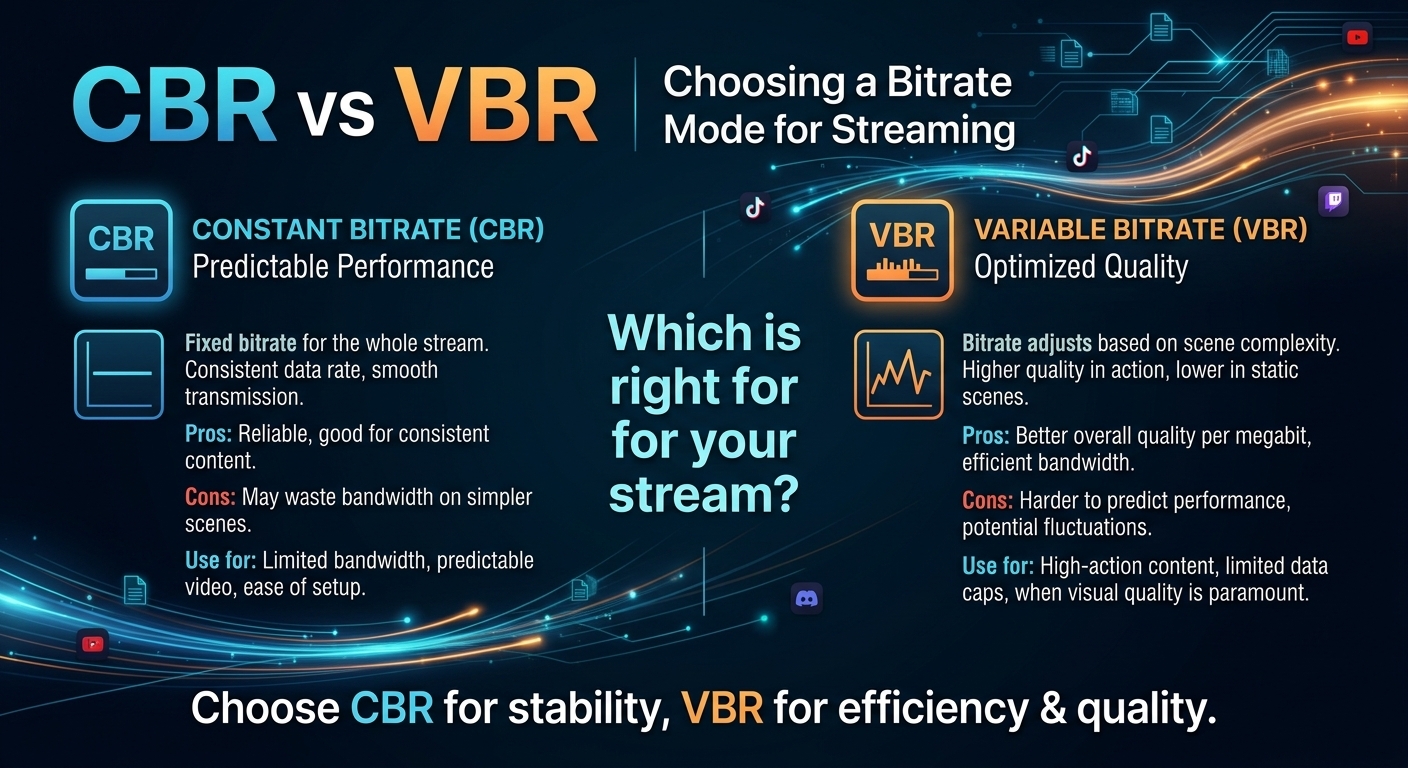
For most on-demand video, capped variable bitrate (VBR) wins the cbr vs vbr decision: it spends bits where the picture ...