
Learn
Lossy vs Lossless Compression: Images, Video and Audio
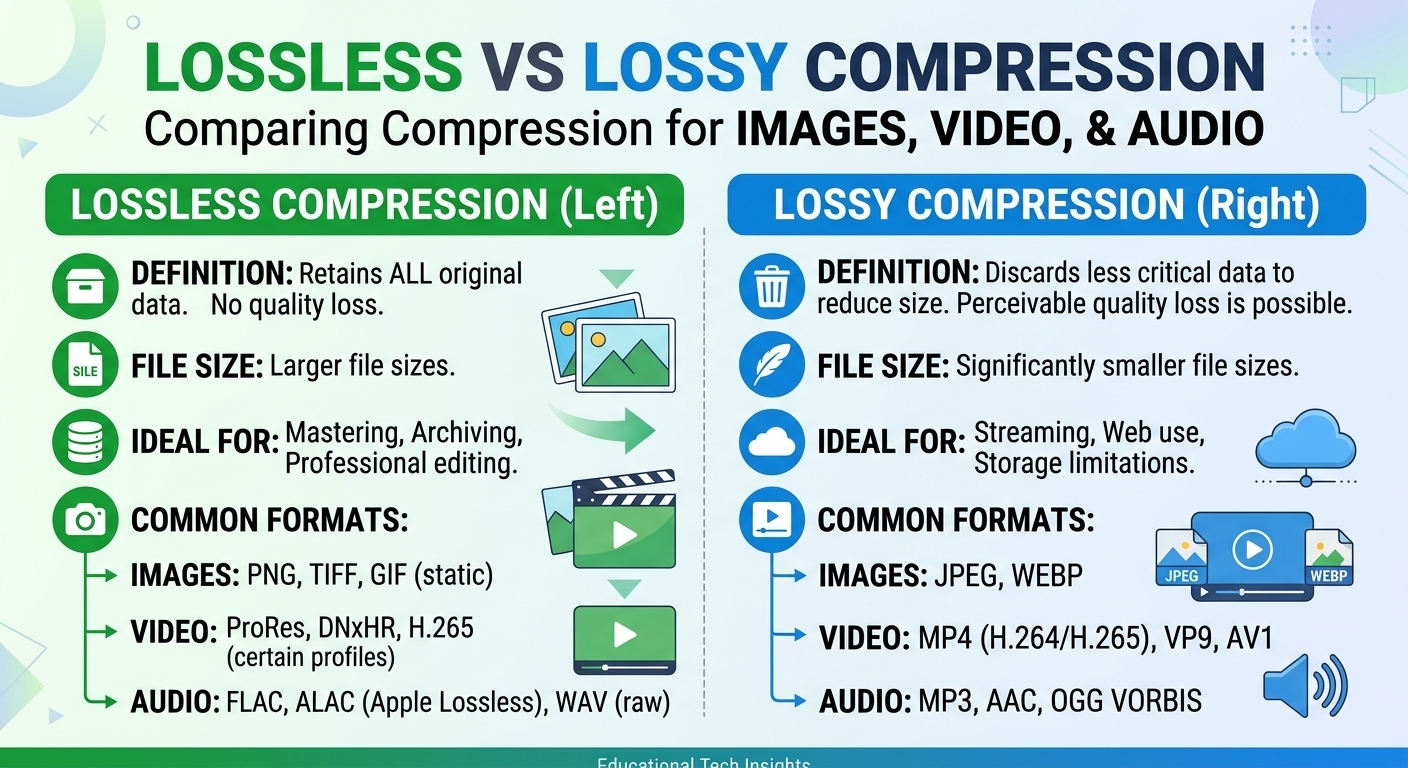
Lossy vs lossless compression comes down to one trade: lossless compression rebuilds every original bit and typically ...
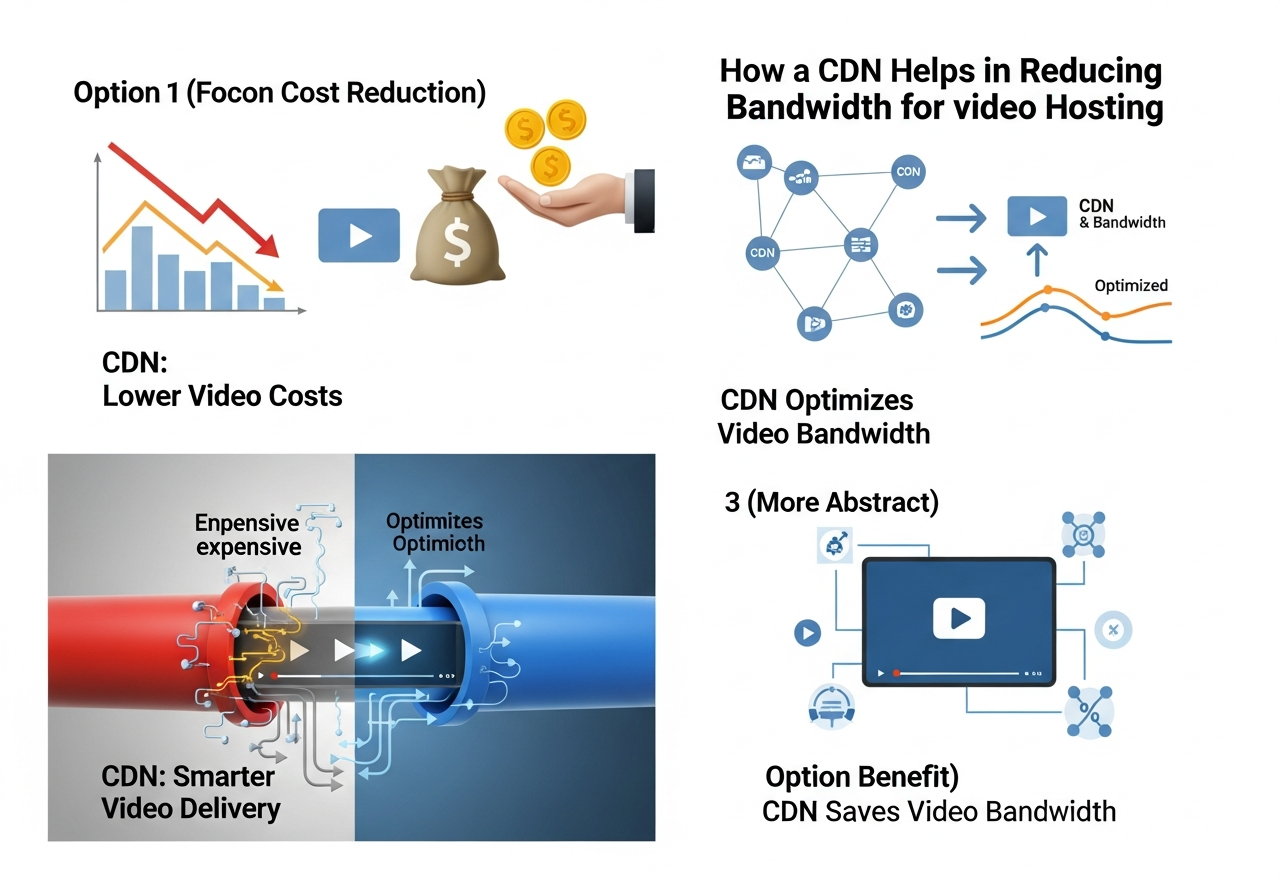
A single 4K live stream at 25 Mbps, sustained for four hours, pushes roughly 45 GB per viewer. Multiply that by 50,000 concurrent viewers and you are looking at 2.2 PB of egress from a single event. At hyperscaler list prices (as of Q2 2026, AWS CloudFront still charges $0.085/GB for the first 10 TB in North America), that one broadcast costs north of $180,000 in delivery alone. This is where a video CDN stops being a performance optimization and becomes a financial control plane. The gap between self-hosting egress and a well-negotiated CDN contract routinely sits at 40–70% for video workloads, yet most teams leave money on the table because they model bandwidth costs at the wrong layer. This article gives you a concrete cost-modeling framework, updated egress pricing comparisons for 2026, origin-offload arithmetic you can apply to your own traffic shape, and a failure-mode checklist the current top-10 results skip entirely.
Bandwidth cost projections break down when teams use flat per-GB assumptions across all traffic. Video workloads are spiky, heavy-tailed, and resolution-mixed. A 1080p HLS stream with six-second segments generates roughly 4.5 Mbps sustained. A 4K HEVC stream with HDR metadata sits closer to 18–25 Mbps. When your catalog serves both, your p95 egress rate can be 4–5x your average, and hyperscaler billing tiers punish you at the margin.
Three dynamics made this worse in 2026 specifically:
The savings from a streaming CDN come from four distinct mechanisms, and understanding which one dominates for your workload determines how much you can actually save.
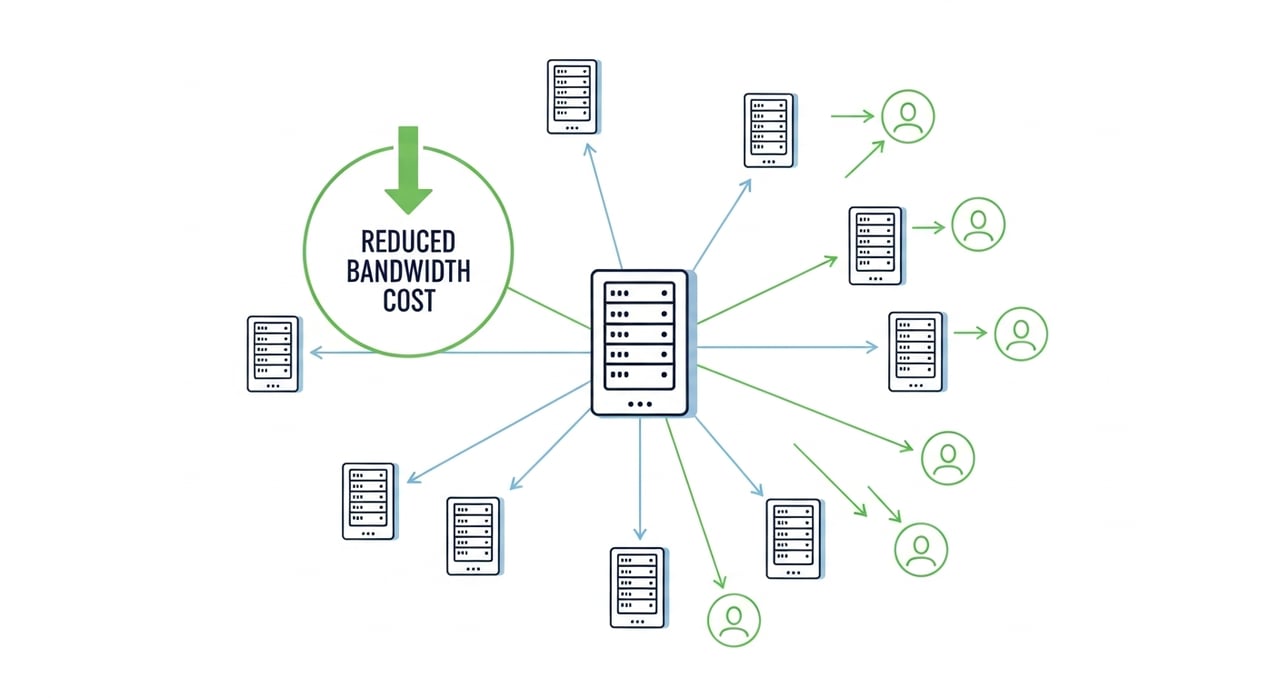
A well-tuned video CDN with mid-tier caching and origin shielding achieves 95–99% cache-hit ratios on VOD catalogs. For a platform serving 500 TB/month, moving from 85% to 97% origin offload eliminates roughly 60 TB of origin egress. At $0.09/GB origin egress (AWS us-east-1, standard tier, 2026), that is $5,400/month recovered from origin alone, before you account for CDN-edge savings.
Hyperscaler CDN pricing in 2026 ranges from $0.02/GB (committed-use, high-volume) to $0.085/GB (on-demand, low tier). Specialized video CDN providers operate at $0.0025–$0.005/GB at scale because their networks are purpose-built for large-object delivery rather than general web acceleration. The delta is 4–34x depending on volume and commitment.
HLS and DASH segment sizes, TTL policies, and manifest freshness intervals directly control cache efficiency. A six-second segment TTL set too low (under 30 seconds for VOD) forces unnecessary origin validation. A segment duration mismatch between encode ladder and CDN cache-key structure creates duplicate cache entries. These misconfigurations erode savings silently.
A CDN that can absorb 10x baseline traffic without provisioning charges turns unpredictable live-event costs into flat operational expenses. Without this, a viral clip or a playoff game can generate a single-day bandwidth bill that exceeds the entire month's budget.
Flat per-GB comparisons are misleading because commit structures, overage rates, and included features vary wildly. The table below normalizes cost per TB at three volume tiers, using publicly available or documented pricing as of Q2 2026.
| Provider | 25 TB/mo ($/TB) | 500 TB/mo ($/TB) | 2 PB/mo ($/TB) |
|---|---|---|---|
| AWS CloudFront (on-demand) | ~$85 | ~$60 | ~$20–40 (negotiated) |
| Google Cloud CDN | ~$80 | ~$55 | ~$20–35 (negotiated) |
| Fastly (committed) | ~$40 | ~$20 | ~$8–12 (negotiated) |
| BlazingCDN | $4 | $3 | $2 |
At the 500 TB tier, the cost difference between a hyperscaler CDN and a purpose-built video hosting CDN can exceed $25,000/month. Over a 12-month contract, that is $300,000 in delivery cost alone. BlazingCDN's volume pricing starts at $5/TB for lower-volume platforms and scales down to $2.50/TB at volume (as of October 2026), with Anycast routing and built-in failover for demand spikes.
Most articles about video CDN cost savings assume a clean deployment. Production reality is messier. These are the failure modes that silently push your effective cost-per-GB back toward self-hosting levels.
Server-side ad insertion (SSAI) platforms frequently append unique session or tracking parameters to segment URLs. Each unique URL is a cache miss. If your SSAI pipeline generates per-viewer segment URLs without a cache-key normalization rule, your edge hit ratio on ad-adjacent segments can drop below 10%. The fix is a CDN-side cache-key transformation that strips or normalizes SSAI parameters before lookup.
When a live event begins, every player simultaneously requests the initial manifest. If the manifest TTL is zero or very short and the CDN does not coalesce origin requests, you get N origin fetches for the same byte range within milliseconds. This is the most common cause of origin overload at stream start. Request collapsing and stale-while-revalidate on manifests are mandatory for live at scale.
Running VOD, live, and software downloads through the same CDN configuration creates cache contention. Large software packages can evict long-tail VOD segments from mid-tier caches, spiking origin pull rates for your video catalog. Workload isolation via separate cache domains or cache-tag partitioning prevents this.
Serving a 12-rung ABR ladder when 80% of your viewers settle on two or three renditions wastes cache space on rungs that are fetched once and evicted. Analyze your ABR session logs quarterly. Prune renditions that account for less than 2% of watch time. This directly improves cache efficiency and reduces origin pulls.
Not every video CDN is the right fit for every workload. Use this matrix to match your traffic profile to the CDN characteristics that actually matter.
| Workload Profile | Key CDN Requirement | Best-Fit CDN Type |
|---|---|---|
| Long-tail VOD (100K+ titles, low per-title views) | Deep mid-tier cache, large SSD/NVMe edge storage | Specialized video CDN with tiered caching |
| Live sports/events (high concurrency, short duration) | Request collapsing, sub-second TTL support, burst capacity | CDN with live-optimized edge and elastic scaling |
| UGC platform (unpredictable popularity, rapid ingest) | Fast cache population, purge latency under 200ms | Multi-CDN with real-time switching |
| EdTech / enterprise VOD (predictable catalog, global learners) | Consistent regional performance, low cost/TB | Cost-optimized CDN with broad regional coverage |
A CDN caches video segments at edge and mid-tier nodes, serving 95–99% of requests without touching your origin. This eliminates origin egress charges (typically $0.05–$0.09/GB at hyperscalers) and replaces them with CDN delivery rates that can be 10–40x lower at volume. The savings compound because the heaviest-watched content has the highest cache-hit ratio.
Self-hosting on bare metal with 10 Gbps unmetered transit (around $1,500–$3,000/month per server in 2026) becomes competitive only if your traffic is geographically concentrated and you can saturate the pipe consistently. Once you need three or more regions, or your peak-to-mean ratio exceeds 3:1, a CDN is cheaper because you pay for delivered bytes rather than provisioned capacity.
Yes, and the effect is largest for live because concurrency is high but the content is identical across viewers. A live segment published once is served to thousands from cache within its TTL window. The key requirement is request collapsing at the edge so the origin sees one fetch per segment, not one per viewer. Without collapsing, live CDN costs can approach self-hosting costs.
For a catalog with typical Zipf-distributed popularity, a well-configured CDN should achieve 97%+ origin offload. If you are below 95%, investigate cache-key fragmentation (query strings, cookies in the cache key), insufficient mid-tier capacity, or TTLs set below segment duration. Each percentage point of offload recovered at 500 TB/month saves roughly $4,500 in origin egress at hyperscaler rates.
Instrument three metrics monthly: origin egress in bytes (not requests), CDN cache-hit ratio by content type (manifest vs. segment vs. other), and effective cost per GB delivered including overage. Compare effective $/GB against your contract rate. If effective cost exceeds contract rate by more than 15%, you have a cache-efficiency or overage problem, not a pricing problem.
Pull your last 30 days of origin egress logs and CDN analytics. Calculate your actual origin offload ratio per content type: manifests, video segments, thumbnails, and API calls separately. If your segment offload is below 96%, you are leaving money on the table and the fix is almost certainly in cache-key configuration or TTL policy, not in switching providers. If it is above 96% and your effective $/GB delivered is still above $5, your pricing tier is the bottleneck. Run the numbers, then negotiate or migrate. That single exercise will tell you more about your real delivery costs than any vendor pitch deck.

Heavy traffic.
Light bill.
The CDN for video and large traffic
Learn
Lossy vs lossless compression comes down to one trade: lossless compression rebuilds every original bit and typically ...
Pricing - Pricing & Costs
The CloudFront vs S3 decision depends more on object size than on traffic volume. At a 500 KB average response, 100 TB ...
Learn
For most on-demand video, capped variable bitrate (VBR) wins the cbr vs vbr decision: it spends bits where the picture ...