
Learn
Lossy vs Lossless Compression: Images, Video and Audio
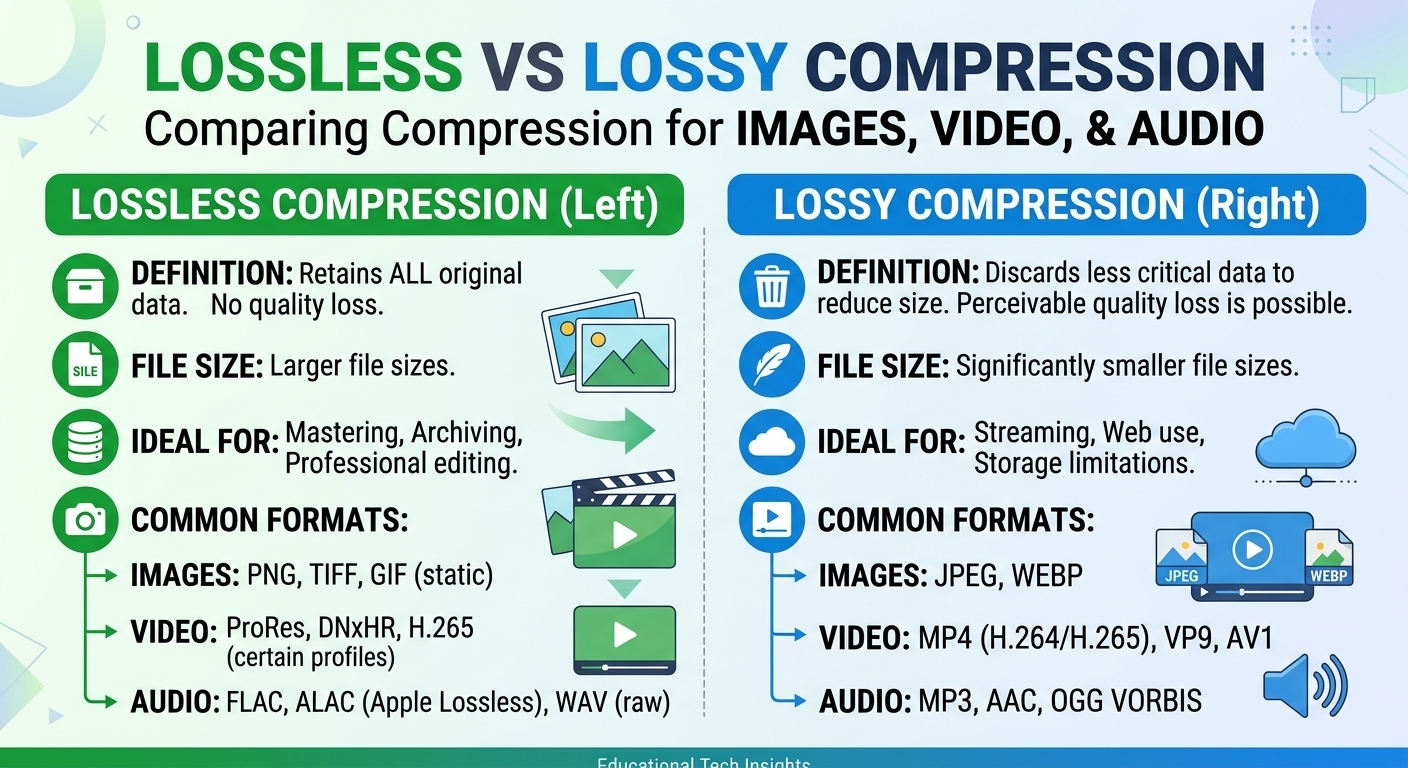
Lossy vs lossless compression comes down to one trade: lossless compression rebuilds every original bit and typically ...
Median time-to-first-frame for web video crossed 1.8 seconds globally in Q1 2026, up 14% year-over-year according to real-user monitoring aggregates. For an indie creator embedding a product walkthrough on a landing page, or a seed-stage startup streaming onboarding content, that kind of latency erodes conversion before the viewer even sees the play button. The fix is almost always delivery infrastructure, not encoding. This article gives you a concrete comparison of 11 free video hosting platform options available right now in 2026, a workload-profile decision matrix you will not find in any of the current page-1 results, and the technical criteria that actually matter when your monthly bandwidth budget is zero dollars.
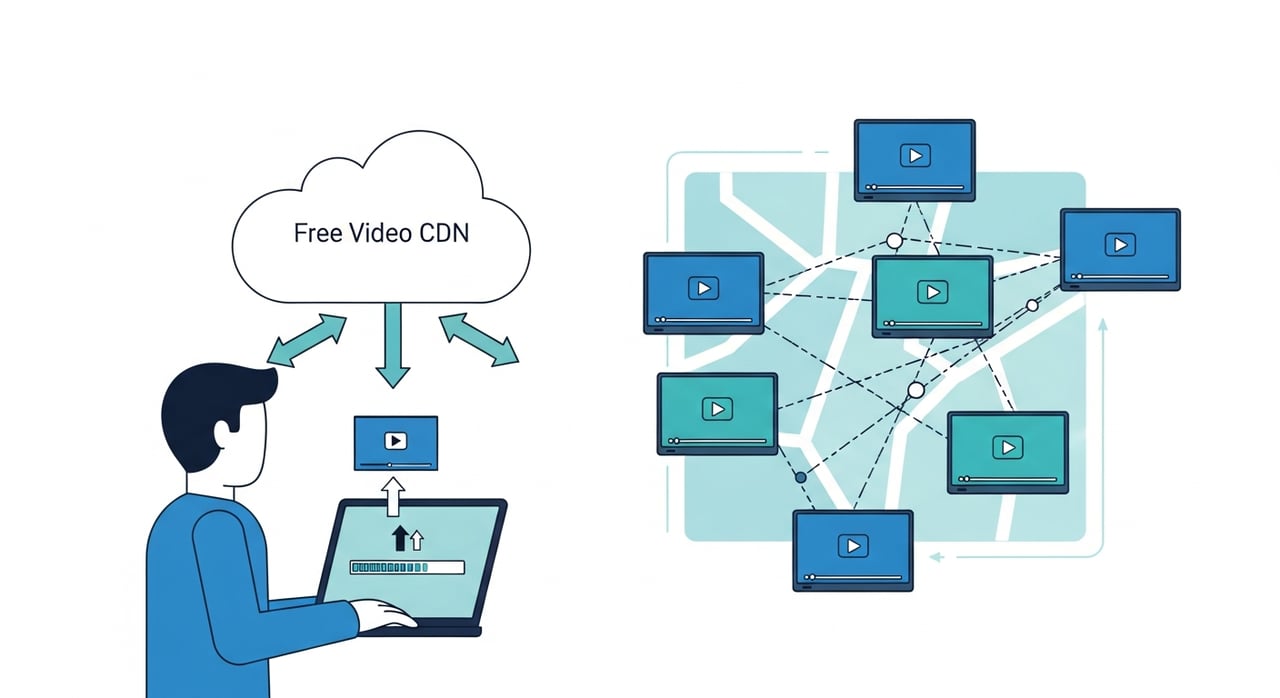
Origin-direct delivery from a single-region object store is a recipe for rebuffering. Even with HTTP/3 and QUIC adoption above 40% of browser traffic as of early 2026, physics still wins: a viewer in Jakarta pulling a 1080p HLS manifest from us-east-1 will experience segment fetch latencies that adaptive bitrate algorithms cannot fully mask. A free video CDN, even a modest one, collapses that RTT by serving segments from a nearby cache node. For creators and startups pre-revenue or sub-$5K MRR, the question is not whether to use a CDN—it is which free tier gives you enough headroom before you hit a paywall or an ad injection you did not consent to.
Each entry below is evaluated on five dimensions that actually affect your architecture: storage quota, monthly egress or view cap, player control (ad injection, branding), protocol support (HLS, DASH, progressive), and API availability. All data reflects publicly documented free-tier terms as of May 2026.
Unlimited storage. Unlimited egress. The catch: you cede player UX entirely. Pre-roll and mid-roll ads can appear on embedded players even on unlisted videos if your channel is in the YouTube Partner Program, and YouTube reserves the right to show ads on non-monetized content per its 2024 ToS update (still in effect). No HLS endpoint access. No API control over adaptive bitrate ladder selection. Best for: reach-first strategies where brand control is secondary.
As of 2026 Vimeo still offers a limited free plan, but it has been progressively squeezed: 500 MB/week upload cap, no custom player colors, no domain-level embed restrictions. HLS playback is handled internally; you get no manifest URL. Ad-free, which is genuinely useful for portfolio sites.
Cloudflare's Stream product is paid ($1/1,000 minutes stored, $5/1,000 minutes delivered as of Q1 2026), but creative architects combine the free 100,000 Workers requests/day with R2 free-tier storage (10 GB) to self-serve HLS segments. You handle transmuxing yourself. This is the most technically demanding option but gives full HLS video hosting control with zero egress fees from R2.
Bunny.net's Stream service starts with a 14-day trial, then bills at $0.005/minute stored and $0.01/GB delivered. Not strictly free, but the micro-pricing means a startup serving 500 GB/month pays around $5. Native HLS and DASH. Customizable player with no forced ads.
Mux offers free video hosting for up to 10 video assets and 20 minutes of encoding per month as of 2026. The API is first-class—if you are building a SaaS product that needs programmatic video management, Mux's data and delivery APIs are the benchmark. HLS with signed URLs. No ad injection. Limited scale on the free tier, but ideal for prototyping.
Streamable's free tier allows 250 MB uploads, with videos capped at 10 minutes. They inject a watermark on free-tier content. No HLS manifest access. Decent for social sharing and quick embeds, weak for anything production-grade.
Dailymotion offers an embeddable player with no storage limits for verified partners. Monetization (ads) is optional but enabled by default. Player customization is limited. HLS delivery is handled server-side. Viable if your audience skews toward markets where Dailymotion has strong presence (France, parts of MENA).
Unlimited storage. No ads. No player customization. Derivative files (including HLS-like segmented MP4s) are auto-generated. Upload via S3-compatible API. The tradeoff: delivery speed is inconsistent, and cache behavior is unpredictable. Best suited for archival use cases, not low-latency product demos.
Peertube uses WebRTC-based peer-to-peer delivery to offset origin bandwidth. Free as in software. You supply the server. HLS is supported natively since v5. The P2P mesh works well at 50–200 concurrent viewers; beyond that, you need CDN-backed delivery anyway. Ad-free by design. Strong option for community-driven content platforms.
Backblaze B2 free tier: 10 GB storage, 1 GB/day egress. Pair it with Cloudflare's Bandwidth Alliance and egress from B2 to Cloudflare is zero-rated. You serve video as progressive download or self-segment into HLS using FFmpeg and host manifests on B2. No player provided—bring your own (Video.js, hls.js). True ad-free video hosting with full control, but significant assembly required.
Following Gfycat's shutdown in 2023, short-form video hosting fragmented. Imgur still supports video up to 60 seconds on free accounts (as of 2026). MP4 only, no HLS, no API. Useful exclusively for micro-content: GIF replacements, short product clips, social embeds.
This is the section you will not find elsewhere. Choosing a free video hosting platform is not about feature lists—it is about matching delivery characteristics to your actual workload. Below is a decision matrix mapping five common indie/startup workload profiles to the best-fit free option.
| Workload Profile | Concurrency | Player Control Needed | Best Free Option | Outgrowth Path |
|---|---|---|---|---|
| SaaS onboarding videos (5–15 clips, <3 min each) | Low (<50) | High (branded, no ads) | Mux Free Tier | Mux paid or self-hosted HLS |
| Portfolio / showreel (1–10 long-form videos) | Low (<20) | Medium (ad-free) | Vimeo Basic | Vimeo Pro or B2 + Cloudflare |
| Community platform (user-uploaded, federated) | Medium (50–200) | Full (self-hosted) | Peertube | Peertube + CDN origin shield |
| Marketing landing page (1–3 hero videos, high traffic) | High (1,000+) | Low (embed OK) | YouTube unlisted | Paid CDN with custom player |
| Developer docs with embedded tutorials | Low–Medium | High (no distractions) | B2 + Cloudflare | Dedicated video streaming CDN |
The "Outgrowth Path" column is deliberate. Every free tier has a ceiling. The question is whether the migration path from free to paid is graceful (Mux, Bunny) or a full re-architecture (YouTube to self-hosted HLS). Choose accordingly.
Three shifts since 2025 are worth noting. First, Cloudflare's R2 egress-free model has made the B2 + Cloudflare stack less unique—R2 alone now handles the same pattern with fewer moving parts. Second, Mux expanded its free tier from 5 to 10 assets in early 2026, making it a realistic prototyping environment for SaaS apps. Third, YouTube's enforcement of ad display on embedded non-monetized content has become more aggressive, pushing creators who need ad-free video hosting toward self-hosted or Vimeo-based solutions.
Free tiers break in predictable ways: an HN front-page hit that blows past your egress cap in two hours, a customer demo that buffers because your origin is in a single region, or a compliance requirement (SOC 2, GDPR data residency) that no free-tier provider will contractually guarantee. When that inflection point arrives—and for any startup with traction, it will—the move to a paid video streaming CDN should be pre-planned, not reactive.
For teams that outgrow free tiers but are not ready for hyperscaler pricing, BlazingCDN's media delivery infrastructure is worth benchmarking. Starting at $5 per TB and scaling down to $2.50 per TB at volume (as of October 2026), it offers Anycast routing with built-in failover at a price well below hyperscaler pay-as-you-go rates. For a startup burning through 5–50 TB/month of video egress, that pricing gap compounds fast.
Mux's free tier (10 assets, 20 encoded minutes/month as of 2026) gives you signed HLS URLs and a proper API. For prototyping and early customers, it is the cleanest integration. If you need more assets without paying, the Backblaze B2 + Cloudflare stack with hls.js gives you full control but requires self-managed transcoding.
Yes, but with constraints. Vimeo Basic, Mux free tier, Internet Archive, Peertube, and the B2 + Cloudflare combination all serve video without ad injection. YouTube and Dailymotion do not guarantee ad-free playback on free accounts, even for unlisted or embedded content.
Transcode your source file into HLS segments and manifests using FFmpeg with the hls_segment_type fmp4 flag. Upload segments and the master .m3u8 to Cloudflare R2 or Backblaze B2. Serve them through Cloudflare's CDN (free plan). Point hls.js in your frontend at the manifest URL. Total infrastructure cost: zero, assuming you stay within free-tier storage and request limits.
Cloudflare R2: unlimited egress (zero-rated). Backblaze B2: 1 GB/day free (zero-rated via Bandwidth Alliance to Cloudflare). Streamable: soft-limited via file size and view throttling. YouTube/Dailymotion: no egress cap but you lose player control. Plan for roughly 1–2 GB per hour of 1080p HLS delivery per concurrent viewer when estimating headroom.
Three signals: your P95 time-to-first-frame exceeds 2 seconds in a key audience region, you need contractual SLA guarantees for customer-facing video, or your monthly egress consistently exceeds the free-tier cap and you are rate-limited or throttled. Any one of those justifies moving to paid delivery.
Pick the workload profile from the decision matrix above that most closely matches your current product. Instrument time-to-first-frame and rebuffer ratio on your existing video embeds using the Performance Observer API or a lightweight RUM snippet. Run that for seven days. If your P75 TTFF is under 1.2 seconds and rebuffer ratio is below 0.5%, your current setup is fine—revisit in a quarter. If not, you now have the data to justify migrating to the free-tier option (or paid tier) that fits. What are your TTFF numbers looking like?

Heavy traffic.
Light bill.
The CDN for video and large traffic
Learn
Lossy vs lossless compression comes down to one trade: lossless compression rebuilds every original bit and typically ...
Pricing - Pricing & Costs
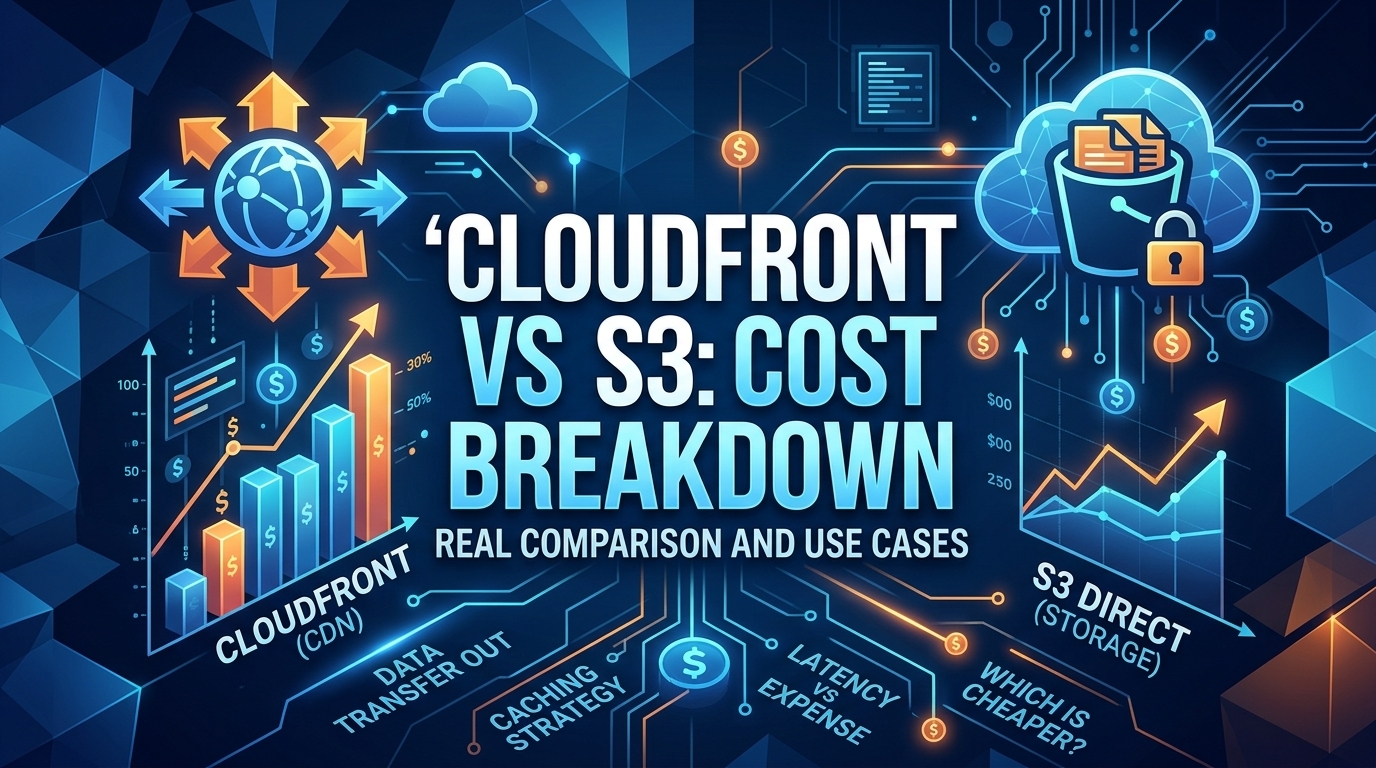
The CloudFront vs S3 decision depends more on object size than on traffic volume. At a 500 KB average response, 100 TB ...
Learn
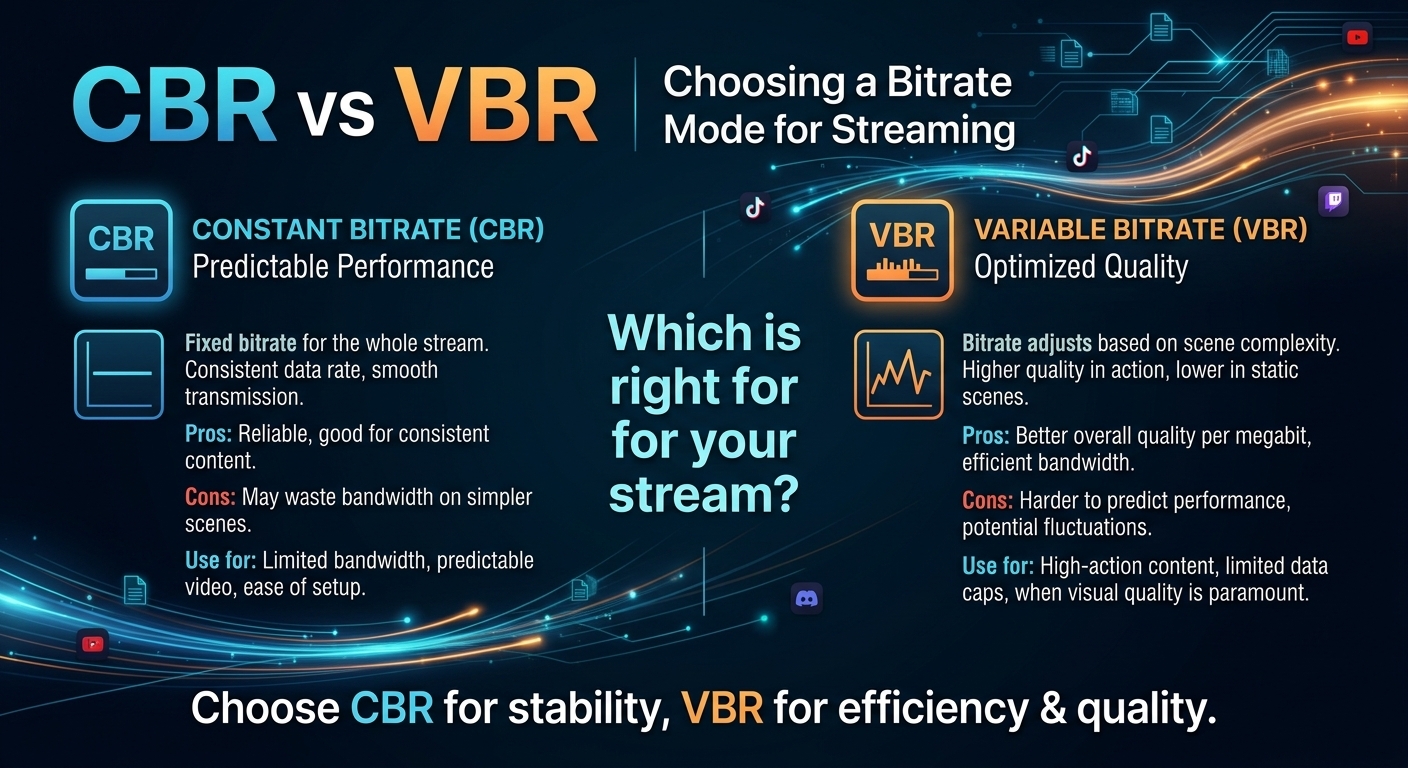
For most on-demand video, capped variable bitrate (VBR) wins the cbr vs vbr decision: it spends bits where the picture ...