
Learn
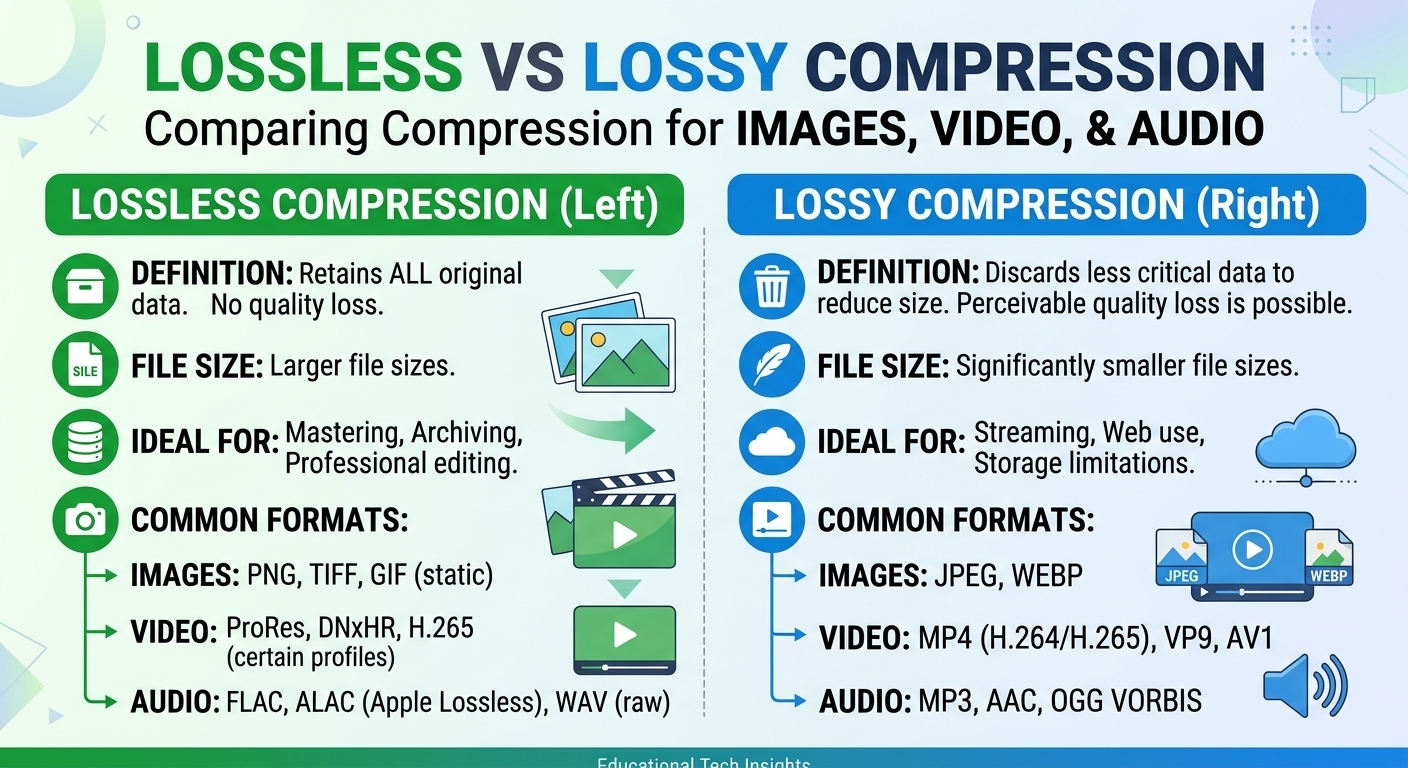
Lossy vs Lossless Compression: Images, Video and Audio
Lossy vs lossless compression comes down to one trade: lossless compression rebuilds every original bit and typically ...

Fastly's Q1 2026 earnings showed 14% YoY revenue growth, but its compute-at-edge pricing adjustments in March 2026 pushed per-request costs up roughly 18% for customers running high-invocation serverless workloads. That price shift, combined with Fastly's continued focus on a relatively narrow set of enterprise verticals, has made evaluating Fastly alternatives a practical exercise rather than a hypothetical one. This article gives you 13 options with a workload-profile decision matrix, current 2026 pricing where available, and the architectural trade-offs that actually matter when you're migrating off Varnish-based edge config at scale.
Three things changed since 2025. First, Fastly's Compute platform (formerly Compute@Edge) matured but got more expensive per million invocations. Second, Cloudflare and AWS both shipped significant edge-compute updates in late 2025 and early 2026 that narrowed Fastly's Wasm-first architectural advantage. Third, the CDN market's overall price-per-TB floor dropped again—driven by hyperscaler bundle economics and newer entrants with lean PoP strategies—making Fastly's bandwidth pricing less competitive for high-volume delivery workloads.
If your primary use case is VCL-heavy cache logic and you've built tooling around it, Fastly still works. But if you're re-evaluating cost, multi-CDN resilience, or edge-compute portability, the alternatives below are worth benchmarking against your actual traffic profile.
Best for: high-volume media delivery, software distribution, and enterprises that need predictable bandwidth economics without hyperscaler lock-in. BlazingCDN keeps pricing low at scale: volume-based tiers start at $5/TB and scale down to $2.50/TB at volume (as of October 2026). For enterprises pushing hundreds of terabytes monthly, that pricing gap against Fastly's typical $0.008–$0.012/GB range is substantial. Configuration is flexible enough to support multi-origin failover and fast scaling under demand spikes without the negotiation cycles you'd expect from hyperscaler CDN contracts. Compare BlazingCDN's architecture and pricing directly.
As of Q1 2026, Cloudflare runs 330+ locations and has pushed Workers to support Python alongside JavaScript and Rust. The free tier still can't be beat for small projects. Enterprise plans (negotiated, typically $5,000+/month) include advanced bot management, Spectrum for non-HTTP protocols, and R2 for zero-egress object storage. The trade-off: Cloudflare's cache purge granularity and instant purge latency still lag behind Fastly's sub-200ms global purge for customers who rely on that for content invalidation at scale.
Still the largest edge network globally (over 4,200 locations as of 2026). Post-Linode integration is now fully branded as Akamai Connected Cloud, giving it a genuine compute+delivery story. Enterprise pricing remains opaque and high—expect $0.01–$0.02/GB for CDN delivery depending on commit. Best suited for organizations needing regulatory-grade security posture and the deepest ISP peering relationships available.
CloudFront's 2026 updates include CloudFront Functions V2 with expanded runtime limits (now 5ms execution for viewer-request events) and tighter Lambda@Edge cold-start performance. Pricing starts at $0.085/GB for the first 10 TB in North America, dropping with volume and savings plans. The real value is integration: if your origin is S3 or ALB, the data-transfer-out discount between AWS services and CloudFront makes it the default for AWS-native stacks. The weakness: multi-cloud or non-AWS origins pay more and get less configurability than Fastly's VCL.
Tight coupling with Cloud Load Balancing and Cloud Armor. As of 2026, Media CDN (Google's separate media-delivery product) supports QUIC-native delivery and LL-HLS natively. Standard Cloud CDN pricing is $0.08/GB for the first 10 TB in NA. Best for GCP-native workloads; limited appeal if you're multi-cloud.
Azure CDN now consolidates under Azure Front Door as the primary SKU for new deployments, with the legacy Verizon/Akamai tiers still available but not recommended. Front Door Premium includes built-in private link origins and managed rule sets. Pricing is $0.081/GB (first 10 TB, NA). The ecosystem play: if your backend is Azure App Service or Blob Storage, the integration is zero-config.
Edgio emerged from the Limelight/Layer0 merger. As of 2026, it is operating under restructured ownership after its 2024 Chapter 11 filing. If you're considering Edgio, verify current SLA guarantees and financial stability directly—its network and edge logic capabilities are strong, but operational continuity risk is real.
Pay-as-you-go at $0.04/GB (NA/EU) with no monthly minimums. Good fit for small-to-mid-scale static asset delivery. Limited edge compute, limited origin shield options. Not an enterprise play, but a clean and affordable alternative for straightforward caching.
$0.01/GB in NA/EU as of 2026, with Bunny Optimizer for image processing at the edge. Bunny Script (their edge-compute product) is still early but functional for lightweight request manipulation. Strong developer UX. The limitation: no enterprise-grade SLA commitments or dedicated account engineering at this price point.
Repositioned toward edge compute and VM-at-edge workloads. Pricing is container/VM-based rather than pure bandwidth. Relevant if your use case is edge-native applications rather than content delivery. Less competitive for pure CDN workloads.
Security-first CDN. If your primary driver is application-layer protection with CDN as a secondary concern, Imperva's integrated approach works. CDN performance and cache hit ratios are typically lower than dedicated CDN providers. Priced per site/application, not per GB.
Purpose-built for frontend frameworks (Next.js, obviously). Not a general-purpose CDN. If your workload is a React/Next.js app and you want zero-config edge delivery with ISR, Vercel is unbeatable in developer experience. For anything else—video, large binary delivery, multi-origin architectures—look elsewhere.
Strong presence in APAC with competitive pricing ($0.03–$0.05/GB in mainland China). The right choice if your audience is primarily in China or Southeast Asia and you need ICP-licensed delivery. Limited utility for NA/EU-centric workloads.
This is the section the top 10 results don't have. Instead of ranking by generic "features," match your actual workload profile to the provider that optimizes for it.
| Workload Profile | Primary Concern | Best Fit (2026) | Runner-Up |
|---|---|---|---|
| High-volume video/media (100 TB+/mo) | Cost per TB | BlazingCDN | Bunny.net |
| Edge compute (Wasm/JS at request path) | Runtime flexibility | Cloudflare Workers | CloudFront Functions V2 |
| AWS-native stack (S3/ALB origin) | Integration, DTO savings | CloudFront | Akamai |
| GCP-native with Cloud Armor | Security + delivery | Google Cloud CDN / Media CDN | Cloudflare |
| Regulatory/compliance-heavy enterprise | ISP peering, audit trails | Akamai | Imperva |
| Frontend framework (Next.js/React) | DX, zero-config | Vercel | Cloudflare Pages |
| China / APAC-heavy audience | Regional latency, ICP | Alibaba Cloud CDN | Akamai |
The matrix above is the fastest way to narrow your shortlist. Match your dominant workload, then benchmark the top two against your real traffic using synthetic and RUM data before committing.
BlazingCDN and Bunny.net are among the lower-priced options per TB for bandwidth-heavy workloads as of 2026. BlazingCDN starts at $5/TB and scales down to $2.50/TB at volume (as of October 2026). Bunny.net is competitive at smaller volumes but lacks enterprise SLA commitments.
Fastly Compute supports Wasm natively with Rust, Go, and JavaScript compilation targets. Cloudflare Workers now supports JavaScript, Python, and Wasm, with a larger ecosystem of pre-built integrations (KV, D1, R2, Queues). Fastly's cold-start performance is slightly better for Wasm-heavy workloads, but Cloudflare's broader runtime support and lower per-request pricing (first million requests free on the free tier) make it more cost-effective for most edge-compute use cases.
Not particularly. CloudFront's cost advantage is almost entirely driven by reduced data-transfer-out fees between AWS services. If your origin is outside AWS, you pay standard egress from your origin provider plus CloudFront's delivery fees, which erodes the pricing advantage. For non-AWS origins, Cloudflare, BlazingCDN, or Akamai are typically better fits.
Edgio filed for Chapter 11 bankruptcy protection in late 2024 and has since been acquired and restructured. The network is operational as of Q1 2026, but long-term SLA reliability and product roadmap continuity remain uncertain. Evaluate carefully and get contractual guarantees before committing.
Fastly's sub-150ms global purge is still best-in-class as of 2026. Cloudflare's purge latency is typically 2–4 seconds globally. Akamai's Fast Purge averages under 5 seconds. If instant cache invalidation is a hard requirement for your content workflow, no alternative fully matches Fastly on this metric yet.
Pick two providers from the decision matrix above. Set up a dual-origin test with synthetic probes from at least five geographic regions using Catchpoint, ThousandEyes, or your existing RUM pipeline. Measure P50 and P99 TTFB, cache hit ratio at the edge, and purge propagation latency under your actual content mix. Compare the cost delta per TB at your projected 90-day volume. That data, not a blog post, is what should drive your migration decision. If your numbers surface something unexpected, post it—the engineering community benefits from real-world CDN benchmarks more than vendor marketing ever will.

Heavy traffic.
Light bill.
The CDN for video and large traffic
Learn
Lossy vs lossless compression comes down to one trade: lossless compression rebuilds every original bit and typically ...
Pricing - Pricing & Costs
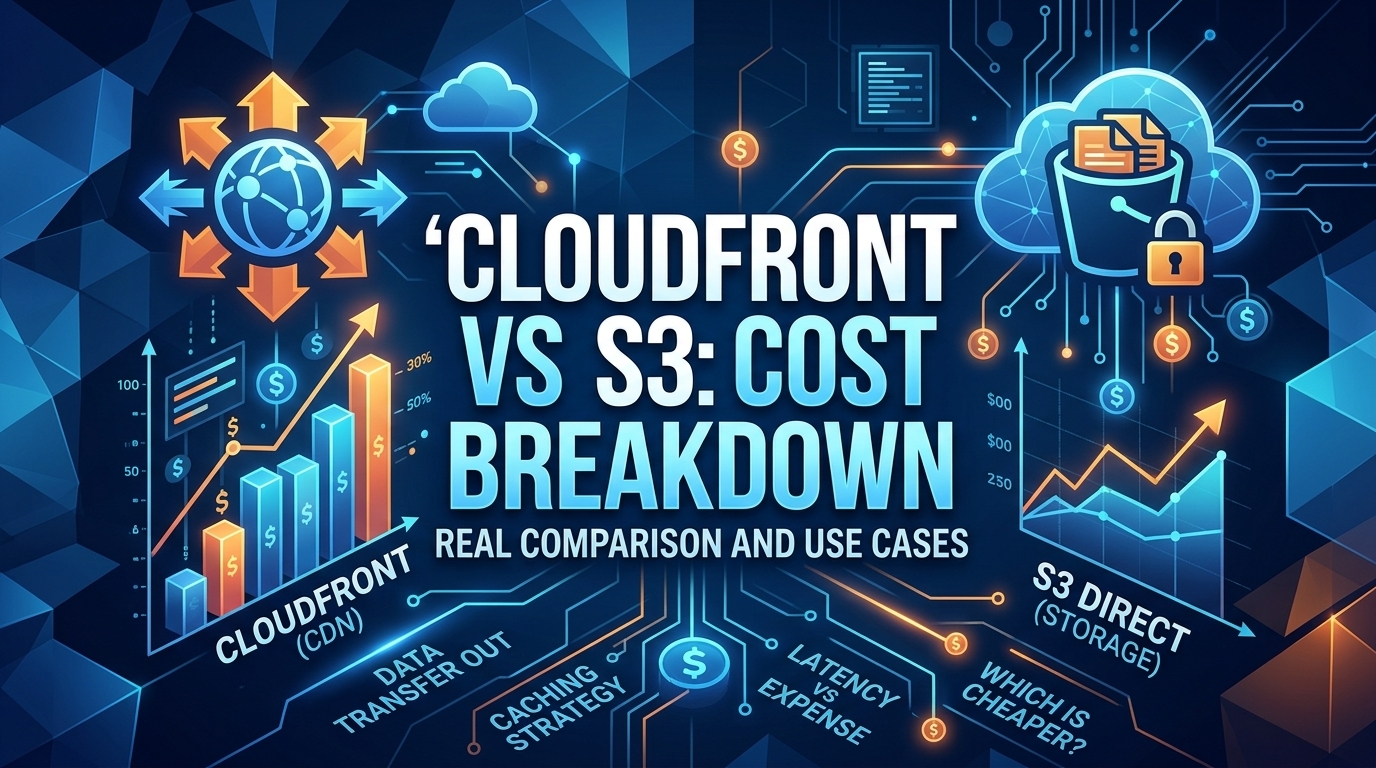
The CloudFront vs S3 decision depends more on object size than on traffic volume. At a 500 KB average response, 100 TB ...
Learn
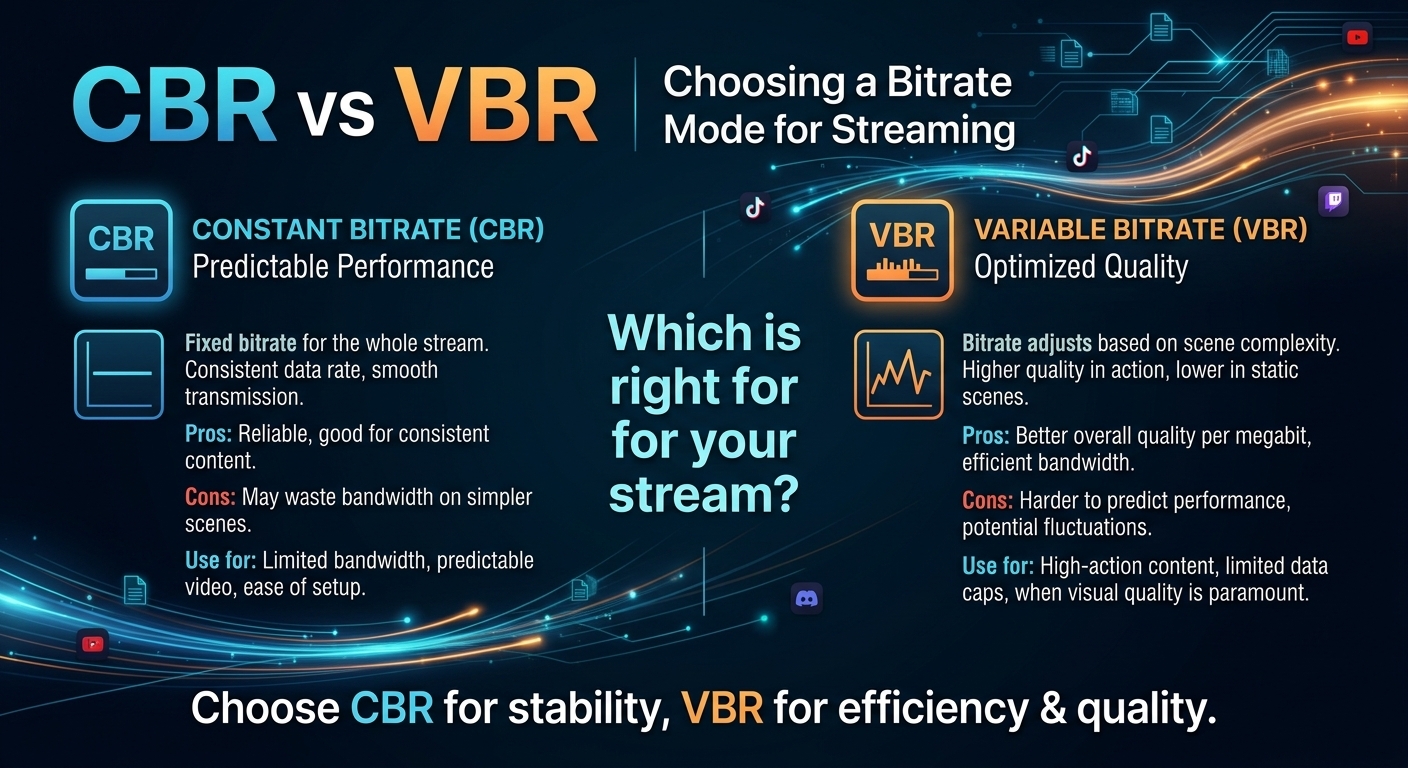
For most on-demand video, capped variable bitrate (VBR) wins the cbr vs vbr decision: it spends bits where the picture ...