
Learn
Lossy vs Lossless Compression: Images, Video and Audio
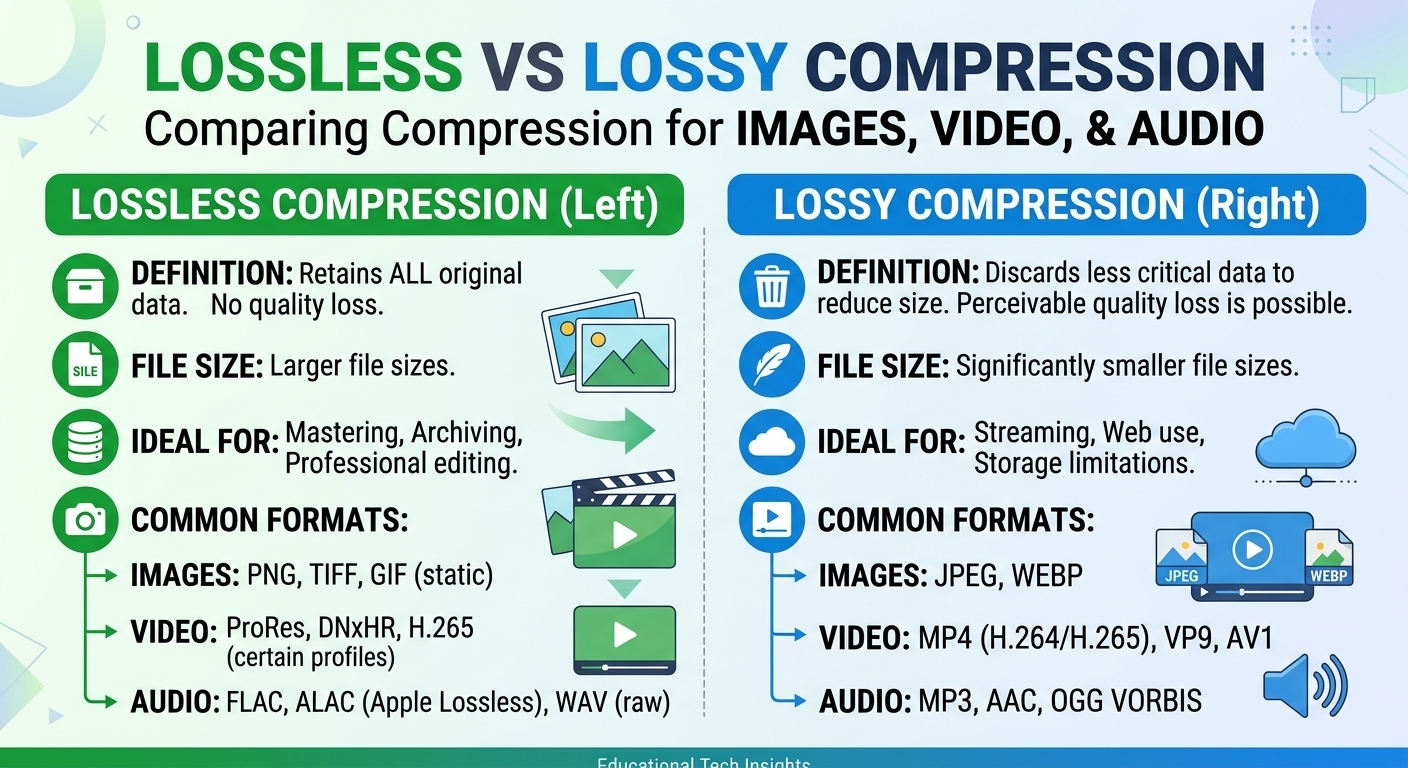
Lossy vs lossless compression comes down to one trade: lossless compression rebuilds every original bit and typically ...
More than 53% of mobile users abandon a page that takes longer than three seconds to load, according to Google’s mobile performance research (source). That single statistic explains why the language around “content delivery” has exploded: content delivery networks, content delivery platforms, edge delivery, media platforms — and a lot of marketing noise in between.
If you’re responsible for digital strategy, streaming, or global application performance, confusing “content delivery platform” with “content delivery network” is no longer a harmless semantic mistake. It can lock you into the wrong contracts, the wrong architecture, and millions in unnecessary infrastructure spend.
This article untangles the terminology, shows where the concepts overlap, and gives you a practical framework for deciding when you actually need a full content delivery platform vs when a high-performance CDN is more than enough. Along the way, you’ll see how leading digital businesses structure their delivery stack — and how you can follow a similar path with far more cost control.
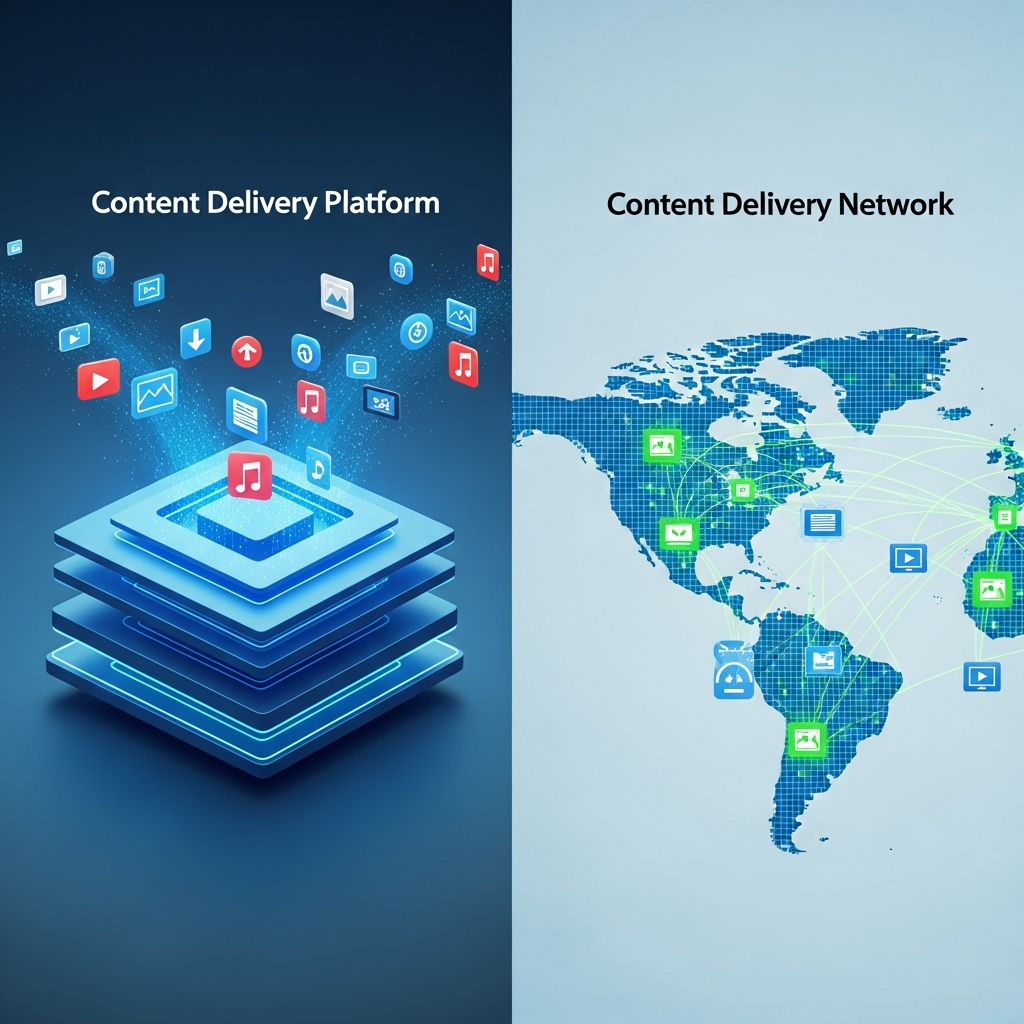
At first glance, “content delivery platform” and “content delivery network” sound like synonyms. Both move content closer to users. Both aim to reduce latency, offload origin infrastructure, and keep experiences available under heavy load.
But in practice, these two labels often describe different layers of your digital delivery stack:
Vendors sometimes blur these definitions intentionally. “Platform” sounds more strategic and gives room for higher-margin managed services and long-term contracts. Meanwhile, many teams only need a highly reliable CDN plus a few supporting tools — but end up paying for a full platform because the distinction wasn’t clear when they evaluated options.
Before we dig into architectures and real-world examples, ask yourself: Are you looking for raw delivery power, or a full content workflow? Keeping that question in mind will make every later section of this article more actionable.
A CDN is a distributed infrastructure that delivers digital content — web pages, videos, downloads, APIs — from locations closer to end users, reducing latency, improving reliability, and offloading your core infrastructure.
While implementations vary by vendor, almost every CDN shares the same core responsibilities:
Think of a CDN as the highways and logistics network for your digital content: someone still has to decide what to ship, how to package it, and which products to prioritize, but the CDN makes sure those bits get to customers quickly and reliably.
On their own, pure CDNs generally do not provide:
Some CDN vendors offer add-ons in these areas, but those are often separate products or partnerships. This gap is where the term content delivery platform appears — a promise to cover both the infrastructure and the higher-level content workflows in one place.
As you read about platforms in the next section, keep asking: Which of these features do I truly need, and which would only add cost and lock-in?
A content delivery platform (CDP) is best understood as a stack of services that sits on top of one or more CDNs. It still relies on CDN infrastructure for the heavy lifting of transport and caching, but wraps that network in features tailored to a particular business problem.
While each vendor’s marketing deck looks different, most content delivery platforms include some combination of:
In short, a content delivery platform tries to become your end-to-end content operations environment, often focused on a single vertical like streaming media, gaming, or software distribution.
Platform vendors solve real problems. For many broadcasters and OTT services, building a fully custom video pipeline is impractical. A ready-made platform dramatically shortens time-to-market and simplifies operations.
But this convenience comes with trade-offs:
Before you adopt a platform, it’s worth asking: Do we want a long-term strategic partner to run our entire pipeline, or do we want control over our core infrastructure with the option to swap tools over time?
To clarify the terminology, it helps to compare content delivery platforms and CDNs across concrete dimensions.
| Dimension | Content Delivery Network (CDN) | Content Delivery Platform (CDP) |
|---|---|---|
| Primary focus | Efficient, reliable delivery of bits across the internet. | End-to-end management of content workflows and delivery. |
| Core capabilities | Caching, routing optimization, TLS termination, content optimization. | Includes CDN capabilities plus storage, transcoding, DRM, analytics, business logic. |
| Layer in the stack | Infrastructure / network layer. | Application / service layer built on top of CDNs. |
| Customization | High for engineering teams: rules, APIs, integration with custom pipelines. | Often opinionated workflows; customization via configuration rather than code. |
| Time-to-market | Fast for teams that already have content workflows; slower if you must build them from scratch. | Faster initial launch for greenfield projects; slower to implement highly unique use cases. |
| Cost structure | Primarily bandwidth/requests; often significantly lower per GB. | Bandwidth + storage + processing + managed services, usually higher per GB or per minute. |
| Vendor lock-in risk | Lower: easier to migrate between CDNs or use multi-CDN strategies. | Higher: workflows, encodings, and integrations are platform-specific. |
| Best suited for | Teams with engineering capacity that want control and cost efficiency. | Organizations prioritizing speed to market and operational simplicity over fine-grained control. |
Looking at this table, where does your organization naturally fit today? And more importantly: Where do you want to be in two to three years — more self-directed, or more managed?
To better understand “content delivery platform vs content delivery network,” it’s useful to look at how real companies describe their stacks — and how analysts talk about them.
Major streaming services (global subscription platforms, regional broadcasters, sports streaming services) all rely on CDNs at their core. For big tentpole events — think global sports tournaments or major series premieres — performance reports from Akamai and others show traffic peaks in the tens of terabits per second, delivered through highly optimized CDNs across continents (example industry analysis).
Yet these same services rarely describe themselves as “using a CDN” in marketing material. They talk about their “streaming platform,” their “end-to-end distribution system,” or “our content delivery platform.” Under the hood, that platform usually consists of:
The “platform” is the combination of all these components; the CDN is the performance backbone that moves bits to viewers reliably. This distinction matters for you because you can often buy or build the platform without being locked into a single CDN.
Large software companies and game publishers routinely handle multi-gigabyte downloads and urgent security updates across global user bases. Here too, the marketing language tends to emphasize “distribution platforms” and “update platforms.”
Operationally, however, the safety net is still the CDN. It ensures:
Some vendors sell full “update platforms” that wrap these delivery capabilities in deployment orchestration, cohort management, and rollback logic. Others provide just the CDN and leave orchestration to your DevOps tools.
In your own roadmap, the key question is: Do you need a full update platform today, or would you rather keep orchestration under your control while using a high-performance CDN as the delivery engine?
Conceptually, you can think of the difference between a content delivery platform and a content delivery network as a stack of layers:
The content delivery platform spans the middle of this stack, coordinating content processing and integrating with business systems. The CDN sits at the bottom of the delivery portion, close to the network edge, efficiently moving bits to users.
Visualizing this distinction helps in architecture discussions: when someone says “we need a better platform,” are they asking for superior workflows, analytics, or management — or do they really mean “we need a faster, more reliable CDN”?
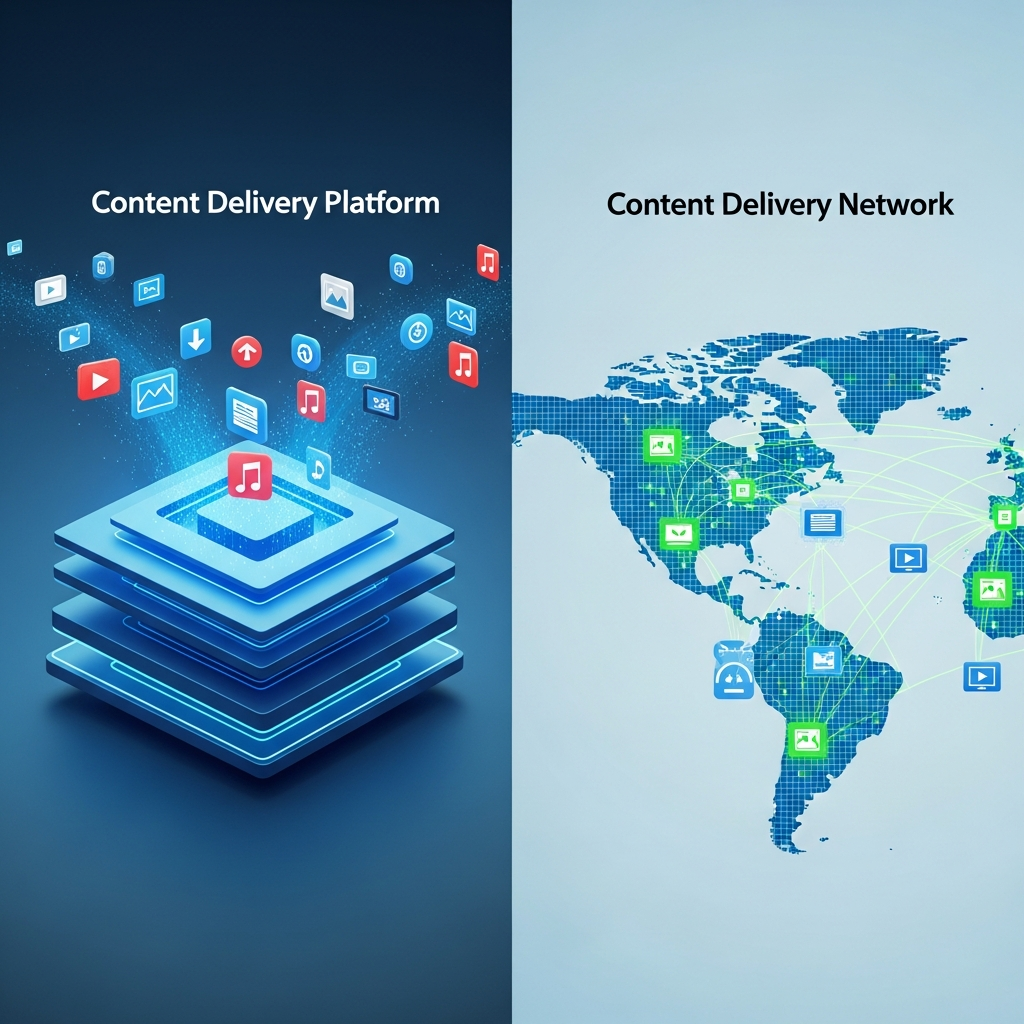
Take a moment to map your current tooling into this layered view. Which layers are you happy with, and which are bottlenecks — the workflows, or the network?
Not every organization needs an all-in-one content delivery platform. But for some, it’s the only realistic way to operate. The tipping point usually comes from complexity in content workflows, not just high traffic volumes.
Broadcasters, news outlets, and OTT services typically manage:
For these teams, content delivery platforms that combine ingest, encoding, storage, rights management, and publishing workflows can reduce operational friction dramatically. Engineers can focus on application features instead of reinventing the media pipeline.
However, even in these settings, advanced teams often decouple the platform from the CDN; they may use a commercial video platform for workflow, but retain the ability to choose (or change) one or more underlying CDNs based on performance and cost.
Enterprises in financial services, healthcare, or government often need strict governance around who can watch what content and when. They may also run internal live streams (town halls, trainings) that must integrate with existing identity systems, compliance tooling, or on-premises archives.
Here, content delivery platforms that integrate with identity providers, auditing systems, and secure archives can make sense — especially when internal teams don’t have deep video expertise. But the same logic applies: many organizations choose platforms that let them bring their own CDN or switch CDN vendors over time.
Look at your own workloads: Are your main challenges around content governance and complex workflows, or around sheer delivery speed and stability? The answer points directly toward “platform” vs “network” priorities.
For many digital businesses, especially in their growth phase, the more strategic first step is getting the CDN layer right before committing to an all-encompassing platform.
SaaS platforms and enterprise web applications live and die by latency, uptime, and perceived responsiveness. Cisco’s Annual Internet Report projected that video, gaming, and web-based applications would account for the vast majority of IP traffic, intensifying competition around user experience quality (Cisco Annual Internet Report 2018–2023, available at cisco.com).
In this environment, your first priority is usually:
These are precisely the strengths of a modern CDN. Full-blown content delivery platforms add little value unless your SaaS product also involves complex media pipelines or heavy VOD/live streaming components.
Game studios and software vendors often revolve around a handful of core workflows:
In many cases, these workflows can be coordinated with existing CI/CD systems, internal deployment tooling, and authentication services. What’s missing is usually a CDN with predictable performance and pricing for huge volumes of download traffic, not an entirely new platform.
If this sounds like your situation, ask: Would a faster, more cost-efficient CDN solve 80% of my pain today, leaving room to add platform-like tools later if needed?
The most serious consequences of confusing a content delivery platform with a content delivery network show up on your balance sheet and in your procurement constraints.
While exact numbers vary by provider and volume, typical patterns look like this:
These extras can be justified when you actively use the platform’s managed workflows. But if you only need fast, reliable delivery, you can end up subsidizing features you never touch.
Content delivery platforms often encourage multi-year, high-commitment contracts because they invest heavily in onboarding and integration. That’s reasonable when they truly become an extension of your internal operations — but risky if your strategy or traffic pattern changes.
By contrast, modern CDN providers increasingly offer transparent, usage-based pricing and flexible commitments. This makes it easier to experiment, run trials, or shift a portion of your traffic as a performance or cost benchmark.
Before signing any agreement, it’s worth asking your team: Are we buying a set of essential infrastructure capabilities, or a platform that will shape our delivery strategy for years?
If you see value in separating the “platform” from the “network,” you need a CDN that can stand on its own merits: performance, cost efficiency, and reliability strong enough to underpin whatever content platform you choose today or build tomorrow.
BlazingCDN is designed precisely for that role. It offers Anycast routing with built-in failover at a lower price, a critical advantage for enterprises moving petabytes of traffic every month. With a starting cost of just $5 per TB (as of October 2026), BlazingCDN allows media companies, game publishers, software vendors, and SaaS platforms to reduce infrastructure spend without compromising user experience.
Enterprises that value both reliability and efficiency use BlazingCDN as the backbone for their own content delivery platforms or for third-party media platforms, enjoying flexible configuration options, rapid scalability to meet traffic surges, and the freedom to evolve their higher-level workflows over time. To see how this translates into real capabilities for engineering and product teams, you can explore the enterprise-focused feature set on BlazingCDN features and map it directly onto your current and future content delivery architecture.
As you evaluate solutions, ask yourself: Would your organization benefit more from a rock-solid, economical CDN foundation first, or from committing immediately to an all-in-one platform?
To turn all of this into a concrete decision, use the following checklist with your team.
If most problems cluster around operations (ingest, rights, approvals, packaging), a platform may add real value. If they cluster around latency, availability, or cost, a better CDN is likely the higher-leverage move.
Use these numbers to have a concrete conversation with finance and leadership: Is the platform premium justified by the operational savings and time-to-market we expect?
Your answers will shape whether “platform” vs “network” is just vocabulary — or a strategic commitment with multi-year implications.
Now that “content delivery platform vs content delivery network” is no longer a fuzzy pair of buzzwords, you’re in a better position than many teams signing contracts today. You know that:
The next move is yours.
Gather your engineering, product, and finance stakeholders and walk through the checklist above. Identify where your current pain truly lives: workflow complexity, or pure delivery performance. Then sketch an architecture that keeps options open — one where a modern, cost-efficient CDN like BlazingCDN can underpin your stack, whether you build your own platform or plug into existing ones.
If this article sparked questions — or challenged assumptions you’ve held about platforms vs networks — share it with your team, bookmark it for your next planning session, and start a discussion: What would our ideal content delivery stack look like if we weren’t constrained by today’s contracts? The sooner you answer that, the sooner your users feel the difference in every page load, stream, and download.

Heavy traffic.
Light bill.
The CDN for video and large traffic
Learn
Lossy vs lossless compression comes down to one trade: lossless compression rebuilds every original bit and typically ...
Pricing - Pricing & Costs
The CloudFront vs S3 decision depends more on object size than on traffic volume. At a 500 KB average response, 100 TB ...
Learn
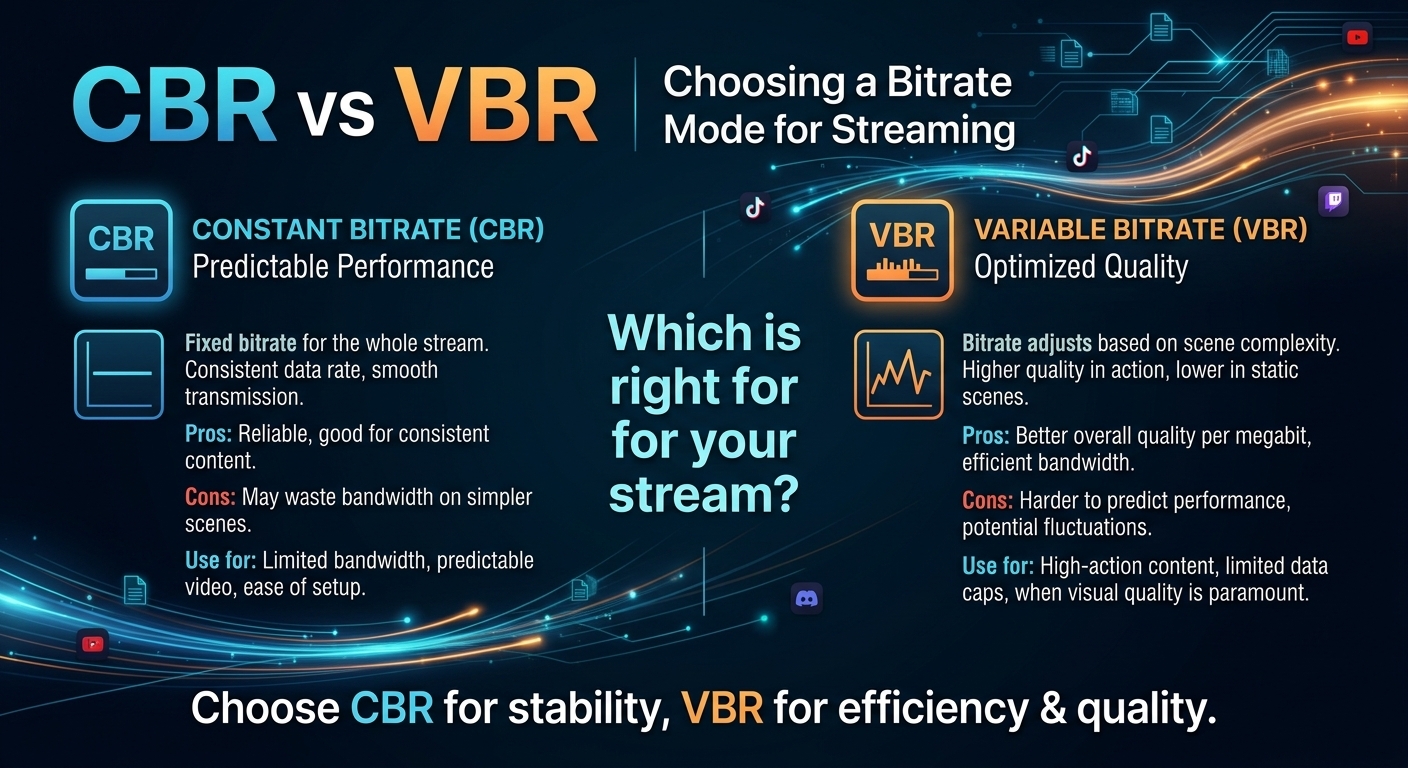
For most on-demand video, capped variable bitrate (VBR) wins the cbr vs vbr decision: it spends bits where the picture ...