
Learn
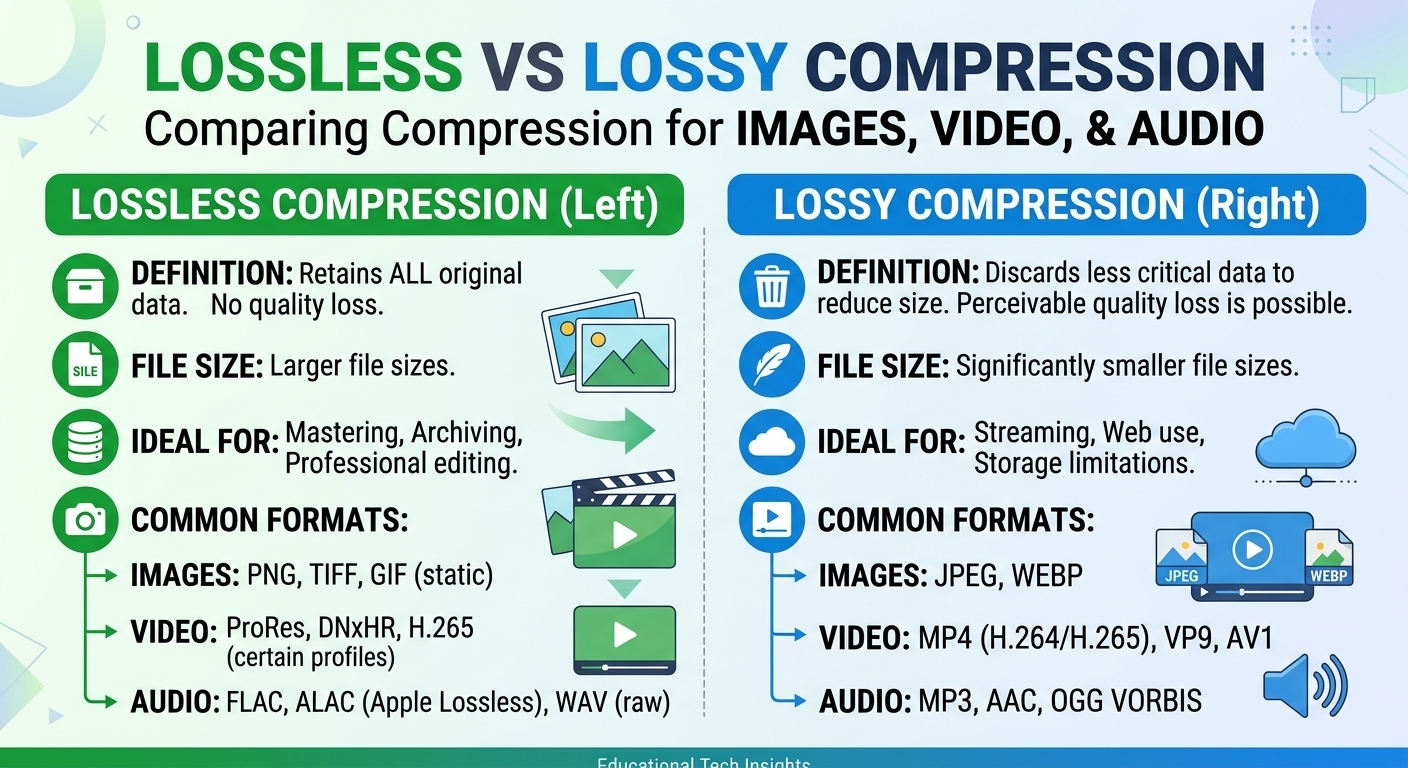
Lossy vs Lossless Compression: Images, Video and Audio
Lossy vs lossless compression comes down to one trade: lossless compression rebuilds every original bit and typically ...

At 50 TB of monthly egress, Cloudflare's published bandwidth rate puts your delivery bill somewhere north of $2,500. A Business plan on top of that adds another $200 before you touch a single advanced feature. Yet a surprising number of engineering teams never model their actual cloudflare pricing against the market until they're already locked in. This article gives you the full 2026 breakdown: every Cloudflare tier with current pricing, a head-to-head comparison against Akamai, CloudFront, and Fastly, a workload-profile decision matrix you won't find in vendor docs, and the math on where a cost-optimized CDN like BlazingCDN changes the calculus entirely.
Cloudflare's tier structure has remained stable since 2024, but the feature gates between plans have shifted. As of Q2 2026, here's the layout:
| Plan | Monthly Cost | Key Inclusions | What's Missing |
|---|---|---|---|
| Free | $0 | Basic CDN, universal SSL, limited page rules | WAF rulesets, image optimization, priority support |
| Pro | $20 | WAF managed rulesets, image/mobile optimization, enhanced analytics | Custom WAF rules, SLA, advanced bot management |
| Business | $200 | Custom WAF rules, 100% uptime SLA, custom SSL certificates | Dedicated account team, named IP ranges, advanced traffic steering |
| Enterprise | Custom (typically $5,000+) | Named account team, advanced bot management, Argo Smart Routing, network-layer controls | Negotiation-dependent; add-ons like Spectrum and Workers Unbound priced separately |
Two things the tier table doesn't tell you. First, Cloudflare's "unmetered bandwidth" on self-serve plans is subject to Terms of Service section 2.8, which prohibits serving a disproportionate amount of non-HTML content unless you're on a paid plan with explicit CDN use. If your primary workload is large-file delivery or video, you can be rate-limited or asked to upgrade. Second, Argo Smart Routing, which meaningfully reduces TTFB on long-haul routes, costs $5 per month plus $0.10 per GB. At 10 TB that's an additional $1,024 per month on top of your plan fee.
Cloudflare's plan pricing is deceptively simple because high-impact features live behind add-on pricing walls. As of 2026:
A mid-traffic SaaS platform running Argo, five Workers routes, and basic rate limiting can easily add $500-$1,500/month beyond the base Business plan. Enterprise contracts bundle many of these, but the published floor for enterprise deals in 2026 remains around $5,000/month, with most organizations reporting annual commits between $60K and $180K depending on traffic profile and feature scope.
The table below compares per-GB delivery costs across the major CDN providers as of Q2 2026. All prices reflect North America/Europe regions unless otherwise noted.
| Provider | 0-10 TB (per GB) | 10-50 TB (per GB) | 50-150 TB (per GB) | 500 TB+ (per GB) |
|---|---|---|---|---|
| Cloudflare (with Argo) | $0.10 | $0.10 | $0.10 | Enterprise negotiated |
| Akamai | $0.049 | $0.045 | $0.040 | Custom |
| AWS CloudFront | $0.085 | $0.080 | $0.060 | $0.020 |
| Fastly | $0.12 | $0.08 | $0.06 | Custom |
| BlazingCDN | $0.005 | $0.0045 | $0.004 | $0.003 |
Note that Cloudflare's "unmetered" bandwidth on self-serve plans effectively costs $0.00/GB for eligible traffic, but the moment you need Argo for performance parity with premium CDNs, the cost jumps to $0.10/GB. Without Argo, Cloudflare routes through its standard anycast mesh, which performs well for latency-insensitive workloads but can add 30-80ms on intercontinental paths compared to smart-routed alternatives.
CloudFront has a steeper entry price but scales more predictably. At 500 TB/month, negotiated CloudFront rates often land around $0.015-$0.020/GB. CloudFront's origin shield ($0.0060/GB) adds cost but dramatically reduces origin load, which matters if your origin compute is expensive. Cloudflare's Tiered Caching (free on Business+) provides a similar function, making the effective comparison less about CDN price and more about total architecture cost.
Fastly charges more per GB but delivers sub-150ms global purge times and Compute@Edge for request-level logic. If your architecture depends on instant cache invalidation (financial data, inventory systems, live scores), Fastly's premium may pay for itself. Cloudflare's purge latency has improved in 2026 but still averages 2-4 seconds for non-enterprise plans, and up to 30 seconds on free/Pro tiers.
It depends entirely on plan tier. Akamai's per-GB pricing on volume commits is often lower than Cloudflare Enterprise for pure delivery workloads. Cloudflare wins on bundled security features (Bot Management, Zero Trust integration). For organizations that need both delivery and security-as-a-service, Cloudflare's consolidated billing is simpler. For pure-play content delivery at scale, Akamai and purpose-built CDNs like BlazingCDN tend to deliver lower per-GB costs.
Pricing comparisons in isolation are misleading. The right CDN depends on traffic shape, origin architecture, and feature requirements. This matrix maps five common workload profiles to the provider that delivers the best cost-to-capability ratio as of 2026.
| Workload Profile | Monthly Egress | Critical Requirement | Best Fit (2026) | Runner-Up |
|---|---|---|---|---|
| SaaS with global users, API-heavy | 1-10 TB | Edge compute, bot management | Cloudflare Business | Fastly |
| Media/video delivery, large-file distribution | 50-500 TB | Low per-GB cost, throughput | BlazingCDN | Akamai |
| E-commerce with dynamic content | 5-50 TB | Instant purge, edge logic | Fastly | Cloudflare Enterprise |
| AWS-native stack, multi-region | 10-100 TB | Origin integration, S3 direct | CloudFront | Cloudflare Enterprise |
| Game/software updates, binary distribution | 100 TB-1 PB+ | Lowest cost per TB, burst capacity | BlazingCDN | CloudFront |
The pattern is clear. Cloudflare owns the low-traffic, security-bundled use case. Once your egress crosses 50 TB/month and your primary need is delivering bytes rather than running edge logic, purpose-built delivery networks outperform on cost by a wide margin.
For delivery-heavy workloads, BlazingCDN provides stability and fault tolerance comparable to CloudFront. Pricing starts at $5/TB and scales down to $2.50/TB at volume (as of October 2026). If your architecture splits security (Cloudflare, your own WAF) from delivery (dedicated CDN), this is where the cost advantage materializes. At 100 TB/month, you'd pay $415 with BlazingCDN versus $10,000+ with Argo-enabled Cloudflare or $6,000+ on CloudFront standard rates. Run the model against your actual traffic shape on BlazingCDN's pricing page and see where the crossover hits for your workload.
Self-serve plans run $0 (Free), $20/month (Pro), and $200/month (Business). Enterprise starts around $5,000/month with annual commits. Add-ons like Argo Smart Routing ($0.10/GB), Workers, and Stream can significantly increase your total bill depending on usage.
Yes, if you need managed WAF rulesets and image optimization. The $20/month cost is negligible for any production site. The real decision is Pro vs Business: the $180/month jump buys custom WAF rules, an SLA, and custom SSL, which most production workloads should have.
At low volumes with Cloudflare's unmetered bandwidth, yes. At enterprise scale where you need Argo for competitive performance, Akamai's negotiated per-GB rates are often lower. The comparison shifts further if you factor in Akamai's bundled edge compute pricing versus Workers Unbound fees.
Cloudflare's Terms of Service (section 2.8) restrict serving disproportionate non-HTML content on self-serve plans. For video delivery, you'll need Cloudflare Stream (separate pricing) or an Enterprise agreement. Many teams route video through a dedicated delivery CDN like BlazingCDN and keep Cloudflare in front of their application tier.
Enterprise is fully custom. Cloudflare's sales team quotes based on traffic volume, feature set, and contract length. Typical annual commits range from $60K to $180K (as of 2026). You gain access to Argo, Bot Management, advanced analytics, dedicated support, and negotiated rate cards for Workers and other compute services.
Pull your last 90 days of egress data from your current provider. Break it down by content type: HTML/API responses versus static assets versus large-file or media delivery. Model the cost across at least three providers using the rates in this article. Most teams discover that a split-CDN architecture, using one provider for security and edge logic, and another for high-volume delivery, cuts their total CDN spend by 40-60% with no loss in cache hit ratio or end-user latency. If you haven't run that model yet, this is the week to do it.

Heavy traffic.
Light bill.
The CDN for video and large traffic
Learn
Lossy vs lossless compression comes down to one trade: lossless compression rebuilds every original bit and typically ...
Pricing - Pricing & Costs
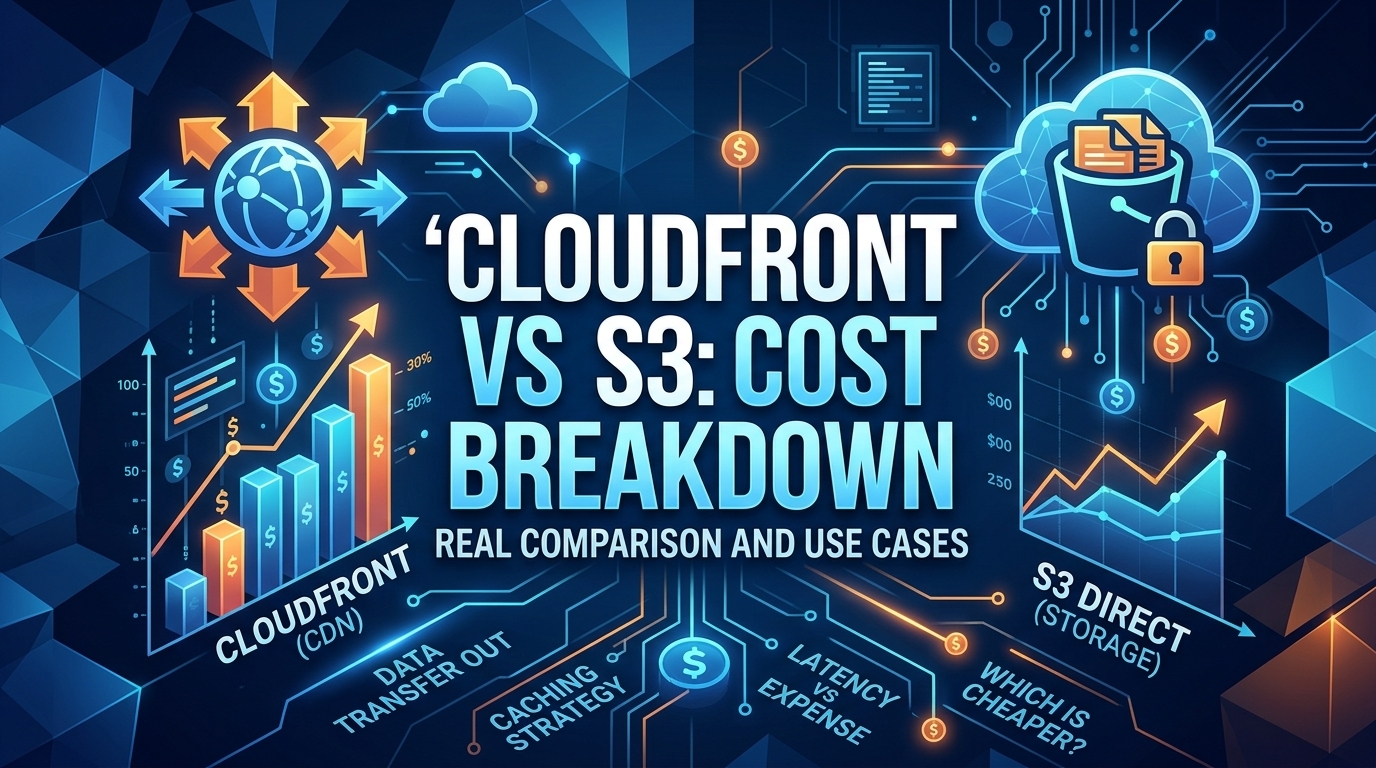
The CloudFront vs S3 decision depends more on object size than on traffic volume. At a 500 KB average response, 100 TB ...
Learn
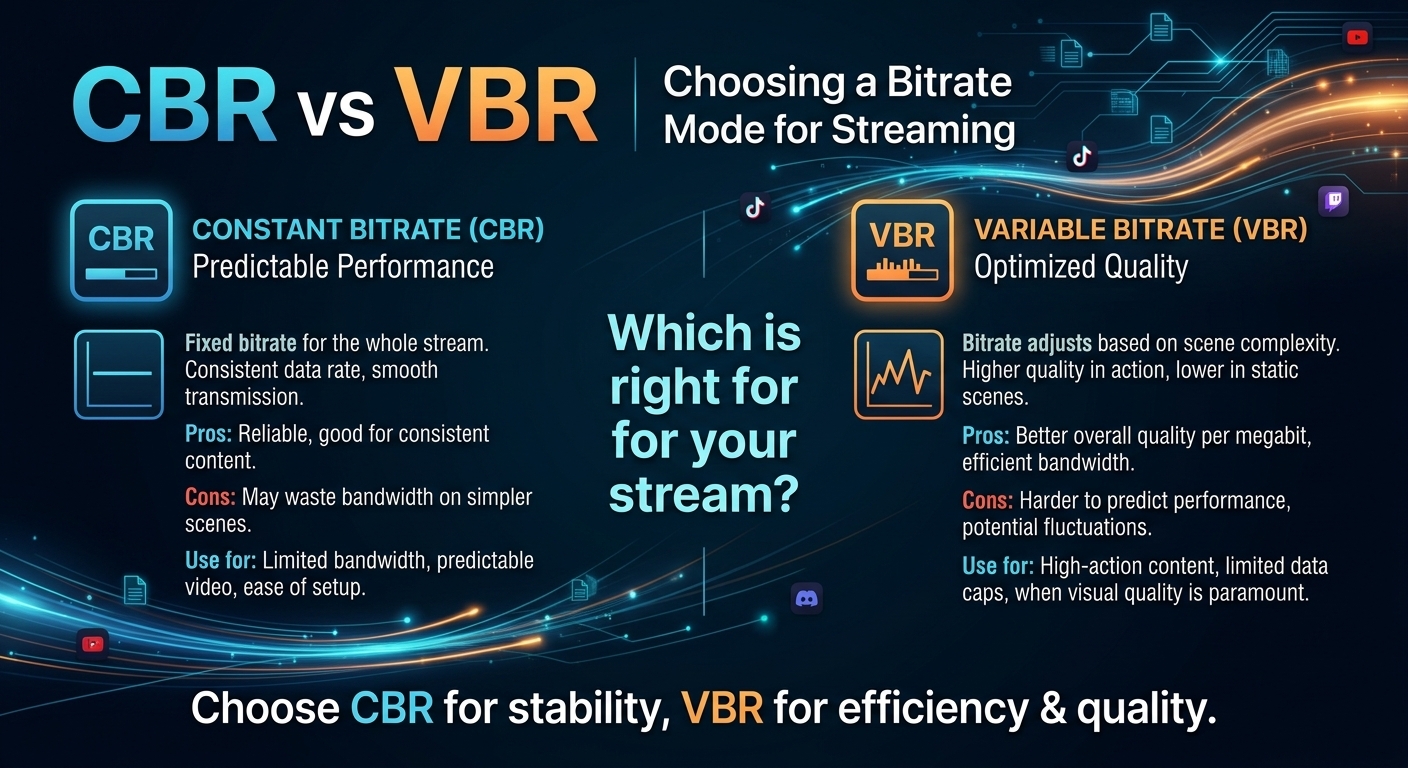
For most on-demand video, capped variable bitrate (VBR) wins the cbr vs vbr decision: it spends bits where the picture ...