
Learn
Lossy vs Lossless Compression: Images, Video and Audio
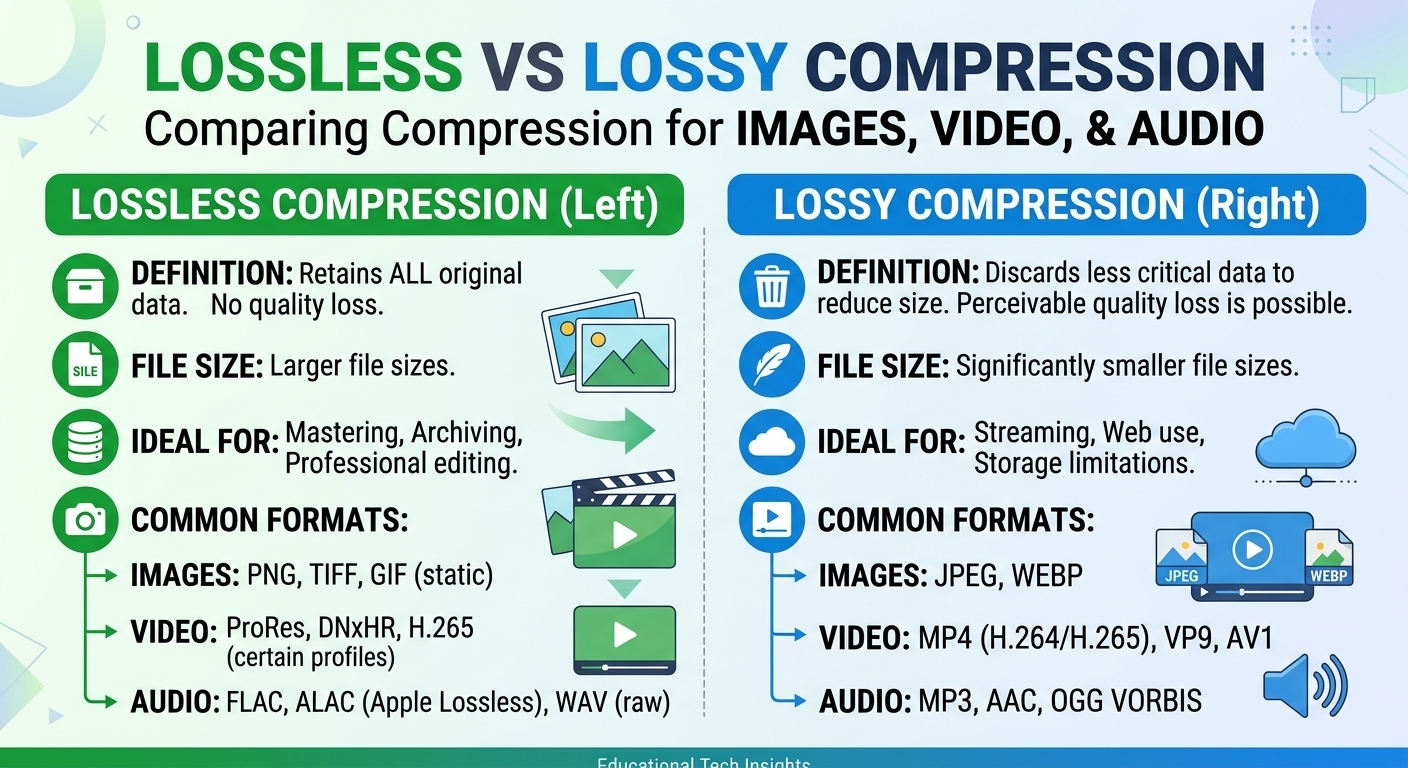
Lossy vs lossless compression comes down to one trade: lossless compression rebuilds every original bit and typically ...

The single most expensive misunderstanding about Cloudflare pricing plans is that they bill per account. They do not. Every paid plan is priced per zone, and a zone is a domain. An engineering org running production, staging, preview, and three regional ccTLDs on Business pays six times $250 per month, not $250. That is $18,000 a year for what most people mentally file as "our CDN subscription." This article is the plan-by-plan reference: every 2026 list price, the add-on lines that show up beneath the zone fee, the thresholds where each tier stops making sense, and a workload matrix for choosing between them.

As of 2026, the self-serve ladder has held steady since the 2024 repricing. If you are reading a comparison that lists Pro at $20 and Business at $200, it predates that change and every downstream calculation in it is wrong by 25 percent.
| Plan | Monthly (per zone) | Annual equivalent | Billing unit | Where it fits |
|---|---|---|---|---|
| Free | $0 | $0 | Per zone | Staging, personal sites, low-risk domains, parked names |
| Pro | $25 | ~$240 (about 20% off) | Per zone | Content sites, marketing properties, small commerce |
| Business | $250 | ~$2,400 (about 20% off) | Per zone | Revenue-critical web apps, custom certificates, prioritised support |
| Enterprise | Custom, commonly $5,000+ | Annual contract, often $60k+ | Contract, account-level | Multi-zone estates, custom terms, bundled platform usage |
Two structural facts shape every decision below. First, there is no self-serve volume discount: zone number 40 costs exactly what zone number one costs. Second, plan level is a feature gate, not a capacity gate. Free and Business deliver cached static assets from the same edge; what changes is the control surface, the certificate options, the analytics retention, and the support queue.
How BlazingCDN compares: BlazingCDN publishes one rate for the US, Europe and Asia, from $5 per TB down to $2.50 per TB, so 100 TB of delivery costs $415 a month (as of October 2026) with no request fees. The plan-by-plan breakdown is on the BlazingCDN vs Cloudflare page.
Universal TLS, authoritative DNS, HTTP/2 and HTTP/3, unmetered bandwidth for standard web assets, and a small allowance of rules. Analytics are sampled and short-lived. Support is community and documentation. For staging environments and internal tools this is the correct answer, and paying for those zones is one of the most common sources of waste in a Cloudflare invoice.
Adds managed rulesets, image optimisation and polish, mobile-oriented tuning, expanded page and cache rules, bot mitigation at the basic tier, and roughly 30 days of analytics retention. Email support with business-hours response. Pro is the right ceiling for content sites where an hour of degraded performance is annoying rather than expensive.
The jump from $25 to $250 is a 10x step and it buys three things engineers actually notice: bring-your-own custom certificates with control over cipher and hostname behaviour, cache bypass and prioritised cache controls suited to logged-in and dynamic traffic, and 24/7 chat support with a response commitment. Business also unlocks the advanced rule capacity that stops teams from writing baroque workarounds in Workers. If your incident cost per hour exceeds a few thousand dollars, the $225 delta is noise.
Negotiated, account-level, and priced against total footprint rather than zone count. Typical inclusions in 2026 contracts: advanced bot management, granular rate limiting, Spectrum for non-HTTP protocols, custom certificate and mTLS handling, log push to your own storage, named account team, and bundled commitments on Workers, R2, or Stream. The crossover math is simple. Twenty Business zones cost $60,000 a year at list. That is already in Enterprise territory, and Enterprise buys account-level features Business cannot reach. Detailed negotiation levers live on our dedicated enterprise pricing page rather than here.
Zone subscriptions are the predictable part of the bill. Platform usage is the part that moves. As of 2026 the headline figures are:
The failure mode is Argo. A team enables it for latency wins on API traffic, then someone routes large downloads through the same hostname, and the $0.10 per GB line quietly exceeds the Business subscription. Instrument bytes-by-hostname before enabling smart routing, not after. If you want the full unit-economics walkthrough with your own traffic numbers, use our Cloudflare cost calculator page.
This matrix is the part most comparisons skip. Plan choice should follow the shape of your traffic and the cost of an incident, not the feature checklist.
| Workload profile | Monthly egress | Recommended tier | Decision trigger |
|---|---|---|---|
| Staging, preview, internal tools | Any | Free | No revenue attached, no custom certificate need |
| Content, docs, marketing | Under 2 TB | Pro | Cacheable, static-heavy, downtime is reputational not financial |
| Transactional commerce | Under 5 TB | Business | Downtime cost per hour above roughly $2,000 |
| Multi-tenant SaaS with customer hostnames | Variable | Enterprise | Custom hostname volume and mTLS requirements |
| 10+ zones under one org | Any | Enterprise quote | List spend above $30k per year with no volume discount |
| VOD, installers, game patches, large binaries | 10 TB and up | Split architecture | Bulk bytes belong on a volume-priced CDN, not a per-zone plan |
Cloudflare's unmetered standard bandwidth applies to ordinary web assets. Sustained delivery of video, installers, and multi-gigabyte binaries sits outside that intent, and at 10 TB per month and above the conversation with your account team changes tone. The clean answer is architectural rather than adversarial: keep Cloudflare where it is strongest, on DNS, security, and the dynamic HTML path, and route the heavy object namespace through a CDN priced on volume.
In that second slot the honest comparison set is the cost-at-scale group. Bunny.net is excellent for small and mid-volume with genuinely simple pricing. CDN77 and Gcore both negotiate well on committed volume. Fastly remains the strongest choice when you need edge compute tightly coupled to streaming logic. BlazingCDN's volume pricing sits in the same league and wins on predictability: starting at $5 per TB, down to $2.50 per TB at volume (as of October 2026), with 500 TB at $1,815 and 1,000 TB at $3,315.
For media and software distributors the practical draw is that this is a lower cost per delivered terabyte, with NVMe SSD edge storage, flexible per-path configuration, fast scaling under release-day spikes, and onboarding measured in about an hour. Run the arithmetic against your own bytes: if your blended Cloudflare cost per delivered GB exceeds $0.01, the split is already paying for itself.
Separate the bill into two columns: zone subscriptions and platform usage. Then compute three numbers. Total spend divided by delivered GB gives your effective cost per GB. Count paid zones that received under 10,000 requests last month; those are downgrade candidates. Sum Argo, Images, Stream, and Load Balancing lines and compare them to your zone total. When platform usage exceeds subscription cost, you are no longer buying a plan, you are buying a platform, and that is the moment to request an Enterprise quote instead of adding another self-serve line item.
Pro and Business are billed per zone, meaning per domain, on the self-serve dashboard. Subdomains inherit the parent zone's plan at no extra cost, so a wildcard structure is cheaper than separate registrable domains. Enterprise contracts are account-level and cover multiple zones under negotiated terms.
The self-serve list prices in effect for 2026 are $25 for Pro and $250 for Business per zone per month, unchanged since the 2024 repricing. Annual prepayment still yields roughly 20 percent off. Any comparison quoting $20 and $200 is using pre-2024 figures.
Three triggers justify it: you need a custom or uploaded TLS certificate, you need cache-bypass and prioritised cache behaviour for authenticated traffic, or you need 24/7 support with a defined response window. If none of those apply, Pro plus a well-written set of cache rules usually delivers equivalent edge behaviour.
Around ten Business zones, or $30,000 in annual list spend. Because self-serve carries no volume discount, an estate that size is paying full retail on every domain while a contract could consolidate them and add account-level features. The request costs nothing and the quote establishes your baseline.
For standard web assets, yes, and that is a real advantage over per-GB CDNs at low volume. Sustained large-file and video delivery falls outside that scope. Teams pushing tens of terabytes of binaries or media typically get a conversation about upgrading or restructuring rather than a surprise overage line.
Keep DNS and the dynamic path on Cloudflare and put the media namespace on a volume-priced CDN. At 100 TB per month, a volume-priced bill of about $415 (starting at $5 per TB, down to $2.50 per TB at volume, as of October 2026) is far below the cost of forcing that traffic through per-zone plans plus Stream minutes.
Pull last month's Cloudflare invoice and your egress by hostname from analytics. Compute cost per delivered GB, list every paid zone under 10,000 monthly requests, and flag any hostname sending more than 1 TB. If your effective rate lands above $0.01 per GB, model the same bytes at $5 per TB or less (as of October 2026) and see what the delta funds. Then tell us where your line sits: what is the zone count at which your org finally called for an Enterprise quote, and did the contract actually beat list?

Heavy traffic.
Light bill.
The CDN for video and large traffic
Learn
Lossy vs lossless compression comes down to one trade: lossless compression rebuilds every original bit and typically ...
Pricing - Pricing & Costs
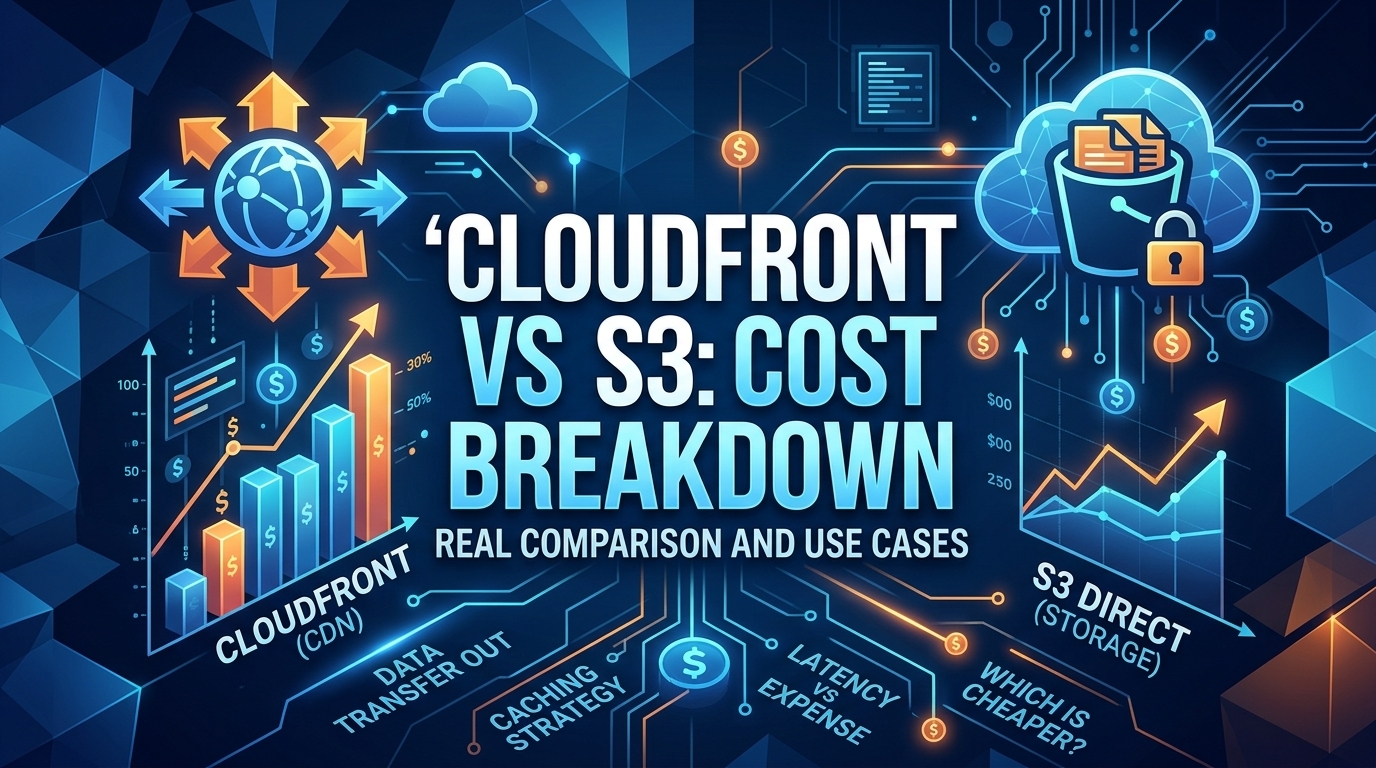
The CloudFront vs S3 decision depends more on object size than on traffic volume. At a 500 KB average response, 100 TB ...
Learn
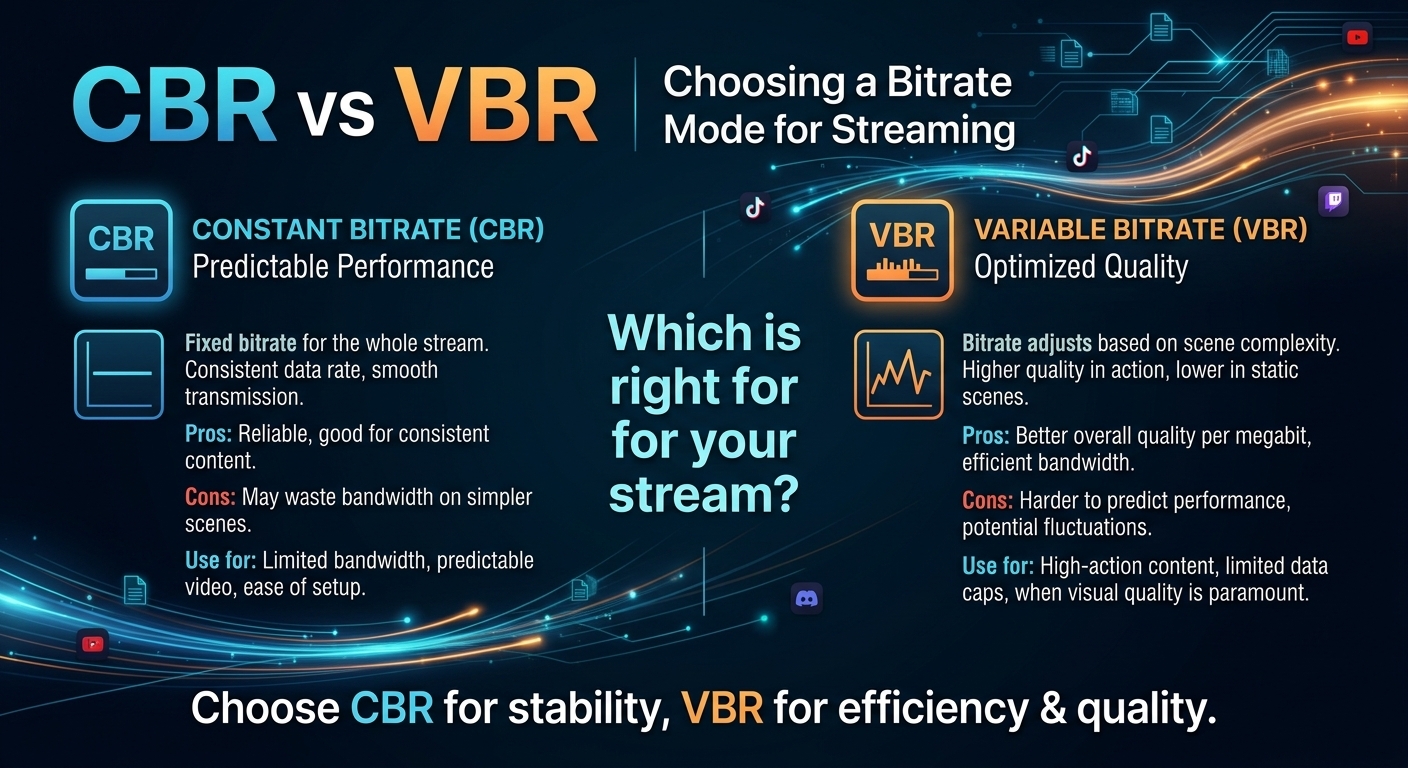
For most on-demand video, capped variable bitrate (VBR) wins the cbr vs vbr decision: it spends bits where the picture ...