
Learn
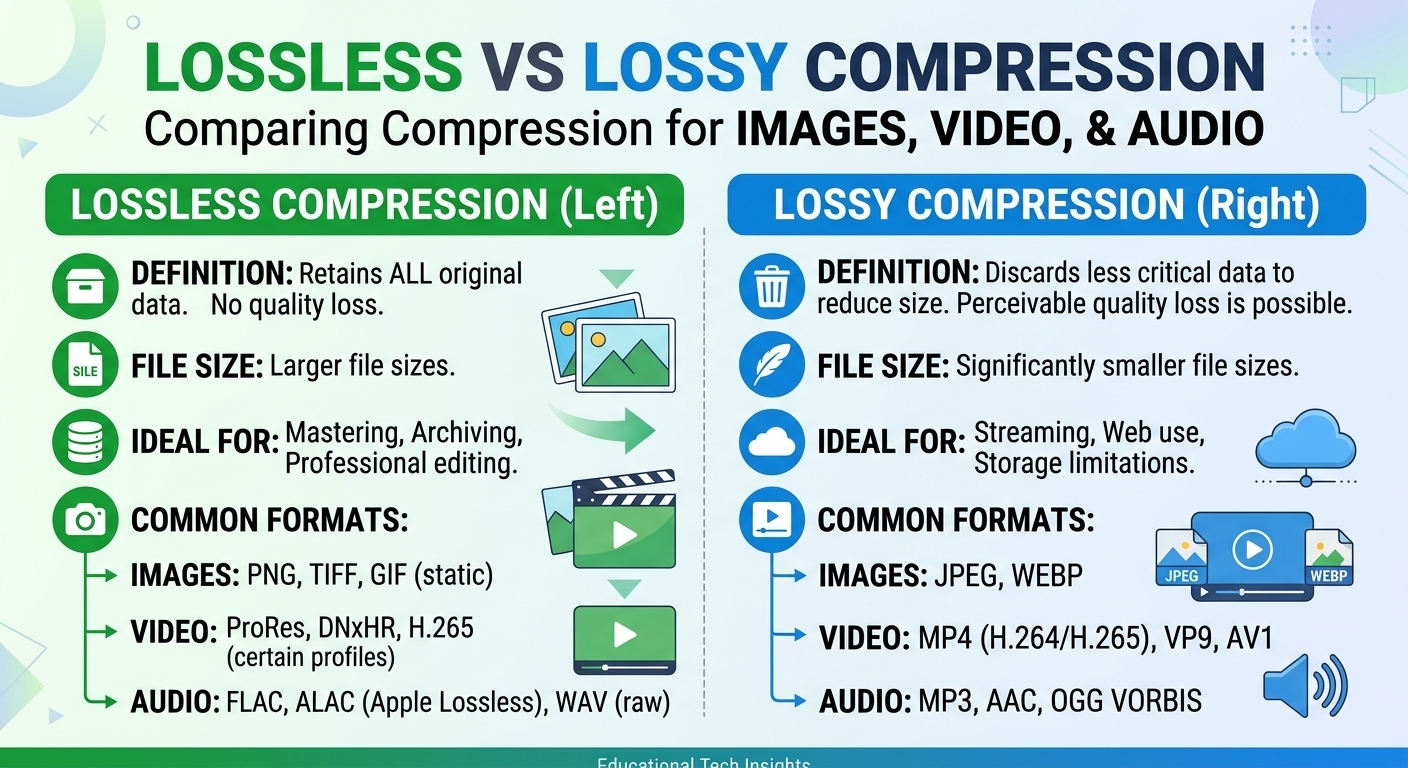
Lossy vs Lossless Compression: Images, Video and Audio
Lossy vs lossless compression comes down to one trade: lossless compression rebuilds every original bit and typically ...
If you are evaluating Cloudflare pricing for a production web property, SaaS platform, API estate, or multi-brand edge stack, the real question is not whether Cloudflare has a free plan. It is which Cloudflare plan matches your operational risk, traffic shape, support expectations, and procurement model without forcing an unnecessary jump to enterprise too early. This article covers Cloudflare Free, Pro, Business, and Enterprise pricing plans, what each tier actually includes as of 2026, and where the upgrade boundaries show up in real architecture decisions.
The scope here is deliberately narrow. This is a pricing and packaging analysis of one vendor, Cloudflare, aimed at architects building an RFP, TCO model, or migration path. It covers plan limits, support model, security and performance features by tier, operational trade-offs, and the conditions under which each plan is the right fit. It does not attempt a full CDN market comparison, edge compute benchmark bakeoff, or object storage evaluation.
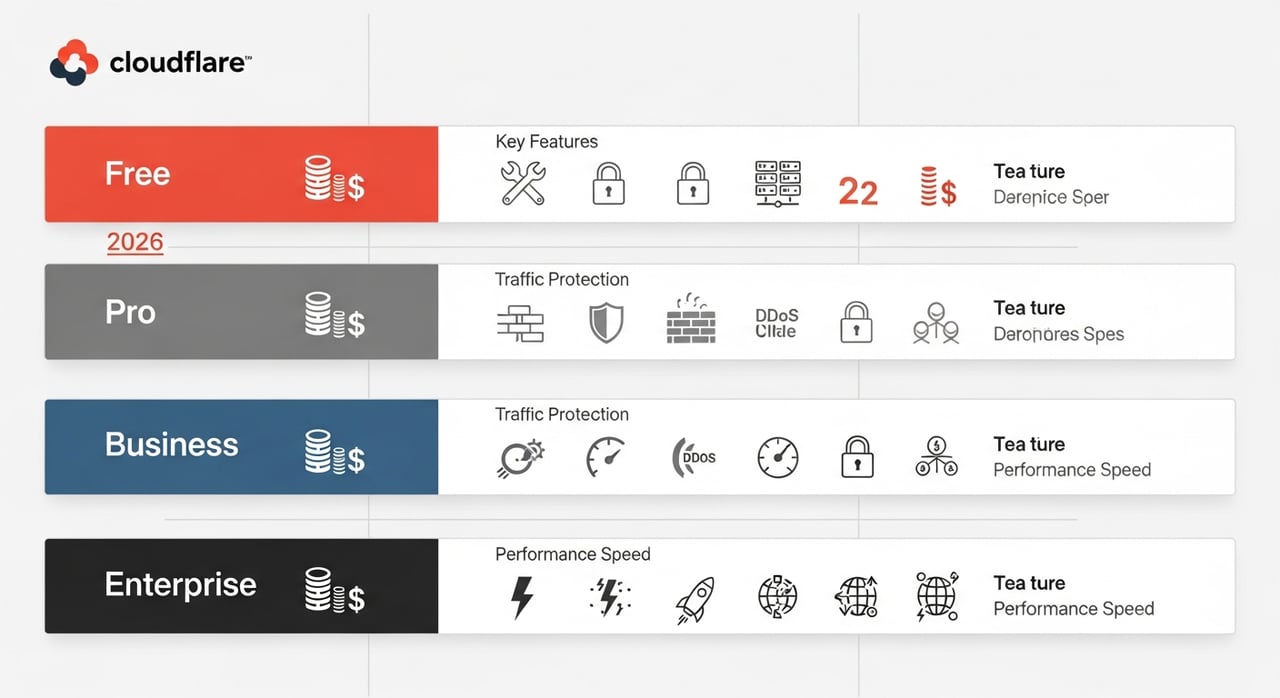
For this Cloudflare pricing review, the useful criteria are the ones that affect architecture and procurement, not brochure-level feature counts. The measurable dimensions are plan entry price, whether pricing is self-serve or quote-based, support path, availability of advanced WAF controls, image optimization, caching controls, compliance and access to contract terms, and the point at which teams typically need enterprise due to policy, uptime, or account-management requirements.
If you are weighting criteria, a practical default for most teams looks like this:
If you run a regulated environment, increase the weight on contract fit and support. If you run a high-volume media or API platform, increase the weight on cost predictability and caching controls. If your team is small and self-serve by design, entry price and default automation matter more than named support.
This article is based on publicly available 2026 plan descriptions and pricing pages, combined with field experience of where teams usually hit packaging boundaries. Some dimensions are easy to verify publicly, such as list pricing for Free, Pro, and Business. Some Enterprise dimensions are harder because Cloudflare enterprise pricing is custom and negotiated. Where no public number exists, that is stated plainly.
Cloudflare is the vendor under analysis here. Near the end, there is also a brief contextual mention of BlazingCDN as a relevant alternative for teams that finish this review and decide their main decision driver is cost-efficient content delivery rather than Cloudflare’s broader edge platform packaging.
The Cloudflare Free plan is the entry point for personal sites, small business websites, prototypes, and low-risk workloads where the team wants CDN, DNS, TLS termination, basic security controls, and a simple on-ramp without procurement. For the long-tail query directly: yes, Cloudflare does have a free plan.
Free is designed as a broad self-serve tier, not a trial with a hard expiration date. That matters because many teams leave low-revenue properties, internal microsites, campaign domains, and early-stage products on Free for longer than expected. In practice, the architectural question is whether a zone can live with standard controls and community-level support rather than whether the CDN works.
One subtle but important fact: the Free plan is often good enough for static and mostly-cacheable sites, but it becomes a weak fit once you need deterministic operational response, formalized escalation, or policy exceptions. The platform can serve the traffic. The account model is what usually breaks first.
As of 2026, Cloudflare Free is $0 per month per site entry point. It is the lowest-friction answer to the question “does Cloudflare have a free plan,” but it should be treated as a low-governance plan, not a low-risk one. For many enterprises, Free is acceptable for noncritical zones and unacceptable for anything with business impact.
The Pro plan is Cloudflare’s first paid self-serve tier for users who want a better security and performance feature set without moving into procurement-heavy enterprise territory. This is the tier most often considered by small SaaS teams, agencies, independent ecommerce operators, and startups asking “how much does Cloudflare Pro cost.”
Cloudflare Pro plan pricing is publicly listed at $20 per month billed monthly, or $240 per year, per website as of 2026. The key point is “per website.” Architects managing many zones need to model that carefully because a low per-zone number can become meaningful at portfolio scale.
Pro is often where teams first notice that Cloudflare pricing plans are organized more around account posture than pure traffic economics. You are paying less for raw egress and more for expanded control surface, security tooling, and convenience features for a given zone.
Cloudflare Pro cost, as of 2026, is $20/month if paid monthly or $240/year if paid annually, per website. For a handful of sites, that is simple. For agencies, multi-brand commerce, or SaaS companies with many production zones, the Cloudflare pricing model can become less attractive than the headline number suggests.
The Business plan is where Cloudflare starts looking like a serious choice for revenue-bearing workloads that still want public pricing and self-serve procurement. It sits between lightweight self-serve and full enterprise contracting. Readers searching “cloudflare business plan pricing” are usually in one of two camps: either they have outgrown Pro operationally, or they need a procurement-safe option without committing to custom enterprise negotiation yet.
Cloudflare Business plan pricing is publicly listed at $200 per month billed monthly, or $2,400 per year, per website as of 2026. Again, the per-website model matters. A single flagship property may justify it easily. A portfolio of dozens of customer-facing sites may not.
An operational nuance that many teams miss: Business is often bought for support posture and governance rather than for raw performance gain. The CDN edge path is not suddenly different in the way a board slide might imply. What changes is access to higher-value controls, support responsiveness, and a more credible plan for business-critical web properties.
What is included in the Cloudflare Business plan depends on the exact product surface you use, but at a practical level this tier is for organizations that need materially better security and operational controls than Pro while staying on a published price card. As of 2026, the list price is $200/month or $2,400/year per website.
Cloudflare Enterprise is the tier for organizations that need negotiated contracts, account management, stronger commercial controls, and access to the broader enterprise feature envelope. This is the answer to the long-tail question “is Cloudflare enterprise pricing custom.” Yes, Cloudflare Enterprise pricing is custom quoted.
Enterprise is not one product SKU in the clean sense that Free, Pro, and Business are. It is a sales-led packaging layer across a broader platform. That means the useful evaluation question is not “what does enterprise cost” in the abstract. It is “which products, support terms, usage commitments, and contract clauses are included in the quote.”
A practical engineering fact worth knowing: two companies that both say they are “on Cloudflare Enterprise” may have materially different entitlements, support paths, and commercial terms. That makes peer comparisons noisy unless you normalize the scope. Procurement teams should insist on line-item clarity for included services, overage treatment, support SLA, uptime SLA, commit tier, and renewal language.
Cloudflare enterprise pricing is custom as of 2026. Public list rates are not published for a standard enterprise package. In practice, deal shape depends on feature bundle, support requirements, contract term, expected usage, and account scope. If you need enterprise, ask for explicit written terms on support SLA, uptime SLA, overage handling, price protection on renewal, and product-specific entitlements.
| Criteria | Cloudflare Free | Cloudflare Pro | Cloudflare Business | Cloudflare Enterprise |
|---|---|---|---|---|
| Public starting price as of 2026 | $0/month | $20/month per website | $200/month per website | Custom quote |
| Annual option | Not applicable | $240/year per website | $2,400/year per website | Custom term |
| Procurement model | Self-serve | Self-serve | Self-serve public plan | Sales-led contract |
| Pricing transparency | High | High | High | Low before quote |
| Best operational fit | Low-risk sites | Small production sites | Business-critical web properties | Enterprise and regulated workloads |
| Support posture | Limited/self-serve | Paid self-serve tier support | Higher business-oriented support path | Contractual enterprise support |
| Custom legal terms | No | No | Generally limited versus enterprise | Yes, negotiated |
| Per-site billing exposure | Low | Moderate for many zones | High for many zones | Depends on negotiated structure |
| Good default use case | Dev, staging, personal, noncritical production | Startup and SMB production websites | Revenue-bearing sites needing stronger controls | Large organizations needing negotiated governance |
“Cloudflare free vs pro vs business” is usually not a feature checklist problem. It is a risk segmentation problem. The right choice depends on what breaks if the site has an incident, how many zones you operate, and whether procurement needs published pricing or negotiated terms.
Moving between Cloudflare pricing plans is easier than migrating between entirely different vendors, but it is not zero-cost. The technical move may be a few clicks. The operational move is where the real cost sits.
This is usually close to zero engineering effort. Expect less than one engineer-day for validation, policy review, and basic regression testing if the zone is already live and uncomplicated.
For straightforward websites, this is still light, usually one to three engineer-days including change review, rule validation, and support-process updates. The hidden cost is governance: teams often use the upgrade as the point to clean up page rules, redirect logic, cache rules, certificate expectations, and ownership boundaries.
The plan change itself is not hard. The contract work is. Budget two to eight weeks on the critical path for procurement, legal review, security questionnaires, invoicing setup, and support/escalation alignment. Engineering effort may still be only a few days unless you are also enabling enterprise-only controls or reorganizing a multi-zone estate.
The lock-in risk is not primarily in DNS proxying. It is in vendor-specific rule expression logic, WAF tuning, page and cache behavior, edge-side security workflows, and any workflows your operations team has built around Cloudflare’s dashboard and APIs. Re-instrumenting observability, reproducing cache key behavior, and translating firewall or rate-limit logic are the parts that usually consume the time.
For a simple marketing site, moving away may be a one-week project. For a multi-domain platform with custom rules, CI-driven config deployment, and incident runbooks tied to Cloudflare, four to twelve engineer-weeks is a more realistic planning range.
If you are turning this Cloudflare pricing analysis into an internal scorecard, use criteria that procurement and engineering can both verify:
Some teams finish a Cloudflare pricing review and realize their primary need is not the full edge-platform packaging model. It is dependable content delivery with straightforward economics, fast onboarding, and room to scale without jumping into custom quote territory too early. In that scenario, BlazingCDN is worth a look alongside the usual hyperscaler and edge-platform shortlist.
For enterprises and large corporate clients focused on CDN TCO, BlazingCDN offers pricing that starts at $5 per TB and scales down to $2.50 per TB at volume (as of October 2026), with flexible configuration and onboarding in about one hour with an engineer, no setup fee. If that is your decision frame, review BlazingCDN compared to major providers.
Do a one-page plan-mapping exercise for every production zone you own. Put each domain into one of four buckets: acceptable on Free, viable on Pro, should be on Business, or requires Enterprise because of support, legal, or board-level risk. Most teams discover they have been overpaying for some zones and under-governing others.
If you are heading toward procurement, ask Cloudflare for two enterprise quotes, not one: a minimum viable enterprise package and a fully loaded package with explicit support SLA, renewal cap, and product entitlements. That single step makes the TCO model defensible and prevents “enterprise” from becoming a vague bucket that finance cannot audit later.
If you want a sharper comparison, run a 30-day proof of concept on one business-critical site and one low-risk site, then measure what actually changed operationally: incident handling, rule management, billing clarity, and escalation path. That tells you more about the right Cloudflare pricing plan than any generic feature matrix.

Heavy traffic.
Light bill.
The CDN for video and large traffic
Learn
Lossy vs lossless compression comes down to one trade: lossless compression rebuilds every original bit and typically ...
Pricing - Pricing & Costs
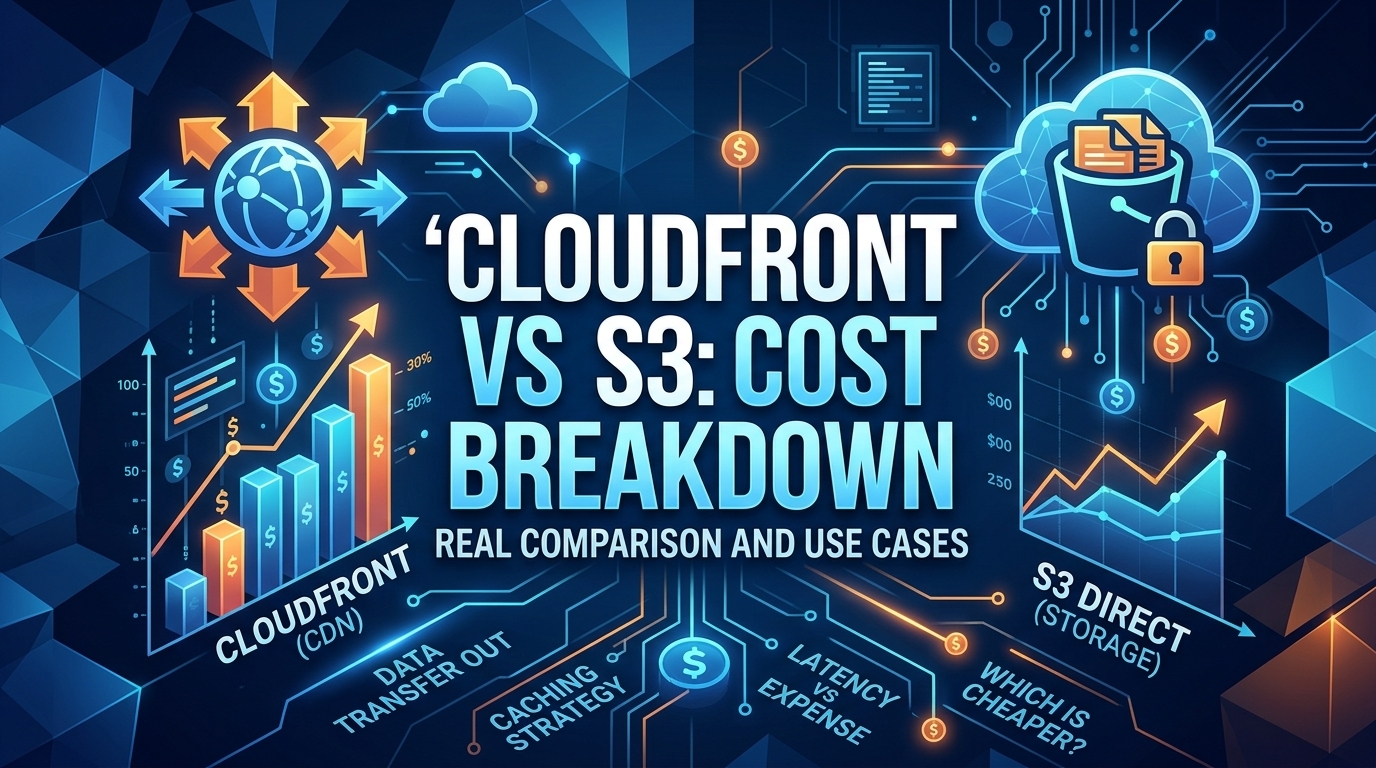
The CloudFront vs S3 decision depends more on object size than on traffic volume. At a 500 KB average response, 100 TB ...
Learn
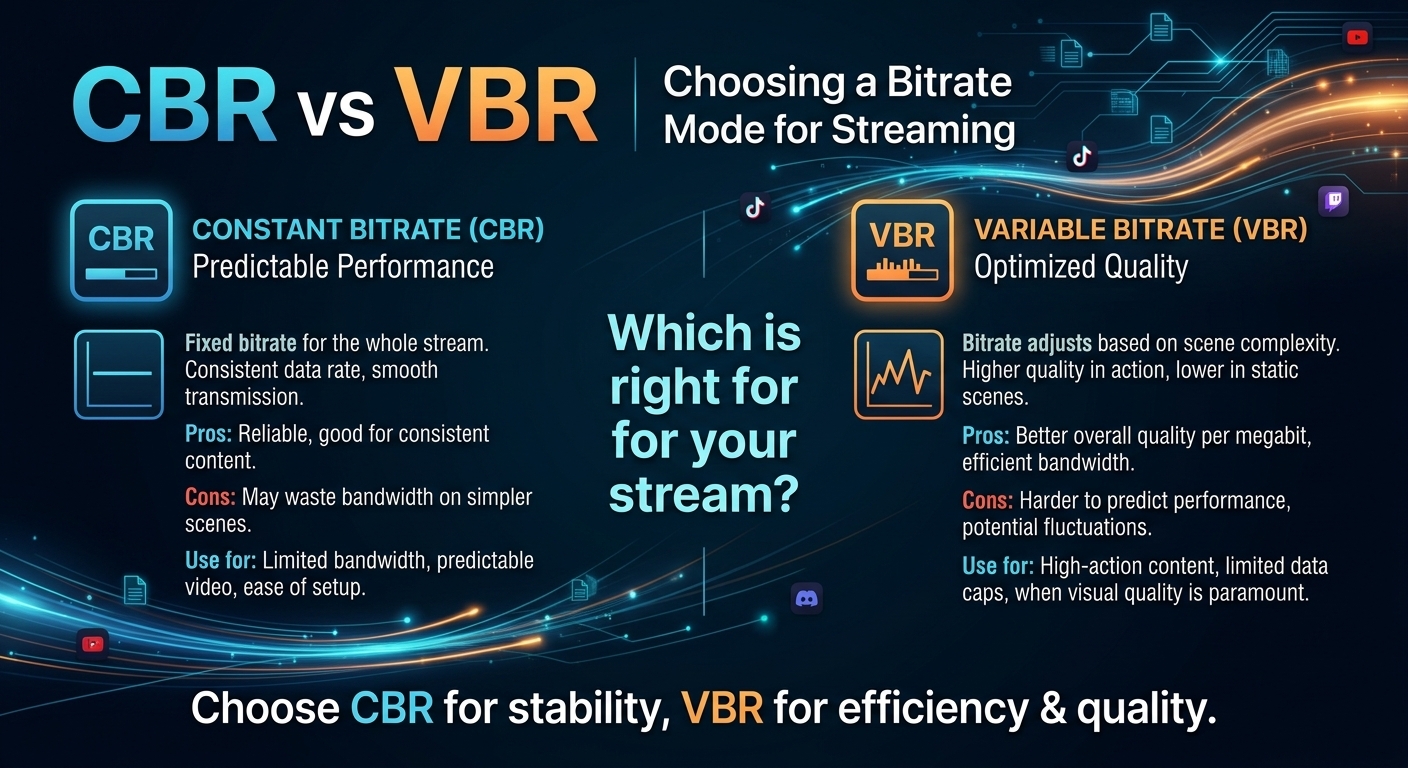
For most on-demand video, capped variable bitrate (VBR) wins the cbr vs vbr decision: it spends bits where the picture ...