
Learn
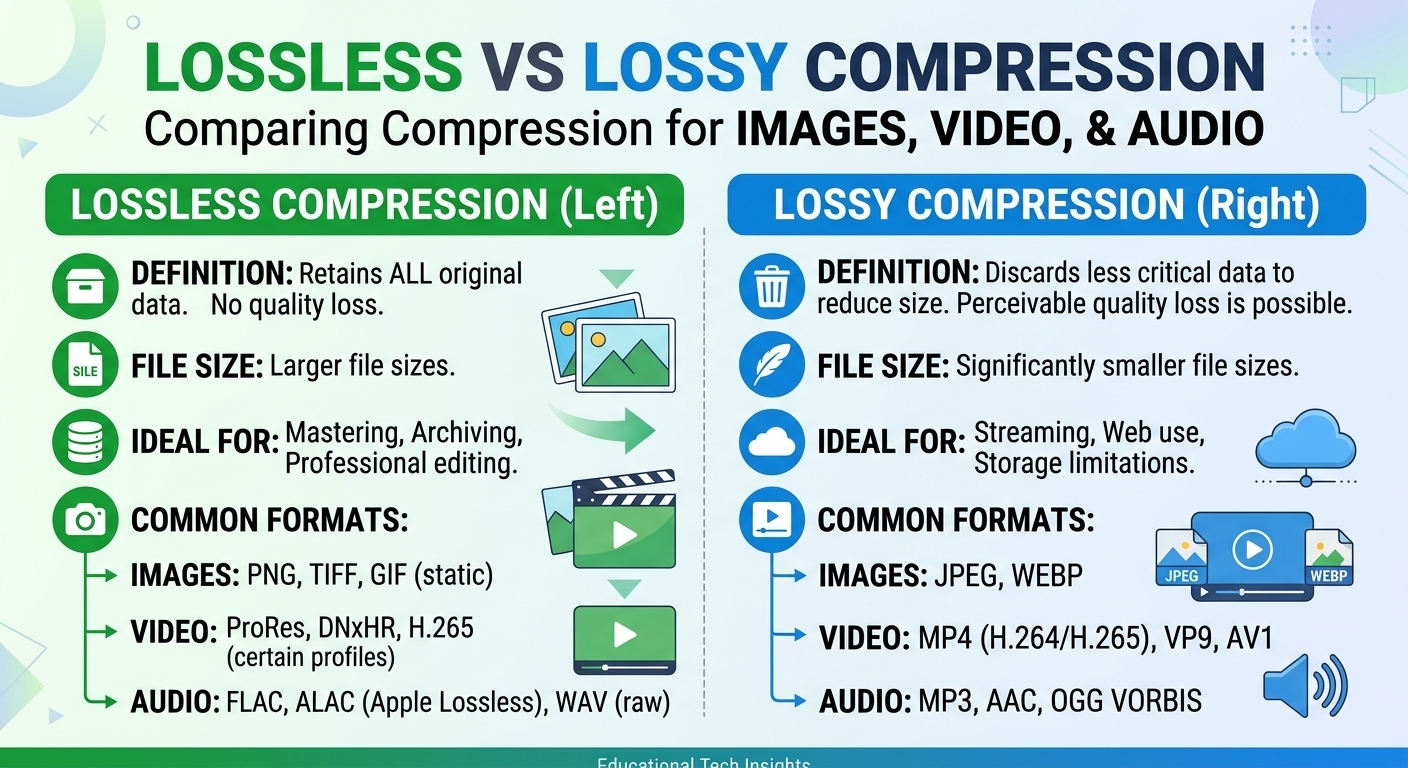
Lossy vs Lossless Compression: Images, Video and Audio
Lossy vs lossless compression comes down to one trade: lossless compression rebuilds every original bit and typically ...
Ask ten engineers what "CF CDN" means and you will get two answers, roughly split down the middle. In AWS-heavy shops, CF means CloudFront (and sometimes CloudFormation, which is why AWS docs write "CFN" for the latter). In web-hosting, DNS, and security circles, CF means Cloudflare. Both are real CDNs, both start with "CF," and they are not the same product, the same billing model, or the same architecture. This article decodes the CF CDN abbreviation in the first thirty seconds, then gives you what you actually came for: a 2026 comparison of the two platforms, current per-GB numbers, cache and purge behavior, and a workload decision matrix you can hand to a platform team.

CF CDN is an informal abbreviation with two dominant readings, disambiguated almost entirely by the surrounding context:
Heuristic that works nearly every time: if the sentence contains a bucket, a distribution, or an invalidation, CF means CloudFront. If it contains a zone, a proxy toggle, or a Worker, CF means Cloudflare. If it contains a stack or a template, it means CloudFormation and someone is in the wrong channel.
The collision is not going away, because both vendors reinforce it. Cloudflare's dashboard, community, and support macros use "CF" internally. AWS response headers on a CloudFront edge still emit x-amz-cf-id and x-amz-cf-pop, which means anyone reading a HAR file from a CloudFront-fronted site literally sees "cf" in the header name. Meanwhile Cloudflare stamps cf-ray, cf-cache-status, and cf-connecting-ip on its own responses. Two different CDNs, both writing "cf" into your logs.
That gives you the most reliable disambiguation trick available: read the response headers. A cf-ray header means Cloudflare. An x-amz-cf-pop header means CloudFront. If you see both, someone stacked Cloudflare in front of a CloudFront distribution, which is a real pattern with real costs discussed further down.
Once you know which CF someone means, the question becomes which one fits the workload. As of 2026 the two platforms have drifted further apart rather than converging.
CloudFront remains an AWS-native delivery layer. Its value compounds when your origins are S3, ALB, API Gateway, or MediaPackage, because origin access control, IAM, CloudWatch metrics, and CloudFormation-managed distributions all come free of glue code. Edge compute splits into CloudFront Functions for header rewrites and redirects at sub-millisecond execution, and Lambda@Edge for heavier Node.js or Python logic where cold starts in the 50–200 ms range are still a design constraint you plan around, not a footnote.
Cloudflare is origin-agnostic by design. It sits in front of anything with a public IP or a Tunnel connector, which makes it the default in multi-cloud and hybrid estates. Workers run on V8 isolates with effectively no cold start, and the surrounding primitives (KV, Durable Objects, R2, Queues) mean stateful edge logic is a supported pattern rather than a workaround.
Protocol parity is essentially complete in 2026: HTTP/3 over QUIC, TLS 1.3, Brotli, and early hints are table stakes on both. Where they differ is cache control ergonomics. Cloudflare's purge-by-tag and purge-by-prefix propagate in seconds on Enterprise plans. CloudFront invalidations typically complete in 60–120 seconds and are billed after the first 1,000 paths per month, which pushes AWS teams toward versioned object keys instead of purges.
Both platforms will exceed a 95% cache hit ratio on well-tuned static catalogs, but only with the second tier enabled. CloudFront Origin Shield adds a designated regional layer that collapses origin fetches; Cloudflare Tiered Cache does the same with upper-tier data centers. Teams that skip these and then complain about origin egress are, in practice, the majority of the "our CDN is expensive" tickets.
Pricing is where the abbreviation actually matters, because the two CFs bill on completely different axes. CloudFront meters bytes and requests. Cloudflare bundles bandwidth into flat plan tiers and meters features.
| Platform | Billing model | Indicative 2026 cost | Watch out for |
|---|---|---|---|
| CloudFront (CF = AWS) | Per GB egress plus per 10k requests | ~$0.085/GB first 10 TB US/EU, tiering down with volume; 1 TB/month free tier | WAF ACLs and rules, invalidations past 1,000 paths, Origin Shield, Lambda@Edge invocations all billed separately |
| Cloudflare (CF = the brand) | Flat plan, bandwidth included for web content | Free tier; Pro from ~$25/mo; Business from ~$250/mo; Enterprise custom | Acceptable-use policy on non-HTML heavy media; Workers, R2 ops, Argo, and bot management priced on top |
| BlazingCDN | Pay-as-you-go, progressive volume tiers | From $5 per TB, down to $2.50 per TB at volume (as of October 2026): 100 TB = $415; 500 TB = $1,815; 1,000 TB = $3,315 | Not a full security suite; pair with an existing edge security layer if that is your requirement |
Run the arithmetic on a 100 TB month of static delivery and the spread is stark. At CloudFront's blended US/EU rate you are in five figures before requests. At 100 TB for $415 (as of October 2026), you are paying roughly $4.15 per TB. That gap is the entire reason bandwidth-dominated workloads (game patches, OS updates, installer distribution, VOD catalogs) get split off from the primary CF CDN even when the rest of the stack stays on AWS.
For those bandwidth-heavy tiers, BlazingCDN's volume pricing lands in the same competitive set as Bunny.net, CDN77, KeyCDN, Gcore, and Medianova rather than competing with Cloudflare's security platform or Akamai's enterprise footprint. The honest framing: Cloudflare gives you WAF, bot management, and Workers in one bill; BlazingCDN gives you NVMe SSD servers, flexible per-property configuration, Anycast routing with built-in failover, and low per-TB pricing, starting at $5 per TB and reaching $2.50 per TB at volume (as of October 2026). Different jobs. Large media and software distributors frequently run both.
| Workload profile | Pick | Why |
|---|---|---|
| S3 or ALB origins, IaC-managed, CloudWatch dashboards | CloudFront | OAC, IAM, and metrics integration eliminate glue code and signed-URL plumbing |
| Multi-cloud or on-prem origins, edge personalization | Cloudflare | Origin-agnostic, Workers with no meaningful cold start, stateful edge primitives |
| Public API under credential-stuffing and scraping pressure | Cloudflare | Bot management and rate limiting bundled rather than assembled from AWS WAF rule groups |
| Live linear broadcast on AWS Elemental and MediaPackage | CloudFront | Packaging-to-delivery path stays inside one control plane and one support contract |
| 50 TB+/month of large binaries, patches, or VOD segments | Volume-priced CDN (test BlazingCDN first) | Per-TB cost dominates the bill; egress spread of 10x or more is normal at this tier |
| Compliance requiring a single vendor for DNS, TLS, and WAF | Cloudflare | One audit surface, one set of logs, one attestation package |
This is not a purely lexical problem. The abbreviation has operational consequences.
Stacking both CFs. Putting Cloudflare in front of a CloudFront distribution works and is occasionally justified, but it adds 10–30 ms of proxy latency, two independent cache states, two purge APIs, and a header set where cf-cache-status and x-cache disagree. During an incident, "the CDN is serving stale" becomes a two-vendor investigation. Only do this when Cloudflare's security posture is mandatory and AWS origin integration cannot be given up.
Purge scripts targeting the wrong CF. Release automation written against the Cloudflare API and later pointed at a CloudFront-fronted property fails silently or 403s. The deploy is green, the cache is stale, and the on-call engineer spends forty minutes on the wrong layer.
Runbooks that just say "flush CF." Write the vendor name. Every time. The five extra characters are cheaper than one bad night.
Header-based routing collisions. If your application reads cf-connecting-ip to determine client IP and you migrate to CloudFront, that header disappears and every request appears to originate from the edge. The CloudFront equivalent lives in CloudFront-Viewer-Address and the standard forwarded chain. Audit that before the cutover, not after.
CF CDN most commonly means either Amazon CloudFront or Cloudflare, depending on who is speaking. AWS practitioners almost always mean CloudFront; web hosting, DNS, and security practitioners almost always mean Cloudflare. A third reading, CloudFormation, is not a CDN at all and AWS abbreviates it CFN specifically to reduce this collision.
Inspect the response headers. A cf-ray or cf-cache-status header indicates Cloudflare; an x-amz-cf-id or x-amz-cf-pop header indicates CloudFront. Seeing both means the site is proxied through Cloudflare into a CloudFront distribution.
Only when the speaker means Cloudflare. Cloudflare's CDN is one component of a broader edge platform that also includes DNS, WAF, bot management, and Workers, and its bandwidth is bundled into flat plan tiers. CloudFront is a metered per-GB CDN whose value comes from AWS-native integration rather than bundled security.
For low-to-moderate web traffic, Cloudflare's flat plans (free, ~$25/mo Pro, ~$250/mo Business) are usually cheaper than CloudFront's ~$0.085/GB first-tier egress. For large-file and video delivery at scale, both are typically beaten by committed-volume CDNs, where roughly $4.15 per TB at 100 TB and $2.50 per TB at the lowest tier are realistic 2026 figures.
Yes, and some teams do it to get Cloudflare's security layer while keeping AWS-native origin access controls. Expect 10–30 ms of added latency, two caches to invalidate on every release, and harder incident triage. Instrument both layers separately before committing to the pattern.
Occasionally, and it is the most disruptive misreading because CloudFormation manages the distribution rather than serving traffic. If the sentence mentions stacks, templates, drift, or change sets, it is CloudFormation. AWS documentation uses CFN for this reason.
Two concrete actions. First, grep your runbooks and deploy scripts for the string "CF" and replace every instance with the actual vendor name. It takes fifteen minutes and removes an entire class of 3 a.m. mistakes. Second, pull last month's egress by content type and split it into HTML-and-API bytes versus large-object bytes. If the large-object share is above 60% of your total and you are paying metered per-GB rates on it, price that slice separately against a committed-volume CDN and see what the delta looks like at your actual volume.
Then the question worth arguing about in your own architecture review: at what monthly egress threshold does splitting delivery across two CDNs stop being operational overhead and start being the obviously correct call? We keep seeing that line land somewhere between 30 and 60 TB. Where does it land for you?

Heavy traffic.
Light bill.
The CDN for video and large traffic
Learn
Lossy vs lossless compression comes down to one trade: lossless compression rebuilds every original bit and typically ...
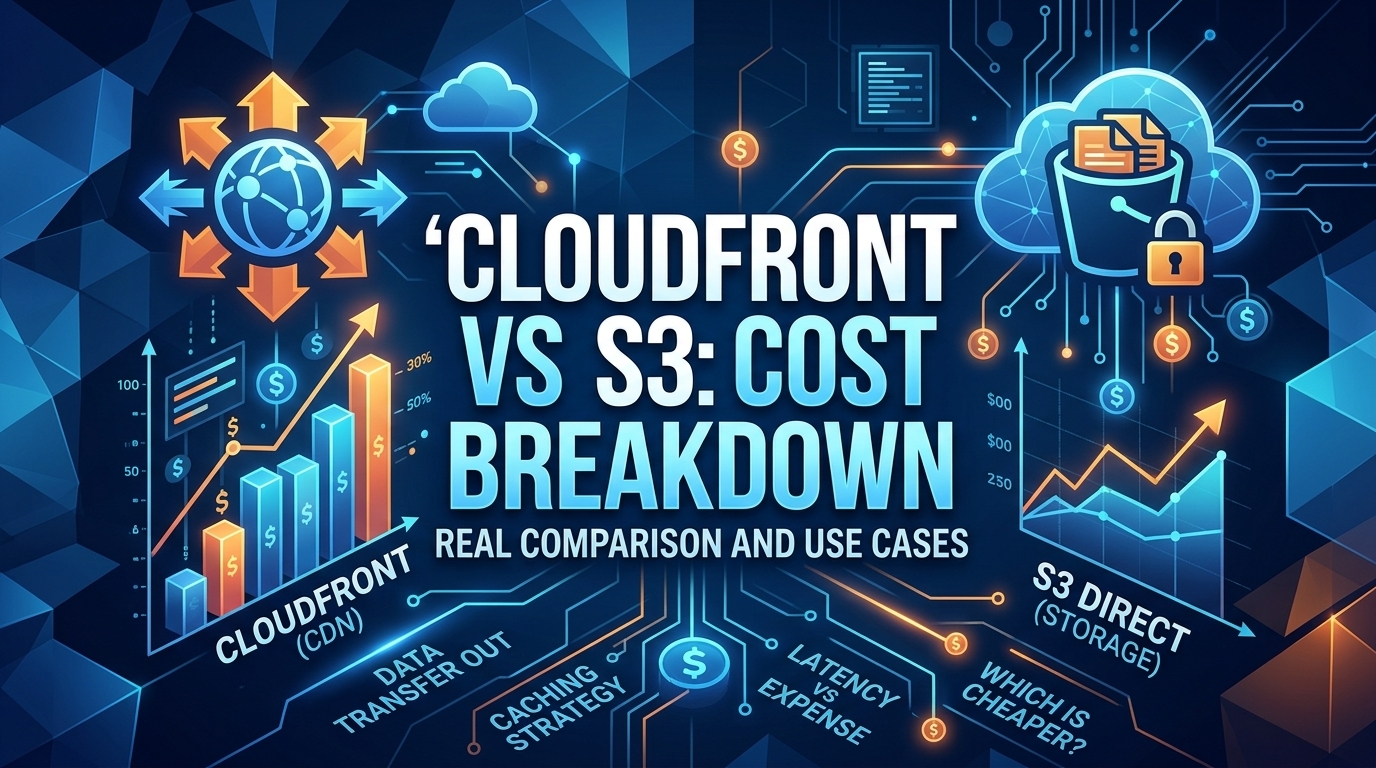
Pricing - Pricing & Costs
The CloudFront vs S3 decision depends more on object size than on traffic volume. At a 500 KB average response, 100 TB ...
Learn
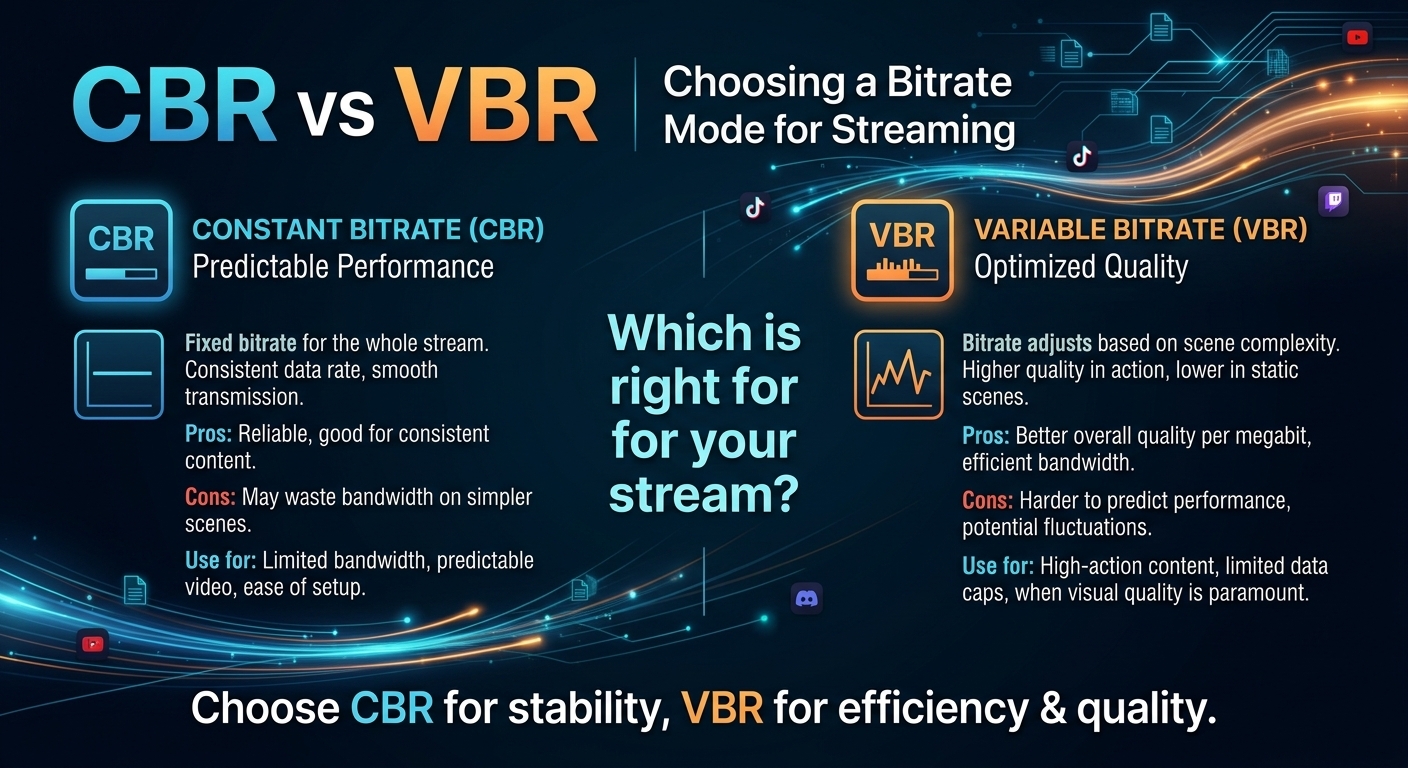
For most on-demand video, capped variable bitrate (VBR) wins the cbr vs vbr decision: it spends bits where the picture ...